

Tires are built to handle far more heat than ordinary summer pavement will expose them to, so they do not normally melt during hot-weather driving. The real danger is heat-related stress: low inflation, heavy loads, sustained speed, aging, damage, and hot conditions can combine to raise internal tire temperatures and increase the chance of structural failure.
Quick Answer
No, car tires do not normally melt in extreme summer weather. Heat can raise tire pressure, accelerate rubber aging, and make existing problems more serious. The biggest preventable risks are underinflation, overloading, worn or damaged tires, and using the wrong cold inflation pressure.
Key Takeaways
- There is no single 122–140°F ambient-temperature cutoff at which a normal passenger tire suddenly becomes unsafe or starts to melt.
- Tire pressure normally rises as the tire and surrounding air warm; set pressure using the vehicle manufacturer’s recommended cold value.
- Underinflation is especially dangerous because extra flexing creates heat and can damage the tire internally.
- Overloading, sustained high speed, aging, impacts, cuts, bulges, and low tread can add to hot-weather risk.
- Check pressure monthly and before long trips, inspect tread and sidewalls, and do not rely on TPMS as your only pressure check.
What Happens to Tires in Extreme Heat?
Tires do not normally liquefy or melt on a hot summer road. Modern tires are complex assemblies made from vulcanized rubber compounds, reinforcing cords, steel belts, and other materials designed to tolerate repeated heating and cooling.
That does not mean heat is harmless. Sustained high temperature accelerates material aging, and operating heat becomes more important when a tire is underinflated, overloaded, damaged, excessively worn, or driven hard for a long period.
The useful safety question is not “At what temperature will my tire melt?” but “Is the tire properly inflated, undamaged, correctly loaded, and suitable for the vehicle and conditions?”
The National Highway Traffic Safety Administration notes that sustained high temperature can contribute to tire deterioration and that poor tire maintenance can lead to flats, blowouts, or tread separation.
Note: Ambient air temperature, pavement temperature, and the temperature inside a rolling tire are not the same measurement. A hot road surface alone does not provide a reliable “tire failure temperature.”
At What Temperature Do Tires Soften?
There is no universal 50–60°C (122–140°F) softening point that can be used as a safe-or-unsafe limit for automotive tires. Different tread, sidewall, innerliner, and bonding compounds are formulated differently, and their behavior also depends on load, inflation, speed, age, and construction.
NHTSA tire-aging research has used temperatures around 60–65°C in accelerated oven-aging procedures. Those temperatures were laboratory test conditions chosen to reproduce material-aging effects over a shorter period; they were not published as a normal-road “softening threshold.”
For drivers, visible condition and correct operation are more useful than trying to measure a tire’s surface temperature. Check inflation, tread, sidewalls, load limits, and unusual vibration or pressure loss instead.
Why Summer Heat Raises Tire Pressure
Air pressure changes with temperature. As the air inside a tire warms, measured pressure rises. As it cools, measured pressure falls.
A commonly used rule of thumb is roughly 1 PSI of pressure change for each 10°F change in ambient temperature, although the exact change varies with tire volume, starting pressure, driving heat, sunlight, and other conditions.
This is why the vehicle manufacturer’s recommended pressure is specified as a cold inflation pressure, not a target you should force a hot tire to match.
Heat Expands Air Pressure
A tire that was correctly set to its placard pressure early in the morning can read several PSI higher later in the day or after highway driving. That increase is normally expected.
The correct cold pressure for your vehicle is normally listed on the Tire and Loading Information label on the driver’s door pillar or door frame and in the owner’s manual. Do not use the maximum pressure molded on the tire sidewall as your normal vehicle inflation target.
Temperature-related pressure changes work in both directions. A cool night or seasonal temperature drop can leave a tire below its recommended cold pressure even though it was correctly inflated during warmer weather.
Pressure Rises With Temperature
Check pressure before driving or after the vehicle has been parked long enough for the tires to cool. NHTSA defines a cold tire for its consumer guidance as one that has not been driven for at least three hours.
If you check immediately after driving and the tire reads higher than the cold placard specification, do not automatically let air out. Michelin’s current pressure guidance specifically warns against deflating a warm tire simply because heat has raised its measured pressure.
Warning: Do not bleed a normally warmed tire down to the vehicle’s cold-pressure specification. It may become underinflated after it cools. If a warm tire is at or below the recommended cold pressure, add air as needed and recheck the pressure when the tire is cold.
How Underinflated Tires Cause Blowouts
Underinflated tires flex more as they roll. That repeated flexing creates extra heat in the sidewall and internal structure. The U.S. Tire Manufacturers Association’s tire-care guidance warns that underinflation can cause excessive heat buildup and internal structural damage that may lead to tire failure.
| Condition | Effect | Risk |
|---|---|---|
| Low cold pressure | Excessive flexing | Heat and internal damage |
| Heavy load or overloading | More stress on tire structure | Overheating and failure |
| Long high-speed driving | Sustained heat generation | Greater stress on a weak tire |
| Damage or aging | Reduced structural margin | Separation or sudden failure |
Hot weather can make these conditions less forgiving because the tire has less opportunity to shed operating heat. Towing and carrying heavy cargo also matter, so never exceed the vehicle’s Gross Vehicle Weight Rating, Gross Axle Weight Rating, or other load limits shown by the manufacturer.
A tire pressure monitoring system helps detect serious pressure loss, but it is not a substitute for a gauge. NHTSA notes that TPMS typically alerts only when a tire is significantly underinflated, so a tire can be below its ideal cold pressure before the warning light appears.
Which Tires Are Best for Hot Weather?
The best tire for hot weather is one that matches your vehicle’s required size, load capability, speed rating, climate, and driving conditions. For warm-season use, summer and all-season tires are the most common choices.
Summer tires are designed for warm-weather performance, while all-season tires provide broader year-round versatility. Your owner’s manual and tire placard should be the starting point before changing tire type or size.
[Products Worth Considering]

Measure tire tread depth quickly and accurately with this LUMITECO dial gauge that reads in 1/32" increments up to 14/32". The color-coded green/yellow/red zones make it easy to judge tire wear and know when replacement is needed. A rugged, compact design with a protective pouch helps keep the gauge ready for use on cars, trucks, motorcycles, and more.

The TYAMATE TM8 solar-powered wireless TPMS delivers real-time tire pressure and temperature monitoring with six alarm modes for safer driving. A vibrant color LCD display shows readings clearly while windshield mounting keeps it hands-free and easy to read. With a wide 0–87 PSI range, strong 433.92 MHz signal transmission, and quick sensor pairing, it’s ideal for RV, sedan, SUV, MPV, and truck use.
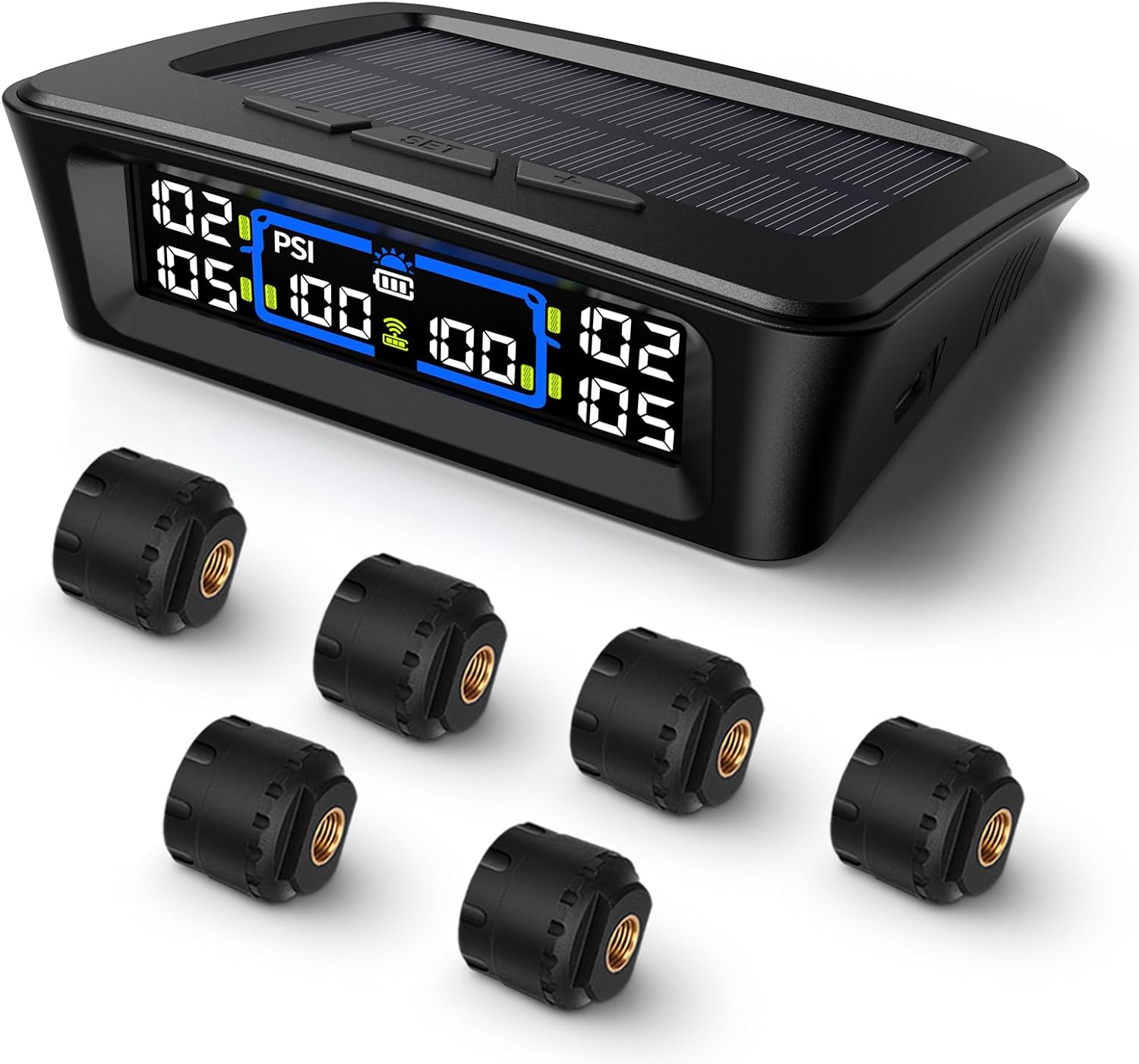
The Tymate TM12 RV TPMS delivers real-time tire pressure and temperature monitoring with a stable 433Hz display for safer long-distance driving. It supports simultaneous monitoring across vehicle and trailer zones, includes six alarm modes for pressure, temperature, leakage, battery, and signal loss, and features easy DIY installation with auto calibration. Power is supplied via USB-C charging or solar recharging, with a wide 0–144 PSI range and up to 50 ft signal coverage for RVs and towable trailers.
Summer Tire Options
Summer tires are built for warm pavement and can offer responsive steering and strong dry or wet warm-weather performance. They are not designed for snow, ice, or freezing conditions.
- Choose the correct tire size and load capability for your vehicle.
- Use summer tires when warm-weather performance is the priority and you do not need them for freezing or snowy conditions.
- Check wet-traction performance as well as dry-road performance if your climate gets frequent summer rain.
- Maintain the vehicle manufacturer’s cold inflation pressure regardless of tire category.
A summer tire does not remove the need for maintenance. Underinflation, overload, impact damage, or severe wear can create problems in any tire type.
All-Season Tire Benefits
All-season tires are a practical option when you want warm-weather capability plus broader seasonal flexibility. Their main advantage is versatility rather than being inherently immune to summer heat.
| Feature | Benefit | Hot-Weather Consideration |
|---|---|---|
| All-season design | Broad everyday usability | Suitable for normal summer driving when properly maintained |
| Vehicle-approved size and load rating | Correct fit and carrying capacity | Helps prevent overloading the tire |
| Adequate tread | Better water evacuation and traction | Important during summer rain |
Do not choose a tire solely because it is labeled all-season. Compare specifications, climate needs, manufacturer recommendations, and the tire’s condition.
Heat-Ready Tire Features
For many passenger tires sold in the United States, the Uniform Tire Quality Grading system includes a temperature grade. According to NHTSA TireWise, the grades are A, B, and C, with A indicating the highest resistance to heat under the standardized test.
- Check the correct tire size required by your vehicle.
- Confirm the tire’s load index and speed capability meet vehicle requirements.
- For applicable passenger tires, compare the UTQG temperature grade as one heat-resistance indicator.
- Choose summer or all-season construction based on the full climate you actually drive in.
- Do not treat run-flat construction as a substitute for correct inflation or as proof that a tire is better suited to extreme ambient heat.
No rating makes a tire immune to damage from underinflation, overloading, impacts, aging, excessive wear, or misuse.
How to Check Tire Pressure Before Driving
A correct pressure check takes only a few minutes and is one of the most useful things you can do before a summer road trip.
- Let the tires cool. Check them before driving or after the vehicle has been parked for at least three hours.
- Find the correct PSI. Use the driver’s door placard or owner’s manual, not the maximum pressure printed on the tire sidewall.
- Use an accurate gauge. Measure all four tires and the spare if the vehicle has one.
- Add air if pressure is low. Bring each cold tire to the vehicle manufacturer’s specified pressure.
- Release air only when appropriate. If a genuinely cold tire is above the specified cold pressure, adjust it to the placard value. Do not bleed a warm tire merely because normal driving heat raised its reading.
- Reinstall valve caps and investigate repeated loss. A tire that repeatedly loses pressure may have a puncture, valve problem, wheel leak, or other defect that needs professional inspection.
Pro Tip: Check pressure early in the morning before a long trip. That gives you a useful cold reading before direct sun and driving heat raise tire temperature.
NHTSA recommends checking tire pressure at least monthly and before long road trips. Do not wait for the TPMS light to tell you when routine pressure maintenance is needed.
Tire Damage Signs You Shouldn’t Ignore
Pressure is only part of a hot-weather tire inspection. Look closely at the tread and sidewalls because an old or damaged tire has less margin for the added stress of highway driving and summer heat.
- Bulges or bubbles: These may indicate damaged internal cords or separation.
- Deep cuts, gashes, or exposed cords: Structural material should never be visible.
- Cracks or severe weathering: Extensive cracking can indicate age or environmental deterioration.
- Tread separation or distortion: Any lifting, waviness, or abnormal shape needs immediate attention.
- Uneven tread wear: This can point to inflation, suspension, or alignment problems.
- Low tread: NHTSA says tires should be replaced when tread reaches 2/32 inch and is level with the built-in treadwear indicators.
- Repeated pressure loss: Do not keep topping up a tire without finding the cause.
- New vibration, thumping, or handling changes: These may signal tire or wheel damage and should be inspected promptly.
Warning: Do not continue normal driving on a tire with a sidewall bulge, exposed cords, obvious tread separation, severe structural damage, or rapid pressure loss. Stop in a safe location and have the tire inspected or replaced.
Do not use your hand as a tire-temperature test after driving. Tire and brake components may be hot, and touch does not tell you whether the tire’s internal structure is safe.
When to Replace Tires Before Summer Travel
There is no universal rule that every tire must be replaced at exactly five years. Tire life depends on its manufacturer, vehicle requirements, service history, storage, climate, damage, maintenance, tread, and operating conditions.
NHTSA notes that some vehicle and tire manufacturers recommend replacing tires when they are roughly six to ten years old regardless of remaining tread. Always follow the earlier applicable limit from your vehicle or tire manufacturer.
For example, Michelin’s current replacement guidance recommends a thorough professional inspection at least annually after five years of service and replacement by ten years from the manufacture date as a precaution. That is manufacturer-specific guidance, not a universal five-year disposal rule.
You can check tire age using the DOT Tire Identification Number on the sidewall. For modern tires, the final four digits identify the week and year of manufacture. A code ending in 4721, for example, means the tire was manufactured in the 47th week of 2021. Reaching five years in 2026 should prompt attention to manufacturer guidance and condition; it does not automatically mean every such tire must be discarded that year.
Age matters, but it is only one replacement factor. Visible damage, structural problems, treadwear indicators, manufacturer limits, and changes in performance can require replacement sooner.
Replace a tire when the tread is level with its wear bars, when serious damage is present, or when the applicable vehicle/tire manufacturer says it has reached its maximum service age. If you are uncertain before a long summer trip, have a qualified tire professional inspect it.
[Products Worth Considering]

The SAFELIFE dial tire tread depth gauge measures tread depth in 1/32 inch increments with clear, easy-to-read 2-inch dial face. Color zones using a traffic light system help you quickly judge whether tread is low, marginal, or ample for safer driving. Built with a durable zinc cast body and a metal detect probe for precise, comfortable use across cars, motorcycles, trucks, and buses.

Accurately measure tire tread depth with a calibrated gauge marked from 0 to 1 inch in 1/32 inch increments. The color-coded bar helps you quickly identify tread condition ranges, supporting safe driving for trucks, motorcycles, automobiles, and passenger vehicles.

Steelman white tire marking crayons provide high-contrast, semi-permanent marks for repairing and inspecting tires and equipment. They write on wet or dry, smooth or coarse surfaces including rubber, metal, glass, and wood, making them ideal for puncture location and damage outlining. The lead- and zinc-free crayons resist weather and fading yet wipe away when you no longer need the marks.
Summer Tire Care Tips for Hot Climates
A simple routine catches most preventable tire problems before a long hot-weather drive.
- Check cold pressure at least monthly and before long trips.
- Use the vehicle placard or owner’s manual for the correct PSI.
- Check the spare tire as well as the four road tires.
- Inspect sidewalls for cuts, cracks, bubbles, scrapes, and other damage.
- Inspect tread depth and look for uneven wear.
- Never exceed the vehicle’s load or axle-weight limits.
- Pay extra attention to inflation and load when towing or carrying heavy cargo.
- Use tires of the correct size, load rating, and type for your vehicle and climate.
- Rotate tires according to the vehicle or tire manufacturer’s recommended schedule when rotation is permitted.
- Have persistent vibration, unusual handling, or repeated pressure loss investigated rather than simply continuing to drive.
Hot climates make good maintenance more important, but there is no special summer PSI that should replace the vehicle manufacturer’s specified cold inflation pressure unless your vehicle manufacturer explicitly provides different instructions.
Note: General tire-safety guidance does not override the instructions in your vehicle owner’s manual, tire placard, or tire manufacturer’s documentation. Those specifications control for your vehicle.
[Products Worth Considering]

Milton S-921 pencil tire pressure gauge helps you maintain optimal tire pressure for passenger cars with accurate readings in PSI and kPa. It features a built-in deflator valve for convenient pressure adjustments, plus a single chuck head and nylon indicator bar for easy use on the go. Built from durable plated brass and designed for reliable performance, it’s a practical road trip and cold-weather maintenance tool.

Monitor tire tread wear with a smart, color-coded depth gauge that shows clear condition ranges at a glance. The bar is range marked for fast, easy readings, helping you maintain safer traction and performance. Each gauge is portable with a pocket clip, and the set includes 20 units for daily use and sharing.

Get precise tire readings with the ETENWOLF T300 Plus digital gauge, calibrated to ANSI B40.7 Grade 2A for reliable accuracy. It measures across a wide 3–200 PSI range and includes thermal compensation for dependable performance from extreme cold to heat. The bright LED display, LED illumination, and replaceable AAA batteries make it easy to check pressures quickly, even in low light.
Frequently Asked Questions
Can Tires Melt in 100 Degree Weather?
No. A 100°F day will not normally make an automotive tire melt. Heat can still increase pressure, speed up aging, and worsen problems caused by underinflation, overloading, wear, or existing damage, so proper maintenance remains important.
What Temperature Is Too Hot for Tires?
There is no single ambient temperature that makes every passenger tire unsafe. Tire construction, cold inflation pressure, load, speed, age, damage, and operating conditions all affect heat stress. Use the vehicle and tire manufacturer’s limits rather than a universal road-temperature cutoff.
Will Rubber Melt in a Hot Car?
Automotive tire rubber is not expected to melt simply because a parked car or road becomes very hot. Prolonged heat, oxygen, sunlight, ozone, and repeated heat cycles can contribute to aging and deterioration over time.
Can Arizona Heat Melt Tires?
Normal Arizona summer driving will not make a properly maintained automotive tire liquefy. Desert heat does make tire condition, cold inflation, vehicle load, tread, and age especially important because sustained hot-weather driving can add to operating stress.
Should I Let Air Out of My Tires When They Get Hot?
Not simply because the pressure rose after driving. A warm tire normally reads higher than its cold setting. Set pressure when the tires are cold and do not bleed a warm tire down to the cold placard value. Recheck it after the tire cools.
Does TPMS Replace a Tire Pressure Gauge?
No. TPMS is an important warning system, but it normally alerts only after pressure has fallen significantly. NHTSA still recommends checking tire pressure manually at least once a month.
Are Summer Tires Better Than All-Season Tires in Extreme Heat?
Summer tires can provide strong warm-weather performance, while all-season tires provide broader seasonal versatility. The right choice depends on your climate, vehicle, wet-weather needs, and manufacturer requirements. Correct inflation and condition matter with either type.
Do Tires Need to Be Replaced at Five Years Old?
Not automatically. Replacement-age recommendations vary. Some manufacturers call for closer professional inspections after five years, while NHTSA notes that some vehicle and tire manufacturers specify replacement in the six-to-ten-year range. Follow the guidance for your particular vehicle and tires.
Conclusion
Tires do not normally melt in extreme summer weather, but heat can magnify problems that are already present. Keep each tire at the vehicle manufacturer’s recommended cold pressure, inspect tread and sidewalls, respect vehicle load limits, and investigate bulges, vibration, severe damage, or repeated air loss before continuing a trip.
Do not use a universal temperature cutoff or a blanket five-year replacement rule. Tire condition, manufacturer guidance, age, inflation, load, and operating conditions provide a much better picture of summer tire safety.
Sources
- NHTSA TireWise — tire pressure, TPMS, tread depth, tire aging, seasonal tire types, and temperature-resistance grades.
- NHTSA Summer Driving & Road Trip Tips — cold tire-pressure checks, vehicle placard pressure, and summer tire inspection.
- U.S. Tire Manufacturers Association — Care and Service of Passenger and Light Truck Tires — proper inflation, underinflation heat buildup, structural damage, and vehicle loading.
- Michelin — How to Properly Inflate Your Car Tires — cold-versus-warm inflation, natural pressure loss, temperature effects, and warm-tire adjustment guidance.
- Michelin — When to Replace Tires — age inspections, ten-year service-life guidance, treadwear indicators, damage signs, and DOT manufacture-date codes.


1 thought on “Can Tires Melt in Extreme Heat? What Really Happens”