Disclosure: As an Amazon Associate, we earn from qualifying purchases. If you click a link on this page and make a purchase, we may receive a small commission at no extra cost to you.
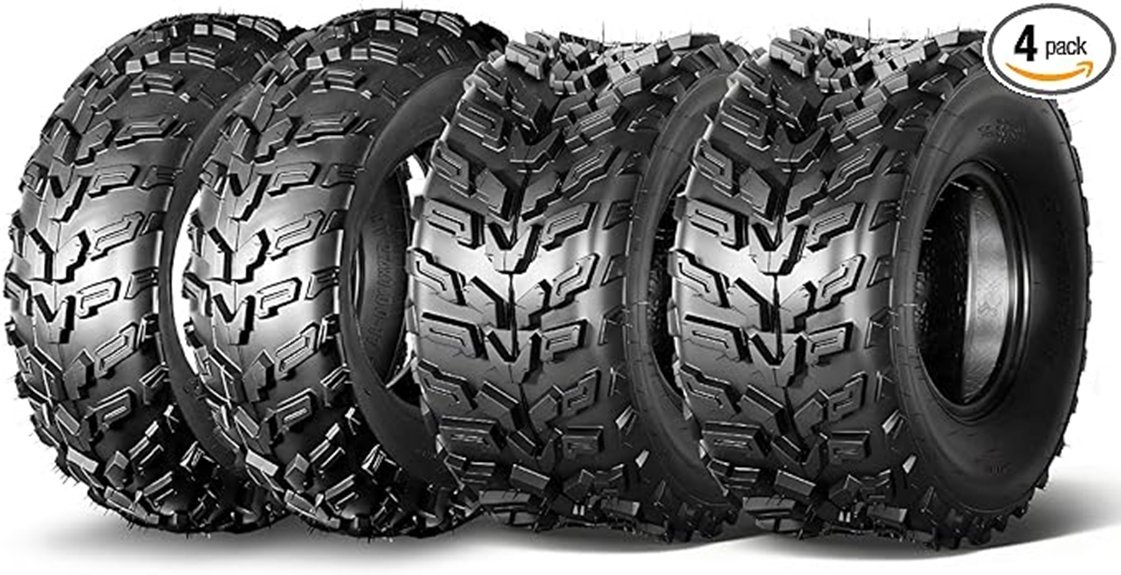
Choosing replacement ATV or UTV tires starts with fit, not tread style. The MOTOOS 22×7-11 front and 22×10-9 rear all-terrain tire set gives you four tubeless, directional tires for trail-focused use, with deeper rear tread and a 6-ply-rated casing listed in the product details. This review explains the sizing, load limits, terrain strengths, setup needs, and catalog inconsistencies you should check before ordering. The set is a practical option for matching machines, but it is not a universal fit guarantee and is not intended for highway use.
Quick Verdict
Rating: 8.2/10, recommended with fitment caveats
Best For: ATV and UTV owners who need a complete 22×7-11 front and 22×10-9 rear off-road replacement set
Bottom Line: The directional tread, tubeless construction, and listed 6-ply rating make this MOTOOS set well suited to mixed trail terrain. The main tradeoff is fitment risk, because wheel size, clearance, load needs, and the listing details must all match your machine.
Key Takeaways
- The package is listed as a set of four MOTOOS tires, with 22×7-11 fronts and 22×10-9 rears.
- Front tires use 11-inch rims and 5.5-inch rim widths, while rear tires use 9-inch rims and 8-inch rim widths.
- The product details list a 6-ply-rated, bias, tubeless construction with directional tread.
- Listed tread depth is 10 mm at the front and 14 mm at the rear, supporting a stronger drive-tire bite.
- The front and rear maximum loads are listed separately as 264 pounds and 285 pounds per tire.
- These are off-road tires. The F speed rating and 24 psi maximum do not make them suitable for highway travel.
ATV Tire Specs at a Glance
| Specification | Detail |
|---|---|
| Brand | MOTOOS |
| Product type | All-terrain ATV/UTV tire set |
| Package | Four tires, two front and two rear; rims are not included |
| Front size | 22×7-11 |
| Rear size | 22×10-9 |
| Construction | Bias, tubeless |
| Ply rating | 6-ply rated in the detailed product specifications |
| Tread type | Directional, self-cleaning all-terrain pattern |
| Tread depth | 10 mm front; 14 mm rear |
| Recommended rim width | 5.5 inches front; 8 inches rear |
| Rim diameter | 11 inches front; 9 inches rear |
| Maximum load | 264 pounds per front tire; 285 pounds per rear tire |
| Maximum pressure | 24 psi |
| Speed rating | F |
| Season listing | Year-round |
| Best use | Mud, dirt, gravel, rocks, sand, trails, and compatible utility equipment; not highway use |
What Is the MOTOOS ATV/UTV Tire Set?
This is a staggered-size replacement package for machines that use narrower 22×7-11 tires at the front and wider 22×10-9 tires at the rear. The front pair is sized for steering response, while the wider rear pair provides a larger contact area for drive traction on loose ground.
MOTOOS lists the tires as bias construction, tubeless, and directional. The set is aimed at trail riders, property owners, and utility-vehicle users who need a complete four-tire package rather than a single replacement. It may also fit select lawn mowers and other utility equipment, but the printed tire size and wheel specifications must match.
Who Should Buy It?
Best For
- ATVs or UTVs that specify 22×7-11 front and 22×10-9 rear tires
- Riders who split time among packed dirt, gravel, mud, sand, and rocky trails
- Buyers who want a tubeless set of four with deeper rear tread
Skip If
- Your machine uses different front or rear rim diameters, widths, or tire sizes
- You need DOT-approved highway tires or sustained high-speed performance
- Your loaded vehicle requires more than the listed per-tire load limits
Fit and Compatibility
The listing describes universal fit, but that term only means the tires are not tied to one exact vehicle model. You still need to match all three numbers in each tire size. For 22×7-11, the tire is about 22 inches tall, about 7 inches wide, and fits an 11-inch rim. For 22×10-9, the tire is about 22 inches tall, about 10 inches wide, and fits a 9-inch rim.
Check your owner’s manual, current tire sidewalls, rim widths, suspension clearance, and fender clearance. Also confirm that a wider or more aggressive tread will not rub at full steering lock or full suspension compression. The listed 5.5-inch front and 8-inch rear rim widths should be compared with your actual wheels.
Before You Buy: Do not order from the vehicle name alone. Match the complete front and rear sizes, rim widths, load requirements, and available clearance. Amazon’s page also shows some conflicting catalog fields, so confirm the seller’s current ply and load information before checkout.
Pro Tip: Photograph the sidewall markings on all four current tires before shopping. This gives you a quick reference for size, rotation direction, load markings, and any front-to-rear differences.
How the 6-Ply-Rated Casing Helps
The detailed product specifications list a 6-ply rating. A higher ply rating generally indicates a stronger casing than a light-duty tire, which can help the tire resist cuts, abrasions, and deformation when you travel across roots, gravel, or rocky ground. It does not make the tire puncture-proof, and sidewall damage can still occur.
Bias construction can provide a firm, durable feel for utility and trail riding. The casing also supports the tread blocks as they flex against uneven terrain. That can improve predictable traction, but ride comfort and steering effort will still depend on your machine, pressure setting, suspension, and load.
Tread Design and Terrain Performance
The directional tread is designed to roll in one marked direction. Angled tread blocks can push loose material away from the contact area while the open channels help reduce packing. Correct mounting direction matters because reversing a directional tire can reduce the intended cleanout and steering behavior.
- Mud: Open channels and spaced blocks can release soft soil more effectively than a tightly packed turf tread, although very deep mud may still overwhelm a 22-inch tire.
- Dirt and gravel: The front pattern supports steering bite, while the 14 mm rear tread gives the drive wheels more depth for acceleration and climbing.
- Sand: The wider rear size can help spread load, but pressure, vehicle weight, and rider input have a major effect on flotation.
- Rocks and roots: The listed 6-ply rating adds casing support, while careful speed and line choice remain essential for protecting the sidewalls.
How It Performs in Real Use
For Mixed Trail Riding
This set makes the most sense when one ride includes several surfaces. The front and rear tread depths are not identical, which is useful because the steering tires need predictable response while the rear tires do more of the driving work. You should expect a more trail-focused feel than you would get from a shallow turf or hard-surface tire.
For Muddy Property Work
On damp fields, access roads, and muddy work areas, the directional channels should clear debris better than closely spaced tread. The 285-pound rear load limit per tire still needs to cover the machine, rider, cargo, and any attached equipment within the vehicle manufacturer’s limits.
For Sand and Loose Soil
The 10-inch-wide rear tires offer more footprint than the 7-inch fronts. That can help forward pull on loose ground, but these are not dedicated paddle tires. Use smooth throttle inputs and the pressure recommended by your vehicle or tire guidance rather than assuming the 24 psi listing is the normal operating pressure.
For Rocky Trails
The casing and tread depth are useful for rough terrain, but the modest tire diameter limits obstacle clearance compared with taller tire packages. Avoid sharp impacts, inspect the sidewalls after difficult sections, and stop if you notice cuts, bulges, exposed cords, or bead damage.
Setup Tips and Common Mistakes
- Confirm the staggered sizes. The front and rear rims have different diameters, so the tires cannot be swapped between axles.
- Check the rotation arrows. Mount each directional tire so it turns in the direction marked on the sidewall during forward travel.
- Use compatible rims. Compare the listed 5.5-inch front and 8-inch rear rim widths with your wheel specifications.
- Have the beads seated correctly. Tire mounting can be hazardous. Use proper equipment or a qualified powersports tire shop.
- Set operating pressure correctly. The listing gives 24 psi as a maximum. Your actual cold pressure should follow the tire markings and vehicle manufacturer’s guidance.
- Recheck after installation. Inspect clearance at full steering lock and through suspension travel before riding at normal speed.
Safety, Inspection, and Maintenance
These tires are listed for off-road use and are not intended for highway travel. An F speed rating is a tire classification, not a target speed. Your safe speed may be far lower because of terrain, load, visibility, machine condition, and tire pressure.
Before each ride, check cold pressure, tread damage, sidewall cuts, embedded objects, bead seating, and wheel fasteners. Keep the load within both the tire limits and the lower limit specified by your ATV or UTV. Replace any tire with structural damage, and use professional inspection when you are unsure.
Pros and Cons
Pros
- Complete set of four in a common staggered ATV size combination
- Directional tread with open channels for mixed off-road surfaces
- Deeper 14 mm rear tread supports drive traction
- Tubeless design can simplify puncture repair when damage is repairable
- Listed 6-ply-rated bias casing suits trail and utility use
Cons
- Fit depends on exact front and rear wheel specifications, not just vehicle type
- Amazon’s catalog shows conflicting general and tire-specific load information
- Not designed for highway use, and rims are not included
Is It Worth the Price?
This MOTOOS package is best viewed as a value-focused replacement set for a machine that already uses these exact sizes. Buying all four tires together can simplify tread matching and replacement planning compared with combining separate front and rear models.
It offers stronger value when you need mixed-terrain traction, tubeless construction, and a listed 6-ply rating without moving to a specialized mud or racing tire. It is not the best fit if you need verified road approval, a vehicle-specific fit guarantee, premium brand support, or higher load capacity.
How It Compares to Alternatives
Same-size alternatives include ROADGUIDER 22×7-11 and 22×10-9 tires, WANDA AT MASTER P341 tires, and TRIBLE SIX trail tires. Compare the actual tread depth, ply rating, load limit, package count, warranty support, and current seller details rather than choosing only by the tire size printed in the title.
The MOTOOS set stands out for its listed 10 mm front and 14 mm rear tread depths, 6-ply-rated product specifications, and complete four-tire package. A competing set may be better when you need a deeper mud tread, a different casing rating, or clearer vehicle-specific fitment information.
Frequently Asked Questions
Are these MOTOOS tires tubeless?
Yes. The listing identifies both the front and rear tires as tubeless. They still need compatible, undamaged rims and correct bead seating to hold air safely.
Will they fit every ATV or UTV?
No. They fit only machines that can safely use 22×7-11 front and 22×10-9 rear tires with the listed rim widths and load limits. Check your manual, current sidewalls, and physical clearance before ordering.
What is the tread depth?
The front tread depth is listed as 10 mm, and the rear tread depth is listed as 14 mm. The deeper rear tread is useful where the drive wheels need more bite on loose or muddy ground.
What rim widths do they require?
The front specification lists a 5.5-inch rim width, while the rear lists an 8-inch rim width. The front tire fits an 11-inch rim diameter, and the rear fits a 9-inch rim diameter.
What are the listed load limits?
The detailed size specifications list 264 pounds for each front tire and 285 pounds for each rear tire. Because Amazon also displays a conflicting general load-capacity field, verify the tire sidewall and current seller information before use.
Can you use them on the highway?
No. The listing states that the tires are not intended for highway use. The F speed rating does not override the off-road-use limitation or your vehicle manufacturer’s speed guidance.
Do the tires include rims?
No. This package includes tires only. You need compatible front and rear rims, and the wheels must be in safe condition for tubeless mounting.
Should you inflate them to 24 psi?
Not automatically. The listing gives 24 psi as the maximum pressure, not necessarily the correct operating pressure for your machine. Follow the tire sidewall, owner’s manual, and qualified installer’s guidance.
The Bottom Line
The MOTOOS 22×7-11 front and 22×10-9 rear tire set is a solid choice for owners who need these exact sizes and want a directional, tubeless, mixed-terrain package. Its main strengths are the complete four-tire format, deeper rear tread, and listed 6-ply-rated casing, while its main limitation is the need to verify fitment and conflicting catalog details carefully. Skip it if you need highway tires, different wheel sizes, or higher load capacity.