
When to Use Tire Chains: Laws, Conditions & Safety

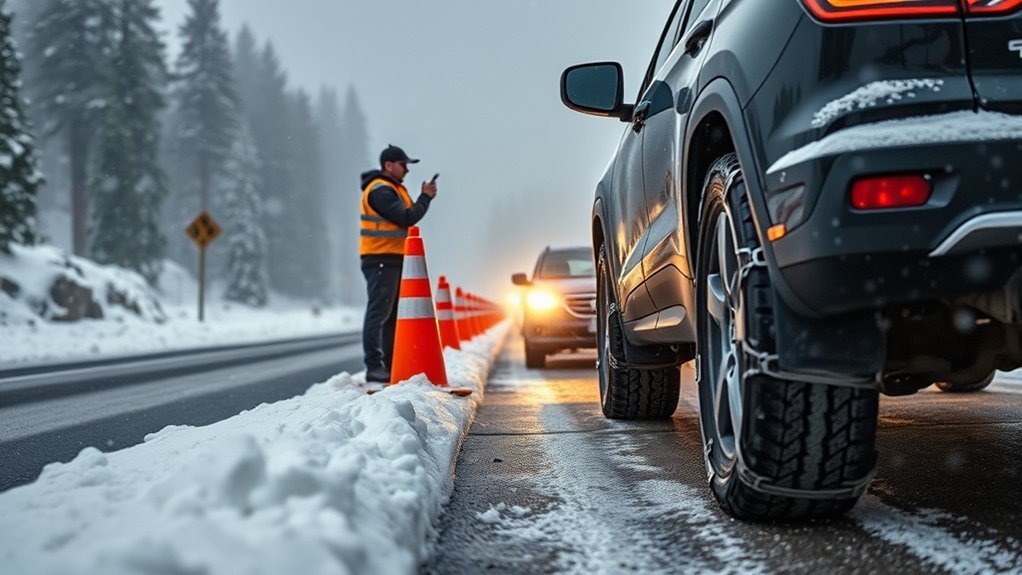
You need tire chains in California when Caltrans or the CHP posts chain-control signs, or when road conditions make normal tires unsafe. The exact rule depends on the posted restriction level: R-1, R-2, or R-3. In California, “chains” usually means any approved tire traction device, including link chains, cable chains, textile snow chains, wheel-hub devices, or automatic traction devices that meet state requirements.
Quick Answer
You need chains in California whenever signs say chains or traction devices are required. R-1 allows some snow-tire exceptions, R-2 allows some 4WD/AWD exceptions, and R-3 requires chains or traction devices on every vehicle with no exceptions. Check Caltrans QuickMap before driving.
Key Takeaways
- Posted signs and official instructions control the rule. Always follow Caltrans, CHP, and local chain-control directions.
- R-1, R-2, and R-3 tell you which vehicles must install chains or approved traction devices.
- Even 4WD and AWD vehicles must carry traction devices when entering chain-control areas.
- Vehicles towing trailers have extra chain rules, and trailers with brakes must have chains on at least one axle.
- Drive slowly with chains installed. Caltrans says the posted speed limit during chain controls is usually 25 or 30 mph.
At a Glance
| Time Required | 10–30 minutes to install chains, depending on practice and conditions |
| Difficulty | Easy to moderate if you have practiced before the trip |
| Tools Needed | Correct-size chains or approved traction devices, gloves, flashlight, tensioners if required, and a safe pull-off area |
| Cost | Varies by tire size and device type; check your vehicle manual before buying |
How to Check Chain Controls and Live Road Conditions
Before you head into the mountains, check current chain controls instead of guessing. Caltrans recommends checking the Caltrans Highway Information Network at 800-427-7623 and Caltrans QuickMap before driving. QuickMap shows active chain controls, closures, CHP incidents, cameras, lane closures, and changeable message signs.
On QuickMap, turn on the Chain Controls layer. Caltrans says this layer displays active chain-control requirements throughout the state, with details shown in the information pop-up. The layer is updated frequently, but roadside signs and instructions from Caltrans or CHP personnel still control what you must do at the checkpoint.
Note: Chain-control areas can change quickly because weather and pavement conditions vary by elevation, shade, traffic, and storm intensity. Check conditions before departure, then check again near the pass.
R-1, R-2, and R-3 Explained
California uses three main chain-requirement levels. These levels tell you when chains or approved traction devices are required and which vehicles may qualify for limited exceptions.
| Level | What It Means | Common Exception |
|---|---|---|
| R-1 | Chains or traction devices are required on most vehicles. | Passenger vehicles and light-duty trucks under 6,000 pounds gross weight may proceed with snow tires on at least two drive wheels, but must carry chains. |
| R-2 | Chains or traction devices are required on nearly all vehicles. | 4WD/AWD vehicles with snow-tread tires on all four wheels may proceed, but must carry traction devices. |
| R-3 | Chains or traction devices are required on all vehicles. | No exceptions. Highways often close before R-3 is imposed. |
R-1: Chains Required, With Snow-Tire Exceptions
Under R-1, chains or approved traction devices are required on all vehicles except passenger vehicles and light-duty trucks under 6,000 pounds gross weight that have snow tires on at least two drive wheels. Vehicles using the snow-tire exception must still carry chains or traction devices.
If you are towing a trailer, the exception becomes stricter. Caltrans says all vehicles towing trailers must have chains on one drive axle, and trailers with brakes must have chains on at least one axle.
R-2: Most Vehicles Need Chains
Under R-2, chains or traction devices are required on all vehicles except 4WD or AWD vehicles equipped with snow-tread tires on all four wheels. Even then, those 4WD/AWD vehicles must carry traction devices in chain-control areas.
This is the level many mountain drivers encounter during stronger winter storms. Do not assume AWD alone is enough. The exemption depends on the posted control, the vehicle, and the tires.
R-3: No Exceptions
Under R-3, chains or approved traction devices are required on every vehicle. There are no snow-tire, AWD, or 4WD exceptions. Caltrans and CHP both note that highways are often closed before R-3 conditions are imposed, so treat this level as severe.
Warning: Do not drive past a chain-control sign without the required traction devices. California Vehicle Code Section 27459 says a motor vehicle, trailer, or semitrailer may not be operated on a signed highway segment without required tire traction devices.
Which Vehicles Must Carry or Use Chains in California

The safest rule is simple: if you plan to drive into a California chain-control area, carry properly fitting chains or approved traction devices. Caltrans states that all vehicles, including 4WD and AWD vehicles, must carry chains when entering a chain-control area.
Passenger Vehicles
Passenger vehicles may qualify for exceptions under R-1 or R-2, but those exceptions are limited. In R-1, snow tires may allow a passenger vehicle to proceed without installing chains. In R-2, a 4WD or AWD vehicle with snow-tread tires on all four wheels may proceed without installing chains. In both cases, you still need to carry traction devices.
California defines a snow-tread tire as one with a deeper, more aggressive tread pattern than a conventional passenger tire. Caltrans also says snow-tread tires can be identified by markings such as MS, M/S, M+S, or Mud and Snow on the sidewall.
4WD and AWD Vehicles
AWD and 4WD help you get moving, but they do not shorten stopping distance on ice the way many drivers expect. Under R-2, 4WD/AWD vehicles may be exempt from installing chains only when they have snow-tread tires on all four wheels and carry traction devices. Under R-3, they must install chains or traction devices like everyone else.
Pro Tip: Practice installing chains at home before your trip. It is much easier to learn in your driveway than on a snowy shoulder with cold hands and traffic passing nearby.
Commercial and Heavy-Duty Vehicles
California does not have a fixed statewide date when all vehicles must carry chains. However, when a road is posted with chain requirements, Caltrans says heavy-duty vehicles over 6,500 pounds gross weight must be equipped with chains mounted on the tires to proceed, unless a posted exception applies.
Commercial drivers should also check the Caltrans truck chain requirements and the official chain-placement chart before entering mountain routes. Truck controls may include minimum-chain or maximum-chain requirements depending on conditions.
Trailers and Towed Vehicles
If you tow a trailer, chain requirements apply to both the towing vehicle and the trailer. Caltrans states that all vehicles towing trailers must have chains on one drive axle. Trailers with brakes must have chains on at least one axle.
Do not assume your tow vehicle’s 4WD system covers the trailer. A trailer can slide, jackknife, or push the tow vehicle on icy grades. Carry correctly sized chains for the trailer as well as the tow vehicle.
Chains, A.T.D.s, Cables, Textile Devices, and Studded Tires
California Vehicle Code Section 605 defines tire traction devices as devices or mechanisms designed to improve traction, braking, and cornering on snow or ice. In practice, that can include conventional link chains, cable chains, textile snow chains, wheel-hub attached devices, and automatic tire chains, as long as they meet the requirements.
| Device | California Use | Important Limit |
|---|---|---|
| Link chains | Commonly used and widely accepted when chain controls are posted. | May not fit vehicles with low wheel-well clearance. |
| Cable chains | Legal as a traction device when compliant. | May be restricted during severe local conditions. |
| Textile snow chains | Listed by Caltrans as an example of an Alternative Traction Device. | Must meet California requirements and your vehicle manufacturer’s guidance. |
| Automatic Traction Devices | Legal in California and used mainly on commercial, emergency, and bus drive axles. | Additional outside-wheel chains may still be required for compliance. |
| Studded tires | Allowed from November 1 through April 30 under California Vehicle Code Section 27454. | Studded tires do not automatically exempt you from posted chain controls. |
[Products Worth Considering]

Worry-Free Self-Tightening Ratchets Provide Automatic Tightening And Centering
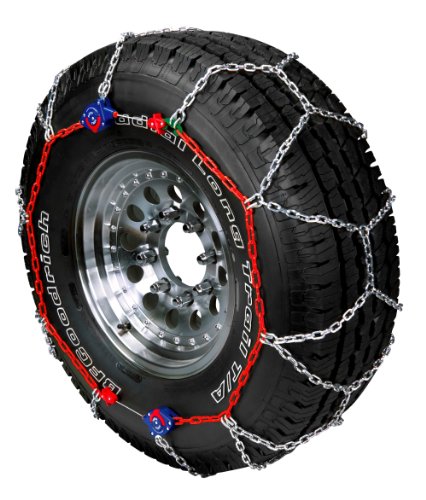
Worry-Free Self-Tightening Ratchets Provide Automatic Tightening And Centering
Worry-free self-tightening ratchets provide automatic tightening and centering
Automatic Traction Devices: How They Work and When Allowed
Automatic Traction Devices, often called A.T.D.s, mount under the vehicle and deploy chain segments beneath the drive wheels when the driver activates the system. Caltrans says they are used mainly on commercial vehicles, emergency vehicles, and buses.
A.T.D.s can reduce the need for roadside installation, which is helpful for emergency response and commercial routes. They are legal in California and may be approved as a direct one-for-one replacement for conventional chains. However, Caltrans also warns that vehicles with only A.T.D.s may still need additional chains on outside wheels to meet the California Chain Requirements Chart.
Before relying on an A.T.D., confirm that the system is properly maintained, works with your axle layout, and meets the posted chain requirement for your vehicle configuration.
[Products Worth Considering]
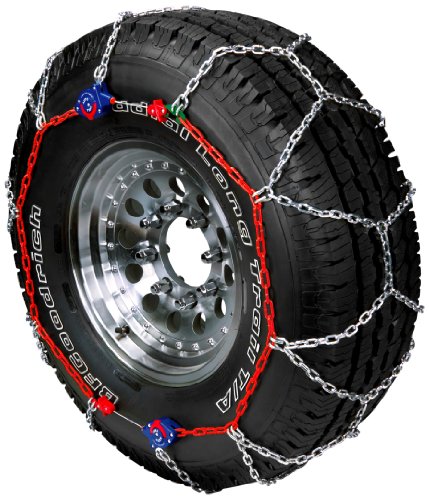
Worry-Free Self-Tightening Ratchets Provide Automatic Tightening And Centering
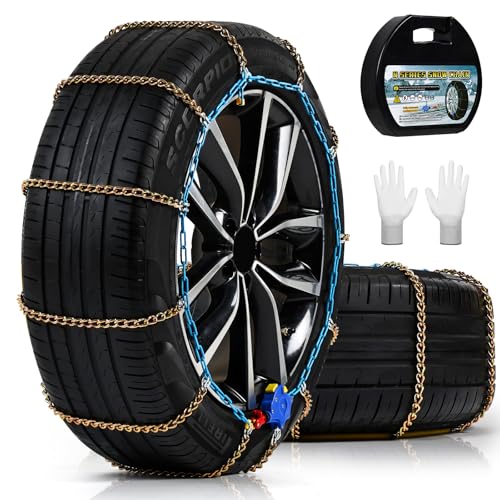
Quick Installation & Removal: The quick-install buckle allows you to easily put on or remove the snow chains in just 1 minute.
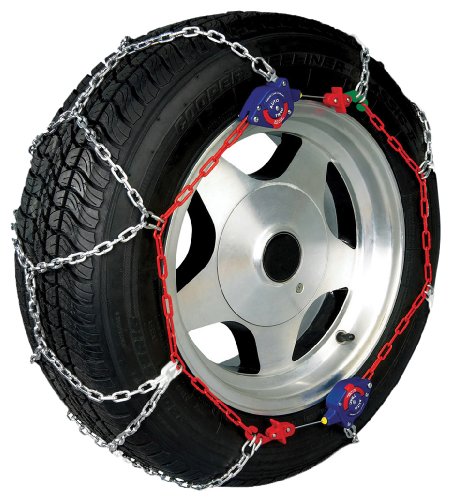
Worry-Free Self-Tightening Ratchets Provide Automatic Tightening And Centering
Choosing the Right Chains or Traction Device for Your Tires
Before buying chains, read your owner’s manual and check the tire size printed on your tire sidewall or driver-door placard. Some vehicles have limited wheel-well clearance and may require low-profile cables or manufacturer-approved traction devices instead of traditional link chains.
Use this checklist before purchasing:
- Match the device to your exact tire size.
- Confirm the device is approved for your vehicle in the owner’s manual.
- Check whether your vehicle requires low-clearance chains or cables.
- Buy chains for the correct axle, and buy trailer chains if you tow.
- Make sure the device has all required tensioners, fasteners, and instructions.
- Test-fit the chains before your trip, not during the storm.
Note: Caltrans does not sell or recommend specific tire-chain brands. It recommends checking your vehicle manufacturer’s specifications for tire chains and traction devices.
[Products Worth Considering]

Quick Installation and Removal: The quick-install buckle allows you to easily install or remove the snow chains in just 1 minute.

Package Dimensions: 14 L x 8 H x 5 W (inches)
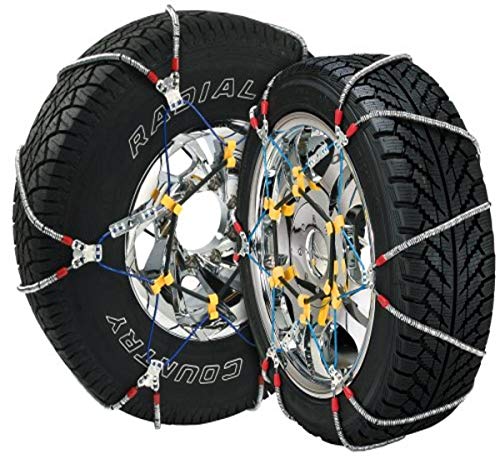
Country of origin : China
Installing Chains: Which Axle and Step-by-Step Tips
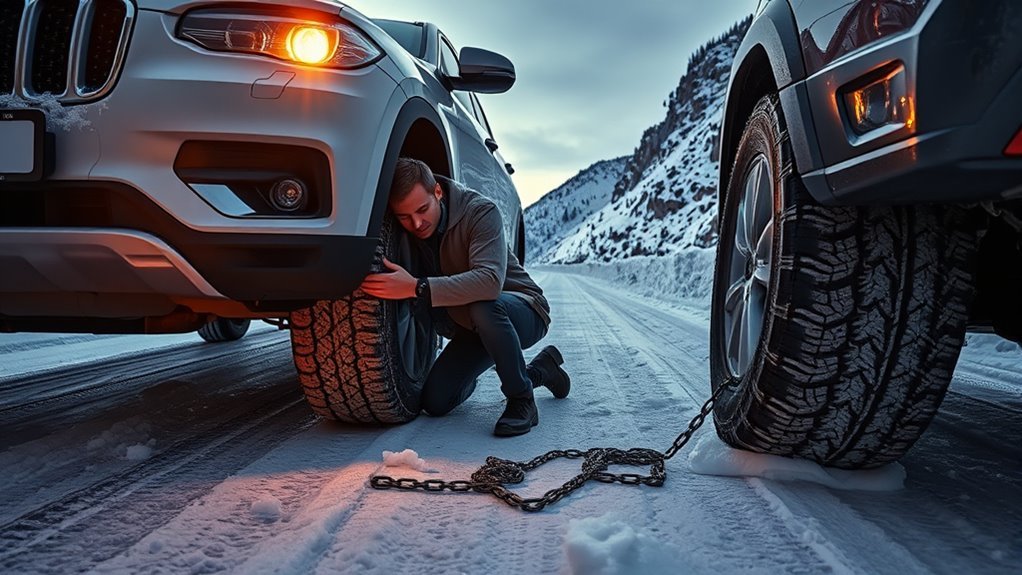
Install chains on the drive axle, because that is where your vehicle sends power to the road. Front-wheel-drive vehicles use the front axle. Rear-wheel-drive vehicles use the rear axle. AWD and 4WD vehicles should follow the owner’s manual and the chain manufacturer’s instructions.
Step-by-Step Chain Installation
- Pull fully off the roadway. Use a safe chain-up area when available. Do not stop in a traffic lane.
- Lay the chains flat. Remove twists, check for broken links, and make sure the traction side faces the road.
- Drape the chain over the tire. Center it across the tread so both sides hang evenly.
- Connect the inside fastener first. Reach behind the tire and secure the inside connection.
- Connect the outside fastener. Tighten it according to the chain instructions.
- Move forward a few feet. This helps the chain settle around the tire.
- Retighten the chains. Loose chains can damage tires, brake lines, fenders, and suspension parts.
- Recheck after a short distance. Stop safely and confirm the chains are still centered and tight.
Common Chain Installation Mistakes
- Buying the wrong size for your tires.
- Installing chains on the wrong axle.
- Leaving chains loose after the first short drive.
- Driving on bare pavement longer than necessary.
- Ignoring clearance limits in the vehicle owner’s manual.
- Forgetting trailer-chain requirements when towing.
Driving With Chains: Safe Speeds, Handling, and Removal
Once chains are installed, drive slowly and smoothly. Caltrans says the speed limit when chains are required is usually 25 or 30 mph, and the posted limit will apply. Avoid sudden acceleration, hard braking, and sharp steering.
Chains are for snow and ice, not clear pavement. When the road clears and you pass the End of Chain Control sign, drive to a safe pull-off area and remove the chains. Driving on bare pavement can damage the road, your tires, and the chains.
The safest chain-control strategy is simple: slow down, stay smooth, recheck tension, and remove chains as soon as clear pavement returns.
Enforcement, Penalties, and Practical Travel Checklist
When highway signs require chains or traction devices, you must stop and install them. Caltrans and CHP both warn that drivers can be cited and fined for failing to comply. You will usually have about one mile between the first “Chains Required” signs and the checkpoint to install chains.
Do not rely on exact fine amounts from old articles or forum posts. Penalties can vary by violation, county, court fees, and whether your vehicle blocks traffic or creates a hazard. The practical answer is simpler: carry the right equipment and follow the posted instructions.
Pre-Trip Chain Season Checklist
- Check Caltrans QuickMap and the Caltrans road conditions hotline before departure.
- Carry correctly sized chains or approved traction devices.
- Confirm your owner’s manual allows the device you plan to use.
- Practice installation before the trip.
- Pack waterproof gloves, a flashlight, a kneeling pad, and warm clothing.
- Carry chains for your trailer if you tow.
- Keep extra time in your schedule for checkpoints, closures, and slow speeds.
- Fill fuel or charge before climbing into mountain areas.
- Carry food, water, blankets, and a phone charger in case traffic stops.
Frequently Asked Questions
Do I need chains if I have AWD and all-season tires?
You might. AWD alone does not exempt you from California chain controls. Under R-2, AWD or 4WD vehicles may proceed without installing chains only when they have snow-tread tires on all four wheels and carry traction devices. Under R-3, chains or traction devices are required on every vehicle.
When should you not use tire chains?
Do not use chains on dry or bare pavement unless directed by officials. Remove them after you pass the “End of Chain Control” sign and can safely pull off the road. You should also avoid using chains that are the wrong size, damaged, loose, or prohibited by your vehicle manufacturer.
Are cable chains legal in California?
Yes, compliant cable chains are generally treated as tire traction devices in California. Caltrans states that cable chains and other Alternative Traction Devices are legal, but they may be restricted at times if local conditions require a more specific device.
Do snow tires replace chains in California?
Only in limited situations. Snow tires may qualify for exceptions under R-1 and, for 4WD/AWD vehicles, under R-2. Vehicles using those exceptions must still carry chains or approved traction devices. Snow tires do not replace chains under R-3.
How fast can you drive with chains in California?
Follow the posted speed limit. Caltrans says the speed limit when chains are required is usually 25 or 30 mph. Drive slower if visibility, traffic, curves, or road surface conditions require it.
Conclusion
When California winter roads call for chains, posted signs decide the rule. Check Caltrans QuickMap before you go, carry the right traction devices, know the R-1, R-2, and R-3 levels, and practice installation before storm day. Put chains on the correct axle, drive slowly, recheck tension, and remove them after chain controls end. Good preparation keeps you legal, safer, and less likely to get stuck at the checkpoint.
Sources
- Caltrans Chain Controls / Chain Installation — R-1, R-2, R-3 levels, speed guidance, installation checkpoints, and QuickMap guidance.
- Caltrans QuickMap FAQ — Chain Controls layer details and statewide road-condition map information.
- Caltrans Truck Chain Requirements — heavy-duty vehicle, ATD, and truck-chain guidance.
- Caltrans Chain Requirements Chart — tire traction device examples, trailer notes, and chain-placement requirements.
- California Highway Patrol Winter Driving Tips — CHP chain-control explanations and winter driving guidance.
- California Vehicle Code Section 27459 — legal requirement for tire traction devices on signed highway segments.

Related Articles
Why Put a Plastic Bottle on Your Tire? The Viral Trick Explained
Mysterious plastic bottle on your tire? Discover the viral trick’s surprising truth and what it really means before you assume it’s protecting your car.
Read More
What Happens When a Tire Blows Out at Highway Speed? Full Guide
Buckle up to discover what really happens when a tire blows out at highway speed, and why your next move could change everything.
Read More
What Does V Mean on a Tire? Load, Speed & Rating Guide
Need to know what “V” means on a tire and how load and speed ratings affect safety?
Read More