
How Much Lift for 33 Inch Tires on a Toyota Tacoma
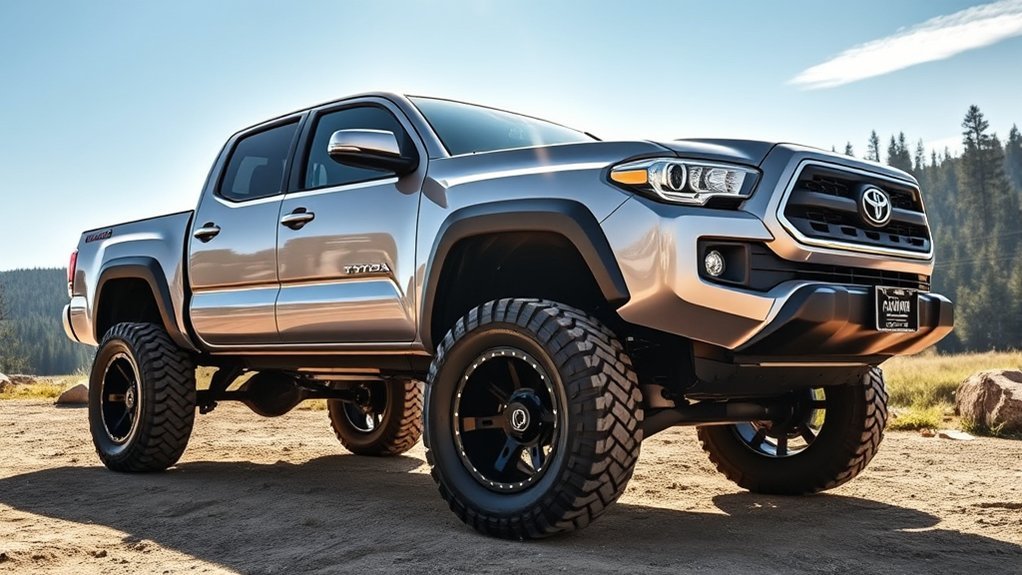
Fitting 33-inch tires on a Toyota Tacoma takes more than choosing a lift height. Your Tacoma’s generation, tire width, actual measured diameter, wheel width, offset, alignment, and intended suspension travel all affect whether the tires rub. A setup that clears on pavement may still contact the body, frame, or suspension at full steering lock or off-road compression.
Last updated: July 17, 2026 · Reviewed for current Toyota Tacoma lift, wheel, and tire fitment guidance.
Quick Answer
Most 2005–2023 six-lug Tacomas need about 2.5 to 3 inches of front lift, suitable wheels, alignment, and often minor trimming to clear a true 33-inch tire. Some narrower tires can work with less lift. The 2024–2026 Tacoma uses different fitment rules, and some tested setups clear nominal 33s with only 1.5 inches.
Key Takeaways
- Lift height alone does not prevent rubbing. Tire width, wheel offset, backspacing, caster, and trimming matter just as much.
- A 3-inch lift is a common starting point for 2005–2023 Tacomas, but it does not guarantee no-rub clearance.
- Do not apply second- or third-generation fitment advice to a 2024–2026 Tacoma.
- The number 285 describes tire width, not overall diameter. You need the complete tire size and manufacturer specifications.
- Re-gearing can improve drivability with heavy 33s, but it is not mandatory for every Tacoma.
- After installation, check alignment, TPMS operation, wheel torque, brake-line clearance, and tire contact at full lock and suspension compression.
At a Glance
| Time Required | Allow one to two hours for measurement and test-fitting. Lift installation, trimming, alignment, and calibration require additional time. |
| Difficulty | Advanced. Correct fitment may require suspension work, alignment changes, trimming, and electronic-system calibration. |
| Tools Needed | Tape measure, straightedge, floor jack, rated jack stands, torque wrench, hand tools, and professional alignment equipment. |
| Cost | Varies widely based on the lift system, control arms, wheels, tires, trimming, alignment, gearing, and required calibration. |
Warning: Incorrect wheel, tire, or suspension fitment can affect steering, braking, stability, component life, and driver-assistance systems. Use components approved for your exact model, drivetrain, trim, and model year. Have a qualified installer inspect the completed setup before road or trail use.
What Lift Height Do I Need for 33-Inch Tires?
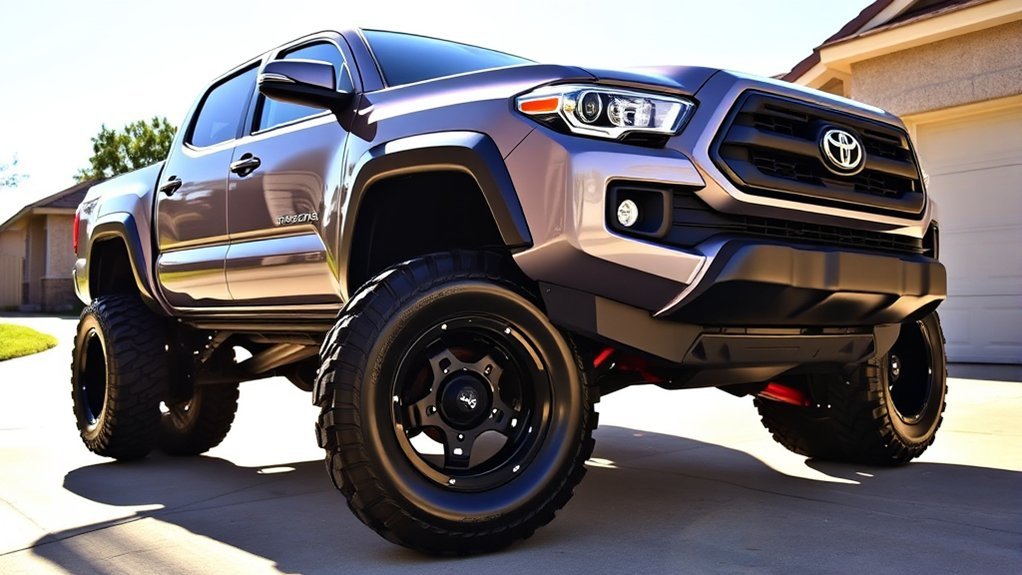
For many 2005–2023 six-lug Tacomas, a front lift of approximately 2.5 to 3 inches is the most practical starting point for a nominal 33-inch tire. However, that recommendation is not a guarantee. A narrow 33-inch tire on a carefully selected wheel may clear with less lift, while a wide 33×12.50 tire may rub even with 3 inches.
ReadyLIFT’s fitment guidance for one 2005–2023 Tacoma 3-inch system lists a 33-inch maximum, but it recommends approximately 32.5 inches and states that true 33s may require minor inner-fender trimming. Its 2.25-inch system also notes that some 33-inch tires can fit with trimming. These are kit-specific examples, not universal rules.
Your final answer depends on:
- Tacoma generation and model year
- Two-wheel drive or four-wheel drive
- Five-lug or six-lug configuration
- TRD Pro, Trailhunter, hybrid, or other factory suspension package
- Actual tire diameter and section width
- Wheel width, offset, and backspacing
- Alignment caster setting
- Whether you need street clearance or full off-road articulation
Use the tire manufacturer’s measured dimensions instead of relying only on the size printed on the sidewall. You should also confirm load index, wheel capacity, and general tire-selection factors before buying a complete set.
[Products Worth Considering]

Replace or upgrade your zero-turn lawn mower tires with a universal fit flat-free tire and wheel assembly in a convenient 2-pack. Smooth tread front-caster style helps turning with reduced turf damage, while flat-free design eliminates the maintenance and downtime of air-filled flats. The included adapter kit supports 5/8-inch axles and hub lengths from 3.4 to 5 inches for compatibility across most ZTR mowers.

These aluminum alloy tire valve stem caps with an O-ring seal help protect valve stems from corrosion while adding a clean, stylish look to your vehicle. The universal fit works across cars, trucks, motorcycles, bicycles, and more, making them an easy upgrade for everyday driving and off-road use. Installation is quick, and the included four-pack keeps all your tires dressed and protected.

Measure tire tread depth quickly and accurately with this LUMITECO dial gauge that reads in 1/32" increments up to 14/32". The color-coded green/yellow/red zones make it easy to judge tire wear and know when replacement is needed. A rugged, compact design with a protective pouch helps keep the gauge ready for use on cars, trucks, motorcycles, and more.
Tacoma Generation Fitment Guide
| Tacoma generation | Practical 33-inch guidance | Main concerns |
|---|---|---|
| 1995.5–2004 | Do not assume that a basic 2-inch leveling kit will clear a true 33. One current manufacturer lists 32 inches as the maximum for its 2-inch six-lug kit. | Limited wheel-well space, tire width, body clearance, suspension condition, and model-specific compatibility. |
| 2005–2015 | About 2.5 to 3 inches is common. Narrower 33s may work with less lift, but trimming and alignment changes are often required. | Cab mount, rear fender liner, pinch weld, mudflap, frame, upper control arm, and caster. |
| 2016–2023 | A 2.5-to-3-inch front lift remains common, but wheel specifications and trimming determine whether a nominal 33 clears. | Body mount, liner and mudflap contact, caster limits, control-arm clearance, and possible driveline vibration with some kits. |
| 2024–2026 | Use fourth-generation-specific guidance. ReadyLIFT lists a no-trim 285/70R17 configuration for one 1.5-inch system and a 285/75R17 configuration for one 2.5-inch system. ICON recommends 33×11.50 tires for specified 1.25-to-3-inch systems. | Suspension type, hybrid or TRD package, wheel offset, rear suspension design, differential-drop requirements, and ADAS recalibration. |
Note: Manufacturer fitment recommendations apply only to the listed kit, wheel width, offset, tire, trim, and drivetrain. A tire with the same sidewall size can measure differently across brands and tread designs.
Benefits and Limits of a 3-Inch Lift for Your Tacoma
A properly designed 3-inch suspension system can create space for larger tires, increase chassis ground clearance, and improve approach clearance. It may also give an installer more room to adjust alignment and control-arm geometry.
However, lift height does not move every contact point away from the tire. The rear portion of the front wheel opening, cab mount, frame, sway bar, upper control arm, and mudflap can still interfere during steering or suspension compression.
Improved Off-Road Capability
Larger tires can raise the lowest axle and differential points, while a suspension lift raises the frame and body. Together, these changes may improve obstacle clearance and approach angles. More aggressive all-terrain tread can also improve off-road traction on loose surfaces.
Do not assume that every 3-inch kit adds suspension travel. A top spacer may raise the vehicle while retaining close to the original shock travel. A complete coilover, shock, spring, bump-stop, and control-arm system may provide better travel management, but only when the components are designed to work together.
Enhanced Tire Clearance
Additional ride height improves vertical clearance above the tire. It can reduce contact at the top of the wheel opening and provide more space during moderate suspension movement.
It does not automatically solve contact behind the tire at full lock. That area is strongly affected by tire width, wheel offset, caster, and the shape of the body mount and liner. Re-check these points before assuming that another inch of lift will solve the problem.
How 33-Inch Tires Affect Tacoma Performance
A larger and heavier tire changes the effective gearing and adds rotating mass. You may notice slower acceleration, more frequent transmission shifting, longer braking response, and reduced fuel economy. The amount of change depends on how much taller and heavier the new setup is than the original tire and wheel package.
A taller tire also changes the relationship between wheel speed and road speed. Your speedometer, odometer, transmission behavior, and electronic systems may require recalibration where supported.
Rolling resistance varies by tire construction, tread, load, and inflation. This guide to tire rolling resistance explains the basic concept, but Tacoma inflation pressure should be established using vehicle and tire load requirements rather than a generic online number.
A lighter 33×11.50 tire on a correctly specified wheel may drive better and clear more easily than a heavy 33×12.50 tire, even though both are sold as 33-inch tires.
What Does “33-Inch Tire” Actually Mean?
“33-inch tire” is a convenient category, not a guaranteed physical measurement. Tire manufacturers publish an overall diameter, section width, tread width, approved wheel-width range, revolutions per mile, and load capacity for each product.
For a metric tire, you can estimate nominal diameter with this formula:
Overall diameter in inches = wheel diameter + 2 × (section width × aspect ratio ÷ 25.4)
- 285/70R17: Approximately 32.7 inches by formula
- 285/75R17: Approximately 33.8 inches by formula
- 285/75R16: Approximately 32.8 inches by formula
The real mounted diameter can differ because of tread depth, wheel width, load, inflation, and manufacturer design. Always compare the tire maker’s published measurements.
Essential Modifications for Clearance With 33s
Most successful Tacoma 33-inch setups combine several smaller fitment decisions instead of relying on lift height alone. Choose the tire, wheel, suspension, and alignment as one system.
Necessary Suspension Upgrades
Select a kit made for your exact Tacoma year, trim, drivetrain, and suspension type. Adjustable coilovers can help set ride height and balance additional front weight, but they must remain within the manufacturer’s approved adjustment range.
Depending on the setup, you may also need:
- Upper control arms that allow suitable ball-joint angles and alignment adjustment
- Rear springs, blocks, or shocks matched to the intended rear lift
- Bump-stop changes specified by the suspension manufacturer
- Differential-drop components on applicable four-wheel-drive systems
- Brake-line, ABS-wire, and sway-bar relocation components
- Professional alignment after installation
Lifted suspensions can alter driveline and steering angles. Use the kit instructions rather than assuming that every Tacoma needs the same supporting parts.
Wheel Offset and Backspacing Considerations
Wheel offset describes the mounting surface’s position relative to the wheel centerline. Backspacing describes the distance from the mounting surface to the wheel’s inner edge. Wheel width changes how a given offset positions the tire, so offset numbers cannot be evaluated alone.
- More positive offset: Moves the tire inward. This may improve outer-fender clearance but reduce clearance to the upper control arm, frame, or sway bar.
- Less positive or negative offset: Moves the tire outward. This may improve inner suspension clearance but increase contact with the fender liner, mudflap, cab mount, or body.
- Wider wheel: Can move both tire sidewalls farther apart and change the mounted tire profile.
Follow the suspension manufacturer’s tested wheel width, offset, and backspacing. A general tire-selection guide can help you compare tire specifications, but it cannot replace Tacoma-specific wheel fitment data.
Potential Rubbing Issues
Check all of these locations:
- Front and rear edges of the fender liner
- Mudflaps and their mounting tabs
- Cab or body mount behind the front tire
- Pinch weld and lower body seam
- Upper control arm
- Frame and sway bar
- Front bumper or valance
- Skid plate and mounting brackets
- Brake hoses, ABS wiring, and reservoir hoses
Removing or reshaping a plastic liner may solve light contact. Metal cutting, welding, or body-mount modification is structural work and should be performed only by a qualified shop.
Pro Tip: Test the exact tire and wheel combination before purchasing four tires. Manufacturer fitment guides repeatedly warn that tires carrying the same labeled size can have meaningfully different measured widths and diameters.
How to Pick the Right Suspension for Your Tacoma
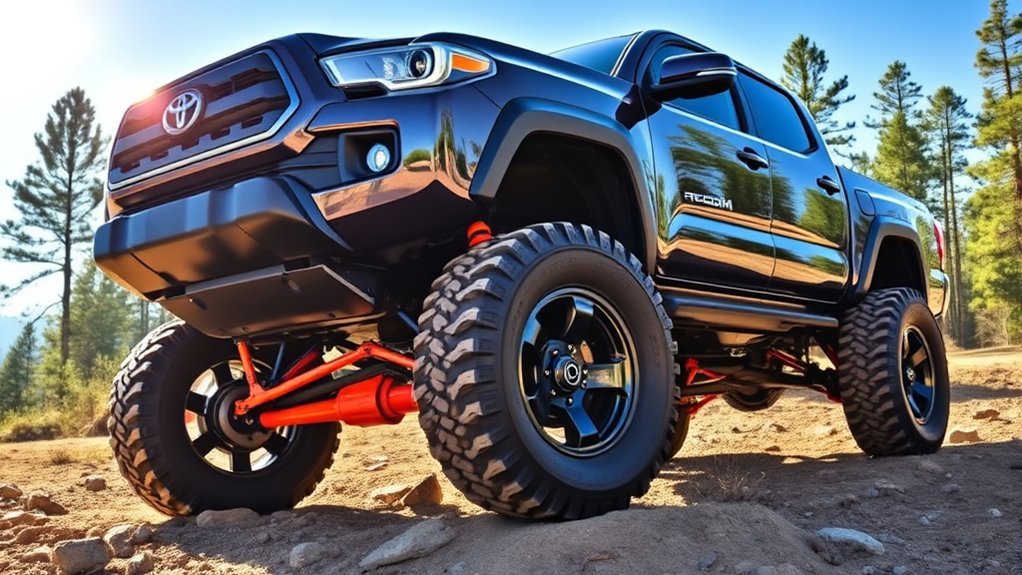
Start with how you use the truck. A street-driven Tacoma carrying little extra weight has different spring and damping needs from a truck with a steel bumper, winch, camper, or constant cargo.
Compare these suspension types:
- Leveling spacer: Raises the front at a lower cost but normally does not provide the same travel or damping benefits as a complete suspension system.
- Adjustable coilover: Provides ride-height adjustment and model-specific damping when used within its approved range.
- Complete suspension system: May include coilovers, rear shocks, springs, control arms, bump stops, and geometry corrections.
- Body lift: Raises the body without increasing suspension or differential clearance. It changes tire-to-body space but does not correct suspension geometry.
Added accessories can reduce the achieved lift height. Suspension manufacturers commonly state that advertised lift ranges assume a particular vehicle weight.
After changing tire size or target inflation pressure, follow the Toyota procedure for TPMS initialization or registration that applies to your model. Cold weather can also change inflation pressure, as explained in this guide to temperature-related pressure changes.
How to Test for Tire Rubbing
A parking-lot steering test is not enough for an off-road truck. The suspension can move the tire into a different part of the wheel opening as it compresses.
- Verify static clearance: With the truck on level ground, inspect the inner and outer sidewalls, upper control arm, frame, sway bar, liner, and body mount.
- Turn to full lock: Check both directions while moving slowly forward and backward.
- Load the suspension: Use a qualified shop or controlled ramp to compress one front corner while checking steering clearance.
- Inspect hoses and wiring: Confirm that brake hoses and ABS wires remain free through the steering and suspension range.
- Look for witness marks: Fresh polishing, rubber dust, bent liner edges, or exposed paint indicate contact.
- Repeat after alignment: Caster and camber changes can move the tire within the wheel opening.
Tire behavior also changes with temperature, load, and tread design. This article about temperature and tire performance offers general background, but your final clearance test must use the actual Tacoma setup.
Why Alignment and Caster Matter
Lifting a Tacoma changes front suspension geometry. After installation, the truck needs a professional alignment that considers the suspension manufacturer’s requirements and tire clearance.
Positive caster can help move the front tire forward in the wheel opening on many Tacoma setups, improving clearance behind the tire. However, the available adjustment range is limited, and excessive or uneven settings can affect steering feel and tire wear.
Upper control arms are not automatically required at one exact lift height. They become useful when the factory components cannot achieve acceptable alignment, ball-joint angles, travel, or tire clearance.
On applicable 2024–2026 trucks, ride-height changes may also require recalibration of cameras, radar, or other advanced driver-assistance systems. Follow the suspension manufacturer’s instructions and Toyota service requirements.
[Products Worth Considering]

Monitor tire tread wear with a smart, color-coded depth gauge that shows clear condition ranges at a glance. The bar is range marked for fast, easy readings, helping you maintain safer traction and performance. Each gauge is portable with a pocket clip, and the set includes 20 units for daily use and sharing.

This 1/2-inch drive breaker bar delivers powerful leverage for loosening and tightening stubborn lug nuts and automotive fasteners. The 180-degree flex head helps you reach tight spaces at the angle you need, making tire and brake jobs easier. A spring-loaded ball detent design holds 1/2-inch sockets securely while the chrome-moly head provides durable strength for everyday use.

Universal magnetic jack pad with aluminum grooved design to protect vehicle pinch welds during lifting. Durable nylon pad inserts are upgraded and secured with screws to resist damage and keep in place. Designed to fit most single vehicle pinpoint welds for safer, stable jacking when changing tires, repairs, or performing oil changes.
Why Re-Gearing May Help After Tire Changes
Re-gearing changes the axle ratio to compensate for taller and heavier tires. It may improve acceleration, transmission behavior, engine braking, towing response, and low-speed trail control.
You are more likely to benefit from re-gearing when:
- The new tires are much heavier than stock
- You tow or carry heavy accessories
- You drive at high elevation
- The transmission hunts between gears
- Low-speed off-road control is important
- You plan to move beyond a nominal 33-inch tire later
You may decide to retain the factory gearing when the truck drives acceptably, the tires are relatively light, and your use does not demand additional torque multiplication. Do not select a ratio from a generic recommendation. The correct choice depends on the original axle ratio, engine, transmission, tire diameter, weight, and intended use.
Regardless of gearing, replacement tires must meet suitable load requirements. This overview of tire load index explains the rating, but confirm your Tacoma’s requirements using its certification label and owner documentation.
Wheel Offset: What You Need to Know for 33s
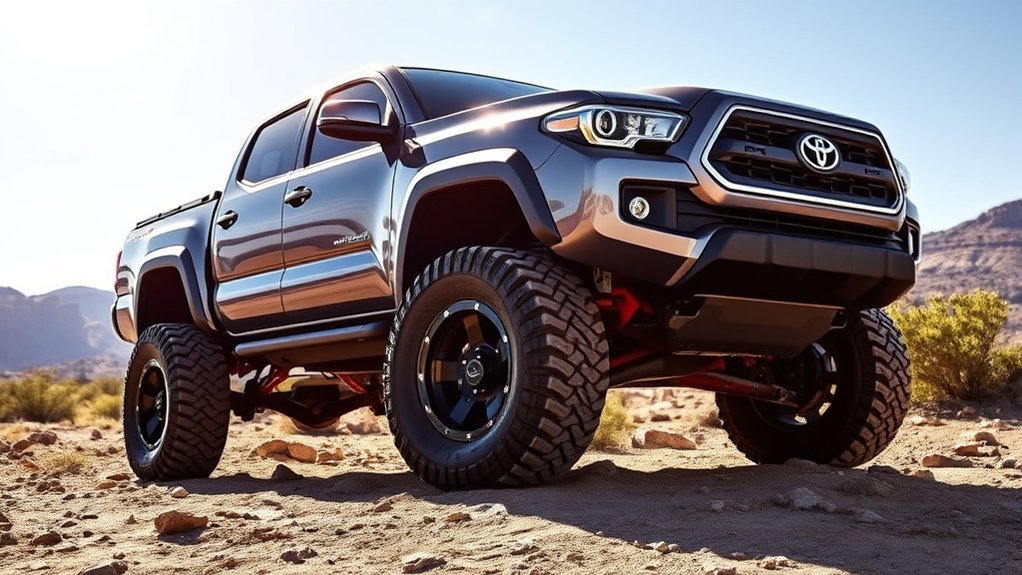
Offset affects both sides of the tire’s clearance envelope. Moving the tire outward may help it clear the suspension, but it also creates a wider swing as you steer. Moving it inward may tuck the tire under the fender, but it can bring the sidewall closer to the upper control arm and frame.
| Offset direction | What it does | Possible contact area |
|---|---|---|
| More positive | Moves the wheel and tire inward | Upper control arm, frame, sway bar, inner liner |
| Near zero | Places the mounting face near the wheel centerline | Depends heavily on wheel width and tire section width |
| Less positive or negative | Moves the wheel and tire outward | Fender, mudflap, cab mount, bumper edge, outer liner |
A wheel spacer moves the wheel outward and reduces effective offset. It does not add suspension lift. Spacers can also change bearing loads and fastener requirements, so use only vehicle-compatible, properly installed components.
Modern Tacoma road tires are normally tubeless. Inner tube basics do not determine lift or offset, but understanding the difference helps prevent unsuitable tube use in a tubeless wheel-and-tire assembly.
What Installer Fitment Guides Consistently Show
Current manufacturer guidance supports several practical conclusions:
- A labeled 33-inch diameter does not guarantee identical fitment across tire brands.
- Some 2005–2023 kits allow a narrow 33 with approximately 2.25 inches of lift and trimming.
- A 2.75-to-3-inch lift is a common manufacturer-tested range for 33×11.50-class tires on earlier six-lug Tacomas.
- A wider 33×12.50 tire generally creates more clearance challenges.
- Fourth-generation Tacomas use different wheel offsets and kit-specific requirements.
- Alignment and trimming may remain necessary even when the advertised tire size is listed as compatible.
- Full-compression clearance matters more than appearance at normal ride height.
General Toyota tire terminology is also explained in this tire-size and specification overview, but verify every Tacoma fitment decision against the tire, wheel, and suspension manufacturers.
Pre-Purchase Checklist for 33-Inch Tires
- Confirm your Tacoma’s year, trim, drivetrain, lug pattern, and factory suspension package.
- Record the current tire size, wheel width, offset, and backspacing.
- Check the new tire’s measured diameter, section width, tread width, load index, and approved wheel-width range.
- Use a suspension system that specifically lists your model.
- Follow the kit maker’s tested wheel specifications.
- Ask whether trimming, upper control arms, differential drops, or rear suspension parts are required.
- Confirm whether ADAS calibration is required.
- Budget for professional alignment and post-installation inspection.
- Check local laws covering ride height, tire coverage, lighting height, and wheel protrusion.
- Test-fit one wheel and tire before mounting the full set when possible.
Post-Installation Checklist
- Torque all suspension and wheel fasteners to the component manufacturer’s specifications.
- Complete a professional alignment.
- Initialize or register the TPMS as required.
- Verify speedometer calibration where supported.
- Check brake-line, ABS-wire, and hose clearance.
- Test steering clearance forward and backward at full lock.
- Check clearance through controlled suspension compression.
- Inspect for rubbing after the first road test and first off-road use.
- Re-torque fasteners at the interval specified by the lift and wheel manufacturers.
- Monitor uneven tire wear, steering pull, vibration, and driveline noise.
Frequently Asked Questions
Can I fit 33s with a 2-inch lift on a Tacoma?
Sometimes. A narrow nominal 33 may fit certain Tacoma configurations with about 2 inches of lift, suitable wheels, added caster, and trimming. A wide 33×12.50 is more likely to rub. Check guidance for your exact model and test the tires at full lock and suspension compression.
What is the best lift height for 33-inch Tacoma tires?
For many 2005–2023 six-lug Tacomas, approximately 2.5 to 3 inches is the most flexible starting range. However, the correct height depends on tire width, wheel offset, caster, trimming, and suspension design. Some 2024–2026 setups can use less lift.
Is a 285 tire always a 33-inch tire?
No. The number 285 describes section width in millimeters. You also need the aspect ratio and wheel diameter. A 285/70R17 is approximately 32.7 inches by formula, while a 285/75R17 is approximately 33.8 inches. Check the tire manufacturer’s measured diameter before buying.
Will 33-inch tires rub with a 3-inch lift?
They can. A 3-inch lift creates vertical clearance, but rubbing behind the tire depends on width, wheel position, caster, the cab mount, liners, mudflaps, and articulation. Manufacturer guidance for some 3-inch Tacoma kits still calls for minor trimming.
Do I need to re-gear my Tacoma for 33-inch tires?
Not automatically. Re-gearing may improve acceleration, towing, transmission behavior, and trail control, especially with heavy tires or added vehicle weight. Keep the factory gears when the truck’s drivability remains acceptable for your use.
Can I use older Tacoma lift advice for a 2024–2026 model?
No. The fourth-generation Tacoma has different suspension, wheel-fitment, drivetrain, and electronic-system considerations. Use a system tested for your exact year and trim, and complete any required ADAS recalibration after installation.
Conclusion
For many 2005–2023 six-lug Tacomas, a properly selected 2.5-to-3-inch front lift offers the most practical starting point for nominal 33-inch tires. It is not a guaranteed no-rub formula. Tire width, measured diameter, wheel width, offset, caster, trimming, and suspension travel determine the final result.
Fourth-generation 2024–2026 Tacomas require their own fitment guidance, and some tested configurations can clear nominal 33-inch tires with less lift. Choose a complete setup from verified manufacturer specifications, test clearance through the full steering and suspension range, and finish the work with alignment, TPMS checks, torque verification, and any required driver-assistance-system calibration.
Sources
- Toyota 2024 Tacoma Owner’s Manual: Tires and Wheels — factory tire sizes, wheel sizes, inflation specifications, and wheel-nut torque.
- Toyota 2024 Tacoma Owner’s Manual: Items to Initialize — TPMS initialization after tire-size and inflation-pressure changes.
- ReadyLIFT 2005–2023 Tacoma 3-Inch SST Fitment Guide — lift range, tested wheel and tire guidance, trimming, alignment, and driveline notes.
- ReadyLIFT 2024 Tacoma 1.5-Inch Leveling Guide — fourth-generation no-trim 285/70R17 wheel and tire example.
- ICON 2024–2026 Tacoma Suspension Fitment Notes — recommended wheel and tire specifications, suspension compatibility, differential-drop notes, and ADAS recalibration.
- National Highway Traffic Safety Administration Tire-Information Interpretation — accuracy requirements for tire-information labeling on qualifying altered vehicles.
[Products Worth Considering]

The Ziopetru adjustable magnetic wheel alignment tool helps you check and restore camber and caster positioning after removing and reinstalling undercarriage components. With a clear leveling/bubble measurement system and an easy zeroing adjustment knob, it supports precise horizontal angle checking. The strong magnetic base mounts to metal surfaces for convenient use at home on cars, motorcycles, trucks, vans, and SUVs.
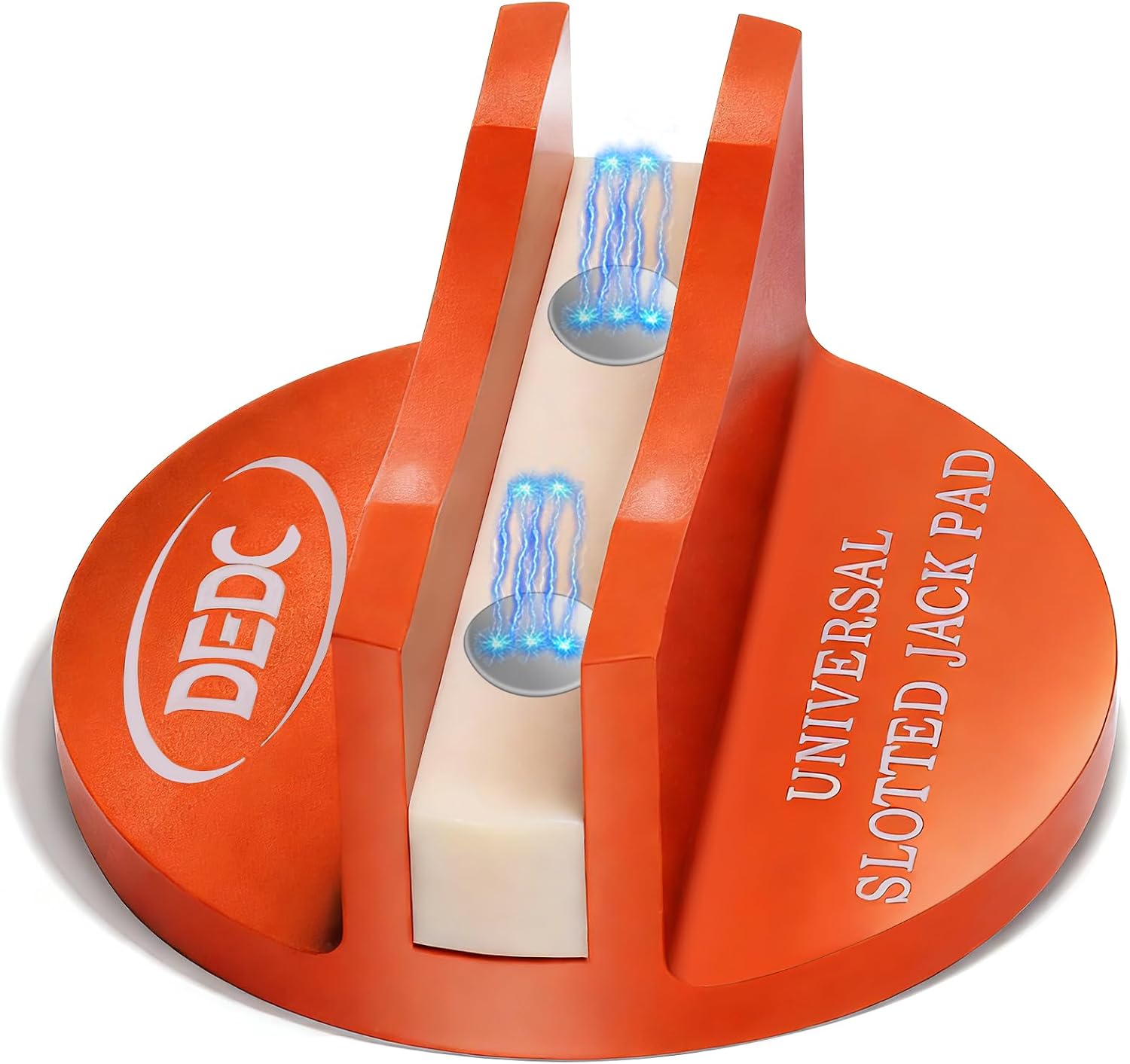
This universal magnetic jack pad is designed to protect pinch welds when lifting vehicles, helping prevent seam damage or warping. Crafted from solid aluminum with a nylon pad insert, it provides reinforced structural support and a secure fit for most single-vehicle pinch welds. Slotted for strong magnet holding, it supports safe jacking for cars, SUVs, trucks, and more.

Replace worn tires quickly with this universal 4.80/4.00-8 tire and inner tube set designed for wheelbarrows and outdoor utility carts. The ribbed tread helps reduce turf damage while the natural rubber construction supports longer service life. Compatible with 15.5-inch outer diameter, 4-inch width, and 8-inch rim diameter wheels, it uses a straight TR-13 valve stem for easy installation. For best results, inflate with a manual pump and do not exceed 25 PSI.

Related Articles
How Tire Weight Affects Toyota Tacoma Performance
How does tire weight influence your Toyota Tacoma's performance and efficiency? Discover the surprising effects that could change your driving experience.
Read More
Tire Noise Levels by Tire Type on a Toyota Tacoma
A comprehensive look at how tire types affect noise levels in your Toyota Tacoma reveals surprising insights that could enhance your driving experience.
Read More
How To Choose Tires for a Dual Use Toyota Tacoma
Unlock the secrets to selecting the perfect tires for your dual-use Toyota Tacoma, ensuring optimal performance and comfort on every adventure. Discover more inside!
Read More