
All Terrain vs Rugged Terrain Tires for a Toyota Tacoma
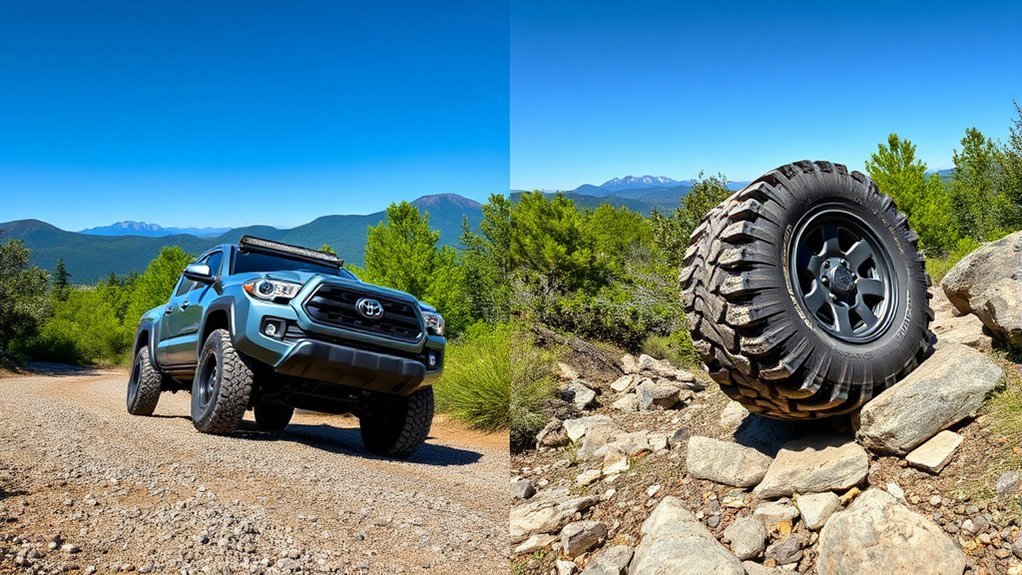
Choosing between all-terrain (AT) and rugged-terrain (RT) tires for your Toyota Tacoma comes down to how you actually drive. AT tires usually make more sense for daily commuting, highway trips, gravel roads, light trails, and mixed weather. RT tires make more sense when your Tacoma sees rougher trails, deeper mud, sharper rocks, ruts, and heavier off-road use.
Quick Answer
Choose all-terrain tires if your Tacoma spends most of its time on pavement with occasional dirt, gravel, snow, or camping trails. Choose rugged-terrain tires if you need stronger off-road traction, tougher sidewall protection, and more confidence on rocky, muddy, or rutted trails, even if road noise, weight, and fuel use increase.
Key Takeaways
- AT tires are the better fit for daily Tacoma drivers who want a smoother ride, lower noise, and balanced traction on pavement, gravel, dirt, and light trails.
- RT tires are a practical middle ground between many AT and mud-terrain tires, giving you more sidewall toughness and off-road bite without going as extreme as a full mud tire.
- Do not choose by tread pattern alone. Match the tire size, load index, speed rating, wheel size, and cold inflation pressure to your Tacoma’s door placard or owner’s manual.
- If you drive in snow, confirm the exact tire carries the Three-Peak Mountain Snowflake symbol instead of assuming every AT or RT tire is winter-ready.
Note: This guide helps you compare tire types, but it does not replace fitment advice from Toyota, your tire installer, or the tire manufacturer. Always confirm size, load rating, clearance, and pressure before you buy.
AT vs RT Tires for Tacoma: The Core Difference
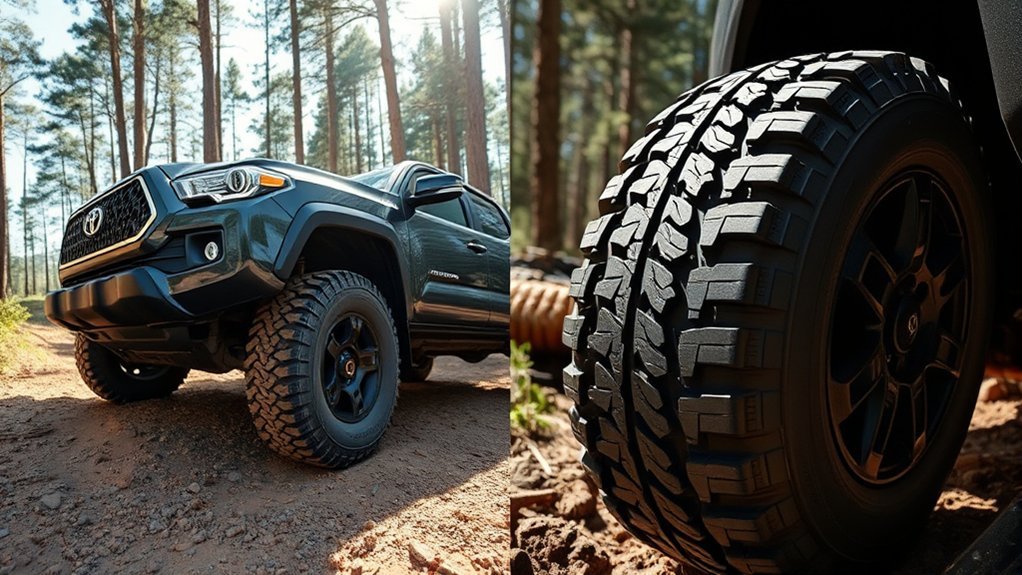
All-terrain tires are built as a compromise between paved-road manners and off-road capability. NHTSA describes all-terrain tires as tires mainly used on four-wheel-drive vehicles that provide a good compromise between on-road driving and off-road capability. That is why they are popular on Tacoma SR, SR5, TRD Sport, TRD Off-Road, Trail Edition, and overland-style builds that still see regular commuting.
Rugged-terrain tires are more aggressive. Many RT-style tires use larger tread blocks, wider voids, stronger shoulder lugs, and tougher sidewall designs than mild AT tires. They are not as extreme as mud-terrain tires, but they can give your Tacoma more grip and protection when the trail gets rough.
Think of the categories this way: highway-terrain tires are best for pavement, AT tires balance road comfort and dirt-road traction, RT tires lean harder toward trail durability, and mud-terrain tires focus most heavily on mud, rocks, and severe off-road use.
| Category | All-Terrain (AT) | Rugged-Terrain (RT) |
| Best for | Daily driving, gravel, dirt roads, camping, light trails | Rocky trails, mud, ruts, overlanding, rough job sites |
| Road comfort | Usually smoother and quieter | Usually firmer and louder than mild AT tires |
| Off-road grip | Good on dirt, gravel, hardpack, and mild trails | Better in mud, loose terrain, rocks, and deeper ruts |
| Main trade-off | Less aggressive in deep mud and sharp rock | More noise, weight, and possible fuel penalty |
[Products Worth Considering]

Upgrade your Toyota tire setup with these corrosion-resistant, leak-proof valve stem caps designed to help protect the valve core from water, snow, and road grime. The caps feature a snug rubber seal and durable copper alloy construction to resist rust and oxidation while maintaining stable tire pressure. Ideal for replacing worn original caps and keeping your wheels looking clean and stylish.

Upgrade your ride with Tactilian American Flag tire valve stem caps featuring a subdued USA design and matte black aluminum look. The set of four includes rubber O-rings for a leakproof fit and is suitable for cars, trucks, bikes, motorcycles, and other wheels. Show patriotism while keeping valve caps secure and stylish.
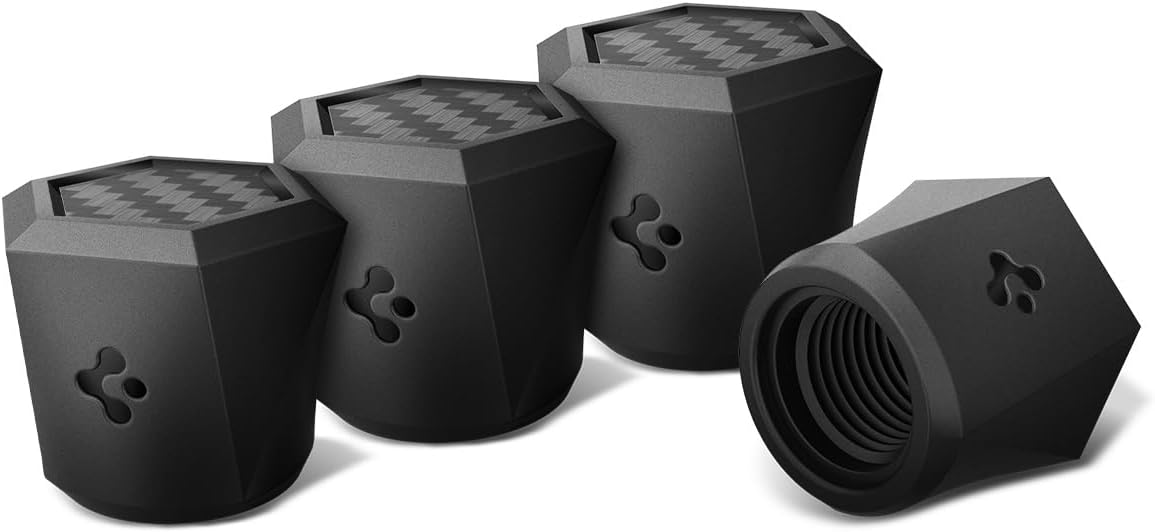
Spigen magnetic tire valve caps attach securely to metal surfaces so you never have to search for lost caps. Designed for Schrader valve stems, they install quickly, help protect against air leakage and corrosion, and feature a light magnet that won’t interfere with TPMS signals.
Understanding All-Terrain (AT) Tires for Your Tacoma
AT tires are the safer default for most Tacoma owners because they balance daily comfort with enough traction for weekend trail use. If your week includes commuting, errands, highway miles, gravel roads, and occasional forest-service roads, an AT tire usually gives you the best mix.
Compared with more aggressive RT tires, AT tires often use a closer tread pattern and lighter construction. That can help with ride comfort, steering feel, wet-road behavior, and fuel economy. You still get open tread blocks and stronger shoulders than a highway tire, but you avoid some of the harshness that comes with a more trail-focused design.
AT tires also work well for Tacoma owners who carry camping gear, drive to trailheads, tow light trailers, or travel on maintained dirt roads. They are not the most aggressive tire for mud or rocks, but they fit the way many Tacoma owners actually use their trucks.
Note: All-terrain does not mean every tire performs the same way. A mild AT tire may feel almost like a highway tire, while an aggressive AT tire may get close to RT behavior. Compare the exact model, size, load rating, and warranty, not just the category name.
Key Features of Rugged-Terrain (RT) Tires
RT tires are made for Tacoma owners who want more trail confidence than a standard AT tire gives. Many RT-style tires use deeper tread voids, more aggressive shoulders, and tougher sidewall construction. That helps when your truck meets rocks, roots, washouts, mud, sand, or deep gravel.
The category is not one single official design. For example, Toyo describes the Open Country R/T Trail as a rugged-terrain tire with more off-road capability than a traditional all-terrain tire without the harshness of a dedicated mud tire. Nitto describes the Ridge Grappler as a hybrid terrain light-truck tire that blends mud-terrain and all-terrain traits.
The trade-off is on-road refinement. RT tires can feel heavier, sound louder, and reduce fuel economy compared with milder AT tires. They can also cost more to mount, balance, and replace because many popular RT options come in larger, heavier light-truck sizes.
Enhanced Off-Road Performance
RT tires help most when the terrain gets loose or uneven. Their wider tread voids can clear mud and debris better than many mild AT tires. Their shoulder lugs can add grip when your Tacoma leans into ruts or climbs over uneven ground.
That extra bite matters if you drive rocky access roads, muddy hunting trails, remote campsites, or rough job sites. For easy gravel and dry dirt, though, a good AT tire may already provide enough traction without the RT tire’s extra noise and weight.
Durable Sidewall Construction
Sidewall strength is one of the biggest reasons Tacoma owners move from AT to RT tires. Many RT tires use reinforced sidewalls to resist cuts, scrapes, and impacts from rocks and trail debris. That can help if your routes include sharp stone, ledges, or uneven fire roads.
Still, stronger sidewalls do not make a tire invincible. You can still damage a tire by overloading the truck, running the wrong pressure, hitting a rock at speed, or choosing a size that rubs suspension or body parts.
Warning: Before changing tire size or load range, check your Tacoma’s owner’s manual, door placard, wheel width, spare-tire space, suspension clearance, and load rating. The correct cold tire pressure comes from the vehicle placard or manual, not the maximum PSI printed on the tire sidewall.
Best Choice by Tacoma Driving Style
The easiest way to choose is to match the tire to your normal week, not your rarest weekend. A tire that looks great online can make your Tacoma feel noisy, heavy, or slow if it does not match your real use.
| Your Tacoma Use | Better Starting Point | Why |
| Daily commute and highway trips | AT | Quieter ride, better comfort, and usually less rolling resistance. |
| Camping, fishing, trailheads, and gravel roads | AT or mild RT | AT is usually enough, but a mild RT can add protection if roads are rocky. |
| Rocky trails, ruts, mud, and remote overlanding | RT | More tread void, shoulder grip, and sidewall toughness can be worth the comfort trade-off. |
| Snowy region with regular winter driving | 3PMSF-rated AT or RT | The severe-snow symbol matters more than whether the tire is labeled AT or RT. |
| Work truck with loads, trailers, or rough sites | Load-appropriate AT or RT | Load index, load range, and sidewall durability matter more than looks. |
Comparing On-Road Performance: AT vs. RT Tires

On pavement, AT tires usually feel more natural on a Tacoma. They tend to track straighter, ride softer, and make less tread noise than more aggressive RT tires. That matters if your truck spends long hours on highways or city streets.
- Ride comfort: AT tires usually absorb small bumps better and feel less harsh during daily driving.
- Cabin noise: RT tires often create more hum because the tread blocks and voids are larger.
- Steering feel: Lighter AT tires can feel more responsive, while heavier RT tires may feel slower to turn.
- Fuel use: More aggressive tread, extra weight, and lower pressure can increase rolling resistance.
That does not mean RT tires are bad on the road. Many modern RT tires are much more civilized than older mud-terrain tires. You just need to accept that their main advantage shows up off pavement.
Off-Road Capabilities: Which Tire Handles Better?
Off-road performance depends on the surface. A Tacoma on packed dirt, gravel, and dry forest roads does not need the same tire as a Tacoma crawling through mud, rocks, and ruts.
Off-Road Performance Comparison
AT tires handle hardpack dirt, gravel, dry trails, mild snow, and light mud well enough for many Tacoma owners. They are a smart match for camping, fishing, trailhead access, and weekend exploring.
RT tires pull ahead when the ground gets rougher. The deeper tread and stronger shoulder design help in loose rock, sloppy mud, sand, and rutted trails. If you regularly air down, crawl slowly, or drive far from pavement, RT tires can be worth the comfort trade-off.
Traction in Challenging Conditions
In deep mud, an RT tire’s larger voids can help the tread clear itself instead of packing up. In rocks, tougher shoulders and sidewalls can help protect against trail damage. In sand, tire pressure and driver technique matter as much as tread type.
If you mostly drive maintained dirt roads, a high-quality AT tire may be the smarter choice. If you often meet ledges, ruts, wet clay, and sharp rock, the RT tire’s added bite and sidewall support can feel worth it.
Wet-Road and Snow Performance
Rain and snow deserve separate attention because aggressive tread does not automatically mean safer traction. Some mild AT tires perform very well in wet conditions, while some aggressive tires can feel less predictable on slick pavement if the tread compound and siping are not designed for it.
For winter driving, check the exact tire for the Three-Peak Mountain Snowflake symbol. USTMA’s severe-snow definition ties the symbol to snow-grip performance criteria and sidewall marking rules. The M+S marking alone is not the same level of winter-performance proof.
On packed snow and ice, a dedicated winter tire may still outperform an AT or RT tire. If your Tacoma sees mountain passes, icy mornings, or long winter commutes, focus on tested winter traction instead of tread appearance.
Warning: Do not assume a tire is good on ice because it has large tread blocks. Ice traction depends heavily on rubber compound, siping, temperature behavior, and winter testing.
Noise Levels: Comparing AT and RT Tires
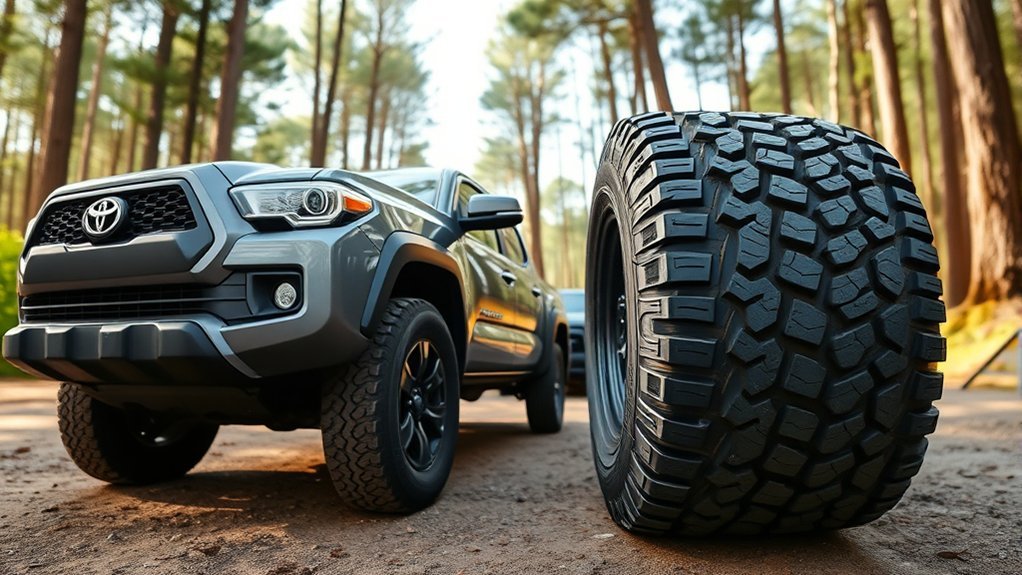
Noise is one of the biggest daily differences between AT and RT tires. AT tires usually use a tighter tread pattern, so they tend to stay quieter at highway speeds. RT tires use more open tread blocks, so they often produce more hum as speed increases.
You may not mind that sound if your Tacoma is a trail truck. You may notice it quickly if your Tacoma is your family vehicle, work commuter, or long-distance road-trip truck.
- Choose AT for quiet daily driving: This is the better fit when comfort matters most.
- Choose RT for tougher trail use: Accept more noise in exchange for more bite and protection.
- Read model-specific reviews: Some RT tires are quieter than expected, while some aggressive AT tires are louder than expected.
[Products Worth Considering]

These universal tire valve stem caps help protect your valve core from dust, debris, moisture, and corrosion, supporting more stable tire pressure. The aluminum alloy design resists long-term wear, while the sealing construction helps help prevent air leakage. They twist on easily for quick installation and help safeguard driving safety across cars, SUVs, trucks, and motorcycles.

These universal aluminum tire valve stem caps help protect valve cores from corrosion caused by dirt, water, and snow while helping prevent air leaks to maintain steady tire pressure. They’re easy to install with a simple screw-on fit and are suitable for cars, SUVs, trucks, bicycles, motorcycles, and other vehicles. The stylish black caps add a clean, standout look to your wheels while supporting reliable long-term performance.
Tread Life and Durability: How Long Will They Last?
Tread life is not controlled by the AT or RT label alone. It depends on the exact tire model, rubber compound, load range, alignment, inflation, rotation, driving style, road surface, and how often you tow or haul.
AT tires often last longer for pavement-heavy driving because they are less aggressive. RT tires can wear faster if you use them mostly on highways, especially if they are heavy, underinflated, or not rotated. On the other hand, RT tires may survive trail abuse better because of their stronger construction.
Check the mileage warranty, but read the conditions. Some warranties change for LT sizes, staggered fitments, off-road use, commercial use, or poor maintenance.
Pro Tip: Rotate your Tacoma’s tires on schedule, keep them properly inflated, and get an alignment if you notice pulling, vibration, or uneven wear. Good maintenance can matter more than the AT-vs-RT label.
P-Metric vs LT Tires for Tacoma
Many Tacoma owners compare P-metric, XL, and LT tires when shopping for AT or RT designs. This choice can change ride quality as much as the tread pattern does.
P-metric and XL tires often ride smoother and weigh less, which can help daily comfort and steering response. LT tires usually use heavier construction and higher load capacity, which can help with towing, hauling, rock protection, and aired-down trail use. The downside is a firmer ride, extra weight, and possible MPG loss.
Do not assume an LT tire is automatically better for every Tacoma. If your truck is mostly a commuter with light weekend trails, a properly rated P-metric or XL AT tire may fit better. If your truck carries armor, tools, camping gear, or trailers, a load-appropriate LT tire may make more sense.
Fuel Efficiency of AT and RT Tires
AT tires usually have the advantage for fuel economy because they tend to be lighter and less aggressive than RT tires. RT tires can add weight, rolling resistance, and aerodynamic drag if you move to a larger size.
The tire’s actual size matters. A taller tire can change effective gearing and speedometer accuracy. A wider tire can add rolling resistance and may rub without the right wheel offset, lift, or trimming.
The best way to protect MPG is to choose the right size, avoid unnecessary tire weight, keep cold pressure correct, and fix alignment problems early. NHTSA notes that tire design, construction, tread, and rolling resistance can affect fuel efficiency.
NHTSA says keeping tires properly inflated can save up to 11 cents per gallon and extend tire life by 4,700 miles. Tire pressure is not just a comfort setting; it is part of your Tacoma’s safety and ownership-cost setup.
How Much Should You Spend on AT vs. RT Tires?
Do not judge AT and RT tires by purchase price alone. The real cost includes the tire, mounting, balancing, valve stems or TPMS service, alignment, road-hazard coverage, fuel impact, treadwear, and how often you replace them.
AT tires often make more financial sense for pavement-heavy Tacoma owners because they usually ride quieter, wear more evenly, and use less fuel than aggressive RT tires. RT tires can be worth the extra cost if they reduce trail damage, lower puncture risk, and give you the grip you need off road.
A good rule is simple: spend more for the capability you will actually use, not for the look alone.
What Do Tacoma Owners Say About AT and RT Tires?
Tacoma owners usually split into two groups. Daily drivers tend to prefer AT tires because they are easier to live with every day. Trail-focused owners often prefer RT tires because they add confidence when the road disappears.
Performance Preferences
If your Tacoma is a commuter that also camps, fishes, hunts, or visits trailheads, AT tires usually fit better. You get enough grip for common off-pavement use without making the truck feel overly heavy or loud.
If your Tacoma has armor, a lift, camping gear, recovery gear, or frequent trail use, RT tires make more sense. Their extra grip and sidewall toughness can feel worth it when the terrain gets unpredictable.
Noise Level Considerations
Noise tolerance is personal. Some drivers barely notice RT tire hum. Others regret aggressive tires after the first long highway trip. If you drive a lot of interstate miles, give noise and ride comfort as much weight as the tread pattern.
When possible, compare owner feedback for your exact Tacoma generation, tire size, and load range. A tire that feels smooth in one size may feel firm or loud in another.
Tacoma Fitment Checklist Before You Buy
Before buying AT or RT tires, confirm the tire fits your truck and your driving needs. A tire that looks right online can still be wrong for your Tacoma.
- Factory tire size: Check the Tire and Loading Information Label on the driver’s doorjamb.
- Owner’s manual: Use the official Toyota owner’s manual for your model year and trim.
- Load index and load range:

Related Articles
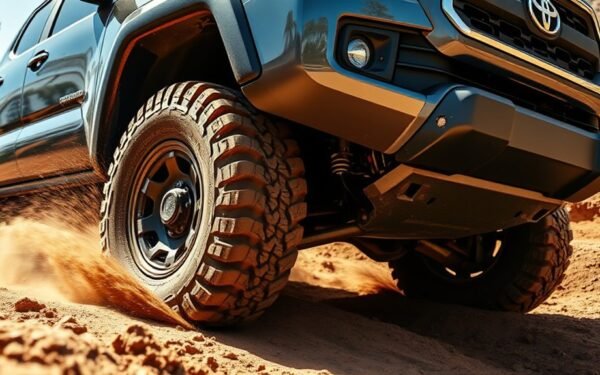
How Tire Weight Affects Toyota Tacoma Performance
How does tire weight influence your Toyota Tacoma's performance and efficiency? Discover the surprising effects that could change your driving experience.
Read More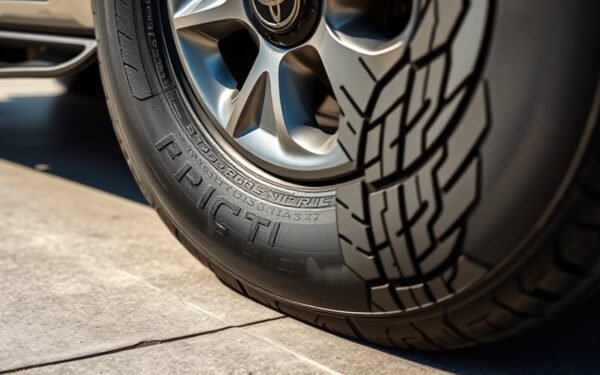
Tire Noise Levels by Tire Type on a Toyota Tacoma
A comprehensive look at how tire types affect noise levels in your Toyota Tacoma reveals surprising insights that could enhance your driving experience.
Read More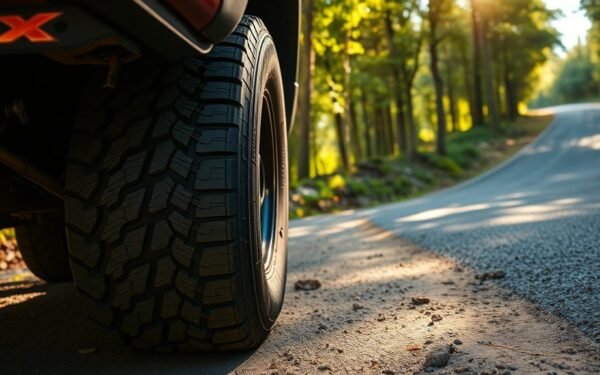
How To Choose Tires for a Dual Use Toyota Tacoma
Unlock the secrets to selecting the perfect tires for your dual-use Toyota Tacoma, ensuring optimal performance and comfort on every adventure. Discover more inside!
Read More