
Tire Pressure in Cold Weather: 1 PSI per 10°F Guide
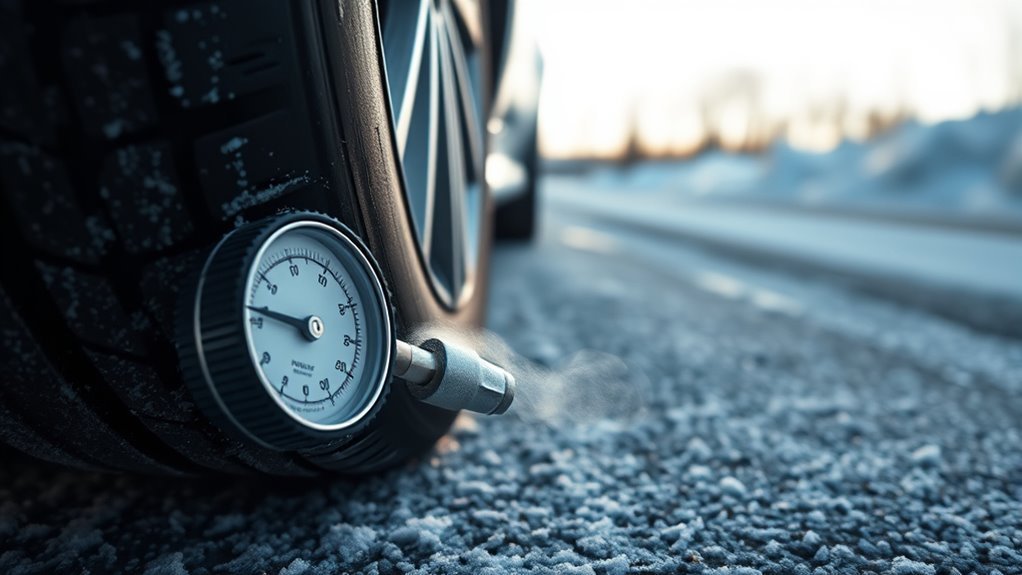
Cold weather can make your tire pressure drop before you even start the car. Expect about a 1 PSI drop for every 10°F decline in air temperature, though some tires may lose slightly more depending on tire size, starting pressure, and weather swings. That lower pressure can hurt handling, braking, tire wear, and fuel economy. Check your tires cold with a quality gauge, inflate them to the PSI on your vehicle’s door-jamb sticker, and get persistent loss checked by a tire shop.
What’s in This Article
- How Much PSI Do Tires Lose in Cold Weather? Quick Answer
- Why Cold Air Lowers Tire Pressure
- Typical PSI Change per 10°F: Real-World Examples
- How to Check Tire Pressure Correctly Before Driving
- What to Do If Your Tires Lose PSI
- How Winter Tire Pressure Affects Safety and Performance
- How Often to Check and Adjust Tire Pressure in Winter
- Where to Get Air, Tools, and Service
- Frequently Asked Questions
- Conclusion
- References
Quick Answer
Tires usually lose about 1 PSI for every 10°F drop in temperature. A 40°F drop can lower pressure by about 4 PSI, which can affect grip, braking, and tire wear. Check tire pressure when the tires are cold and inflate them to the vehicle maker’s recommended cold PSI.
Key Takeaways
- Expect about 1 PSI of tire pressure loss for every 10°F temperature drop.
- Check tire pressure when the tires are cold, before you drive more than a short distance.
- Use the PSI listed on your vehicle’s door-jamb sticker, not the max PSI on the tire sidewall.
- Recheck pressure every two weeks in winter, and more often during sharp cold snaps.
- Get the tire inspected if it keeps losing pressure after you inflate it.
How Much PSI Do Tires Lose in Cold Weather? Quick Answer
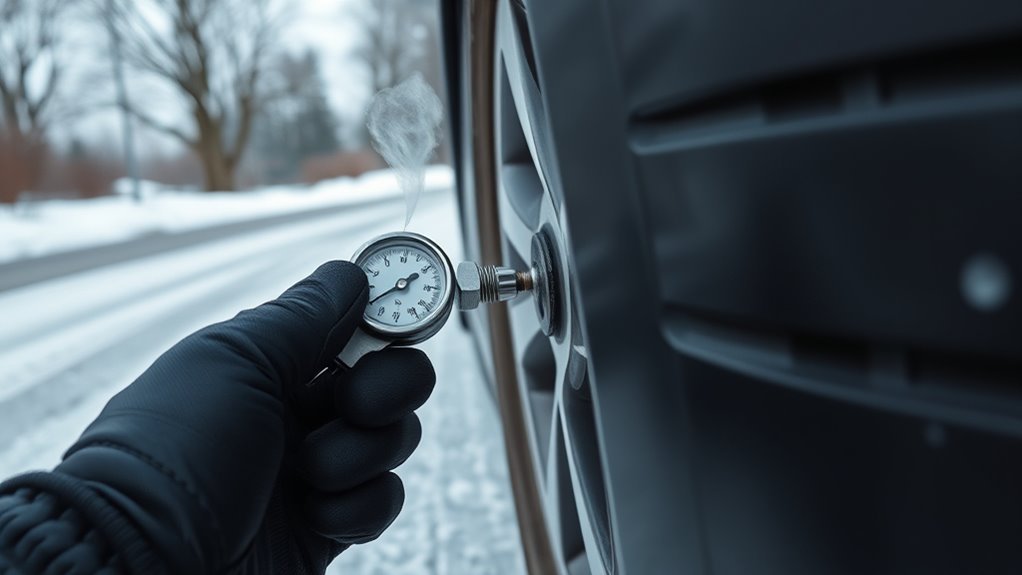
You can expect tires to lose about 1 PSI for every 10°F drop in air temperature. Some real-world readings may vary by tire size, starting pressure, load, and how fast the temperature changes. A drop from 70°F to 30°F can lower pressure by about 4 PSI.
That pressure loss matters. Low tire pressure can reduce grip, slow steering response, increase tire wear, and cost you fuel. You won’t always see the change by looking at the tire, so measure it with a gauge.
For safe winter maintenance, check tire pressure when the tires are cold. Use the manufacturer’s cold PSI recommendation on the driver-side door jamb or in the owner’s manual. Keep a quality gauge in your glove box and top up pressure before long drives.
[Products Worth Considering]

EVOULTES heavy duty tire inflator with an integrated gauge delivers accurate pressure readings from 10–120 PSI, helping you inflate, deflate, and check tires in one tool. The 16.5-inch extended dual-head air chuck with swivel base reaches hard-to-access dual wheel valves on trucks and RVs. A brass trigger core and side-mounted air release valve make operation smooth, with standard 1/4" NPT threading and quick-connect compatibility for easy setup.

The AstroAI 2 pack air chucks provide a heavy-duty, closed-flow locking design that helps keep air flowing during inflation while securely attaching to the valve stem. Built with 250 PSI rated brass components and compatible with Schrader valves, they feature 1/4" female NPT threads for a wide fit with common inflators. The straight tip and locking clip make filling tires and monitoring pressure more convenient.

The JACO FlowPro Tire Inflator measures, inflates, and airs down tires up to 100 PSI with battery-free operation and ±2% accuracy after calibration. It features a glowing pressure dial for night visibility, a heavy-duty steel build with a hybrid hose, and a precision push-to-inflate thumb trigger. The patented Lightning Air Chuck locks on for a secure seal, and the kit includes quick-connect hardware for easy inline use with your air compressor.
Why Cold Air Lowers Tire Pressure
Cold air lowers tire pressure because cooler air molecules move with less energy. They strike the inside of the tire with less force, so the pressure reading drops.
The ideal gas law explains the pattern: pressure changes with absolute temperature when tire volume stays mostly the same. In plain terms, colder air creates lower tire pressure.
Air Molecules Move Slower
As air gets colder, the molecules inside the tire slow down. They collide with the tire walls less forcefully, which lowers the pressure you see on a gauge.
The common rule works well for daily driving: expect about 1 PSI of pressure loss per 10°F drop. A sharp cold snap can cause your tire pressure monitoring system (TPMS) light to turn on overnight.
Ideal Gas Law Basics
The ideal gas law uses the formula PV = nRT. In a tire, volume and the amount of air stay mostly stable, so pressure falls when temperature falls.
This pressure change affects braking, handling, and fuel use. Check and adjust tire pressure after major weather changes, especially before highway trips.
Temperature-Pressure Relationship
Cooler air exerts less force on the inner tire walls. As a practical estimate, each 10°F drop lowers pressure by about 1 PSI.
Use the chart below as a simple guide. Start from the temperature at which you last checked and filled the tires.
| Temperature Drop | Expected PSI Loss | What to Do |
|---|---|---|
| 10°F | About 1 PSI | Check if near the recommended limit |
| 20°F | About 2 PSI | Check and top up if needed |
| 40°F | About 4 PSI | Inflate to the door-jamb PSI |
| 50°F | About 5 PSI | Inflate and recheck soon |
Typical PSI Change per 10°F: Real-World Examples
The 1 PSI per 10°F rule gives you a fast estimate. It helps you decide when to check pressure after a weather change.
For example, tires set to 35 PSI at 70°F may read about 31 PSI when the air drops to 30°F. That 4 PSI loss can make the tire run hotter and wear faster.
PSI Loss Per 10°F
For most passenger vehicles, a 10°F temperature drop lowers tire pressure by about 1 PSI. A 20°F drop usually lowers pressure by about 2 PSI.
Some drivers see slightly larger swings because tires, gauges, and weather conditions differ. Treat the rule as a guide, then confirm with a tire pressure gauge.
Real-World Temperature Examples
Use these examples to compare your last tire fill with the current outdoor temperature. The exact reading may differ, but the pattern stays useful.
| Temperature Change | Typical PSI Loss | Possible Effect |
|---|---|---|
| -10°F | About 1 PSI | Small change, worth tracking |
| -20°F | About 2 PSI | Lower grip and efficiency |
| -40°F | About 4 PSI | Noticeable underinflation risk |
| -50°F | About 5 PSI | Higher wear and safety risk |
Monitor pressure often during cold months. A two-minute check can prevent uneven wear, poor handling, and avoidable fuel loss.
Fuel Impact By PSI
Low tire pressure can reduce fuel economy because underinflated tires create more rolling resistance. Even a few PSI can make your engine work harder.
Government fuel-economy guidance commonly links proper tire pressure with better mileage and longer tire life. Check pressure cold, use a calibrated gauge, and inflate to the vehicle maker’s PSI target.
How to Check Tire Pressure Correctly Before Driving
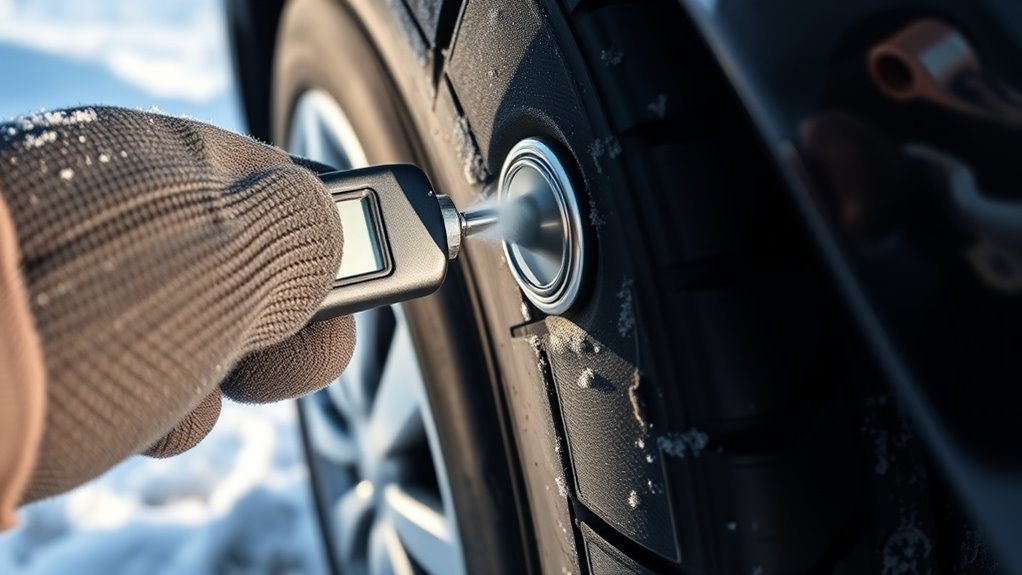
Check tire pressure while the tires are cold. A cold tire means the vehicle has been parked for several hours or driven only a short distance.
Find the recommended tire pressure on the driver-side door-jamb sticker or in the owner’s manual. Most passenger vehicles fall near 30 to 35 PSI, but your vehicle’s label gives the correct number.
- Remove the valve stem cap from one tire.
- Press a quality pressure gauge firmly onto the valve stem.
- Read the PSI and compare it with the vehicle’s recommended cold pressure.
- Add air if the reading sits below the recommended number.
- Replace the valve stem cap to keep dirt and moisture out.
Pro tip: Check all four tires and the spare, since each tire can lose pressure at a different rate.
What to Do If Your Tires Lose PSI
If your tires lose PSI in cold weather, inflate them to the vehicle’s recommended cold pressure before driving. Then recheck them after 24 to 48 hours.
A small drop during a cold snap can be normal. A tire that keeps losing pressure after you inflate it may have a puncture, bad valve stem, damaged wheel, or bead leak.
| Action | Goal |
|---|---|
| Measure cold | Get an accurate PSI reading |
| Inflate | Reach the door-jamb PSI |
| Recheck | Confirm pressure holds |
| Inspect | Look for leaks or damage |
| Visit a shop | Repair punctures or valve issues |
Warning: Don’t ignore repeated pressure loss, since a slow leak can turn into a flat or blowout.
How Winter Tire Pressure Affects Safety and Performance
Low tire pressure changes how the tire contacts the road. That can reduce traction, slow steering response, and increase stopping distance.
Underinflation can also make the tire flex more as it rolls. Extra flex builds heat, wears the tread unevenly, and can shorten tire life.
Proper inflation helps your tires maintain grip, stability, and predictable handling. It also supports better fuel economy and more even tread wear.
[Products Worth Considering]

The Fanttik X10 Pro is a cordless portable tire inflator that reaches up to 150 PSI and can inflate an R15 tire in about 35 seconds for quick roadside or home top-ups. With AccuInFlate auto-stop and smart start/stop controls, it helps maintain accurate pressure and frees your hands once the target is reached. A high-visibility digital display and preset modes make it easy to set and monitor inflation for cars, motorcycles, bikes, and balls.
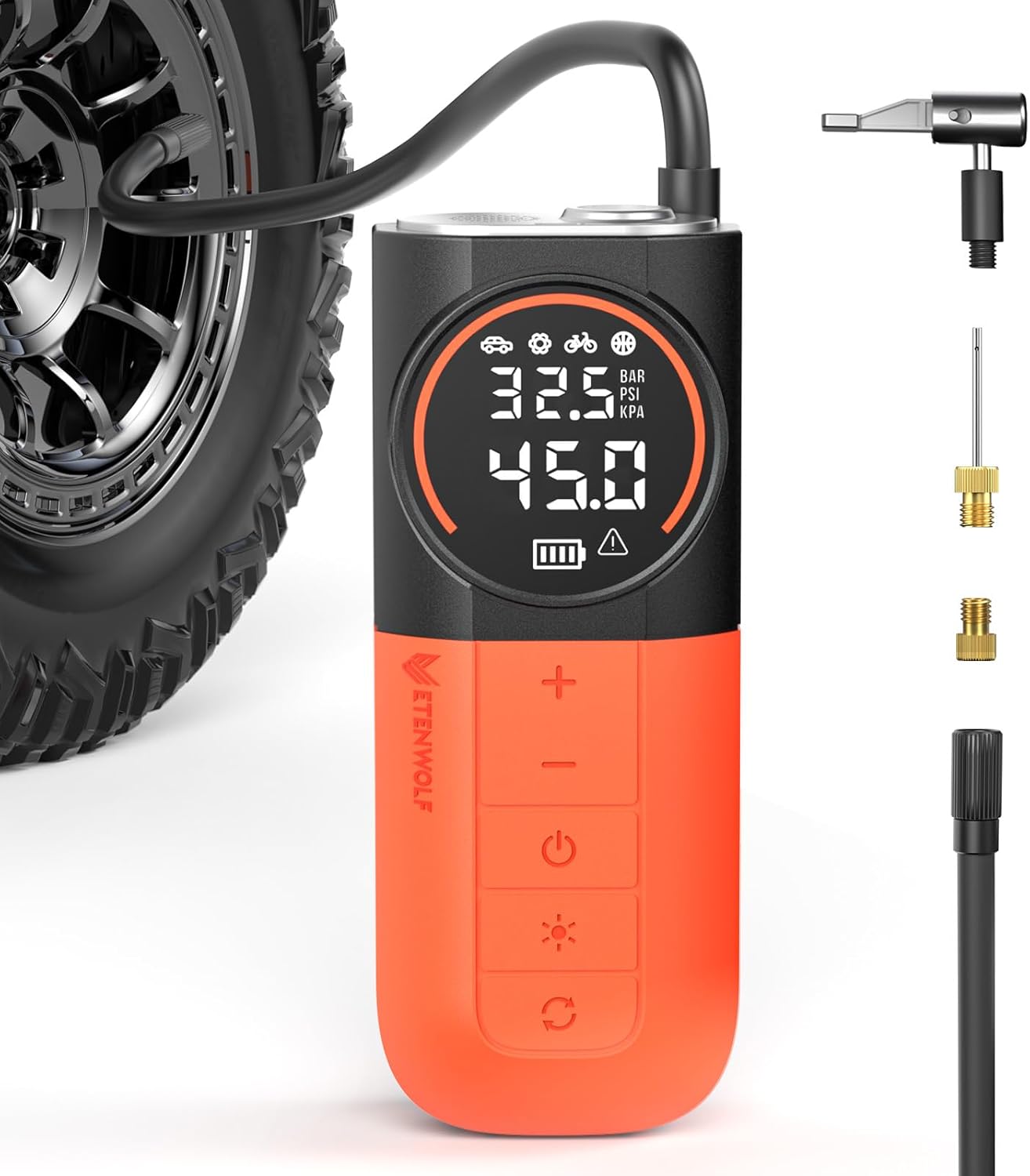
The ETENWOLF S1 cordless tire inflator delivers ultra-fast inflation with up to 160 PSI and a 20 L/min airflow for quicker tire top-offs. Its 5200mAh battery and cooling system support inflating many tires and sports balls on a single charge, while the digital pressure gauge and multi-unit display help you reach the right pressure accurately. With preset modes, pressure memory, an auto-stop feature, and an LED flashlight, it’s built for easy roadside and everyday use.
How Often to Check and Adjust Tire Pressure in Winter
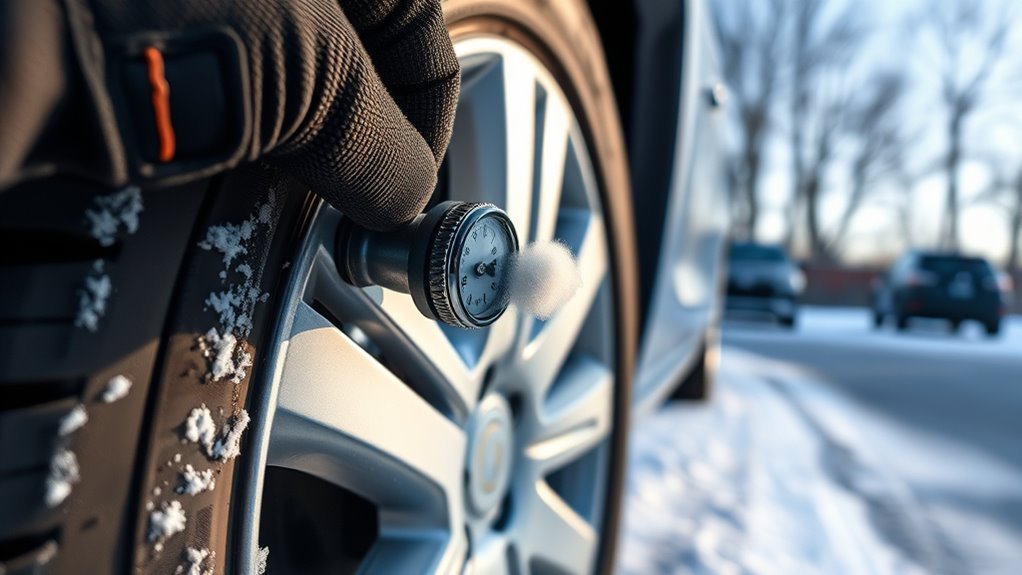
Check tire pressure at least every two weeks during cold weather. Check weekly during long cold spells or when temperatures swing sharply.
Always check before long trips, heavy loads, or highway driving. Cold pressure checks give you the most useful reading because driving warms the tires and raises PSI.
The tire pressure monitoring system can help, but don’t rely on it alone. Some systems warn you only after pressure drops well below the recommended level.
Where to Get Air, Tools, and Service
You can add air at many gas stations, tire shops, car washes, and service centers. Some pumps cost money, while others offer free air.
Keep a tire pressure gauge and portable inflator in your vehicle if you drive often in cold weather. A portable inflator helps you fix low pressure at home, at work, or on the road.
Choose a tire shop or mechanic when one tire keeps dropping faster than the others. A professional can check for punctures, valve leaks, rim damage, and bead leaks.
Should You Fill Tires to the Max PSI in Winter?
No, don’t fill tires to the max PSI printed on the sidewall. That number shows the tire’s maximum pressure, not the best pressure for your vehicle.
Use the cold tire pressure listed by the vehicle manufacturer. The correct PSI balances load, grip, braking, comfort, and tire wear.
Note: If you inflate warm tires, recheck them cold later and adjust to the door-jamb PSI.
Frequently Asked Questions
How Much Will Tire Pressure Drop in Cold Weather?
Tire pressure usually drops about 1 PSI for every 10°F fall in air temperature. A 30°F drop can lower pressure by about 3 PSI, so check the tires before you drive.
How Much PSI Do You Lose in Winter?
You may lose 3 to 5 PSI during a strong winter temperature swing. The exact amount depends on the temperature change, tire size, starting pressure, and whether the tires were checked cold.
Should I Fill My Tires to Max PSI in Winter?
No, you shouldn’t fill your tires to the max PSI in winter. Follow the vehicle maker’s recommended cold PSI, which appears on the door-jamb sticker or in the owner’s manual.
Why Does My TPMS Light Come On During Cold Weather?
Your tire pressure monitoring system light may come on because cold air lowers tire pressure overnight. Check each tire with a gauge, inflate to the recommended PSI, and see whether the light turns off after driving a short distance.
Can I Drive With Low Tire Pressure in Cold Weather?
You should avoid driving far with low tire pressure. Underinflation can reduce control, increase tire heat, and raise the risk of tire damage.
Conclusion
Cold weather lowers tire pressure by about 1 PSI for every 10°F drop, so winter checks matter. Use a quality gauge, check tires cold, and inflate to the PSI on your vehicle’s door-jamb sticker. Recheck pressure after sharp temperature changes and before long drives. If one tire keeps losing air, get it inspected before it becomes a bigger problem.
References
- Tires — National Highway Traffic Safety Administration
- Saving Money on Gas — U.S. Department of Energy
- Tire Pressure — National Highway Traffic Safety Administration

Related Articles
AWD Tire Rotation Pattern: How Often and How to Do It
W**ondering the right AWD tire rotation pattern and timing? Discover the simple method, ideal schedule, and mistakes to avoid before your tires wear unevenly.
Read More
Wheel Damage: Types, Repair Options, and Costs
Many wheel damages look minor, but some hide costly safety risks—learn which repairs are worth it and when replacement is smarter.
Read More
Tire Balancing Weights: Types, Cost, and Why You Need Them
Precisely chosen tire balancing weights reduce vibration and wear, but which type fits your wheels and what it really costs may surprise you.
Read More