
Effect of Larger Tires on Toyota Tacoma Fuel Economy
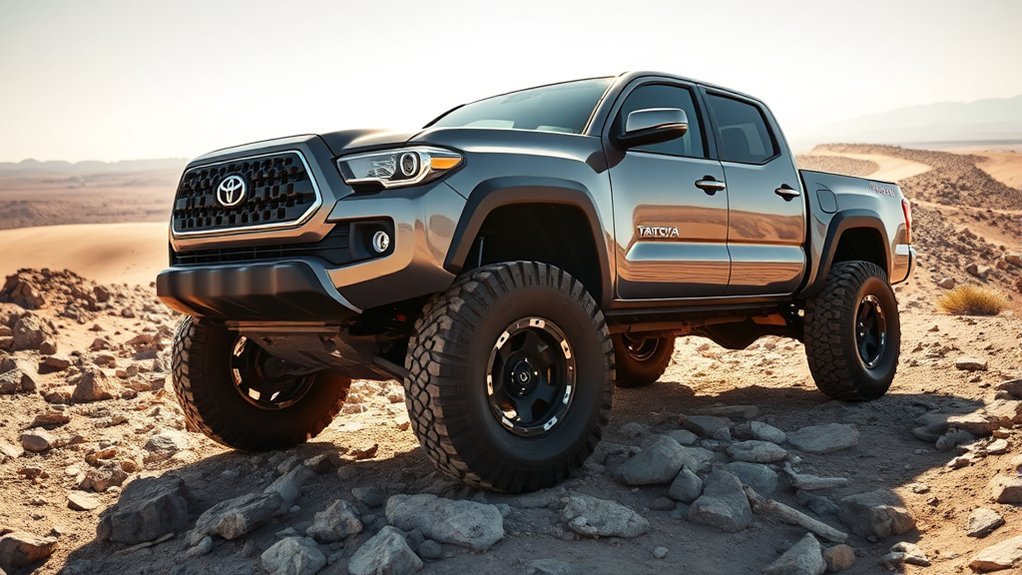
Thinking about bigger tires for your Toyota Tacoma? The upgrade can make your truck look tougher and perform better off-road, but it usually comes with a fuel-economy trade-off. The real MPG change depends on your Tacoma’s year, trim, engine, gearing, tire size, tire weight, wheel weight, lift height, and driving habits.
Instead of treating one MPG number as universal, it is better to understand why larger tires affect efficiency, how to estimate the drop on your own truck, and which changes can help you keep the setup enjoyable every day.
Quick Answer
Larger tires usually reduce Toyota Tacoma MPG because they add weight, rolling resistance, and effective gearing changes. A mild move to a lighter 33-inch tire may only cause a small drop, while 35s or 37s can feel much heavier, especially with a lift, heavy wheels, towing, or city driving.
Key Takeaways
- Factory Tacoma tire size varies by year and trim, so compare upgrades against your exact stock tire size, not a generic baseline.
- Tire weight, wheel weight, tread pattern, width, and rolling resistance can hurt MPG as much as diameter.
- Regearing can restore drivability with 35s or 37s, but it should not be treated as a guaranteed MPG fix.
- Larger tires can affect speedometer accuracy, braking feel, towing performance, rubbing clearance, and spare-tire fit.
- The best way to know your real loss is to hand-calculate MPG for several tanks before and after the tire change.
At a Glance
| Time Required | 30 minutes to compare tire specs; several fuel tanks to measure real MPG |
| Difficulty | Moderate for tire selection; advanced for 35-inch or 37-inch fitment and regearing |
| Tools Needed | Tire-size calculator, tire-pressure gauge, MPG log, alignment check, and professional fitment advice for larger setups |
| Cost | Tires and wheels vary widely; major setups may also need lift parts, trimming, alignment, calibration, or differential regearing |
How Larger Tires Impact Your Tacoma’s Performance
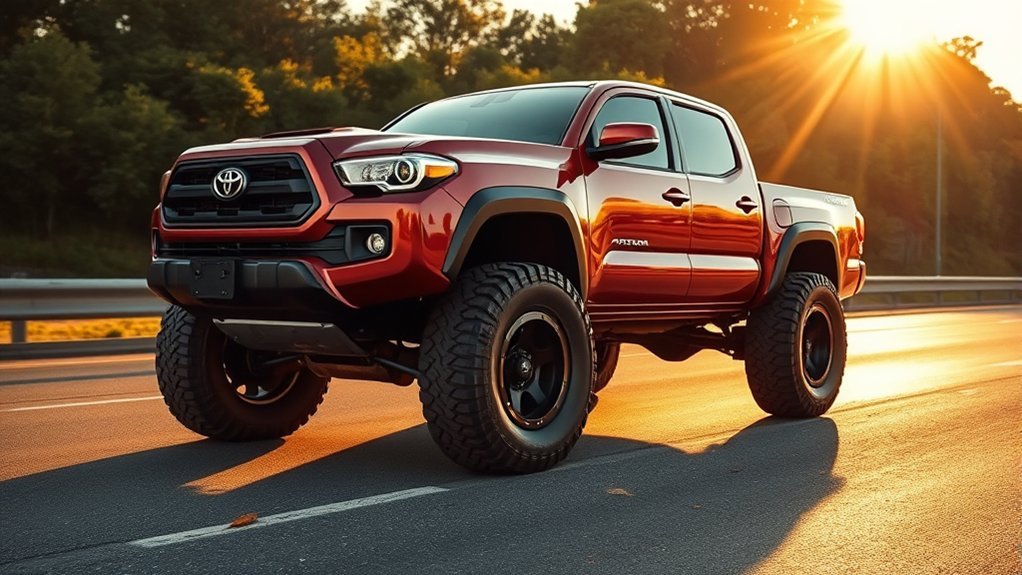
When you install larger tires on a Tacoma, you change more than the look of the truck. A taller tire raises the effective gearing, which can make the engine feel like it has less leverage at the wheels. A wider or more aggressive all-terrain tire can also add rolling resistance. If the tire is much heavier than stock, your Tacoma has to work harder every time it accelerates, brakes, climbs, or tows.
That does not mean bigger tires are a bad idea. Larger tires can add ground clearance, improve approach angles slightly, and increase traction on rocks, dirt, snow, or rutted trails. The trade-off is that those benefits often come with slower acceleration, more downshifting, longer braking feel, more road noise, and lower MPG.
Note: Tacoma factory tire size depends on year and trim. Current high-off-road trims are commonly listed with 33-inch tires, while 35-inch and 37-inch tires usually require aftermarket planning. Always compare the new tire against the tire size on your door placard or current sidewall, not against a generic “stock” number.
[Products Worth Considering]
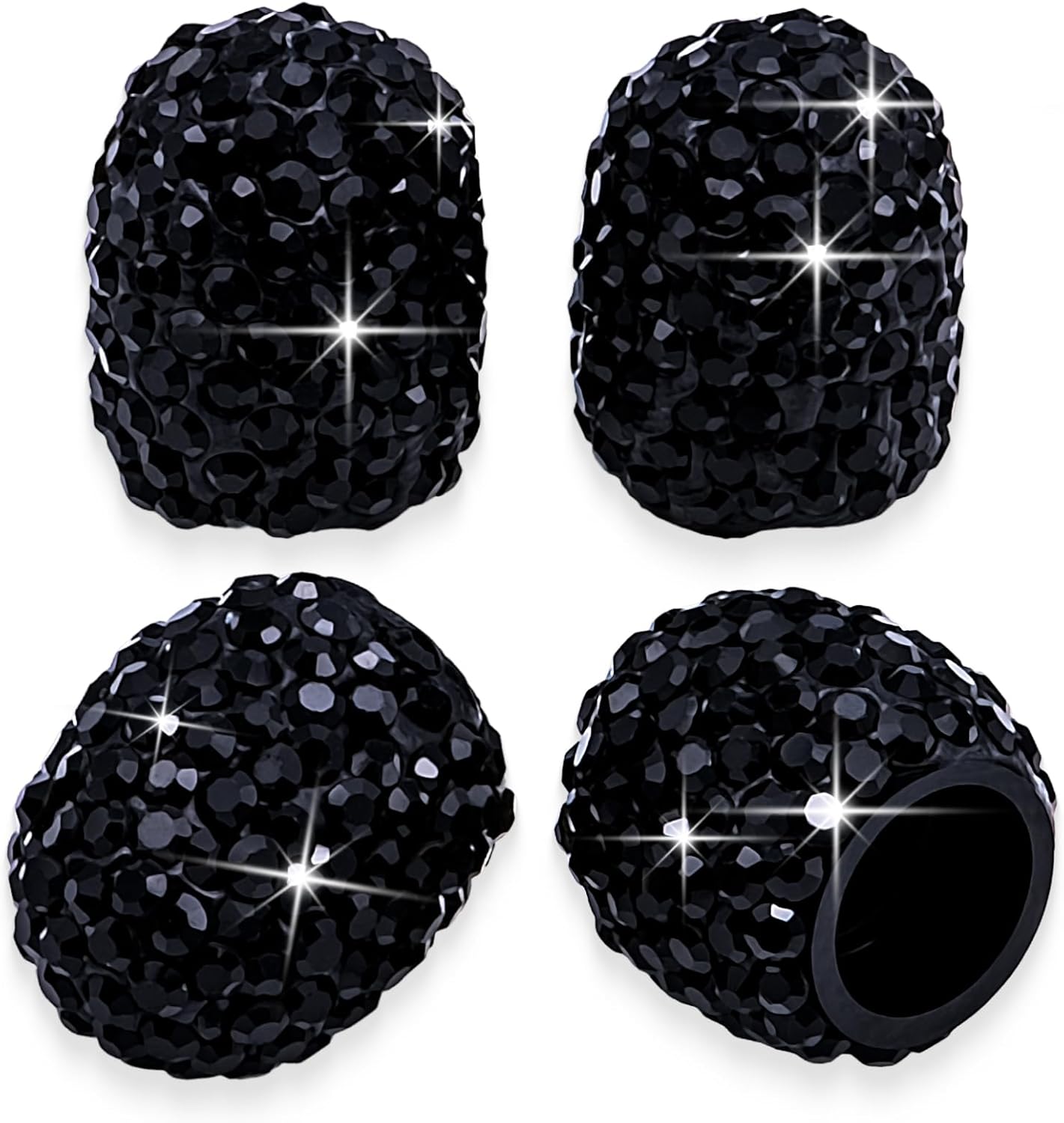
Add a sparkling, diamond-look upgrade to your vehicle with these bling rhinestone tire valve caps. They help protect valve stems from dirt, grime, and dust while offering a smooth, comfortable touch. Suitable for cars, SUVs, trucks, motorcycles, and bicycles, they’re quick to install by hand for an easy custom style.

Upgrade your Toyota tire setup with these corrosion-resistant, leak-proof valve stem caps designed to help protect the valve core from water, snow, and road grime. The caps feature a snug rubber seal and durable copper alloy construction to resist rust and oxidation while maintaining stable tire pressure. Ideal for replacing worn original caps and keeping your wheels looking clean and stylish.

These universal tire valve stem caps help protect your valve core from dust, debris, moisture, and corrosion, supporting more stable tire pressure. The aluminum alloy design resists long-term wear, while the sealing construction helps help prevent air leakage. They twist on easily for quick installation and help safeguard driving safety across cars, SUVs, trucks, and motorcycles.
MPG: Stock vs. Oversized Tires
The MPG loss from oversized tires is not the same for every Tacoma. A lighter 33-inch all-terrain tire on a newer Tacoma may create only a modest change. A heavy 35-inch mud-terrain tire on heavy aftermarket wheels may be much more noticeable. A 37-inch setup is a major modification and usually brings the biggest MPG, braking, and drivability trade-offs.
| Tire Setup | Typical MPG Effect | What to Watch |
|---|---|---|
| Factory-size tire | Best baseline for your exact truck | Use FuelEconomy.gov for EPA estimates, then compare with your own hand-calculated MPG. |
| Mild 33-inch all-terrain setup | Often small to moderate, depending on weight and tread | Check tire weight, width, speed rating, load rating, and alignment. |
| 35-inch tires | Usually noticeable, especially in city driving or hills | May require lift, trimming, wheel-offset changes, calibration, and possibly regearing. |
| 37-inch tires | Usually the largest drop and biggest drivability change | Major fitment, braking, gearing, spare, and long-term wear considerations. |
For the most accurate answer, measure your own truck. Fill the tank, reset the trip meter, drive normally, refill at the same pump if possible, and divide miles driven by gallons used. Do this for at least three tanks before the tire change and three tanks after the tire change. The dashboard MPG display is helpful, but hand calculation gives you a cleaner comparison.
A bigger tire does not reduce MPG by diameter alone. The full setup matters: tire weight, wheel weight, tread design, width, lift height, alignment, tire pressure, and how fast you drive.
Why Tire Weight and Width Matter
A taller tire changes gearing, but weight and width often decide how much you feel the upgrade. Heavy tires and wheels add rotating mass, so your Tacoma needs more energy to get them moving. Aggressive tread blocks can also create more rolling resistance. Wider tires can add drag and may follow road grooves more than a narrower tire.
This is why two tires with the same diameter can feel very different. A lighter all-terrain tire may be easier to live with than a heavier mud-terrain tire in the same size. If MPG matters, compare the tire’s published weight, load range, tread depth, and width before buying.
Pro Tip: If you want a tougher look without a big MPG hit, choose the lightest tire that still has the load rating, traction, and durability you need. Avoid buying more tire than your driving actually requires.
Can Regearing Boost Your Tacoma’s Efficiency?
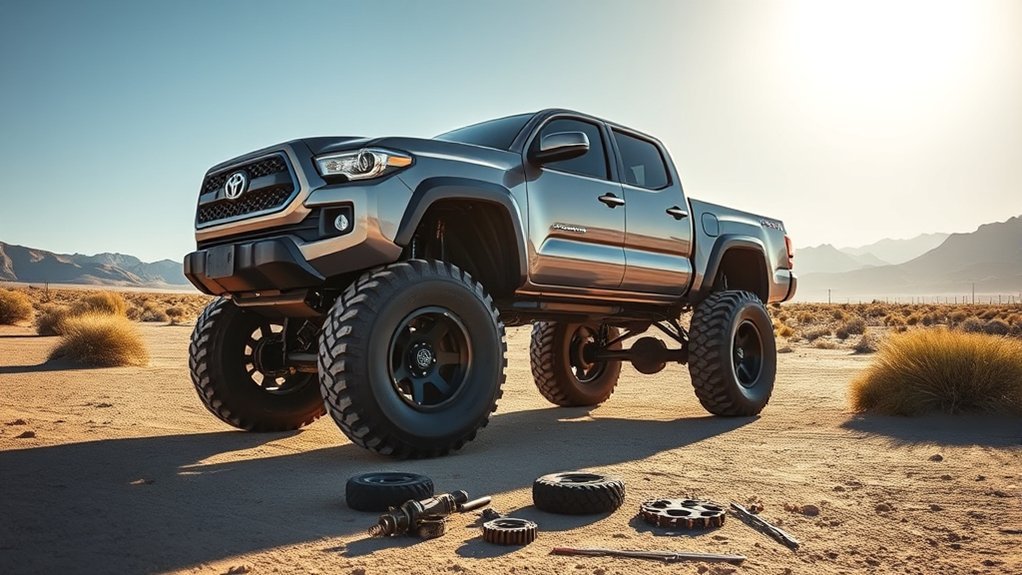
Regearing changes the differential gear ratio so the engine can work in a better range after taller tires are installed. It is most useful when larger tires make the truck feel slow, cause frequent hunting between gears, or make towing feel strained.
Regearing can improve drivability a lot, but it should not be sold as a guaranteed MPG gain. In some setups, a better gear ratio can recover some efficiency because the transmission stops hunting and the engine is not lugging. In other setups, the lower gearing can raise cruising rpm and reduce highway MPG. The result depends on tire size, engine, transmission, axle ratio, speed, terrain, load, and driving style.
When Regearing Makes Sense
- Your Tacoma feels sluggish after the tire upgrade.
- The transmission shifts constantly on hills or into headwinds.
- You tow, carry camping gear, or run armor, a camper shell, or rooftop accessories.
- You moved to heavy 35-inch or 37-inch tires.
- You want better low-speed trail control and throttle response.
When Regearing May Not Be Worth It
- You only moved slightly larger than stock.
- Your tires are light and your truck still drives well.
- You mostly drive flat highways at steady speeds.
- The fuel savings would take too long to offset the cost.
- You plan to change tire size again soon.
What Tacoma Owners Say About Tire Upgrades
Tacoma owners often agree on the basic trade-off: larger tires look better and work better off-road, but they can make the truck feel heavier. The biggest complaints are lower MPG, slower acceleration, more road noise, and more frequent downshifts. The biggest benefits are added stance, more ground clearance, stronger trail traction, and a more confident look.
The experiences vary because the setups vary. A daily-driven Tacoma on lighter 33-inch all-terrain tires is not the same as a lifted Tacoma on heavy 37-inch mud-terrain tires, steel bumpers, skid plates, and rooftop gear. When you read owner reports, compare trucks that match your generation, engine, transmission, axle ratio, lift height, wheel weight, tire model, and driving style.
[Products Worth Considering]
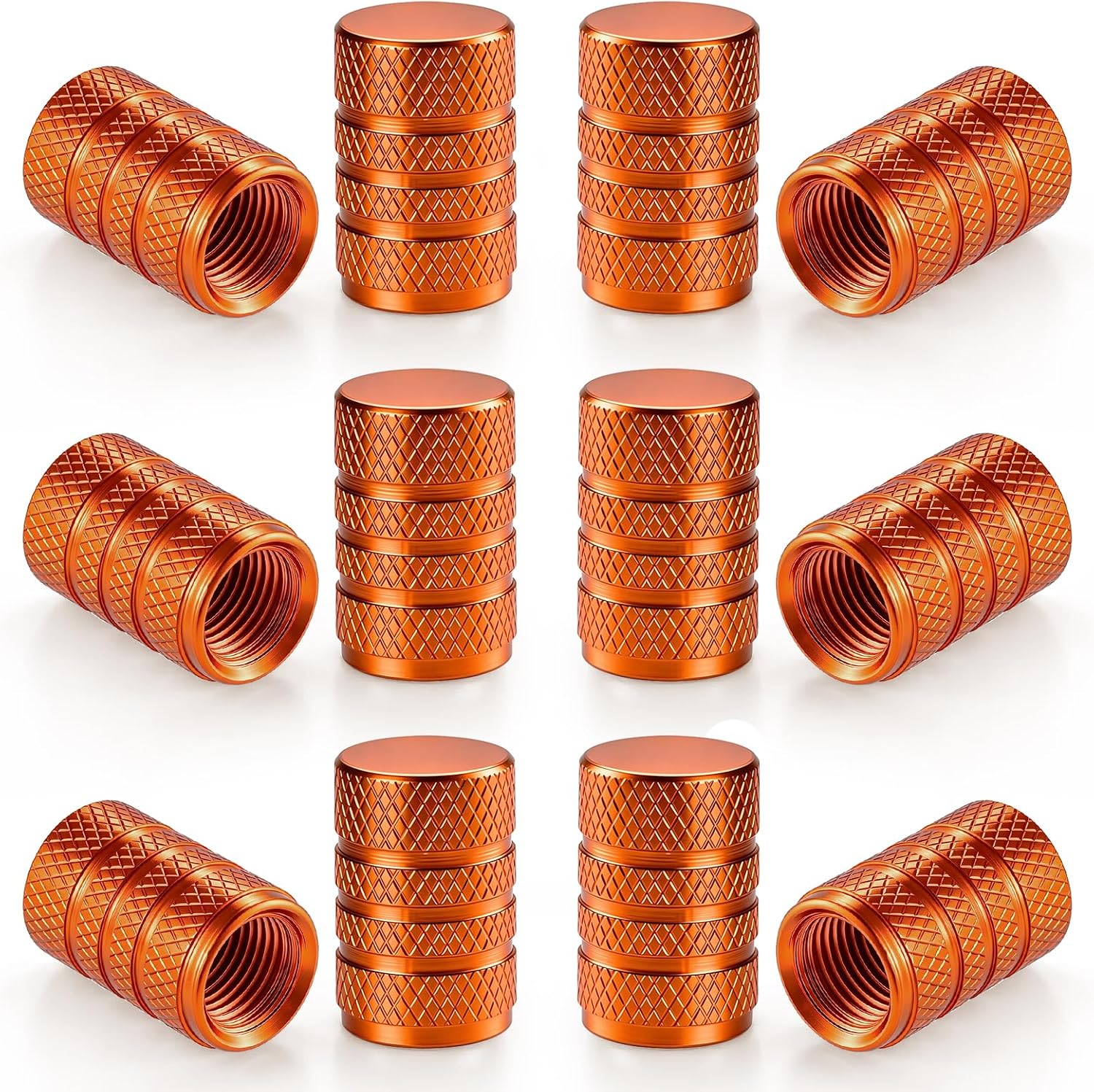
Upgrade your vehicles with these universal aluminum alloy tire valve stem caps designed to help keep dust out and maintain stable tire pressure. Each cap features an internal rubber seal for long-lasting leak protection and features an easy screw-on installation that won’t damage the valve stem threads. Suitable for cars, trucks, motorcycles, and bicycles, they also add a personalized decorative touch to your wheels.

EVOULTES heavy duty tire inflator with an integrated gauge delivers accurate pressure readings from 10–120 PSI, helping you inflate, deflate, and check tires in one tool. The 16.5-inch extended dual-head air chuck with swivel base reaches hard-to-access dual wheel valves on trucks and RVs. A brass trigger core and side-mounted air release valve make operation smooth, with standard 1/4" NPT threading and quick-connect compatibility for easy setup.
Strategies to Enhance Fuel Efficiency With Larger Tires
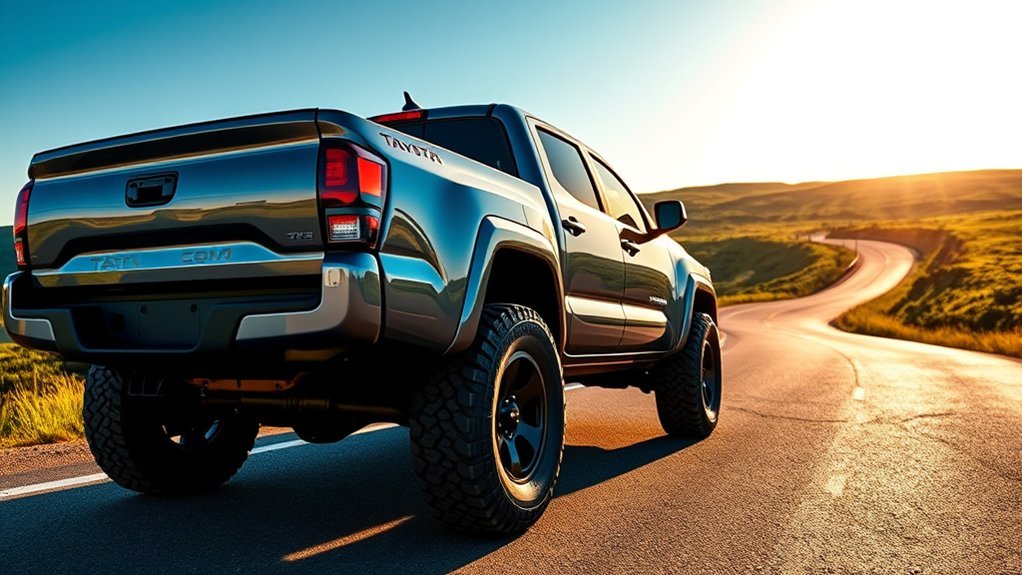
You may not recover all the MPG lost from larger tires, but you can reduce the damage. Start with the parts that create the least compromise.
- Choose lighter tires and wheels. Compare tire and wheel weights before buying. A lighter setup usually feels better in stop-and-go driving.
- Keep tire pressure correct. Use the vehicle placard as a starting point, then work with a tire professional if your new tire size or load range changes. NHTSA tire guidance stresses proper tire maintenance and pressure for safety.
- Get an alignment after the upgrade. Toe and camber problems can increase drag and wear tires quickly.
- Recalibrate the speedometer if needed. Taller tires can make the speedometer and odometer inaccurate, which can also distort MPG calculations.
- Remove unused weight and drag. Roof racks, rooftop tents, recovery boards, steel armor, and bed cargo all affect fuel use when carried daily.
- Drive a little slower on the highway. Speed and aerodynamic drag can hurt MPG quickly, especially with a taller truck and aggressive tires.
- Use the right tire for your real terrain. Mud-terrain tires may be overkill if you mostly drive pavement, gravel, and light trails.
Warning: Do not choose a tire only by diameter. Check load rating, wheel fitment, brake clearance, rubbing at full lock, suspension travel, spare-tire storage, and the effect on towing and braking. If you are unsure, use a qualified tire shop or off-road alignment shop.
Balancing Performance and Fuel Economy: Key Considerations
The best tire size for your Tacoma depends on how you use the truck. A trail-focused build can justify heavier tires, more clearance, and regearing. A daily driver that spends most of its time on pavement usually benefits from a lighter, narrower, less aggressive tire.
Fitment and Clearance
Before buying tires, check whether the size fits your Tacoma’s generation, suspension height, wheel offset, and alignment specs. Some larger tires rub the body mount, fender liner, cab mount, upper control arm, or mud flap area. A tire that technically bolts on may still rub during turns, braking, reverse, or suspension compression.
Speedometer and Odometer Accuracy
Larger tire diameter can change the speedometer and odometer reading. If the odometer records fewer miles than you actually travel, your hand-calculated MPG can look worse or better than it really is. A calibration tool or professional recalibration may be needed after a major size change.
Towing and Payload
Large tires can make towing feel harder because the engine and transmission have less mechanical advantage. If you tow a camper, carry a bed rack, or run a heavy overlanding setup, treat tire size, gear ratio, brake feel, and load rating as one complete system.
Fuel Efficiency Trade-Offs
If MPG is a top priority, avoid jumping straight to the biggest tire that fits. A mild tire upgrade often gives you the best balance of stance, traction, cost, and fuel economy. A heavy 35-inch or 37-inch setup can be worth it for serious off-road use, but it is rarely the most efficient choice for commuting.
Tuning for Optimal Results
Some owners use calibration or tuning tools after changing tire size. The main goal should be accurate speed, proper shift behavior, and smooth drivability. Be careful with any tune that claims large MPG gains by itself. Tire choice, gearing, pressure, alignment, speed, and weight usually matter more than a simple software change.
Frequently Asked Questions
How big of a tire can you put on a Toyota Tacoma?
It depends on your Tacoma’s generation, trim, suspension, wheel offset, and how much trimming you accept. Many owners can run mild 32-inch to 33-inch setups with fewer changes, while 35-inch tires often need more fitment work. A 37-inch setup is a major modification and should be planned with suspension, gearing, braking, and clearance in mind.
How much does tire weight affect MPG on a Toyota Tacoma?
Heavier tires and wheels usually reduce MPG because the truck must work harder to accelerate and brake them. The effect is stronger in city driving, hills, towing, and stop-and-go traffic. Tire weight is not the only factor, though. Tread pattern, width, pressure, alignment, lift height, and driving speed also matter.
Do 35-inch tires require regearing on a Tacoma?
Not always, but many Tacoma owners consider regearing when moving to heavy 35-inch tires, especially if they tow, drive in mountains, or dislike the slower acceleration. Regearing is mainly a drivability upgrade. It may help fuel economy in some situations, but it is not a guaranteed MPG payback.
Will larger tires change my Tacoma’s speedometer?
Yes, they can. A taller tire travels farther with each rotation, which can make the speedometer and odometer read incorrectly. After a major tire-size change, recalibrate the speedometer or account for the error when measuring MPG and driving speed.
What is the best Tacoma tire size for MPG and off-road use?
For many daily drivers, a lighter all-terrain tire close to factory size, or a mild 33-inch setup where it fits properly, gives the best balance. Serious trail use may justify 35s or 37s, but those sizes usually cost more in fuel, fitment work, braking feel, and drivetrain strain.
Conclusion
Larger tires can make your Toyota Tacoma more capable and more aggressive-looking, but they usually reduce fuel economy. The biggest mistake is focusing only on diameter. Tire weight, wheel weight, tread, width, lift height, gearing, pressure, alignment, speed, and vehicle load all shape the final MPG result.
If your Tacoma is mainly a daily driver, choose the lightest tire that meets your traction and load needs, keep the size reasonable, and measure your own MPG before and after the change. If your truck is built for harder trails, larger tires may be worth the fuel cost, but plan the whole system: clearance, braking, speedometer calibration, spare fit, towing feel, and possible regearing.
Sources
- Toyota Tacoma official specifications — factory trim and equipment reference.
- FuelEconomy.gov Find a Car — official EPA fuel-economy lookup by year, drivetrain, and trim.
- NHTSA Tire Safety — tire pressure, tire maintenance, and safety guidance.
- 49 CFR § 571.138 Tire Pressure Monitoring Systems — federal TPMS standard reference.
- U.S. Department of Energy: Fuel-Efficient Driving — driving habits, maintenance, speed, and efficiency guidance.

Related Articles
How Tire Weight Affects Toyota Tacoma Performance
How does tire weight influence your Toyota Tacoma's performance and efficiency? Discover the surprising effects that could change your driving experience.
Read More
Tire Noise Levels by Tire Type on a Toyota Tacoma
A comprehensive look at how tire types affect noise levels in your Toyota Tacoma reveals surprising insights that could enhance your driving experience.
Read More
How To Choose Tires for a Dual Use Toyota Tacoma
Unlock the secrets to selecting the perfect tires for your dual-use Toyota Tacoma, ensuring optimal performance and comfort on every adventure. Discover more inside!
Read More