
Why Toyota Hilux Tire Pressure Drops in Cold Weather
Cold weather can make your Toyota Hilux tire pressure drop even when the tires are not leaking. That matters because underinflated tires can reduce traction, hurt fuel economy, speed up tire wear, and make the truck feel less stable in winter driving. The fix is simple: check pressure when the tires are cold, use the Hilux door placard or Owner’s Manual as your main guide, and adjust all tires, including the spare, before pressure gets dangerously low.
Quick Answer
Toyota Hilux tire pressure drops in cold weather because air contracts as temperature falls. A useful rule is about 1 PSI lost for every 10°F drop. Check pressure when the tires are cold, set it to the driver’s door placard or Owner’s Manual value, and check the spare monthly.
Key Takeaways
- Cold air can lower tire pressure by about 1 PSI for every 10°F temperature drop.
- Always use your Hilux door placard or Owner’s Manual for the correct cold tire pressure.
- Check pressure before driving or after the truck has been parked for at least three hours.
- Do not use the pressure printed on the tire sidewall as your normal driving pressure.
- Check the spare tire too, but do not assume every Hilux spare should be inflated to 60 PSI.
At a Glance
| Time Required | 5 to 10 minutes |
| Difficulty | Easy |
| Tools Needed | Tire pressure gauge, air compressor or service-station air hose, valve caps |
| Cost | Usually free if you already own a gauge; low cost if you need to buy one |
How Cold Weather Affects Tire Pressure in Your Toyota Hilux
When temperatures drop, the air inside your Toyota Hilux tires contracts. That contraction lowers the pressure reading, even if there is no puncture. AAA explains that tire pressure can drop by about 1 PSI for every 10°F temperature drop, so a cold front can make a tire look low overnight.
This pressure loss matters because your tires already work harder on cold, wet, icy, or slushy roads. Low pressure can make the sidewalls flex too much, increase rolling resistance, reduce steering response, and create uneven tread wear. Toyota also notes that tire pressure affects stability, handling, braking, fuel consumption, tread wear, and blowout risk.
Note: If your Hilux has a tire pressure monitoring system, the warning light may appear on a cold morning and change after the tires warm up. Still check pressure with a gauge. TPMS is not a replacement for routine tire checks.
[Products Worth Considering]

EVOULTES heavy duty tire inflator with an integrated gauge delivers accurate pressure readings from 10–120 PSI, helping you inflate, deflate, and check tires in one tool. The 16.5-inch extended dual-head air chuck with swivel base reaches hard-to-access dual wheel valves on trucks and RVs. A brass trigger core and side-mounted air release valve make operation smooth, with standard 1/4" NPT threading and quick-connect compatibility for easy setup.

The JACO FlowPro Tire Inflator measures, inflates, and airs down tires up to 100 PSI with battery-free operation and ±2% accuracy after calibration. It features a glowing pressure dial for night visibility, a heavy-duty steel build with a hybrid hose, and a precision push-to-inflate thumb trigger. The patented Lightning Air Chuck locks on for a secure seal, and the kit includes quick-connect hardware for easy inline use with your air compressor.
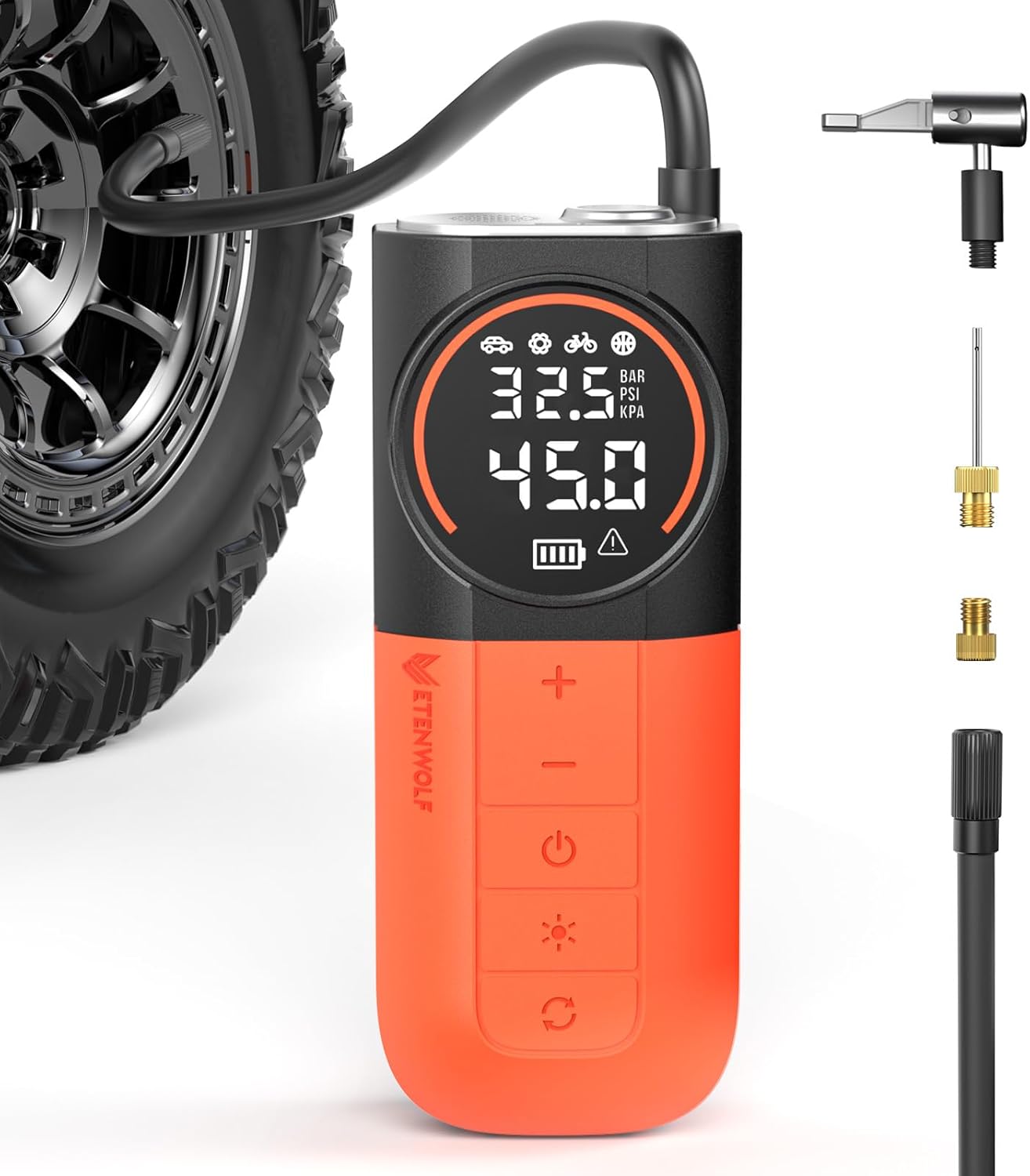
The ETENWOLF S1 cordless tire inflator delivers ultra-fast inflation with up to 160 PSI and a 20 L/min airflow for quicker tire top-offs. Its 5200mAh battery and cooling system support inflating many tires and sports balls on a single charge, while the digital pressure gauge and multi-unit display help you reach the right pressure accurately. With preset modes, pressure memory, an auto-stop feature, and an LED flashlight, it’s built for easy roadside and everyday use.
Why Tire Pressure Drops in Winter
Winter pressure loss usually comes from temperature change, normal air loss over time, load changes, or a slow leak. Knowing the cause helps you decide whether you only need to add air or you need to inspect the tire more closely.
Cold Air Effects
Cold air molecules move less and take up less space, so the pressure inside the tire falls. A 30°F temperature swing can lower pressure by about 3 PSI. That may be enough to affect handling or trigger a warning light if the tire was already close to the lower limit.
A tire that was correctly inflated in mild weather can become underinflated after a sharp winter temperature drop.
Pressure Loss Factors
Cold weather is not the only reason your Toyota Hilux tire pressure may drop. Watch for these common causes:
- Temperature change: Cold air contracts and lowers the pressure reading.
- Natural air loss: Tires can lose small amounts of pressure over time.
- Valve stem leaks: A worn or loose valve core can let air escape slowly.
- Small punctures: A nail or screw may cause one tire to drop faster than the others.
- Wheel or bead leaks: Corrosion, dirt, or damage where the tire seals to the wheel can cause slow loss.
- Heavy loads: Cargo or towing can require different pressure settings listed by Toyota.
If all four tires drop by a similar amount after a cold night, temperature is the likely reason. If one tire drops faster than the rest, inspect it for a puncture, valve issue, or bead leak.
Find the Correct Toyota Hilux Tire Pressure
The correct tire pressure for your Hilux is not the same for every model year, trim, tire size, market, or load. Toyota says the correct tire pressure specs can be found on the driver’s door jamb sticker, in the Owner’s Manual, or in vehicle-specific online manuals.
As a reference only, Toyota UK lists these Hilux tire pressure examples in its Toyota tyre pressure and size guide:
| Hilux Tire Size | Front Pressure | Rear Pressure |
| 225/70 R17 | 2.4 bar / 35 psi | 2.4 bar / 35 psi |
| 265/65 R17 | 2.0 bar / 29 psi | 2.0 bar / 29 psi |
| 265/60 R18 | 2.0 bar / 29 psi | 2.0 bar / 29 psi |
Use those numbers only as examples. Your own Hilux placard or Owner’s Manual should always override a general online table, especially if you have aftermarket tires, different wheels, heavy cargo, towing weight, or a regional model with different specifications.
Warning: Do not inflate your Hilux tires to the number printed on the tire sidewall for normal driving. That number is usually the tire’s maximum pressure, not Toyota’s recommended cold inflation pressure for your truck.
What Signs Indicate Your Tire Pressure Is Low?
The easiest sign is a low tire pressure warning light, if your Hilux is equipped with TPMS. But you should not wait for the light. The National Highway Traffic Safety Administration says underinflated tires can be hard to spot visually and TPMS is not a substitute for regular tire maintenance.
You may also notice that one tire looks flatter than the others, the steering feels heavier, the truck pulls to one side, fuel economy drops, or the tire shoulders show faster wear. In cold weather, these symptoms can appear after a sudden temperature drop, even if the tire looked fine the day before.
If only one tire loses pressure much faster than the others, treat it as a possible puncture, valve stem leak, bead leak, or wheel issue. Add air only as a temporary step, then inspect the tire or have it checked by a tire professional.
Easily Check and Adjust Your Tire Pressure
Checking and adjusting your Hilux tire pressure is simple, but timing matters. The pressure on the door placard is a cold tire pressure, so you should check it before driving or after the truck has been parked for at least three hours.
- Park safely and let the tires cool. Check in the morning before driving whenever possible.
- Find the correct PSI. Look at the driver’s door placard first, then the Owner’s Manual if needed.
- Remove the valve cap. Keep it somewhere clean so dirt does not enter the valve.
- Press the gauge firmly onto the valve stem. A brief hiss is normal, but reseat the gauge if air keeps escaping.
- Compare the reading with the placard value. Check all four road tires and the spare.
- Add air if the tire is low. Add a little at a time, then recheck with the gauge.
- Release air only if the tire is cold and over the specified pressure. Do not bleed pressure from a hot tire just because the reading looks high after driving.
- Replace the valve caps tightly. Valve caps help keep dirt and moisture out.
Pro Tip: Keep a small digital tire gauge in your Hilux. Gas-station gauges can be inaccurate or hard to read in freezing weather, and a personal gauge makes it easier to compare readings week to week.
Why Maintaining Proper Tire Pressure Is Crucial for Safety
Maintaining proper tire pressure is one of the simplest ways to protect your Hilux in cold weather. Toyota explains that low tire pressure can reduce vehicle stability, handling, and braking, while also increasing fuel consumption, tread wear, and blowout risk.
[Products Worth Considering]

These JUSTTOP valve stem caps help protect your tire valves from water, dust, and sand to support leak prevention and safer driving. They are easy to install by hand and feature a durable, enhanced-seal design to reduce air leakage. Universal fit makes them suitable for cars, SUVs, trucks, motorcycles, and bicycles.

Upgrade your tires with authentic 40mm caliber bullet-shaped stem caps designed to help keep inflation consistent and secure. The patented insert helps protect TPMS and the lacquer coating resists tarnishing for a stylish look. Easy to install on standard Schrader valve stems, these caps fit cars, trucks, SUVs, motorcycles, BMX and bicycles.
Safety Risks of Low Pressure
Underinflated tires flex more than they should. That can make the truck feel slow to respond, especially during braking, cornering, or emergency steering. On cold, wet, icy, or snowy roads, that reduced response can make a bad situation worse.
- Reduced steering response and stability
- Less predictable braking feel
- Higher tire heat from extra sidewall flex
- Greater chance of tire damage or failure if the tire stays low
Impact on Tire Wear
Low tire pressure can wear the outer shoulders faster because more of the tire’s edge contacts the road. Over time, this shortens tread life and can make the tire noisier. Overinflation can also cause uneven wear, often through the center of the tread. The goal is not “more air is better.” The goal is the correct cold pressure for your Hilux.
Performance and Handling Issues
Underinflated tires increase rolling resistance, which means the engine works harder to move the truck. That can reduce fuel economy and make the Hilux feel heavier on the road. Correct pressure helps the tires keep their intended shape, giving you better contact, better control, and more even wear.
TPMS Light Troubleshooting in Cold Weather
If your Hilux has TPMS, use the warning light as a prompt to check pressure, not as your only tire-maintenance tool. Bridgestone notes that when a TPMS light comes on and stays on, at least one tire may be low and you should check all tires with a gauge.
| What You Notice | Likely Cause | What To Do |
| All tires are a few PSI low after a cold night | Normal cold-weather pressure drop | Inflate each tire to the cold placard pressure. |
| One tire is much lower than the others | Possible puncture, valve leak, bead leak, or wheel issue | Add air only if safe, then inspect or repair the tire promptly. |
| TPMS light turns off after driving | Pressure rose as the tires warmed up | Check again when cold and adjust if needed. |
| TPMS light flashes, then stays on | Possible TPMS fault | Check pressure manually and have the system inspected. |
Keep Your Spare Tire Ready for Winter Emergencies
Your spare tire matters most when conditions are worst, so do not ignore it. NHTSA recommends checking all tires, including the spare, at least once a month when cold. Toyota tire guidance also points owners to the tire information placard or Owner’s Manual for the correct cold pressure, including the spare.
Do not assume your Hilux spare should be set to 60 PSI. Many compact temporary spares use higher pressures, but many Hilux models use a full-size spare or a spare that must follow a specific placard/manual value. Check the pressure printed on the spare tire, the driver’s door label, and your Owner’s Manual before adding air.
- Inspect the spare for cracks, cuts, sidewall damage, and uneven wear.
- Make sure the spare is accessible and the lowering mechanism works if it is mounted under the truck.
- Check that your jack, wheel wrench, lock key, and roadside tools are in the vehicle.
- Replace missing valve caps so water and dirt do not enter the valve stem.
Note: If you drive off-road, air down for traction, or tow in winter, reinflate to the correct road pressure before highway driving. Low off-road pressure is not safe for normal road speeds.
Frequently Asked Questions
Why does my tire pressure keep going down in cold weather?
Your tire pressure drops in cold weather because the air inside the tire contracts as temperature falls. A common rule is about 1 PSI lost for every 10°F drop. Tires can also lose air slowly over time, so check them monthly and after big temperature changes.
Is 26 PSI too low in winter?
For many Hilux setups, 26 PSI will be below the recommended road pressure, but the exact answer depends on your tire size, model, load, and market. Check the driver’s door placard or Owner’s Manual. If the placard says 29 PSI, 26 PSI is still low. If it says 35 PSI, it is very low.
Is 40 PSI OK for winter tires on a Toyota Hilux?
Only use 40 PSI if your Hilux placard, Owner’s Manual, tire-load guidance, or specific winter tire setup calls for it. Do not raise pressure to 40 PSI just because the weather is cold. Overinflation can reduce ride comfort and cause uneven wear.
Should I check Hilux tire pressure hot or cold?
Check it cold. That means before driving or after the truck has been parked for at least three hours. Driving heats the tires and temporarily raises the pressure, which can give you a misleading reading.
Should I lower tire pressure for snow?
For normal road driving, use the Toyota-recommended cold tire pressure. Lowering pressure for public-road snow driving can increase tire heat, reduce stability, and damage the tire. Off-road airing down is a separate practice and requires careful reinflation before returning to road speeds.
Sources
- Toyota: How To Check Tire Pressure – supports using the door jamb sticker, Owner’s Manual, and proper pressure checks.
- Toyota UK: Tyre Pressure and Size Guide – supports Hilux pressure examples by tire size.
- NHTSA TireWise – supports monthly pressure checks, TPMS limitations, tread checks, and tire safety guidance.
- NHTSA: June Is Tire Safety Month – supports checking all tires, including the spare, when cold.
- AAA: Tire Pressure and Temperature Change – supports the 1 PSI per 10°F temperature-drop rule.
- Bridgestone: TPMS Light Guidance – supports checking all tires with a gauge when the TPMS light appears.
Conclusion
Cold weather can lower your Toyota Hilux tire pressure quickly, but it does not have to catch you off guard. Check the pressure when the tires are cold, follow the driver’s door placard or Owner’s Manual, and include the spare in your monthly routine. If one tire drops faster than the rest or the TPMS light stays on, inspect the tire instead of assuming it is only winter weather. A few minutes with a gauge can improve safety, handling, fuel economy, and tire life all season long.

Related Articles
Toyota Hilux Run-Flat Tires: What You Need to Know
Take control of your safety with Toyota Hilux run-flat tires; discover their benefits and hidden costs that could change your driving experience forever.
Read More
Effects of Underinflated Tires on the Toyota Hilux
Inadequate tire pressure in your Toyota Hilux can lead to serious safety issues and costly repairs; discover how to avoid these pitfalls.
Read More
The Risks of Overinflating Toyota Hilux Tires
Overinflating your Toyota Hilux tires can lead to dangerous blowouts and uneven wear, but understanding the risks is crucial for your safety.
Read More