
How to Properly Torque Lug Nuts on a Toyota Hilux

Correctly torquing the wheel nuts on a Toyota Hilux is a small job with a big safety role. The key is not just “tight enough.” You need the correct torque value for your exact Hilux, clean dry wheel hardware, a calibrated torque wrench, and a crisscross tightening pattern so the wheel seats evenly against the hub.
Quick Answer
Toyota Hilux lug nut torque is not one universal number. Toyota-Tech lists many 2015-on Hilux 4×4 models at 105 N·m, while Hilux 4×2 models are listed at 121 N·m for alloy wheels and 152 N·m for steel wheels. Always confirm your owner’s manual, service data, or wheel documentation before final tightening.
Key Takeaways
- Use the torque value for your exact Hilux model, drivetrain, wheel type, and wheel hardware.
- Toyota-Tech lists 2015-on Hilux 4×4 wheel nuts at 105 N·m, but 4×2 values differ by wheel material.
- Tighten by hand first, then use a torque wrench in a star or crisscross pattern.
- Keep wheel studs, wheel nuts, and mating surfaces clean and dry; do not add oil, grease, or anti-seize unless specified by the manufacturer.
- Recheck torque after the first short drive or after the interval recommended by your manual, wheel supplier, or tire shop.
At a Glance
| Time Required | 10–20 minutes for a torque check; longer if removing and reinstalling a wheel |
| Difficulty | Easy to moderate |
| Tools Needed | Torque wrench, correct socket, wheel chocks, jack and stands if removing a wheel, clean rag or wire brush for hub cleaning |
| Cost | Usually free if you already own a torque wrench; professional re-torque checks are often inexpensive or included after tire service |
Confirm the Correct Toyota Hilux Lug Nut Torque First
Before tightening, confirm the exact torque value for your Hilux. The best source is your owner’s manual, repair manual, Toyota service information, or the documentation supplied with your wheels. This matters because Hilux torque values can vary by drivetrain and wheel type.
The Toyota-Tech wheel torque table lists the following values for 2015/04-on Hilux models:
| Hilux configuration | Wheel type | Torque | Approx. ft-lbf |
|---|---|---|---|
| Hilux 4×4, 2015/04-on | Factory wheel nut setup listed by Toyota-Tech | 105 N·m | 77 ft-lbf |
| Hilux 4×2, 2015/04-on | Alloy wheels | 121 N·m | 89 ft-lbf |
| Hilux 4×2, 2015/04-on | Steel wheels | 152 N·m | 112 ft-lbf |
Note: If your Hilux is an older model, has aftermarket wheels, wheel spacers, replacement studs, wheel locks, or non-factory lug nuts, do not assume the table above applies. Follow the exact documentation for your vehicle and wheel hardware.
[Products Worth Considering]

These aluminum alloy tire valve caps help protect valve stems from road damage during everyday driving and long-term use. The hexagon, stylish design adds a clean look while...
Why Proper Torque Matters for Your Hilux
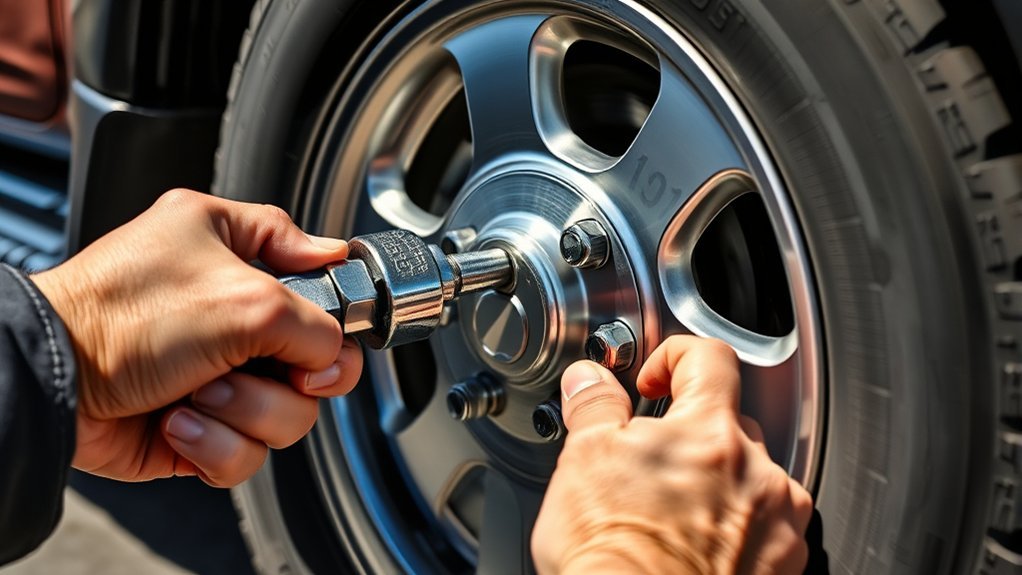
Wheel nuts hold the wheel clamped tightly against the hub. If they are too loose, the wheel can move, vibrate, damage studs, or come off. If they are too tight, the studs, threads, wheel seats, brake components, or wheel itself can be damaged.
Correct torque also helps the wheel sit flat. Uneven clamping force can create vibration, make the wheel difficult to remove later, and increase stress on the studs or wheel mounting holes.
Torque is not a guess. It is the measured twisting force needed to create the correct clamping load between the wheel and hub.
Tools You’ll Need for Accurate Torque Application
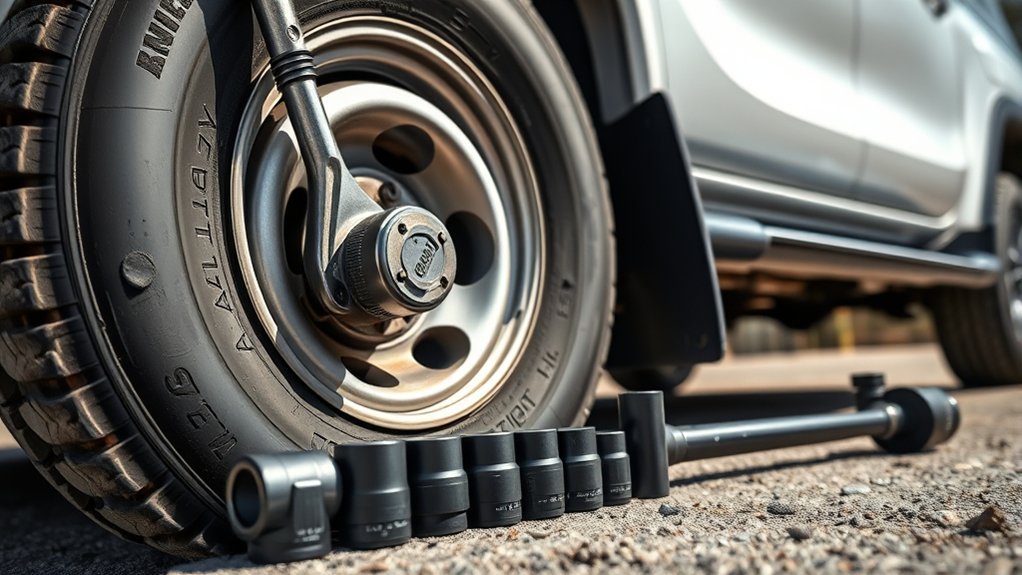
- Torque wrench: Use a wrench that covers the needed range, such as 105–152 N·m depending on your Hilux.
- Correct socket: Use the socket size that fits your wheel nuts snugly.
- Lug wrench or breaker bar: Use this for loosening or initial snugging only, not final torque.
- Wheel chocks: Chock the wheels that stay on the ground.
- Jack and axle stands: Use these only if the wheel must be removed. Never place any part of your body under a vehicle supported only by a jack.
- Clean rag or brush: Clean dirt, rust flakes, grit, or debris from the wheel-to-hub mating surfaces.
Warning: Do not apply oil, grease, or anti-seize to Toyota wheel studs or wheel nuts unless the vehicle or wheel manufacturer specifically instructs you to. Lubrication changes the relationship between torque and clamping force and can lead to over-tightening or loosening.
How to Properly Torque Lug Nuts on a Toyota Hilux
Step 1: Park Safely and Check the Spec
Park on level ground, apply the parking brake, and chock the wheels. Before touching the wheel nuts, confirm the torque value for your exact Hilux and wheel setup. Do not use 103 N·m or 76 ft-lbf just because it appears in a generic Toyota chart; Hilux values can differ.
Step 2: Clean and Inspect the Wheel Mounting Surfaces
Clean the hub face, wheel mounting face, wheel studs, and lug nut seats. Remove loose rust, grit, or dirt that could stop the wheel from sitting flat. Inspect studs and nuts for damaged threads, stretching, cracks, corrosion, or cross-threading.
If a stud, nut, or wheel seat looks damaged, stop and have it inspected or replaced before driving. A torque wrench cannot make damaged hardware safe.
Step 3: Seat the Wheel by Hand
Place the wheel fully against the hub. Install each wheel nut by hand first. The nuts should turn smoothly for several threads. If one binds immediately, remove it and check for cross-threading or dirt.
Pro Tip: Starting every nut by hand is one of the easiest ways to avoid cross-threading, which can ruin a wheel stud and make the final torque reading unreliable.
Step 4: Snug the Nuts in a Crisscross Pattern
Use a crisscross or star pattern so the wheel pulls evenly onto the hub. For a 6-lug Hilux wheel, move from one nut to the nut roughly opposite it, then continue around the wheel. Snug the nuts evenly first; do not fully tighten one nut while the others are loose.
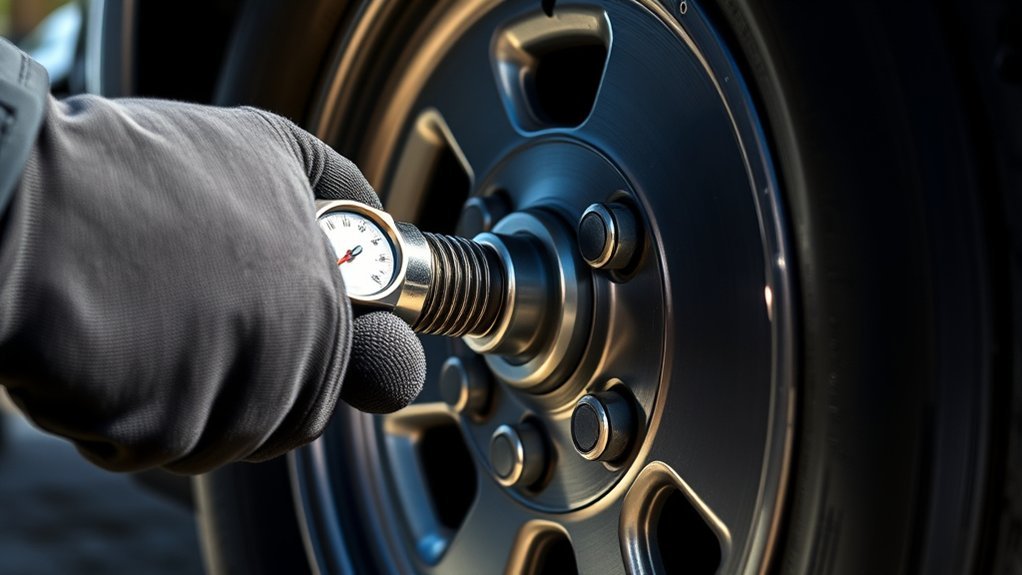
Step 5: Use a Torque Wrench for Final Tightening
Set the torque wrench to the correct value. Tighten the nuts in the same crisscross pattern until the wrench clicks or signals the set torque. Do not keep pulling after the wrench clicks.
For best control, tighten in two passes: first at roughly half to two-thirds of the final torque, then again at the full specified torque. This helps seat the wheel evenly and reduces the chance of one side clamping before the other.
Step 6: Recheck After Driving
After wheel removal, tire replacement, rotation, or new wheel installation, recheck the torque after the first short drive or the interval recommended by your manual, tire shop, or wheel supplier. Many tire professionals recommend a recheck around 50 km to 100 miles because normal driving can let the wheel assembly settle slightly.
Why a Diagonal Tightening Pattern Prevents Wheel Damage
A diagonal or crisscross tightening pattern spreads clamping force evenly across the wheel. This reduces the chance that the wheel will sit crooked on the hub, which can cause vibration, false torque readings, or uneven stress around the wheel mounting holes.
This pattern matters even more with alloy wheels because the mounting surfaces and seats can be more sensitive to uneven pressure. The goal is not just to make each nut tight; it is to seat the entire wheel flat and evenly.
Common Mistakes to Avoid When Torquing Hilux Lug Nuts
- Using the wrong torque spec: Always confirm the spec for your exact Hilux, wheel type, and hardware.
- Using an impact wrench for final tightening: Impact tools can over-tighten or tighten unevenly. Use a torque wrench for the final pass.
- Lubricating studs or nuts: Oil, grease, and anti-seize can change clamping force and create unsafe torque results unless specifically required by the manufacturer.
- Tightening one nut fully before the others: This can pull the wheel unevenly against the hub.
- Ignoring dirty mating surfaces: Dirt or rust can create false torque, where the wrench clicks but the wheel is not clamped properly.
- Reusing damaged hardware: A stretched stud, rounded nut, cracked wheel seat, or cross-threaded nut should be fixed before driving.
- Assuming aftermarket wheels use factory torque: Aftermarket wheels, spacers, and wheel locks may require different hardware or torque values.
How to Check Torque After Installation
To check torque after installation, park on level ground and let the wheel hardware cool if you have just driven hard or braked heavily. Set your torque wrench to the correct value and apply it to each nut in a crisscross pattern.
If the wrench clicks immediately without the nut moving, that nut is already at or above the set value. If the nut turns before the click, it was below the set value and has now been brought up to spec. If any nut moves a long way, feels rough, keeps turning, or never reaches torque, stop and inspect the hardware.
When to Re-Torque Your Lug Nuts
Re-torque your Hilux wheel nuts after any job that involved removing a wheel, including tire rotation, tire replacement, puncture repair, brake work, suspension work, wheel balancing, or installing new wheels.
You should also check torque if you notice vibration, knocking, wobble, a missing nut, a recent hard impact with a pothole, or visible movement around the wheel mounting holes. Do not continue driving if a wheel feels loose or makes unusual noises after service.
Troubleshooting After Torquing Hilux Lug Nuts
| Problem | Possible cause | What to do |
|---|---|---|
| Nut will not start by hand | Cross-threading, dirt, damaged stud, or wrong nut | Stop. Clean and inspect the stud and nut before trying again. |
| Torque wrench clicks but wheel still feels loose | Dirty mating surface, wrong wheel, wrong nut seat, or damaged hardware | Remove the wheel and inspect the hub, wheel seat, nuts, and studs. |
| Vibration after wheel service | Wheel not seated, incorrect torque, balance issue, or damaged wheel | Stop when safe and have the wheel installation checked. |
| Nut keeps loosening | Damaged stud, wrong nut, incorrect wheel seat, or contamination | Do not keep retightening and driving. Have the hardware inspected. |
Additional Tips for Maintaining Your Toyota Hilux Wheels
- Check wheel nut torque after professional tire or brake work, especially before long highway trips or off-road use.
- Keep a record of the torque value used for your exact wheel setup.
- Store your torque wrench unloaded at its lowest setting if the wrench manufacturer recommends it.
- Do not use a torque wrench as a breaker bar unless it is designed for that use.
- Inspect alloy wheels for cracks, elongated mounting holes, or seat damage if a wheel has been driven loose.
- For off-road driving, inspect wheels and lug nuts more often because impacts, vibration, mud, and grit can make wheel service harder.
Frequently Asked Questions
What should Toyota Hilux wheel nuts be torqued to?
It depends on the Hilux configuration and wheel type. Toyota-Tech lists 2015-on Hilux 4×4 models at 105 N·m, Hilux 4×2 alloy wheels at 121 N·m, and Hilux 4×2 steel wheels at 152 N·m. Always confirm your owner’s manual, service data, or wheel documentation before tightening.
Is 76 ft-lbf correct for a Toyota Hilux?
Do not treat 76 ft-lbf as a universal Hilux torque value. Some Toyota vehicles use a value near 103 N·m, but Toyota-Tech lists different Hilux values depending on drivetrain and wheel type. Check your exact model and hardware before final tightening.
Should I grease Toyota Hilux lug nuts?
No. Keep Toyota wheel studs and wheel nuts clean and dry unless Toyota or the wheel manufacturer specifically says otherwise. Oil, grease, or anti-seize can change the clamping force and may cause over-tightening, damage, or loosening.
Can I use an impact wrench to tighten Hilux wheel nuts?
You can use an impact tool carefully for removal or light initial run-down, but do not use it for final tightening. Final tightening should be done with a torque wrench set to the correct specification.
When should I re-torque Toyota Hilux lug nuts?
Re-torque after any wheel removal, tire rotation, new tire installation, brake work, or suspension work. Many tire professionals recommend checking after the first short drive, often around 50 km to 100 miles, but your manual, wheel supplier, or tire shop may specify a different interval.
What if one lug nut will not reach torque?
Stop tightening. A nut that will not reach torque may have damaged threads, a stretched stud, the wrong nut seat, or a wheel that is not sitting flat. Inspect the hardware before driving.
Conclusion
Properly torquing Toyota Hilux lug nuts starts with the correct spec for your exact model and wheel setup. Once you have that value, clean the mounting surfaces, start every nut by hand, tighten in a crisscross pattern, use a torque wrench for the final pass, and recheck the torque after the wheel has been driven and settled. Done carefully, this simple process protects the studs, wheels, hubs, and everyone riding in the vehicle.
Sources
- Toyota-Tech wheel torque values table — Hilux wheel nut torque values by drivetrain and wheel type.
- Toyota Owners wheel nut guidance — Toyota warning against oil or grease on wheel bolts or wheel nuts.
- Continental Tires retorquing wheels guide — Retorque timing, clamping force, and over-/under-torque risks.
- NHTSA TireWise — Tire safety and maintenance context.

Related Articles

Toyota Hilux Run-Flat Tires: What You Need to Know
Take control of your safety with Toyota Hilux run-flat tires; discover their benefits and hidden costs that could change your driving experience forever.
Read More
Effects of Underinflated Tires on the Toyota Hilux
Inadequate tire pressure in your Toyota Hilux can lead to serious safety issues and costly repairs; discover how to avoid these pitfalls.
Read More
The Risks of Overinflating Toyota Hilux Tires
Overinflating your Toyota Hilux tires can lead to dangerous blowouts and uneven wear, but understanding the risks is crucial for your safety.
Read More