
Flotation Tire Sizes Explained: How to Read and Match Them
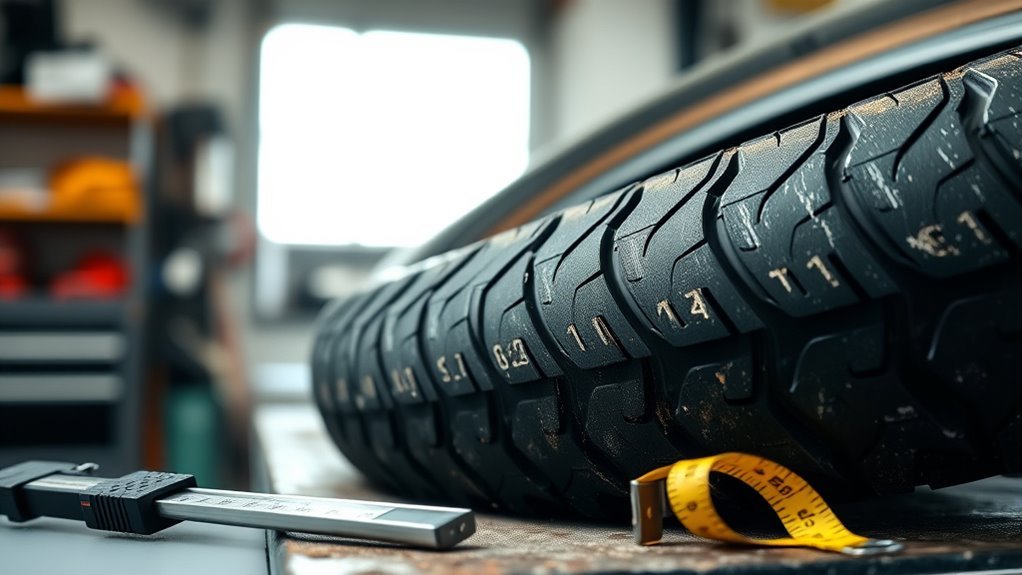
Flotation tire sizes show the outside diameter, width, and rim size. This tells you the tire’s overall height, sidewall-to-sidewall width, and the wheel diameter it fits. You need these three numbers to check clearance, rim compatibility, and how the tire changes ride height. These dimensions also affect your gearing and speedometer readings. Always confirm the load index and speed rating match your vehicle. Keep the overall diameter within about 3 percent of the factory size when swapping tires. Read on for specifics on fitment, load charts, and performance effects.
Quick Answer
- Format: Flotation sizes use Height × Width × Rim (for example, 35×12.50R17).
- Height: The first number is the overall tire height in inches.
- Width: The second number is the tread width in inches.
- Rim: The final number is the required wheel diameter.
- Fitment: Always verify fender clearance and match the tire’s load index to your vehicle’s weight capacity.
What Flotation Tire Size Numbers Mean
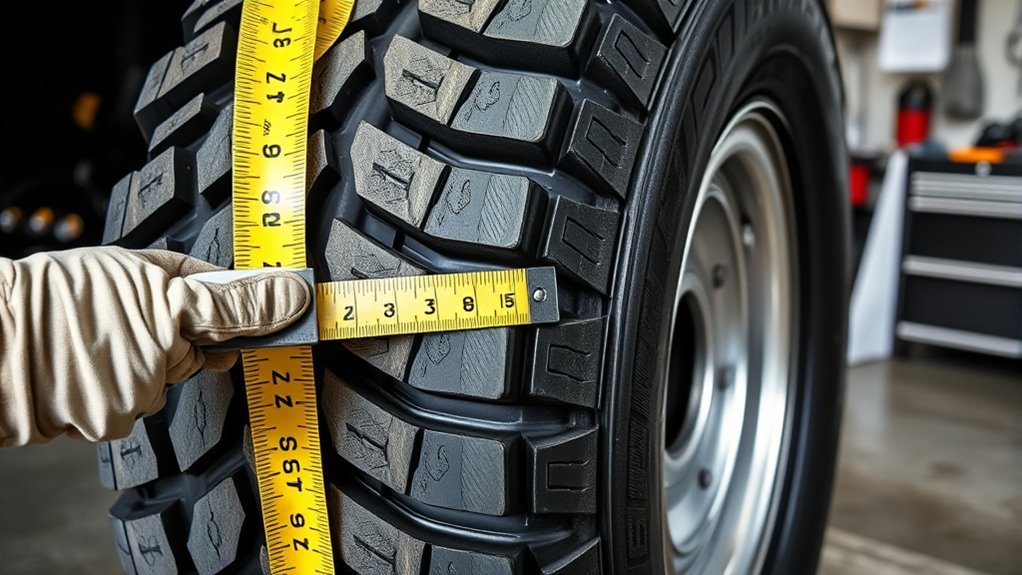
Flotation tire sizes use three numbers to describe key dimensions: overall height, width, and wheel diameter. For example, look at a 35×12.50R17 tire. You read the first number as the overall tire height in inches when mounted and inflated. This height changes your vehicle’s ride height, handling, and ground clearance. The second number is the tire’s width across the sidewalls in inches. You use this to confirm fitment, traction footprint, and lateral stability. The final number denotes wheel diameter in inches. This ensures the tire mounts correctly to the rim. In practice, you match these numbers to your specific needs, like off-road or agricultural use. You also need to check load ratings and construction type for safety. Understanding these figures helps you choose tires that improve off-road control and capability.
How Flotation Sizes Are Written: Diameter × Width × Rim
When you read a flotation size like 33 × 12.50 × 15, the first number is the overall tire diameter in inches. This shows how it will change ride height and handling. The middle number specifies the tire width from sidewall to sidewall. This affects traction and stability. The final number is the rim diameter in inches. It must match your wheel exactly for correct mounting and safe driving.
Overall Diameter Explained
The first number in a flotation tire size gives the tire’s overall diameter in inches. For example, the 35 in a 35×12.50R17 tire. This lets you quickly gauge how the tire changes vehicle ride height and clearance. Tire height directly affects gearing, axle articulation, and obstacle clearance. You should select a size that balances ground clearance with driveline stress. Larger diameters raise the vehicle and improve clearance. However, they can alter your speedometer and braking calibration. Smaller diameters lower clearance but might improve acceleration and braking response. When choosing, always confirm rim diameter compatibility. Also, consider the overall package. Width and rim size interact with diameter to influence the contact patch and vehicle stability. Use precise measurements instead of estimates to ensure safety and performance.
Width Measurement Details
The middle number in a size like 35×12.50R17 is 12.50. This specifies the tire’s width across the sidewalls in inches. You use this value to judge the contact patch, footprint, and handling behavior. Wider tires offer better support at low tire pressures. They also improve stability. However, width also impacts steering response and clearance.
- Width defines the sidewall-to-sidewall distance and directly affects the contact area.
- Wider tires lower ground pressure. This helps a vehicle move over soft terrain.
- Increased width can change steering effort. It might require suspension or fender adjustments.
- Match the width to your vehicle’s purpose and rim compatibility to maintain safety.
Choose your width carefully. Maximize terrain access while staying within the mechanical limits of your vehicle.
Rim Diameter Importance
The final number in a flotation size is the rim diameter. This dictates whether a tire will seat and seal correctly on your wheel. You should never substitute rim diameters. Selecting the correct rim diameter guarantees the tire matches the wheel flange. This prevents air leaks, bead unseating, and dangerous tire failure. When buying off-road tires, match the rim diameter to the wheel specs exactly. Overall height and width affect ride and traction, but the rim diameter controls the mechanical fit. Verify wheel markings and tire labels before installation. Prioritize rim diameter for safety and performance.
Convert Flotation Sizes to Inches and Millimetres (Quick Formulas)
When reading a flotation size like 37×12.5×18, interpret the numbers as tire height, tread width, and wheel diameter in inches. You can convert each to millimeters by multiplying by 25.4. For example, 37 inches times 25.4 equals 940.8 mm in height. A 12.5-inch width equals 317.5 mm. An 18-inch wheel diameter equals 457.2 mm. These conversions help you verify fitment and clearances. Metric conversions are useful for precise clearance planning and standardized communication with parts suppliers. Apply these quick formulas when comparing tires.
- Height: Multiply overall inches by 25.4 to get millimeters for suspension checks.
- Width: Multiply tread width inches by 25.4 to check fender and track clearance.
- Wheel diameter: Multiply rim inches by 25.4 to match rim specs exactly.
- Verification: Round to one decimal place for practical fitment. Document exact values for ordering.
How Flotation Profile Differs From Metric Aspect Ratio

Flotation sizes state overall height in inches instead of a sidewall-to-width percentage. This lets you read the tire profile directly. For instance, 37×12.5×18 tells you the tire is 37 inches tall and 12.5 inches wide. Metric sizing uses millimeters and an aspect ratio. The aspect ratio is the sidewall height as a percentage of the width. You can interpret a flotation profile at a glance. Overall height and width are explicit, so you know the ride height without calculating sidewall height. A metric aspect ratio requires a math formula and often hides the real-world height until you convert it. The clarity of flotation sizing provides predictable clearance and easier comparison across brands. It also highlights the superior low-pressure behavior on soft terrain. Metric tires often have narrower widths and percentage-based sidewalls that improve on-road handling, but they require conversions for off-road planning. Flotation sizing gives you direct dimensional information.
Matching Flotation Tire Sizes to Rims and Vehicle Clearance
When choosing flotation tires, match the tire width to the rim’s recommended width range. This maintains bead seating, handling, and sidewall behavior. Check fender and suspension clearance for the tire’s width and overall diameter. This prevents rubbing during suspension travel and tight turns. Changes in overall diameter alter gearing, speedometer readouts, and roll circumference. Always confirm vehicle compatibility or ask a tire professional.
[Products Worth Considering]

The 5 Gallon Air Tire Bead Seater quickly inflates tire sidewalls to seat the bead onto the rim, works for tires up to 24.5 inches on vehicles ranging from cars to ATVs. Its heavy‑duty all‑steel construction with powder coating ensures durability, while the easy‑to‑read gauge lets you monitor pressure accurately. The long‑reach metal barrel delivers a precise air blast at the perfect angle for efficient bead seating. Ideal for automotive shops and DIY enthusiasts needing reliable tire repair performance.
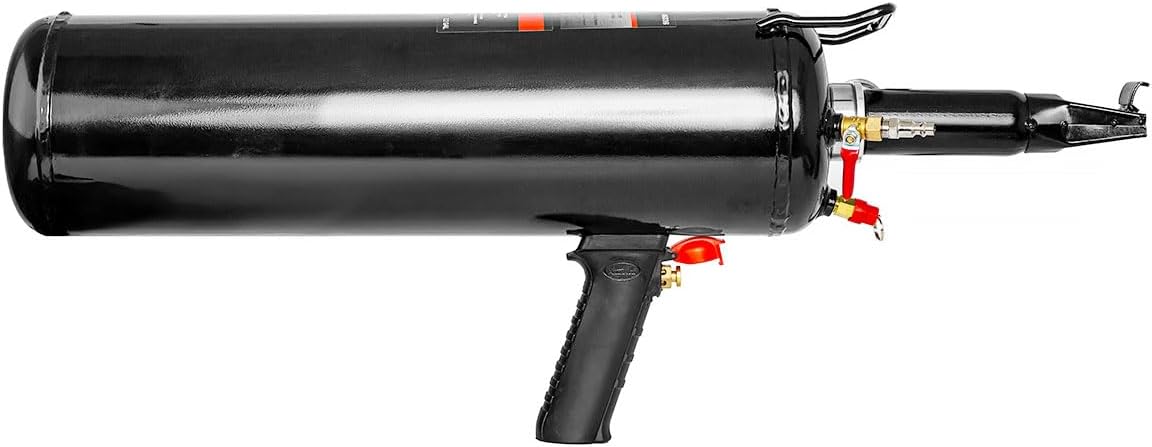
The XtremepowerUS Tire Bead Seater delivers rapid, high‑pressure inflation for a wide range of vehicles, from motorcycles to large tractors, with a 12‑liter capacity and 116 PSI maximum pressure. Its ergonomic, handheld design features a push‑button switch, non‑slip grip, and built‑in piston valve for precise control and easy operation. The durable steel construction and large‑diameter exhaust valve ensure reliable performance and efficient air release, making tire bead seating quick and hassle‑free.

The VIAIR 400P EF is a 12V portable air compressor designed for off‑road trucks and SUVs, delivering fast, high‑performance inflation for up to 35‑inch tires. Its upgraded head improves heat dissipation and reduces noise, while a 5‑in‑1 hose and dual‑compartment bag add convenience. Versatile power options and a stable I‑Beam sand tray make it ideal for rugged terrain and heavy‑duty use.
Rim Width Compatibility
One major factor in upgrading tires is rim width compatibility. The tire’s published height, width, and rim diameter must pair correctly with the wheel. This ensures proper bead seating, carcass shape, and handling. You need rims that center the tire bead and support the carcass. Mismatched rim width alters the contact patch and causes uneven wear. Always check the manufacturer’s rim-width ranges for your specific tire size.
- Verify the rim width falls within the tire maker’s recommended range.
- Confirm bead seating and inflation pressures for that specific rim and tire combo.
- Assess how the tire profile fits on the rim to ensure predictable handling.
- Cross-check vehicle specs to avoid clearance conflicts before buying.
Fender And Suspension Clearance
If you plan to upgrade your tires, verify that the overall tire height and width clear your fenders. They also need to clear the full range of suspension travel. This prevents rubbing during turns, bumps, or heavy compression. Measure your fender clearance and suspension travel to find your maximum tire dimensions. Use manufacturer specs for recommended sizes. Confirm the tire width matches the rim width range to prevent irregular wear. Calculate the load index to ensure the tires can support your vehicle’s weight under load or when towing. Underspecified tires can compress too much and reduce effective suspension travel. Fitment trials are the best way to spot issues. Mount the tire and cycle the suspension through its full travel. Make adjustments, like trimming fenders or choosing a different wheel offset, rather than ignoring safety limits.
Overall Diameter Effects
The overall diameter determines both clearance and effective gearing. Match the flotation tire diameter to your rim size and vehicle fitment before mounting. This avoids rubbing, altered speedometer readings, or drivetrain stress. Preserve tire performance and vehicle stability by picking a diameter that fits your suspension travel and wheel wells. Larger flotation tires raise ground clearance and increase the contact patch. These are great benefits for off-road driving. However, they also change gearing, speedometer calibration, and fuel efficiency.
- Verify rim diameter compatibility to prevent bead seating issues.
- Check suspension and fender clearance through full steering cycles.
- Assess gearing and final drive impacts. Recalibrate the speedometer if needed.
- Confirm the tires match your intended terrain and load capacity.
Flotation Load Capacity and Speed Ratings : What to Read
How do you read the load and speed markings on a flotation tire? These numbers help you match weight capacity and safe speeds to your vehicle. You will see a load index number and a speed rating letter stamped near the size marking. The load index converts to a specific weight capacity in pounds or kilograms at the tire’s recommended inflation pressure. Consult a load capacity chart to translate the index into the exact weight each tire supports. Tire Rack provides an excellent load index chart for verifying these numbers. The speed rating letter shows the maximum safe speed under that load. Higher letters do not mean the tire is better for heavy loads. They simply indicate tested velocity limits. For example, a 33×12.50R17 tire will list its size alongside a load index and a speed letter. Match these numbers to your vehicle’s gross axle weight rating (GAWR) and gross vehicle weight rating (GVWR). Choose tires that meet or exceed your manufacturer’s limits.
[Products Worth Considering]

The VEVOR dual-cylinder air compressor delivers rapid 30‑second inflation with 10.6 CFM airflow and 150 PSI pressure, making it ideal for tires and inflatable equipment. Its lightweight design, built‑in thermal cut‑off, and versatile nozzle adapters ensure safe, portable use for cars, trucks, RVs, motorcycles and more. The complete kit includes a long hose, gauge, adapters and a tool bag for on‑the‑go road trips.

The VIAIR 300P delivers reliable tire inflation for trucks, SUVs, and jeeps with up to 150 PSI pressure and a 33% duty cycle, ensuring quick recovery from flats on and off road. Its 12‑volt operation and 2.30 CFM free flow make it ideal for emergency roadside use, while the deluxe dual‑compartment carry bag adds convenience and portability. Easy to connect to a vehicle battery and equipped with a 5‑in‑1 gauge, it provides accurate pressure monitoring and hassle‑free operation.
When You Can and Can’t Swap Flotation Sizes

When changing flotation tire sizes, keep the overall diameter close to the factory size. This preserves speedometer accuracy, suspension geometry, and handling. Small differences, usually within 3 percent, are acceptable. Larger deviations can alter gearing, clearance, and electronic safety systems. Check flotation size compatibility by comparing the overall height, width, and wheel diameter. Also, confirm the load index matches or exceeds the vehicle’s requirement. Do not fit flotation tires in dual-wheel applications. They are too wide for paired axles and can ruin vehicle stability. Always consult a tire professional for final approval.
- Verify overall diameter and width against original specifications.
- Confirm the load index meets safety requirements.
- Avoid dual-axle installations with flotation designs.
- Get professional approval for unconventional size swaps.
[Products Worth Considering]

1.Accurate and Efficient: Different colors on the bar represents different scopes, the red range on bar: 0 - 3/ 32; Yellow range on bar: 3/ 32 - 6/ 32; Green range on bar: 6/ 32 - 32/ 32, allowing you easy and fast to read and calibrated

HIGH ACCURACY: Every ETENWOLF's pencil tire gauge is calibrated to ANSI B40.1 Grade B, it is accurate to 2% of span in the middle 50% of range and 3% of span in the lower and upper 25% of range. Each of ETENWOLF pencil tire pressure gauge is manually calibrated and has its unique calibration number printed on the pencil

Accurate and precise tire tread depth readings in 1/32 inch increments (1/128 inch resolution)
How Size Changes Affect Speedometer, Gearing & Handling
Changing tire size has measurable effects on speedometer accuracy, effective gearing, and handling. Larger tires reduce your indicated speed. Your speedometer will read lower than your actual road speed. Smaller tires increase the indicated speed. Differences of several miles per hour are common and matter for legal driving limits. You also alter the effective gear ratio when tire circumference changes. Larger tires raise the final drive ratio. This lowers engine RPMs at highway speeds but reduces acceleration. Smaller tires do the opposite. They can force transmission recalibrations to restore fuel economy. Handling dynamics also shift. Wider tires improve lateral grip and stability. Taller tires raise ride height and off-road capability but degrade cornering precision. Tire weight also affects braking. Larger, heavier tires usually lengthen stopping distances. Evaluate these trade-offs against your intended use.
Common Flotation Tire Sizes
If you are shopping for off-road or truck tires, you will frequently encounter a few standard flotation sizes.
- 31×10.50R15: A popular entry-level upgrade for compact trucks and older SUVs. It offers better ground clearance without requiring a major suspension lift.
- 33×12.50R15 (or R17/R20): A common mid-level off-road size. It provides a wide footprint for mud and sand but usually requires a leveling kit or minor lift.
- 35×12.50R17: The go-to size for serious off-road enthusiasts. It offers excellent axle clearance and rock-crawling ability but almost always requires a dedicated suspension lift and potential re-gearing.
Understanding these popular benchmarks helps you gauge what modifications your vehicle might need before upgrading.
Pre-Purchase Checklist: Common Mistakes and Fitment Tests
Flotation tires can transform your off-road capability, but you need a pre-purchase checklist to avoid fitment errors. Verify specifications, evaluate fitment factors, and test clearance before buying. Use objective measurements instead of estimates.
Run a focused pre-purchase checklist. Verify specs, fitment, clearance, and load capacity using exact measurements.
- Check the vehicle’s doorjamb or owner’s manual to confirm recommended tire specs.
- Measure rim diameter precisely. A mismatch causes bead sealing failures and safety risks.
- Perform a clearance test. Mount the tire and inspect for rubbing against bodywork or suspension parts.
- Verify the load index covers your vehicle’s gross weight, cargo, and towing needs.
Frequently Asked Questions
How Do Inflation Pressures Change With Flotation Tire Sizes?
Larger flotation tires let you reduce inflation pressure to increase the tread footprint. Maintain your load capacity by matching the tire width and pressure to a standard load chart. This ensures you do not underinflate the tire, which can ruin its structural integrity.
Are Flotation Tires Better for Fuel Economy?
Generally, no. While you might see slight fuel savings in soft soils due to reduced sinking, flotation tires are heavier and create more aerodynamic drag. On paved roads, the increased rolling resistance and weight usually lower your overall fuel economy.
Do Flotation Tires Affect Off-Road Traction Differently?
Yes. Lower ground pressure and a larger footprint enhance grip on soft surfaces like sand and mud. However, the wider contact patch can sometimes reduce hard-surface traction in rain or snow. They are built specifically to prioritize off-road mobility.
How Does Tire Age Impact Flotation Tire Performance?
Tire rubber degrades over time. As compounds age and harden, the tire loses grip, ride quality, and flexibility. Look for cracked sidewalls or hardened tread blocks. Replace aged tires before they fail on the trail.
Can Flotation Tires Be Repaired After Sidewall Damage?
Rarely. Sidewall repairs are generally unsafe and limited by tire shop policies. If rocks or debris puncture the sidewall and damage the internal structural cords, you must replace the tire.
Conclusion
You now know how to read flotation sizes, convert them to metric, and match them to your rims. Before you buy new tires, double-check your rim width compatibility, load index, and vehicle clearance. Test for suspension rubbing and calculate your speedometer error. Avoid unsupported tire swaps that put dangerous stress on your drivetrain. Follow these guidelines to keep your vehicle safe, legal, and ready for the road.

Related Articles
What Does THE P Stand For on a Tire? Full Meaning Explained
I’ll explain what the “P” on a tire really means and why it could change how you choose your next set.
Read More
How to Use a Tubeless Tire Repair Kit: Complete Field Guide
Learn how to fix tubeless tire punctures fast with the right kit, because one small mistake can leave you stranded on the trail.
Read More
How to Tell a Tire’s Diameter: Easy Guide to Reading Tire Size
Want to decode tire sidewall numbers and find the right diameter, but wonder what those hidden digits really mean?
Read More