
How to Rotate Tires on a Toyota Hilux the Right Way
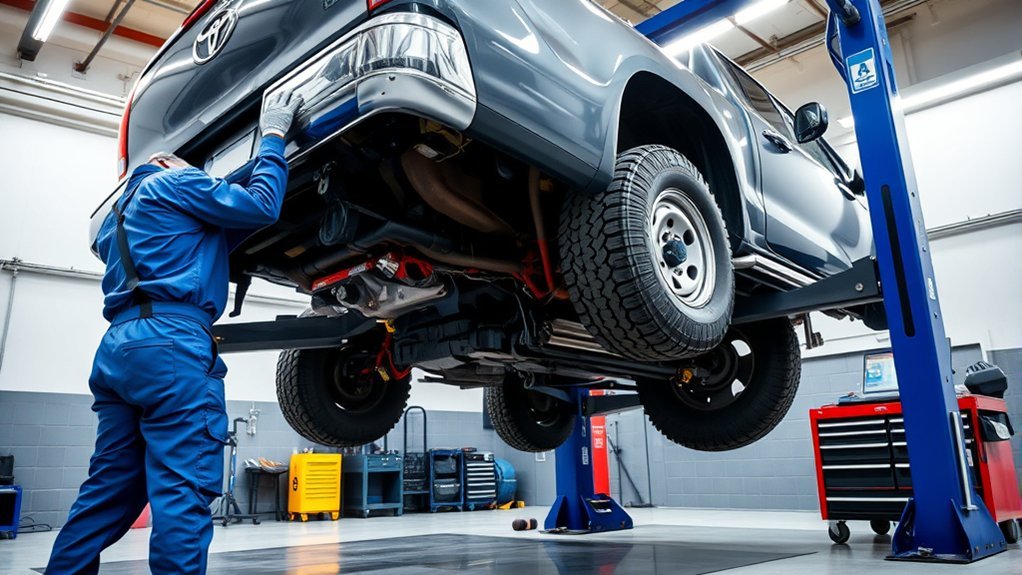
Rotating the tires on a Toyota Hilux helps the set wear more evenly, but the right pattern depends on your tire type, drivetrain, spare wheel, and owner’s manual. Before you lift the truck, identify whether the tires are directional or non-directional, gather the right tools, and plan the pattern you will use.
Quick Answer
Many Toyota Hilux owner manuals list tire rotation at about 10,000 km or 6,000 miles, but you should confirm the interval and pattern in your exact model-year manual. Use the correct pattern for your tire type, support the truck with jack stands, set tire pressure after rotation, and torque the wheel nuts to the manual’s specification.
Key Takeaways
- Check the sidewall first: directional tires usually rotate front-to-rear on the same side only.
- For same-size, non-directional Hilux tires, the correct pattern depends on whether your truck is 2WD, 4WD, and whether the spare is a matching full-size wheel.
- Do not rely on the jack alone. Use wheel chocks, rated jack stands, and the factory jacking points.
- After rotation, adjust cold tire pressure, tighten wheel nuts in a star pattern, and road-test for vibration, pulling, or noise.
At a Glance
| Time Required | 30–60 minutes for a DIY four-tire rotation; longer if including a matching full-size spare |
| Difficulty | Moderate DIY job; use a professional if you do not have jack stands or a torque wrench |
| Tools Needed | Owner’s manual, floor jack, rated jack stands, wheel chocks, lug wrench or breaker bar, torque wrench, tire pressure gauge, tread-depth gauge |
| Cost | DIY: usually free if you already own the tools. Shop rotation: commonly a low-cost maintenance service, depending on location. |
Understanding Directional vs. Non-Directional Tires

Before rotating the tires on your Toyota Hilux, look at the tire sidewall. Tire rotation is not only about moving wheels around; it is about keeping each tire mounted and rolling the way it was designed to work.
[Products Worth Considering]

Universal magnetic jack pad with aluminum grooved design to protect vehicle pinch welds during lifting. Durable nylon pad inserts are upgraded and secured with screws to resist damage and keep in place. Designed to fit most single vehicle pinpoint welds for safer, stable jacking when changing tires, repairs, or performing oil changes.

Secure your trailer or RV tires with a scissor-style wheel chock stabilizer that applies opposing force to help prevent wheel shift. It fits tight wheel gaps from 3.5 inches up to 12 inches and works for travel trailers, campers, fifth wheels, toy haulers, and heavy-duty trucks. The surface uses new electrophoretic technology to help prevent rust for reliable travel use.

Camco’s RV wheel chocks with an attached rope help keep your travel trailer securely in place for safer unhitching or parking. This 2-pack is compatible with wheels up to 26-inch diameter and features durable UV-resistant construction for reliable outdoor performance. The rope enables quick, safe removal so you can prepare for your next trip with less hassle.
Directional Tires
Directional tires are designed to roll in one direction. They usually have an arrow, plus wording such as “Rotation” or “Direction,” molded into the sidewall. If your Hilux has directional tires of the same size on all four corners, they normally move front to rear on the same side. Do not cross them left-to-right unless the tire is removed from the wheel and remounted correctly.
Non-Directional Tires
Non-directional tires do not have a one-way rolling arrow, so they allow more rotation patterns. That does not mean you should move them randomly. Use the pattern in your Hilux owner’s manual, especially if the truck is 4WD, has a matching full-size spare, has different front and rear tires, or uses aftermarket wheels.
Asymmetric Tires
Some tires are asymmetric rather than directional. These often say “Outside” and “Inside” on the sidewall. Asymmetric tires can usually be rotated as long as the “Outside” side remains facing outward after the wheel is installed. If a tire is both directional and asymmetric, follow both markings.
Note: The sidewall markings matter more than the tread pattern alone. If you are unsure, ask a tire shop before rotating the tires.
Before You Start: Safety Checks and Tools
A Hilux is heavier than a small passenger car, so lifting safety matters. Work on level, solid ground. Set the parking brake, place the transmission in Park or in gear, and chock the wheels that stay on the ground before lifting.
Warning: Never work under or around a lifted vehicle supported only by a jack. Use rated jack stands at the correct support points. If you do not have safe lifting equipment, have the rotation done by a qualified tire shop.
Tools and Supplies
- Hilux owner’s manual or official Toyota manual lookup
- Floor jack rated for the vehicle weight
- Rated jack stands
- Wheel chocks
- Lug wrench or breaker bar
- Torque wrench that covers your Hilux wheel-nut specification
- Tire pressure gauge
- Tread-depth gauge or treadwear indicator check
- Gloves and a clean rag
Use the jack points shown in your owner’s manual. Toyota’s manual instructions for wheel changes identify specific jacking locations, and the wheel-nut torque can vary by model and configuration. Do not guess the torque value.
Step-by-Step Guide for Rotating Your Tires
Step 1: Identify Your Tire and Spare Setup
Walk around the Hilux and check each tire before loosening anything. Confirm:
- All four tires are the same size and type.
- The tires are directional, asymmetric, or non-directional.
- The spare is a matching full-size tire or a different/temporary spare.
- No tire has sidewall damage, exposed cords, bulges, severe cracking, or a puncture that needs repair.
If the spare is a temporary tire or a different wheel/tire type, do not include it in a normal five-tire rotation. Check its pressure and condition separately.
Step 2: Choose the Correct Rotation Pattern
Use your owner’s manual first. The table below gives practical guidance for common Hilux setups, but it does not override Toyota’s instructions for your exact model year, market, tire size, or wheel package.
| Hilux tire setup | Typical pattern | Important note |
|---|---|---|
| Directional tires, same size | Front-to-rear on the same side | Do not cross left-to-right unless the tires are dismounted and remounted correctly. |
| Non-directional tires, same size, 2WD/RWD | Rear tires move straight to front; front tires cross to rear | Common rear-wheel-drive pattern; confirm with your manual. |
| Non-directional tires, same size, 4WD | Often a cross pattern or manual-specific pattern | Uniform tread depth is especially important on 4WD drivetrains. |
| Matching full-size spare | Use Toyota’s five-tire rotation pattern if your manual specifies one | Adjust the spare’s pressure before putting it into service. |
| Different-size front/rear tires or aftermarket staggered setup | May be limited or not recommended | Follow the tire manufacturer and Toyota guidance. |
Step 3: Loosen the Wheel Nuts
With the tires still on the ground, slightly loosen each wheel nut about a quarter to half turn. Do not remove the nuts yet. Loosening them while the tire is grounded helps prevent the wheel from spinning.
Step 4: Lift and Support the Hilux
Lift at the correct jacking point, then place the Hilux securely on jack stands. If you are rotating all four tires at home, it is safest to support the truck properly before removing more than one wheel. Keep the jack nearby as a backup, but never treat it as the main support.
Step 5: Remove, Inspect, and Label the Tires
Remove the wheel nuts and wheels. If you are new to tire rotation, use chalk or masking tape to mark the starting position: LF for left front, RF for right front, LR for left rear, and RR for right rear.
Inspect each tire for:
- Uneven shoulder wear
- Center wear from overinflation
- Both-shoulder wear from underinflation
- Cupping or scalloping that may point to worn suspension or balance issues
- Sidewall cuts, bulges, cracking, or exposed cords
- Embedded nails, screws, stones, or glass
Step 6: Move Each Wheel to Its New Position
Move the wheels according to the pattern you selected. Keep directional arrows pointing forward when the truck drives ahead. Keep “Outside” markings facing outward on asymmetric tires.
Pro Tip: Take a phone photo of the tires before moving them. If you get interrupted, the photo helps you confirm the original positions and avoid mixing up the pattern.
Step 7: Reinstall and Hand-Tighten
Clean dirt from the wheel mounting surface. Place each wheel on the hub and start all wheel nuts by hand to avoid cross-threading. Snug the nuts lightly in a star pattern, but do not fully tighten while the wheel is still in the air.
Step 8: Lower and Torque the Wheel Nuts
Lower the Hilux until the tire touches the ground enough to prevent rotation, then tighten the wheel nuts with a torque wrench in a star pattern. Use the exact torque value in your owner’s manual for your model and wheel type. After tightening, fully lower the truck and recheck the torque sequence.
Step 9: Set Tire Pressure and Road-Test
Check tire pressure when the tires are cold. Use the Hilux tire placard or owner’s manual, not the maximum pressure printed on the tire sidewall. If your Hilux uses different front and rear pressures, adjust each tire after it moves to its new position.
Drive slowly at first, then road-test at normal speeds. Listen for new thumping, rubbing, or humming. Watch for steering pull, vibration, or a pressure warning light.
How Often Should You Rotate Tires on Your Hilux?
Many Toyota Hilux owner manuals list tire rotation at approximately 10,000 km or 6,000 miles. Still, the safest answer is to follow the service schedule for your exact model year, tire size, and market. Toyota also advises owners to consult the owner’s manual for the recommended rotation schedule and correct pattern.
Rotate sooner if you drive mostly on rough roads, tow heavy loads, carry tools or cargo often, drive off-road, or notice uneven wear before the scheduled interval.
Note: Tire pressure should be checked at least monthly and before long trips. A rotation is also a good time to check tread depth, sidewall condition, and the spare tire.
Signs Your Tires Need Rotation Soon

You do not always need to wait for the odometer interval. Rotate or inspect the tires sooner if the wear pattern starts to change.
Uneven Tread Wear
Uneven tread wear is the clearest sign. Look for one front tire wearing faster than the other, one shoulder becoming smooth, feathered tread blocks, or a noticeable tread-depth difference between front and rear tires.
If the treadwear indicators are flush with the tread, the tire is worn out and should be replaced instead of rotated. In U.S. safety guidance, tires are not considered safe when tread is worn to 2/32 inch.
Vibration While Driving
Steering wheel vibration or body shake after a rotation can mean a balance issue, but it can also point to a bent wheel, damaged tire, loose wheel nuts, dirt trapped between the wheel and hub, or suspension wear. Stop driving and inspect the wheels if the vibration is severe or appears immediately after the job.
Pulling or Noise
If the Hilux pulls left or right after rotation, check tire pressure first. If pressure is correct, the issue may be alignment, tire conicity, uneven wear, or a suspension problem. New humming or thumping should also be checked, especially if it changes with speed.
Benefits of Tire Rotation for Your Hilux
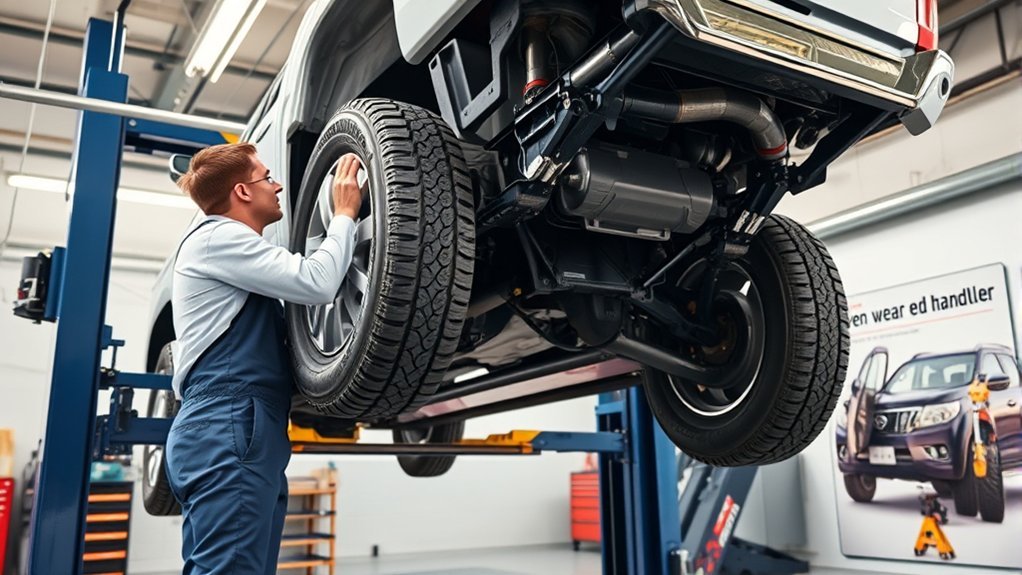
Regular tire rotation helps each tire spend time on different corners of the vehicle. That matters because front tires handle steering and much of the braking load, while rear tires and drive tires experience different stresses depending on whether your Hilux is 2WD or 4WD.
Poor tire maintenance, including failing to rotate tires, can contribute to flats, blowouts, or tread separation. Rotation is a small job, but it is tied directly to tire safety and tire life.
The main benefits are:
- More even tread wear: Tires last longer when one position is not doing all the hard work.
- Better handling consistency: Even tread depth helps the Hilux feel more predictable in braking, steering, rain, and gravel.
- Less vibration and noise: Rotation can reduce irregular wear before it becomes loud or uncomfortable.
- Warranty protection: Some tire mileage warranties require documented rotations.
- Earlier problem detection: Rotation gives you a chance to spot punctures, sidewall damage, pressure loss, and suspension-related wear.
[Products Worth Considering]

Camco Trailer Aid Plus tandem tire ramp lifts your trailer for quick, safe tire changes with ample clearance from its 5 1/2-inch lift. It helps you change a flat tire without unloading cargo, making roadside and routine maintenance more efficient. The heavy-duty, waterproof and rustproof polymer design supports up to 15,000 lb and is built for easy portability and storage.

The Dr.Roc spare tire tool kit helps you release, lower, or raise your spare tire with reliable extension tools and a lug nut wrench. It is made from rustproof automotive-grade steel and includes an organized carry case for convenient storage. Designed for compatibility with select GM models from the late 1990s through 2019, it uses upgraded extension components to install and remove spare tires with less hassle.
Fixing Common Post-Rotation Issues
If the Hilux feels worse after a tire rotation, do not ignore it. A correct rotation should not create severe shaking, clunking, or pulling.
| Problem after rotation | Likely causes | What to do |
|---|---|---|
| Steering wheel vibration | Wheel imbalance, damaged tire, bent rim, dirt on hub, loose wheel nuts | Stop and inspect; verify torque; have wheels balanced if vibration remains. |
| Truck pulls to one side | Unequal tire pressure, alignment issue, irregular tire wear | Set cold pressure; if pulling continues, get alignment and tire inspection. |
| New humming or thumping | Cupped tire moved to front, tread damage, wheel bearing or suspension issue | Inspect tread and sidewall; have a shop check if noise is strong or increasing. |
| Pressure warning light | Incorrect pressure after moving tires, TPMS relearn/reset needed, slow leak | Set pressure cold; follow the manual for TPMS reset if equipped; inspect for leaks. |
When Not to Rotate the Tires Yourself
Stop and use a professional if you find any of the following:
- A bulge, exposed cord, deep sidewall cut, or severe cracking
- A wheel nut that is seized, rounded, or cross-threaded
- A tire that repeatedly loses air
- Heavy vibration before the rotation
- No safe place to lift the truck
- No rated jack stands or torque wrench
- Aftermarket wheels with different torque or fitment requirements
Rotating a damaged tire can hide the real issue for a short time, but it will not make the tire safe.
Frequently Asked Questions
What does Toyota recommend for Hilux tire rotation?
Many Hilux owner manuals list tire rotation at about 10,000 km or 6,000 miles, but Toyota’s broader guidance is to follow the schedule and pattern in your exact owner’s manual. Model year, tire size, drivetrain, spare wheel, and market can change the details.
Is it okay to rotate Hilux tires just front to back?
Yes, but only for certain setups. Directional tires normally rotate front-to-rear on the same side. Non-directional tires on a rear-wheel-drive or 4WD Hilux often use a cross pattern, unless the owner’s manual says otherwise.
Should I include the spare tire in the rotation?
Include the spare only if it is a matching full-size tire and your owner’s manual gives a five-tire rotation pattern. Do not include a temporary spare or a different wheel/tire type in the normal rotation.
Do I need an alignment every time I rotate Hilux tires?
No. Rotation and alignment are different services. However, if you see one-sided wear, feathering, pulling, or repeated uneven wear, get the alignment and suspension checked.
Why does my Hilux vibrate after a tire rotation?
Possible causes include wheel imbalance, a damaged tire, cupped tread, dirt between the wheel and hub, a bent rim, or incorrect wheel-nut tightening. Recheck torque and pressure first, then have the tires balanced and inspected if vibration continues.
Can I rotate tires without a torque wrench?
It is not recommended. Wheel nuts must be tightened to the correct specification. Too loose can allow the wheel to loosen; too tight can damage studs, nuts, or wheels. Use a torque wrench or have a tire shop do the job.
Conclusion
Rotating Toyota Hilux tires is a useful maintenance job when it is done with the right pattern, safe lifting equipment, and correct wheel-nut torque. Check the tire sidewalls first, confirm the owner’s manual pattern, inspect for damage, and set tire pressure after the wheels move. If you find severe wear, vibration, damage, or any lifting safety concern, let a qualified technician handle the rotation.
Sources
- Toyota Tire Rotation Guide — Toyota guidance on why rotation matters and why owners should follow the vehicle manual.
- Toyota UK Owner’s Manual Lookup — official Toyota manual lookup for model-specific maintenance guidance.
- NHTSA TireWise — tire pressure, tread depth, tire rotation, and tire safety guidance.
- U.S. Tire Manufacturers Association Tire Care & Safety Guide — tire rotation patterns, inspection guidance, spare tire cautions, and treadwear warnings.
- Tire Industry Association Tire Rotation — general rotation intervals and drivetrain-based rotation patterns.
- OSHA 1910.244: Jacks — safety principles for rated jacks and securing raised loads.

Related Articles

Toyota Hilux Run-Flat Tires: What You Need to Know
Take control of your safety with Toyota Hilux run-flat tires; discover their benefits and hidden costs that could change your driving experience forever.
Read More
Effects of Underinflated Tires on the Toyota Hilux
Inadequate tire pressure in your Toyota Hilux can lead to serious safety issues and costly repairs; discover how to avoid these pitfalls.
Read More
The Risks of Overinflating Toyota Hilux Tires
Overinflating your Toyota Hilux tires can lead to dangerous blowouts and uneven wear, but understanding the risks is crucial for your safety.
Read More