
Toyota Hilux Tire Sizes: OEM Fitment Guide 2026
Your Toyota Hilux needs the right tire size to steer, brake, tow, and ride the way Toyota designed it to. OEM tire sizes vary by model year, trim, market, drivetrain, and wheel package, so one Hilux size does not fit every truck. This guide explains common factory tire sizes, how to confirm your exact specification, and what to check before you upgrade.
What’s in This Article
- Understanding OEM Tire Sizes for the Toyota Hilux
- Key Factors for Selecting the Right Tire Size
- Common OEM Tire Sizes for Various Hilux Models
- How to Find Your Hilux’s Tire Specifications
- Why You Should Stick With OEM Tire Sizes
- Choosing the Right Tire Brand for Your Hilux
- Seasonal Tire Considerations for Optimal Performance
- Upgrading Your Hilux Tires: Essential Tips
- Signs It’s Time to Replace Your Hilux Tires
- FAQs About OEM Tire Sizes for the Toyota Hilux
Quick Answer
The correct OEM tire size for your Toyota Hilux depends on its year, trim, drivetrain, and wheel package. Common sizes include 205/70R14, 215/75R15, 31X10.50R15, 245/70R16, 265/65R17, and 265/60R18, but you should confirm your exact size on the tire placard or in your owner’s manual.
Key Takeaways
- Check your door placard or owner’s manual before you buy replacement Hilux tires.
- Match the tire size, load index, and speed rating to your vehicle’s factory specification.
- Choose tires based on your driving mix, including city roads, highways, towing, and off-road use.
- A larger tire may need suspension, clearance, speedometer, and alignment checks.
- Replace tires when tread wear, age, sidewall damage, or poor grip affects safety.
Understanding OEM Tire Sizes for the Toyota Hilux
The original equipment manufacturer (OEM) tire size tells you the tire size Toyota selected for a specific Hilux configuration. That size supports the truck’s steering feel, braking, ride height, gearing, stability systems, and load rating.
OEM tire sizes can vary a lot by model year, trim, market, and drivetrain. Older Hilux models often used smaller 14-inch or 15-inch sizes, while newer versions may use 16-inch, 17-inch, or 18-inch wheels.
For older 4WD models, common examples include 215/75R15 and 31X10.50R15. Newer models may use sizes such as 245/70R16, 265/65R17, or 265/60R18, depending on trim and wheel package.
To get the best tire performance, use your vehicle’s owner’s manual or tire placard as the final source. The correct size helps protect safety, fuel use, handling, and ride comfort.
[Products Worth Considering]

This locking tire air chuck adapter converts an unscrewed connection into a secure locking fit to help prevent air leakage during inflation. The brass threaded screw-in...
Key Factors for Selecting the Right Tire Size
Choosing the right tire size for your Toyota Hilux takes more than matching numbers on the sidewall. You also need to check fitment, terrain, load needs, and how the tire affects daily driving.
Tire Compatibility Considerations
Start with the model year, trim level, drivetrain, and wheel size. A 2WD work truck and a 4WD off-road trim may use different factory tire sizes.
- Match the tire size to the factory wheel diameter and width.
- Check the recommended load index and speed rating.
- Confirm suspension and wheel arch clearance.
- Watch for rubbing at full steering lock or full suspension travel.
- Keep tire pressure and wheel alignment within specification.
If you change tire diameter, you may affect speedometer accuracy, gearing, braking, and stability control behavior. A tire shop can check these details before installation.
Terrain and Driving Conditions
Your driving conditions should guide your tire choice. Larger all-terrain tires can improve grip on dirt, gravel, and rocky tracks, but they may add road noise and reduce fuel economy.
Wider tires can help on sand, mud, and loose surfaces when used at the correct pressure. Narrower tires may perform better on wet roads, snow, or rutted tracks because they can cut through soft material more easily.
Aspect ratio also matters. A taller sidewall can improve ride comfort and rim protection, while a lower-profile tire can sharpen road handling.
Load Capacity Requirements
Your Hilux tires must support the truck, passengers, cargo, accessories, and trailer tongue weight. Always check the tire load index before you buy.
- Load index: Use the sidewall number to confirm the tire’s rated carrying capacity.
- Cargo weight: Choose tires that support your normal work or travel load.
- Towing use: Use properly rated tires if you tow often.
- Pressure checks: Adjust pressure only within Toyota and tire maker guidance.
Do not choose a tire with a lower load rating than your factory specification. That change can increase heat buildup and tire failure risk.
Warning: Never fit tires with a lower load rating than Toyota recommends for your Hilux.
Common OEM Tire Sizes for Various Hilux Models
Hilux tire sizes have changed across generations and markets. Use the table below as a general guide, not as a replacement for your tire placard.
| Model Year | Common Tire Size |
|---|---|
| 1995-2005 | 205/70R14 (2WD) |
| 1995-2005 | 31X10.50R15 (4WD) |
| 2006-2011 | 265/65R17 |
| 2012 | 265/70R16 |
| 2015 | 265/60R18 |
The right size affects tire life, tread wear, ride height, noise, braking, and wheel alignment. It can also change how your Hilux feels on the highway and on rough tracks.
How to Find Your Hilux’s Tire Specifications
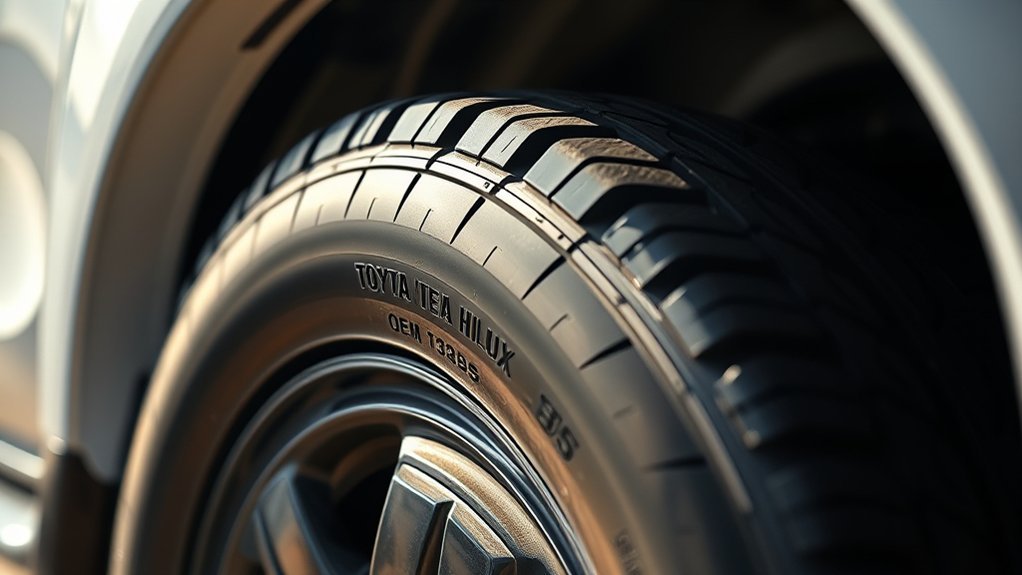
You can find your Toyota Hilux tire specifications in several places. Check more than one source if your truck has aftermarket wheels or a previous owner changed the setup.
- Check the driver’s side door jamb: The tire placard lists the recommended sizes and pressures.
- Read the owner’s manual: The manual may list sizes by trim, wheel package, and load use.
- Ask a tire shop: A professional can confirm the size using your vehicle identification number (VIN).
- Inspect the current tires: The sidewall shows size, load index, speed rating, and construction type.
For example, some 2019 Hilux models use 265/65R17, while others may use 245/70R16. Your exact trim and market decide the correct fit.
Why You Should Stick With OEM Tire Sizes
Using OEM tire sizes helps your Toyota Hilux perform the way Toyota intended. Factory sizes support stable handling, predictable braking, accurate speed readings, and proper load capacity.
Correct sizing also helps your anti-lock braking system, traction control, and stability control work as designed. Major size changes may confuse those systems, especially if the rolling diameter changes a lot.
OEM sizes can also protect your vehicle warranty and resale value. Buyers often prefer trucks that use factory-style wheels, tires, and suspension settings.
Note: A small tire upgrade may work well, but you should confirm clearance, load rating, and speedometer impact first.
Choosing the Right Tire Brand for Your Hilux
The right tire brand depends on how you use your Toyota Hilux. A truck that spends most of its time on highways needs a different tire than one used for mud, gravel, towing, or farm work.
Look for reputable brands that offer the size, load rating, and tread type your Hilux needs. Many drivers compare highway-terrain, all-terrain, mud-terrain, and commercial light truck options before buying.
- Brand reputation: Choose a maker known for quality control and clear warranty support.
- Tire performance: Match the tread to your road and off-road use.
- Tread pattern: Pick highway, all-terrain, or mud-terrain tread based on your driving mix.
- Maintenance needs: Rotate tires and check pressure to extend tread life.
The best tire for your Hilux balances grip, comfort, noise, durability, and cost. Do not choose a tire only because it looks aggressive.
Seasonal Tire Considerations for Optimal Performance
Weather affects grip, braking, and steering. Choose a tire type that matches the temperatures and road surfaces you face most often.
Tire Type Selection
Different tire types suit different Hilux uses. Focus on your real driving conditions, not just the most rugged-looking tread.
- Winter tires: Use deeper tread and softer compounds for cold, snow, and ice.
- Summer tires: Improve warm-weather road grip and braking.
- All-season tires: Cover mild mixed conditions but may not match dedicated seasonal tires.
- All-terrain tires: Balance paved-road comfort with off-road traction.
Regular pressure checks matter in every season. Temperature changes can raise or lower tire pressure enough to affect handling and wear.
Weather Condition Adaptation
Wet roads need tires with grooves that move water away from the tread. That design helps reduce hydroplaning risk and improves braking grip.
Hot climates can increase tire heat, especially with heavy loads or low pressure. Cold climates can harden some rubber compounds and reduce traction.
Rotate your tires on schedule and inspect tread depth often. These simple checks help your Hilux stay predictable in changing weather.
Upgrading Your Hilux Tires: Essential Tips
Upgrading your Toyota Hilux tires can improve traction, stance, and off-road confidence. A poor upgrade can also create rubbing, poor braking, speedometer error, and extra stress on suspension parts.
- Keep diameter close: Stay near the OEM rolling diameter unless you plan for changes.
- Choose the right tread: Use all-terrain tires for mixed road and trail use.
- Check load ratings: Match or exceed the factory load index.
- Confirm clearance: Check fenders, mud flaps, suspension, and steering lock.
- Get an alignment: Align the truck after major tire or suspension changes.
Before you fit larger tires, ask a qualified tire specialist to check wheel offset, rim width, and suspension setup. That step can prevent costly fitment problems.
Signs It’s Time to Replace Your Hilux Tires
Tires wear out even when they still look usable at a glance. You should inspect your Hilux tires often, especially before towing, long trips, or off-road driving.
- Tread wear bars show: Replace the tire when tread reaches the built-in wear indicators.
- Uneven wear appears: Check alignment, pressure, suspension, and rotation habits.
- Sidewalls crack or bulge: Replace damaged tires before you drive at speed.
- Punctures repeat: Inspect the tire condition and repair history.
- Grip drops: Replace tires if wet or loose-surface traction feels poor.
Tire age also matters. Many tire makers recommend regular professional inspections as tires get older, even when tread depth still looks acceptable.
Pro tip: Check tread depth across the inner, center, and outer tread to catch alignment problems early.
FAQs About OEM Tire Sizes for the Toyota Hilux
These quick answers cover common questions about Hilux tire sizes, wheel fitment, and replacement choices.
What Size Are Stock Hilux Tires?
Stock Hilux tires vary by model year, drivetrain, trim, and market. Common examples include 205/70R14, 215/75R15, 245/70R16, 265/65R17, and 265/60R18.
What Size Wheels Are on a 2020 Hilux SR5?
Many 2020 Hilux SR5 models use 18-inch alloy wheels, but specifications can vary by country and package. Check the door placard or owner’s manual before ordering tires.
Can You Fit 33s on a Hilux?
You can fit 33-inch tires on some Hilux builds, but you may need a lift, the right wheel offset, trimming, or other clearance work. Always check steering lock, suspension travel, brake clearance, and alignment after the change.
What Is the Best Tyre for a Toyota Hilux?
The best tyre for a Toyota Hilux depends on your driving. Choose highway-terrain tyres for quiet road use, all-terrain tyres for mixed driving, and mud-terrain tyres for heavy off-road work.
Frequently Asked Questions
Can I use a different tire size than the OEM size?
You can use a different tire size if it fits safely and keeps the correct load rating. Check wheel clearance, rolling diameter, speedometer accuracy, and local road rules before you change sizes.
Where is the tire placard on a Toyota Hilux?
You can usually find the tire placard on the driver’s side door jamb or door frame. It lists the recommended tire size and cold tire pressure for your Hilux.
Do bigger tires affect fuel economy on a Hilux?
Bigger or heavier tires can reduce fuel economy because the engine works harder to turn them. They can also affect acceleration, braking, and steering feel.
Should I replace all four Hilux tires at once?
Replacing all four tires helps keep grip and handling consistent. If you replace only two, fit the matching pair according to tire shop guidance and your vehicle’s drivetrain needs.
References
- Toyota Owner’s Manuals and Warranty Information — Toyota, accessed 2026
- Tires — National Highway Traffic Safety Administration, accessed 2026
- Tire Maintenance — U.S. Tire Manufacturers Association, accessed 2026
Conclusion
The most important step is simple: match your Hilux tires to the factory specification unless a qualified expert confirms a safe upgrade. Check your tire placard, owner’s manual, load rating, and driving needs before you buy. With the right size and tread type, your Hilux can handle daily roads, heavy loads, and rough tracks with more confidence.

Related Articles
Toyota Hilux Run-Flat Tires: What You Need to Know
Take control of your safety with Toyota Hilux run-flat tires; discover their benefits and hidden costs that could change your driving experience forever.
Read More
Effects of Underinflated Tires on the Toyota Hilux
Inadequate tire pressure in your Toyota Hilux can lead to serious safety issues and costly repairs; discover how to avoid these pitfalls.
Read More
The Risks of Overinflating Toyota Hilux Tires
Overinflating your Toyota Hilux tires can lead to dangerous blowouts and uneven wear, but understanding the risks is crucial for your safety.
Read More