
How Tire Tread Pattern Affects Traction on Different Surfaces
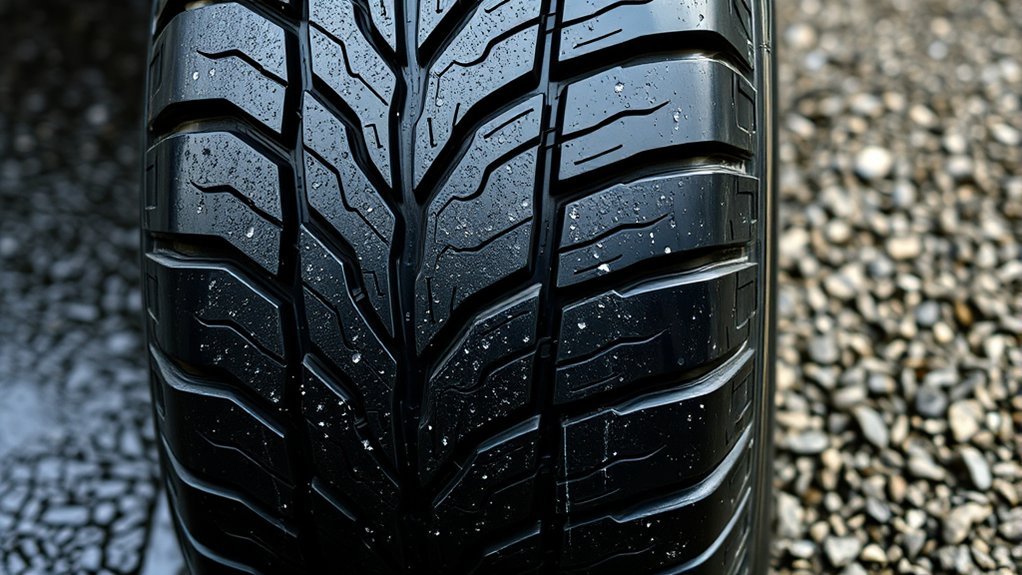
Tire tread patterns are essential for traction on various surfaces. Symmetrical designs offer a quieter ride, while asymmetrical patterns balance dry grip and wet traction. Directional patterns excel in water dispersion, reducing hydroplaning risks. Tread depth greatly impacts performance—deeper grooves enhance grip and stability. Off-road capabilities benefit from large voids and staggered patterns for improved traction on uneven terrain. Understanding these factors can help you choose the best tread pattern for your needs and guarantee better performance overall.
What Are Tire Tread Patterns and Why Do They Matter?
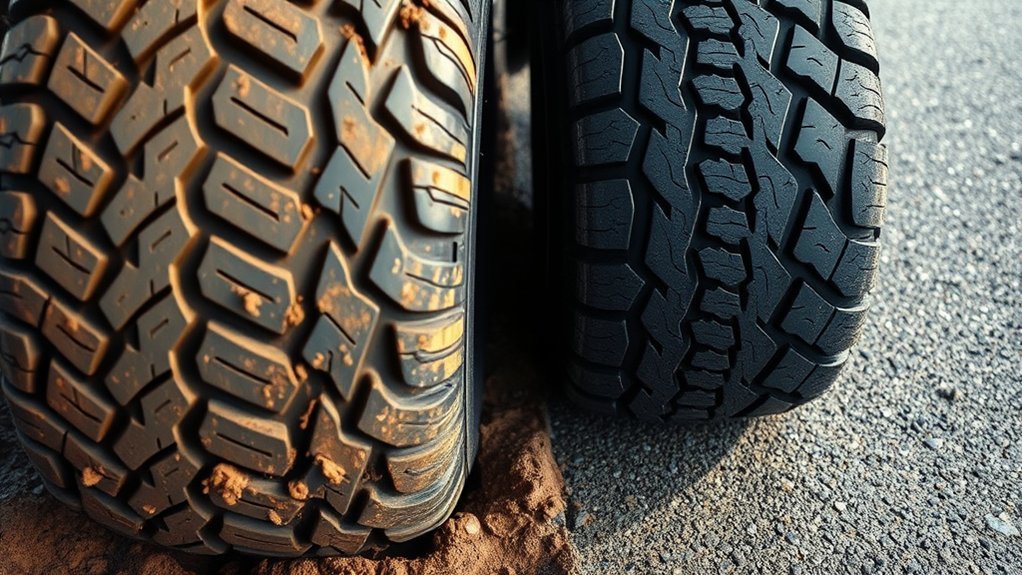
When you think about tire tread patterns, it’s essential to recognize their vital role in driving performance. Tread patterns—comprising grooves, channels, and ridges—interact dynamically with road surfaces, directly influencing traction and handling metrics. Different designs, like symmetrical, asymmetrical, and directional, are meticulously engineered to optimize grip under various conditions, such as wet, dry, and off-road terrains.
For instance, deeper grooves and sipes enhance water evacuation, markedly reducing hydroplaning risk while improving wet traction. Asymmetrical patterns skillfully balance larger outer blocks for dry grip with smaller inner blocks for wet conditions. Understanding these tread materials and their specific purposes is essential for any driver aiming to maximize safety and driving enjoyment. Selecting the right tread pattern not only enhances performance metrics but also liberates your driving experience, allowing you to tackle diverse terrains with confidence.
How Do Tread Designs Impact Traction?
Tread designs greatly influence traction by tailoring performance to specific surfaces and conditions. You’ll notice that variations like deep grooves enhance water evacuation, minimizing hydroplaning risks, while asymmetrical patterns balance grip on both dry and wet surfaces. Understanding these design principles can help you select tires that deliver ideal traction for your driving environment.
Tread Design Variations
While various tread designs cater to specific driving conditions, their impact on traction is profound and multifaceted. Symmetrical patterns offer tread design benefits like a quiet ride and longevity, making them suitable for smooth, daily driving. In contrast, asymmetrical tread patterns leverage larger outer blocks for dry grip and smaller inner blocks for wet traction, optimizing handling across mixed surfaces. Directional tread designs, with their V-shaped patterns, excel at water dispersion, greatly lowering hydroplaning risk. Deep grooves and siping increase traction on slippery surfaces by enhancing water evacuation and maximizing biting edges. Finally, a higher void ratio in tread patterns provides off-road traction, effectively shedding mud and debris, showcasing the latest tread pattern innovations.
Surface-Specific Performance
Understanding how tread designs impact traction is vital for optimizing vehicle performance across different surfaces. Tread patterns with deep grooves and siping enhance water evacuation, promoting traction consistency on wet roads. Asymmetrical designs combine larger outer blocks for dry grip and smaller inner blocks for wet conditions, showcasing surface adaptability. Directional patterns, featuring V-shaped designs, excel in muddy and snowy scenarios by channeling water away from the contact patch. Hybrid tread patterns balance off-road traction with on-road stability, making them versatile for varying environments. Additionally, tires constructed with softer rubber compounds greatly improve grip on uneven surfaces compared to harder alternatives, further enhancing traction consistency. Prioritizing these features guarantees you maximize performance regardless of the driving conditions.
Water Evacuation Efficiency
Effective water evacuation is essential for maintaining traction on wet surfaces, and the design of a tire’s tread plays a pivotal role in this process. Tread patterns that feature deep grooves and channels enhance water channeling, greatly aiding hydroplaning prevention. As you consider tire options, note the following:
- Tread voids allow for increased water displacement, improving traction in heavy rain.
- Asymmetrical designs optimize grip enhancement by balancing dry and wet performance.
- Sipes introduce additional biting edges, boosting friction and enabling better water drainage.
- Directional patterns offer superior water evacuation, reducing hydroplaning risks.
The Role of Tread Depth in Tire Grip and Stability
Tread depth plays an essential role in tire grip and stability, directly influencing how your vehicle performs on various surfaces. Deeper grooves enhance grip by creating more channels for water evacuation, considerably reducing the risk of hydroplaning on wet roads. For ideal traction, it’s generally recommended to maintain a minimum tread depth of 4/32 inches, while deeper treads—10/32 inches or more—are vital for off-road traction.
In terms of vehicle stability, greater tread depth increases the contact area with the ground, which promotes superior cornering and braking performance. Regularly monitoring your tire’s tread depth is important; tires worn below 2/32 inches can severely compromise traction, especially in challenging conditions. The relationship between tread depth and performance is particularly evident in specialized tires, designed with deeper patterns to enhance grip on loose surfaces like mud and gravel, ensuring you maintain control wherever you drive.
Tread Patterns and Wet Weather Performance
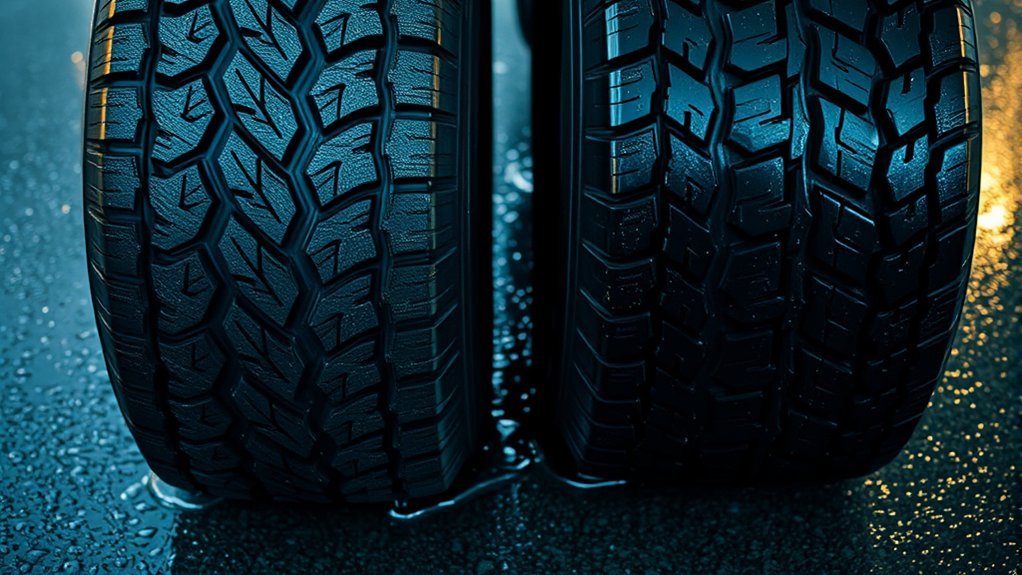
When driving in wet conditions, the design of your tires can greatly impact safety and performance. Selecting the right tread pattern is essential for maintaining traction during rain. Here are key factors to take into account:
- Deep grooves and channels: Enhance water evacuation, reducing hydroplaning risks.
- Directional tread designs: V-shaped patterns channel water effectively, boosting grip in rainy conditions.
- Asymmetrical patterns: Combine larger outer blocks for dry traction and smaller inner blocks for efficient water dispersion.
- Optimized siping: Increases biting edges, enhancing grip while preserving off-road capabilities.
Understanding these elements can greatly improve your tire safety in wet conditions. Choosing tires with the appropriate tread pattern not only enhances stability but also provides confidence while maneuvering slick roads. Prioritizing these features will keep you safer and more in control, even when the weather turns unpredictable.
Tread Design for Off-Road Capabilities
When selecting off-road tires, you’ll want to focus on essential tread features that enhance performance in challenging terrains. Ideal traction design, characterized by large voids and staggered patterns, is vital for maneuvering through mud and sand effectively. Understanding these attributes will help you make informed choices for your specific driving conditions.
Essential Tread Features
To maximize off-road performance, selecting tires with essential tread features is crucial. You’ll want to focus on designs that enhance traction balance while ensuring tread flexibility. Consider the following features:
- Deeper Tread Patterns: These improve grip on uneven surfaces like rocks and mud.
- Staggered Blocks: They create additional biting edges, enhancing stability on loose terrain.
- Mud-Terrain Lugs: Larger, aggressive lugs dig into soft ground for superior traction.
- Stone Ejectors: These prevent debris from lodging in grooves, maintaining optimal grip and reducing puncture risks.
Optimal Traction Design
Ideal traction design is essential for maximizing off-road capabilities. When you choose off-road tires, focus on those with mud-terrain (M/T) patterns featuring large, aggressive tread blocks. These designs dig into soft surfaces, enhancing traction mechanics in muddy or loose terrain. Consider the void ratio; higher ratios allow for effective mud shedding, preventing clogging and ensuring consistent grip. Hybrid tread patterns offer a balance between robust off-road capabilities and smooth highway performance. Advanced tire technology, such as stone ejectors, prevents debris from lodging in treads, reducing puncture risks and maintaining traction. By understanding these features, you can select the best tire design that liberates your off-road experience and empowers your journey through challenging terrains.
Mud and Sand Performance
- Mud-terrain (M/T) tires: Large, aggressive tread blocks and high void ratios enhance mud traction by digging into soft surfaces.
- Self-cleaning grooves: Deeper and wider grooves shed mud, maintaining grip during slippery conditions.
- Paddle-like lugs: Sand-specific designs improve sand performance by preventing sinking and enhancing propulsion.
- Hybrid tires: Combining mud and all-terrain features, they offer versatility while ensuring stability on softer surfaces.
Additionally, proper tire inflation is essential; lower pressures increase the contact patch, allowing tires to conform to mud and sand, further enhancing overall traction.
What Factors Affect Tire Wear and Durability?
While factors like tread design and driving habits play essential roles, tire wear and durability are influenced by a complex interplay of several elements. Your driving style greatly dictates how quickly tires wear out; aggressive acceleration and hard braking can drastically shorten tread lifespan. Regular tire maintenance, including proper inflation and rotation, promotes uniform wear, which enhances durability and performance.
The depth of the tread is vital; deeper treads offer better traction, while worn-out tires increase risks like hydroplaning. Additionally, environmental factors such as road surfaces and temperature fluctuations impact wear rates. For instance, exposure to harsh conditions can degrade rubber compounds, further compromising tire integrity. By understanding these factors, you can make informed decisions that prolong tire life and optimize performance on various surfaces.
How to Select the Best Tread Pattern for Your Driving Needs
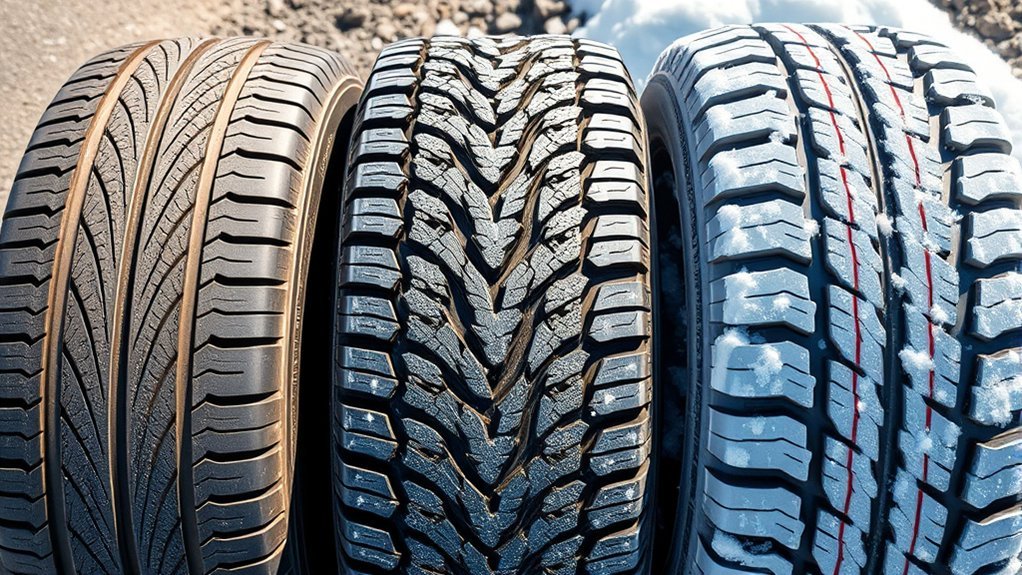
Understanding how tire wear and durability are influenced by various factors leads you to the importance of selecting the right tread pattern for your driving needs. Choosing the appropriate tread pattern impacts your vehicle’s performance across different driving conditions. Here’s what to take into account:
- Assess typical driving conditions—opt for asymmetrical patterns for balanced traction or directional patterns for superior rain and mud performance.
- Reflect on your vehicle’s intended use; all-terrain tires suit mixed driving, while dedicated winter tires excel in snow and ice.
- Review tread depth; deeper grooves enhance water evacuation on slippery surfaces, while shallower patterns improve dry road performance.
- Evaluate noise levels; hybrid tread patterns can provide a quieter ride while maintaining versatility.
Comparing Symmetrical, Asymmetrical, and Directional Tread Patterns
When selecting tires, it’s vital to grasp the differences between symmetrical, asymmetrical, and directional tread patterns, as each design greatly impacts your vehicle’s performance. Symmetrical tread patterns provide a consistent design, favoring a quiet ride and longevity, making them ideal for everyday use on dry surfaces. In contrast, asymmetrical tread patterns combine inner and outer designs that enhance both dry grip and water evacuation, yielding superior performance in varied conditions. Directional tread patterns, with their V-shaped designs, excel in water dispersion and hydroplaning resistance, making them particularly effective in wet or muddy environments. Understanding these tread pattern comparisons is essential for accurate traction assessments. Each pattern serves a unique purpose, so selecting the right one based on your driving needs can considerably improve safety and performance. By recognizing these distinctions, you can make informed choices that enhance your driving experience.
Frequently Asked Questions
How Do Tire Tread Patterns Affect Fuel Efficiency?
Tread design greatly impacts fuel economy. A streamlined pattern reduces rolling resistance, enhancing fuel efficiency. Conversely, aggressive treads can cause drag, decreasing mileage. Choosing the right tread helps optimize performance and saves you money at the pump.
Can Tread Patterns Influence Road Noise Levels?
Yes, tread patterns markedly influence road noise levels. A well-designed tread can enhance noise reduction, minimizing vibrations and air turbulence, resulting in a quieter ride. You’ll appreciate the difference in comfort and driving experience.
What Is the Lifespan of Different Tread Patterns?
Different tread patterns can markedly impact tread longevity and tread wear. Typically, asymmetric patterns last longer on varied surfaces, while aggressive designs may wear out faster but offer enhanced grip when you need it most.
How Do Temperature Changes Affect Tire Performance?
Temperature extremes can greatly impact tire performance. In colder conditions, tread flexibility decreases, leading to reduced grip. Conversely, heat causes softer compounds to wear faster, compromising durability and traction. Monitor temperatures for ideal tire maintenance.
Are There Specific Tread Patterns for Electric Vehicles?
Absolutely, specific tread designs for electric vehicles enhance electric efficiency and traction control. These patterns optimize performance, ensuring smoother rides and better grip, allowing you to experience liberation on the road while maximizing your vehicle’s potential.
Conclusion
In the intricate dance between tire tread patterns and varied surfaces, your choice holds the key to both safety and performance. Think of your tires as the roots of a tree; just as roots anchor and nourish, the right tread grips the road, ensuring stability and control. As you navigate different terrains, remember that selecting the appropriate tread is not just a matter of function—it’s about forging a connection with the ground beneath you, enhancing your journey with every turn.

Related Articles
Winter Tire Compound vs All-Season: Why Cold Weather Changes Everything
Not all tires are created equal—discover how temperature affects performance and why winter tires could be your best choice for safety this season.
Read More
Steel-Belted vs Kevlar-Reinforced Sidewalls: Puncture Resistance Compared
Pitting steel-belted durability against Kevlar-reinforced puncture resistance reveals crucial insights; find out which tire best suits your needs.
Read More
What Makes a Tire Good for Snow and Ice? Compound, Tread, and Sipes
Unlock the secrets to optimal winter tires with the perfect blend of compound, tread design, and sipes for unparalleled performance on snow and ice.
Read More