Quick Answer: How Directional Tread Channels Water
Last updated: July 7, 2026
Directional tread channels water by using V-shaped grooves, circumferential channels, sipes, and shoulder openings to move water away from the tire’s contact patch. That water path helps the tire keep more rubber on wet pavement, which can improve steering feel and reduce hydroplaning risk. The benefit depends on correct mounting direction, enough tread depth, proper tire pressure, and safe speed in standing water.
What’s in This Article
- Quick Answer: How Directional Tread Channels Water
- Directional Tread at a Glance
- How Directional Tread Channels Water
- Tread Features That Improve Wet Grip (Grooves, Sipes, Voids)
- Why Directional Tread Reduces Hydroplaning Risk
- How to Identify Mounting Direction and Sidewall Markings
- Rotating and Maintaining Directional Tires (Side-Specific Rules)
- Which Vehicles and Conditions Benefit Most From Directional Tread
- When to Choose Directional Tread vs Asymmetrical or All-Season Tires
- Quick Buying Checklist: Choosing the Right Directional Tire
- Common Mistakes to Avoid With Directional Tires
- Frequently Asked Questions
- Conclusion
- References
Quick Answer
Directional tread uses V-shaped grooves, wide channels, and small sipes to move water out from under the tire. This helps the tire keep more rubber on the road, which can improve wet grip and reduce hydroplaning risk. To get the benefit, you must mount the tire in the arrow-marked direction, keep the correct tire pressure, and replace worn tires before rain performance drops.
Key Takeaways
- Choose directional tread when wet traction and water evacuation matter most.
- Check the sidewall arrow before mounting because the tread must roll in one direction.
- Rotate directional tires front to rear on the same side unless a tire shop remounts them.
- Check tread depth and pressure monthly because worn or underinflated tires clear less water.
- Match the tire type to your climate, speed, vehicle, and driving style.
Directional Tread at a Glance
Directional tread works best as a complete water-management system. The V-shaped pattern starts the flow, the main grooves carry water, and shoulder openings give it a way out. Use this table before you compare tire models.
| Feature | Wet-Road Benefit | What to Check |
|---|---|---|
| V-shaped directional grooves | Push water from the tread center toward the shoulders. | Sidewall arrow must point forward when the vehicle moves. |
| Circumferential channels | Move larger water volume through the tread. | Grooves must have enough remaining depth. |
| Sipes | Add biting edges and break thin water film. | Blocks should not look feathered, cupped, or torn. |
| Shoulder voids | Give displaced water an outer escape path. | Look for even wear across both shoulders. |
How Directional Tread Channels Water
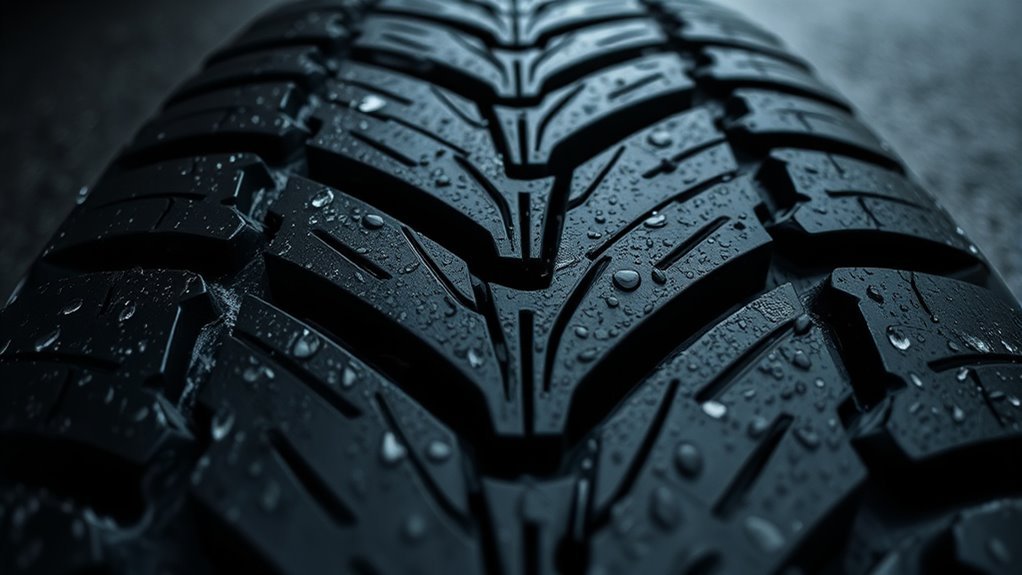
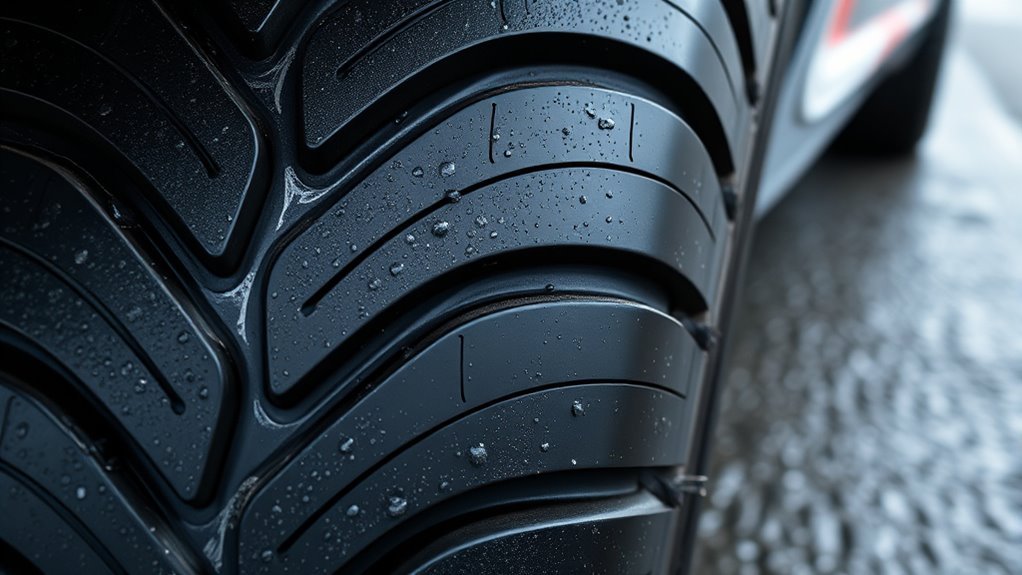
Directional tread uses V-shaped or arrow-like grooves to push water away from the contact patch as the tire rolls. That helps you keep more rubber on the road and lowers hydroplaning risk in wet conditions.
The V-profile and deep circumferential grooves create directed water flow channels. These channels move water laterally and rearward, which helps preserve grip and steering feel.
Wider drainage passages can move more water, but engineers still need enough tread block strength to support the tire. Lateral channels and sipes help break surface film and guide leftover moisture into the main grooves.
You get the most benefit when the tire has enough tread depth, correct pressure, and the right mounting direction. If any of those factors slip, the pattern can’t clear water as well.
Tread Features That Improve Wet Grip (Grooves, Sipes, Voids)
Directional tires use several tread features to manage water. Wide circumferential grooves move larger water volumes, dense sipes add biting edges, and shoulder voids give water a path out of the tread.
Wider Circumferential Grooves
Water-channeling grooves help move water away from the contact patch. Wider circumferential grooves create main flow paths that support water evacuation on wet roads.
Good groove design balances width, depth, and tread strength. Too little drainage can leave water under the tire, while too much void space can reduce tread block support.
When you compare directional tires, look for grooves that connect cleanly with angled channels and shoulder openings. That layout helps the tread keep water moving instead of trapping it.
Dense Siping Patterns
Dense sipes are small cuts in the tread blocks. They add extra biting edges that help the tire grip wet pavement during braking, turning, and acceleration.
Sipes also break thin water film on the road surface. The grooves then carry that moisture out of the contact patch.
You’ll want siping that works with the main tread pattern, not against it. Too many flexible cuts can soften tread blocks and reduce precise handling.
Large Shoulder Voids
Large shoulder voids sit near the outer tread edges. They help move water from the center of the tire toward the shoulder and away from the contact patch.
This matters during cornering because lateral grip depends on stable tread contact. Shoulder voids give displaced water a clear escape path before it builds under the tire.
Adjacent sipes add more edges and help break surface tension. Together, these features can improve wet-road feedback and control.
Pro tip: Compare the full tread layout, not just groove size, because sipes, voids, and block stiffness all affect wet grip.
Why Directional Tread Reduces Hydroplaning Risk
Hydroplaning happens when water pressure lifts the tire enough to reduce contact with the road. Directional tread helps by giving water a planned path away from the contact patch.
This design does not make a tire immune to hydroplaning. Speed, standing water depth, tread wear, tire pressure, and vehicle weight still affect risk.
V-Shaped Water Channels
When water meets a V-shaped directional tread, the angled channels push it outward from the center of the tire. This helps maintain road contact in rain.
The tread geometry also supports steering feedback during wet cornering. As long as the tire rolls in the correct direction, the grooves guide water toward the shoulders.
A reversed directional tire can work against its own design. That can reduce wet grip and make the tire feel less predictable.
Rapid Circumferential Evacuation
Deep circumferential grooves help move water along the tread as the tire rolls. These grooves work with the V-shaped channels to clear fluid from the contact area.
Wider and more direct channels can move larger water volumes. You should still slow down in heavy rain because no tread pattern can overcome unsafe speed or deep standing water.
- Reduce speed before you reach pooled water.
- Keep both hands steady if the vehicle starts to feel light.
- Avoid sharp braking or sudden steering when traction drops.
Tread Depth And Sipes
Tread depth plays a major role in wet grip. Deep grooves give water space to move, while worn grooves lose drainage capacity.
NHTSA says tires are not safe and should be replaced when tread is worn down to 2/32 inch. If you drive often in heavy rain, start inspecting and planning replacement earlier because wet braking and water evacuation usually decline before the legal minimum.
Sipes help by adding small edges and micro-channels. Correct tire pressure also helps the tread keep its intended shape on the road.
Warning: Replace the tire at 2/32 inch tread depth and inspect sooner if rain grip drops, grooves look shallow, or the tire shows uneven wear.
How to Identify Mounting Direction and Sidewall Markings
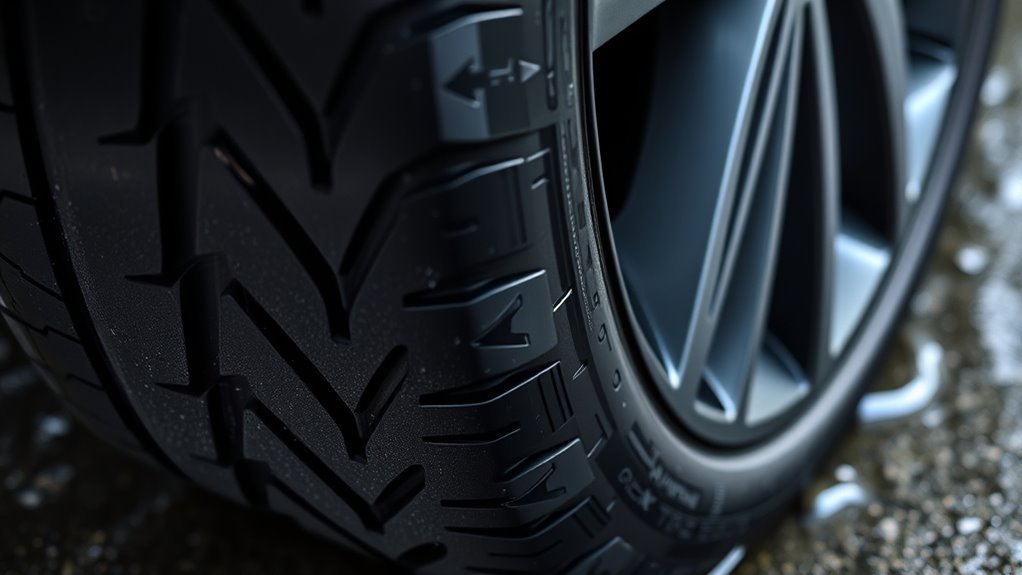
If you’re installing directional tires, inspect the sidewall before mounting. Look for rotation arrows, the word “Rotation,” or a similar marking that shows the intended forward travel direction.
Align the tire so the arrow points in the direction the tire rolls when the vehicle moves forward. The V-pattern should send water from the center of the tread toward the outer shoulders.
- Find the sidewall arrow before the tire goes on the wheel.
- Match the arrow with the wheel’s forward rotation direction.
- Check all four tires before final torque and road use.
Don’t guess based only on tread appearance. Sidewall markings give the final mounting direction, and a wrong setup can reduce wet-road performance.
Rotating and Maintaining Directional Tires (Side-Specific Rules)
Once you confirm the mounting direction, keep that direction during rotation. Move directional tires from front to rear on the same side, unless a tire shop dismounts and remounts them.
This side-specific rotation keeps the V-pattern pointed the right way. It also helps preserve wet traction and handling balance.
NHTSA tells drivers to check the owner’s manual for the correct rotation pattern and says tires may be rotated every 5,000 to 8,000 miles if the vehicle manufacturer recommends it. Also check your tire warranty, because some warranties require documented rotations.
Inspect sidewalls, tread wear, alignment, and balance at each rotation. If you feel vibration, pulling, or uneven wear, have the tires and suspension checked before the wear gets worse.
When you replace one tire, match size, load rating, speed rating, and tread type as closely as possible. Mixing different tread patterns can change grip from one side of the vehicle to the other.
Which Vehicles and Conditions Benefit Most From Directional Tread
Directional tread works best when water evacuation and wet stability matter. Performance cars, sporty sedans, and vehicles driven often in rainy climates can benefit from this tread pattern.
You may also see directional designs on some winter and all-season tires. These patterns can help move slush and water, but they do not replace the need for proper winter tires on ice or packed snow.
Directional tread can improve wet-road confidence when the tire design, tread depth, pressure, and driving speed all work together.
You’ll get the most value in these conditions:
- Wet highways where steady water evacuation supports stability.
- Rainy climates where roads often hold surface water.
- Performance driving where steering feedback matters in wet weather.
- Slushy conditions when the tire design also suits winter use.
[Products Worth Considering]
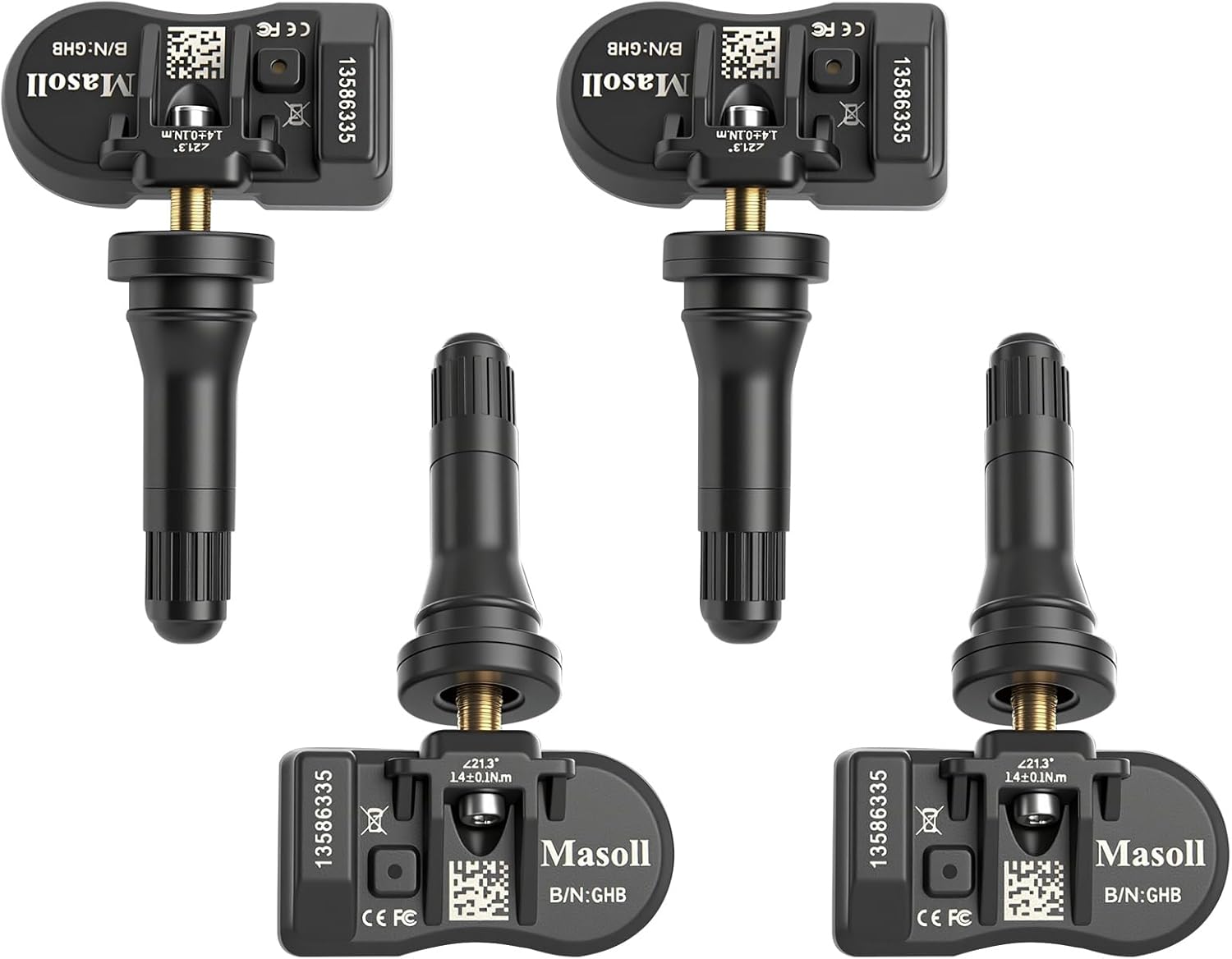
Masoll TPMS sensors are designed for most GM vehicles after 2006, helping you clear tire pressure warnings with OEM-level 315/433MHz compatibility. The 4-pack includes pre-programmed sensors, but re-learning is required after installation using a GM TPMS relearn tool or scan tool. Built with a dual-antenna design and a long-life CR2050 battery, these sensors deliver reliable performance in extreme temperatures with corrosion-resistant valve construction.

Monitor tire tread wear with a smart, color-coded depth gauge that shows clear condition ranges at a glance. The bar is range marked for fast, easy readings, helping you maintain safer traction and performance. Each gauge is portable with a pocket clip, and the set includes 20 units for daily use and sharing.

The SAFELIFE dial tire tread depth gauge measures tread depth in 1/32 inch increments with clear, easy-to-read 2-inch dial face. Color zones using a traffic light system help you quickly judge whether tread is low, marginal, or ample for safer driving. Built with a durable zinc cast body and a metal detect probe for precise, comfortable use across cars, motorcycles, trucks, and buses.
When to Choose Directional Tread vs Asymmetrical or All-Season Tires

Choose directional tread when your top priorities include wet traction, water evacuation, and high-speed stability. Its V-shaped channels help move water away from the contact patch.
Choose asymmetrical tires when you want a balanced mix of dry cornering, wet grip, comfort, and tread life. These tires use different tread zones for different jobs.
Choose all-season tires when you need broad year-round use in mild conditions. They often trade some peak wet or winter performance for comfort, durability, and seasonal range.
| Tread Type | Best For | Main Trade-Off |
|---|---|---|
| Directional | Wet grip, water evacuation, sporty handling | Limited rotation pattern |
| Asymmetrical | Mixed dry and wet performance | Mounting side matters on many designs |
| Symmetrical | Simple rotation, comfort-focused daily driving | Less specialized water evacuation |
| All-season | Daily driving in mild weather | Less specialized wet or winter performance |
[Products Worth Considering]

Measure tire tread depth quickly and accurately with this LUMITECO dial gauge that reads in 1/32" increments up to 14/32". The color-coded green/yellow/red zones make it easy to judge tire wear and know when replacement is needed. A rugged, compact design with a protective pouch helps keep the gauge ready for use on cars, trucks, motorcycles, and more.

Accurately measure tire tread depth with a calibrated gauge marked from 0 to 1 inch in 1/32 inch increments. The color-coded bar helps you quickly identify tread condition ranges, supporting safe driving for trucks, motorcycles, automobiles, and passenger vehicles.
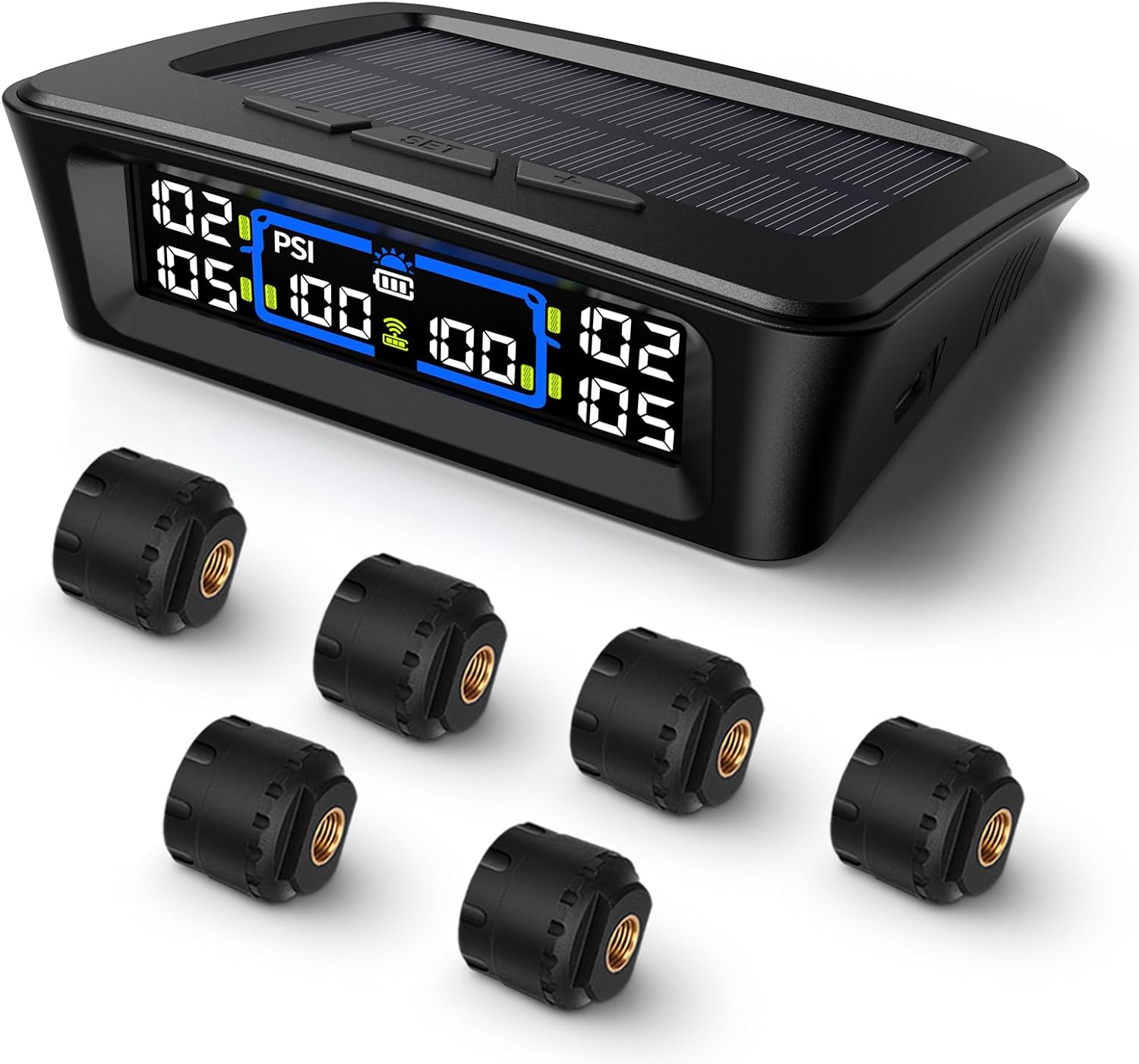
The Tymate TM12 RV TPMS delivers real-time tire pressure and temperature monitoring with a stable 433Hz display for safer long-distance driving. It supports simultaneous monitoring across vehicle and trailer zones, includes six alarm modes for pressure, temperature, leakage, battery, and signal loss, and features easy DIY installation with auto calibration. Power is supplied via USB-C charging or solar recharging, with a wide 0–144 PSI range and up to 50 ft signal coverage for RVs and towable trailers.
Quick Buying Checklist: Choosing the Right Directional Tire
If you want reliable wet-weather performance, start by confirming the tire has a true directional pattern and clear sidewall arrows. Those markings help your installer mount the tire correctly.
Then match the tire to your vehicle, climate, and driving habits. A performance directional tire may suit wet highway driving, while an all-season directional tire may suit daily commuting.
- Verify the V-shaped tread and sidewall rotation arrow.
- Match tire size, load rating, and speed rating to your vehicle placard or owner’s manual.
- Check the UTQG traction grade for wet-pavement stopping performance where it applies.
- Choose groove depth and channel design for your local rain level.
- Check warranty terms, expected tread life, and rotation rules.
- Monitor tread depth so wet performance stays reliable.
[Products Worth Considering]

The TYAMATE TM8 solar-powered wireless TPMS delivers real-time tire pressure and temperature monitoring with six alarm modes for safer driving. A vibrant color LCD display shows readings clearly while windshield mounting keeps it hands-free and easy to read. With a wide 0–87 PSI range, strong 433.92 MHz signal transmission, and quick sensor pairing, it’s ideal for RV, sedan, SUV, MPV, and truck use.

Replace worn or malfunctioning GM TPMS sensors with this 433MHz pre-programmed sensor set designed for compatibility with many Chevrolet, Buick, GMC, and Cadillac models. It includes guidance for proper OBDII relearning/pairing after installation and supports reliable long-term operation with a high-performance CR2032 battery. Quality tested for durability and performance to help restore accurate tire pressure monitoring.

Autel MX TPMS sensors combine 315MHz and 433MHz in a single easy-to-install press-in design for faster tire service. They support wireless programming with strong signal performance, and the sensors are clone-able for streamlined replacement. Built for reliability and tested to SAE standards, each sensor includes a series number for quality control.
Common Mistakes to Avoid With Directional Tires
Directional tires work well only when you use them as designed. Small setup errors can reduce the wet-grip benefit you paid for.
- Don’t mount a directional tire against the sidewall arrow.
- Don’t cross-rotate directional tires unless a shop remounts them.
- Don’t mix worn and new tires without checking vehicle requirements.
- Don’t ignore uneven wear, vibration, or pulling.
- Don’t assume directional tread can prevent hydroplaning at unsafe speeds.
Frequently Asked Questions
Can Directional Tread Be Quieter Than Other Tread Patterns?
Yes, directional tread can be quiet when engineers tune the block spacing and groove layout well. Noise still depends on tire model, rubber compound, road surface, wear pattern, and vehicle insulation.
Do Directional Tires Affect Fuel Efficiency?
Directional tires may affect fuel efficiency, but tread pattern alone does not decide fuel use. Rolling resistance, tire pressure, compound, weight, alignment, and driving style often matter more.
Can I Use Directional Tires on Snow or Ice?
You can use directional tires on snow or ice only if the tire model suits winter conditions. For severe winter driving, choose dedicated winter tires that carry the proper winter rating.
Will Directional Tread Wear Faster on Front-Wheel Drive Cars?
On front-wheel-drive cars, front tires often wear faster because they handle steering, braking, and drive force. Regular same-side rotation helps even out wear and protect handling.
Are Directional Tires Compatible With Tire Pressure Monitoring Systems?
Yes, directional tires work with tire pressure monitoring systems (TPMS). The tire’s tread direction does not stop TPMS sensors from reading pressure, but your installer still needs to mount each tire correctly.
What Happens If Directional Tires Are Mounted Backward?
A backward directional tire may move water less effectively because the tread points the wrong way. Have the tire remounted in the correct direction before you rely on it in wet weather.
Can You Cross-Rotate Directional Tires?
You should not cross-rotate directional tires while they stay mounted on the wheels. Move them front to rear on the same side unless a tire shop dismounts and remounts them so the arrows still point forward.
How Do You Know a Tire Is Truly Directional?
Look for a rotation arrow, the word “Rotation,” or similar sidewall marking. Tread appearance helps, but the sidewall marking is the safer guide because some patterns only look directional.
Conclusion
Directional tread works like a set of planned drains under your tire, guiding water away from the contact patch. You’ll get the best results when you mount the tire in the arrow-marked direction, keep enough tread depth, and rotate it correctly. Before your next rainy drive, check the sidewall arrows, tread depth, and tire pressure. A few simple checks can help you keep wet-road grip more predictable.
References
- Tires — National Highway Traffic Safety Administration
- TireWise Tire Safety Ratings and Awareness — National Highway Traffic Safety Administration
- Extended Pacejka Tire Model for Enhanced Vehicle Stability Control — Singh and Sivaramakrishnan