
17 Vs 20 Inch Wheels on a 4runner: Pros and Cons
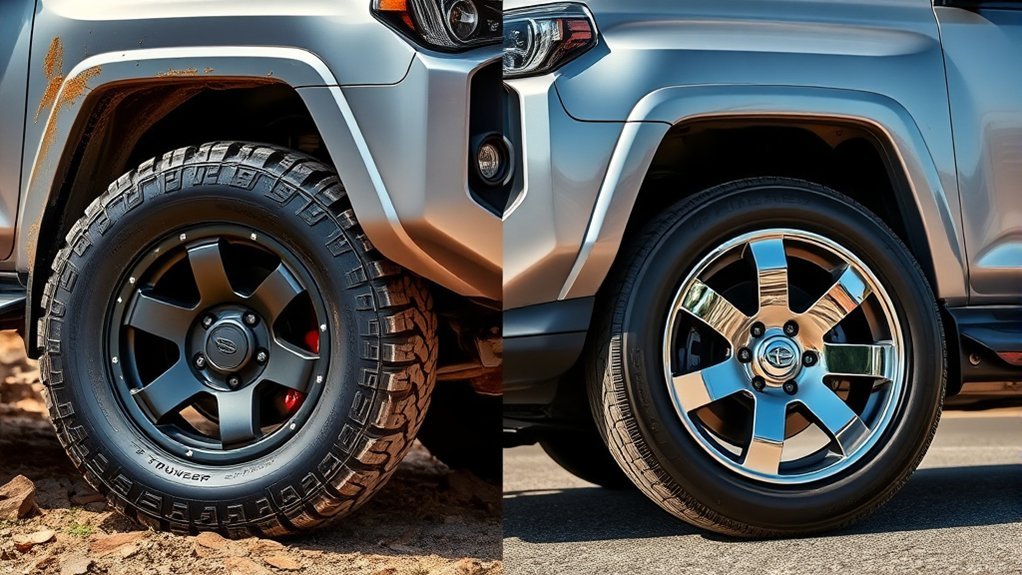
When choosing between 17-inch and 20-inch wheels for your 4Runner, consider comfort and performance. 17-inch wheels offer a softer ride, better shock absorption, and improved off-road stability. They’re also more affordable and flexible on rugged terrain. In contrast, 20-inch wheels provide a sporty look but can lead to a harsher ride and increased costs for tires. Each size has its pros and cons, so you’ll want to weigh these factors carefully to make the best choice.
Advantages of 17-Inch Wheels for a 4Runner
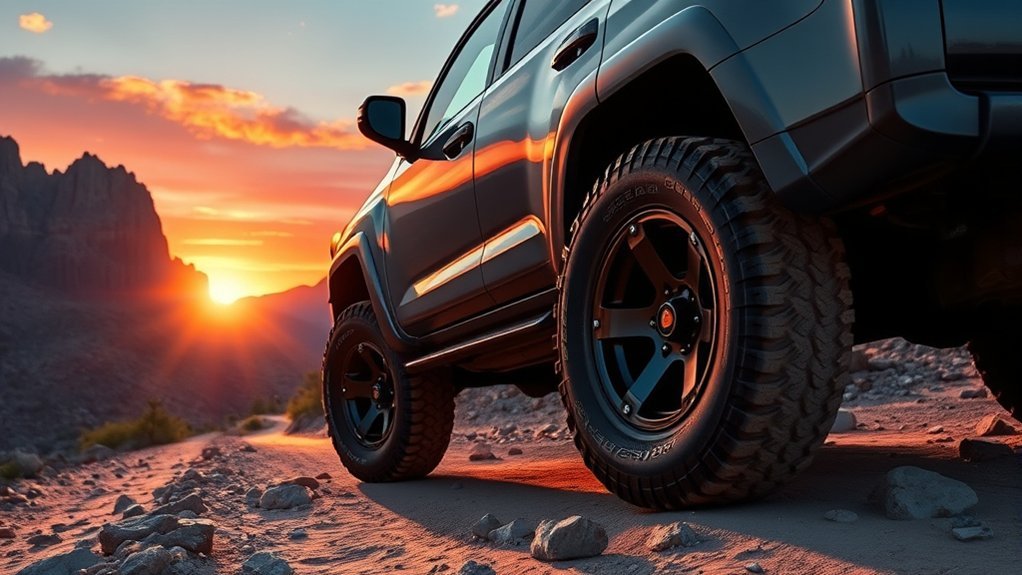
When you consider upgrading your 4Runner’s wheels, opting for 17-inch versions can greatly enhance your driving experience. These wheels provide a softer ride quality thanks to their taller sidewalls, which absorb road imperfections effectively. This feature is especially beneficial for off-road adventures, as the added sidewall height improves traction and resilience on rough terrain.
You’ll also enjoy a wider tire selection with 17-inch wheels, making it easier to find options that suit your driving needs and budget. Competitive prices often accompany these choices, allowing for more freedom in your tire selection.
Additionally, the increased sidewall height reduces the risk of curb damage and pothole impacts, leading to lower maintenance costs over time. With enhanced stability during daily driving and off-road excursions, 17-inch wheels present a practical solution that aligns with your desire for a more liberated driving experience.
Key Disadvantages of 20-Inch Wheels
While 20-inch wheels might look sleek and stylish on your 4Runner, they come with several key disadvantages that can affect your driving experience. First, tire availability becomes a concern; you’ll find fewer options, often at higher prices, limiting your choices for off-road capabilities. This can put a damper on your adventures.
The ride comfort takes a hit, too. With shorter sidewalls, you’ll feel more road vibrations, especially on uneven terrain, making every bump more pronounced. Additionally, the thinner sidewalls increase the risk of damage from potholes and curbs, leading to costly repairs.
Finally, if you love off-roading, be aware that 20-inch wheels can reduce performance. They struggle to absorb impacts and provide traction on rough surfaces, making your journeys less enjoyable. In short, while they may look good, the practical drawbacks can outweigh the aesthetic benefits.
Ride Quality: 17-Inch vs. 20-Inch Wheels
When choosing between 17-inch and 20-inch wheels for your 4Runner, ride quality is a key factor to evaluate. The taller sidewalls of 17-inch wheels provide a smoother, more comfortable experience by better absorbing road imperfections, while the lower sidewalls of 20-inch wheels can lead to harsher vibrations. If comfort and handling on uneven terrain matter to you, the 17-inch option might be the way to go.
Comfort and Smoothness Comparison
Switching from 20-inch to 17-inch wheels can dramatically enhance your driving comfort, thanks to the increased sidewall height that cushions against road imperfections. This added height improves impact resistance, allowing your 4Runner to absorb bumps and dips more effectively. You’ll likely notice a smoother ride, especially on uneven surfaces, as the taller sidewalls reduce the transmission of vibrations into the cabin. Many drivers report less jumpiness and a more stable experience, making 17-inch wheels ideal for daily commutes and long highway trips. While 20-inch wheels may look sleek, they deliver a harsher ride due to their shorter sidewalls. Ultimately, prioritizing comfort means opting for the 17-inch wheels, especially if you value an enjoyable driving experience over aesthetics.
Impact of Sidewall Height
The impact of sidewall height on ride quality between 17-inch and 20-inch wheels can’t be overstated. With 17-inch wheels, the taller sidewall performs better in cushioning against road imperfections, delivering a noticeably smoother ride. This design absorbs shocks more effectively, enhancing comfort during highway travel and minimizing vibrations transmitted into your vehicle. In contrast, the shorter sidewalls of 20-inch wheels limit tire deformation, resulting in a harsher ride and heightened sensitivity to bumps and potholes. Many drivers find that the softer ride quality of 17-inch wheels reduces fatigue during long drives, making them ideal for daily use and off-road adventures. Ultimately, the trade-off between aesthetics and sidewall performance heavily leans toward comfort for those prioritizing driving dynamics.
Aesthetic Appeal: Finding the Right Look for Your 4Runner
When considering aesthetic appeal for your 4Runner, wheel size plays an essential role in shaping its overall look. A set of 20-inch wheels can give your vehicle a more aggressive stance, while 17-inch options might lend a more classic vibe. Ultimately, it’s about balancing your personal style with the rugged image you want to project.
Wheel Size Impact
Choosing the right wheel size for your 4Runner can greatly influence its overall aesthetic appeal. Larger 20-inch wheels create an aggressive, sporty look that can make your vehicle stand out. They fill out the wheel wells nicely, enhancing balance. However, you might sacrifice some ride comfort due to increased wheel weight. Conversely, 17-inch wheels, while less bold, offer practicality and accommodate off-road tires, aligning with a rugged aesthetic. The choice reflects your balance between striking visuals and functional performance, including braking performance.
| Wheel Size | Aesthetic Appeal | Practicality |
|---|---|---|
| 17-inch | Subtle, rugged | High |
| 20-inch | Bold, aggressive | Moderate |
| Weight | Lighter | Heavier |
| Comfort | Better | Reduced |
| Off-road | Accommodated | Limited |
Personal Style Preferences
Finding the right look for your 4Runner often hinges on personal style preferences, especially when it comes to wheel size. The choice between 17-inch and 20-inch wheels can greatly alter the vehicle’s aesthetic appeal.
- Larger wheels give a sporty, aggressive vibe that aligns with modern trends.
- Smaller wheels can enhance a rugged, utilitarian style.
- Color choices for your wheels can further personalize the look.
- Seasonal trends might influence your decision, as certain styles resonate more in different climates.
Ultimately, it’s about balancing visual impact with functionality. Larger wheels may catch eyes but could compromise ride comfort. Choose what feels right for you—your 4Runner is an extension of your style and spirit!
Comparing Short-Term and Long-Term Costs of Wheel Sizes
While the allure of 20-inch wheels may catch your eye with their bold aesthetics, understanding the financial implications is essential. Initially, you might enjoy short-term savings with a 17-inch setup, as these wheels generally cost less upfront and have a wider range of more affordable tire options. However, the long-term expenses can stack up with 20-inch wheels. Replacement tires for these larger rims often run 30-50% higher, and the likelihood of damage from road hazards can lead to frequent repairs. Additionally, the heavier weight may reduce fuel efficiency, further inflating your long-term costs. Resale value can also be a concern; while 20-inch wheels look impressive, their limited market appeal and higher replacement costs can leave you with less when it’s time to sell. Ultimately, weighing these factors will help you make a financially sound choice for your 4Runner.
Evaluating Off-Road Performance: 17-Inch vs. 20-Inch Wheels?
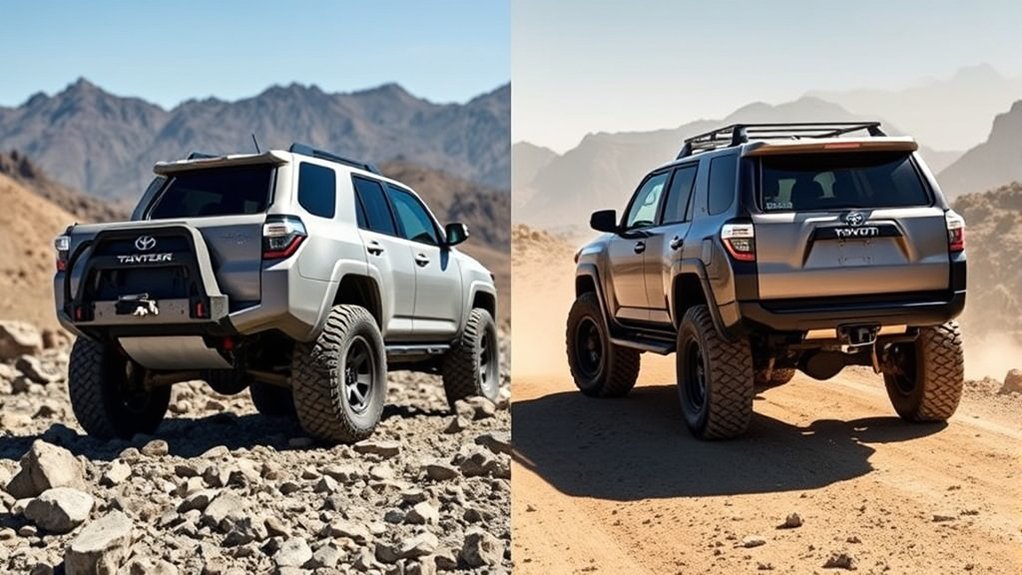
When it comes to off-road performance, the choice between 17-inch and 20-inch wheels can greatly impact your 4Runner’s capability. 17-inch wheels, with their taller sidewalls, excel in absorbing shocks from rough terrain, offering a smoother ride on rocky paths and uneven surfaces. Here’s why 17-inch wheels often win out for off-road adventures:
- Enhanced off-road traction for tackling tough trails.
- Greater wheel durability, reducing the risk of damage.
- More tire options available for specialized off-road tires.
- A softer ride quality that improves handling over obstacles.
If you’re an off-road enthusiast, opting for 17-inch wheels means better stability and comfort in challenging conditions. With their ability to flex and adapt, these wheels equip you to conquer the wild, keeping your 4Runner ready for the next adventure without the stress of damaging your rims.
Frequently Asked Questions
What Are the Disadvantages of 20-Inch Rims?
20-inch rims can compromise your ride comfort and off-road performance. With stiffer sidewalls, you’ll feel more road vibrations, and their limited cushioning increases the risk of damage on rough terrain, making them less versatile.
What Is the Best Wheel Size for a 4runner?
For unbeatable wheel performance and ride comfort, you can’t go wrong with 17-inch wheels on a 4Runner. They absorb impacts like a champ, making every off-road adventure smoother and more enjoyable than ever.
Is It Worth Putting 20-Inch Rims on a Vehicle?
Yes, putting 20-inch rims can enhance your vehicle’s aesthetic appeal, but consider the performance impact. They may offer a sportier look, yet you might face a harsher ride and increased repair costs.
Do 20-Inch Wheels Get Better Mileage?
No, 20-inch wheels don’t get better mileage. While they may look sharp, lower tire pressure and stiffer sidewalls compromise ride comfort and fuel efficiency, leading to potential drops in MPG you might not expect.
Conclusion
Choosing between 17-inch and 20-inch wheels for your 4Runner isn’t just a numbers game; it’s about ride comfort, off-road capability, and visual appeal. You want a smoother ride, better traction, and a look that reflects your style. Weighing the pros and cons helps you envision your adventures. Whether you prioritize performance, aesthetics, or cost, making an informed decision guarantees your 4Runner perfectly fits your lifestyle and driving dreams. Embrace the journey with wheels that elevate every experience!

Related Articles
Steel Wheels vs Aluminum Wheels for Off-Road Driving
How do you choose between steel wheels you can hammer back into shape and aluminum wheels that might leave you stranded?
Read More
4Runner Tire Clearance With a Lift: Sizing Chart
Explore how lifting your 4Runner affects tire clearance, sizing options, and modifications needed for optimal performance—your adventure awaits!
Read More
17 Inch Vs 18 Inch Wheels for Off-Road Use
Prefer 17-inch wheels for serious off-roading, but the real compromise might surprise you once the pavement ends.
Read More