When Is a Tire Too Old to Safely Use on a 4Runner
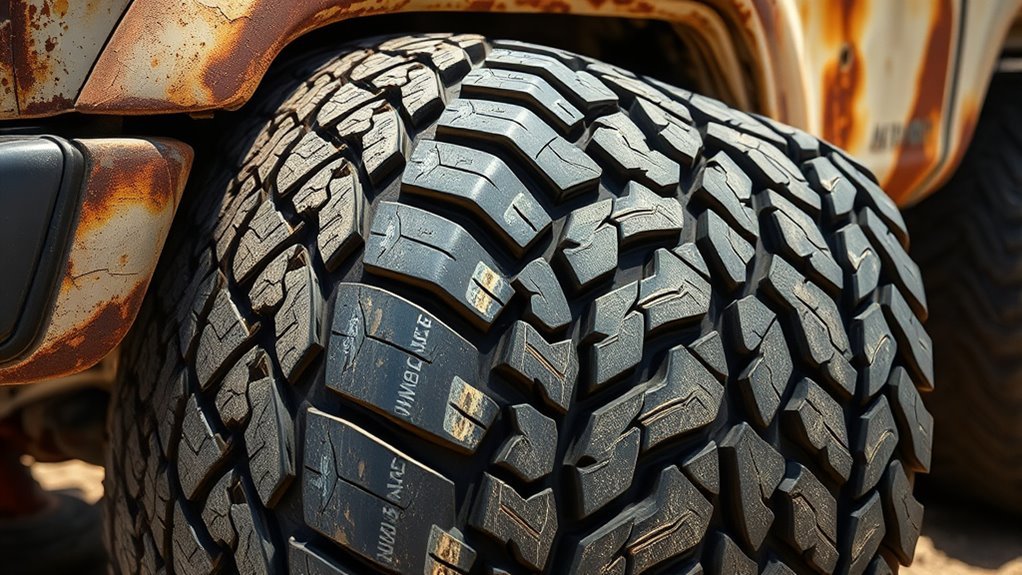
Your 4Runner’s tires expire six years from their manufacture date, regardless of tread depth remaining. Check the DOT code’s last four digits to find the week and year—rubber degrades internally through oxidation and UV exposure, creating hidden failures you can’t see. After six years, replace them proactively; ten years is an absolute maximum. Catastrophic blowouts strike aged tires without warning, even on city streets. You’ll discover exactly how to decode those numbers and inspect for invisible damage ahead.
When Your 4Runner Tires Are Too Old: The 6-Year Rule
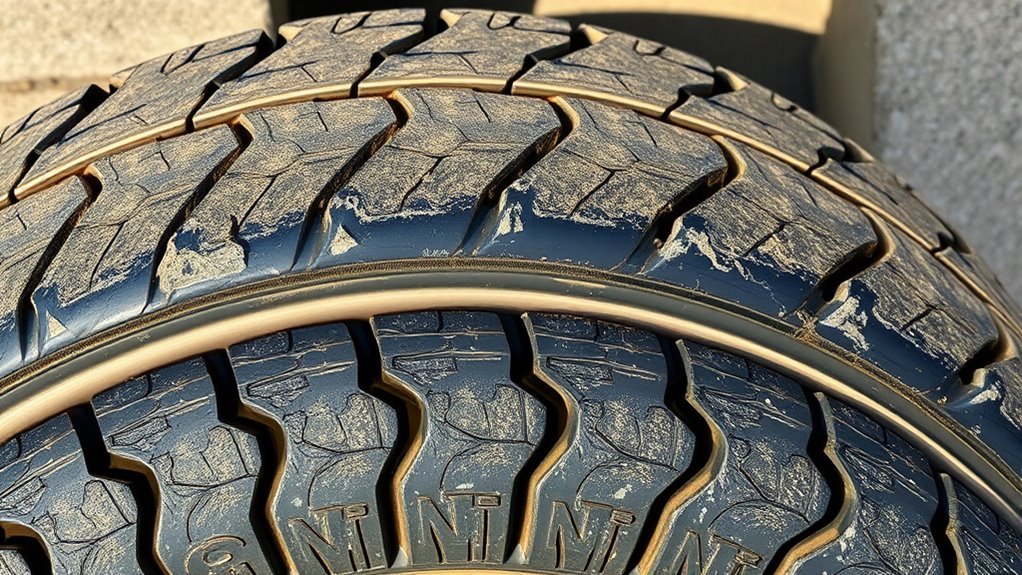
Why gamble with degradation you can’t see? You’re driving a 4Runner—capable, rugged, built for freedom—but your tires might betray you silently. After six years, rubber degradation accelerates regardless of how deep your tread looks. The compound hardens, cracks form internally, and wet traction plummets without warning.
You inspect tread depth religiously; that’s prudent tire maintenance. Yet age operates independently of wear. The DOT code stamped on your sidewall reveals manufacturing date—decode it. Six years from that week marks your proactive replacement window, not the maximum limit.
You aren’t paranoid; you’re strategic. Blowouts rarely announce themselves. They seize control, strand you, or worse. Your 4Runner demands reliability matching its capability. Don’t let aged rubber cage your adventures. Replace at six years. Liberation requires preparation, not reaction. Your safety isn’t negotiable.
How to Check Your Tire’s Manufacture Date
You’ll locate the DOT code stamped on your tire’s sidewall, then decode its final four digits to identify the exact week and year of manufacture. Once you’ve determined your tire’s age, you’ll understand why manufacturers impose strict replacement timelines regardless of remaining tread depth. This precise tracking enables you to mitigate the safety risks posed by rubber degradation before visible failure occurs.
Locating the DOT Code
Every tire carries a hidden timestamp that reveals its true age. You find this critical data by locating the DOT Code on your tire’s sidewall. Scan the outer wall for a rectangular box stamped with raised letters and numbers—this is your Tire Identification marker. You’ll typically spot it on the inner sidewall, though some manufacturers place it outward. The DOT Code sits near the tire’s rim, often requiring you to crouch or turn the wheel for full visibility. Clean away road grime if necessary; clarity matters when reading these digits. Once located, focus on the last four numbers—they disclose your tire’s birth week and year. Master this location skill, and you command knowledge that protects your freedom on the road.
Decoding Manufacture Date
How do you transform a cryptic string of digits into actionable safety intelligence? You examine the DOT code’s final four digits. The first two numbers indicate the production week; the last two reveal the year. “2319” means your tire rolled off the line in the 23rd week of 2019.
You cannot rely on tread depth alone. Modern tire technology incorporates advanced compounds, yet rubber degradation remains inevitable. These safety innovations do not override time-based deterioration. You must calculate your tire’s age precisely—6 years triggers replacement consideration; 10 years mandates retirement regardless of appearance.
You liberate yourself from catastrophic failure by decoding this data yourself. Don’t trust visual inspections. Control your vehicle’s fate through verified knowledge, not assumptions. Your 4Runner’s safety demands this exactitude.
Understanding Tire Age
Although tread depth offers a familiar metric for tire assessment, you’re neglecting critical data if you haven’t decoded the DOT stamp on your sidewall. Locate those final four digits—they reveal your tire’s birth week and year. This isn’t optional tire maintenance; it’s survival intelligence.
Aging rubber betrays you silently. Consider these realities:
- Six years marks your expiration threshold regardless of remaining tread
- Ten years constitutes absolute maximum lifespan from manufacture date
- Cracks, crazing, or sidewall deterioration demand immediate replacement
You’re not merely preserving vehicle performance—you’re reclaiming autonomy from catastrophic failure. Indoor storage slows degradation but won’t halt chemical breakdown. Apply these safety tips: inspect quarterly, document installation dates, and reject false security from deep grooves. Your 4Runner’s liberation depends on informed vigilance against invisible decay.
Why Tread Depth Hides the Real Danger
Rubber deteriorates regardless of how much tread remains. You face dry rot, sidewall cracking, and compound hardening that strip away traction and invite blowouts. Six years of age compromises performance even with deep grooves intact.
UV exposure and temperature swings accelerate this hidden decay. You must inspect sidewalls for cracks and verify manufacture dates—not just depth measurements. Your 4Runner demands more than superficial checks. True liberation comes from rejecting simplistic metrics and embracing complete tire vigilance. Your safety depends on seeing what tread depth conceals.
Spot Dry Rot and Cracking Before They Fail
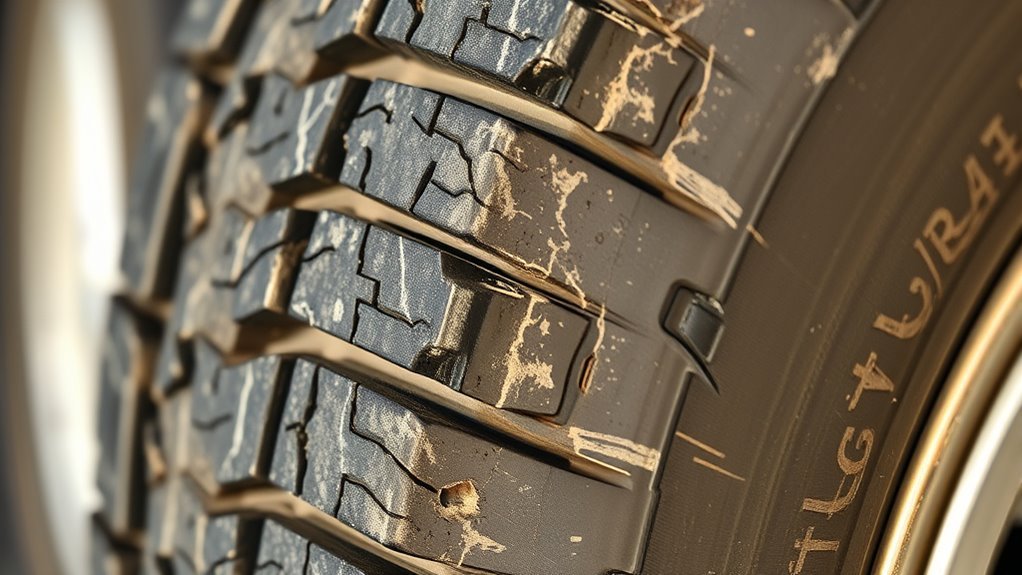
Surface cracks betray rubber’s hidden breakdown long before catastrophic failure. You must liberate yourself from the false security of deep tread—dry rot kills silently.
Inspect your sidewalls weekly. Hairline fissures spiderwebbing across the rubber signal molecular decay you cannot reverse. Sun exposure and temperature swings accelerate this deterioration; six-year-old tires demand obsessive scrutiny regardless of mileage.
Your liberation checklist:
- Trace every crack with your fingernail—shallow surface marks differ from deep fissures that flex and widen under pressure
- Flex the sidewall manually—degraded rubber reveals itself through stiffness and audible crackling
- Document inspection dates—freedom from blowouts requires systematic tire maintenance discipline
These safety tips transform you from passive victim to active guardian. Replace at first sign of structural compromise. The trail demands reliability; your 4Runner’s grip depends on rubber integrity you verify, not assume.
Garage vs. Street: Where You Park Matters
Where you park your 4Runner directly affects how quickly your tires age. Indoor storage shields rubber from UV degradation and temperature swings that accelerate hardening and cracking, while street parking exposes tires to relentless solar radiation and moisture cycles that compromise structural integrity year-round. A climate-controlled garage further stabilizes pressure retention and slows oxidation, giving you measurable control over a variable that otherwise erodes safety margins with little warning.
Indoor Storage Benefits
Although you might not give it much thought, where you park your vehicle directly impacts how quickly your tires age. You control your 4Runner’s fate through simple tire maintenance and storage tips that liberate you from premature replacement costs.
Storing your vehicle indoors delivers measurable protection:
- UV shielding — You eliminate solar degradation that fractures rubber compounds and accelerates dry rot.
- Climate stability — You maintain consistent temperature and humidity, preventing the expansion-contraction cycles that generate microcracks.
- Load distribution — You deploy tire blocks to redistribute weight, eliminating flat spots that compromise ride quality and safety.
Your garage becomes a preservation chamber. You inspect regularly in controlled conditions, spotting bulges or fissures before catastrophic failure. Indoor storage extends functional life considerably, though you must still monitor age-related deterioration—time degrades even protected rubber.
Sun Exposure Risks
Because UV radiation attacks polymer chains at the molecular level, your parking location becomes a critical variable in tire longevity. Parking your 4Runner in a garage slows rubber oxidation, preserving elasticity and structural integrity. Street parking exposes tires to relentless UV exposure, accelerating hardening and cracking regardless of tread depth. Studies indicate direct sunlight can halve tire lifespan compared to indoor storage.
You must inspect sidewalls regularly for UV-induced deterioration—surface cracks signal compromised safety. Tire protection becomes essential when garage access proves impossible; quality covers shield rubber from photodegradation, extending service life. Your vigilance liberates you from premature failure: monitor, protect, and choose parking strategically. The freedom to roam demands tires that haven’t surrendered to solar assault.
Climate Control Impact
Your parking environment directly governs the chemical kinetics of rubber aging, with climate-controlled garages offering measurable protection against the thermal and oxidative stress that street-parked tires endure.
You reclaim control over tire longevity through deliberate storage environment choices. Consider these liberation points:
- Escape UV imprisonment—your garage shields rubber from photodegradation that cracks sidewalls and seizes elasticity.
- Defeat temperature tyranny—stable climates slow oxidation kinetics, extending service life beyond arbitrary calendar limits.
- Reject humidity’s corrosion—controlled atmospheres prevent the hydrolytic breakdown that weakens structural integrity.
You manipulate time itself: flat-surface parking with reduced pressure arrests deformation creep. The street exposes your tires to accelerated aging you cannot regulate. Your garage becomes a preservation chamber, transforming the 6-10 year guideline from rigid expiration into negotiable territory—liberation through environmental mastery.
Off-Road Harder? Replace Your 4Runner Tires Sooner
If you’re pushing your 4Runner through rocky trails, deep mud, or steep inclines, you’ll need to replace your tires sooner than the typical driver—off-road driving accelerates wear in ways that standard mileage calculations don’t capture.
Your aggressive tread pattern demands deeper lugs for traction. You’ll hit critical thresholds faster: 5/32″ minimum for snow, 4/32″ for wet conditions. Don’t wait for wear bars—your liberation depends on grip when you’re clawing up loose terrain. Most enthusiasts swap rubber every 3-4 years regardless of appearance.
Inspect frequently for dry rot and sidewall cracking. These flaws compromise structural integrity under torsional stress. Your off road maintenance schedule must compress standard intervals. Tire performance degrades nonlinearly; you’ll feel it in slipping climbs, delayed bite, unpredictable yaw.
Replace early. The cost of fresh rubber pales against extraction fees or worse. Your 4Runner’s capability ends where your tires’ confidence does.
Blowout Stories: What Pushing Past 6 Years Looks Like
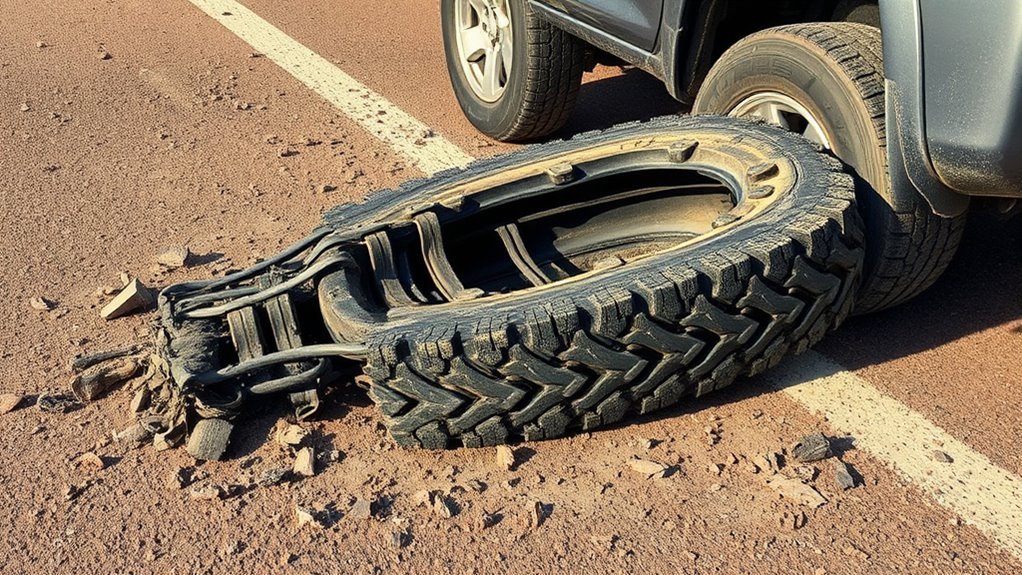
Off-road wear isn’t the only clock running on your rubber. Time itself becomes your adversary once you push past six years, and the consequences demand your attention.
Consider these realities:
Age alone destroys tires—seven years is not a safety margin, it’s a countdown to catastrophe.
- A driver watched their 7-year-old tire disintegrate at highway speed—full tread depth couldn’t save them from catastrophic failure.
- Another owner discovered their 11-year-old spare had turned to stone; the blowout risks materialized before they reached the trailhead.
- Sidewall cracks betrayed a weekend warrior’s 8-year-old set, transforming a casual drive into a fight for control.
These aging indicators—hardened rubber, internal deterioration, visible fissures—operate invisibly until they don’t. You cannot negotiate with degraded polymer chemistry. The liberation you seek on remote trails requires unwavering mechanical reliability. Replace proactively. Your safety margin isn’t a suggestion—it’s the difference between reaching your destination and becoming another cautionary tale.
Buy New Tires Without Getting Old Stock
Before you finalize your tire purchase, examine the DOT manufacture date stamped on the sidewall to confirm the tire is less than one year old. You should also question the retailer about storage conditions, as UV exposure and temperature fluctuations degrade rubber compounds even in unused tires. Finally, inspect the tire’s physical condition yourself—look for surface cracking, discoloration, or dry rot that signals premature aging.
Check Manufacture Date
How can you guarantee you’re not paying premium prices for rubber that’s already past its prime? You decode the DOT code stamped on the tire sidewall. This four-digit sequence reveals the week and year of manufacture—critical data for evaluating tire longevity and identifying safety concerns.
Here’s what you’re fighting against:
- Deception: Retailers selling 18-month-old tires as “new” inventory
- Risk: Rubber compounds degrading internally despite pristine tread
- Loss: Your money and your family’s security on compromised tires
You must inspect every tire yourself. Don’t trust shelf tags or verbal assurances. The DOT code doesn’t lie—it’s your liberation from manipulated inventory. Check it before purchase, or you’re accepting accelerated degradation that compromises handling, structural integrity, and emergency performance.
Verify Storage Conditions
| Storage Factor | Ideal Condition |
|---|---|
| Temperature | Cool, below 77°F |
| Humidity | Dry environment |
| Light exposure | No direct sunlight |
| Heat sources | Away from radiators/equipment |
| Position | Upright, not stacked flat |
Ask your dealer about their storage techniques and inventory turnover. Reputable sellers rotate stock within six months and maintain climate-controlled warehouses. Don’t accept aged inventory disguised as deals—your safety demands precision. Inspect for dry rot, cracks, or discoloration before purchase. You’re reclaiming control by demanding transparency about every tire’s journey from factory to your 4Runner.
Inspect Physical Condition
Three critical checks separate fresh rubber from aging stock that’ll betray you at highway speeds.
Begin your tire inspection with a thorough visual assessment of the sidewalls. You’re hunting for cracks, crazing, or dry rot—these aren’t cosmetic flaws. They’re structural failures waiting to happen. Rubber degrades chemically; you can’t see the molecular breakdown, but surface fissures scream “replace me.”
Your three non-negotiables:
- Zero tolerance for sidewall cracks—any fissure means the compound’s compromised
- DOT date verification—locate the four-digit code; reject anything over 6 months old
- Wear indicator exposure—flush bars signal imminent hydroplaning risk
Don’t negotiate with degraded tires. Freedom demands reliability. Inspect ruthlessly, choose wisely, drive alive.
Sell or Repurpose 4Runner Tires With Tread Left
Residual tread depth presents a viable opportunity for 4Runner owners seeking value recovery rather than immediate disposal. You can explore tire resale options when your tires exceed 5/32″ tread depth and show no dry rot or visible cracks. Off-road enthusiasts frequently seek budget-friendly used tires for light-duty applications, allowing you to offset replacement costs directly.
Consider these pathways for tires with remaining life:
| Application | Target Audience | Key Requirements |
|---|---|---|
| Resale | Off-road enthusiasts | >5/32″ tread, no cracks |
| Landscaping projects | Homeowners, gardeners | Visual integrity check |
| DIY planters | Crafters, sustainability advocates | Sidewall stability |
| Construction barriers | Contractors | Structural soundness |
You must inspect each tire’s integrity before transfer to eliminate safety risks for subsequent users. Repurposing extends material lifespan beyond automotive use, aligning with resource liberation principles. Whether selling or transforming, you’re extracting maximum utility while preventing premature landfill contribution. Act deliberately—your caution protects others.
Track Tire Age and Plan Your Next Replacement
Once you’ve maximized the utility of your 4Runner’s tires through resale or repurposing, you’ll need to establish a systematic approach for monitoring your replacement set. Decode the DOT code immediately after installation to establish your baseline. Mark your calendar for mandatory inspections at 6-year intervals, regardless of apparent condition.
Maximize utility, then establish systematic monitoring—decode the DOT code immediately and schedule mandatory 6-year inspections regardless of condition.
Implement this vigilant tracking protocol:
- Document the birthdate — Photograph the DOT code and store it where you’ll access it during seasonal maintenance checks, ensuring you’re never guessing your tire’s true age.
- Measure what matters — Gauge tread depth quarterly; replace at 4/32″ for wet performance, never risking the absolute 2/32″ minimum.
- Witness the decay — Inspect sidewalls for ozone cracking, UV damage, and rubber hardening that compromises structural integrity.
Your tire warranty won’t protect against age-related failure. Freedom demands preparation. Schedule replacement before the 10-year manufacturing limit expires. Control your timeline—don’t let deteriorating rubber dictate your safety.
Frequently Asked Questions
When to Replace Toyota 4runner Tires?
Replace your 4Runner tires every 3-4 years regardless of tire lifespan appearance, or sooner if tread depth falls below 4/32″. You must inspect for dry rot and replace immediately if cracks develop—your safety demands proactive action.
Conclusion
You can’t see rubber degradation, but it’s happening regardless of tread depth. The NHTSA found tires over six years old are three times more likely to fail catastrophically. Check your DOT code, set calendar reminders, and don’t let garage-kept tires lull you into complacency. Your 4Runner’s age matters less than your tires’—replace them proactively, not reactively. The six-year rule isn’t conservative; it’s survival.

Related Articles
How to Use a Portable Air Compressor for 4Runner Tires
Breathe new life into your 4Runner tires with a portable air compressor; discover essential tips for efficient use and maintenance that you can't afford to miss.
Read More
How to Read Tire Wear Patterns and What They Reveal
How to interpret tire wear patterns can reveal vital insights about your vehicle's health and performance; discover what your tires are telling you.
Read More
7 Ways to Extend the Life of Your 4Runner Tires
Just seven simple maintenance habits can double your 4Runner tire life—but the third one surprises even veteran owners.
Read More