
How to Check Tire Age Using the DOT Date Code
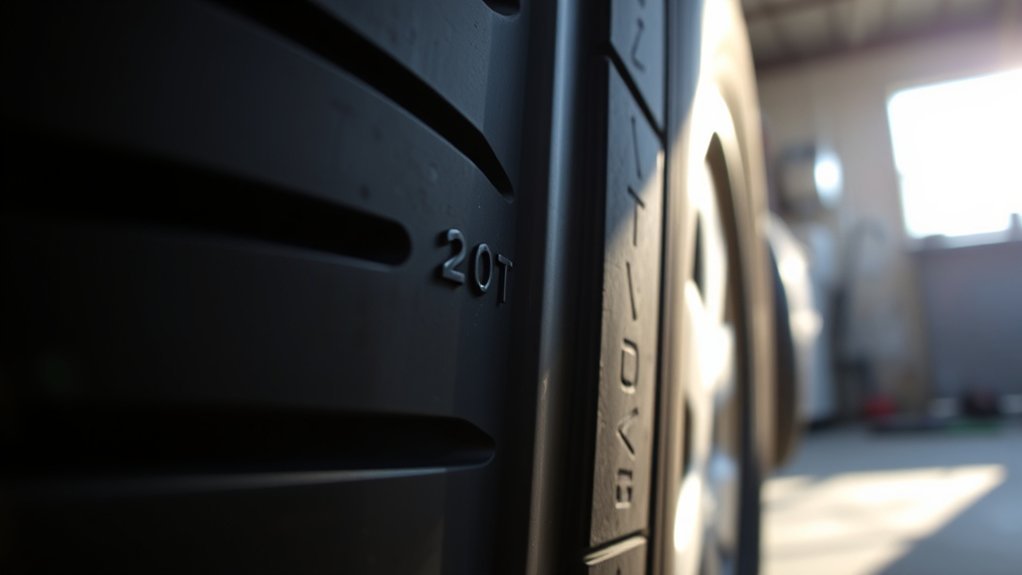
To check your tire age, find the DOT date code on the outer sidewall—it’s in a raised rectangular box. The four-digit code shows the manufacturing week and year; for example, “2319” means it was made in the 23rd week of 2019. Tires lose effectiveness after six years, regardless of their appearance. Regularly inspect for cracks or wear and consult an expert if they’re aging. There’s more to learn about tire maintenance and safety tips that can keep you on the road safely.
Where to Find the DOT Date Code on Your Tires
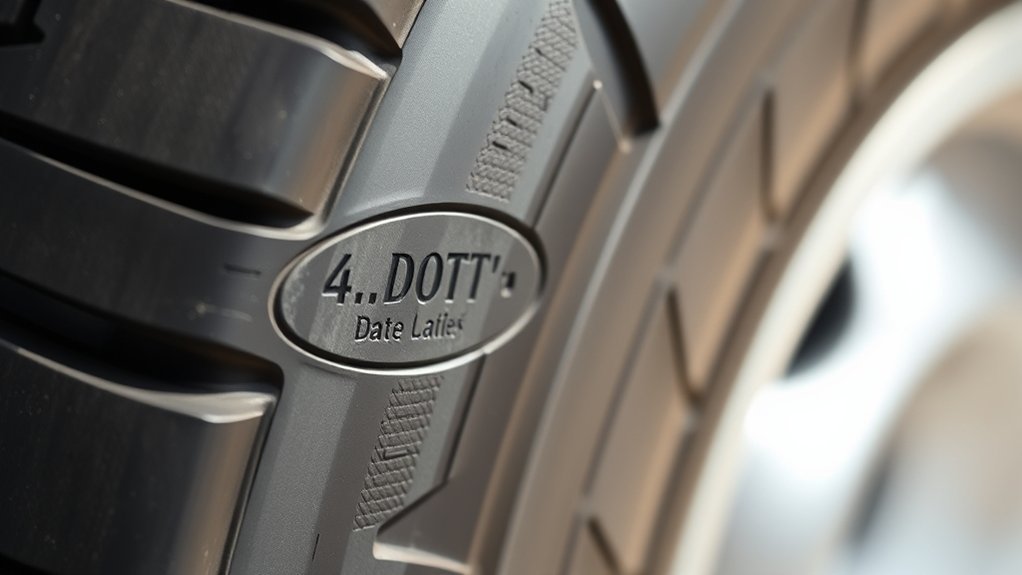
To guarantee your tires are safe and reliable, checking the DOT date code is essential. You’ll find this code on the outer sidewall of tires made after 2000, typically within a raised rectangular box. Start with a thorough sidewall inspection; scan the tire in a clockwise direction until you spot that box. The four-digit code within tells you when your tire was manufactured, with the first two digits indicating the week and the last two the year. For instance, a code like “0619” means it was made in the 6th week of 2019. If your tires have a three-digit code, it’s best to avoid them, as they could pose safety risks due to aging rubber. Regularly checking this detail helps guarantee peak tire placement and maximizes your driving experience. Stay informed and keep your journey safe!
Decoding the DOT Code: Understanding Week and Year Format
Understanding the DOT code is essential for evaluating your tire’s age and ensuring safe driving conditions. Located on the tire’s sidewall, the DOT code reveals important information about its manufacturing. The last four digits are key: the first two indicate the week of production (01-52), while the last two represent the last two digits of the year. For instance, if you see “2319,” that means your tire was made in the 23rd week of 2019.
This date coding system is mandated by the U.S. Department of Transportation for all tires intended for public road use. By decoding the DOT code, you can quickly assess your tire’s age and make informed decisions about replacement. Staying aware of your tire manufacturing date is crucial for maintaining safety and performance. So, take the time to check your tires—you’ll be driving with confidence!
Why Tire Age Matters for Safety and Performance
Knowing how to decode the DOT code helps you identify your tire’s age, but it’s just as important to understand why that age matters. Tire degradation is a natural process; rubber compounds break down over time, impacting both performance and safety. Even if a tire looks new, its effectiveness can diminish considerably after six years.
Environmental factors like heat, UV exposure, and humidity can accelerate this aging, leading to hardening and cracking. These changes can have serious safety implications, increasing the risk of tire failure while driving. Regularly inspecting your tires for signs of wear, such as cracks or bulges, is vital.
How to Inspect Tires for Other Signs of Wear?
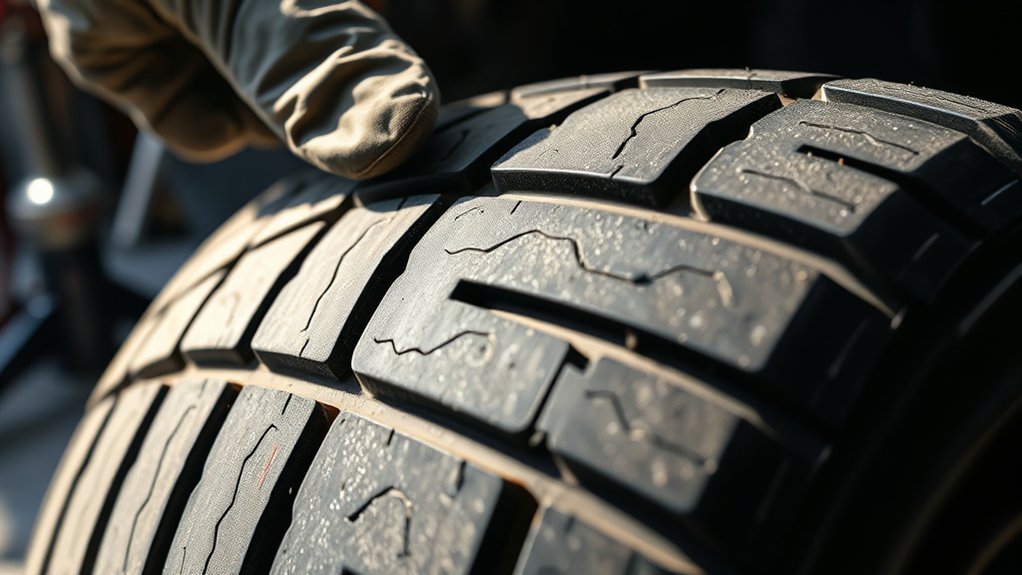
While regular checks on your tire’s age are essential, you shouldn’t overlook other signs of wear that could compromise safety. Start with a tread inspection using the penny test: insert a penny with Lincoln’s head down. If you see the top of his head, it’s time to replace the tire. Also, look for visible cracking or bulging on the sidewalls—these wear indicators can signal structural issues.
Next, monitor for uneven wear patterns, which may indicate misalignment or improper inflation. Keep an eye on tire pressure, too; under-inflated tires not only wear faster but also hurt fuel efficiency. Finally, check for foreign objects like nails or stones lodged in the tread, as they can cause leaks.
| Type of Wear | Action Needed |
|---|---|
| Shallow Tread | Replace Tire |
| Cracking/Bulging | Inspect or Replace Tire |
| Uneven Wear | Align Tires |
| Foreign Objects | Remove and Inspect Tire |
Next Steps for Aging Tires: Replacement and Safety Tips
After checking for signs of wear, it’s important to reflect on what to do next with aging tires. If your tires are over six years old or show visible signs of deterioration, it’s time to contemplate your replacement options for the sake of tire safety. Here are three key steps to take:
It’s crucial to evaluate aging tires; if they’re over six years old or deteriorating, consider replacement for safety.
- Assess the Damage: Look for cracks, bulges, or reduced tread depth. If you spot these, replacement is essential.
- Check the DOT Code: Use the last four digits to determine the manufacturing date—this gives you a clear idea of tire age.
- Consult a Professional: Always seek advice from a tire expert to guarantee you’re following the manufacturer’s recommendations and making informed decisions.
How to Spot Counterfeit Tire Dates
How can you be certain the tire dates you’re seeing are authentic? Start by checking the DOT code, which reveals the week and year of manufacture. For instance, “2319” means the tire was made in the 23rd week of 2019. Look closely at the tire’s quality and markings; authentic tires have consistent, clear printing, while counterfeit indicators might include smudged text or irregular fonts.
Be cautious of unusually low prices—these can signal counterfeit products with misleading dates. Also, verify the manufacturer’s name and logo; counterfeit tires often mimic branding but get details wrong. To confirm tire authenticity, utilize resources like the NHTSA website to check for recalls and safety reports. By being vigilant and informed, you can protect yourself from the risks associated with counterfeit tires.
Effective Maintenance Tips for Tire Longevity
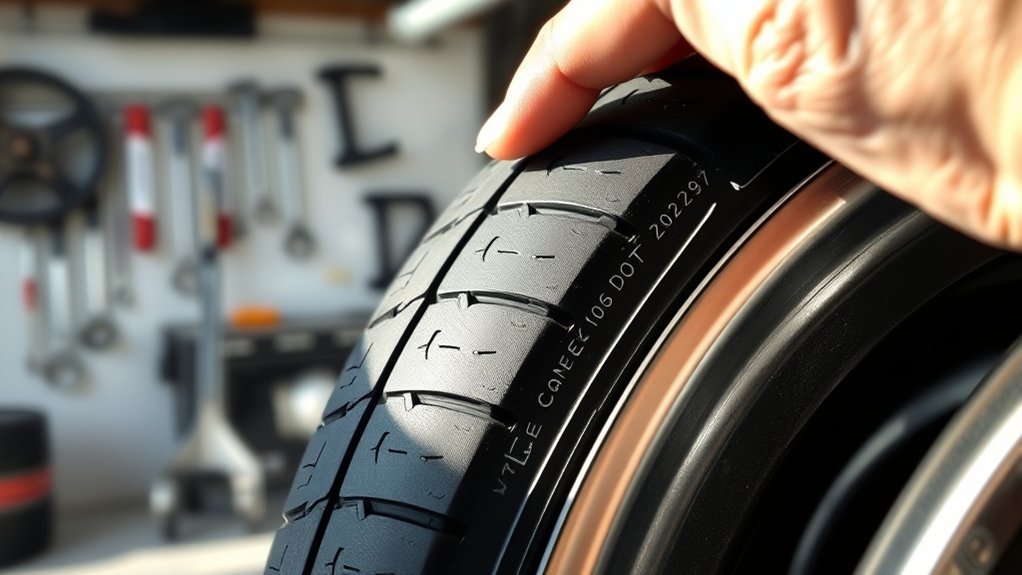
Verifying your tires are authentic is just the first step in maintaining their longevity. Effective tire maintenance can considerably extend their life and enhance your driving experience. Here are some essential longevity tips:
Verifying your tires’ authenticity is essential for safety and longevity, paving the way for a better driving experience.
- Regular Inspections: Check your tires for visible signs of wear like cracks or uneven tread. Early detection guarantees safety and performance.
- Maintain Proper Pressure: Always keep your tires inflated to the manufacturer’s recommended levels. This not only prolongs tire life but also improves fuel efficiency.
- Rotate Your Tires: Follow your vehicle’s maintenance schedule and rotate your tires every 5,000 to 7,500 miles. This promotes even wear and boosts durability.
Resources for Checking Tire Recalls Using DOT Codes
Knowing how to check for tire recalls using your DOT code is essential for your safety. You can easily access recall information through the NHTSA website by entering your tire’s brand and DOT code. Staying informed about any recalls guarantees that you address potential issues before they become dangerous.
How to Check Recalls
Wondering if your tires might be affected by a recall? Checking for recalls is essential for your tire safety. Follow these steps:
- Visit the NHTSA website: Enter your tire brand and DOT code to find any recall records.
- Stay updated: Recall information changes frequently, so make it a habit to check for announcements related to your tires.
- Contact for remedies: If your tire’s recalled, reach out to the manufacturer or local dealer for recall procedures.
Using NHTSA Resources
After checking for recalls, understanding how to use NHTSA resources can enhance your tire safety even further. The National Highway Traffic Safety Administration offers a user-friendly online tool to check for tire recalls using your tire’s DOT code. Just enter the brand or DOT code on their website, and you’ll access essential recall information, including specific production dates and batches affected. This is significant for consumer awareness, as some tires with the same DOT code may have been distributed globally. Regular updates on recall cases mean you can stay informed about potential issues, enabling you to make safer choices. Staying vigilant about tire safety can help you protect yourself and others on the road.
Understanding Recall Notifications
While tire safety is often overlooked, understanding recall notifications is essential for ensuring your vehicle remains roadworthy. Staying informed about recalls can greatly impact your safety on the road. Here’s how to check for recalls effectively:
- Visit the NHTSA website: Enter your tire brand and DOT code to find detailed recall records.
- Check all tires: Recall notifications may cover multiple tires produced in the same batch, so inspect every tire using the DOT code.
- Consult local authorities: Regional recall information can vary, especially for non-U.S. tires sharing a DOT code.
Frequently Asked Questions
Can Tire Age Affect Fuel Efficiency?
Yes, tire age affects fuel efficiency. Older tires can degrade, leading to poor tire performance and increased fuel consumption. Regularly checking your tires guarantees ideal performance, helping you save fuel and enjoy smoother rides.
How Often Should I Check My Tire Age?
You should check your tire age at least once a year during safety inspections. For instance, when Sam discovered his tires were older than recommended, he prioritized tire maintenance, boosting safety and performance on the road.
Do All Tires Have a DOT Date Code?
Yes, all tires have a DOT date code. Checking it helps guarantee tire safety and monitor tread wear. Regularly inspecting this code keeps you informed about your tires’ age, promoting safer driving experiences.
What Is the Maximum Age for Tires?
Most experts recommend replacing tires after six years, regardless of tread wear, due to safety concerns. A tire’s lifespan can diminish, so don’t ignore age; it’s essential for your safety and driving liberation.
Can Tire Age Impact Insurance Coverage?
Yes, tire age can impact insurance coverage. If your tires are older, insurers might consider them a liability during claim considerations, potentially affecting payouts. Regularly check and replace tires to maintain your coverage and safety.
Conclusion
Your tires are the unsung heroes of your vehicle, connecting you to the road like roots anchor a tree. By regularly checking the DOT date code, you can guarantee these essential components stay safe and reliable. Don’t let age creep up unnoticed; inspect for wear and consider replacements when necessary. Just as a tree thrives with care, your tires will serve you well with proper maintenance. Stay proactive, and keep your journeys safe and smooth!

Related Articles

How to Use Tire Deflators for Quick Off-Road Airing Down
I discovered how tire deflators can transform your off-road experience, but there’s more to mastering their use than you might think.
Read More
Don’t Forget Your Spare: 4Runner Spare Tire Pressure Tips
Ignore your 4Runner's spare tire pressure, and your next flat could leave you stranded—discover the trim-specific secret that saves roadside headaches.
Read More
How to Protect 4Runner Tires From Dry Rot and Cracking
B]: Block UV damage and cracking with these proven 4Runner tire protection methods that could save you thousands—but the hidden culprit most owners miss is revealed inside.
Read More