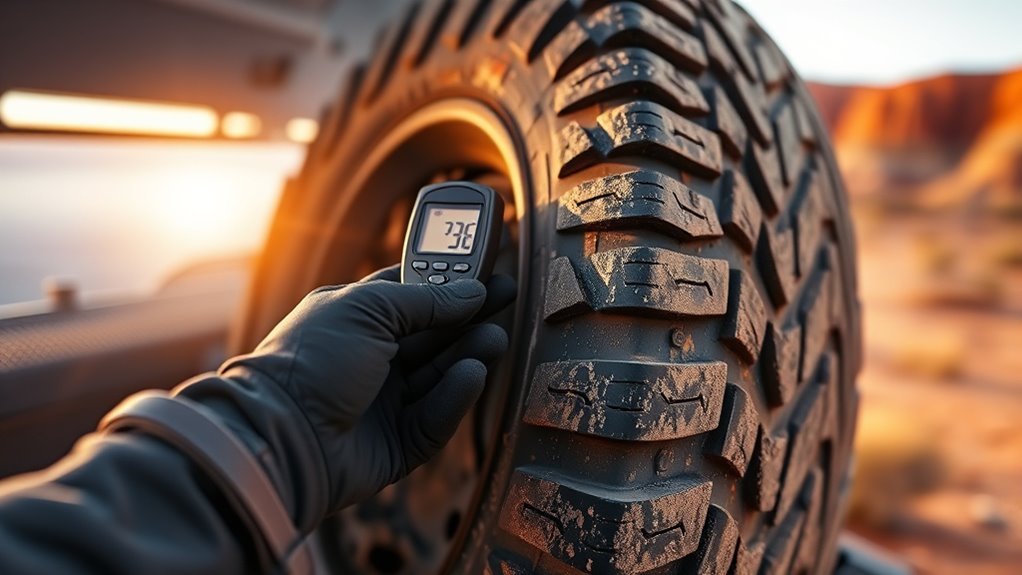
Your 4Runner spare tire should be inflated to the cold PSI shown on your driver-door tire-and-loading label. For many newer 4Runners, that may be around 33 PSI; for other years or tire packages, it may differ. The safe rule is simple: trust the placard, check the spare cold, and do not use the number molded into the tire sidewall as your target pressure.
Quick Answer
Set your 4Runner spare tire to the cold pressure listed on the driver-door tire-and-loading label. If your placard says 33 PSI, use 33 PSI. If it says 32 PSI or another value, use that instead. Check it cold at least monthly and before long trips.
Key Takeaways
- The correct spare tire pressure is the cold PSI on your 4Runner’s tire-and-loading label, not the maximum PSI on the tire sidewall.
- Check the spare when it is cold, meaning the tire has been parked for at least three hours or driven less than about a mile.
- Some 4Runner spares can be checked without lowering the tire, but valve-stem access depends on wheel design and how the spare is mounted.
- If the spare is overinflated, release air slowly, recheck often, and finish at the placard PSI.
- TPMS is helpful, but it is not a replacement for manual monthly pressure checks with a gauge.
At a Glance
| Time Required | 2–5 minutes if the valve stem is reachable; 10–20 minutes if you must lower the spare. |
| Difficulty | Easy for a pressure check; moderate if the spare must be lowered from the underbody carrier. |
| Tools Needed | Accurate tire pressure gauge, air compressor or gas-station inflator, valve cap, gloves, flashlight, and the factory spare-lowering tool. |
| Cost | Usually free if you already own a gauge; about $10–$25 for a basic gauge. |
Your 4Runner Spare Tire Pressure Starts With the Door Placard
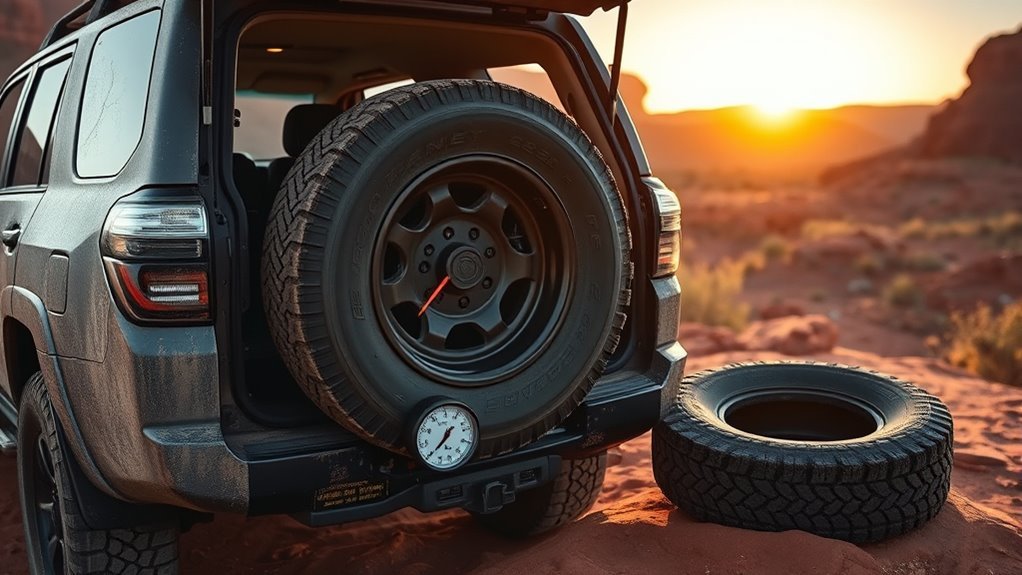
The most accurate answer is not “always 33 PSI” or “always 32 PSI.” The correct answer is the cold tire inflation pressure printed on your specific 4Runner’s tire-and-loading information label. Toyota’s owner material directs owners to that label for the recommended cold pressure and tire size.
You will usually find the label on the driver-side door jamb. It lists the original tire size and recommended cold PSI. If your 4Runner still uses the factory tire size and load rating, this is your baseline for the four road tires and the full-size spare.
Note: The PSI molded into the tire sidewall is the tire’s maximum pressure rating, not the pressure Toyota wants you to use for normal driving. Use the door placard or owner’s manual guidance instead.
For a 2025 4Runner or a 4Runner Hybrid, some tire-pressure references and owner placards commonly show 33 PSI. For many older stock 4Runners, 32 PSI is common. Because tires, trims, wheels, and model years vary, check your own placard before adding or releasing air.
Check Your Spare Tire Pressure Without Lowering It
Because the 4Runner spare is mounted under the rear cargo area, many owners assume they must lower the tire every time. Sometimes you can avoid that. Kneel safely behind the vehicle, look through the wheel openings, and see whether the valve stem faces outward enough for your gauge to reach it.
If the valve stem is visible and you can attach the gauge squarely, take the reading without lowering the tire. If the stem points upward, inward, or is blocked by the wheel design, lower the spare instead of forcing the gauge at an angle.
Pro Tip: Use a straight-on digital or stick gauge for the first check. If access is tight, a gauge with a short flexible hose often reaches the valve stem more cleanly.
Once you have the reading, compare it with the placard PSI. If it is low, add air. If it is high, release air slowly and recheck. Finish by reinstalling the valve cap, because the cap helps keep dirt and moisture out of the valve.
Which 4Runner Trims Let You Check Without Lowering?
Valve-stem access depends more on wheel design, valve orientation, and how the spare is mounted than on trim name alone. Some SR5, SR5 Premium, and Limited setups may allow direct access. Off-road trims, TRD wheels, aftermarket wheels, or a spare installed with the valve facing inward may require lowering the tire.
SR5 and Limited Valve Access
Many SR5 and Limited configurations use a spare wheel that leaves the valve stem easier to see from behind the bumper. If the valve stem faces outward, you can often check pressure in seconds. Do not assume this is true until you inspect your own spare.
Off-Road and ORP Lowering May Be Required
Off-road-oriented wheel setups may leave the valve tucked against the carrier or hidden by the wheel face. If you cannot reach the stem cleanly, lower the spare using the factory tool. It takes longer, but it prevents damage to the valve stem and gives you a better chance to inspect the tire.
TRD and Aftermarket Wheel Variations
TRD wheels and aftermarket wheels can change valve access. A spoke pattern that looks open on the road wheel may be awkward when the wheel is mounted under the vehicle. Check your exact setup in the driveway before you need the spare at night, in rain, or on a shoulder.
| Setup | Likely Access | Best Action |
|---|---|---|
| Valve stem visible through the spare wheel | Usually reachable | Check with a gauge without lowering. |
| Valve stem faces upward or inward | Usually blocked | Lower the spare for an accurate reading. |
| TRD, ORP, or aftermarket wheel | Case-by-case | Inspect the wheel orientation before a trip. |
When to Lower Your Spare to Check Pressure

Lower the spare whenever you cannot reach the valve stem cleanly, when the pressure reading seems questionable, or when you want to inspect the tire’s sidewall, tread, age, and valve condition. A pressure check is useful, but a full visual inspection is better before a long trip.
[Products Worth Considering]

The Dr.Roc spare tire tool kit helps you release, lower, or raise your spare tire with reliable extension tools and a lug nut wrench. It is made from rustproof automotive-grade steel and includes an organized carry case for convenient storage. Designed for compatibility with select GM models from the late 1990s through 2019, it uses upgraded extension components to install and remove spare tires with less hassle.

This spare tire tool kit is designed for the 2004 to 2018 Ford F-150 to help you loosen and tighten wheel lug nuts and manage the spare tire and provided jack functions from underneath the vehicle. It includes the lug nut wrench and extension pieces plus a convenient storage carrying case for organized transport. The jack itself is not included.

Milton S-921 pencil tire pressure gauge helps you maintain optimal tire pressure for passenger cars with accurate readings in PSI and kPa. It features a built-in deflator valve for convenient pressure adjustments, plus a single chuck head and nylon indicator bar for easy use on the go. Built from durable plated brass and designed for reliable performance, it’s a practical road trip and cold-weather maintenance tool.
Pre-Trip Inspections
Before a road trip, trail day, towing day, or remote drive, check the spare cold. Confirm the pressure, inspect the sidewalls for cracks or cuts, make sure the valve cap is installed, and verify that the lowering tool, jack, and lug wrench are in the vehicle.
Seasonal Pressure Changes
Tire pressure changes with temperature. A common rule of thumb is about 1 PSI for every 10°F change, and some tire-care guidance gives a range of 1–2 PSI per 10°F. That does not mean you should inflate far above the placard in winter. It means you should recheck the spare after major weather swings and adjust it to the placard PSI while the tire is cold.
| Situation | What to Do | Target |
|---|---|---|
| First cold snap | Check the spare and road tires cold. | Driver-door placard PSI. |
| Summer heat | Do not bleed air from a hot tire just because it reads higher after driving. | Recheck cold before adjusting. |
| Long trip or towing | Check all tires, including the spare, before departure. | Placard or owner’s manual load guidance. |
Post-Delivery and Post-Service Checks
Check the spare after buying the vehicle, after a tire rotation, after a spare-tire swap, and after any service that involved the underbody carrier. Some owners discover a spare that is above or below the placard pressure. Correct it before you need it on the road.
Warning: Do not crawl under a vehicle supported only by a jack, and do not work close to traffic if the vehicle is on a roadside shoulder. Move to a safe, level area first whenever possible.
How to Lower Your 4Runner Spare Tire: Step-by-Step
Practice this process once at home so it feels familiar during an emergency. Your exact tool storage location and lowering mechanism may vary by model year, so confirm the details in your owner’s manual.
- Park safely. Choose a flat, firm surface. Shift to Park, set the parking brake, turn on hazard lights if needed, and chock a wheel if the vehicle could roll.
- Find the spare-lowering tool. Open the rear liftgate and locate the factory tool kit. Many 4Runners store the tool in a rear cargo-side compartment.
- Open the access point. Remove the cover for the spare-tire winch access point near the rear cargo area or bumper area, depending on model year.
- Insert the tool. Seat the tool fully in the winch mechanism before turning. If it is not engaged, stop and realign it.
- Lower the spare slowly. Turn the tool steadily until the tire reaches the ground and the cable has enough slack to release the retainer.
- Inspect and check pressure. Read the spare pressure with a gauge, inspect the sidewall and tread, then adjust to the driver-door placard PSI.
- Reinstall securely. If you are only checking pressure, reconnect the retainer and raise the spare until it is tight against the carrier. Confirm it does not wobble.
[Products Worth Considering]

These aluminum alloy tire valve stem caps with an O-ring seal help protect valve stems from corrosion while adding a clean, stylish look to your vehicle. The universal fit works across cars, trucks, motorcycles, bicycles, and more, making them an easy upgrade for everyday driving and off-road use. Installation is quick, and the included four-pack keeps all your tires dressed and protected.

This tire inflator with pressure gauge delivers long-lasting performance with a durable rubber-protected gauge and sturdy build. The longer hose and 360 swivel air chuck help you seal the valve securely and keep your hands free while measuring, inflating, or deflating. It’s battery-free for reliable use and provides ±2 PSI accuracy in the mid-range for most typical tires, with universal compatibility for 1/4 NPT compressor outputs.
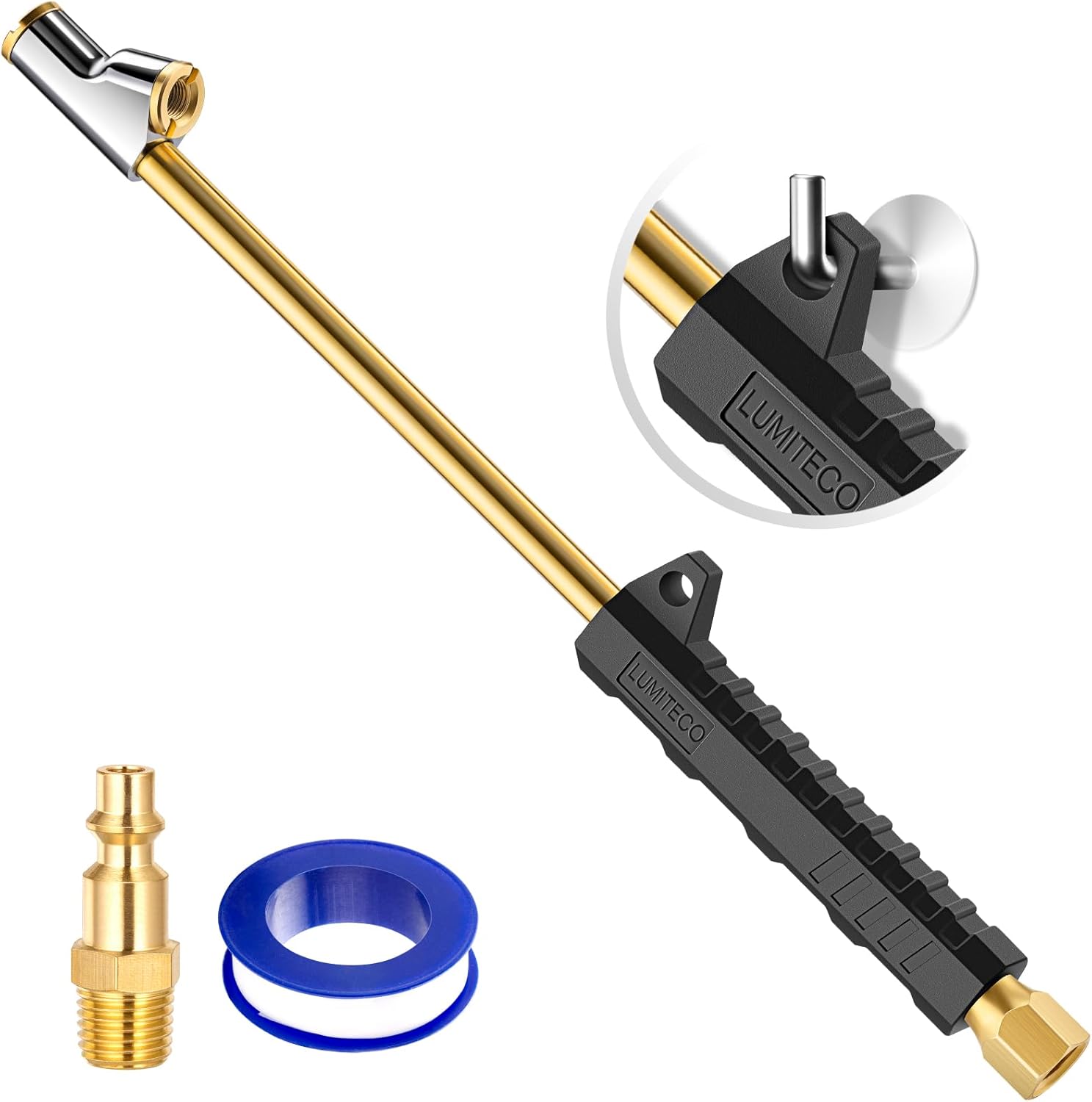
The LUMITECO 12" extended reach dual head air chuck is designed for hard-to-reach truck, RV, and bus dual wheels, making tire inflation quick and easier. It features a straight foot lock-on chuck for inner tires and a 30° reverse chuck for outer valves, with a closed-flow design that only allows air when engaged. Built with a brass body and ergonomic rubber grip, it connects easily using a 1/4" FNPT thread plus a standard quick plug for compressor-ready inflation.
How to Deflate an Over-Inflated Spare Tire
If the spare is above the placard PSI, release air in short bursts. Use the tip of your pressure gauge or a valve tool to press the center pin of the valve stem. Recheck every few seconds so you do not drop below the target.
After adjustment, press the gauge on the valve again and confirm the final cold pressure. Reinstall the valve cap. If you hear a leak, see cracking around the valve stem, or the spare keeps losing pressure, have the tire inspected before relying on it.
Note: If you accidentally release too much air, inflate the spare back to the placard PSI while it is cold. Do not leave it “close enough” if you are about to travel.
How Often to Check Your Spare

Check the spare at least once a month and before long trips. NHTSA recommends checking all tires, including spare tires, and tire-industry guidance also recommends monthly cold checks. A spare can lose pressure slowly even when it has never touched the road.
- Monthly: Check pressure cold and confirm the valve cap is installed.
- Before long trips: Check pressure, sidewall condition, tread, valve stem, jack, lug wrench, and lowering tool.
- After big temperature swings: Recheck cold pressure and adjust to the placard PSI.
- After service: Confirm the spare was reinstalled securely and still has the right pressure.
- At tire replacement time: Inspect the spare’s age and condition, not just the four road tires.
Why Your 4Runner Spare May Read Higher Than the Placard
If your spare reads far above the placard PSI, do not assume that is the correct operating pressure. It may have been inflated during delivery prep, service, storage, seasonal changes, or a previous owner’s maintenance. The fix is simple: check it cold and adjust to the pressure on your tire-and-loading label.
A spare tire is only useful if it is inflated, accessible, undamaged, and matched to your vehicle’s placard pressure.
Overinflation can reduce the tire’s contact patch and cause harsh handling if the spare is installed. Underinflation can cause heat buildup and sidewall flex. Both problems are avoidable with a monthly gauge check.
Don’t Get Stranded: Test Your Jack and Spare Tools Now
Your spare tire system includes more than the tire. You also need the jack, lug wrench, wheel-lock key if equipped, lowering tool, and enough familiarity to use them under stress. Lay everything out once in your driveway and confirm each piece is present.
Also inspect the spare itself. Look for cracking, bulges, cuts, missing valve caps, uneven wear, and an old DOT date code. If the spare is many years old or shows damage, ask a tire professional whether it should be replaced even if the tread looks unused.
Warning: A factory jack is for emergency tire changes, not under-vehicle repairs. Use the correct jacking points, keep people out of the vehicle while it is raised, and never place any part of your body under the vehicle while it is supported only by the jack.
[Products Worth Considering]

Upgrade your Toyota tire setup with these corrosion-resistant, leak-proof valve stem caps designed to help protect the valve core from water, snow, and road grime. The caps feature a snug rubber seal and durable copper alloy construction to resist rust and oxidation while maintaining stable tire pressure. Ideal for replacing worn original caps and keeping your wheels looking clean and stylish.

This heavy-duty tire pressure gauge combines measurement, inflation, and deflation in one compact tool for quick roadside and garage use. Its dual-head chuck helps reach inner and outer dual-wheel positions, while the clear indicator bar makes readings easy to see. Built for durability, it supports a wide pressure range and works across cars, trucks, RVs, SUVs, and motorcycles.

Secure a full-size spare on your trailer with this powder-coated steel spare tire mount bracket. It fits most 4-, 5-, and 6-lug wheel bolt patterns and mounts to trailer tongues up to 4 in wide and 5 in tall. Built for reliable carry with a max 150 lb load rating and includes zinc-plated hardware for straightforward installation.
Troubleshooting Common Spare Tire Pressure Problems
| Problem | Likely Cause | Fix |
|---|---|---|
| Cannot reach valve stem | Valve faces inward or wheel blocks access | Lower the spare and reinstall it with the valve positioned for easier future checks if possible. |
| Pressure keeps dropping | Valve leak, puncture, bead leak, or aging tire | Inflate for testing, apply soapy water around the valve and bead, and have a tire shop inspect it. |
| Spare winch will not lower | Tool not seated, corrosion, or stuck mechanism | Do not force it hard enough to strip the mechanism. Re-seat the tool and service the carrier if it remains stuck. |
| TPMS light is on | One or more tires may be low; systems vary on whether the spare is monitored | Check all four road tires and the spare manually with a gauge. |
Frequently Asked Questions
Do you really inflate a 4Runner spare to 60 PSI?
No. A full-size 4Runner spare should be set to the cold PSI shown on the driver-door tire-and-loading label, not 60 PSI unless a specific label or special-use instruction says so. A 60 PSI number is common on some compact temporary spares, but most 4Runner spares are full-size.
What is the 50/50 rule on spare tires?
The phrase usually refers to compact temporary spares: do not exceed about 50 mph and use the spare only for a short distance, often described as about 50 miles. It is not a rule telling you to inflate a full-size 4Runner spare to 50% above normal pressure.
What is the tire pressure for a Toyota spare wheel?
Use the pressure specified by the vehicle manufacturer. For a Toyota 4Runner, that means the cold PSI on the tire-and-loading label or in the owner’s manual. Do not use the sidewall maximum as the normal inflation target.
Can I check the 4Runner spare without lowering it?
Sometimes. If the valve stem faces outward and your gauge can attach straight to the valve, you can check it without lowering. If the stem is blocked or points inward, lower the spare for an accurate reading.
Does TPMS mean I can skip checking the spare?
No. TPMS is not a replacement for regular manual pressure checks. Systems vary by model year and configuration, and a warning may not appear until pressure is significantly low. Check the spare with a gauge monthly.
Conclusion
Your 4Runner spare is your backup plan, but only if it is inflated, accessible, and safe to use. Check the driver-door placard, set the spare to that cold PSI, inspect it monthly, and practice lowering it before an emergency. A five-minute check at home can prevent a long wait on the roadside later.
Sources
- Toyota Owners — 2025 4Runner Hybrid Tire Inflation Pressure — backs up using the tire-and-loading label for recommended cold pressure.
- Toyota Owners — 2024 4Runner Manuals and Warranties — owner manual access and Toyota-specific reference material.
- NHTSA TireWise — backs up checking all tires including spare tires, using placard pressure, and checking cold.
- U.S. Tire Manufacturers Association — Tire Care Essentials — backs up monthly checks, cold pressure, spare checks, and temperature-related PSI changes.
- Bridgestone Americas — Tire Inflation — backs up the approximate 1 PSI per 10°F temperature-change rule and cold-tire timing.
- Michelin — Tire Pressure Guide — backs up pressure-checking best practices and using vehicle-recommended pressure.