How to Air Up Tires After Off-Roading Without a Shop
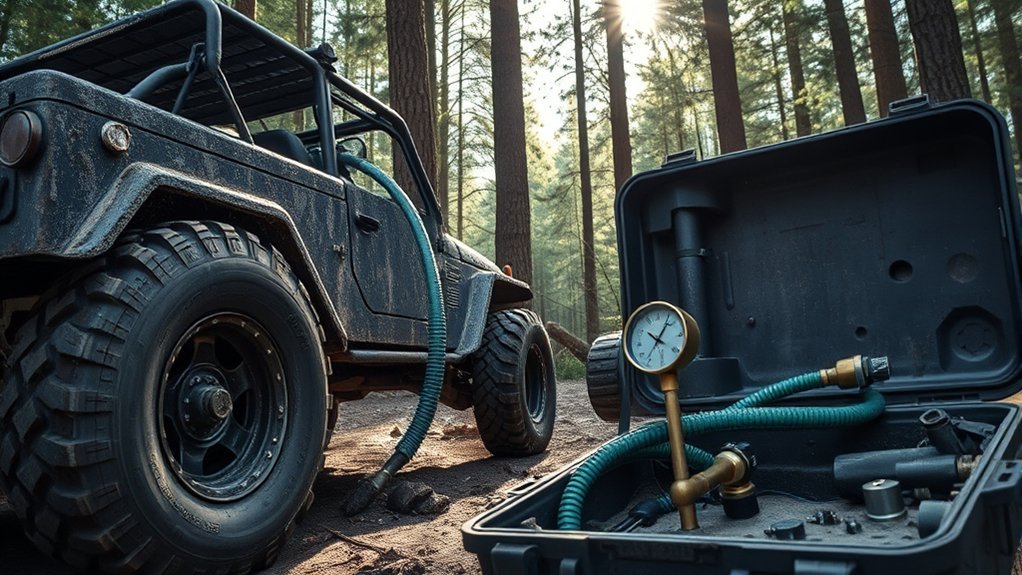
To air up your tires after off-roading without a shop, start by checking their current pressure and then choose a portable compressor or onboard air system for efficiency. Guarantee you maintain a safe inflation level of 30-35 psi. Connect the compressor to your vehicle’s battery, and monitor the pressure with a reliable gauge to avoid over-inflation. Regular maintenance of your equipment enhances performance and longevity. You’ll find essential tips for effective inflation as you continue exploring further.
Understanding the Importance of Tire Pressure After Off-Roading
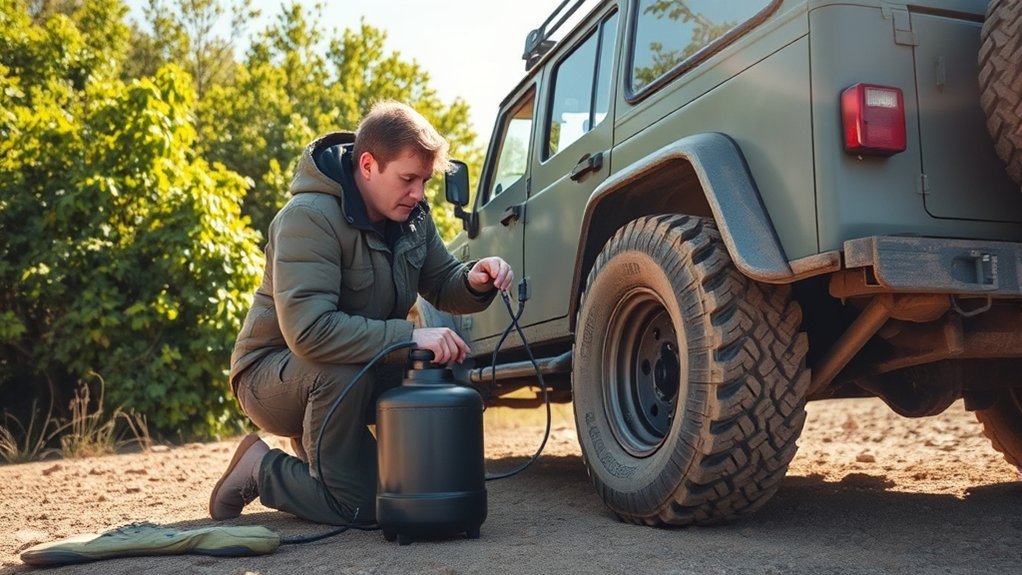
When you’ve just tackled rugged terrain, understanding tire pressure’s importance becomes crucial for your vehicle’s performance and safety. Proper tire pressure is essential for ideal tire handling, ensuring your vehicle remains stable and responsive on paved roads. After off-roading, reinflating tires to the recommended 30-35 psi safeguards against safety concerns like blowouts and poor handling characteristics.
Airing up too quickly can cause uneven heating, compromising tire integrity. Gradual inflation allows for even temperature distribution, markedly reducing risks. Utilizing reliable inflator tools like portable compressors can expedite this process, ensuring you’re ready for the next adventure.
Regularly checking and adjusting tire pressure post-off-roading not only prevents excessive tire wear but also enhances fuel efficiency, contributing to long-term tire longevity. By prioritizing proper tire pressure, you’re not just ensuring a smoother ride; you’re actively investing in your safety and freedom on the road.
Choosing the Right Equipment to Air Up Tires
When choosing equipment to air up your tires, consider the essential types of compressors available, such as portable units for budget-conscious users or onboard systems for efficiency. Evaluate the speed at which each option inflates tires, as well as how well they can accommodate your specific off-roading needs. Balancing cost with performance will guarantee you select the right tool for the job.
Essential Compressor Types
Choosing the right compressor for airing up tires after off-roading can greatly impact your experience. Here’s a quick overview of essential compressor types to examine:
| Compressor Type | Inflation Speed | Price Range |
|---|---|---|
| Portable Compressors | Slower, budget-friendly | $60 – $180 |
| Onboard Air Systems | Under 1 minute | Starting at $290 |
| PowerTank Systems | 1 minute 19 seconds | Around $700 |
| Morrflate Compressors | Simultaneous tire inflation | Varies |
When selecting, prioritize compressor maintenance and air hose compatibility. Verify features like a long power cord and a removable air hose with a quick release to enhance your efficiency on the trail.
Budget-Friendly Options
While some off-roaders may opt for high-end equipment, budget-friendly options exist that effectively meet your needs for airing up tires. Portable compressors range from $60 to $180, making them accessible for occasional enthusiasts. The Viair compressor is a standout, filling a 35” tire from 10 psi to 35 psi in just over 3 minutes, debunking inflation myths surrounding slow air-ups. When making compressor comparisons, consider that onboard air systems, while efficient, start at $290, suitable for frequent off-roaders. For those prioritizing speed, the Powertank offers rapid inflation using CO2, but it comes at a higher price. Investing in reliable, budget-friendly equipment guarantees you’ll be ready to air up without needing a shop, especially in remote areas.
Efficiency and Speed Factors
To maximize efficiency and speed when airing up tires after off-roading, selecting the right equipment is essential. Your choices can greatly affect tire maintenance and inflation techniques, ensuring you’re back on the road swiftly.
- Portable compressors: Budget-friendly but slower; ideal for casual off-roaders.
- Onboard air systems: Inflate tires in under a minute; perfect for serious enthusiasts.
- Powertank: Fills a 35” tire in just 1 minute and 19 seconds, offering silent operation.
- Morrflate compressor: Allows simultaneous inflation of all four tires, enhancing efficiency.
- Tire pressure gauge: Critical for accurate pressure checks, boosting safety and performance.
Investing in the right gear not only saves time but elevates your off-roading experience.
Portable Compressors: A Convenient Solution for On-the-Go
When you’re off-roading, having a portable compressor on hand can make the difference between a smooth ride and a frustrating experience. These budget-friendly compressors, priced from $60 to $180, offer a compact and convenient solution for quick tire inflation. For example, a Viair compressor can inflate a 35” tire from 10 psi to 35 psi in just 3 minutes and 23 seconds, showcasing its efficiency. Many models use alligator clips to connect directly to your vehicle’s battery, making them versatile and easy to use without hardwiring.
To maximize performance, focus on regular compressor maintenance; check for leaks and guarantee proper connections. When using inflation techniques, start slow to avoid over-inflation and monitor your tire pressure closely. With a portable compressor, you can quickly get back on the trail, ensuring your off-roading experience remains liberating and enjoyable.
Onboard Air Systems: Efficiency and Speed in Tire Inflation
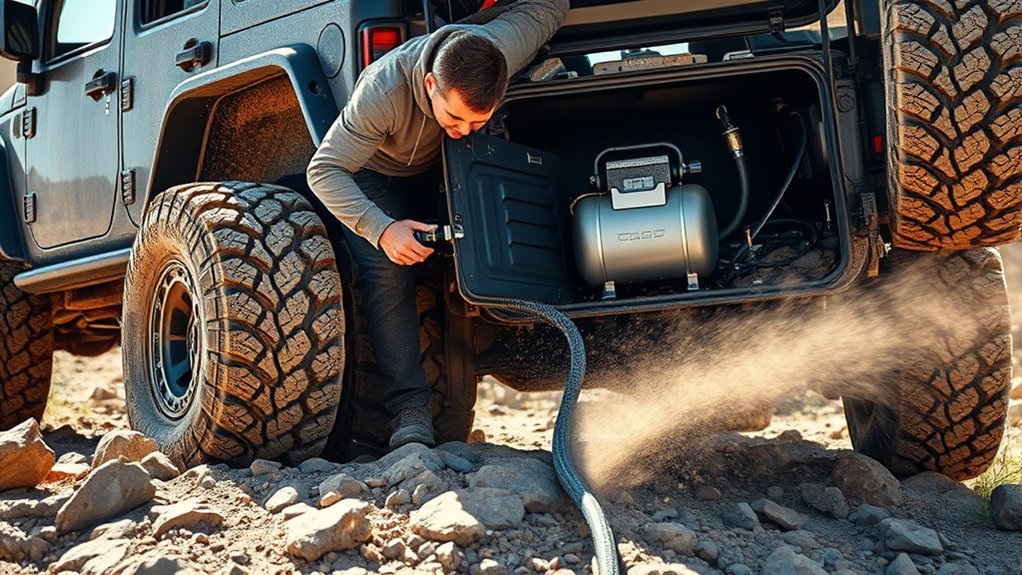
Portable compressors offer convenience, but onboard air systems take tire inflation to the next level with their speed and efficiency. These hard-mounted systems can inflate tires in under a minute, saving you valuable time on your off-road adventures. With a 100% duty cycle, they operate continuously without overheating, allowing silent inflation while you tackle other tasks.
Here are some onboard advantages:
- Fast tire inflation in under a minute
- Stability during rough terrain
- Ability to power pneumatic tools
- Engagement of locking differentials
- Durable investment starting at $290
Investing in an onboard air system not only streamlines your tire inflation process but also requires minimal compressor maintenance. This versatility makes it an essential upgrade for serious off-road enthusiasts looking to enhance their experience and freedom on the trails.
Powertank Systems: Fast and Silent Inflation Options
Powertank systems revolutionize tire inflation with their ability to fill a 35” tire in under 1 minute and 19 seconds using compressed CO2. This rapid inflation is complemented by their silent operation, allowing you to inflate tires discreetly without the noise of a motor. With a compact design, these systems are not only portable but also highly efficient for both trail and home use.
Fast Inflation Capabilities
Experience rapid tire inflation with Powertank systems, which utilize compressed CO2 to achieve impressive speeds of about 1 minute and 19 seconds for a 35” tire. This remarkable efficiency allows you to maximize your off-road adventures without lengthy downtime.
- Fill a 35” tire 10 to 40 times with a full 10lb CO2 tank.
- Maintain tire pressure effectively using advanced inflation techniques.
- Enjoy a discreet operation without the noise of traditional compressors.
- Benefit from extensive mounting and accessories included.
- Invest in a reliable solution for just around $700.
With these capabilities, Powertank systems revolutionize tire maintenance, ensuring you’re always ready for your next challenge on the trail.
Silent Operation Benefits
While off-roading, the last thing you want is the disruptive noise of a traditional compressor, which can detract from the adventure. Powertank systems offer silent operation, ensuring noise-free inflation that enhances your overall experience. You can inflate a 35” tire in just 1 minute and 19 seconds without the clatter of a motor. With a 10lb CO2 tank, you gain ample capacity for multiple inflations, promoting off-road convenience. Plus, the absence of moving parts means significant maintenance reduction, guaranteeing performance reliability when you need it most.
| Feature | Powertank Systems | Traditional Compressors |
|---|---|---|
| Noise Level | Silent | Loud |
| Inflation Speed | 1:19 for 35” tire | Slower |
| Maintenance Needs | Low | High |
| Capacity | 10-40 uses | Limited |
How to Use Your Tire Inflator Effectively
To effectively use your tire inflator, start by selecting a model equipped with a reliable gauge to monitor tire pressure during inflation. This guarantees your tires reach the recommended psi for safe driving. Here are some key techniques to enhance your inflation process:
- Check initial tire pressure with a gauge to avoid over-inflation.
- Connect your portable compressor to your vehicle’s battery or a 110v outlet using a transformer if it draws high amps at startup.
- For rapid inflation, consider using a Powertank; it can fill a 35” tire in just 1 minute and 19 seconds.
- Always reinflate tires to the recommended pressure, typically between 30-35 psi for standard vehicles.
- Maintain uniform pressure across all tires for maximum performance on paved roads.
What Not to Do When Inflating Your Tires
Inflating your tires requires careful attention to avoid common pitfalls that can compromise safety and performance. First, don’t over-inflate your tires; exceeding the recommended psi can lead to blowouts, especially after airing down for off-road conditions. Avoid using a compressor that’s not suited for high-volume inflation, as it may overheat or damage your tires due to prolonged use. Always use a reliable pressure gauge; inaccurate readings can result in under or over-inflated tires, both of which pose risks. Before inflating, check for tire damage, as sharp rocks or obstacles may have compromised their integrity. Finally, don’t neglect to monitor tire pressure consistently during inflation. This guarantees that each tire reaches the correct psi, promoting peak on-road performance and safety. By following these guidelines, you can protect your tires and enhance your off-roading experience.
How to Regularly Check and Maintain Tire Pressure
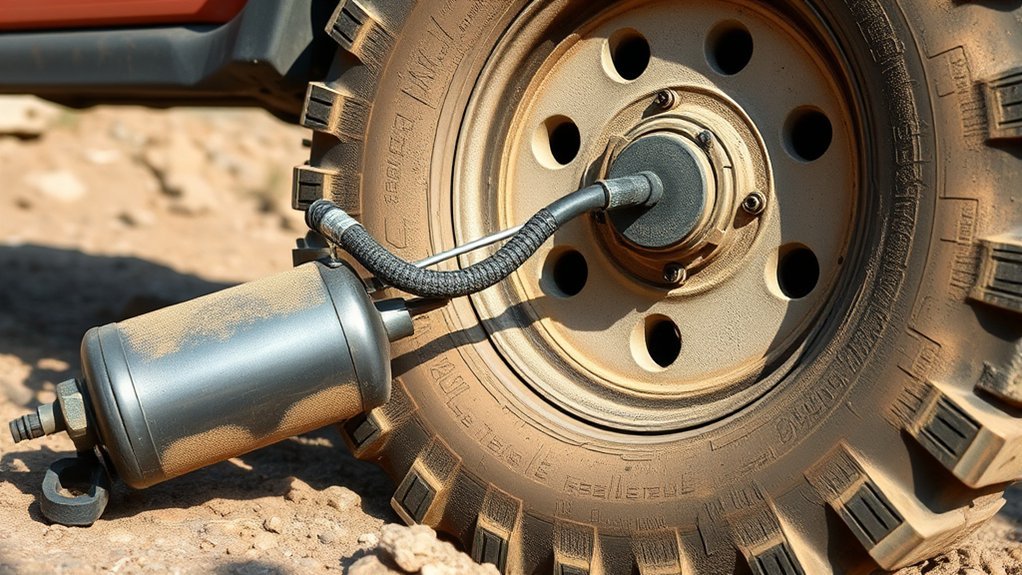
How often should you check your tire pressure? You should inspect it at least once a month and before any off-road adventures. Remember, tires can lose 1 psi for every 10°F drop in temperature, so regular pressure monitoring is essential for ideal tire maintenance.
- Use a reliable tire pressure gauge for accurate readings.
- Inflate tires to the recommended pressure in your vehicle’s manual (typically 30 to 35 psi).
- Continuously monitor tire pressure while off-roading; lower pressure can affect handling.
- Re-inflate tires to proper levels before hitting paved roads.
- Invest in a portable compressor or tire inflator for quick inflation, like the efficient ARB dual compressor.
Maintaining the correct tire pressure enhances vehicle performance and safety, ensuring your off-road experience remains liberating and enjoyable. Regular checks will keep your tires in top shape, ready for any adventure.
Troubleshooting Common Tire Inflation Issues
When you’re inflating tires after off-roading, you might encounter common issues like insufficient pressure or slow inflation rates. Identifying these problems early can save you time and guarantee your tires are safe for the road. Let’s explore effective solutions to keep your inflation process smooth and efficient.
Common Issues Encountered
While you’re enthusiastic to get back on the trail after off-roading, several common issues can hinder efficient tire inflation.
- Difficulty accessing the battery for compressor connection can be frustrating; consider using a portable compressor with alligator clips.
- Standard 12v outlet compressors often lack the power needed for high-volume inflation.
- A transformer can step down voltage from a 110v outlet, guaranteeing compressor compatibility without losing power.
- Regularly check compressor fittings and hose connections to prevent leaks.
- Tire deflators can speed up airing down, making your shift to proper tire pressure smoother.
Addressing these issues will enhance your overall experience and make sure you’re ready for your next adventure.
Effective Solutions Available
To guarantee efficient tire inflation after off-roading, consider several effective solutions that address common issues. Here’s a quick overview of options to enhance your off-road performance:
| Solution | Key Features |
|---|---|
| Portable Compressors | Fills a 35” tire from 10 psi to 35 psi in 3+ mins |
| Onboard Air Systems | Inflates tires in under a minute; supports tools |
| Powertank Systems | Uses CO2 for silent inflation in ~1:19 minutes |
| Tire Deflators | Quick adjustments for ideal tire pressure |
Utilizing these solutions will help you maintain proper tire pressure, ensuring your vehicle performs at its best on rugged terrains. Don’t overlook the convenience of a 110v outlet to power high-demand compressors for effective inflation.
User Tips for Effective Tire Inflation
Understanding effective tire inflation techniques can greatly enhance your off-roading experience. Here are some key inflation tips to keep your tires in prime shape:
Mastering tire inflation techniques is essential for optimizing your off-roading adventures and ensuring peak tire performance.
- Choose the Right Equipment: Use a portable compressor or an onboard air system for quick inflation.
- Opt for a Powertank: For rapid refills, a Powertank can inflate a 35” tire in about 1 minute and 19 seconds.
- Maintain a Reliable Power Source: Verify your compressor has a dependable power source, like alligator clips to your battery.
- Use a Tire Pressure Gauge: Regularly check your tire pressure to guarantee it’s ideal for performance and safety.
- Deflate Before You Inflate: Consider using automatic tire deflators to lower pressure before reinflating, making the process smoother.
Frequently Asked Questions
What Is the 3% Tire Rule?
The 3% Tire Rule states you shouldn’t exceed a 3% increase in tire pressure after driving. For off-road safety, guarantee your tires stay within this limit to maintain ideal traction and prevent over-inflation.
What Is the 7 7 Rule for Tires?
The 7 7 rule suggests you lower your tire pressure by 7 psi from the recommended level for off-road safety. This adjustment enhances traction and stability, optimizing your vehicle’s performance on challenging terrains.
What Can I Use if I Don’t Have an Air Pump?
If you’re stranded without an air pump, think outside the box. Use a portable compressor or a Powertank for tire inflation alternatives. DIY air solutions can transform your off-roading experience, keeping you liberated on the trails.
Conclusion
In conclusion, keeping your tires properly inflated after off-roading isn’t just a good practice; it’s essential for your vehicle’s performance and your safety. By choosing the right equipment and following best practices, you can easily avoid the pitfalls of under-inflation. Think of it as giving your tires a little TLC rather than a chore. With regular checks and maintenance, you’ll guarantee a smooth ride on and off the beaten path. Happy trails!

Related Articles
How to Plug a Tire on a 4Runner in an Emergency
Learn the essential steps to plug a tire on your 4Runner in an emergency and discover tips that could save you in unexpected situations.
Read More
How Long Does a Tire Patch Last on a 4Runner Tire
Just how long can a vulcanized patch survive on your 4Runner's tire before hidden dangers emerge?
Read More
How to Reseat a Tire Bead Off-Road in an Emergency
Discover the ratchet strap trick that off-roaders use to reseat tire beads when stranded miles from help.
Read More