
4Runner Tires for Rock Crawling: What You Need to Know
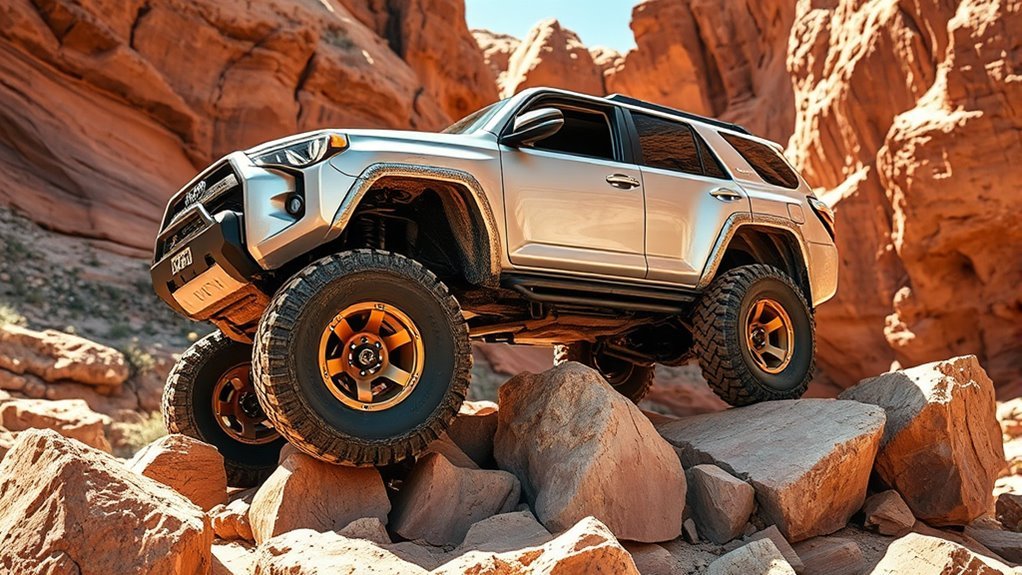
You can build a 4Runner that crawls cleanly over ledges, slickrock, and loose boulder fields, but the tire choice has to match the rig. The best setup is not always the biggest tire or the softest compound. For most 4Runner owners, the right answer is a DOT light-truck mud-terrain or aggressive hybrid tire in a realistic size, aired down correctly, with enough sidewall strength for the vehicle’s actual weight.
Quick Answer
For a rock-crawling 4Runner, start with a strong LT tire, reinforced sidewalls, and a size you can clear without destroying drivability. A 33-inch tire is the easiest serious upgrade, while 35s are for committed builds with trimming, gearing, and spare-tire planning. True sticky competition tires grip harder but are usually trail-only.
Key Takeaways
- A “sticky” tire means a softer compound that conforms to rock, but not every sticky tire is safe or legal for street use.
- 33-inch tires are the practical sweet spot for many 4Runners; 35s bring more clearance but usually require trimming, wheel planning, and gearing consideration.
- Load Range E is useful for heavy armored rigs, but load index and proper inflation matter more than the letter on the sidewall.
- Airing down improves traction, but low PSI is for trail speeds only. Reinflate before driving on pavement at speed.
- Avoid recommending UTV/SxS tires as normal 4Runner tires. Use DOT light-truck tires for daily-driven rigs.
At a Glance
| Time Required | 1–2 hours to research and measure; a full day or more if fitting 35s with trimming and alignment work. |
| Difficulty | Moderate for 33s; advanced for 35s or 37s because clearance, gearing, steering, and braking all become part of the build. |
| Tools Needed | Tape measure, tire-pressure gauge, deflators, portable air compressor, torque wrench, jack, jack stands, and access to a tire professional for mounting. |
| Cost | About $1,200–$2,500 for four or five LT off-road tires; more if wheels, beadlocks, trimming, gears, suspension, or steering upgrades are needed. |
What “Sticky” Means for 4Runner Rock Crawling
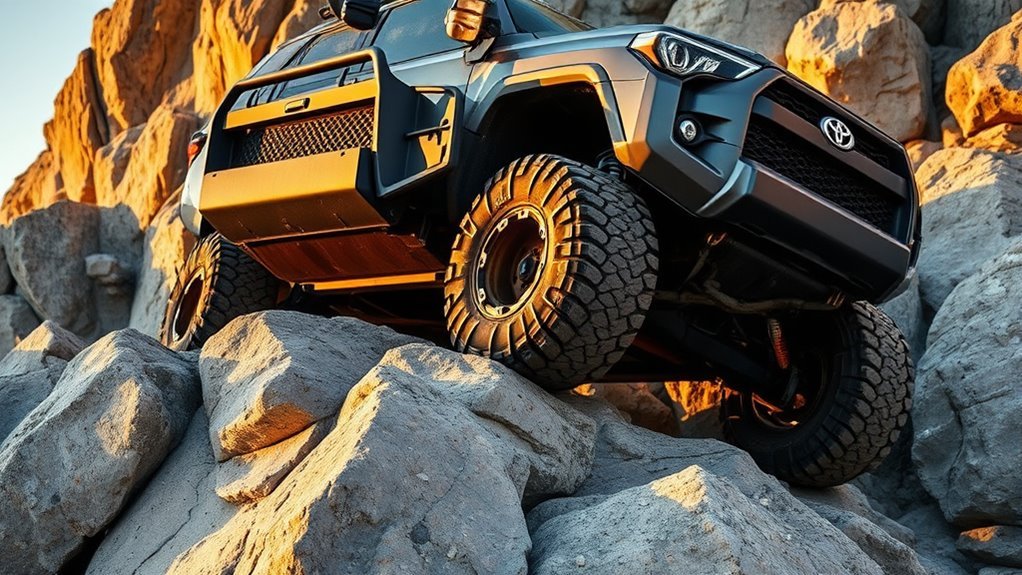
In rock crawling, “sticky” describes a tire compound that is softer and more compliant than a normal all-terrain or highway tire. Instead of skipping across slickrock, the rubber deforms around small edges, ledges, and uneven surfaces. That creates more mechanical grip at low speed.
The important catch: true sticky competition tires are not the same thing as DOT light-truck tires. Some extreme sticky tires are built for buggies, UTVs, or trailer-only crawlers. They may have low maximum pressure, low load capacity, no street approval, short tread life, or sizing that does not make sense for a full-weight 4Runner.
Warning: Do not assume a tire is safe for road use just because it is 35 inches tall. Check for DOT markings, load index, wheel size, speed rating, and the manufacturer’s intended vehicle type before mounting it on a street-driven 4Runner.
For most 4Runner owners, the smarter path is a DOT LT mud-terrain or aggressive hybrid tire with a strong carcass, deep sidewall lugs, and good aired-down behavior. You give up some pure competition grip, but you gain load capacity, highway stability, braking consistency, and legal road manners.
[Products Worth Considering]
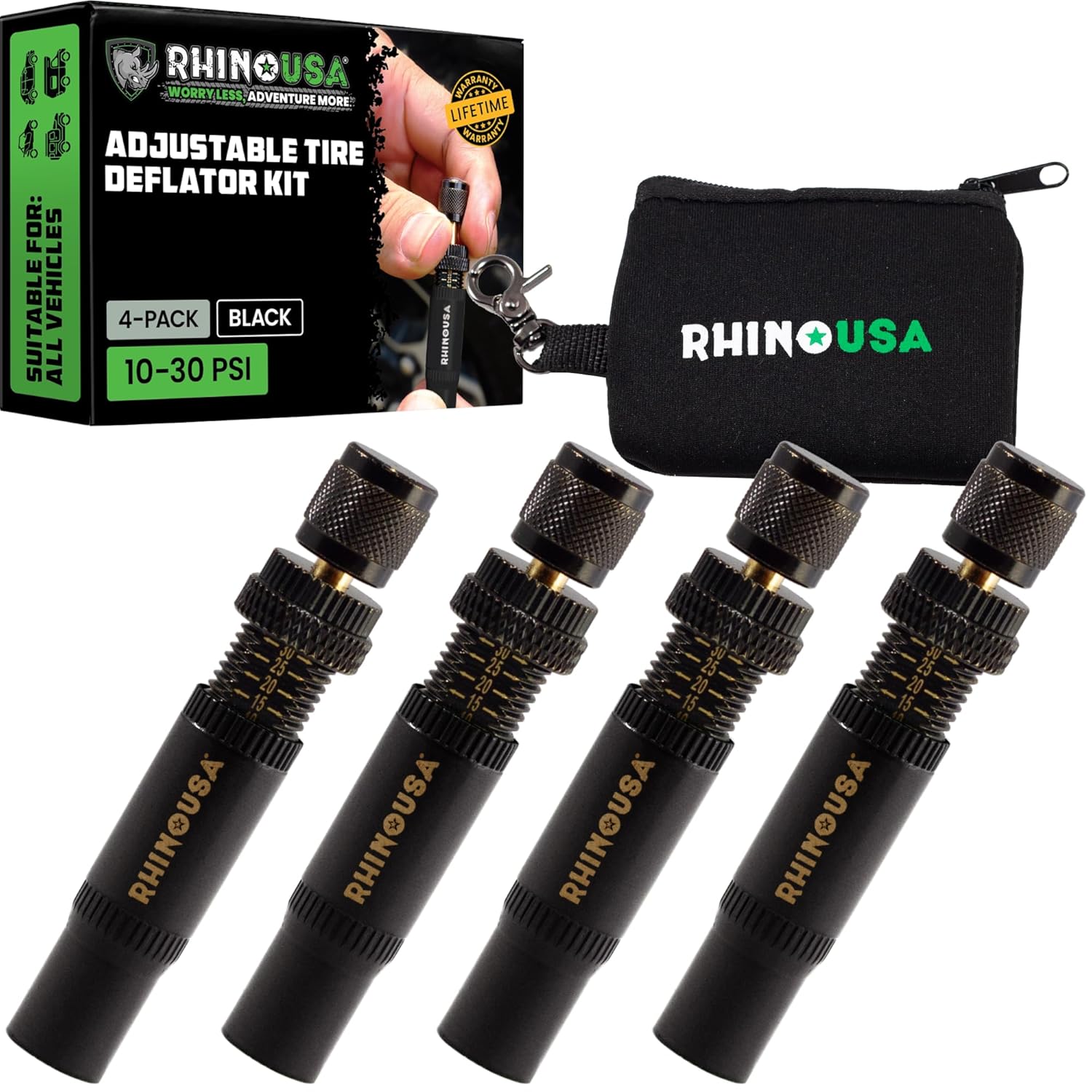
Use the Rhino USA adjustable tire deflators to air down all four tires at once by screwing one deflator onto each valve stem, letting you step away while the tires reach your preset pressure. Each deflator independently adjusts across a 10–30 PSI range with laser-etched indicators for quick setup and verification, making it ideal for beach, sand, and rocky off-road trails.

Secure your parked vehicle quickly with AFA Tooling 4T rubber wheel chocks in a 4-pack for two dual-wheel sets. The ribbed design and textured base grip fast without pounding, so you can chock tires on trailers, RVs, ATVs, and work vehicles with confidence. EZ rustproof handles with rope ties keep the pair together for easy placement and removal, while nylon-reinforced rubber stands up to dirt, ice, salt, and harsh weather.

The Tymate TM3 RV TPMS delivers real-time tire pressure monitoring from 0 to 144 PSI with accurate readings and dependable wireless communication. It includes four external sensors with pre-pairing, six alarm modes for rapid leak, pressure extremes, temperature, and signal loss, plus an easy-reference setup for alert thresholds. Solar and USB-C charging help keep the display powered, while the color LCD and adaptive backlight improve visibility for safer driving and towing.
Are 35-Inch Tires Right for 4Runner Rock Crawling?
Thirty-five-inch tires are popular on serious 4Runner builds because they add clearance under the differential, increase approach confidence, and create a longer footprint when aired down. They also look right under a built truck. That does not make them the default answer.
Toyota’s own modern off-road 4Runner reference point is helpful here: the 2025–2026 Trailhunter and TRD Pro are marketed with 33-inch Toyo all-terrain tires, not 35s. That does not mean 35s are wrong. It means 35s move you from “factory-style off-road upgrade” into “modified build” territory.
On many 4Runner setups, 35s can bring rubbing at the fender liner, body mount, cab mount, bumper, mud flap area, upper control arm, or sway-bar area depending on wheel width and offset. They can also affect braking, steering weight, acceleration, fuel economy, crawl ratio, spare-tire storage, and speedometer accuracy.
Note: A tire’s advertised size is not always its true mounted diameter. A “35” may measure closer to 34.4–34.8 inches depending on brand, load rating, wheel width, and inflation.
33s, 35s, or 37s? Sizing Tradeoffs Explained
Pick tire size by clearance, gearing, terrain, and how much cutting you are willing to do. Bigger tires are not automatically better if they make the truck sluggish, unstable, or unreliable.
| Tire Size | Best For | Main Benefit | Main Tradeoff |
|---|---|---|---|
| 33s | Daily-driven trail 4Runners | Strong capability with fewer fitment problems | Less belly and diff clearance than 35s |
| 35s | Committed rock-crawling builds | Better clearance and longer aired-down footprint | Usually needs trimming, wheel planning, and gearing review |
| 37s | Highly modified trail rigs | Maximum obstacle clearance | Heavy, expensive, hard on steering, axles, gearing, and brakes |
If your 4Runner still sees long highway trips, 33s or a mild 34-inch metric size often give the best real-world balance. If you trailer the truck to hard trails and accept cutting, 35s make more sense. If you want 37s, think of the tire purchase as only the first line item in a much larger drivetrain and steering project.
Load Ratings That Matter for Built 4Runner Crawlers
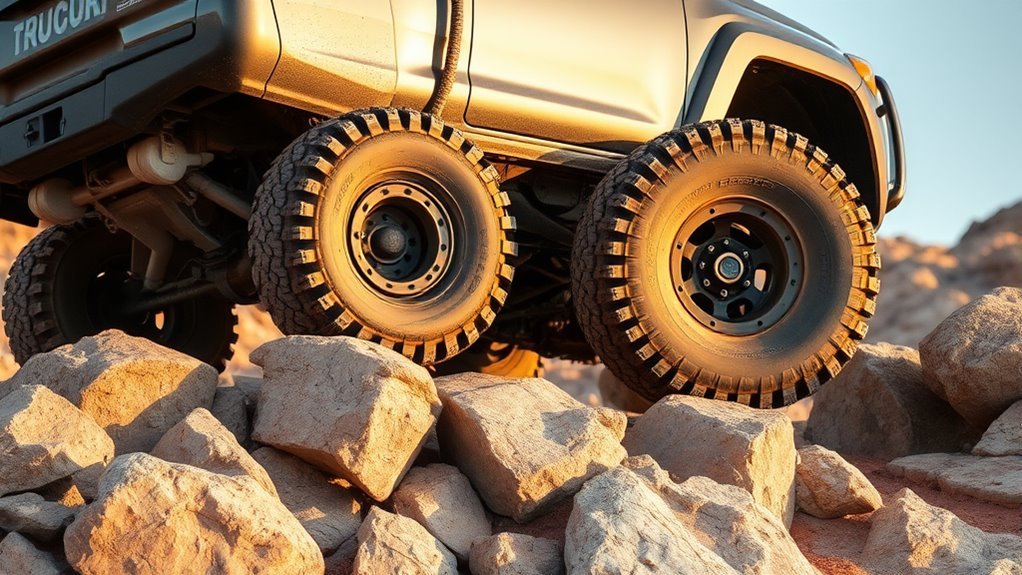
Load range matters, but it is not the whole story. The number you should respect first is the tire’s load index and maximum load at a given pressure. Then compare that against your actual vehicle weight, axle weight, armor, winch, tools, passengers, water, camping gear, and recovery equipment.
Load Range Essentials
Load Range E tires are common on heavy off-road builds because they often have stronger casing construction and higher load capacity than lighter-duty versions. They can be a good match for a 4Runner with steel bumpers, skids, sliders, roof rack, drawer system, fridge, and camping weight.
That said, E-rated tires can also be heavy and stiff. A lighter 4Runner may ride and conform better on a C- or D-rated LT tire if the load index is still safely above the vehicle’s needs. Do not buy the letter alone. Match the tire to your measured rig, not to an internet rule.
When switching from a P-metric tire to an LT or flotation-size tire, the pressure on the door placard may not directly carry over. Use the tire manufacturer’s load-inflation data or a qualified tire shop to set a safe road pressure.
Weight Distribution Impact
Rock-crawling 4Runners often gain weight unevenly. A steel front bumper and winch load the front axle. A drawer system, spare tire carrier, tools, and water shift weight rearward. A rooftop tent raises the center of gravity.
That extra weight changes how the tire sidewall works on rocks. Too little tire for the build can roll the shoulder, heat the casing, or damage sidewalls. Too much tire can add unsprung weight and make the suspension less responsive. The best setup carries the load safely while still flexing enough to grip.
Picking Tread Patterns for Your Local Rock
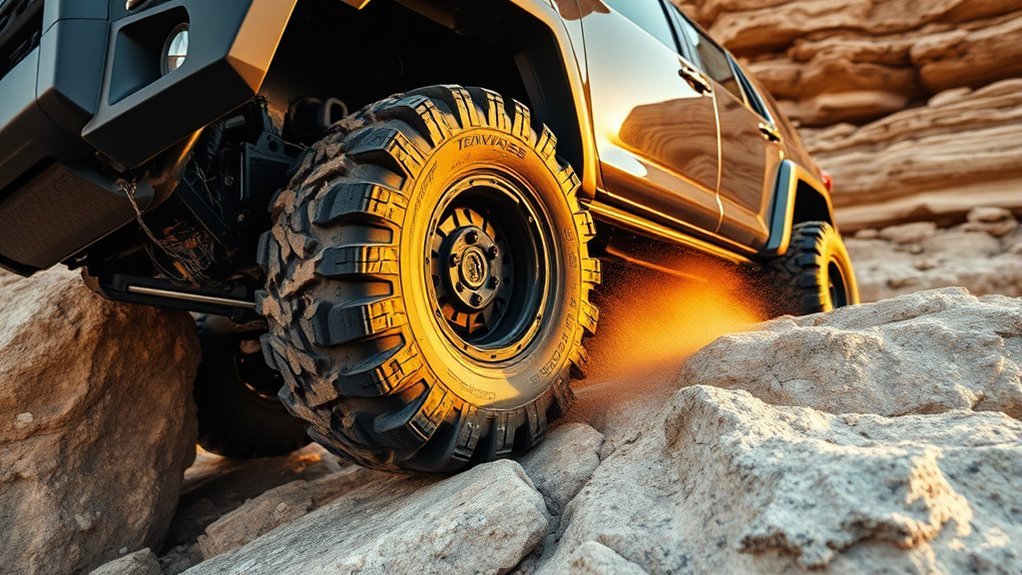
Your local rock should decide your tread. Slick sandstone, sharp granite, loose river rock, and mud-covered boulders all ask different things from the tire.
| Terrain Type | Best Tread Pattern | Compound Priority | Sidewall Priority |
|---|---|---|---|
| Jagged granite | Aggressive lugs with strong shoulder blocks | Cut-resistant soft-to-medium compound | High |
| Smooth sandstone | Moderate voids with siping | Conformity and contact patch | Medium |
| Loose river rock | Wide footprint with staggered biting edges | Grip plus durability | High |
| Mud-coated boulders | Self-cleaning mud-terrain lugs | Chip resistance and clean-out | High |
| Mixed alpine trails | Hybrid or mild mud-terrain | Wet grip and tread life | Medium to high |
For a street-driven 4Runner, a full mud-terrain usually beats a pure sticky tire because it balances off-road bite with road braking, load capacity, and tread life. For a trailered crawler, a competition sticky can make sense if the tire’s load, wheel, and vehicle-use limits all check out.
Tire Pressure for Maximum Rock-Crawling Grip
Airing down is one of the biggest traction gains you can make on rocks. Lower pressure lets the tread flatten, lengthen the contact patch, and wrap around ledges instead of bouncing off them. The correct number depends on tire size, wheel width, vehicle weight, sidewall stiffness, terrain, and whether you run beadlocks.
Use these as starting points, not final rules:
- Standard wheels, daily-driven 4Runner: start around 16–20 PSI on rough trails, then adjust carefully.
- Technical rock on standard wheels: many rigs work in the 12–16 PSI range, but debeading risk increases as pressure drops.
- Beadlock wheels or trail-only setups: 8–12 PSI can work for slow crawling when the wheel, tire, and driver experience support it.
- Highway driving: air back up to a safe road pressure before speed, heat, and load build up.
Warning: Low PSI is for low-speed trail use. Driving fast on underinflated tires can overheat the casing, damage the tire, and create a serious failure risk.
Carry a real pressure gauge, not just deflators. Check all four tires after a temperature change, after a long crawl, and before leaving the trailhead. If one tire drops faster than the others, inspect the bead, valve stem, and sidewall before continuing.
Wheel Width, Offset, Beadlocks, and Spare Fitment
The tire is only half the setup. Wheel width and offset decide where the tire sits in the wheel well. A wider 12.5-inch tire may clear the upper control arm but hit the body mount or fender sooner. A narrower 10- to 11.5-inch tire may tuck better, steer easier, and fit the spare location more cleanly.
Beadlock wheels help hold the tire bead at very low pressure, which is useful for slow crawling. They also add cost, weight, maintenance, and sometimes street-legality questions depending on the wheel and local regulations. If you run non-beadlock wheels, stay more conservative with PSI and steering input.
Pro Tip: Buy five matching tires if you wheel hard. A full-size spare keeps traction, ABS behavior, and drivetrain strain more predictable after a trail puncture.
[Products Worth Considering]

Camco Trailer Aid Plus tandem tire ramp lifts your trailer for quick, safe tire changes with ample clearance from its 5 1/2-inch lift. It helps you change a flat tire without unloading cargo, making roadside and routine maintenance more efficient. The heavy-duty, waterproof and rustproof polymer design supports up to 15,000 lb and is built for easy portability and storage.

This cordless portable tire inflator delivers fast, safe inflation with an automatic shutoff when the target pressure is reached, helping prevent overinflation. The built-in LED lighting and real-time digital display make it easier to check pressure and handle roadside tire changes at night. It includes multiple nozzles for use on cars, motorcycles, bicycles, and inflatables like balls and swimming rings.
Making Sticky Tires Last on Your 4Runner
Soft rubber grips well, but it wears faster when abused. You can extend tire life with simple habits after every hard trail day.
- Inspect every sidewall and tread block. Look for cuts, missing lugs, exposed cords, sliced valve stems, and rocks trapped near the bead.
- Wash mud and grit out of the tread. Dirt, grit, and embedded stones accelerate wear and can hide casing damage.
- Rotate consistently. For aggressive tires on a heavy 4Runner, a 3,000–5,000 mile rotation interval is a smart target.
- Check torque and pressure. Recheck lug torque after wheel work and verify cold pressure before every highway drive.
- Watch tire age. Even deep tread can be unsafe if the casing is old, cracked, or heat-damaged.
Sticky and mud-terrain tires reward smooth driving. Wheelspin tears lugs. Bouncing shocks the sidewall and drivetrain. A low, steady crawl usually beats throttle.
When Bigger Tires Force Axle and Gear Upgrades
Larger tires change leverage. They effectively raise the final drive ratio, which can make the 4Runner feel lazy off the line and weaker in low-speed crawling. The simple way to think about it is this: if you increase tire diameter, you reduce mechanical advantage unless you change gears.
Use this rough formula:
New gear target ≈ current axle ratio × new tire diameter ÷ old tire diameter.
That math does not choose the perfect gear by itself, but it shows why 35s can make stock gearing feel taller. Add bumper weight, armor, roof load, and mountain highways, and regearing becomes more attractive.
Gears are not the only weak link. Bigger tires can also stress CV axles, tie rods, wheel bearings, brakes, steering racks, and suspension bushings. A 35-inch tire may be manageable on a careful driver’s rig. A 37-inch tire usually pushes the 4Runner into a much more serious build plan.
Sticky 4Runner Tires Worth Considering in 2026
The best tire depends on whether your 4Runner is a daily driver, a weekend trail rig, or a trailered crawler. Do not mix those categories when shopping.
Best DOT Light-Truck Options for Street-Driven 4Runners
These are not pure competition stickies, but they are the more realistic choices for most 4Runner owners who still drive to work, the trailhead, and home.
- BFGoodrich Mud-Terrain T/A KM3: A proven mud-terrain with Krawl-TEK compound and a Linear Flex Zone designed to help the tire flex around obstacles when aired down.
- Mickey Thompson Baja Boss M/T: A strong pick for aggressive trail use with Sidebiters, Powerply XD 3-ply construction, stone ejectors, and a silica-reinforced compound.
- Interco IROK: A very aggressive option for owners who prioritize trail traction. Check the exact size because DOT approval, construction, and road manners vary by version.
Competition and Trail-Only Sticky Options
True sticky tires can be incredible on rocks, but they are not automatic 4Runner recommendations. The Maxxis Roxxzilla, for example, is built for extreme rock and desert terrain with select competition “sticky” compound sizes, but its common sizing and specifications are aimed at the UTV/SxS and competition world, not a normal street-driven 4Runner.
The same caution applies to UTV tires such as OBOR RocScraper, Valor Alpha H2, and EFX MotoCrusher. They may be excellent for their intended platforms, but a full-weight 4Runner needs the correct load rating, tire construction, wheel size, road approval, and manufacturer-supported use case.
Compound Benefits Explained
A softer compound helps the tread blocks conform to rock. That creates grip at low speed, especially on sandstone, granite slabs, and ledges where wheelspin is your enemy. The downside is faster wear, more heat sensitivity, and more chunking if you drive aggressively on sharp rock or pavement.
For a dual-purpose 4Runner, choose the softest tire that still meets your road, load, and tread-life needs. For a trail-only crawler, you can bias harder toward maximum grip because highway manners no longer matter as much.
Frequently Asked Questions
Do beadlock wheels improve rock crawling performance?
Yes, beadlock wheels can improve rock crawling because they help keep the tire bead seated at lower PSI. That lets you run a larger footprint with less fear of debeading. They are most useful for slow technical crawling, but they add cost, maintenance, and possible street-legality concerns depending on the wheel and local rules.
Can I daily drive sticky rock-crawling tires?
You can daily drive many DOT mud-terrain tires, but true sticky competition tires are usually a poor daily-driver choice. They can wear quickly, make more noise, handle worse in wet conditions, and may not be approved for highway use. For a daily-driven 4Runner, choose a DOT LT tire instead of a UTV or competition-only sticky.
What is the best tire width for 4Runner rock crawling?
A 12.5-inch-wide tire is common for 35-inch LT mud-terrains, but it is not always easiest to fit. Narrower 10- to 11.5-inch tires can steer better, tuck better, and reduce rubbing. Choose width based on wheel offset, suspension clearance, body mount clearance, and the type of rock you drive.
Do rock-crawling tires affect fuel economy significantly?
Yes. Heavy mud-terrain tires, larger diameter, aggressive tread, and lower gearing needs can all reduce fuel economy. The exact loss depends on tire weight, size, tread design, vehicle weight, driving speed, and gearing. Expect a noticeable drop when moving from stock-size all-terrains to heavy 35-inch mud-terrains.
How often should I rotate tires for rock crawling?
Rotate aggressive off-road tires every 3,000–5,000 miles, or sooner if you see uneven wear. Include the spare in the rotation if it is the same size, model, and wear level. Rock-crawling tires live a hard life, so inspect them after every trail day.
Can I fit 35-inch tires on a stock 4Runner?
Do not plan on 35s as a simple stock fitment. Depending on generation, trim, wheel offset, and tire model, 35s usually require suspension changes, trimming, liner work, body mount clearance, alignment, and spare-tire planning. A 33-inch tire is the more realistic upgrade for many owners.
Do I need to regear for 35-inch tires?
You may not need to regear immediately, but many heavy 4Runner builds feel better with deeper gears after moving to 35s. Regearing helps restore low-speed control, transmission behavior, and drivability, especially with armor, camping weight, mountain driving, or frequent crawling.
Conclusion
The best 4Runner rock-crawling tire is the one that matches your actual rig, not the one with the biggest sidewall number. If you daily drive the truck, start with a DOT LT mud-terrain or aggressive hybrid tire, realistic sizing, correct load capacity, and a safe air-down routine. If you are building a trailer-only crawler, then true sticky competition tires become a serious option.
For most owners, 33s are the cleanest capability jump, 35s are the committed-build sweet spot, and 37s are a full-system project. Choose the tire after you measure clearance, weight, gearing, wheel specs, spare location, and the trails you actually drive.
Sources
- Toyota Trailhunter official page — factory 33-inch tire context for modern Toyota off-road trucks, including 4Runner Trailhunter.
- NHTSA TireWise — tire safety, load limits, pressure, and maintenance guidance.
- BFGoodrich Mud-Terrain T/A KM3 — Krawl-TEK compound, aired-down flex, and tire safety warnings.
- Mickey Thompson Baja Boss M/T — sidewall, compound, construction, and LT tire size data.
- Maxxis Roxxzilla — competition sticky compound and extreme rock-crawling tire specifications.
- Interco IROK — aggressive off-road tire construction, DOT notes, and terrain-use details.

Related Articles

When to Switch From All-Season to Winter Tires on a 4Runner
Ineffective all-season tires in cold weather can jeopardize your safety—discover when to make the crucial switch for better traction and handling.
Read More
4Runner Tire Mileage: How Many Miles Should They Last
Curious about how long your 4Runner tires should last? Discover essential tips and factors that influence tire longevity.
Read More
How Long Do Toyota 4Runner Tires Typically Last
How long do Toyota 4Runner tires typically last? Discover the factors that influence tire longevity and essential tips for maintenance.
Read More