
17-Inch vs. 18-Inch Tires on Toyota Camry: Handling and Comfort Trade-offs
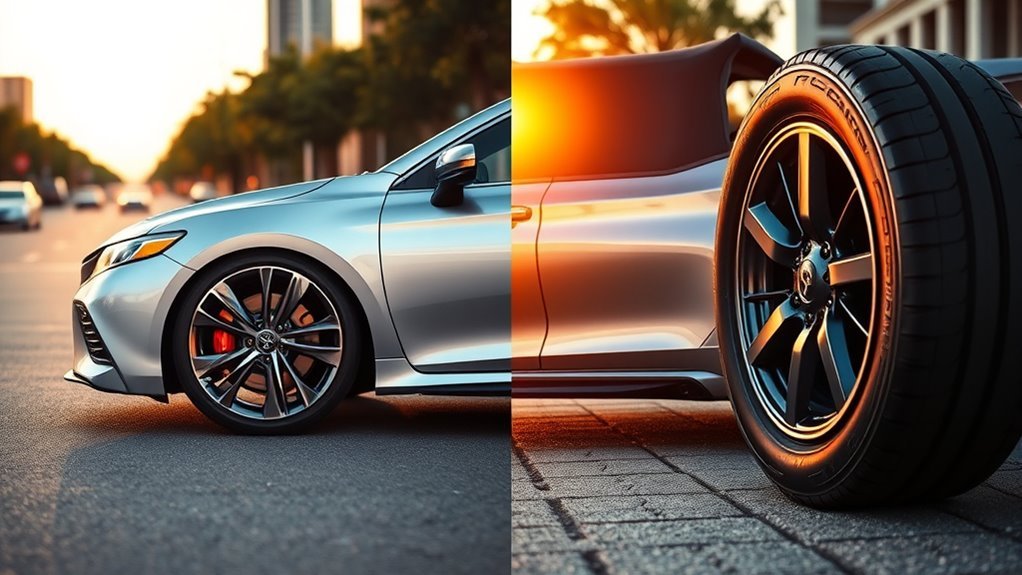
If you want a Toyota Camry that rides more calmly, 17-inch tires are usually the better pick. Their taller sidewalls absorb bumps better, cost less, and give you more all-season and winter options. If you want a sharper, sportier feel, 18-inch tires give you quicker steering response and a more aggressive look, but they ride firmer and can cost more. The differences matter most in comfort, budget, and tire choices, and the details get clearer from here.
Which Camry Tire Size Fits Your Needs?
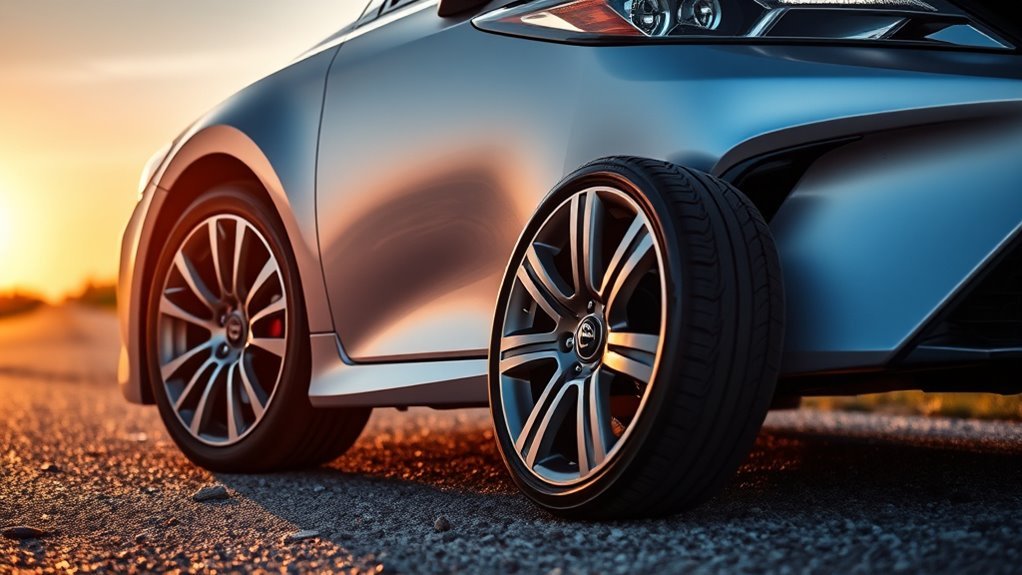
Which tire size fits your needs depends on what you value most in your Camry. If you want a calmer commute, 17-inch tires usually suit you better because their taller sidewalls filter rough pavement and support ride stability. You’ll notice more forgiveness over cracks and potholes, and that can make daily driving feel less constrained. If you prioritize a sharper look and a slightly sportier stance, 18-inch tires may appeal more. They can also make the car feel a bit more responsive, though the real-world change in tire performance is small for normal driving. You should also weigh cost and availability: 17-inch options tend to be easier to find and less expensive, while 18-inch tires can add weight, firmness, and a bit more noise. For most drivers, your choice comes down to comfort versus style, not a dramatic handling difference.
17-Inch Camry Tires: Comfort and Cost
When you compare 17-inch and 18-inch Camry tires, the biggest differences often come down to comfort and cost. 17-inch tires usually ride more smoothly because their taller sidewalls absorb bumps better, and they’re also more forgiving on rough pavement, helping reduce the risk of wheel damage from potholes. You’ll typically pay just under $200 for 17-inch tires, while 18-inch upgrades often cost over $300, so the smaller size gives you a clearer budget advantage. That gap matters if you want practical mobility without unnecessary expense. 17-inch options also give you a broader selection of affordable all-season and winter choices, which can support tire longevity and lower ownership costs. By contrast, 18-inch tires can increase road harshness and may slightly reduce MPG because of added weight and shorter sidewalls. If you value a performance balance that preserves comfort, control, and affordability, 17-inch tires usually make the more accessible choice.
18-Inch Camry Tires: Style and Steering Feel
Eighteen-inch Camry tires can give your sedan a more aggressive stance by filling out the wheel arches better and adding a sportier look, which is a key reason many drivers choose them over 17-inch setups. If your style preferences lean toward a sharper, more assertive presence, this size delivers that visual upgrade without changing the car’s core character. You may also notice slightly better steering response, because the shorter sidewall flexes less and communicates inputs more directly. That can make the wheel feel more precise and confident in quick lane changes or on winding roads. Still, the everyday difference is modest, so you shouldn’t expect a dramatic transformation. For many drivers, the choice comes down to whether you value a bolder appearance and a firmer feel more than a simpler, less flashy setup. When you want freedom to personalize, 18-inch tires give you that option.
How Wheel Size Changes Camry Ride Quality

When you move from 17-inch to 18-inch tires on a Camry, you’ll usually feel a firmer ride because the shorter sidewall absorbs fewer bumps. The 17-inch setup gives you more cushioning and smoother impact isolation, while the 18-inch setup sharpens steering response and road feel. That trade-off means you’re choosing between greater comfort on rough pavement and a more connected, sportier driving experience.
Ride Comfort Differences
A 17-inch wheel setup usually gives the Toyota Camry a more comfortable ride because the taller sidewalls can absorb bumps, potholes, and rough pavement more effectively. You’ll usually notice smoother ride quality on broken city streets and less harshness over expansion joints. By contrast, 18-inch tires often create a firmer feel, since their shorter sidewalls transmit more vibration and road noise into the cabin. That means you may feel more of the surface texture during daily commuting. For many drivers, the comfort trade offs are clear: 17-inch tires favor a more forgiving, relaxed experience, while 18-inch tires lean toward a sharper, sportier appearance. If you value ease, calm, and comfort over style, the 17-inch option often makes more sense.
Handling And Road Feel
Moving from 17-inch to 18-inch tires can sharpen the Camry’s steering response because the shorter sidewalls flex less, so you’ll usually feel a more connected, sportier road feel. You’ll notice stronger steering responsiveness, but the gain is subtle in normal commuting. On smooth pavement, 18-inch tires can improve cornering stability and make turn-in feel cleaner. | Wheel Size | Effect |
| — | — |
|---|---|
| 17-inch | Softer, calmer response |
| 18-inch | Firmer, quicker feedback |
| Everyday driving | Differences stay modest |
| Rough roads | More NVH and vibration |
You may also hear more road noise and feel more vibration with 18-inch tires because the stiffer sidewalls absorb less. If you want comfort and freedom from harshness, 17-inch wheels usually serve better; if you value sharper control and style, 18-inch wheels fit that priority.
What You’ll Notice in Camry Handling
Switching from 17-inch to 18-inch tires on a Toyota Camry can make the steering feel a bit sharper, with the shorter sidewalls adding feedback and giving the car a more planted, sportier character. You’ll notice more steering feedback in quick lane changes and a slight boost in cornering stability when you push into sharper turns.
Switching to 18-inch tires can sharpen steering feel and add a more planted, sportier character.
- The Camry feels more responsive at the wheel.
- Body motion can seem a little more controlled.
- Everyday driving changes stay modest.
- Professionals notice the difference more near grip limits.
- Ride harshness and NVH can rise slightly.
If you value precision, 18-inch tires can help you feel more connected to the road. If you prioritize calm comfort, 17-inch tires still deliver a smoother, more forgiving setup. For most normal commutes, the handling gap stays subtle, but you may still sense the 18-inch option as the more assertive, freer-feeling choice.
Camry Tire Prices and Replacement Costs
When you compare Camry tire replacement costs, 17-inch tires usually come out noticeably cheaper, with many options around $200, while 18-inch tires can push past $300 for the same type of replacement. That gap matters because you’re not just paying for rubber; you’re also buying into a different cost structure over time. With 17-inch sizes, you’ll usually find more all-season and winter choices, which gives you room to match budget considerations without sacrificing basic function. 18-inch tires often cost more because availability is tighter, especially in odd sizes for larger rims, and that can limit competitive pricing. You may also see better tire longevity with 17-inch options, which can lower your total operating expense. By contrast, 18-inch tires can wear faster and raise maintenance costs, so the price difference isn’t only upfront. Over a full ownership cycle, 17-inch tires usually preserve more financial freedom.
Which Camry Wheel Size Works Best Daily
Beyond tire prices, the best Camry wheel size for daily driving comes down to comfort, ride quality, and overall usability. You’ll usually find that 17-inch tires deliver the most balanced daily experience because their taller sidewalls absorb bumps and rough pavement better. That gives you calmer commuting, less harshness, and often better tire longevity.
- 17-inch tires soften potholes and joints.
- 18-inch tires feel firmer but stay composed.
- Everyday handling differences stay minimal.
- Steering feedback can feel sharper on 18s.
- 17-inch setups usually cost less and often help fuel economy.
If you track performance metrics for daily use, the 17-inch option often wins by making ordinary driving easier without sacrificing much control. The 18-inch choice suits you if you value a cleaner look and a slightly tighter feel, but it usually asks more from your budget and comfort. For most drivers, 17s are the pragmatic, freedom-friendly pick.
How to Choose Between 17 and 18 Inches
How do you choose between 17- and 18-inch Camry tires? You weigh comfort, cost, and control to find your performance balance. If you want a softer commute and better tire longevity, 17-inch tires usually win because taller sidewalls cushion impacts and often cost less to buy and replace. If you value sharper steering and a more assertive look, 18-inch tires fit that goal, though the handling gain is modest for daily driving.
| Choice | Main Benefit | Main Trade-off |
|---|---|---|
| 17-inch | More comfort | Less visual flair |
| 18-inch | Sportier feedback | Higher cost |
| 17-inch | Wider tire availability | Less aggressive stance |
| 18-inch | Fills wheel arches | Fewer winter options |
You should also check availability: 17-inch sizes often offer more all-season and winter choices, which can expand your options and keep you free from unnecessary compromise.
Frequently Asked Questions
What Size Wheels Give the Smoothest Ride?
17-inch wheels usually give you the smoothest ride, because their taller sidewalls absorb bumps better. You’ll also want proper tire pressure and wheel alignment; both reduce harshness, noise, and uneven wear on rough roads.
What Are the Best Tires to Buy for a Toyota Camry?
You’d do well with Michelin Defender or Bridgestone Turanza; Consumer Reports often ranks them highly. Compare Tire brands by Performance ratings, then choose X-Ice Xi3 for winter or Continental DWS for sportier grip.
Does a Camry Have Good Handling?
Yes, your Camry handles well for everyday driving. Its suspension tuning keeps it composed, while proper tire pressure sharpens stability and steering. You’ll get balanced, predictable responses, though it’s not a sports sedan.
Conclusion
When you choose 17-inch Camry tires, you’re choosing the softer path: a quieter ride, lower costs, and more cushion for daily miles. Step up to 18-inch tires, and you trade some comfort for sharper steering and a more planted feel. Think of it like choosing between a padded chair and a firm one—both support you, but in different ways. Your best pick depends on whether you value comfort, style, or response most.

Related Articles

16-Inch vs. 17-Inch Tires on Toyota Camry: How Ride Quality Differs
Bigger or smaller? Discover how 16-inch and 17-inch Camry tires change comfort, noise, and handling—before you choose the wrong set.
Read More
Toyota Camry 4-Cylinder Tire Size: OEM Specs for All Model Years
Learn the essential tire sizes for your Toyota Camry 4-cylinder across all model years to ensure optimal performance and safety—discover the specifics now!
Read More
Summer Tires vs. All-Season Tires for Toyota Camry: What’s the Difference?
Best for your Toyota Camry? Discover how summer and all-season tires differ, and which choice could change your drive.
Read More