
How to Fix a Flat Wheelbarrow Tire: Patch or Replace the Tube
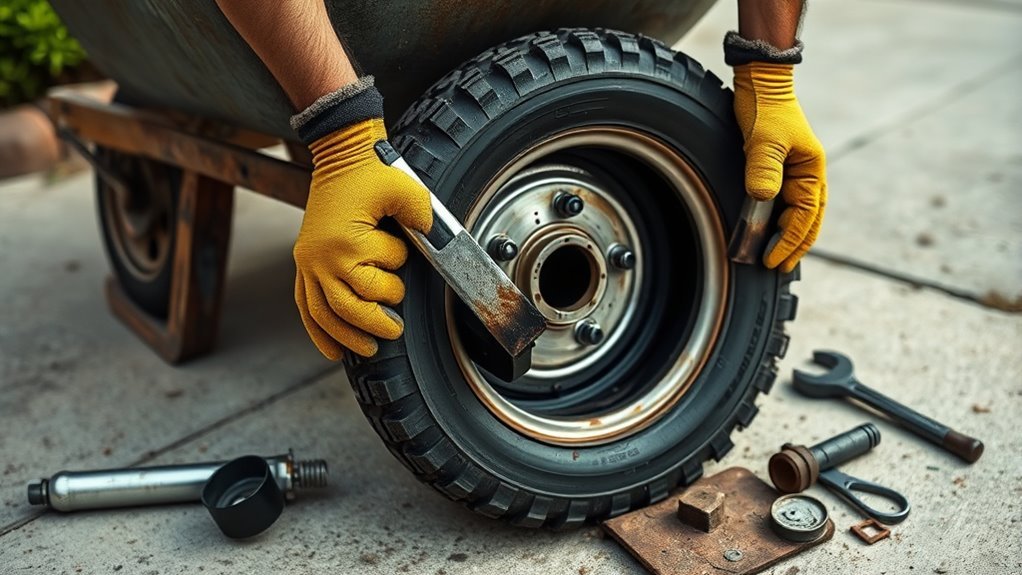
You can fix a flat wheelbarrow tire quickly by swapping the tube or patching small holes. Loosen the axle nuts, pull the wheel off, deflate fully, and pry the tire bead off with levers. Pull out the old tube, inspect the tire and rim for debris, then either patch small punctures with a kit or fit a correctly sized replacement. Seat the valve first, inflate gradually, reinstall, and check alignment and pressure.
Quick Answer: Fix or Replace Your Wheelbarrow Tube (Time & Cost)
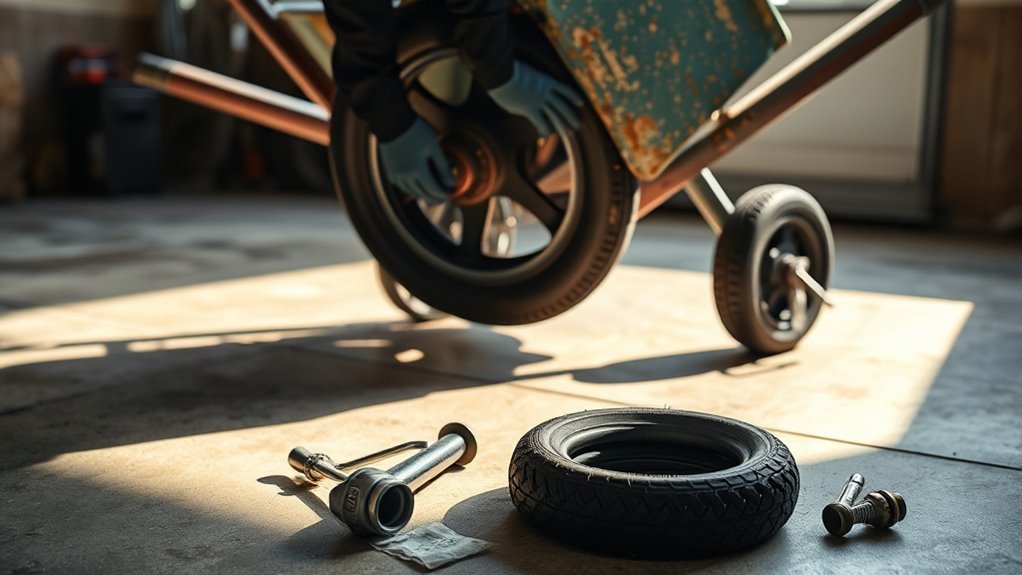
In most cases, it is cheaper and faster to replace the wheel than to repair the tube. Puncture-proof replacement wheels typically cost between £10 and £20, so a quick cost comparison often favours replacement. Repairs take more effort, and parts or labour can add up quickly. If you do want to fix the tube, weigh the time and part costs against buying a new wheel. Always check inner tube dimensions before buying replacements to avoid compatibility problems. Do regular inspections to catch wear early and avoid surprises. Depending on local availability and your schedule, swapping the wheel is usually the most efficient choice.
Tools & Parts Needed (Wrench, Levers, Pump, Replacement Tube)
You only need a few tools to swap a wheelbarrow tube: a wrench to remove the axle nuts, tire levers or a large flat-head screwdriver to pry the tyre off the rim, an air pump to inflate and test the new tube, and a correctly sized replacement tube to fit your wheel.
Use the wrench to loosen mounting hardware, keeping nuts and washers together. Levers make tire removal faster and reduce rim damage. A flat-head screwdriver works if you don’t have levers. Inflate the new tube partially with the pump to seat it, then check tire pressure to the recommended level. Carry a basic repair kit (patches, adhesive) for quick fixes, and confirm tube size matches your wheel before starting.
[Products Worth Considering]
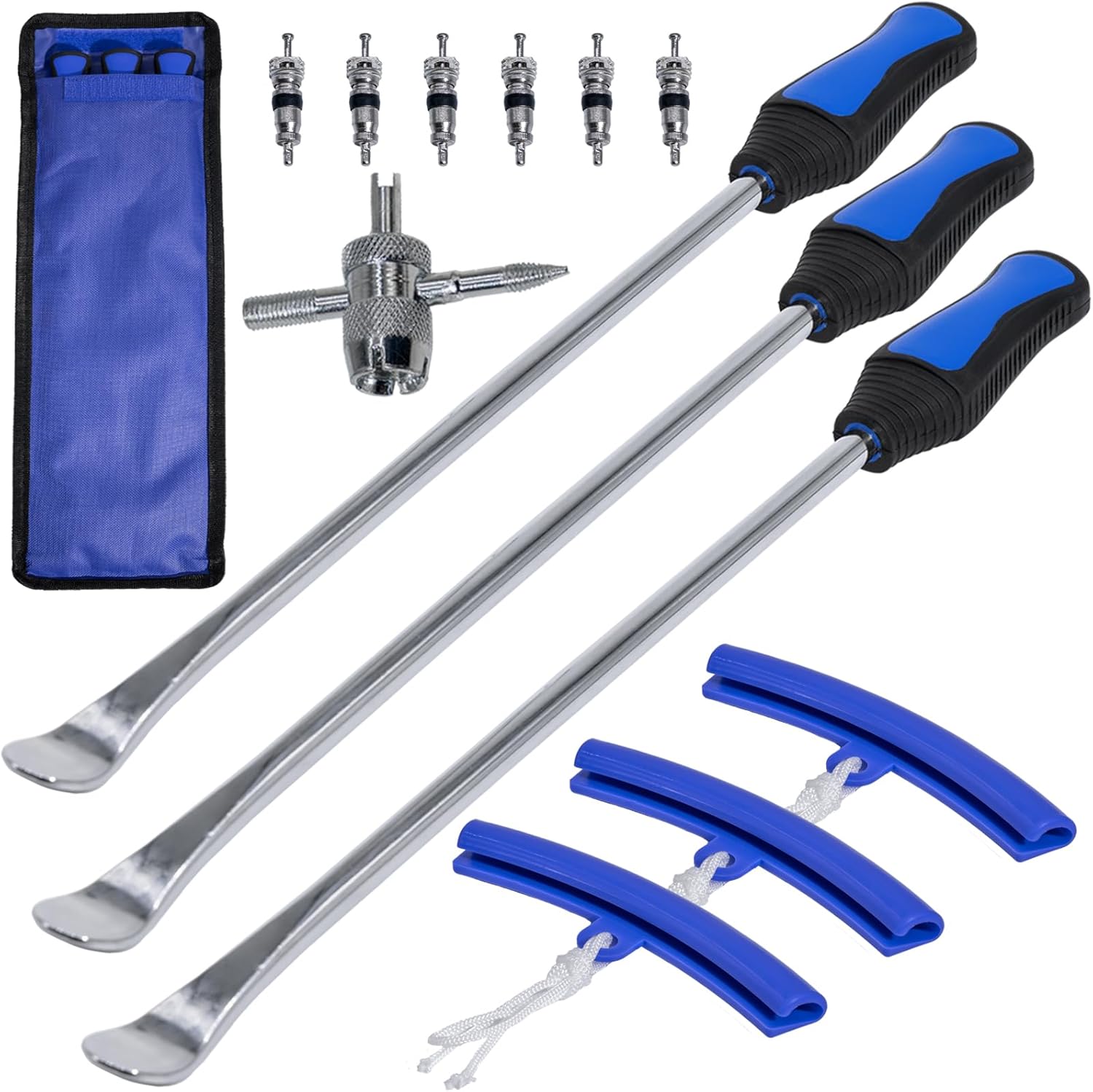
This tire spoon set helps you remove and install motorcycle, dirt bike, lawn tractor, and bicycle tires with extra leverage from a 14.5-inch spoon length. The kit includes tire removal tools, rim protectors, and a valve tool to simplify repairs and help protect rims during changing. Designed for quick, on-the-go service, it’s convenient for garage work, trails, and track-side fixes.

This VEVOR tire bead breaker uses a slide-hammer impact and wedge tip to separate tire beads from rims quickly and efficiently without damaging hub surfaces. The long handle and sturdy steel construction help reduce user strain while providing reliable, portable tire changing for cars, trucks, and more. Ideal for home mechanics and repair shops handling multiple vehicle tire sizes.

This AUTOWN flat tire repair kit is designed for quick, reliable puncture repairs using a plug kit and spiral probe tool to simplify installation. Built for durability and safe handling, it offers strong adhesion and flexibility to help maintain tire air tightness. With a portable storage case and a multi-vehicle approach, it’s suitable for cars, motorcycles, ATVs, tractors, lawn mowers, RVs, jeeps, and trucks.
Decide: Patch the Tube or Buy a New Wheel?
Once you have removed the wheel and inspected the tube, weigh your options: patching versus replacing. If there is a single small puncture and the tube is otherwise sound, patching with a basic kit (often under £15) saves money and keeps you working. Factor in the time and care needed for a reliable seal, though.
If there are multiple holes, significant wear, or a damaged valve, replacement makes more sense. New pneumatic or puncture-proof wheels can cost as little as £10, and swapping is faster and more reliable. Consider terrain too: solid rubber eliminates punctures but rides harsher, while pneumatic gives better comfort on rough ground. Regular inspection and maintenance help you choose wisely and avoid repeat failures.
[Products Worth Considering]
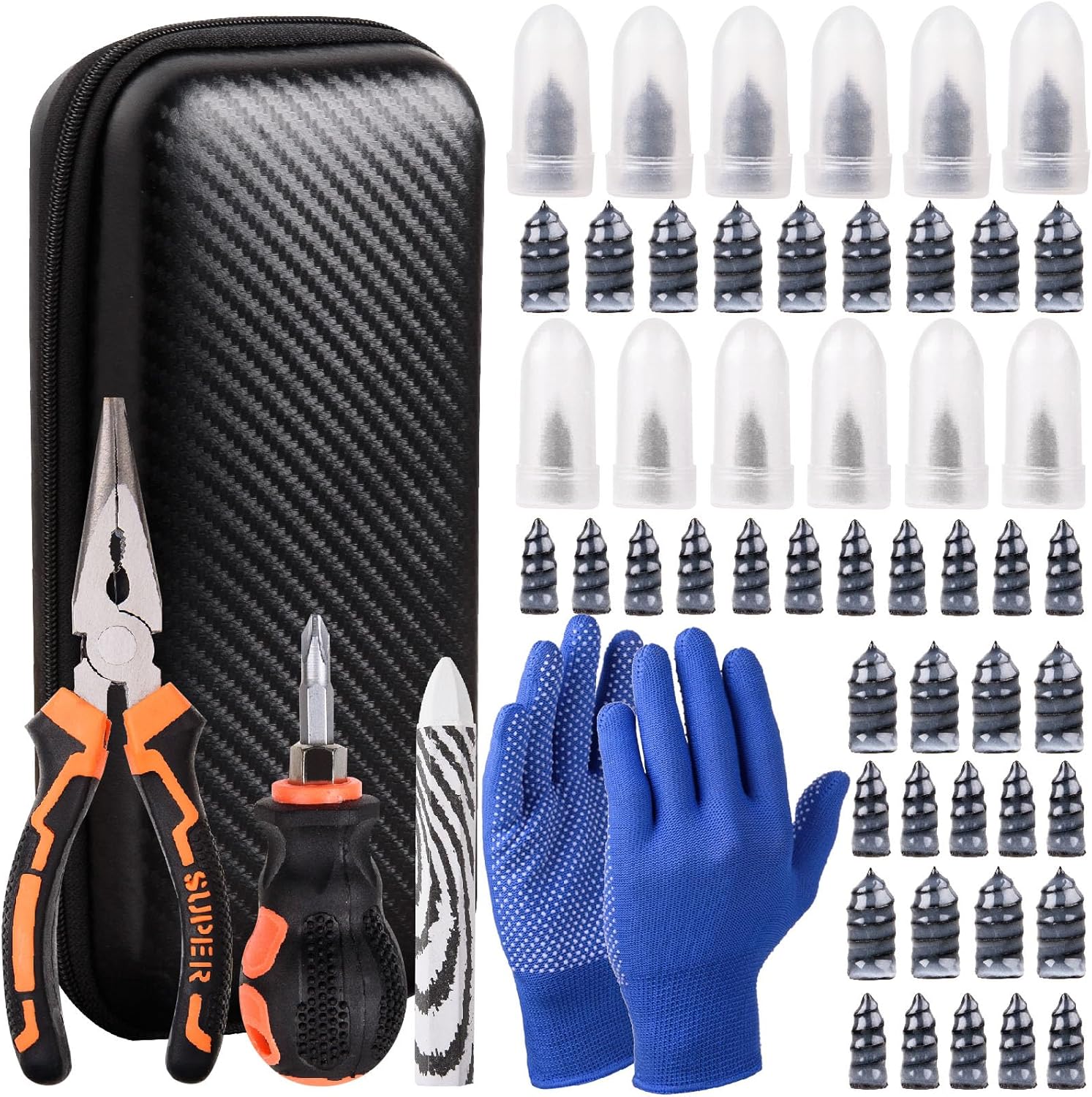
This tire sidewall puncture repair kit fixes flats fast without removing the tire, helping you get back on the road in minutes. It includes self-tapping repair nails, essential tools, gloves, and a portable storage bag for convenient roadside use. Designed for tubeless tires, it helps create a tight, leak-resistant seal for cars, motorcycles, trucks, SUVs, and ATVs.

Wykodra tire plugs provide quick vulcanizing repairs for tubeless tires, helping you seal punctures and get back on the road. The industrial-strength rubber creates a long-lasting, leak-resistant bond and is designed for emergency fixes without removing the tire. Choose between two standard plug sizes with color-matched options for small to larger damage across many vehicles and off-road uses.

2-PACK 4.80/4.00-8 INNER TUBES: Includes two replacement inner tubes for 4.80/4.00-8 tires with compatible 8-inch rims (approximately 15.5-inch outer diameter). Tubes only; tires, wheels, and rims are not included. Confirm the size shown on your existing tire before ordering
Remove the Wheel From the Wheelbarrow
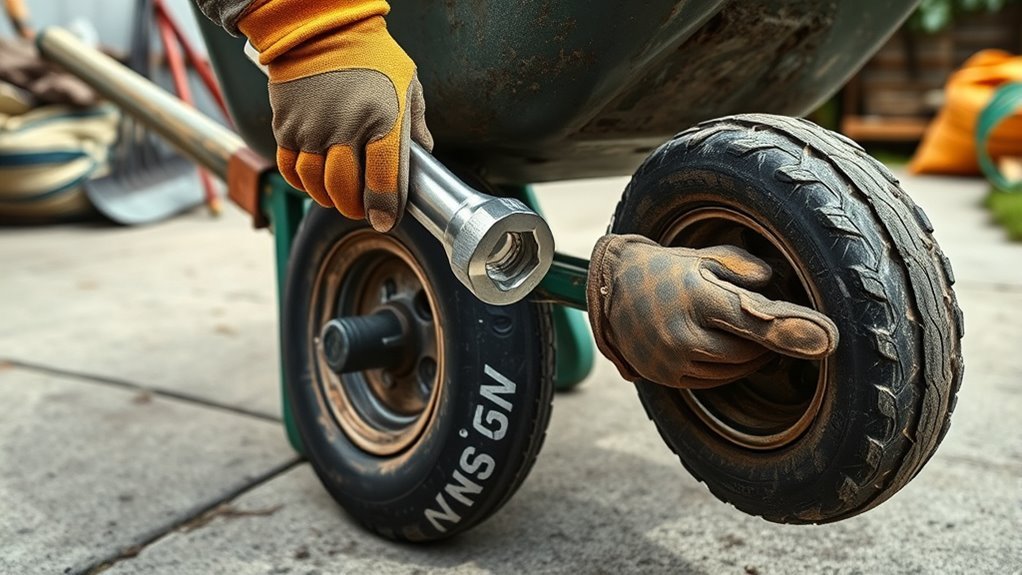
Loosen the axle nuts with a wrench and pull the wheel assembly off the bracket so you can work on the tire more easily. Remove the nuts, slide the wheel with the axle and bushings off, and set it on a flat surface for stable, safe work. Keep hardware organized for reuse and note any wear for axle maintenance. For two-wheel dollies, you might skip removal if access is fine.
| Task | Tip |
|---|---|
| Wheel removal | Use the correct wrench size; hold axle steady |
| Hardware | Place nuts/bushings in a tray |
| Workspace | Flat, clean surface for stability |
Following this approach keeps you organized and less likely to lose parts.
Unseat the Tire Safely From the Rim
Start by making sure the tire is completely flat. This reduces tension and makes prying much easier. With the wheel secured, insert a large flat-head screwdriver between the tire bead and rim, tip pointing outward, and pry the bead over the rim lip. Move a few inches, repeat, and work your way around the tire until a section clears.
For stubborn areas, use a second screwdriver wrapped in duct tape to protect the rim. This gives leverage while providing rim protection. Keep both hands steady, prying a little at a time to avoid damaging the tire or rim. Once the bead is loosened all the way, manually pull the remaining tire off the rim. Regular tire maintenance prevents tight, hard-to-unseat beads.
Extract the Old Tube and Inspect the Tire for Debris
With the tire unseated and fully deflated, pull the tube out gently starting at the valve to avoid tearing it. Run your fingers along the tire’s inner surface to feel for embedded glass, nails, or thorns and remove any debris you find. Finally, inspect the rim and valve stem for sharp edges or damage that could puncture a new tube.
Remove Tube Carefully
Deflate the tire completely so you can pry it off without stretching or pinching the tube. Then use a large flat-head screwdriver to lever the bead over the rim while guarding the tube with your hand. Remove the valve core first to speed deflation, and work opposite the valve to ease extraction. Reach between tire and rim, pull the valve through the hole, then ease the rest of the tube out without yanking.
- Start at the valve to reduce stress and avoid tears.
- Pry slowly, protecting the tube with your fingers and a cloth.
- Clean rim and tire bead area to remove grit and prevent future punctures.
Handle parts gently and inspect the rim edge for sharp burrs before fitting a new tube.
Check For Embedded Debris
Once the tube is out, give the inside of the tire a careful inspection for anything that caused the leak. Start by visually scanning the inner surface, then run your fingers along it to detect sharp points. Common culprits include nails, glass, and sharp stones. Remove anything you find with pliers or a magnet.
Use a bright light and fingertip probing to catch small shards. If you suspect a hidden puncture, spray soapy water around the interior and watch for rising bubbles that reveal leaks. Keep the valve position in mind for reinstallation, but don’t troubleshoot the rim or valve yet. Once the tire is clear of debris and damage, you can repair or replace the tube and finish the job.
Inspect Rim And Valve
Pull the old tube out by pushing the valve stem back through the rim hole first to avoid tearing it, then peel the tube away from the tire. Once free, inspect the rim and valve area closely. Check rim condition for sharp edges, rust, or burrs that could puncture a new tube. Verify the valve hole is clear and the valve itself is not bent or damaged. Good valve maintenance prevents leaks.
- Clean rim flange and remove debris or rust before fitting a new tube.
- Run your fingers along the inner tire surface to find embedded objects or cuts.
- Replace the tire or file down any sharp rim edges if you find significant damage.
Address any issues now to ensure a reliable, leak-free installation.
Locate the Leak in the Tube (Inflate, Listen, Soapy Water)
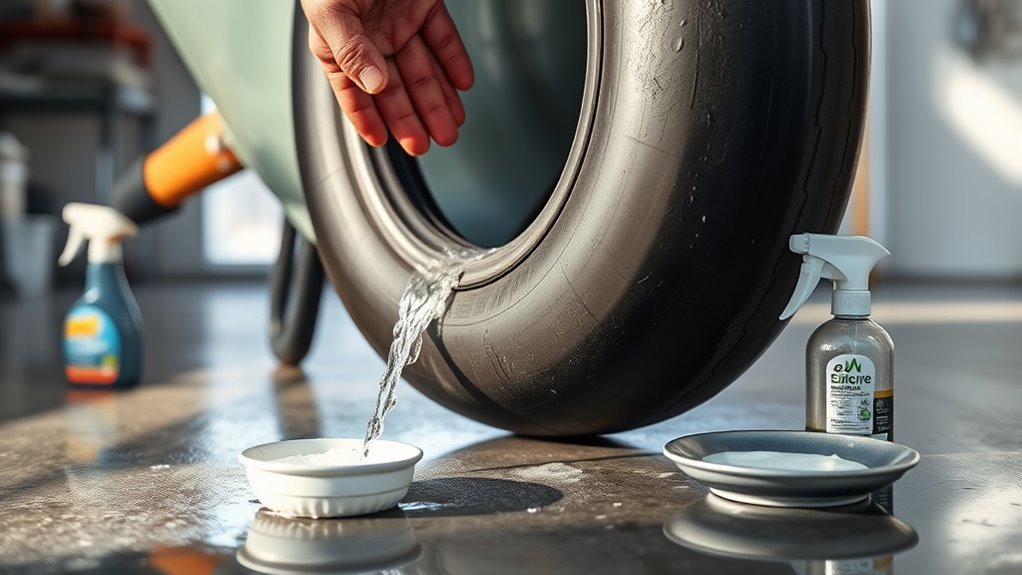
Inflate the tube with a bike pump until it is firm but not overpressurized, then listen closely and scan for leaks. You will catch hissing sounds where air escapes. Hold the tube near your ear and rotate it slowly.
Next, spray soapy water from a bottle over the tube, paying special attention to the valve and seam areas. Watch for persistent bubbles that mark the puncture. Mark each spot with a pen or chalk and note its size and location so you can decide on repair or replacement. Small pinholes near the centre are often patchable. Large tears or damaged valves usually mean a new tube. Work methodically to avoid missing multiple leaks.
Patch the Tube or Fit a New Wheelbarrow Tube Correctly
Decide whether to patch or replace the tube based on the size and location of the leak. Small pinholes in the tread can be reliably patched, but large tears, valve damage, or multiple leaks mean you should fit a new tube that matches your wheelbarrow’s tire diameter and width.
For patching, clean around the puncture, roughen the surface with sandpaper, apply adhesive, press the patch firmly, and let it cure per the kit instructions. The same technique used for bicycle inner tube repair applies to wheelbarrow tubes. If fitting a new tube, check the tube specs, insert the valve through the rim hole first, then tuck the tube into the tire to avoid pinching. Inflate gradually, watching for even seating and leaks. Replace tubes showing heavy wear or many previous patches.
Patch small tread punctures; replace tubes with large tears, valve damage, or multiple leaks. Match size, seat valve, avoid pinches.
- Patch small punctures cleanly and follow cure times.
- Match tube diameter and width exactly.
- Seat valve first; avoid pinching the tube.
[Products Worth Considering]
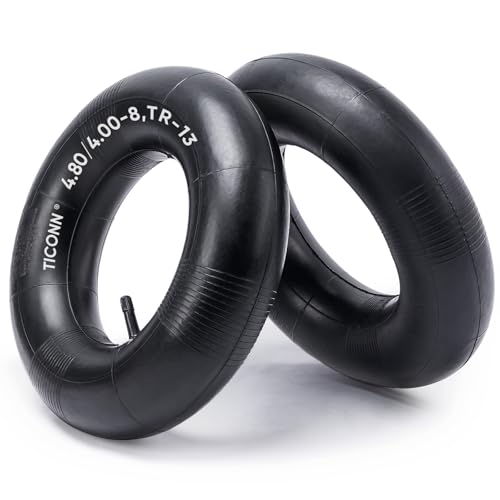
Universal Compatibility: 4.80/4.00-8 inner tube fits 8"rims (15.5"OD) and features a TR-13 straight valve stem, Perfect for replacement inner tubes for lawn mowers, hand trucks, garden carts, yard tractors, snow blowers
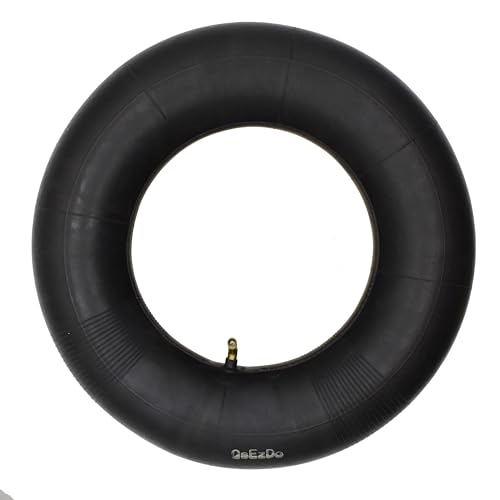
Precise Fit Replacement Inner Tube: Designed to fit 4.80/4.00-8" tires and wheels with 15.5" outside diameter. Also compatible with 4.80 4.00-8, 4.80/4.00-8, 4.8/4.0 8, 4.80 4.00 8, 480/400-8, 4.00-8, 4.80x4.00-8 inch sizing. Please verify the size before purchasing

Fits 4.80/4.00-8 & 4.00-8 Tires on 8" Rims
Tubeless vs. Tubed Wheelbarrow Tires
Not all wheelbarrow tires have inner tubes. Tubeless tires form an airtight seal directly with the rim, so there is no separate tube to patch. You can identify a tubeless tire by checking the valve stem: if it is bolted tightly to the rim and does not move, the tire is tubeless. A loose, flexible valve stem means the tire has a tube inside.
For tubeless flats, you can often use a tire plug kit rather than a patch. Push the plug into the puncture from the outside, trim the excess, and reinflate. If the bead has broken away from the rim, you may need to reseat it with a quick burst of compressed air. Tubeless repairs tend to be faster, but large sidewall damage still means replacement.
Re-Seat, Inflate to the Right Pressure, Reinstall, and Perform Safety Checks
Seat the tube evenly by pressing the tire bead into the rim all the way around so the tube cannot get pinched as you inflate. Once seated, partially inflate to shape the tube, check the bead seating, then finish to the manufacturer’s recommended pressure. This is usually printed on the tire sidewall and typically falls between 20 and 35 PSI for most wheelbarrow tires, though it varies by model. Use a reliable gauge. Correct pressure prevents blowouts and improves performance.
Reinstall the wheel onto the axle, confirm bushings sit correctly, and tighten the mounting nuts securely. Spin the wheel and watch for rubbing on the frame or wobble. Adjust axle position or tighten fasteners as needed. For ongoing tire maintenance, inspect tread and sidewalls regularly and check pressure before each heavy use. Correct low PSI promptly to extend tube life.
Frequently Asked Questions
Can I Change the Inner Tube Without Removing the Wheel?
Yes. You can change the inner tube without removing the wheel, but it is trickier. Deflate the tire, pry one side off the rim, access the valve stem, swap the tube, reseat the tire, and check everything carefully before reinflating.
Conclusion
Most wheelbarrow flats happen close to the job, so fixing the tube on the spot saves real time. Whether you patch or replace, work step by step: remove the wheel, unseat the tire, take out the tube, find the leak, then patch or fit a new tube. Re-seat the tire, inflate to the correct pressure, reinstall, and check for wobble. A quick, tidy repair keeps you moving and cuts downtime.

Related Articles
What Does THE P Stand For on a Tire? Full Meaning Explained
I’ll explain what the “P” on a tire really means and why it could change how you choose your next set.
Read More
How to Use a Tubeless Tire Repair Kit: Complete Field Guide
Learn how to fix tubeless tire punctures fast with the right kit, because one small mistake can leave you stranded on the trail.
Read More
How to Tell a Tire’s Diameter: Easy Guide to Reading Tire Size
Want to decode tire sidewall numbers and find the right diameter, but wonder what those hidden digits really mean?
Read More