
Are Tire Chains Safe for a Hyundai Sonata? Risks & Fitment
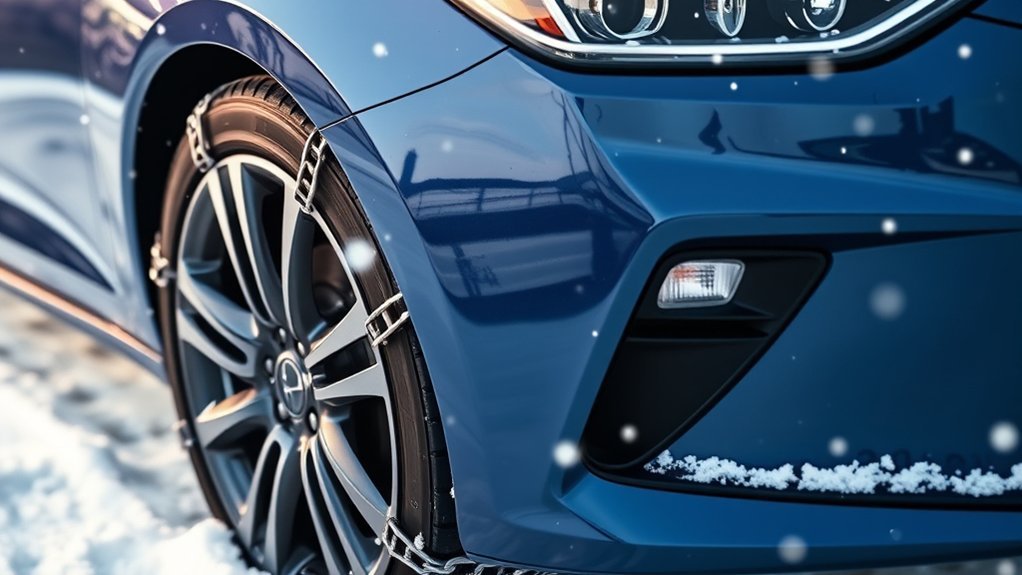
Tire chains can be safe for a Hyundai Sonata, but only when they match your exact tire size, meet the clearance requirements in your owner’s manual, and are used on snow or ice at low speed. The safest starting point is simple: check the tire size on your sidewall or driver-side door placard, choose a compatible SAE Class S or wire-type traction device, and install it only as Hyundai and the chain maker instruct.
Quick Answer
Tire chains are safe for a Hyundai Sonata only if they fit your exact tire size, meet restricted-clearance requirements such as SAE Class S or wire-chain fitment, and are installed on both front tires. Drive under 20 mph (30 km/h), retighten after 0.3–0.6 miles, and remove them on cleared roads.
Key Takeaways
- Do not buy chains by model name alone. Match the chain to the tire size printed on your Sonata’s tire sidewall or door placard.
- For a 2023 Hyundai Sonata, factory full-size tire sizes may include 205/65 R16, 215/55 R17, 235/45 R18, or 245/40 R19, depending on equipment.
- Install traction devices on both front tires, not just one tire and not the rear tires.
- Stop immediately if you hear chain contact with the body or chassis. Retighten, slow down, or remove the chains if contact continues.
- For frequent winter driving, winter tires are usually the better everyday solution; chains are for short-distance severe snow or chain-control roads.
At a Glance
| Time Required | 10–20 minutes the first time; faster after a practice fit |
| Difficulty | Moderate; harder in snow, darkness, or roadside traffic |
| Tools Needed | Correct chain/cable set, gloves, flashlight, kneeling pad, warning triangle, and the chain maker’s instructions |
| Cost | Usually about $40–$200+ depending on cable, chain, or textile traction device type |
NHTSA reports that snow, sleet, and ice create dangerous road conditions, with thousands of injury crashes occurring in snow or sleet conditions in recent crash data. Good tires, slower speeds, and proper winter preparation matter before you ever install chains.
Compatibility of Tire Chains With the 2023 Hyundai Sonata
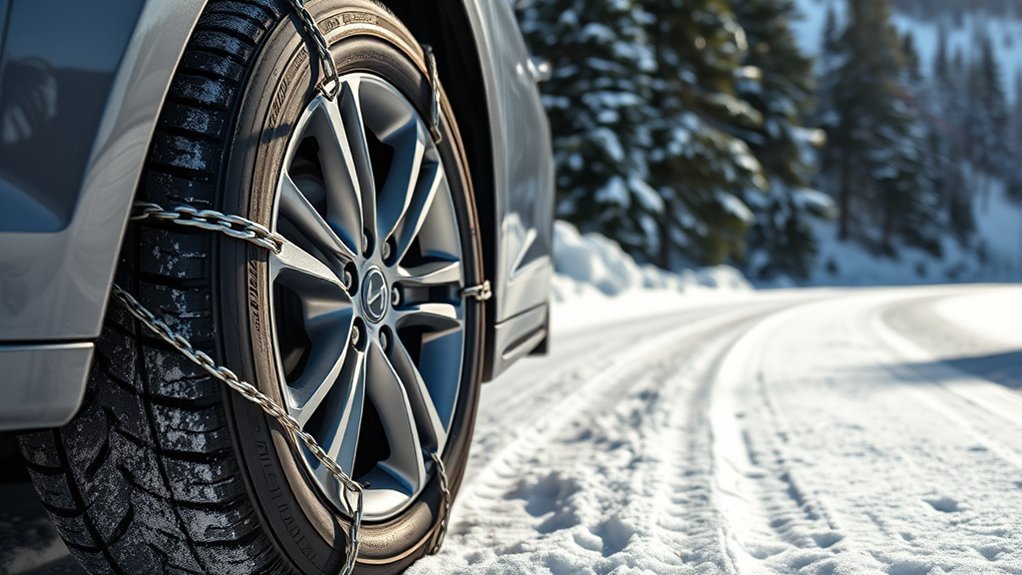
Tire chains can be compatible with a 2023 Hyundai Sonata, but the fit must be exact. Hyundai’s owner guidance says tire chains should be properly selected for the size of tire on the vehicle, installed according to the chain manufacturer’s instructions, and used with care because improper chain use can damage the vehicle.
The 2023 Sonata may use more than one full-size tire size depending on trim and equipment. Common factory sizes listed in the owner’s manual include 205/65 R16, 215/55 R17, 235/45 R18, and 245/40 R19. That means a chain set labeled for 215/55 R17 is not automatically correct for every 2023 Sonata. Always check the tire sidewall and driver-side door placard before buying.
Warning: Do not use chains that rub the body, chassis, brake lines, suspension, or wheels. If you hear ticking, scraping, or knocking after installation, stop in a safe place and retighten or remove the chains.
For restricted-clearance passenger cars, look for chains, cables, or textile traction devices that meet the vehicle and product maker’s clearance requirements. SAE Class S products are designed for vehicles with restricted wheel-well clearance, which is why they are commonly recommended for modern passenger cars.
[Products Worth Considering]

Worry-Free Self-Tightening Ratchets Provide Automatic Tightening And Centering

Requires low operating space around drive tires

Special Note: Before purchasing, please check the specification information on the tire sidewall. Select the correct size based on the tire specifications and size chart to avoid unnecessary complications
How to Ensure Proper Fitment for Tire Chains
Proper fitment starts before the snowstorm. Buy traction devices by tire size, not by vehicle name alone. Then do a practice installation at home so you can confirm the chains fit before you are stuck on the shoulder in freezing weather.
Note: If your Sonata has aluminum wheels, Hyundai advises against using tire chains on them. If chain use is unavoidable, use a wire-type chain and confirm clearance carefully.
| Fitment Check | What to Confirm |
|---|---|
| Tire size | Match the exact tire sidewall size, such as 205/65 R16, 215/55 R17, 235/45 R18, or 245/40 R19. |
| Clearance rating | Use SAE Class S, low-profile cable, wire-chain, or textile traction devices only when they fit the manual and product instructions. |
| Wheel placement | Install on both front tires. Do not install only one chain. |
| Dry fit | Practice once in a driveway, then roll forward slowly and check for rubbing or loose sections. |
| Retightening | Retighten after driving 0.3–0.6 miles (0.5–1.0 km), or sooner if you hear contact. |
[Products Worth Considering]
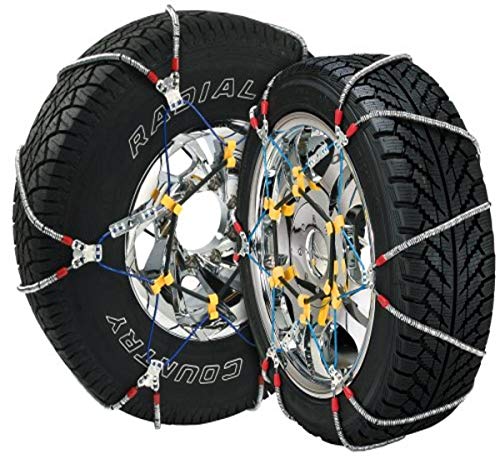
Country of origin : China
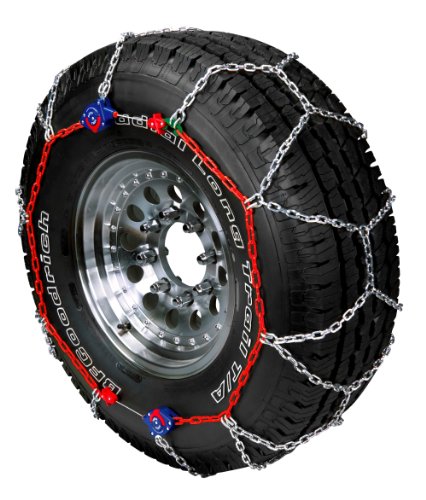
Worry-free self-tightening ratchets provide automatic tightening and centering
Worry-Free Self-Tightening Ratchets Provide Automatic Tightening And Centering
Risks of Tire Chains on Sedans
The Hyundai Sonata is a low-clearance passenger sedan, so the biggest risks are rubbing, wheel damage, poor handling, and overconfidence. Chains can help the front tires bite into snow, but they do not make the car immune to sliding, braking distance, or black ice.
Tire Damage Risks
Wrong-size chains or loosely installed chains can slap against the tire, fender liner, brake lines, suspension, body, or wheel. That can damage the vehicle and can also chew up the tire if the chain shifts while driving.
Aluminum wheels need special caution. Hyundai’s guidance warns not to use tire chains on aluminum wheels if avoidable; if chain use is unavoidable, a wire-type chain is the safer choice. Even then, you should inspect the wheel face, inner barrel, valve stem area, and clearance after a short test roll.
Handling Stability Concerns
Tire chains change how the Sonata feels. Steering may feel rougher, braking may feel uneven, and the car can still slide sideways during sharp turns. Hyundai’s manual warns that tire chains may adversely affect vehicle handling and recommends slow driving, avoiding bumps, holes, sharp turns, and locked-wheel braking.
Pro Tip: Keep your steering, braking, and throttle inputs gentle. Chains help you move, but they do not cancel the need for extra following distance on snow and ice.
Why You Should Check Local Tire Chain Regulations
Chain laws are route-specific. Mountain roads may require chains or approved traction devices during storms, while other roads may prohibit chains on bare pavement because they can damage the road surface. Always check posted signs, state transportation updates, and local rules before you install chains.
For example, Caltrans chain controls use posted requirement levels and remind drivers to follow highway signs and vehicle manufacturer specifications. Other states and provinces may use different wording, so check the transportation agency for the route you plan to drive.
Local Chain Laws
Local chain laws usually focus on road conditions, vehicle type, tire type, and posted chain-control levels. They may also require you to carry chains even when you are not yet required to install them.
| Aspect | What to Check | Why It Matters |
|---|---|---|
| Chain control signs | Whether chains or traction devices are required on your road | You may be cited or turned around if you ignore posted controls. |
| Approved device type | Chains, cable chains, textile traction devices, or snow tires | Some roads accept traction devices other than metal chains. |
| Speed limit | Posted chain-control speed and chain manufacturer limit | Hyundai’s guidance is to stay under 20 mph (30 km/h) with chains. |
| Studded tire rules | Whether studded tires are legal by date or location | Studded tires are restricted in many places. |
Seasonal Restrictions
Many winter-driving rules are seasonal or condition-based. A route may allow chains only when snow or ice is present, while a mountain pass may require chains during storms even if lower-elevation roads do not. The safest habit is to check the route before leaving and again before entering a chain-control area.
Alternatives to Tire Chains for the Hyundai Sonata
Tire chains are not the only option for a Hyundai Sonata. In many winter situations, another traction choice may be safer, quieter, or easier to live with.
- Winter tires: Best for regular cold-weather driving. Hyundai recommends snow tires of the same size and load range as the original tires and says to mount snow tires on all four wheels for balanced handling.
- Low-profile cable chains: Often easier to install than bulky link chains and better for limited wheel-well clearance, as long as they fit your tire size and manual guidance.
- Textile traction devices or tire socks: Lightweight and compact, but legality and performance vary by road authority and conditions.
- Studded tires: Helpful on ice in some areas, but they are noisy, can damage pavement, and may be restricted by local law.
Note: If you rarely drive in severe snow, carrying properly fitted cable chains for emergencies may be enough. If you drive all winter in freezing temperatures, a full set of winter tires is usually the better everyday upgrade.
[Products Worth Considering]

【OE PART NUMBER】: 52933-2L500, 52933-2M000, 52933-2L700, 52933-2M550, 52933-3N000

Pirelli s Noise Canceling technology for comfort

Covered by Nexen's best-in-class Total Coverage Warranty, which includes 36 months of Roadside Assistance
Tips for Safe Installation of Tire Chains

Correct installation is what makes tire chains useful instead of risky. Follow the chain maker’s instructions first, then use these Sonata-specific safety habits.
- Pull completely off the road. Choose a level area away from traffic. Turn on hazard lights and place a warning triangle behind the vehicle if you have one.
- Put the Sonata in Park. Apply the parking brake and turn off the engine before installing chains.
- Install chains on both front tires. Do not install a single chain, and do not install them on the rear tires only.
- Center and tighten the chains. Make sure no loose hooks, cables, or links can strike the wheel, brake components, or fender liner.
- Drive slowly at first. Roll forward a short distance and listen for scraping, ticking, or knocking.
- Retighten soon. After 0.3–0.6 miles (0.5–1.0 km), stop safely and retighten the chains.
- Stay below the limit. Drive less than 20 mph (30 km/h) or the chain manufacturer’s recommended limit, whichever is lower.
- Remove them on cleared roads. Chains should come off as soon as the road surface is clear enough that they are no longer needed.
Warning: Never keep driving if the chains continue to contact the body or chassis after retightening. Slow down, pull over safely, and remove them if the contact cannot be fixed.
Troubleshooting Tire Chain Problems on a Hyundai Sonata
| Problem | Likely Cause | Safe Fix |
|---|---|---|
| Scraping or ticking sound | Loose chain or inadequate clearance | Stop, retighten, and remove the chain if contact continues. |
| Heavy vibration | Chain not centered or uneven tension | Recenter the chain and check both front tires. |
| Chain keeps loosening | Wrong size or missing tensioner | Do not continue. Replace with the correct size and tensioning setup. |
| Poor steering or sliding | Too much speed, ice, or sudden inputs | Slow down, increase following distance, and avoid sharp steering or braking. |
When to Hire a Professional for Tire Chain Installation
Hiring a professional or using an authorized chain installer makes sense when you are unsure about clearance, cannot safely install the chains roadside, or are driving into an active chain-control area in bad weather.
| Situation | Why Hire a Professional? |
|---|---|
| You have never installed chains | A professional can confirm correct front-tire placement and tension. |
| You hear rubbing after a practice fit | They can identify whether the chain type, size, or clearance is wrong. |
| Weather or traffic makes roadside work unsafe | Quick installation reduces exposure to passing traffic and cold. |
| You are entering a chain-control checkpoint | A local installer may know the current posted requirements, but you should still follow your owner’s manual. |
If you use a roadside chain installer, get a receipt when possible and inspect the chains yourself after driving a short distance. The driver is still responsible for operating the vehicle safely.
Frequently Asked Questions
Are Hyundai Sonatas good in snow?
A Hyundai Sonata can handle light snow when equipped with good tires and driven gently, but it is still a front-wheel-drive sedan with limited ground clearance. Winter tires improve cold-weather grip more consistently than chains for daily driving. Chains are better reserved for short sections of deep snow, packed snow, or posted chain-control roads.
Why don’t people use tire chains as often anymore?
Many drivers use winter tires, all-weather tires, cable chains, or textile traction devices because they are easier to live with than traditional link chains. Chains are still useful and sometimes required, but they are noisy, speed-limited, and can damage a vehicle if the size or clearance is wrong.
Do tire chains go on the front or rear of a Hyundai Sonata?
Install tire chains on both front tires of a Hyundai Sonata. Do not install a single chain, and do not install chains on the rear tires only. Front placement matches the drive wheels and Hyundai’s owner guidance for tire chains.
How fast can I drive a Hyundai Sonata with tire chains?
Drive less than 20 mph (30 km/h) or the chain manufacturer’s recommended speed limit, whichever is lower. Even at low speed, avoid sharp turns, potholes, sudden braking, and dry pavement.
Can tire chains damage a Hyundai Sonata?
Yes. Wrong-size chains, loose chains, bulky chains, or chains used on cleared roads can damage tires, wheels, brake lines, suspension parts, body panels, and fender liners. Stop immediately if you hear contact and remove the chains if retightening does not solve it.
Conclusion
Tire chains are not automatically unsafe for a Hyundai Sonata, but they demand careful fitment. The right setup is a traction device matched to your exact tire size, suitable for restricted clearance, installed on both front tires, tightened correctly, and driven slowly on snow or ice only. If you drive in winter often, consider winter tires first and keep chains or cables for severe conditions and posted chain-control roads. When in doubt, follow your owner’s manual, the chain manufacturer’s instructions, and local road signs.
Sources
- Hyundai Manuals & Warranties — official owner-manual lookup for Hyundai vehicles.
- 2023 Hyundai Sonata Owner’s Manual — tire sizes, tire-chain placement, speed, retightening, and aluminum-wheel cautions.
- NHTSA Winter Weather Driving Tips — winter-driving risks, tire safety, and vehicle-prep guidance.
- Caltrans Chain Controls / Chain Installation — chain-control levels, posted-road requirements, and safe installation guidance.
- Laclede Chain SAE Classifications — SAE Class S restricted-clearance explanation for passenger tire chains and cables.

Related Articles

Danger of Using Summer Tires in Winter on a Hyundai Sonata
Potentially perilous, using summer tires in winter on your Hyundai Sonata can compromise safety—discover the hidden dangers that await you on icy roads.
Read More
Can You Mix Nitrogen and Air in Hyundai Sonata Tires? Answered
Discover the implications of mixing nitrogen and air in your Hyundai Sonata tires—are the benefits worth the risks? Explore the answer inside!
Read More
How to Tell If Hyundai Sonata Tires Are Too Old to Use Safely
Understand how to assess the age of your Hyundai Sonata tires and discover crucial signs of deterioration that could compromise your safety on the road.
Read More