
Hyundai Sonata Tire Noise vs Wheel Bearing Noise: How to Tell
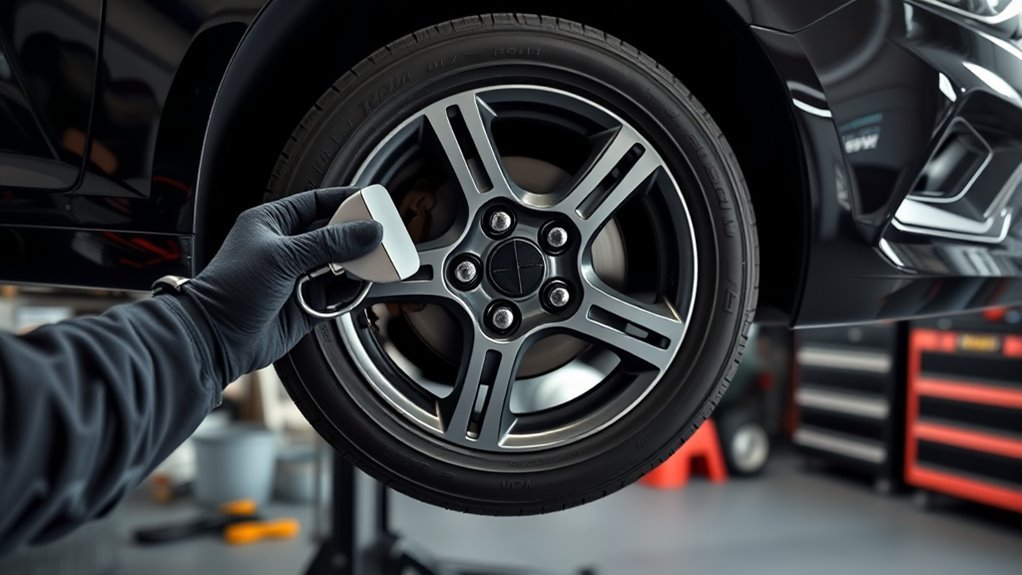
If your Hyundai Sonata has a humming, growling, roaring, or thumping noise from the wheel area, the fastest way to narrow it down is to watch how the sound changes with speed, pavement, steering load, and tire condition. Tire noise usually changes with the road surface or tread wear. Wheel bearing noise is more often a steady speed-related hum or growl that changes when the vehicle’s weight shifts in a turn.
Quick Answer
On a Hyundai Sonata, tire noise usually changes with pavement texture, tread pattern, uneven wear, tire pressure, or balance. A bad wheel bearing usually makes a humming, rumbling, or growling noise that rises with vehicle speed and may change when you gently steer left or right. Use road tests plus a tire and hub inspection before replacing parts.
Key Takeaways
- Tire noise often changes on fresh asphalt versus rough concrete, while bearing noise is usually more consistent with road speed.
- A bearing noise that changes during a gentle left-right steering-load test is a strong clue, but not proof by itself.
- Check tire pressure cold, inspect tread depth and wear patterns, and look for cupping, feathering, bulges, or missing wheel weights.
- Grinding, hub heat, severe wheel play, steering vibration, or ABS/traction-control warnings call for prompt professional inspection.
At a Glance
| Time Required | 20–45 minutes for basic road and visual checks |
| Difficulty | Beginner for listening and tire inspection; intermediate for lifted wheel checks |
| Tools Needed | Tire pressure gauge, tread depth gauge or penny, flashlight, gloves, wheel chocks, jack, jack stands, and torque wrench if wheels are removed |
| Cost | $0–$30 for basic checks if you already have tools; repair cost depends on tires, alignment, brakes, suspension, or bearing replacement |
Warning: Do not crawl under a Sonata supported only by a jack. Use the correct lift points, wheel chocks, and jack stands on solid level ground. If the noise has become grinding, the wheel has obvious play, the hub area is very hot, or ABS/traction-control warnings appear with wheel-end noise, limit driving and arrange professional inspection.
Tire Noise vs Wheel Bearing Noise: Quick Comparison
| What You Notice | More Likely Tire Noise | More Likely Wheel Bearing Noise |
|---|---|---|
| Sound | Hum, roar, slap, thump, or droning from tread pattern or uneven wear | Humming, rumbling, growling, whining, or grinding from the wheel-end bearing |
| Road surface effect | Often changes noticeably on rough concrete, grooved pavement, or fresh asphalt | Usually stays more consistent across surfaces, though cabin resonance can still change |
| Steering-load effect | Usually little change with gentle left-right steering | May get louder or change pitch when the vehicle’s weight loads the worn bearing |
| Visual clues | Cupping, feathering, low tread, bulges, flat spots, low pressure, or missing wheel weights | Wheel play, rough hand rotation, hub heat, steering vibration, or ABS-related symptoms |
[Products Worth Considering]

EVOULTES heavy duty tire inflator with an integrated gauge delivers accurate pressure readings from 10–120 PSI, helping you inflate, deflate, and check tires in one tool. The 16.5-inch extended dual-head air chuck with swivel base reaches hard-to-access dual wheel valves on trucks and RVs. A brass trigger core and side-mounted air release valve make operation smooth, with standard 1/4" NPT threading and quick-connect compatibility for easy setup.

The JACO FlowPro Tire Inflator measures, inflates, and airs down tires up to 100 PSI with battery-free operation and ±2% accuracy after calibration. It features a glowing pressure dial for night visibility, a heavy-duty steel build with a hybrid hose, and a precision push-to-inflate thumb trigger. The patented Lightning Air Chuck locks on for a secure seal, and the kit includes quick-connect hardware for easy inline use with your air compressor.
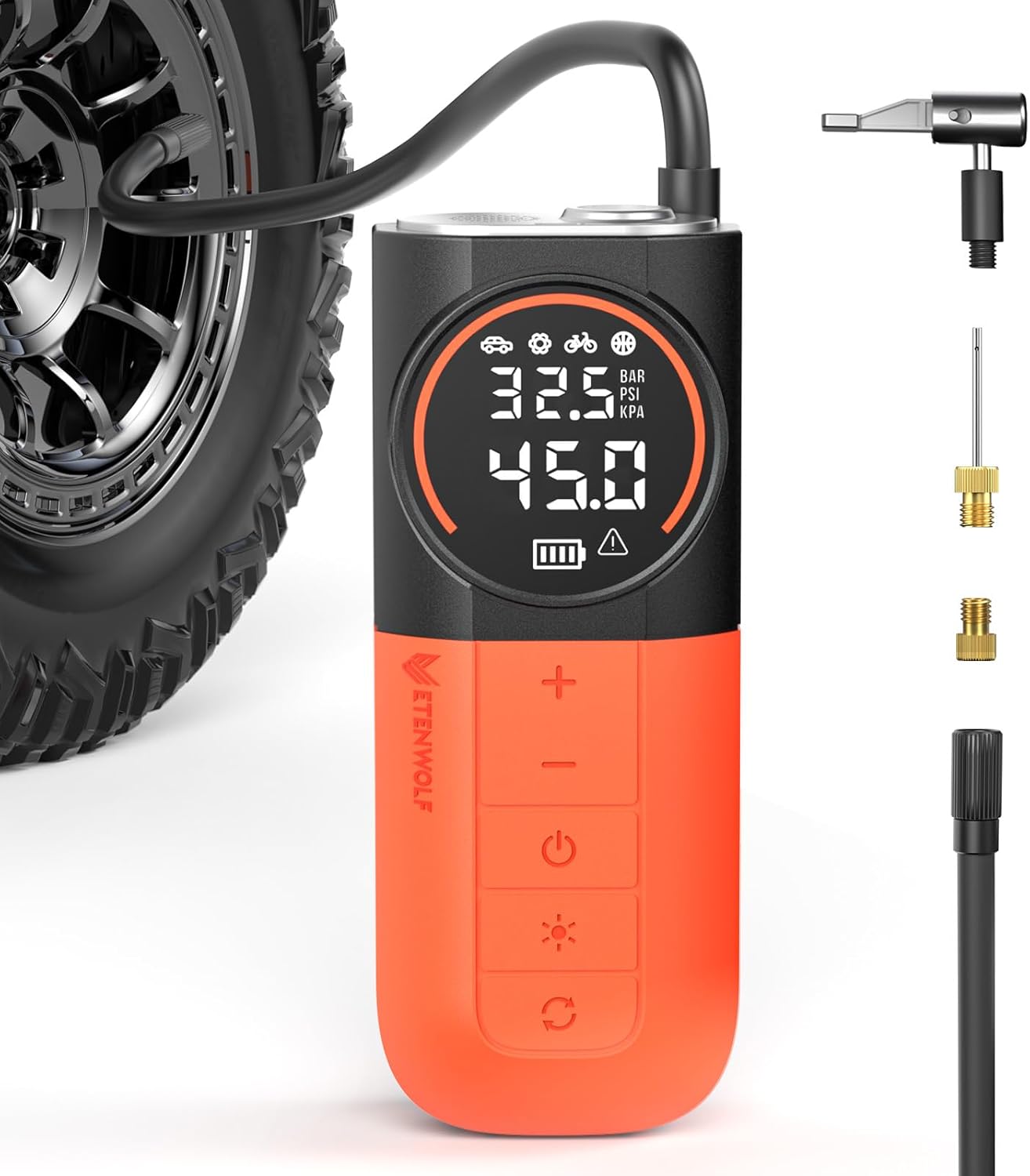
The ETENWOLF S1 cordless tire inflator delivers ultra-fast inflation with up to 160 PSI and a 20 L/min airflow for quicker tire top-offs. Its 5200mAh battery and cooling system support inflating many tires and sports balls on a single charge, while the digital pressure gauge and multi-unit display help you reach the right pressure accurately. With preset modes, pressure memory, an auto-stop feature, and an LED flashlight, it’s built for easy roadside and everyday use.
How to Identify Tire Noise Issues in Your Hyundai Sonata
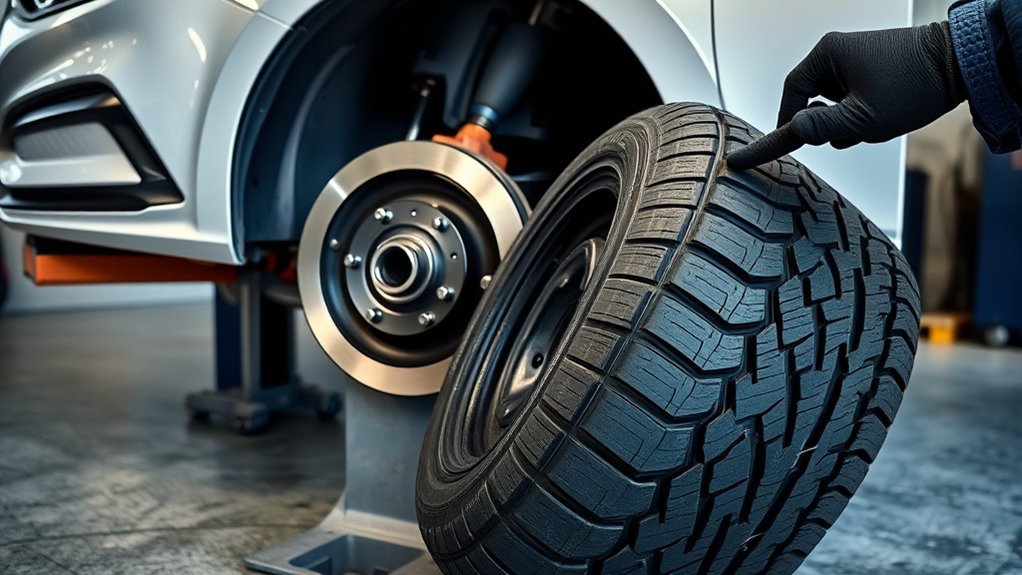
Start with the tires because they are the easiest and safest items to inspect. Tire noise on a Hyundai Sonata often shows up as a hum, roar, slap, or rhythmic thump that rises with vehicle speed. It may get much louder on rough pavement and quieter on smooth asphalt.
Check the cold tire pressure first. NHTSA recommends checking tire pressure at least once a month when the tires are cold, and the correct pressure is listed on the driver’s door-jamb Tire and Loading Information Label or in the owner’s manual. Do not rely only on the dash display; Hyundai’s TPMS page explains that the system uses wheel sensors and warning messages to alert for low pressure or TPMS faults, but a manual gauge is still the best first check.
Next, inspect the tread. Look for:
- Cupping or scalloping: small high-low dips around the tread that often make a humming or helicopter-like sound.
- Feathering: tread blocks that feel sharp in one direction and smooth in the other, often related to toe alignment.
- One-edge wear: inner or outer shoulder wear that can point to alignment or suspension issues.
- Center wear: often linked with overinflation.
- Both-edge wear: often linked with underinflation.
- Flat spots, bulges, cracks, or exposed cords: replace or inspect immediately instead of continuing to test drive.
Hyundai’s tire maintenance best-practices bulletin says most Hyundai models use a tire rotation interval of about 7,500 miles or sooner if irregular wear develops, but you should always follow the schedule and tire rotation pattern for your Sonata’s exact model year and tire package. The same bulletin notes that scalloped or cupped wear may come from worn suspension parts, tire imbalance, or wheel alignment out of specification.
Pro Tip: Run your hand lightly over the tread blocks from front to back, then back to front. A saw-tooth feel often points to feathering or heel-toe wear, which can sound like a bad bearing even when the bearing is fine.
Understanding Wheel Bearing Noise Characteristics
A worn wheel bearing supports the vehicle load less smoothly as the internal rolling surfaces wear. The sound often begins as a faint hum or rumble, then becomes a louder growl, whine, or grind as damage worsens. A wheel bearing can be hard to identify from the driver’s seat because sound travels through the suspension, subframe, and body.
A MOOG wheel-end bearing diagnosis bulletin lists common symptoms such as humming, rumbling, growling, whining or grinding while the vehicle is moving, steering wheel vibration that changes with speed or turns, looseness or play, and possible ABS system issues.
| Bearing Symptom | What It Usually Means | What to Do Next |
|---|---|---|
| Hum, rumble, or growl that rises with speed | Possible bearing wear, but tire noise can sound similar | Compare pavement surfaces and perform a gentle steering-load test |
| Pitch or volume changes while turning | Load shift may be stressing a worn bearing | Have the suspected wheel-end inspected before replacing parts |
| Grinding, heat, or rough hand rotation | More advanced wheel-end problem | Stop casual driving and schedule service promptly |
| ABS or traction-control warning with wheel noise | Possible wheel-speed sensor or hub-related issue | Ask a technician to scan codes and inspect the hub assembly |
Differentiating Tire and Wheel Bearing Noises
The best diagnosis uses several clues instead of one sound. A humming Sonata may have cupped tires, a failing wheel bearing, a dragging brake, a bent dust shield, a worn suspension part, or a CV axle issue. Use the checks below to narrow the cause before paying for parts.
Sound Characteristics Comparison
Tire noise is often broader and more pavement-sensitive. It may become louder on coarse concrete, quieter on fresh asphalt, or change after rotating tires front to rear. Rhythmic thumping can suggest a flat spot, separated belt, imbalance, or a damaged tire.
Wheel bearing noise is often more constant with road speed. The engine RPM does not usually change the sound, but vehicle speed does. A bearing can hum at 30 mph, growl at 50 mph, and become loud enough to mask tire noise at highway speed.
Load and Steering Influence
On a safe, open road, hold a steady speed where the noise is easy to hear. Make a very gentle lane-position change or light steering input left and right. Do not swerve sharply. If the noise changes pitch or volume as the car’s weight shifts, a wheel bearing becomes more likely.
As a general clue, a noise that gets louder when turning left may involve the right-side bearing because the vehicle loads the right side more. A noise that gets louder when turning right may involve the left-side bearing. Treat this as a clue, not a final diagnosis, because tires and other wheel-end faults can mislead you.
Road Surface Impact Analysis
Road surface is one of the cleanest tire-noise tests. Repeat the same speed on two safe surfaces, such as smooth asphalt and rough concrete. Tire noise often changes a lot. Wheel bearing noise usually remains more tied to speed and load than to pavement texture.
- Fresh asphalt: Tire roar often drops. If the hum remains nearly unchanged, suspect a rotating mechanical part.
- Rough concrete: Tire noise often gets louder, especially with cupping or aggressive tread patterns.
- Grooved pavement: Some tires whine or wander slightly even when nothing is broken.
- Same speed, different surface: A big sound change points toward tires; a small sound change keeps bearing, brake, or drivetrain causes in play.
Common Signs of Tire Noise and Their Implications
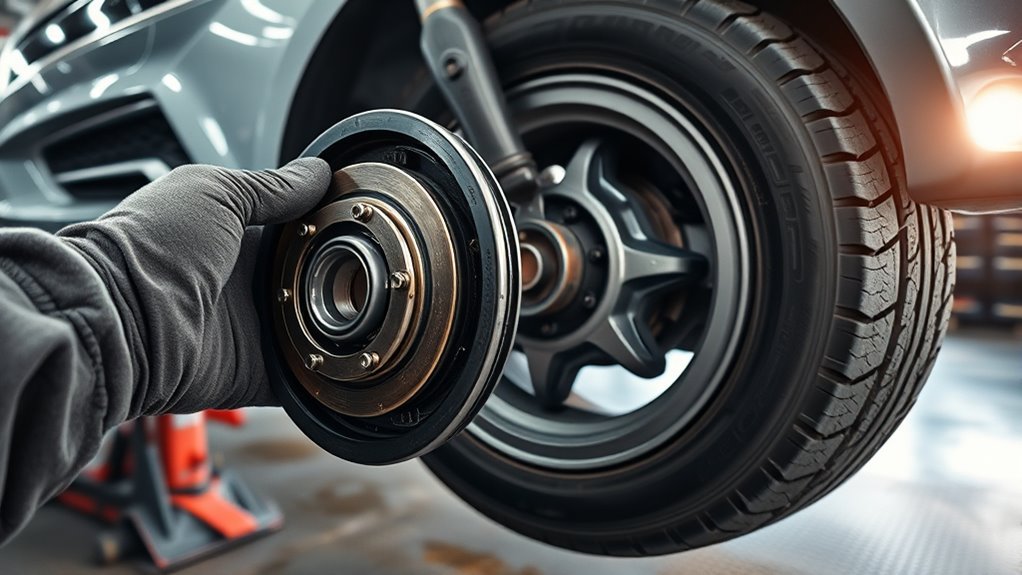
Tire noise is not just annoying; it is often a sign that the tire, wheel, alignment, or suspension needs attention. If the sound started after a tire rotation, the rotated tire may have uneven wear that is now in a more audible position. If the sound started after hitting a pothole, inspect for bent wheels, bubbles, sidewall damage, missing balance weights, and alignment changes.
Use these clues:
- Roar that changes with pavement: common with tread pattern, low pressure, or uneven wear.
- Rhythmic thump: possible flat spot, belt damage, wheel imbalance, or tire out-of-round condition.
- Feathered tread: often points to toe alignment problems.
- Cupped tread: may point to worn shocks/struts, imbalance, or alignment issues.
- Noise after rotation: the tire may already have wear that is now easier to hear from the front or rear.
Tread depth matters too. Hyundai’s tire maintenance bulletin states that tread wear indicators appear at 2/32 inch of tread life and tires should be replaced before the tread is worn down to those indicators. If any tire is close to the wear bars, has visible damage, or shows uneven wear that cannot be corrected, replacement may be safer than continued diagnosis.
Identifying Key Symptoms of Worn Wheel Bearings
When you notice a steady hum, rumble, growl, or grinding noise from the wheel area, pay attention to these wheel-bearing clues:
A bad wheel bearing is most suspicious when the noise rises with vehicle speed and changes with steering load, while tire noise is most suspicious when it changes strongly with pavement or tread condition.
- Speed-related hum or growl: The noise gets louder as vehicle speed rises, not necessarily as engine RPM rises.
- Pitch change in turns: Gentle steering changes make the sound louder, quieter, or slightly different.
- Steering wheel vibration: Vibration that changes with speed or turning can point to a wheel-end issue.
- Wheel play: With the car safely lifted and supported, noticeable looseness can indicate a bearing, suspension, or steering problem.
- Rough hand rotation: A gritty or rumbling feel while spinning the wheel by hand is a warning sign.
- Heat or grinding: Excessive heat near one hub or a grinding sound deserves immediate service attention.
- ABS or traction-control warning: Some hub assemblies integrate or affect wheel-speed sensor readings.
Note: Wheel play can also come from worn suspension or steering parts. A professional inspection can separate a loose bearing from a ball joint, tie rod, control-arm bushing, or strut issue.
How to Test Your Road Noise for Better Diagnostics
Use a calm, repeatable process. Avoid testing in traffic, rain, heavy wind, or on roads where you need sudden steering inputs.
- Record the conditions. Note the speed, road surface, temperature, and whether the noise is front, rear, left, or right.
- Separate engine noise from road noise. If the sound follows vehicle speed more than engine RPM, focus on tires, wheels, bearings, brakes, and axles.
- Compare road surfaces. Drive the same speed on smooth asphalt and rough concrete. Big changes suggest tire noise.
- Try a gentle steering-load test. At a safe steady speed, make small left-right steering inputs and listen for pitch or volume changes.
- Inspect all four tires. Check cold pressure, tread depth, wear bars, cupping, feathering, bulges, cracks, and missing wheel weights.
- Check for brake clues. A scraping sound that changes when lightly applying the brakes may point to brake pads, calipers, rotors, or dust shields.
- Lift only if you can do it safely. With the vehicle properly supported, check wheel play and rotate each wheel by hand for roughness or rumble.
- Get a second opinion before parts replacement. A technician can use a lift, stethoscope, chassis ears, scan tool, and alignment equipment to confirm the source.
| Observation Technique | What to Look For |
|---|---|
| Road-surface comparison | Tire roar often changes a lot between smooth asphalt and rough concrete |
| Gentle steering-load test | Bearing noise may change when the vehicle loads one side |
| Tire inspection | Cupping, feathering, wear bars, bubbles, low pressure, or missing balance weights |
| Lifted wheel check | Play, rough rotation, grinding, or vibration through the spring or knuckle |
[Products Worth Considering]

This portable cordless tire inflator delivers fast, efficient inflation for cars, motorcycles, bikes, and sports balls with a digital pressure gauge. Use the one-click PSI preset with auto shut-off for accurate, hands-free topping to your target pressure up to 150 PSI. It’s compact and rechargeable with a built-in emergency LED light plus valve adapters and accessories for quick, ready-to-go use.

This 100-piece tire repair screw plug kit provides a fast, self-service solution for punctures on the road. Choose the correct plug size, insert it into the break, and screw it in to help seal the puncture and temporarily restore tire pressure. Thickened threads and rubber-wrapped plugs improve bite and sealing while remaining compact and easy to carry.
Other Issues Mimicking Tire or Bearing Noise?
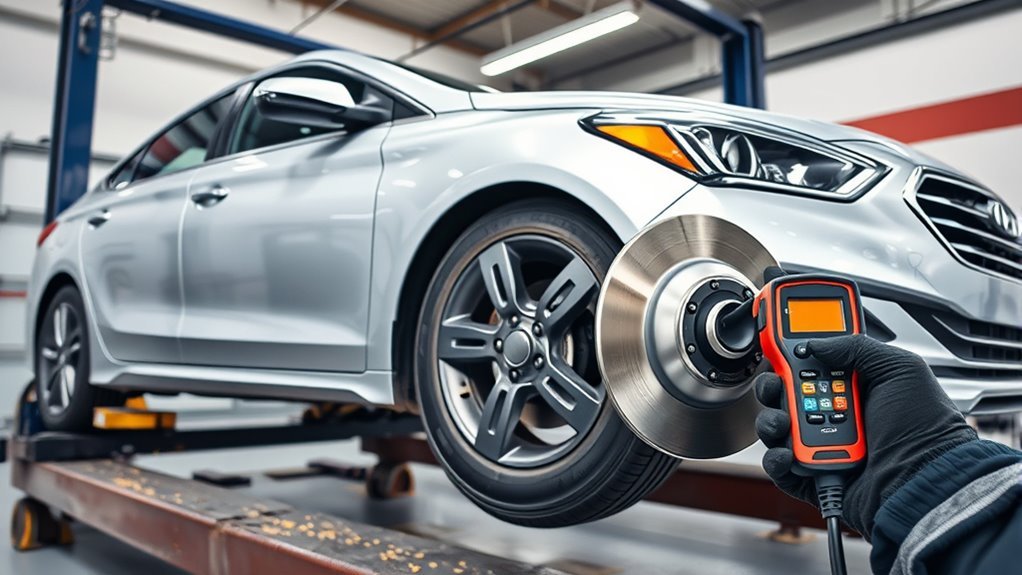
Do not assume every hum is a bad tire or every growl is a bad bearing. Several wheel-end problems can sound similar, and replacing the wrong part can leave the noise unchanged.
Common Misdiagnosed Problems
- Dragging brake caliper: May create scraping, heat, burning smell, or pull.
- Bent brake dust shield: Can make a steady metallic scrape that changes with wheel rotation.
- Missing wheel weight: Can cause vibration and tire noise after a pothole or tire service.
- Bent wheel or tire belt issue: Can create thumping, vibration, or side-to-side wobble.
- Worn shocks or struts: Can contribute to cupped tire wear and repeating road hum.
- Loose or damaged suspension parts: Can create clunks, vibration, and uneven tire wear.
CV Axle Issues
A CV axle problem can mimic tire or bearing noise, especially if the outer joint clicks during turns or the inner joint vibrates under acceleration. Inspect the CV boots for tears, missing clamps, or grease thrown around the wheel well. A torn boot lets dirt and moisture into the joint, which can accelerate wear and create noise.
Brake System Anomalies
- Dragging brake calipers may produce scraping or rubbing, sometimes with unusual heat at one wheel.
- Bent brake dust shields can create a steady metallic sound that follows wheel speed.
- Worn brake pads can create squealing, grinding, or scraping that changes when braking.
- A rotor backing plate or small stone trapped near the brakes can sound like a wheel bearing at low speeds.
If the sound changes when you lightly apply the brakes, include the brake system in the diagnosis before approving a bearing or tire replacement.
The Importance of Early Diagnosis and Maintenance
Early diagnosis helps you avoid unnecessary repairs and reduces safety risk. A noisy tire may only need pressure correction, rotation, balancing, alignment, or replacement. A failing wheel bearing can become a serious wheel-end problem if ignored.
Preventive maintenance matters. Keep tire pressure set to the cold pressure on the door-jamb placard, rotate tires on schedule, inspect tread wear, balance tires when vibration appears, and check alignment after pothole hits or uneven wear. NHTSA notes that tire maintenance items such as inflation, rotation, balance, and alignment help tires last longer and support safer driving.
Because tire noise and bearing noise can overlap, do not replace parts based on sound alone. Combine the road test, tire inspection, brake check, and safe lifted-wheel inspection. When those clues disagree, a technician can confirm the source with shop equipment.
When to Consult a Technician for Noise Issues
Schedule a professional inspection if you notice any of these symptoms:
- Consistent humming or growling that intensifies with speed: A technician should check tires, wheel bearings, brakes, and suspension.
- Noise changes during gentle lane changes: This is a strong wheel-bearing clue, but it still needs confirmation.
- Sudden loud noise after tire rotation: A rotated tire may have cupping, feathering, imbalance, or internal damage.
- Grinding, heat, or burning smell near one wheel: Stop casual driving and inspect the brake and hub area promptly.
- Uneven tire wear or steering vibration: Ask for tire, wheel, suspension, and alignment checks.
- ABS or traction-control warning with wheel noise: Ask the shop to scan codes and inspect the hub and wheel-speed sensor area.
Warning: If the Sonata feels unstable, the wheel has visible wobble, braking changes suddenly, or the noise turns into loud grinding, do not keep testing it on public roads. Have the vehicle inspected before driving farther.
Frequently Asked Questions
Can unbalanced tires sound like a bad wheel bearing?
Yes. An unbalanced tire can create humming, droning, thumping, or vibration that gets worse with speed. The key difference is that tire imbalance usually does not change much during a gentle steering-load test, while a worn bearing often does.
How can I tell which wheel bearing is bad on my Hyundai Sonata?
A common clue is that the noise gets louder when the worn bearing is loaded in a turn. Noise louder on a left turn often points to the right side, and noise louder on a right turn often points to the left side. This is not a guarantee because sound can travel through the body, so confirm with a wheel-end inspection.
Can tire rotation make road noise suddenly louder?
Yes. A tire with cupping, feathering, or uneven tread can become louder when moved to a different position. If the noise starts immediately after rotation, inspect the rotated tires, verify pressure, and check for uneven tread before assuming a bearing failed.
Is it safe to drive with a noisy wheel bearing?
A faint suspected bearing hum may allow a short cautious drive to a repair shop, but it should not be ignored. Grinding, wheel play, hub heat, steering vibration, or warning lights are stronger signs to limit driving and get the vehicle inspected promptly.
Will new tires fix wheel bearing noise?
No. New tires may reduce tire roar, but they will not repair a worn wheel bearing. If the hum or growl remains the same after tire replacement or does not change with pavement, the hub, bearing, brakes, and suspension still need diagnosis.
Conclusion
Distinguishing tire noise from wheel bearing noise in a Hyundai Sonata comes down to pattern recognition. Tire noise usually changes with pavement, tread wear, tire pressure, balance, or rotation history. Wheel bearing noise usually follows vehicle speed and may change when steering load shifts onto the worn side.
Start with safe, simple checks: cold tire pressure, tread wear, road-surface comparison, and a gentle steering-load test. Then inspect for wheel play, rough rotation, brake drag, CV axle damage, and suspension wear if you can do so safely. When the noise is grinding, the hub is hot, the wheel has play, or warning lights appear, stop guessing and have the Sonata inspected by a qualified technician.
Sources
- Hyundai Tire Maintenance Best Practices TSB hosted by NHTSA — tire pressure, 7,500-mile general rotation guidance, tread wear indicators, and cupping/scalloping causes
- NHTSA TireWise Tire Safety — tire pressure, tire sizing label, treadwear, rotation, balance, alignment, and safety guidance
- Hyundai Owner’s Manual TPMS Information — TPMS warning behavior and wheel sensor explanation
- MOOG Diagnosis of Worn Wheel End Bearings — wheel bearing noise, vibration, play, ABS symptoms, and inspection clues

Related Articles

Danger of Using Summer Tires in Winter on a Hyundai Sonata
Potentially perilous, using summer tires in winter on your Hyundai Sonata can compromise safety—discover the hidden dangers that await you on icy roads.
Read More
Can You Mix Nitrogen and Air in Hyundai Sonata Tires? Answered
Discover the implications of mixing nitrogen and air in your Hyundai Sonata tires—are the benefits worth the risks? Explore the answer inside!
Read More
How to Tell If Hyundai Sonata Tires Are Too Old to Use Safely
Understand how to assess the age of your Hyundai Sonata tires and discover crucial signs of deterioration that could compromise your safety on the road.
Read More