
How Hot Weather Changes Hyundai Sonata Tire Pressure (PSI Guide)

Hot weather can raise your Hyundai Sonata’s tire pressure, but the safe answer is not to guess, overcorrect, or use one PSI number for every Sonata. The correct pressure is the cold tire pressure printed on your driver-side door-jamb placard or listed in your owner’s manual. Heat, driving, tire size, and model year all affect what you see on the gauge.
Quick Answer
Hot weather can raise Hyundai Sonata tire pressure by about 1–2 psi for every 10°F temperature increase, and driving can make tires read even higher. Set your Sonata’s tires to the door-jamb placard pressure only when the tires are cold—after parking for at least three hours or driving less than 1 mile.
Key Takeaways
- Do not assume every Hyundai Sonata uses 32 psi. Use the pressure listed on your driver-side door placard or owner’s manual.
- Check pressure when the tires are cold for the most accurate reading.
- Warm tires commonly read several psi higher than the cold specification, so do not bleed air from hot tires just to match the cold number.
- TPMS is a warning system, not a replacement for a monthly gauge check.
- Proper tire pressure improves handling, tire wear, safety, and fuel economy.
At a Glance
| Time Required | 5–10 minutes |
| Difficulty | Easy |
| Tools Needed | Accurate tire pressure gauge, air compressor, valve caps |
| Cost | Usually free at home or a service station; about $10–$25 for a basic gauge |
Recommended Tire Pressure Levels for Hyundai Sonatas

The correct Hyundai Sonata tire pressure is the number on the Tire and Loading Information Label on the driver-side door jamb. You can also confirm it in your owner’s manual. Do not use the maximum PSI molded into the tire sidewall as your everyday inflation target.
Many recent Sonata models list different pressures depending on tire size. For example, Hyundai’s online manual shows cold inflation examples such as 36 psi for 215/60R17 tires and 33 psi for 215/55R18 or 235/45R19 tires. Your exact vehicle may differ, especially if it is a different model year, trim, market, or tire size.
Note: If this article and your Sonata’s door sticker disagree, trust the door sticker. It is specific to your vehicle’s factory tire and load configuration.
[Products Worth Considering]

EVOULTES heavy duty tire inflator with an integrated gauge delivers accurate pressure readings from 10–120 PSI, helping you inflate, deflate, and check tires in one tool. The 16.5-inch extended dual-head air chuck with swivel base reaches hard-to-access dual wheel valves on trucks and RVs. A brass trigger core and side-mounted air release valve make operation smooth, with standard 1/4" NPT threading and quick-connect compatibility for easy setup.
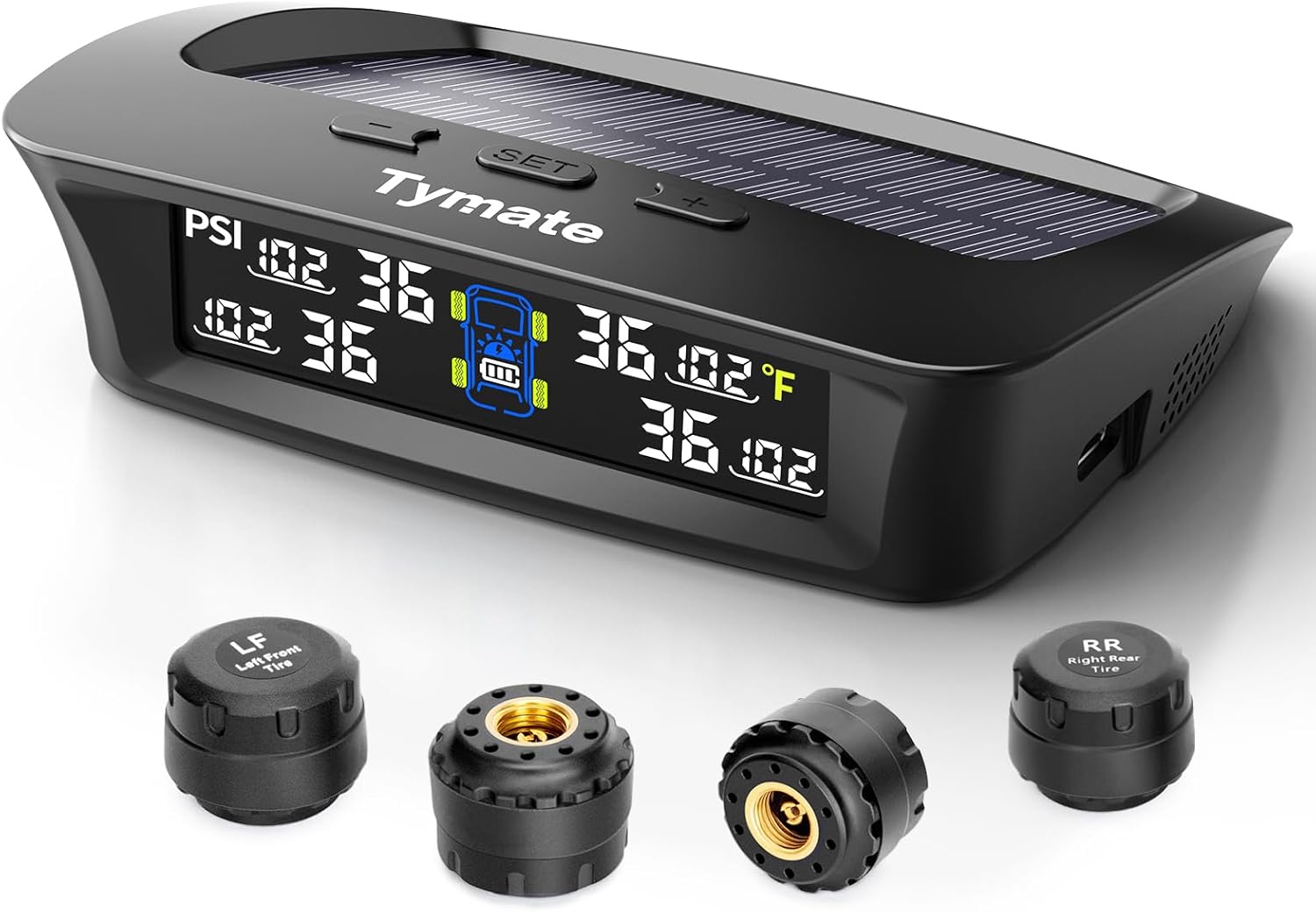
The Tymate TM3 RV TPMS delivers real-time tire pressure monitoring from 0 to 144 PSI with accurate readings and dependable wireless communication. It includes four external sensors with pre-pairing, six alarm modes for rapid leak, pressure extremes, temperature, and signal loss, plus an easy-reference setup for alert thresholds. Solar and USB-C charging help keep the display powered, while the color LCD and adaptive backlight improve visibility for safer driving and towing.

This solid brass tire inflation hose adapter screws into your inflator and uses a locking press clip to securely clamp onto the tire valve stem. It helps reduce air leakage for fast, efficient pumping and is designed for reliable performance with a wide range of vehicles and inflator setups.
Why You Should Check Tire Pressure in Hot Weather
Hot weather affects tire pressure because the air inside the tire expands as temperature rises. A common rule of thumb is that tire pressure changes by about 1–2 psi for every 10°F change in temperature. That means a Sonata set correctly on a cool morning may show a higher reading later in the afternoon.
Driving also heats the tires. Hyundai states that warm tires can normally read 4–6 psi above the recommended cold tire pressure. That temporary rise does not automatically mean the tires are overinflated.
Cold vs. Hot Tire Pressure
A cold tire reading means the car has been parked for at least three hours or driven less than 1 mile. This is the reading you should use when setting pressure. A hot reading is useful for spotting a major problem, but it is not the best number for final adjustment.
Warning: Do not release air from warm tires just because the gauge reads above the door-jamb number. If you bleed hot tires down to the cold specification, they may become underinflated after cooling.
Safety and Performance Impact
Correct pressure helps your Sonata brake, steer, and ride as designed. Underinflation can create excess heat, poor handling, and reduced fuel economy. Overinflation can create a harsher ride, more center tread wear, and a higher chance of tire damage from potholes or road debris.
Fuel economy matters too. FuelEconomy.gov says keeping tires inflated to the proper pressure can improve gas mileage by 0.6% on average and up to 3% in some cases. The gain is modest, but the safety and tire-wear benefits make the check worthwhile.
How to Check Your Hyundai Sonata Tire Pressure
- Park long enough for a cold reading. Check after the car has been parked for at least three hours, or before driving more than 1 mile.
- Find the correct PSI. Open the driver door and read the Tire and Loading Information Label on the door jamb.
- Remove the valve cap. Keep it in your hand or pocket so it does not roll away.
- Press the gauge firmly onto the valve stem. A brief hiss is normal, but a long hiss usually means the gauge is not sealed correctly.
- Compare the reading with the placard. If the tire is low, add air. If it is high while cold, release a small amount and recheck.
- Check all four tires and the spare if equipped. Some compact spares require much higher pressure than the regular tires.
- Reinstall every valve cap. Valve caps help keep dirt and moisture away from the valve core.
Pro Tip: Keep a digital or dial gauge in the glove box and compare it once against a trusted shop gauge. Gas-station gauges can be damaged or inaccurate from heavy use.
Signs of Over-Inflation
Overinflation means the tire pressure is above the recommended cold pressure for your Sonata. Mildly high pressure after driving on a hot day may be normal, but pressure that is high when cold should be corrected.
Common signs of overinflation include:
- Harsh ride: The car feels stiff over bumps or rough pavement.
- Center tread wear: The middle of the tread wears faster than the edges.
- Reduced comfort and grip: The tire may not maintain the intended contact patch.
- More road-impact sensitivity: Overinflated tires may be more vulnerable to cuts or impact damage from potholes.
What to Do If Your Tires Are Over-Inflated
If your Sonata’s tires are over the recommended pressure while they are cold, release air slowly until the gauge matches the door-jamb placard. Press the valve stem briefly, check again, and repeat in small steps.
If the tires are over the placard number only because they are hot from driving, wait until they cool and check again. A warm reading several psi higher than the cold number can be normal.
Note: If one tire is much higher or lower than the others, inspect it for damage, uneven wear, a leaking valve stem, or a recent repair issue.
How Seasonal Changes Affect Tire Pressure

Seasonal temperature swings can move your tire pressure enough to affect handling and tire wear. Summer heat usually raises pressure. Cold fronts usually lower it. Hyundai also notes that tire pressure can change with elevation, so rechecking is smart after major mountain or desert travel.
| Temperature Change | Typical Pressure Change | What to Do |
|---|---|---|
| +10°F | About +1 to +2 psi | Recheck cold before adjusting |
| +20°F | About +2 to +4 psi | Expect a higher afternoon reading |
| -10°F | About -1 to -2 psi | Add air if cold pressure is low |
| Big seasonal swing | Several psi possible | Check monthly and before road trips |
A tire that was perfect in spring can be several psi different during a summer heat wave or after a cold front. Monthly cold-pressure checks prevent most surprises.
[Products Worth Considering]

The AstroAI 2 pack air chucks provide a heavy-duty, closed-flow locking design that helps keep air flowing during inflation while securely attaching to the valve stem. Built with 250 PSI rated brass components and compatible with Schrader valves, they feature 1/4" female NPT threads for a wide fit with common inflators. The straight tip and locking clip make filling tires and monitoring pressure more convenient.

This multi-function tire valve stem removal tool set makes it fast to remove, install, bleed, and clean valve cores for easier tire maintenance. It includes valve core removers, a 4-way spool tool, replacement valve caps, and spare cores to handle replacements and repairs with confidence. Universal compatibility suits cars, trucks, motorcycles, bicycles, and more for roadside convenience.
Why Regular Tire Pressure Monitoring Is Essential
Regular tire pressure checks are one of the simplest maintenance habits for a Hyundai Sonata. The National Highway Traffic Safety Administration recommends checking all tires, including the spare, at least once a month when the tires are cold.
Your Sonata’s Tire Pressure Monitoring System helps, but it is not a precision maintenance gauge. The U.S. Tire Manufacturers Association explains that TPMS warns when tires are significantly underinflated and should not replace monthly pressure checks with a gauge.
When you check pressure, also inspect tread depth, uneven wear, cracks, bulges, nails, and valve caps. If a tire repeatedly loses air, have it inspected by a qualified tire shop or Hyundai dealer.
Tips for Adjusting Your Tire Pressure Like a Pro
- Use the placard, not guesses. Your Sonata’s door-jamb label is more accurate than a generic online PSI number.
- Check before driving. Morning checks are usually best because the tires are cool.
- Adjust in small amounts. Add or release air a little at a time, then recheck.
- Keep all tires matched to the spec. Unless the placard lists different front and rear pressures, keep them even.
- Do not exceed sidewall maximum pressure. The sidewall number is a maximum limit, not the recommended driving pressure.
- Recheck after big weather changes. Heat waves, cold fronts, and long road trips can all change the reading.
Community Insights on Tire Pressure Management
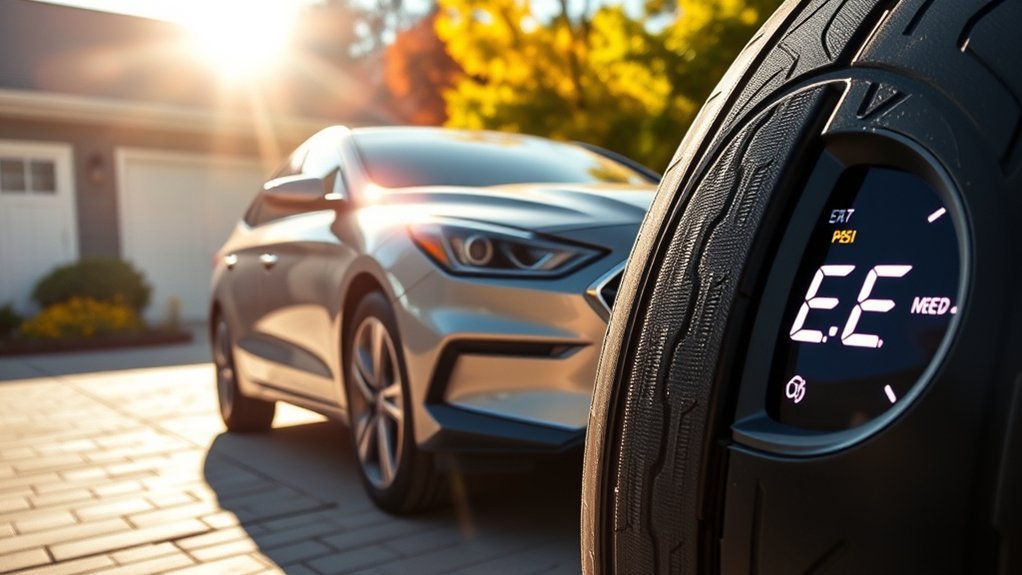
Sonata owners often notice higher dashboard pressure readings in summer traffic or after highway driving. That does not always mean something is wrong. The key is to compare tires under the same conditions and make final adjustments only from a cold reading.
A practical routine is simple: check tire pressure once a month, before long trips, and after major temperature changes. Keep a gauge in the car, but make your final adjustment at home or at a service station before the tires have warmed up from a long drive.
Frequently Asked Questions
How much PSI should I add when Hyundai Sonata tires are hot?
Do not add or release air based only on a normal hot reading. Warm tires can read several psi higher than cold tires. Let the car sit for at least three hours, then adjust to the pressure listed on the driver-side door-jamb placard.
What PSI should a Hyundai Sonata be at?
Use the PSI printed on your Sonata’s driver-side door-jamb Tire and Loading Information Label. Many recent Sonatas list pressures in the low-to-mid 30s, but the exact number depends on model year, tire size, trim, and market.
Does hot weather affect tire PSI?
Yes. Tire pressure often rises about 1–2 psi for every 10°F increase in outside temperature. Driving also heats the tires, so the dashboard or gauge reading may be higher after a trip than it was before you started.
Should I lower tire pressure in summer?
Only lower it if the tires are above the recommended pressure when measured cold. Do not bleed air from hot tires just because they read higher after driving or sitting in the sun.
Is the tire sidewall PSI the correct Sonata pressure?
No. The tire sidewall usually shows the maximum pressure the tire can handle, not the recommended pressure for your vehicle. Use the Hyundai door-jamb placard or owner’s manual instead.
Can I rely on the TPMS light instead of checking pressure?
No. TPMS is a backup warning for significant underinflation. It may not alert you to smaller pressure changes that still affect tire wear, fuel economy, and handling. Use a gauge monthly.
Conclusion
Hot weather can make your Hyundai Sonata’s tire pressure look high, but the safest approach is simple: check the tires cold, use the driver-side door-jamb placard, and avoid adjusting based only on a hot reading. Do not rely on a universal 32 psi number, the tire sidewall maximum, or the TPMS light alone. A five-minute monthly pressure check helps protect ride comfort, tire life, fuel economy, and safety.
Sources
- Hyundai Owner’s Manual — Tires and Wheels — Sonata tire-size examples and cold inflation pressures.
- Hyundai Owner’s Manual — Recommended Cold Tire Inflation Pressures — cold tire definition, warm tire pressure increase, and over/underinflation warnings.
- NHTSA TireWise — monthly tire checks, placard guidance, TPMS basics, and tire safety.
- U.S. Tire Manufacturers Association — Tire Care Essentials — temperature-related PSI changes and TPMS limitations.
- FuelEconomy.gov — Keeping Your Vehicle in Shape — fuel-economy benefits of proper tire inflation.

Related Articles

Danger of Using Summer Tires in Winter on a Hyundai Sonata
Potentially perilous, using summer tires in winter on your Hyundai Sonata can compromise safety—discover the hidden dangers that await you on icy roads.
Read More
Can You Mix Nitrogen and Air in Hyundai Sonata Tires? Answered
Discover the implications of mixing nitrogen and air in your Hyundai Sonata tires—are the benefits worth the risks? Explore the answer inside!
Read More
How to Tell If Hyundai Sonata Tires Are Too Old to Use Safely
Understand how to assess the age of your Hyundai Sonata tires and discover crucial signs of deterioration that could compromise your safety on the road.
Read More
One Comment