
Hyundai Sonata TPMS Light Won’t Turn Off: Causes & Fixes
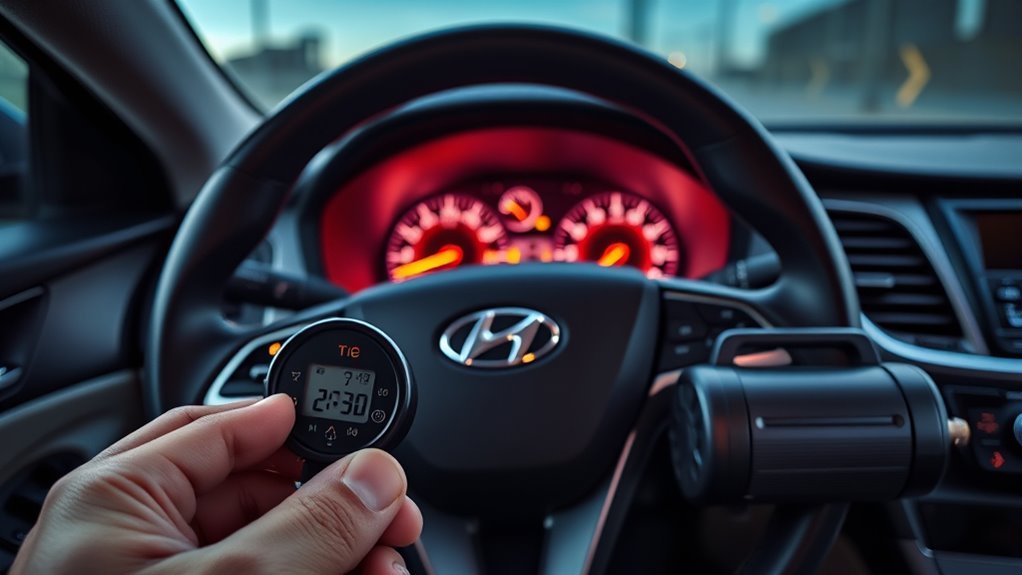
If your Hyundai Sonata’s TPMS light will not turn off, start with the simple checks before assuming a sensor has failed. A steady tire-pressure warning usually means one or more tires are low, while a warning that flashes for about a minute and then stays on usually points to a TPMS malfunction. The correct fix depends on the light pattern, the cold tire pressure, the condition of the tires, and whether any wheels, tires, sensors, or sealants were recently changed.
Quick Answer
A Hyundai Sonata TPMS light usually stays on because one or more tires are below the cold PSI listed on the driver-side door jamb placard, a tire has a slow leak, or a TPMS sensor is not communicating. Check all tires cold, inflate to the placard PSI, reinstall valve caps, then drive normally for a few minutes. If the light flashes first or will not clear, have the system scanned.
Key Takeaways
- Use the cold tire pressure on your Sonata’s door-jamb placard, not a generic 32 PSI number and not the maximum PSI printed on the tire sidewall.
- A steady TPMS light usually means low tire pressure; a light that flashes for about one minute and then stays on usually means a TPMS fault.
- Check pressure when the tires are cold. Do not bleed air from warm tires just because the gauge reads a few PSI higher after driving.
- If the warning returns after inflation, look for a slow leak, damaged valve stem, puncture, incompatible wheel, dead sensor battery, or sensor relearn issue.
- Get professional help right away if a tire will not hold air, the warning flashes, the car feels unstable, or the light stays on after correct pressure and normal driving.
At a Glance
| Time Required | 10–20 minutes for a basic pressure check; longer if a leak or sensor fault needs diagnosis. |
| Difficulty | Easy for tire-pressure checks; moderate to professional for TPMS sensor diagnosis or replacement. |
| Tools Needed | Accurate tire-pressure gauge, air compressor, valve caps, tire tread/leak inspection light, and a TPMS scan tool if the warning persists. |
| Cost | Often free if the tires only need air; leak repair or sensor replacement cost varies by shop, tire condition, and sensor type. |
Why Is Your Hyundai Sonata TPMS Light On?

Your Sonata’s TPMS light turns on when the tire pressure monitoring system detects a tire-pressure problem or a system fault. The most common cause is simple: one or more tires are below the recommended cold inflation pressure listed on the vehicle placard or tire inflation label.
Warning: If the TPMS light comes on while driving, slow down, avoid hard cornering, and expect longer stopping distances. Stop in a safe place and check the tires as soon as possible. Do not keep driving on a tire that looks flat, will not hold air, or makes the vehicle feel unstable.
Use the light pattern to narrow the problem:
- Steady TPMS light: Usually means one or more tires are significantly underinflated.
- Flashing light for about one minute, then solid: Usually means the TPMS has a malfunction, such as a failed sensor, communication issue, incompatible wheel, or relearn problem.
- Light turns on after a cold night: Tire pressure may have dropped with temperature. Recheck all tires cold and inflate to the placard PSI.
- Light comes back after adding air: Suspect a slow leak, valve stem problem, puncture, bead leak, cracked wheel, or faulty TPMS sensor.
Hyundai’s owner information says the proper pressure is shown on the vehicle placard or tire inflation pressure label on the driver’s side center pillar. Federal TPMS guidance also says TPMS does not replace regular tire maintenance, so you should still check pressure manually with a quality gauge.
[Products Worth Considering]

EVOULTES heavy duty tire inflator with an integrated gauge delivers accurate pressure readings from 10–120 PSI, helping you inflate, deflate, and check tires in one tool. The 16.5-inch extended dual-head air chuck with swivel base reaches hard-to-access dual wheel valves on trucks and RVs. A brass trigger core and side-mounted air release valve make operation smooth, with standard 1/4" NPT threading and quick-connect compatibility for easy setup.

The AstroAI 2 pack air chucks provide a heavy-duty, closed-flow locking design that helps keep air flowing during inflation while securely attaching to the valve stem. Built with 250 PSI rated brass components and compatible with Schrader valves, they feature 1/4" female NPT threads for a wide fit with common inflators. The straight tip and locking clip make filling tires and monitoring pressure more convenient.
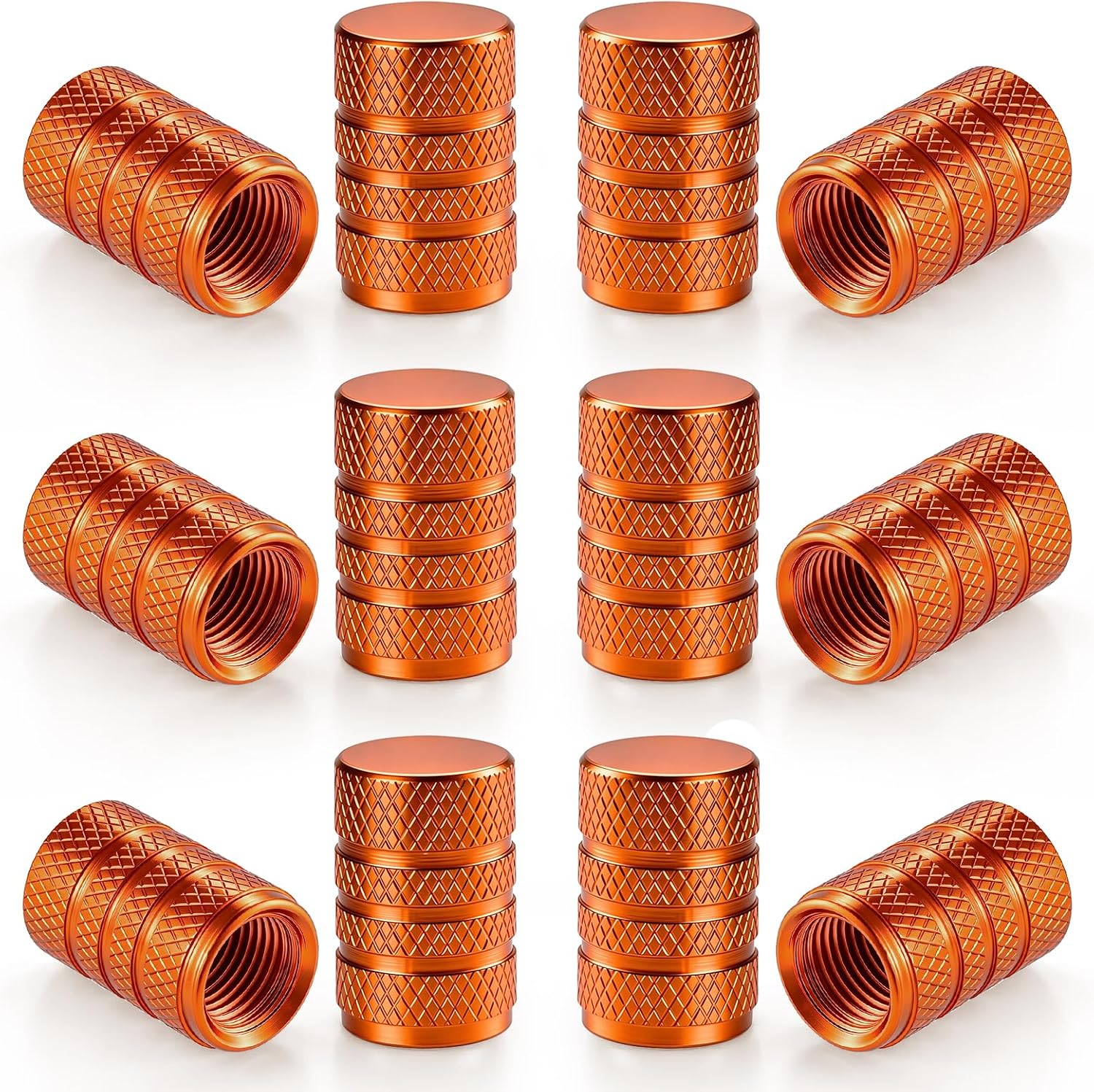
Upgrade your vehicles with these universal aluminum alloy tire valve stem caps designed to help keep dust out and maintain stable tire pressure. Each cap features an internal rubber seal for long-lasting leak protection and features an easy screw-on installation that won’t damage the valve stem threads. Suitable for cars, trucks, motorcycles, and bicycles, they also add a personalized decorative touch to your wheels.
Common Reasons for TPMS Alerts
A TPMS alert can come from tire pressure, tire damage, sensor issues, wheel changes, or environmental conditions. Do not assume the system is wrong until you have checked the tire pressure with a gauge.
Tire Pressure Issues
Low pressure is the first thing to check. Common causes include:
- Natural air loss: Tires can lose small amounts of air over time.
- Cold weather: Tire pressure often drops when outside temperature falls.
- Slow leaks: Nails, screws, bead leaks, cracked rubber, or damaged valve stems can leak slowly.
- Recent service: Tire rotation, replacement tires, or wheel work can leave one tire below spec or disturb a sensor.
- Spare tire use: If your Sonata has a spare without a TPMS sensor, the warning may stay on until the original TPMS-equipped wheel is repaired, inflated, and reinstalled.
Always inflate to the cold PSI on your Sonata’s placard. Do not use the maximum PSI printed on the tire sidewall as your target pressure.
Sensor Malfunctions
If the tire pressures are correct but the warning flashes first or keeps returning, the issue may be in the TPMS hardware or communication system. Possible causes include:
- Weak or dead battery inside a wheel-mounted TPMS sensor
- Sensor damaged during tire mounting or valve-stem service
- Corrosion around the valve stem or sensor hardware
- Aftermarket wheels or replacement sensors that are not compatible
- Sensor IDs that were not relearned after sensor or wheel replacement
- Radio-frequency interference from nearby transmitters or electronic devices
- Use of tire sealant that is not approved for the vehicle and may damage the sensor
Note: A visual tire check is not enough. A tire can look normal and still be several PSI low. Use a gauge, then compare the reading with the door-jamb placard.
Effective Strategies for Maintaining Optimal Tire Pressure
The best way to stop repeat TPMS alerts is to maintain pressure before the system has to warn you. Check your Sonata’s tires at least monthly, before long trips, and whenever the weather changes sharply.
- Check pressure cold: A cold tire has been parked for at least three hours or driven less than about one mile.
- Use a quality gauge: Cheap or damaged gauges can read several PSI off.
- Set all four tires to the placard PSI: Some vehicles use the same front and rear pressure, while others do not.
- Reinstall valve caps: Caps help keep dirt and moisture out of the valve core.
- Inspect while inflating: Look for nails, sidewall bulges, uneven tread wear, cracked valve stems, or air bubbles if using soapy water on a suspected leak.
Proper inflation also helps fuel economy. FuelEconomy.gov says keeping tires inflated to the proper pressure can improve gas mileage by 0.6% on average and up to 3% in some cases. Underinflated tires also affect handling, braking, tread wear, and heat buildup.
Check Your Tire Pressure Easily
Follow this quick process before trying to reset anything:
- Find the correct PSI. Open the driver’s door and read the tire placard on the door jamb or center pillar.
- Wait until the tires are cold. Morning is best, before driving more than a short distance.
- Remove the valve cap. Press the gauge firmly onto the valve stem until the hissing stops.
- Compare the reading with the placard. Add air if the tire is low.
- Check all four tires. If equipped with a spare, check that tire manually too, because it may not show on the TPMS display.
- Reinstall the valve caps. Replace cracked or missing caps.
- Drive normally. After the correct pressure is set, the warning often clears after the system receives updated readings.
Pro Tip: If you checked pressure after driving, do not release air just because the tires read higher than the placard. Warm tires commonly read several PSI higher. Let them cool, then set the pressure.
Reset Your TPMS Light in Simple Steps

Many Hyundai Sonata TPMS warnings clear automatically after the tires are set to the correct cold pressure and the vehicle is driven. Do not rely on generic “TPMS reset button” advice unless your exact model-year owner’s manual shows one.
- Set the pressure correctly. Inflate all four tires to the cold PSI on the placard.
- Check for obvious tire damage. Do not drive on a tire that is visibly flat, bulging, cut, or unable to hold air.
- Start the vehicle and watch the light pattern. A steady light points first to pressure. A flashing-then-solid light points to a TPMS malfunction.
- Drive normally for a few minutes. The system may need driving time to update sensor readings.
- Recheck pressure if the light returns. A tire that drops again has a leak until proven otherwise.
- Scan the system if it will not clear. A TPMS-capable scan tool can read sensor IDs, pressure data, battery status when available, and fault codes.
If the warning remains after the tires are correctly inflated and driven, the next step is not more air. It is leak testing, sensor diagnosis, or a professional TPMS inspection.
Understanding TPMS Sensors and How They Work
Most modern Hyundai Sonata models use direct TPMS. That means each road wheel has a pressure sensor mounted inside the tire near the valve stem. The sensor sends pressure information to the vehicle, and the dashboard warns you if pressure is low or if the system detects a malfunction.
The TPMS is a warning system, not a replacement for regular maintenance. It may not warn you before a sudden blowout, severe road-debris damage, or every type of leak. It also may not display pressure for a spare tire if the spare does not have a sensor.
When sensors are replaced, rotated with different wheel sets, or installed with aftermarket wheels, the vehicle may need compatible sensors and a relearn procedure. A tire shop or Hyundai dealer can usually confirm whether each sensor is awake, transmitting, and assigned to the correct wheel position.
When Should You Call a Professional for TPMS Help?
Call a tire professional or Hyundai service department if the basic pressure check does not solve the issue. Professional help is especially important when:
- The TPMS light flashes for about one minute, then stays on.
- The same tire loses pressure again after being inflated.
- A tire will not hold air long enough to drive safely.
- The vehicle pulls, shakes, feels unstable, or has longer stopping distance.
- The TPMS display shows missing or inconsistent pressure readings.
- You recently replaced tires, wheels, valve stems, or TPMS sensors.
- You used tire sealant or a puncture-repair kit and the light appeared afterward.
- The warning remains after correct cold pressure and normal driving.
A shop can perform a leak test, inspect valve stems and beads, check sensor signals, relearn sensor IDs, and replace failed sensors if needed.
[Products Worth Considering]

Upgrade your Toyota tire setup with these corrosion-resistant, leak-proof valve stem caps designed to help protect the valve core from water, snow, and road grime. The caps feature a snug rubber seal and durable copper alloy construction to resist rust and oxidation while maintaining stable tire pressure. Ideal for replacing worn original caps and keeping your wheels looking clean and stylish.

These universal tire valve stem caps help protect your valve core from dust, debris, moisture, and corrosion, supporting more stable tire pressure. The aluminum alloy design resists long-term wear, while the sealing construction helps help prevent air leakage. They twist on easily for quick installation and help safeguard driving safety across cars, SUVs, trucks, and motorcycles.
Signs of Faulty TPMS Sensors

A bad TPMS sensor can make the light stay on even when the tires are correctly inflated. The key is to confirm the pressure first, then diagnose the system.
Inconsistent Pressure Readings
Possible sensor-related symptoms include:
- One tire pressure reading disappears from the cluster display.
- A reading is far different from a manual gauge reading.
- The warning comes back soon after tire service.
- The system cannot identify a sensor during a scan.
- The light appears after aftermarket wheels or new sensors were installed.
Inconsistent readings do not always mean the sensor is bad. A slow leak, cold weather, damaged tire, or incorrect pressure can create similar symptoms. That is why a manual pressure check comes first.
Illuminated Warning Light
A steady warning light usually starts with tire pressure. A flashing-then-solid warning light is more likely a system malfunction. Causes can include a dead sensor battery, physical sensor damage, corrosion, incompatible sensors, or sensor IDs that need relearning.
TPMS sensor batteries are sealed inside the sensor body. When the battery fails, the usual repair is replacing the sensor rather than replacing only the battery.
The Impact of Temperature on Tire Pressure
Temperature changes are one of the most common reasons a Sonata TPMS light appears in the morning or after a seasonal change. As outside temperature drops, tire pressure drops too. A practical rule of thumb is about 1 PSI for every 10°F temperature change, though the exact amount can vary.
Cold-weather TPMS warnings are not always sensor failures. If the tires were set correctly on a warm day, they may be below the placard pressure during a cold snap. Check and adjust them cold, then recheck after the next major weather swing.
The right pressure target is the cold PSI on your Sonata’s door placard, not a universal number and not the tire sidewall maximum.
TPMS Sensor Lifespan and Replacement
TPMS sensors are built to last for years, but they do not last forever. Heat, age, corrosion, tire mounting damage, road salt, and battery depletion can all shorten sensor life. If your Sonata is older and the TPMS light flashes before staying on, sensor age becomes more likely.
Typical Sensor Lifespan
Many direct TPMS sensors last several years before their sealed batteries weaken. A shop should still test the system before replacing parts, because a flashing TPMS light can also come from incompatible wheels, relearn problems, RF interference, or a damaged sensor.
- Replace only after diagnosis: Do not replace sensors just because the light is on.
- Use compatible sensors: OEM or correctly programmed sensors help prevent repeat warnings.
- Service valve hardware carefully: Damaged valve stems, seals, or nuts can cause leaks.
- Relearn when required: Some sensor replacements require a TPMS relearn or registration procedure.
Replacement Process Overview
| Step | What Happens |
|---|---|
| 1. Confirm tire pressure | All tires are checked cold and adjusted to the door-placard PSI. |
| 2. Scan each sensor | A TPMS tool checks whether each sensor transmits properly. |
| 3. Inspect tire and valve hardware | The shop checks for punctures, bead leaks, corrosion, and valve-stem problems. |
| 4. Replace failed parts | A failed sensor or leaking valve hardware is replaced with a compatible part. |
| 5. Relearn and road test | The sensor IDs are relearned if required, and the vehicle is driven to confirm the light clears. |
Frequently Asked Questions
Why is my TPMS light not turning off?
The most likely causes are one or more tires still being below the cold placard PSI, a slow leak, a damaged valve stem, or a TPMS sensor fault. Check all tires cold with a gauge first. If the light flashes for about a minute before staying on, have the TPMS scanned for a malfunction.
Why is my tire pressure light still on after filling tires on my Hyundai Sonata?
The tires may not have been filled to the correct cold PSI, the gauge may be inaccurate, a tire may be leaking, or the system may need driving time to update. Recheck all four tires when cold, use the door-jamb placard PSI, then drive normally. If the warning returns, leak-test the tires and scan the TPMS.
Does a Hyundai Sonata have a TPMS reset button?
Do not assume your Sonata has a manual reset button. Many Hyundai TPMS warnings clear after the tires are set to the correct pressure and the vehicle is driven. Check your exact model-year owner’s manual before using any reset procedure.
Can cold weather make the TPMS light come on?
Yes. Cold weather lowers tire pressure, and a tire that was correct in warm weather can become low after a temperature drop. Check the tires cold and inflate them to the placard PSI.
Can I drive with the TPMS light on?
You should stop and check the tires as soon as it is safe. If a tire is visibly low, damaged, or will not hold air, do not keep driving on it. If the pressure is correct but the light flashes or remains on, schedule TPMS diagnosis because the system may not warn you correctly next time.
Conclusion
If your Hyundai Sonata’s TPMS light will not turn off, start with the basics: check all tires cold, inflate them to the PSI on the driver-side placard, reinstall the valve caps, and drive normally for a few minutes. If the warning comes back, treat it as a real problem until you find the cause. A slow leak, damaged valve stem, incompatible wheel, weak sensor battery, or TPMS relearn issue can all keep the light on. For safety, do not ignore a flashing TPMS light or a tire that repeatedly loses pressure.
Sources
- Hyundai Owner’s Manual: Low Tire Pressure Position and Tire Pressure Telltale — backs Hyundai-specific TPMS warnings, placard-pressure guidance, cold-weather notes, and low-pressure safety risks.
- Hyundai Owner’s Manual: Tire Pressure Monitoring System — backs flashing-then-solid malfunction behavior, spare tire behavior, sealant caution, and when to visit Hyundai service.
- Hyundai Technical Service Bulletin: Tire Maintenance Best Practices — backs monthly cold-pressure checks, driver door-jamb placard location, and warm-tire pressure caution.
- 49 CFR 571.138: Tire Pressure Monitoring Systems — backs TPMS definitions, low-pressure warning requirements, and the statement that TPMS is not a substitute for proper tire maintenance.
- FuelEconomy.gov: Gas Mileage Tips — backs fuel-economy benefits of proper tire inflation and the warning not to use tire sidewall maximum pressure as the target.

Related Articles

Danger of Using Summer Tires in Winter on a Hyundai Sonata
Potentially perilous, using summer tires in winter on your Hyundai Sonata can compromise safety—discover the hidden dangers that await you on icy roads.
Read More
Can You Mix Nitrogen and Air in Hyundai Sonata Tires? Answered
Discover the implications of mixing nitrogen and air in your Hyundai Sonata tires—are the benefits worth the risks? Explore the answer inside!
Read More
How to Tell If Hyundai Sonata Tires Are Too Old to Use Safely
Understand how to assess the age of your Hyundai Sonata tires and discover crucial signs of deterioration that could compromise your safety on the road.
Read More