
Hyundai Sonata Tire Pressure Seasonal Adjustment Guide
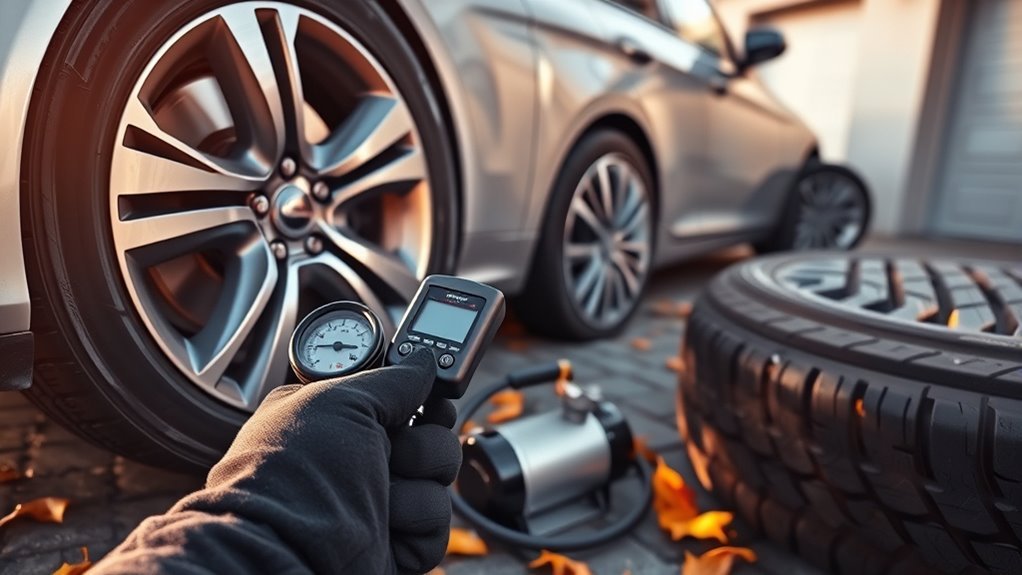
Your Hyundai Sonata tire pressure should be set from the driver’s door-jamb Tire and Loading Information label, not from the maximum PSI printed on the tire sidewall. For many 2017 gasoline Sonata trims, the placard is commonly 34 psi front and rear when the tires are cold, while hybrid and plug-in hybrid trims may differ. Always let your own label and owner’s manual win.
Quick Answer
Check Hyundai Sonata tire pressure when the tires are cold, meaning parked for at least three hours or driven less than 1 mile. Use the driver’s door-jamb placard as the target PSI. Many 2017 gasoline Sonatas list 34 psi, but hybrids and plug-in hybrids may use a different value.
Key Takeaways
- Use the Sonata’s door-jamb placard PSI, not the tire sidewall maximum pressure.
- Measure pressure when tires are cold for the most accurate reading.
- Expect pressure to move about 1 psi for every 10–12°F temperature change.
- Do not bleed air from warm tires just because they read higher than the cold PSI target.
- For a 2017 Sonata, do not use the car for trailer towing; Hyundai does not recommend it.
At a Glance
| Time Required | 5–10 minutes for all four tires |
| Difficulty | Easy beginner maintenance |
| Tools Needed | Quality tire pressure gauge, air compressor, valve caps, tire log or phone note |
| Cost | Usually free if you already own a gauge; $10–$25 for a basic digital gauge |
Warning: Never inflate a Sonata tire to a random winter number such as 40–45 psi unless your exact door placard, owner’s manual, tire maker, or qualified technician tells you to. Overinflation can reduce ride comfort, increase center tread wear, and make the tire more vulnerable to road-impact damage.
Quick: Check & Set Sonata Tire Pressure (5-Step Guide)
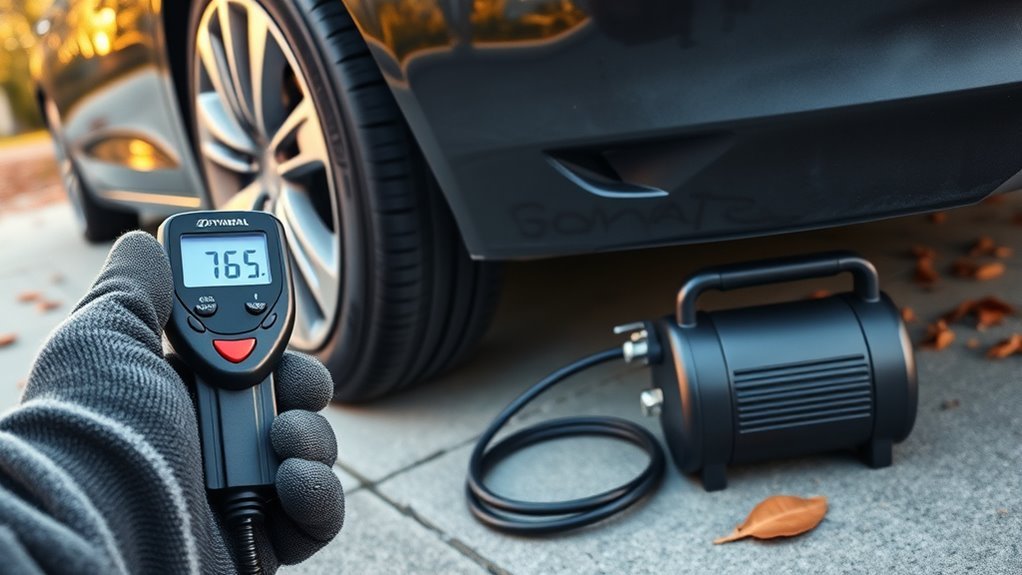
Start with cold tires. According to NHTSA tire safety guidance, the correct tire pressure is the pressure listed by the vehicle manufacturer on the driver-side label or in the owner’s manual, not the maximum pressure molded into the tire sidewall.
- Park long enough for a cold reading. Wait at least three hours after driving, or check before your first trip of the day.
- Find the door-jamb PSI. Open the driver’s door and read the Tire and Loading Information label on the door edge or center pillar.
- Measure each tire. Remove the valve cap, press a quality gauge firmly onto the valve stem, and write down each reading.
- Add or release air slowly. Use short bursts of air if the tire is low. If you overfill a cold tire, release air in small amounts and recheck.
- Reinstall valve caps and recheck monthly. Valve caps help keep dirt and moisture out of the valve core, which can reduce slow leaks.
Pro Tip: Keep a simple note in your phone with the date, outside temperature, and four tire readings. If one tire keeps dropping faster than the others, you have early evidence of a slow leak.
[Products Worth Considering]

EVOULTES heavy duty tire inflator with an integrated gauge delivers accurate pressure readings from 10–120 PSI, helping you inflate, deflate, and check tires in one tool. The 16.5-inch extended dual-head air chuck with swivel base reaches hard-to-access dual wheel valves on trucks and RVs. A brass trigger core and side-mounted air release valve make operation smooth, with standard 1/4" NPT threading and quick-connect compatibility for easy setup.

This portable cordless tire inflator delivers up to 160 PSI with fast 17 L/min airflow to help you quickly top up tires and get back on the road. It features dual power mode, running on a 21V rechargeable battery or a 12V DC adapter for convenient roadside use. An automatic shut-off with digital pressure gauge helps prevent overinflation, and a built-in LED light improves visibility in low-light conditions.

The JACO FlowPro Tire Inflator measures, inflates, and airs down tires up to 100 PSI with battery-free operation and ±2% accuracy after calibration. It features a glowing pressure dial for night visibility, a heavy-duty steel build with a hybrid hose, and a precision push-to-inflate thumb trigger. The patented Lightning Air Chuck locks on for a secure seal, and the kit includes quick-connect hardware for easy inline use with your air compressor.
Find the Right PSI for Your Hyundai Sonata
For many 2017 Hyundai Sonata gasoline trims, the recommended cold tire pressure is commonly 34 psi for the front and rear tires. Hybrid and plug-in hybrid trims may be listed at a different pressure, often around 35 psi, depending on trim and tire size. Because wheel size, trim, replacement tires, and market can vary, your own door-jamb label is the final source.
| 2017 Sonata gasoline trims | Often 34 psi front and rear when cold; confirm on your placard. |
| 2017 Sonata Hybrid / Plug-In Hybrid | May be around 35 psi front and rear; confirm on your placard. |
| Replacement tires | Use the vehicle placard unless a qualified tire professional provides a load-based replacement-tire pressure. |
| Temporary spare or Tire Mobility Kit | Follow the spare tire label or owner’s manual. Do not assume the spare uses the same PSI as the road tires. |
The tire sidewall pressure is not the Sonata’s recommended driving pressure. It is the tire’s maximum inflation pressure under specified load conditions. Using that number as your everyday target can cause poor ride quality, uneven wear, and reduced grip.
Tools, Timing, and “Cold” Pressure Best Practices
A precise gauge matters because a tire can look normal even when it is underinflated. Hyundai’s tire-pressure instructions say to use a good quality tire pressure gauge and check the pressure at least once a month. If the cold reading matches the recommended pressure on the tire and loading label, no adjustment is needed; if it is low, add air until it reaches the recommended pressure.
Cold tire pressure means the vehicle has not been driven for at least three hours or has been driven less than about 1 mile.
Use this timing routine for the cleanest reading:
- Check in the morning before driving when possible.
- Check all four tires, not only the tire that triggered a warning.
- Check the spare tire if your Sonata is equipped with one.
- Replace missing valve caps promptly.
- Recheck pressure before long trips and after big weather swings.
Note: Warm tires can read 4–6 psi higher than the recommended cold pressure. Do not release air from a warm tire just to force it down to the cold placard number. Recheck and adjust when the tires are cold.
How to Adjust Pressure for Cold Weather (PSI Rules)
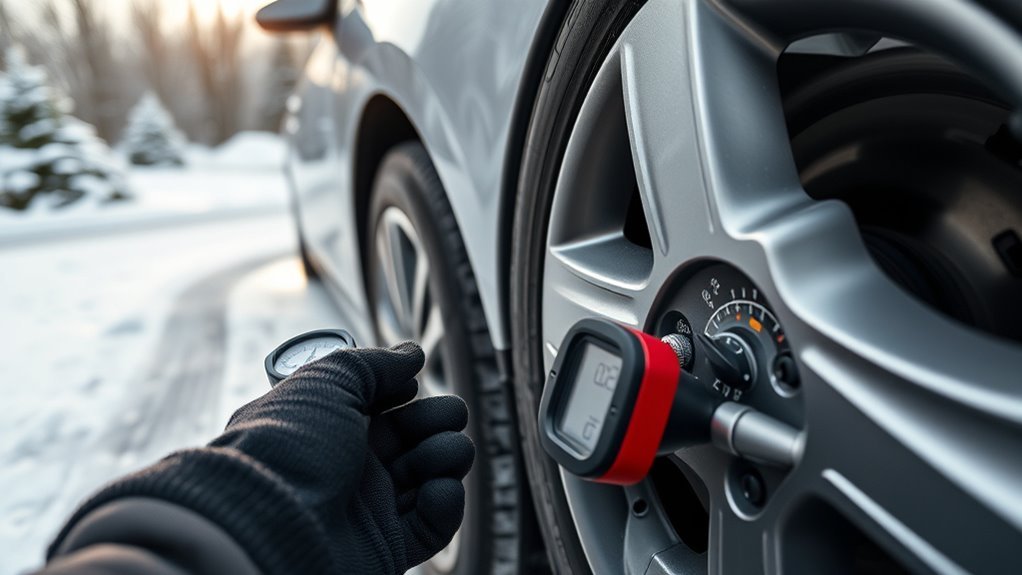
Cold weather lowers tire pressure. A practical rule is about 1 psi for every 10–12°F drop in temperature. That means a tire set correctly at 34 psi on a mild day can read several pounds low after a hard cold snap.
Cold-Weather PSI Adjustment
For winter, start with the Sonata’s door-jamb pressure. If colder temperatures are expected soon and your owner’s manual allows it, a small cold-weather buffer of about 3 psi may be acceptable. That is very different from automatically inflating to 40–45 psi, which is not a universal Sonata rule.
- Set the tires cold, not after a highway drive.
- Use the placard PSI as the baseline.
- Recheck after the temperature stabilizes for a few days.
- Never exceed the maximum inflation pressure molded on the tire sidewall.
- If one tire drops repeatedly, inspect it for a leak instead of simply adding more air every week.
Tire Pressure Temperature Rule
The pressure change caused by weather is normal, but it still matters. If the outside temperature drops 30°F, a tire can lose roughly 2–3 psi. That is enough to affect handling, braking feel, fuel economy, and TPMS warnings.
Use this simple seasonal plan:
- Fall: Check weekly during the first major cold swings.
- Winter: Check monthly and before road trips.
- Spring: Recheck as temperatures rise, but only adjust from a cold reading.
- Summer: Watch for underinflation before long highway trips, because heat buildup is harder on a low tire.
Hot Weather, Heavy Loads, and Towing: PSI Tips
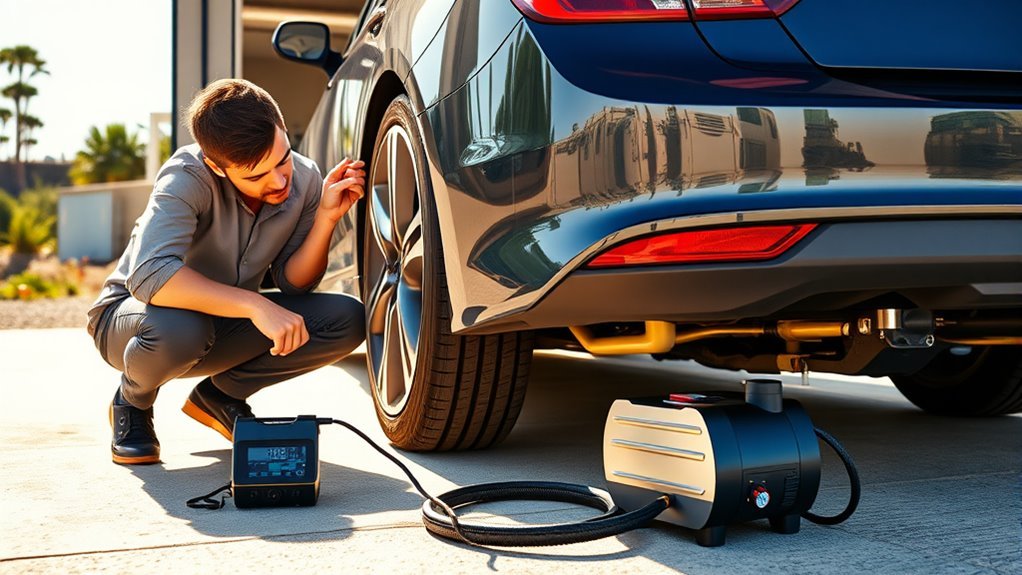
Hot pavement and highway speed increase tire temperature, but the fix is not to guess or bleed warm tires down. Set pressures to the placard value when the tires are cold, then leave normal warm-pressure rise alone unless a tire is dangerously over the sidewall maximum or a technician tells you otherwise.
Warning: Hyundai’s 2017 Sonata owner’s manual states that trailer towing is not recommended for this vehicle. Do not use a generic “add 3–5 psi for towing” rule on a 2017 Sonata.
For heavy cargo, use the vehicle’s load label and stay within the listed occupant-and-cargo capacity. Some 2017 Sonata manual listings show a vehicle capacity weight of 904 lb, but your actual door label is the value to follow. Overloading can affect braking, handling, tire heat buildup, and tire failure risk.
When carrying luggage or passengers:
- Spread cargo evenly and keep heavy items low in the trunk.
- Do not exceed the door-label combined occupant-and-cargo limit.
- Use the cold placard PSI unless your exact owner’s manual or tire professional gives a different load-based value.
- Recheck pressure before the trip, not after the tires are hot.
[Products Worth Considering]
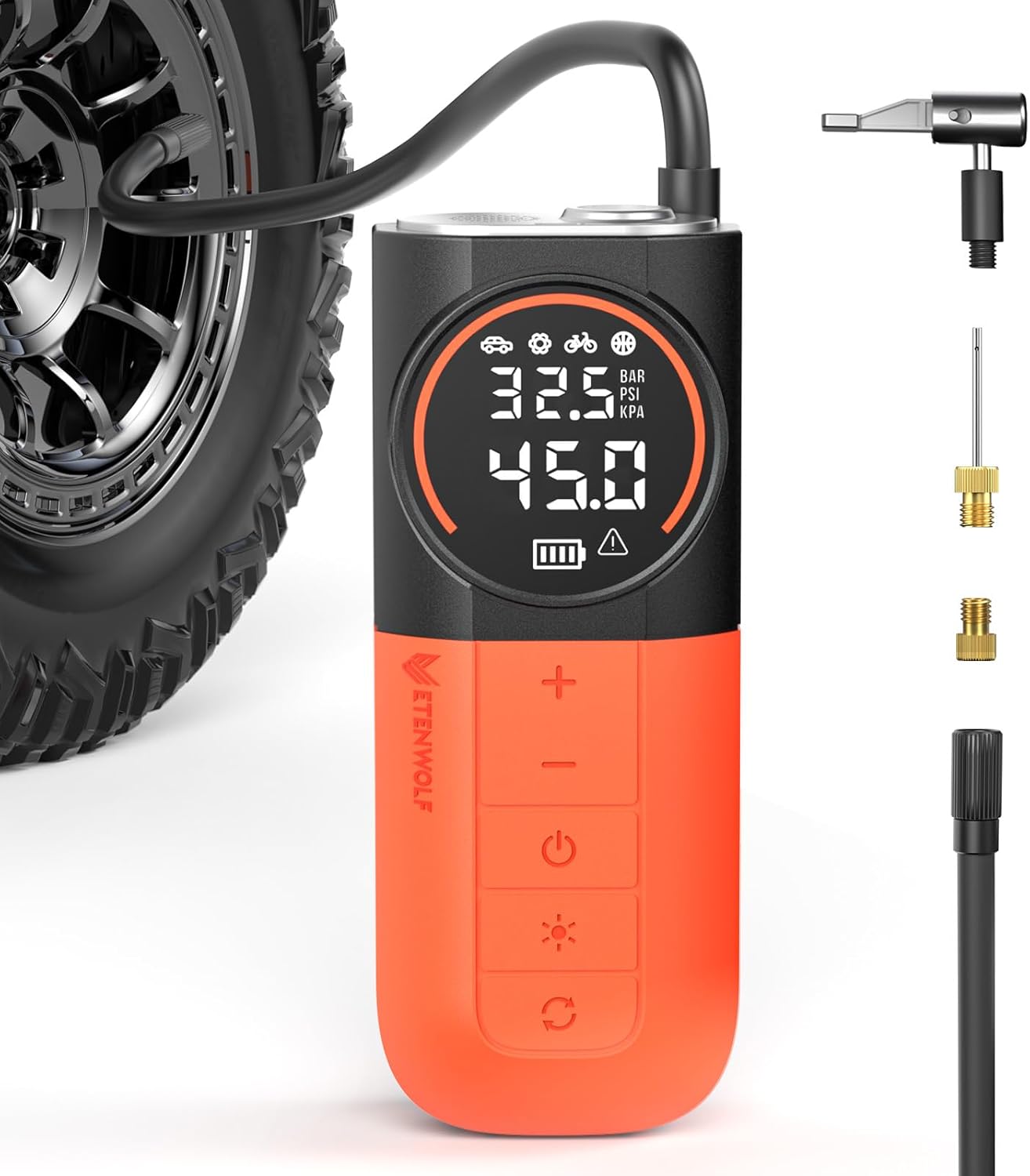
The ETENWOLF S1 cordless tire inflator delivers ultra-fast inflation with up to 160 PSI and a 20 L/min airflow for quicker tire top-offs. Its 5200mAh battery and cooling system support inflating many tires and sports balls on a single charge, while the digital pressure gauge and multi-unit display help you reach the right pressure accurately. With preset modes, pressure memory, an auto-stop feature, and an LED flashlight, it’s built for easy roadside and everyday use.

This portable cordless tire inflator delivers fast, efficient inflation for cars, motorcycles, bikes, and sports balls with a digital pressure gauge. Use the one-click PSI preset with auto shut-off for accurate, hands-free topping to your target pressure up to 150 PSI. It’s compact and rechargeable with a built-in emergency LED light plus valve adapters and accessories for quick, ready-to-go use.
Fixing Uneven Pressure, Leaks, and TPMS Alerts
If one Sonata tire is 2–3 psi lower than the others, treat it as actionable. Temperature changes usually affect all tires in the same direction. One tire dropping faster often points to a nail, valve-stem leak, bead leak, cracked wheel, or previous repair problem.
Check For Slow Leaks
Start with a visual inspection. Look for screws, nails, cuts, sidewall bulges, cracked rubber, damaged valve stems, and uneven tread wear. Then use soapy water on the valve stem, tread puncture area, and bead area; bubbling usually means air is escaping.
- Tread puncture: A repair may be possible if the puncture is small and in the repairable tread area.
- Sidewall damage: Replace the tire; sidewall punctures and bulges are not safe patch-only repairs.
- Valve leak: Replace the valve stem or valve core as needed.
- Repeated pressure loss: Have the tire inspected by a tire shop instead of relying on constant top-offs.
Reset TPMS Sensors
For a 2017 Hyundai Sonata, do not assume there is an under-dash TPMS reset button or a universal “blink three times” procedure. First set all tires to the correct cold pressure. Then drive normally and give the system time to update. The 2017 manual describes the low-pressure telltale remaining on until the vehicle is driven for about 20 minutes above 15.5 mph after the low-pressure tire is corrected, repaired, or replaced.
If the TPMS light blinks for about one minute and then stays on, that usually indicates a TPMS malfunction rather than simple low pressure. Have the system checked by a Hyundai dealer or qualified technician. If your specific Sonata year or market has a cluster-menu reset procedure, follow the exact owner’s manual for that vehicle.
Note: Tire sealant from a Tire Mobility Kit can affect TPMS components. If you use sealant after a puncture, have the tire, wheel, and TPMS sensor inspected during repair or replacement.
Seasonal Tire-Pressure Checklist (Monthly Schedule)
A monthly routine prevents most tire-pressure surprises. It also helps you spot slow leaks before they become roadside problems.
- Every month: Check all four tires cold and log the readings.
- Before long trips: Check pressure, tread condition, valve caps, and visible damage.
- After a 20–30°F temperature swing: Recheck cold pressure because the PSI may have changed enough to matter.
- When TPMS turns on: Pull over safely, check all tires with a gauge, and inflate to the placard PSI.
- When one tire keeps losing air: Inspect for leaks and schedule a tire-shop check.
- After tire rotation or replacement: Confirm all tires are at the proper cold pressure and verify TPMS behavior.
Keep the routine simple: door label, cold tires, quality gauge, monthly log. That is the safest and most accurate way to maintain Sonata tire pressure through seasonal changes.
Frequently Asked Questions
What is the tire pressure for a Hyundai Sonata in the winter?
Use the PSI on your driver’s door-jamb label when the tires are cold. Many 2017 gasoline Sonatas commonly list 34 psi, while hybrid and plug-in hybrid trims may differ. If your owner’s manual allows a small cold-weather buffer, use that guidance; do not automatically inflate to 40–45 psi.
How do I reset the tire pressure warning on a 2017 Hyundai Sonata?
Set all four tires to the correct cold PSI first. Then drive and allow the TPMS to update. The 2017 Sonata manual indicates the low-pressure warning may remain until the vehicle is driven for about 20 minutes above 15.5 mph after correction. If the warning blinks for about one minute and stays on, have the TPMS checked.
Why do tire pressures need to be adjusted as the seasons change?
Air pressure changes with temperature. As weather gets colder, pressure drops; as weather gets warmer, pressure rises. A good rule is about 1 psi for every 10–12°F change. Recheck cold pressure after major weather swings to keep the tires at the placard value.
Should I use the tire sidewall PSI or the Sonata door-jamb PSI?
Use the Sonata door-jamb PSI. The sidewall number is the tire’s maximum inflation pressure, not the vehicle’s recommended everyday driving pressure. The vehicle placard is matched to the car’s weight, handling, ride, and original tire setup.
Can I add extra PSI when carrying heavy cargo?
Do not guess. Stay within the vehicle’s occupant-and-cargo load limit and use the cold placard PSI unless your exact owner’s manual, tire placard, or tire professional gives a different load-based pressure. For a 2017 Sonata, Hyundai does not recommend trailer towing.
Conclusion
The safest Hyundai Sonata tire pressure routine is simple: check cold tires, use the driver’s door-jamb placard, adjust slowly with a reliable gauge, and recheck monthly. Many 2017 gasoline Sonatas commonly use 34 psi front and rear, but your own label is the authority. Avoid universal winter overinflation rules, do not bleed warm tires down to cold specs, and do not tow with a 2017 Sonata. Follow those basics and your tires will last longer, ride better, and respond more predictably in changing weather.
Sources
- NHTSA TireWise: Tire Safety Ratings and Awareness — backs door-label PSI, monthly checks, cold-pressure guidance, TPMS warnings, and tire safety basics.
- Hyundai Technical Service Bulletin 20-SS-002H: Tire Maintenance Best Practices — backs Hyundai cold-tire definition, monthly checks, warm-tire pressure rise, and tire wear patterns.
- Hyundai Owner’s Manual: Recommended Cold Tire Inflation Pressures — backs cold-tire definition, warm-tire warning, and over/underinflation risks.
- Hyundai Owner’s Manual: Check Tire Inflation Pressure — backs use of a quality gauge, valve-cap guidance, and inflation/deflation steps.
- 2017 Hyundai Sonata Owner’s Manual: Load Limit and Trailer Towing Sections — backs 2017 Sonata vehicle capacity and “not recommended” trailer towing guidance.

Related Articles

Danger of Using Summer Tires in Winter on a Hyundai Sonata
Potentially perilous, using summer tires in winter on your Hyundai Sonata can compromise safety—discover the hidden dangers that await you on icy roads.
Read More
Can You Mix Nitrogen and Air in Hyundai Sonata Tires? Answered
Discover the implications of mixing nitrogen and air in your Hyundai Sonata tires—are the benefits worth the risks? Explore the answer inside!
Read More
How to Tell If Hyundai Sonata Tires Are Too Old to Use Safely
Understand how to assess the age of your Hyundai Sonata tires and discover crucial signs of deterioration that could compromise your safety on the road.
Read More