
How to Cut a Tire in Half: Tools, Steps, and Safety
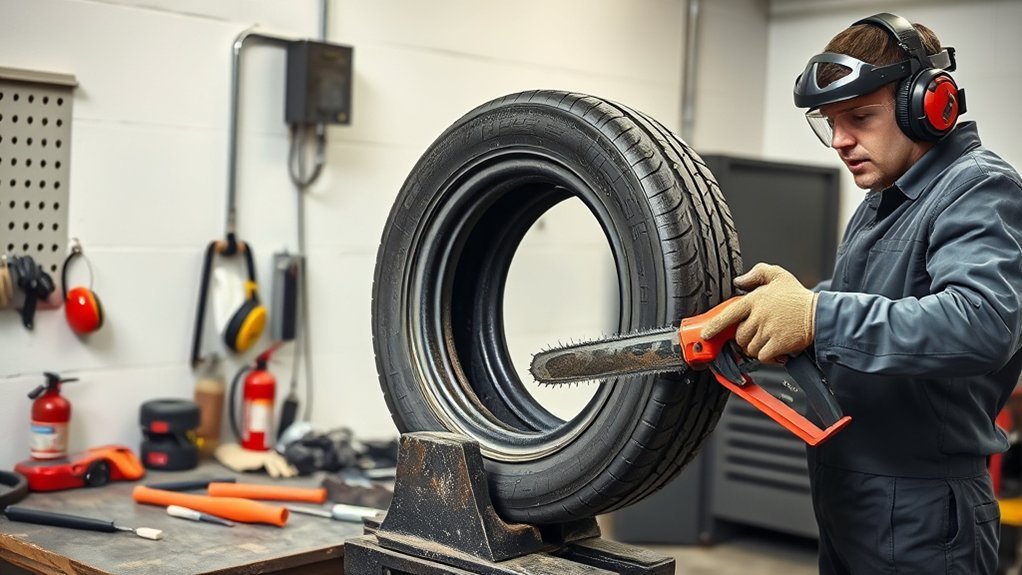
To cut a tire in half, you’ll need a sharp utility knife, Sawzall, circular saw, or angle grinder with a metal-safe blade. Secure the tire, puncture the sidewall about 1 inch from the tread, then saw steadily along the seam. Use dowels to reduce binding as you cut through steel belts. Wear safety glasses, gloves, boots, and a dust mask. With the right setup, you can make a clean cut and learn the finer points next.
Key Takeaways
- Use a utility knife, sawzall, circular saw, or angle grinder; choose metal-cutting blades for steel-belted tires.
- Wear safety glasses, gloves, boots, and a dust mask before starting any tire-cutting work.
- Puncture the sidewall about 1 inch from the tread to create a controlled starting point.
- Saw steadily along the sidewall seam, rotating the tire and using dowels to reduce blade binding.
- Dispose of tire pieces according to local rules, and consider recycling or repurposing the rubber.
[Products Worth Considering]

Ride with confidence using these fat tire inner tubes designed for 26-inch e-bikes and bikes. The butyl rubber construction delivers good airtightness, durability, and shock absorption for a smoother ride. Each tube fits 26x3.5 to 4.0 tires with an AV 32mm Schrader valve, and the kit includes tire levers for easier installation.

These glow-in-the-dark tire valve caps add a fluorescent look to your vehicle while helping protect valve stems from wear and tear. They’re made for long-lasting luminous effects after charging in sunlight, making night rides more noticeable. Universal fit works for cars, SUVs, trucks, motorcycles, and bicycles for easy, quick customization.

This screw-in tire plug kit offers quick, DIY tire repairs for punctures from nails, screws, and sharp debris. Simply screw the vacuum tire mending nail into the puncture for a fast roadside fix, designed to create a strong, air-tight seal. It fits most tubeless tires for cars, trucks, motorcycles, and more, helping you avoid costly replacements until professional service is available.
What Tools Do You Need to Cut a Tire?
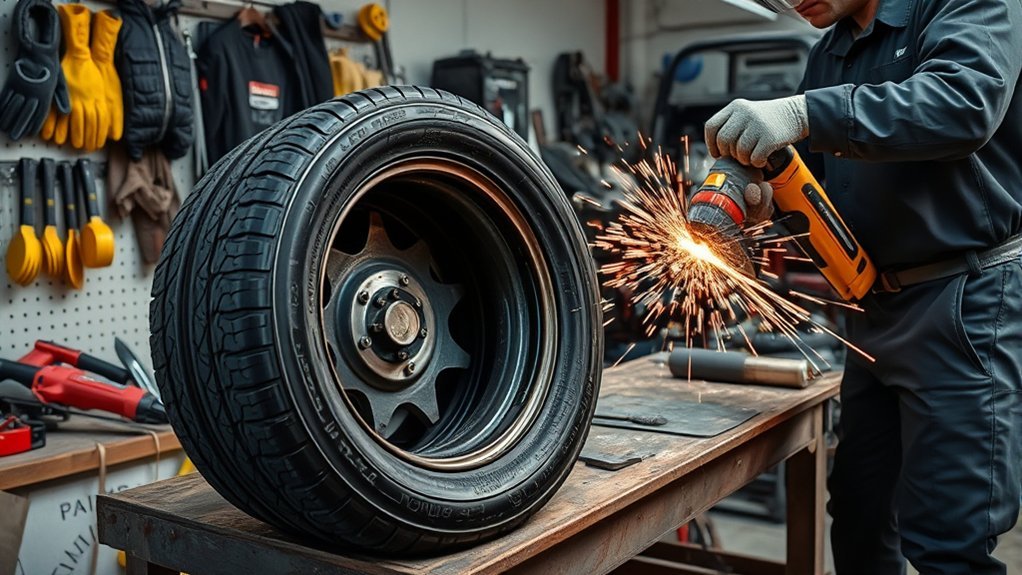
You’ll need a few specific tools to cut a tire cleanly and safely. Start with a sharp utility knife or retractable box cutter for initial punctures and for slicing softer sidewall sections.
Start with a sharp utility knife or box cutter for punctures and softer sidewall cuts.
If you’re facing steel belts or thick tread, the best tool to cut is usually a high-powered option: a circular saw or a Dremel fitted with metal-safe blades.
For tighter or more detailed cuts, use an angle grinder with a diamond blade; it can handle rubber and embedded metal efficiently. A Sawzall with a new metal-cutting blade is another strong choice when you need more force on thick tires.
Before you cut, put on safety glasses and other protective gear. Tires can throw debris and sharp steel fragments as the blade exits the material.
Match the tool to the tire’s thickness and reinforcement, and use only sharp, appropriate blades to maintain control and reduce heat buildup during the cut.
How Do You Start the First Cut?
Start the first cut by puncturing the sidewall about 1 inch from the tread with a sharp utility knife or similar blade to create an entry point. Hold the tire firmly so it doesn’t shift, and use an awl or ice pick if you need a more exact puncture.
Once you’ve opened the rubber, begin a controlled sawing motion to cut the tire along the sidewall seam. Keep the blade steady and maintain consistent pressure so you don’t wander off line.
As the cut opens, insert a wooden dowel into the gap to separate the sections and reduce binding. Advance the blade, then move the dowel forward as needed.
Rotate the tire whenever the angle becomes awkward, and keep the work positioned so you can complete the cut cleanly all the way around. Stay deliberate; precision at this stage makes the rest of the job easier and safer.
How Do You Cut the Sidewall?
Puncture the sidewall about 1 inch from the tread with a sharp knife or awl to create your entry point, then use a controlled sawing motion along the seam just outside the tread to cut through the rubber. Keep your hands steady and the blade angled for consistent penetration as you cut a tire efficiently.
- Wear safety glasses to block flying debris.
- Keep the work area clear of obstructions.
- Insert a wooden dowel to hold the cut open.
- Rotate the tire to maintain a comfortable cutting angle.
- Finish the sidewall cut before standing the tire upright.
Work methodically around the circumference, advancing a short distance at a time. If the rubber binds, reset your grip and continue with measured pressure rather than forcing the blade.
The dowel helps preserve access and reduces pinching as you progress. Maintain control, and don’t rush the cut; precision reduces slip risk and improves the quality of the sidewall separation.
How Do You Cut a Tire in Half?
To cut a tire in half, secure it firmly and make an initial puncture in the sidewall about 1 inch from the tread with a sharp utility knife.
From there, guide the cut along the seam outside the tread, using a steady sawing motion and firm, even pressure. As you advance, insert wooden dowels into the opening to keep the two cut sections separated and to reduce binding.
If the tire includes heavy steel belts, you can switch to a circular saw or Dremel fitted with a metal-safe blade for cleaner progress.
Keep the workspace clear so the tire doesn’t shift while you cut, and check your line often to stay accurate.
When you finish, separate the halves completely and dispose of the cut pieces according to local waste rules, since many services require a tire to be cut into at least two pieces before pickup.
[Products Worth Considering]

This portable cordless tire inflator delivers up to 160 PSI with fast 17 L/min airflow to help you quickly top up tires and get back on the road. It features dual power mode, running on a 21V rechargeable battery or a 12V DC adapter for convenient roadside use. An automatic shut-off with digital pressure gauge helps prevent overinflation, and a built-in LED light improves visibility in low-light conditions.

The 22800 wheel stud installer makes replacing wheel studs quick and secure, saving time and effort during tire service. It uses a ratchet or impact wrench to pull new studs firmly into place, helping when existing studs are too long. Compatible with most automotive wheels and light-duty truck wheel studs, it’s designed for easy, tool-assisted installation.

This compact 2-piece tire spoon kit makes quick work of motorcycle and small tire changes on the trail or in the garage. Forged and heat-treated steel construction helps resist bending and breaking for reliable repeated use. Curved ends grip tire beads securely while reducing pinching, and the flat lever end improves control for faster installs and removals.
What Safety Gear Do You Need?
Before you make the first cut, put on safety glasses, heavy-duty gloves, and steel-toed boots to protect your eyes, hands, and feet from flying debris, sharp edges, and dropped tire sections.
Safety glasses should stay on any time you cut, trim, or inspect the tire, because metal shards and rubber chips can rebound quickly. Choose gloves with puncture resistance and a firm grip so you can control the tire without contacting exposed wire.
Wear a dust mask to reduce inhalation of rubber particles, especially during extended cutting. Add hearing protection if you use saws or grinders, since these tools can exceed safe noise levels. Keep your gear fitted correctly so it won’t slip or catch while you work.
- Safety glasses
- Heavy-duty gloves
- Dust mask
- Steel-toed boots
- Earplugs or earmuffs
How Should You Dispose of Tire Pieces?
Once you’ve cut the tire into manageable sections, check your local disposal rules because many waste services require at least two pieces for pickup, and some municipalities also require the sidewalls to be removed. When you split a tire in half, inspect the steel belts and collect every sharp fragment. Bag the debris, then deliver the pieces to a recycling center that accepts rubber materials whenever possible.
| Option | Action | Result |
|---|---|---|
| Disposal | Follow pickup rules | Avoid rejected loads |
| Recycling | Drop off rubber pieces | Reduce landfill waste |
| Repurpose | Use in gardens or crafts | Extend tire life |
If you’re not ready to discard the sections, consider repurposing them before disposal. Keep each piece dry, stacked securely, and labeled if your hauler requests identification. Proper handling protects workers, prevents punctures, and keeps your tire in half project compliant with local regulations.
Frequently Asked Questions
What Is the Easiest Way to Cut a Tire in Half?
You’ll cut a tire easiest with a sharp utility knife or reciprocating saw, using a metal-safe blade. For creative recycling, puncture the sidewall, saw steadily, and stabilize it while wearing gloves and safety glasses.
What Tool Can I Use to Cut a Tire?
You can use a utility knife, Sawzall, angle grinder, or Dremel; each handles different tire sections. For Alternative Methods, choose sharp, metal-safe blades. Don’t beat around the bush: start with a puncture, then cut carefully.
How to Safely Cut a Tire?
You safely cut a tire by wearing safety glasses, gloves, and sturdy clothing, securing it firmly, and using a metal-safe blade. Keep distance from the tread, then dispose scraps through Tire Recycling facilities.
Is Slashing One Tire a Felony?
Yes—slashing one tire can be a felony, depending on Tire Damage costs and local law. You should check your state’s criminal mischief statutes; if damage crosses the threshold, you’re facing harsher charges.
Conclusion
Now that you’ve cut the tire cleanly in half, you can see the rubber curl back like a dark ribbon, revealing the steel and fabric layers inside. Keep your blades sharp, your grip steady, and your safety gear on until the job’s done. Lift each piece carefully, clear away debris, and dispose of the tire sections according to local rules. When you work methodically, you make a tough cut safer, cleaner, and more controlled.
[Products Worth Considering]

This 4-in-1 tire valve core removal tool helps you deflate, unblock, and remove or install valve cores quickly for easier tire repair. The multifunction design also supports re-taping damaged threads and reaming inside the valve stem for smoother service. Included as a 2-pack, it’s compact for convenient carry and works for cars, bicycles, and motorcycles.

This locking tire air chuck adapter converts an unscrewed connection into a secure locking fit to help prevent air leakage during inflation. The brass threaded screw-in nozzle clamps firmly to the tire valve stem for fast, efficient pumping. Designed for reliable performance up to 250 PSI, it’s compatible with 8mm hose inflators and suitable for cars, trucks, motorcycles, bicycles, and more.

This 38-piece tire spoon set provides everything you need for safer tire changes with dual-size hardened steel levers for leverage and control. Rim protectors help prevent wheel scratches, while valve tools and included valve cores/caps support quick deflation and maintenance. Designed for motorcycles, dirt bikes, bicycles, ATVs, and lawn equipment, it comes in a storage bag for easy transport and organization.

Related Articles

What Is a Wheel Bolt Pattern? Can You Change It?
How does a wheel bolt pattern work, and can you really change it without trouble? Keep reading to find out.
Read More
Can You Replace Just One Tire? When It’s Safe
Can you replace just one tire safely? Discover the key match-up rules that could save your car’s handling and drivetrain.
Read More
How to Paint Your Wheels at Home: Step-by-Step Guide
Get a flawless DIY wheel makeover at home, but avoid costly mistakes by learning the step-by-step process inside.
Read More