
Bubble in Tire: Can It Be Fixed? Safety Guide
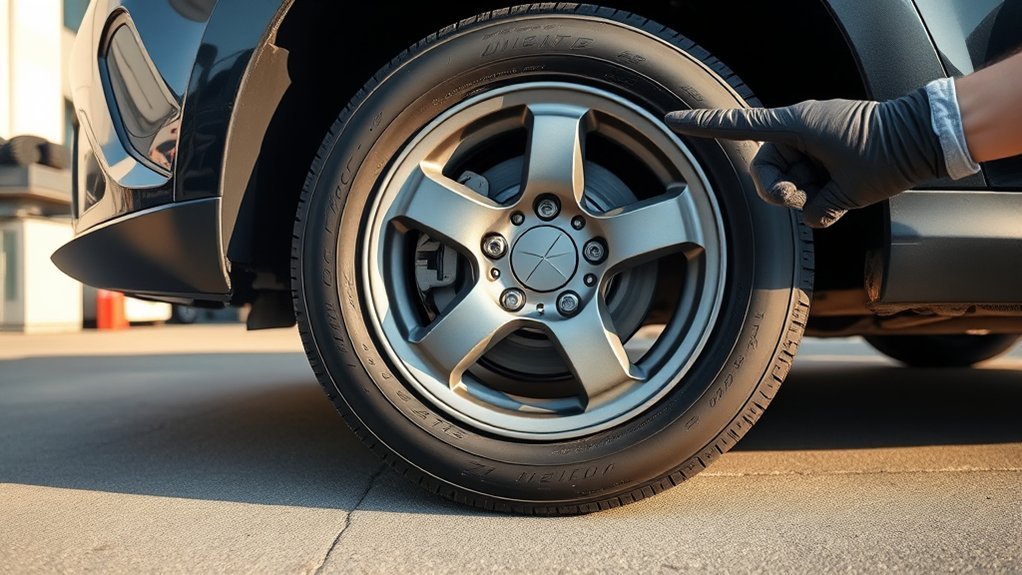
A bubble in your tire usually can’t be fixed safely, because it means the sidewall’s internal cords are damaged. You shouldn’t keep driving on it, since the tire can suddenly fail and cause loss of control. Inspect the sidewall for bulges, then have the tire replaced right away with one that matches your vehicle’s specs. A technician should also check for related damage, and there’s more to know about what caused it and what to do next.
Key Takeaways
- A tire bubble cannot be reliably fixed; it means the tire’s internal cords are damaged and the tire must be replaced.
- Driving on a bubbled tire is unsafe because the sidewall can suddenly burst, causing loss of control.
- Bubble damage is usually caused by impacts from potholes, curbs, debris, or chronic underinflation.
- Inspect the sidewall for bulges or blisters, and have the tire checked immediately by a professional.
- Replace the tire with the correct size and rating, and inspect nearby tires for related damage.
[Products Worth Considering]

This tire inflator with pressure gauge delivers long-lasting performance with a durable rubber-protected gauge and sturdy build. The longer hose and 360 swivel air chuck help you seal the valve securely and keep your hands free while measuring, inflating, or deflating. It’s battery-free for reliable use and provides ±2 PSI accuracy in the mid-range for most typical tires, with universal compatibility for 1/4 NPT compressor outputs.

Vigorder rubber cement glue delivers superior adhesion and cures quickly within about 30 seconds for seamless rubber bonding. Once cured, it helps provide a strong, durable, waterproof seal that holds up to vehicle weight, pressure, and heat. Suitable for cars, motorcycles, trucks, bicycles, and off-road tires, it’s designed for emergency patch and maintenance repairs.

The SAFELIFE dial tire tread depth gauge measures tread depth in 1/32 inch increments with clear, easy-to-read 2-inch dial face. Color zones using a traffic light system help you quickly judge whether tread is low, marginal, or ample for safer driving. Built with a durable zinc cast body and a metal detect probe for precise, comfortable use across cars, motorcycles, trucks, and buses.
What a Tire Bubble Means
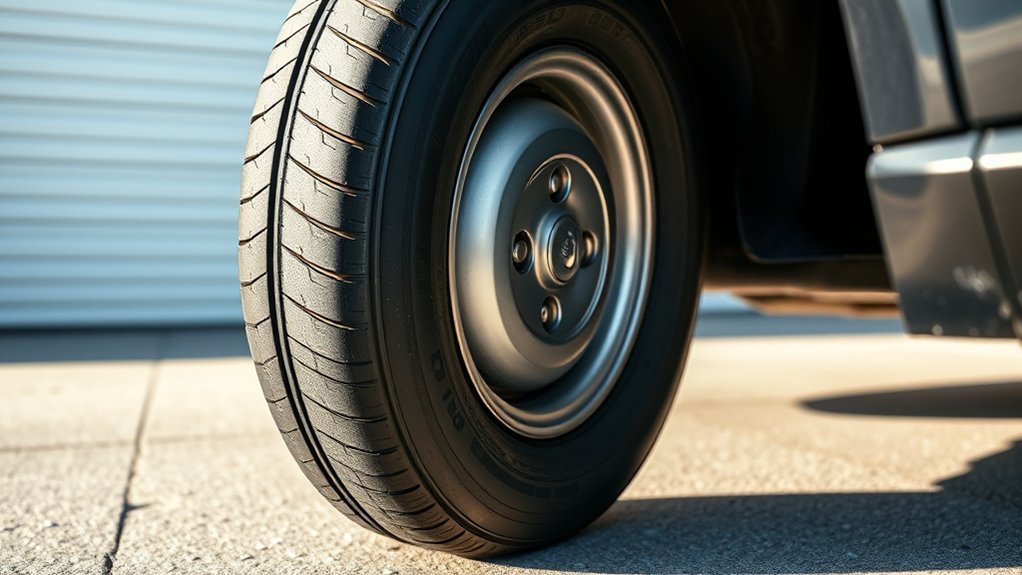
A tire bubble is a bulge in the sidewall that signals serious internal damage, usually from hitting a pothole or curb. When you see one, the tire bubble means the tire’s internal cords have broken and air is forcing the rubber outward.
That tells you the internal structure has failed, so the tire’s structural integrity is compromised. You shouldn’t treat it as a cosmetic flaw. Low tire pressure can make your tire more vulnerable to this kind of damage, especially after an impact.
Once a bubble appears, the tire can’t be repaired reliably; it must be replaced immediately. A professional inspection can confirm the damage, but it won’t restore the tire.
If you notice any sidewall bulge, assume the tire isn’t safe to drive on and address it at once.
Can You Drive on a Tire Bubble?
Can you drive on a tire bubble? You shouldn’t. A tire bubble means the tire’s internal layers have failed, so the sidewall or tread has lost strength.
That makes the tire bubble unsafe because it can burst without warning, leading to sudden loss of steering or braking control. You also risk worsening the structural damage every mile you keep driving immediately; heat and road vibration can enlarge the weak spot.
NHTSA links tire failures to about 11,000 crashes each year, and a bubbled tire belongs in that risk category. If you spot one, stop driving as soon as you can do so safely.
Don’t try to patch or inflate it and continue. The only correct move is to replace the tire and get professional help from a qualified technician. Treat the bubble as a serious failure, not a minor defect.
Why Tire Bubbles Form
Tire bubbles usually form when you damage the tire’s internal cords, often after a hard impact with a pothole, curb, or road debris.
You’re also more likely to see a bubble if the tire runs underinflated, has a manufacturing defect, or has weakened from wear and rough driving.
Temperature changes can add stress by altering pressure, which can make hidden internal damage show up as a bulge.
Common Causes
Tire bubbles usually form after a hard impact, such as hitting a pothole, curb, or road debris, because the blow can damage the tire’s internal structure.
These common causes include driving on underinflated tires, which reduce cushioning and raise stress on the sidewall. A tire bubble can also develop from manufacturing defects, so you should inspect new tires carefully and document problems for warranty review.
Excessive load adds more strain, especially if the tire already has weak spots. Even a brief run on a flat or severely underinflated tire can trigger tire failure later.
You can lower risk by maintaining proper pressure, avoiding overloading, and checking for bulges after impacts.
Internal Tire Damage
A tire bubble starts when the tire’s internal structure gets damaged, often from a hard hit like a pothole, curb, or road debris that snaps or weakens internal cords.
Once that happens, air can force the rubber outward, and the bulge marks a damaged tire that may fail suddenly.
- Low tire pressure raises risk.
- Heat changes can worsen stress.
- Manufacturing defects can trigger it.
- The internal structure can’t support load.
- You should get the tire replaced.
You can’t safely repair this kind of tire bubble, so treat it as a safety guide warning.
Check for cuts, bent sidewalls, and uneven wear, but don’t drive far on it.
If you notice a bulge, reduce speed and seek inspection immediately.
How to Check for Tire Bubble Damage
Start by inspecting the tire’s sidewall for any lumps, blisters, or bulges, since these usually signal compromised structure.
Rotate the wheel and feel the tire surface so you can catch hidden damage that isn’t visible at first glance.
If you notice a bubble or any wobbling, don’t load the tire and get it inspected by a professional right away.
[Products Worth Considering]

Measure tire tread depth quickly and accurately with this LUMITECO dial gauge that reads in 1/32" increments up to 14/32". The color-coded green/yellow/red zones make it easy to judge tire wear and know when replacement is needed. A rugged, compact design with a protective pouch helps keep the gauge ready for use on cars, trucks, motorcycles, and more.

The Big Rig Defense Tire Thumper is a truck tire pressure checker that lets you quickly check multiple tires by giving them a firm whack. Listen for a reassuring thump and feel the stick bounce when a tire is fully inflated, helping you get back on the road safely. It features a comfortable, glove-friendly handle and a secure wrist strap for confident use on busy routes.

Keep your tires properly inflated with this analog VONDIOR tire pressure gauge, designed for fast, easy readings without batteries. The swiveling, two-axis hose and large glow dial help you measure at any tire angle with instant visibility. Built with a protective rubber shield, it supports durable, low-maintenance use for cars and trucks.
Spotting Sidewall Bulges
To spot a sidewall bulge, inspect the tire closely for any lump or blister on the sidewall or shoulder, since that visible unevenness usually signals internal damage.
When you spot a tire bubble, assume the internal structure may be weakened and avoid driving harder than necessary. Turn the wheel to expose the tread edge and sidewall bulges you might miss at rest.
Watch for wobbly tire performance at speed, because instability can point to a bubble. Keep tire pressure in range; underinflation raises impact risk and can worsen damage.
- Look for smooth, rounded swelling
- Check both front and rear tires
- Note any vibration or pull
- Schedule immediate inspection for any bulge
- Don’t ignore even a small tire bubble
Checking For Hidden Damage
Once you’ve spotted a bubble, check for hidden damage by examining the tire closely for any bulges or irregularities, especially on the sidewall, since these often point to internal structural problems.
Rotate the wheel and repeat the visual inspection from several angles; a tire bubble can hide when the tire sits still.
Use a tire pressure gauge to confirm proper tire pressure, because underinflation can worsen hidden damage and stress the internal structure.
Inspect the tread for uneven wear, which may signal alignment issues or damage spreading beyond the bubble.
Don’t press on the bulge; that can increase the risk of sudden failure.
If you find any doubt, stop driving and ask a professional to inspect the tire before you use it again.
Why Tire Bubbles Can’t Be Repaired
A tire bubble can’t be safely repaired because it signals internal structural damage, not just a surface flaw. When you see a tire bubble, the tire’s internal structure has already failed, so the tire bubble can’t be repaired without risking safety.
The sidewall layers have weakened, and any patch or seal won’t restore compromised structural integrity. High-pressure air trapped in the bulge can keep stressing the damaged area and trigger a sudden blowout.
- The bubble shows deep internal separation.
- The sidewall can’t regain full strength.
- Standard repairs don’t reach the damaged layers.
- Hidden damage often continues to spread.
- Replacement is the only reliable option.
If you keep driving on it, you expose yourself and your passengers to avoidable danger.
Professionals consistently advise immediate replacement because the problem isn’t cosmetic; it’s structural. You need a tire that can hold load, pressure, and road forces safely, and a bubbled tire no longer can.
What to Do After You Spot a Tire Bubble
When you spot a tire bubble, stop driving right away because the tire’s structure is already compromised and a blowout can happen without warning.
A tire bubble means the structure is compromised—stop driving immediately, because a blowout can happen without warning.
Park on level ground, set the brake, and inspect the tire bubble from a safe distance. Look at its size and location, but don’t press on it or try to deflate it; the internal structure may fail further.
If you have a spare and can change it safely, do that only if you’re comfortable and the area is secure. Otherwise, call roadside assistance immediately.
You can also contact a tire shop for guidance, but don’t keep driving to get there. A bubbled tire needs immediate replacement, since the sidewall damage can’t be trusted.
When you choose the replacement, match the size, speed rating, and load index of the other tires so your vehicle stays stable and safe.
When to Replace the Tire
Replace the tire immediately after you spot a bubble, even if the tread still looks usable. A tire bubble means the tire’s structural integrity is compromised, and the internal damage can’t be repaired safely.
In this safety guide, treat the tire bubble as a needs immediate replacement issue, not a delay. Driving on a tire like this raises blowout risk, especially at highway speed, so don’t keep using it.
- Replace the tire at once.
- Match size, speed rating, and load index.
- On AWD vehicles, replace at least two tires on the same axle.
- Verify the new tire suits your vehicle’s handling needs.
- Ask a technician to inspect for related damage.
A replaced tire must restore stability and performance, not just cover the problem. If you keep driving on a tire with a bubble, you’re accepting unnecessary danger.
Choose prompt replacement and protect yourself, your passengers, and your vehicle.
Frequently Asked Questions
Can a Tire With a Bubble Be Fixed?
No, you can’t safely fix a tire with a bubble; you need tire replacement. Check bubble causes, inspect air pressure, and do a visual inspection. Ignoring it compromises tire safety and increases driving risks.
Can I Drive With a Bubble in My Tire?
No—think of it like a cracked bridge: one weak spot can fail suddenly. You’re facing serious tire safety issues; bubble causes internal damage, driving risks rise, so stop now, use emergency measures, and explore replacement options.
Can a Tire Shop Fix a Bubble?
No, you can’t safely fix a tire bubble; the tire damage from bubble formation means safety concerns outweigh repair options. You should arrange tire replacement quickly, because driving risks rise and maintenance tips won’t restore structural integrity.
How Long Will a Tire With a Bubble Last?
Only a few miles, maybe less, and you shouldn’t risk it—why gamble? Check bubble formation causes, follow tire maintenance tips, note tire replacement signs, respect safety inspection importance, driving safety tips, impact on performance, long term effects.
Conclusion
A tire bubble means the tire’s inner structure is damaged, so you shouldn’t ignore it or try to patch it. You can’t safely repair this kind of weakness, and driving on it can lead to a blowout. Check the tire right away, then replace it if you spot any bulge, tear, or sidewall damage. If you’re unsure, have a trusted mechanic inspect it. Don’t gamble with safety; one small bubble can turn into a catastrophe.
[Products Worth Considering]

This 12-inch LUMITECO dual head tire pressure gauge features an integrated straight-on chuck and a 30° reverse chuck to reach hard-to-access dual wheel valves. Its 10–150 PSI / 1–10 BAR range with a clear, two-sided scale helps you quickly check tire pressure for safer, smoother driving. Heavy-duty construction and a simple no-battery design make it a reliable tool for trucks, cars, RVs, and motorcycles.

Replace worn tires quickly with this universal 4.80/4.00-8 tire and inner tube set designed for wheelbarrows and outdoor utility carts. The ribbed tread helps reduce turf damage while the natural rubber construction supports longer service life. Compatible with 15.5-inch outer diameter, 4-inch width, and 8-inch rim diameter wheels, it uses a straight TR-13 valve stem for easy installation. For best results, inflate with a manual pump and do not exceed 25 PSI.

Accurately measure tire tread depth with a calibrated gauge marked from 0 to 1 inch in 1/32 inch increments. The color-coded bar helps you quickly identify tread condition ranges, supporting safe driving for trucks, motorcycles, automobiles, and passenger vehicles.

Related Articles
How to Inspect a Tire: 8-Point Safety Check
Just when you think your tires are fine, this 8-point safety check reveals hidden problems you’ll want to catch before they turn dangerous.
Read More
How to Prove Someone Slashed Your Tires: Evidence Guide
Mysterious tire damage can reveal more than you think—discover the evidence that could prove sabotage and keep reading for the key clues.
Read More
How to Drive on a Donut Tire: Speed and Distance Limits
Carefully learn how far and fast you can safely drive on a donut tire before risking a blowout or losing control.
Read More