
How Oversized Tires Affect Your Transmission
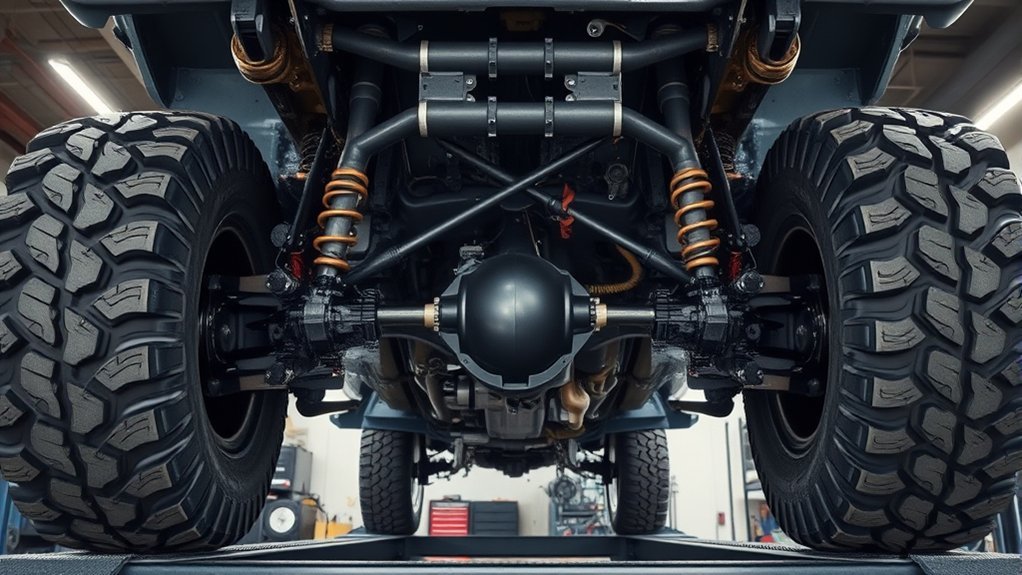
Oversized tires make your transmission work harder because they effectively raise your gearing, so the engine must deliver more torque to move the vehicle. That added load increases heat, slip, and clutch wear, and it can trigger sluggish shifts, hunting, and delayed torque-converter lockup. Your speedometer can also read low, which skews shift timing and mileage data. Regearing, recalibrating, and adding cooling help protect the drivetrain, and the details matter if you want the full picture.
Key Takeaways
- Oversized tires effectively raise gearing, increasing drivetrain load and making the transmission work harder.
- Larger tires add rotational mass and can cause more heat, slip, and slower throttle response.
- Shift timing may become erratic because speed readings change, leading to hunting and extra clutch wear.
- Re-gearing helps restore proper torque delivery and reduces stress on the transmission.
- Speedometer and odometer readings must be recalibrated after fitting larger tires for accuracy.
[Products Worth Considering]

Slip the Powerbuilt tire step over your vehicle’s tire to reach roof racks, engine bays, truck boxes, and more without overreaching. Its adjustable, universal design fits tires with a cross tread width up to 13 inches, including car, truck, RV, and semi tires. The non-slip cheesegrater surface and anti-slip tape provide secure grip while the open design lets mud and debris pass through. Fold-flat storage with rubber bumpers helps keep your tire and the step protected between uses.

Keep food and beverages cold for hours with these reusable XL slim cooler ice packs. The break-resistant, BPA-free design features a space-saving shape that fits the top or sides of large coolers and wipes clean easily. Freeze overnight for best results, and use them for camping, fishing, tailgates, and beach days.

These pre-assembled 15x6.00-6 front tire and wheel assemblies are designed for quick replacement on riding lawn mowers and lawn tractors. Built with natural rubber pneumatic tires and turf-friendly tread for solid traction and improved shock absorption. A thickened welded rim and 3/4" sintered iron bushing help provide stable, heavy-duty support for everyday mowing use.
How Oversized Tires Affect Transmission
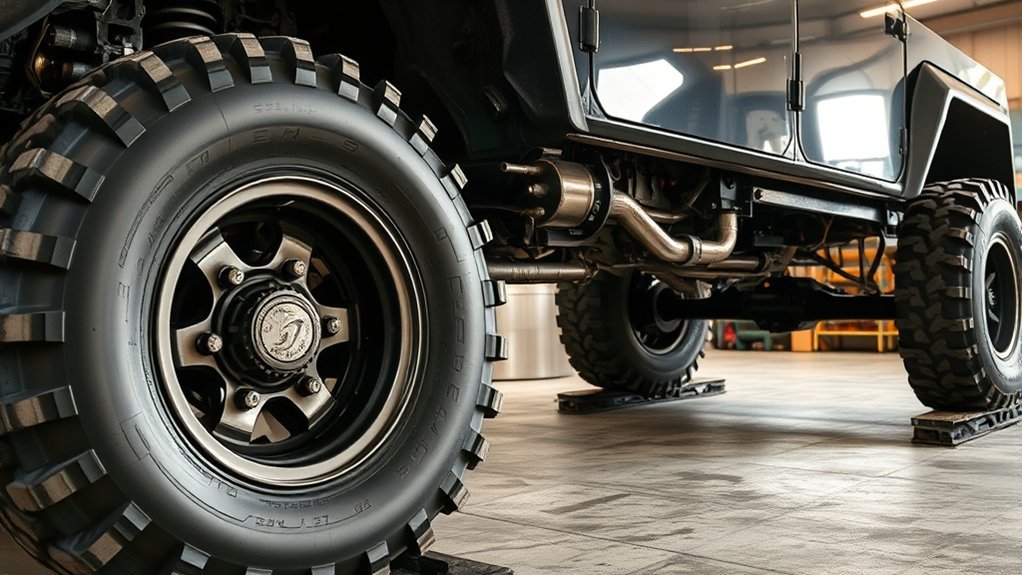
Oversized tires increase the effective gearing, so your transmission has to work harder to move the vehicle at the same speed. When you run oversized tires, you raise drivetrain load and heat output.
The transmission must multiply torque longer, which pushes fluid temperatures up and can trigger overheating under heavy use. You may also notice delayed torque converter lockup, sluggish launch response, and shift hunting if the control module sees inaccurate vehicle speed data.
Higher rolling inertia adds slip inside the converter, so power delivery feels soft and inefficient. Over time, that extra demand accelerates clutch wear and can shorten transmission life.
Higher rolling inertia increases converter slip, making power delivery feel soft while accelerating clutch wear.
If your tires are more than a couple of inches larger than stock, you should re-gear to restore proper torque delivery and stabilize shift quality.
Why Bigger Tires Change Gear Ratios
When you fit bigger tires, the effective gear ratio changes because each tire rotation covers more ground. So, the driveshaft must turn fewer times per mile to keep the vehicle moving at the same road speed. That shift lowers the numerical gear ratio at the wheels, and you’ll feel it in performance.
To estimate the correction, use ((new tire diameter / old tire diameter) × stock ratio) and recalculate the gear ratio before you drive.
- Larger diameter reduces tire rotations per driveshaft turn.
- Your effective gear ratio becomes taller.
- Re-gearing restores torque and acceleration behavior.
- Rear-wheel-drive systems often need ring-and-pinion changes.
- Tire increases beyond a couple inches usually justify re-gearing.
If you don’t match the gear ratio to the new tire size, the transmission may command delayed upshifts and erratic shifting. In diagnostic terms, that means the drivetrain no longer operates in its designed range.
How Heavier Tires Stress the Transmission
Heavier tires add rotational mass, so your transmission has to deliver more torque just to keep the vehicle moving.
That extra load raises heat and can increase slip, which accelerates wear on fluid, clutch packs, and bands.
If the gear ratio’s now too tall, you should regear to reduce stress and protect the transmission.
Extra Rotational Mass
That extra rotating weight forces your transmission to work harder to keep the tires moving at speed, which raises torque demand and increases wear on internal components.
Your increased rotational mass adds inertia, so you’ll notice slower acceleration and a higher workload during every shift.
- More torque is needed to maintain road speed.
- Stock gear ratios may no longer match load demand.
- Shift timing can become delayed or inconsistent.
- Stress cycles rise as the transmission compensates.
- Durability drops when the drivetrain stays under constant load.
When you fit heavier tires, the transmission must repeatedly overcome this mass, and that extra effort compounds.
Diagnostic signs include sluggish response, erratic shifting, and reduced efficiency. Even if the vehicle still drives, the mismatch can shorten component life.
Heat And Slip
As oversized tires add rolling inertia, your transmission has to work harder to keep the vehicle moving, and that extra load turns into heat.
You’ll see the effect fastest in the torque converter, where the added mass can increase slip under load and raise fluid temperature.
If you’re cruising in 5th or 6th gear, the transmission may stay in a high-stress range longer, and heat can build quickly.
That elevated temperature accelerates fluid breakdown, clutch wear, and erratic shifts when the gear ratio isn’t matched to the tire size.
You need to monitor transmission temperature closely, because higher-than-normal readings often signal overheating before a failure occurs.
Diagnostic data should confirm whether heat and slip are becoming chronic under these heavier tire loads.
Regear For Protection
Regear the vehicle after installing oversized tires, because the larger diameter changes the effective gearing and forces the transmission to carry more load at every shift.
If you skip re-gearing, you’ll raise torque demand, delay converter lockup, and trigger sluggish acceleration with erratic shift timing. That mismatch drives fluid temperature up, accelerates breakdown, and increases wear on clutches, seals, and bearings.
Professional re-gearing restores correct torque delivery and keeps the transmission within design limits.
- Check shift quality after tire changes
- Monitor transmission fluid temperature
- Watch for delayed lockup
- Inspect for slip under load
- Schedule re-gearing before damage starts
Common Transmission Symptoms After Bigger Tires
When you install bigger tires, the transmission often starts showing clear stress signals: delayed torque-converter lockup from incorrect speed readings, sluggish acceleration, and erratic shifting behavior.
These common transmission symptoms usually mean the drivetrain’s load has risen faster than the control strategy can compensate. You may notice the engine revs flare before the truck moves, then shifts feel harsh, late, or indecisive.
As the transmission works harder, fluid temperature climbs, and that heat can push the unit toward overheating and failure. If you’re running 35-inch tires without proper gearing, limp mode can appear because the module sees excessive strain and limits operation.
In severe cases, prolonged slip can burn clutches or damage shafts. Treat these signs as diagnostic evidence, not normal tire-related noise. They show the transmission isn’t receiving the mechanical advantage it needs to operate within safe limits.
When to Regear Your Truck
If your truck is showing delayed lockup, harsh shifts, or rising transmission temperatures after a tire upgrade, the next step is usually re-gearing. You should do it when your tires jump more than a couple inches in diameter, because the taller effective gearing can rob torque and upset shift timing. Automakers already account for this by pairing larger tire packages with different axle ratios.
- Larger tires reduce mechanical leverage at the wheels.
- The transmission works harder to hold cruise speed.
- RPMs can fall below the efficient range.
- Heat builds when lockup happens late.
- Component wear rises when shifts become erratic.
A clear example is a GMC Sierra moving from 31.6-inch tires to 35-inch tires; the factory 3.42:1 setup often needs a deeper ratio, around 3.79:1, to restore drivability.
If your tires are oversized and the truck feels lazy, hot, or unstable on shifts, re-gearing isn’t optional—it’s a corrective repair that protects the transmission and keeps performance consistent.
[Products Worth Considering]

The VEHLIVE SU-50448 II TPMS relearn tool provides a fast activation reset to restore accurate tire pressure monitoring after sensor replacement or tire rotation. It supports 315 MHz and 433 MHz GM series sensors and helps clear dashboard pressure warnings. With simple two-button operation and horn-confirmed relearning order, you can reprogram sensors conveniently at home.

This professional wheel and rim brush kit makes it easy to lift brake dust, grime, and dirt from wheels and tires without scratching finishes. The brushes feature soft, metal-free wool heads and a flexible 360-degree rim brush design for reaching hard-to-clean areas. Includes multiple brush types plus accessories for thorough car, motorcycle, and general vehicle detailing.

This ecocstm ratchet wrench is designed to make emergency and routine tire changes faster with a 360° rotating head and quick forward/reverse switching. The extended handle provides extra leverage to reduce effort and hand fatigue, while the adapter helps fit many scissor jacks on cars, SUVs, trucks, and vans. Built for reliable performance with durable construction, it’s a practical travel essential for on-the-road preparedness.
How to Calculate the Right Gear Ratio
To calculate the right gear ratio after a tire upgrade, divide the new tire diameter by the old diameter, then multiply that result by your stock axle ratio. Use this formula: (new tire diameter ÷ old tire diameter) × stock ratio.
Divide the new tire diameter by the old one, then multiply by your stock axle ratio.
If you ran 31.6-inch tires with 3.42:1 gears and switch to 35-inch tires, compute 35 ÷ 31.6 × 3.42, which equals 3.79. That means you’d need gear ratios near 3.79:1 to restore the drivetrain’s effective leverage.
This correction helps you recover torque, acceleration, and fuel efficiency that larger tires usually reduce. If you ignore the change, the transmission works harder, temperatures rise, and performance becomes inconsistent.
Compare your result with factory gear ratios offered on similar models, because automakers often calibrate them for larger tires. After the swap, monitor transmission temperature and drivetrain wear closely.
Precise calculations keep your setup balanced and diagnostic feedback will confirm whether the ratio’s working correctly.
Regear 4X4 vs. RWD Vehicles
Re-gearing matters for both 4X4 and RWD vehicles after an oversized tire upgrade, because it restores torque delivery and keeps the transmission from working under excessive load.
On a 4X4, you’ll re-gear both axles so front and rear ratios stay synchronized. That balance helps all four tires pull evenly and reduces driveline bind.
On a RWD truck or SUV, re-gearing usually means changing the rear ring-and-pinion set to recover acceleration and drivetrain efficiency. Without it, the transmission can run hotter and shift later, especially when the rear axle carries the full load.
- 4X4: match front and rear gear ratios
- RWD: recalibrate the rear axle only
- Restore low-speed torque after tire upsizing
- Reduce thermal stress on transmission fluid
- Use professional re-gearing to avoid ratio mismatch
How Oversized Tires Affect Your Speedometer
When you install oversized tires, the increased diameter changes the distance your vehicle covers per wheel rotation, so your speedometer and odometer won’t read accurately.
A move from stock 31.6-inch tires to 35-inch tires can make you read roughly 10-12% slower than your actual speed, which can skew speed, mileage, and performance calculations.
You’ll need to recalibrate the speedometer—typically with a programmable tuner or, on older vehicles, a gear change—to avoid errors and related drivability issues.
Tire Diameter Changes
As tire diameter increases, your speedometer can start reading low because the wheel covers more ground per rotation than the factory calibration expects. When you move from stock 31.6-inch tires to 35-inch tires, you can see about a 7.6% underreporting of actual speed.
You should verify the ratio of new tire diameter to old tire diameter before you assume the gauge is correct.
- Larger tire diameter changes rotational circumference
- Your speed calculation loses calibration
- Newer vehicles may accept programmable tuner correction
- Older models often need gear or adapter changes
- Uncorrected readings can create legal and drivetrain risk
If you ignore this mismatch, you’re driving with inaccurate data and stressing the system.
Odometer Accuracy
Larger tires don’t just alter your speed reading; they also affect odometer accuracy. When you fit oversized tires, you increase outer diameter, so each rotation carries your vehicle farther than the factory calibration assumes. That means your odometer records fewer miles than you actually travel, especially on tires without correction.
| Tire change | Effect |
|---|---|
| Stock 31.6 in | Baseline calibration |
| 35 in upgrade | About 10% slower indication |
| True road distance | Higher than displayed |
| Risk | Misleading maintenance intervals |
| Result | Speeding and safety exposure |
This error skews mileage logs, service timing, and trip diagnostics. If you monitor distance closely, you can detect drift early and avoid unreliable data.
Speedometer Recalibration
Oversized tires throw off your speedometer because the larger circumference makes each wheel rotation cover more ground than the factory calibration expects. Your speedometer then underreports road speed, and a 31.6-inch-to-35-inch change can create about a 10% error if you don’t recalibrate.
- Verify actual tire diameter.
- Compare indicated vs. GPS speed.
- Reprogram the speedometer on newer vehicles.
- Swap speedometer gears on older models.
- Recheck after any tire change.
That error can expose you to speeding violations, distort fuel-efficiency data, and mask drivetrain behavior.
Recalibrate promptly so your speedometer stays accurate, your diagnostics stay trustworthy, and your driving decisions reflect real road speed, not a false reading.
How to Reduce Heat and Wear
To keep heat and wear in check with oversized tires, you should address both load and cooling capacity at the same time.
Add a high-quality transmission cooler so you can pull heat out before fluid temperatures climb into the breakdown zone. Re-gear if your tire change has pushed the drivetrain out of its torque band; better gearing reduces converter slip, lowers line pressure stress, and cuts heat generation.
Check transmission fluid level and condition regularly. Dark color, burnt odor, or delayed shifts signal overheating, and you should correct the issue before the fluid loses its protective film. Use synthetic transmission fluid for improved thermal stability and lubrication under heavy load.
Drive smoothly: avoid hard launches, abrupt throttle changes, and unnecessary tow-style acceleration. These habits reduce shock loading and help your transmission run cooler.
Frequently Asked Questions
How Much MPG Will I Lose With Bigger Tires?
You’ll usually lose about 1–3 MPG with bigger tires, and more if you drive aggressively or skip re-gearing. Your Fuel Efficiency drops because extra weight and rolling resistance make your engine work harder.
Will 20 Inch Rims Mess up Transmission?
Yes, 20-inch rims can affect your transmission if the overall tire diameter changes. You’ll alter the Rim Impact, which can delay shifts, raise heat, and increase wear unless you re-gear or recalibrate.
What Can Ruin Your Transmission?
Too much heat, low fluid, and neglected maintenance can ruin your transmission. Transmission strain from oversized tires, bad gearing, or slipping clutches delays shifts, overheats components, and triggers limp mode; an ounce of prevention’s worth a pound of cure.
Can Tires Mess up the Transmission?
Yes—if your Tire Diameter is too large, you can upset shift timing, overload gearing, and raise transmission temperatures. You’ll notice delayed upshifts, erratic lockup, or limp mode, especially if you don’t re-gear properly.
Conclusion
When you add oversized tires, you change your transmission’s workload, gear ratios, and heat profile all at once. If you notice delayed shifts, excess hunting, or rising temperatures, your drivetrain is telling you something is off. Regearing can restore lost leverage and protect internal components before wear turns into damage. Think of the wrong tire-and-gear match like forcing a runner to carry sandbags—everything works harder, and nothing lasts as long.
[Products Worth Considering]

Cool Coolers by Fit & Fresh provides reusable XL slim ice blocks designed for strong, long-lasting cooling in coolers and cooler bags. The break-resistant, BPA-free packs are leak-proof and easy to clean, helping keep food and beverages cold without a messy melt. A space-saving slim shape fits top or side placements, and the tire-pattern design boosts cooling surface area for next-day use.

RVMATE dual-axle RV tire covers help shield your tires from sunlight, snow, rust, and dirt to keep them in better condition in harsh weather. Made with heavy-duty waterproof, UV-resistant 420D Oxford fabric, they provide strong shading and help reduce wear. They install easily by placing the cover on the wheel and fastening the rope for a stable fit.

This metal-free wheel and tire cleaning brush uses dense, fluffy synthetic wool to safely clean rims, spokes, fenders, and engine areas without worrying about damaging surfaces. Its flexible, comfortable design helps you reach detailed areas while maintaining durability, and the extra absorbent fibers work well with wheel spray cleaners for faster cleanup. Reusable and washable performance helps prevent grime and build-up for cleaner vehicles and easier maintenance at home.

Related Articles
Weight on Wheels Meaning: Why Unsprung Weight Matters
C**urious how weight on wheels affects speed, grip, and ride quality? Discover why unsprung weight can make or break your setup.
Read More
Caster, Camber, and Toe: Wheel Alignment Explained
I’m breaking down caster, camber, and toe—three tiny alignment angles that can transform your car’s handling, but one of them may surprise you.
Read More
Low Profile Tires: Pros, Cons, and Are They Worth It?
What makes low profile tires worth the tradeoff, and are the sharper handling and sleek look enough to justify the drawbacks?
Read More