
How to Find Which Tire Is Low on Your Hyundai Sonata

To find which Hyundai Sonata tire is low, do not judge by sight alone. Park the car, check the tires when they are cold, read each tire with a good pressure gauge, and compare every reading with the PSI listed on the driver-door tire placard. The tire with the biggest PSI drop is the one that needs attention.
Quick Answer
The low tire on a Hyundai Sonata is the tire that reads several PSI below the recommended cold pressure on the driver-door placard. Some Sonata models can show individual tire pressures in the cluster, but the most reliable check is still a cold reading with a tire pressure gauge.
Key Takeaways
- Use the PSI on the driver-door placard, not the maximum PSI printed on the tire sidewall.
- Check tire pressure when the tires are cold: parked for at least 3 hours or driven less than 1 mile.
- A steady TPMS light usually means one or more tires are significantly low; a flashing TPMS light often points to a system fault.
- If one tire keeps losing air, inspect for a nail, valve-stem leak, bead leak, rim damage, or sidewall damage.
At a Glance
| Time Required | 5–10 minutes for a pressure check; longer if you need to inflate or inspect for leaks. |
| Difficulty | Easy. No mechanical experience needed. |
| Tools Needed | Tire pressure gauge, air compressor, phone or paper for recording readings, and a flashlight for damage checks. |
| Cost | Usually free to a few dollars for air; about $10–$25 for a basic digital gauge. |
How to Identify the Low Tire on a Hyundai Sonata
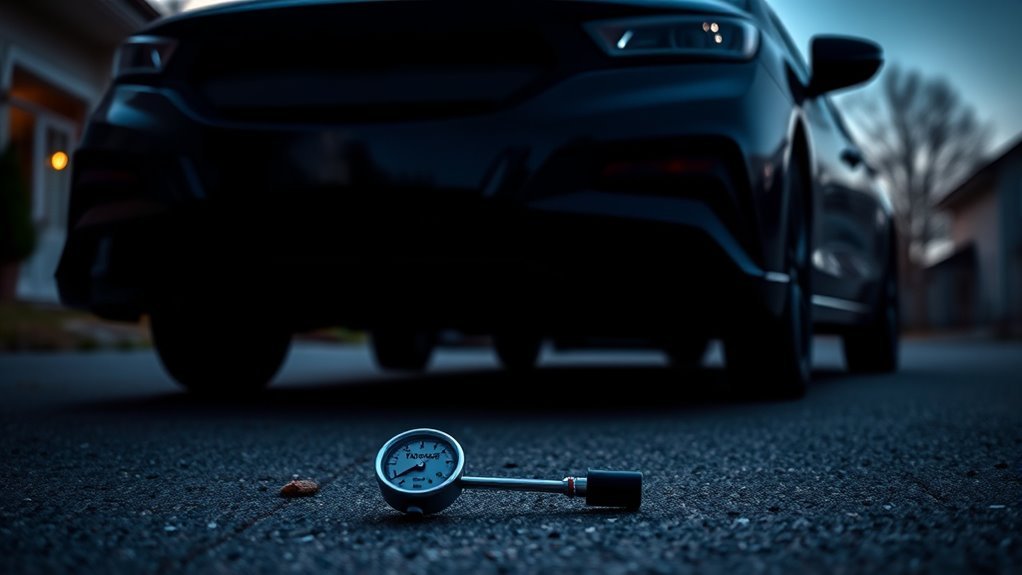
The fastest way to identify the low tire is to measure all four tires and compare the readings. Check the front-left, front-right, rear-left, and rear-right tire in the same session. Write each PSI down. The tire that is several PSI below the vehicle manufacturer’s recommended cold tire pressure is the low tire.
If your Sonata has a tire-pressure screen in the cluster, use it as a helpful starting point. Hyundai owner guidance notes that some models show tire pressure in the cluster after a few minutes of driving, and the display may show a “Drive to display” message before readings appear. The displayed value can differ from a handheld gauge, so confirm low pressure manually before making repair decisions.
Note: You may not be able to identify a low tire by looking at it. A tire can look normal and still be several PSI below spec. Always verify with a gauge.
[Products Worth Considering]

The JACO FlowPro Tire Inflator measures, inflates, and airs down tires up to 100 PSI with battery-free operation and ±2% accuracy after calibration. It features a glowing pressure dial for night visibility, a heavy-duty steel build with a hybrid hose, and a precision push-to-inflate thumb trigger. The patented Lightning Air Chuck locks on for a secure seal, and the kit includes quick-connect hardware for easy inline use with your air compressor.

The AstroAI 2 pack air chucks provide a heavy-duty, closed-flow locking design that helps keep air flowing during inflation while securely attaching to the valve stem. Built with 250 PSI rated brass components and compatible with Schrader valves, they feature 1/4" female NPT threads for a wide fit with common inflators. The straight tip and locking clip make filling tires and monitoring pressure more convenient.

EVOULTES heavy duty tire inflator with an integrated gauge delivers accurate pressure readings from 10–120 PSI, helping you inflate, deflate, and check tires in one tool. The 16.5-inch extended dual-head air chuck with swivel base reaches hard-to-access dual wheel valves on trucks and RVs. A brass trigger core and side-mounted air release valve make operation smooth, with standard 1/4" NPT threading and quick-connect compatibility for easy setup.
Why Cold Tire Pressure Matters
Check your Sonata’s tire pressure when the tires are cold. Hyundai and tire-safety guidance define a cold tire as one that has been parked for at least 3 hours or driven less than about 1 mile. Driving heats the tire and raises the pressure reading, which can make a low tire look closer to normal than it really is.
The correct PSI is listed on the driver-door tire placard or in the owner’s manual. That number is the cold inflation pressure for the tire size fitted to the car. Do not use the maximum PSI molded into the tire sidewall as your target; that number is not the Sonata’s recommended operating pressure.
Pro Tip: Check pressure first thing in the morning before the car has been driven. This gives you the cleanest baseline and makes repeat checks easier to compare.
Measure Each Hyundai Sonata Tire With a Gauge
Use a reliable digital or pencil-style pressure gauge. Work around the car in a consistent order so you do not miss a tire. A simple left-to-right routine helps: front-left, front-right, rear-right, rear-left.
Step 1: Find the Recommended PSI
Open the driver’s door and look for the tire and loading information placard on the door edge or door jamb. Write down the recommended cold PSI. Some vehicles list the same PSI for all four tires; others may list different front and rear pressures. Follow the placard for your exact Sonata, tire size, and load condition.
Step 2: Check Each Tire When Cold
Remove the valve cap from the first tire. Press the tire gauge squarely onto the valve stem until the reading locks in. If you hear air hissing, the gauge is not sealed correctly. Lift it off, reseat it straight, and take the reading again.
Step 3: Record Every Reading
Record each tire immediately so you can compare the numbers without guessing.
| Tire Position | Measured PSI | Difference From Placard |
| Front Left | Write reading here | Placard PSI minus reading |
| Front Right | Write reading here | Placard PSI minus reading |
| Rear Right | Write reading here | Placard PSI minus reading |
| Rear Left | Write reading here | Placard PSI minus reading |
Step 4: Identify the Low Tire
The low tire is the one with the largest negative difference from the placard PSI. As a practical rule, a tire that is 3 PSI or more below the recommended cold pressure deserves attention right away. A tire that is much lower than the others, or keeps losing pressure after inflation, should be inspected for a leak.
Compare PSI to the Driver-Door Sticker
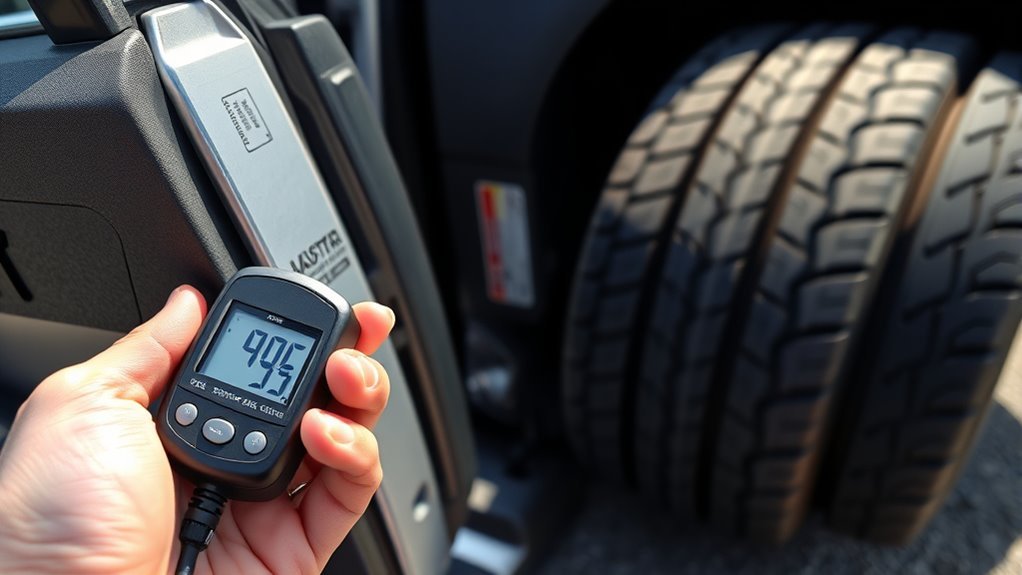
The driver-door placard is your control number. Compare each measured PSI to that value, then decide what to do:
- One tire is low: inflate it to the placard PSI and inspect for a puncture, valve leak, or rim/bead leak.
- Two tires on the same side are low: check for damage, recent curb impact, or a temperature-related drop, then inflate and monitor.
- All four tires are low: the pressure may have dropped because of cold weather or long time between checks. Inflate all four to the placard PSI when cold.
- One tire is much lower than the rest: do not ignore it. This often points to a nail, damaged valve stem, bead leak, cracked rim, or other air-loss issue.
TPMS helps, but it does not replace monthly cold tire-pressure checks with a gauge.
Use the Sonata TPMS Display If Equipped
Many newer Hyundai models can show tire pressure in the instrument-cluster utility view or tire-pressure screen. If your Sonata has this feature, scroll to the tire-pressure display using the steering-wheel cluster controls. If the screen says “Drive to display,” drive for a few minutes in a safe area until the readings appear.
Use the display to see which tire is suspicious, then confirm with a manual gauge. Hyundai notes that displayed tire-pressure values may differ from gauge readings, so the gauge remains the final check when you are inflating or diagnosing a leak.
Note: If your Sonata does not show individual tire pressures, that does not mean the TPMS is broken. Some systems warn that at least one tire is low without giving a wheel-by-wheel reading.
Fix a Low Hyundai Sonata Tire: Inflate, Bleed, or Repair
Once you identify the low tire, choose the right fix based on the reading and the tire’s condition.
[Products Worth Considering]
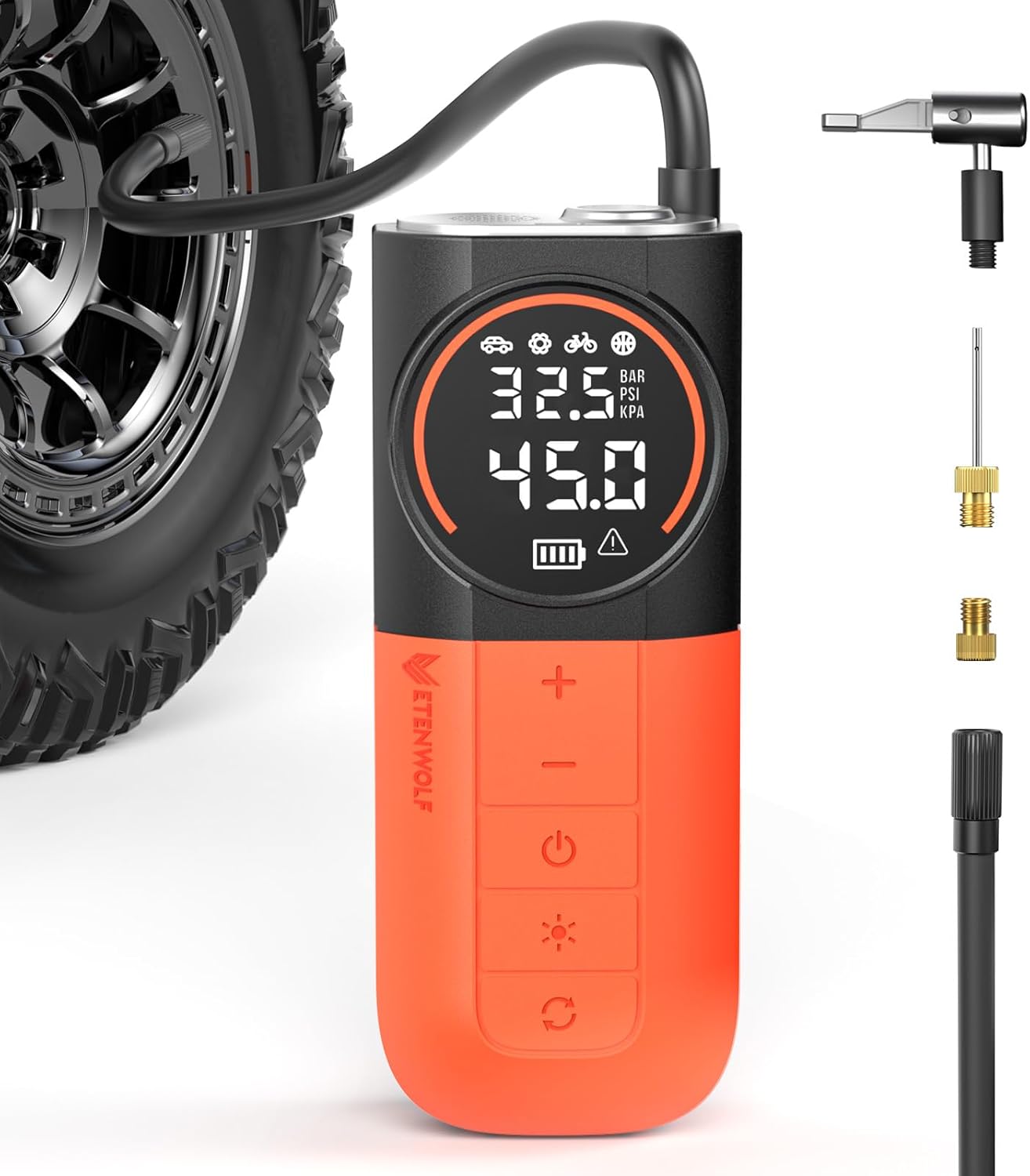
The ETENWOLF S1 cordless tire inflator delivers ultra-fast inflation with up to 160 PSI and a 20 L/min airflow for quicker tire top-offs. Its 5200mAh battery and cooling system support inflating many tires and sports balls on a single charge, while the digital pressure gauge and multi-unit display help you reach the right pressure accurately. With preset modes, pressure memory, an auto-stop feature, and an LED flashlight, it’s built for easy roadside and everyday use.

The Fanttik X10 Pro is a cordless portable tire inflator that reaches up to 150 PSI and can inflate an R15 tire in about 35 seconds for quick roadside or home top-ups. With AccuInFlate auto-stop and smart start/stop controls, it helps maintain accurate pressure and frees your hands once the target is reached. A high-visibility digital display and preset modes make it easy to set and monitor inflation for cars, motorcycles, bikes, and balls.
Inflate a Low Tire
Add air in short bursts, then recheck with the gauge. Stop when the tire reaches the driver-door placard PSI. Reinstall the valve cap firmly after the reading is correct.
Bleed an Overinflated Tire
If a cold tire is above the recommended PSI, release air slowly by pressing the valve core with the gauge tip or a small tool, then recheck. Do not bleed a hot tire just because it reads higher after driving; warm pressure naturally rises.
Repair or Replace a Damaged Tire
If the tire has a nail in the tread, a slow leak may be repairable by a tire shop. If you see a sidewall bulge, exposed cord, deep cut, cracked sidewall, or rapid pressure loss, treat it as unsafe. Use the spare tire if your Sonata has one, or use the tire mobility kit only if the owner’s manual allows it for that type of damage.
Warning: Do not drive on a flat tire, a tire with sidewall damage, or a tire that loses pressure again immediately after inflation. Pull over safely and get roadside help or professional tire service.
Troubleshoot Leaks, Uneven Wear, and Warning Lights
A tire that keeps dropping below the recommended PSI needs more than air. Repeated air loss means air is escaping somewhere or the TPMS reading is affected by a system problem.
Inspect for Visible Damage
Look closely at the tread and sidewall. Check for nails, screws, glass, cuts, bubbles, sidewall cracks, and uneven tread wear. Run your eyes around the bead area where the tire meets the wheel. A bent rim or corroded bead seat can also cause slow air loss.
Check the Valve Stem
A loose or damaged valve stem can leak even when the tire itself is not punctured. Listen for a faint hiss. You can also apply soapy water around the valve stem and tread area; bubbles that keep forming usually show the leak location.
Understand the TPMS Light
A steady low tire pressure light means one or more tires are significantly underinflated. Reduce speed, avoid hard cornering and sudden braking, and check all four tires as soon as you can safely stop. A light that flashes for about a minute and then stays on often points to a TPMS malfunction, sensor issue, wheel/tire mismatch, or system problem that needs diagnosis.
Reset or Relearn the TPMS
After setting all four tires to the recommended cold PSI, follow the reset process for your Sonata’s model year. Some Hyundai systems reset through the cluster by selecting the tire-pressure screen and holding the OK button to set the current pressures. Other systems relearn after driving. If the warning light stays on after the tires are correctly inflated, or if it flashes, have the TPMS inspected.
How Often to Check Sonata Tire Pressure
Check the tire pressure at least once a month and before long trips. Also check it after a major temperature swing, after hitting a pothole or curb, before carrying heavy loads, and any time the TPMS light comes on.
Cold weather can lower tire pressure, while driving and sun exposure can raise the reading. That is why a consistent cold-pressure routine is the easiest way to spot real pressure loss instead of normal temperature-related changes.
Frequently Asked Questions
Can my Hyundai Sonata tell me which tire is low?
Some Sonata models can show individual tire pressures in the instrument cluster after a few minutes of driving. If your car only shows a general TPMS warning light, check all four tires with a gauge to identify the low one.
Does the Hyundai app show tire pressure?
Feature availability depends on the model year, trim, connected-service setup, and app support. Some Hyundai connected services provide vehicle health status or alerts, but for tire inflation decisions, use the cluster display if equipped and confirm with a tire pressure gauge.
How do I reset the low tire pressure warning on a Hyundai Sonata?
First, adjust all four tires to the recommended cold PSI on the driver-door placard. Then follow your model’s owner-manual reset process. Some Hyundai systems use the cluster tire-pressure screen and OK/Set button; others relearn after driving. If the light flashes or stays on, get the TPMS checked.
Is 30 PSI low for a Hyundai Sonata?
It depends on the PSI listed on your driver-door placard. Do not use 30 PSI as a universal cutoff. If the placard calls for a higher pressure, 30 PSI may be low; if it calls for a lower or similar pressure, it may be close to correct.
Why does one Sonata tire keep losing air?
Common causes include a nail or screw in the tread, a leaking valve stem, bead leakage where the tire meets the wheel, rim damage, or sidewall damage. If the same tire keeps dropping after inflation, have it inspected and repaired before driving long distances.
Conclusion
To find which Hyundai Sonata tire is low, measure all four tires cold, compare each reading to the driver-door placard, and inflate any low tire to the recommended PSI. Use the TPMS display if your Sonata has it, but confirm with a gauge before inflating or diagnosing a leak. If one tire repeatedly loses pressure, has visible damage, or causes the TPMS warning to return, get the tire inspected instead of simply adding air again.
Sources
- Hyundai Owner’s Manual: Tire Pressure Monitoring System — supports TPMS limitations, monthly cold checks, and underinflation safety guidance.
- Hyundai Owner’s Manual: Check Tire Pressure — supports cluster tire-pressure display, “Drive to display,” and gauge-reading caveat.
- Hyundai Owner’s Manual: Resetting TPMS — supports model-specific reset guidance and cold-pressure reset conditions.
- NHTSA TireWise: Tire Safety Ratings and Awareness — supports checking all tires, using the driver-door placard, and cold-pressure guidance.
- 49 CFR § 571.138: Tire Pressure Monitoring Systems — supports the federal TPMS warning threshold and telltale requirements.
- U.S. Tire Manufacturers Association: Tire Care Essentials — supports monthly checks, cold-pressure checks, and TPMS not replacing gauge checks.

Related Articles

Danger of Using Summer Tires in Winter on a Hyundai Sonata
Potentially perilous, using summer tires in winter on your Hyundai Sonata can compromise safety—discover the hidden dangers that await you on icy roads.
Read More
Can You Mix Nitrogen and Air in Hyundai Sonata Tires? Answered
Discover the implications of mixing nitrogen and air in your Hyundai Sonata tires—are the benefits worth the risks? Explore the answer inside!
Read More
How to Tell If Hyundai Sonata Tires Are Too Old to Use Safely
Understand how to assess the age of your Hyundai Sonata tires and discover crucial signs of deterioration that could compromise your safety on the road.
Read More