
Sonata Tire Size Chart 2011–2025: Fitment Guide

Choosing the wrong Hyundai Sonata tire size can affect ride comfort, speedometer accuracy, handling, and tire wear. Sonata factory tire sizes from 2011–2025 range from 205/65R16 on many base and Eco trims to 245/40R19 on N Line models. Some aftermarket or optional fitments may use 245/35ZR20, but you should confirm wheel clearance, load rating, and overall diameter before changing sizes.
Quick Answer
Most Hyundai Sonata models use 205/65R16, 215/55R17, 225/45R18, or 245/40R19 tires, depending on year and trim. Use the tire size, load index, and speed rating shown on your driver-side door placard. If you upsize, keep the overall tire diameter within about 3% of the factory size and verify Tire Pressure Monitoring System (TPMS) compatibility.
Key Takeaways
- Check your Sonata’s driver-side door placard before buying replacement tires.
- Match the original equipment tire size, load index, and speed rating whenever possible.
- Use 5×114.3 wheels with a 67.1 mm center bore and M12x1.5 lug hardware.
- Keep overall tire diameter within about 3% when changing wheel size.
- Confirm TPMS sensor fitment before installing aftermarket wheels.
Sonata Tire Sizes: 2011–2025 Quick Chart
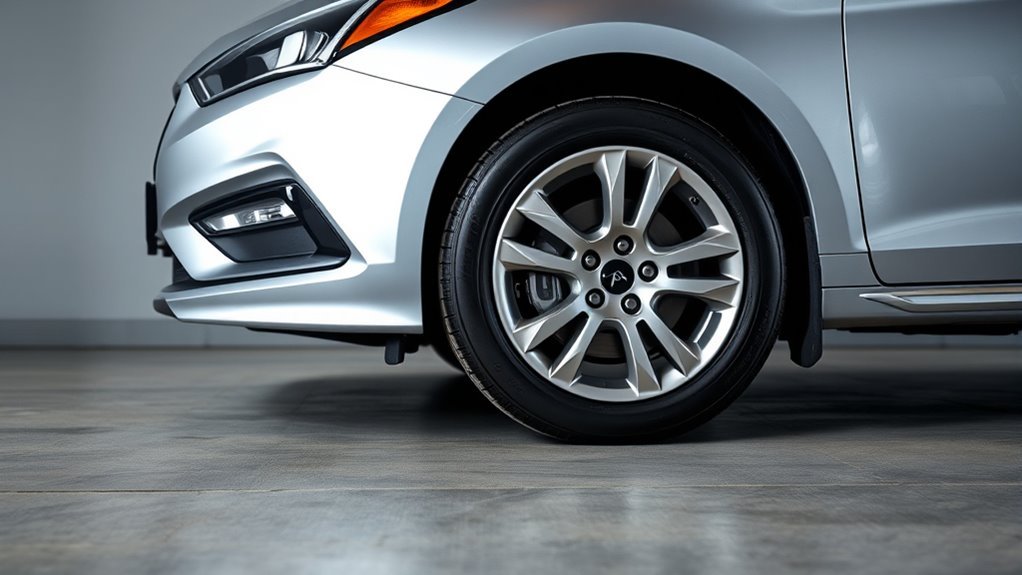
Sonata tire fitments from 2011–2025 cover comfort-focused 16-inch tires and sport-focused 19-inch tires. Common factory sizes include 205/65R16, 215/55R17, 225/45R18, and 245/40R19. Some late-model or aftermarket setups may use 245/35ZR20, but you should verify clearance before using that size.
Use this chart as a starting point, not as a final fitment guarantee. Trim, market, wheel package, and production changes can affect the correct size. Always confirm the size printed on your tire sidewall or listed on the driver-side door placard.
| Model Years | Common Tire Sizes | Typical Use |
|---|---|---|
| 2011–2015 | 205/65R16, 215/55R17, 225/45R18 | Base, Limited, and Sport-style trims |
| 2016–2023 | 205/65R16, 215/55R17, 225/45R18, 235/45R18 | Eco, SEL, Limited, Sport, and Hybrid trims |
| 2024–2025 | 215/55R17, 235/45R18, 245/40R19 | SEL, Limited, Hybrid, and N Line trims |
OE Tire Options by Trim (Eco, SEL, Limited, Sport, N Line)
Tire size varies by Sonata trim because each trim targets a different ride and handling balance. Eco trims often use narrower 205/65R16 tires to help ride comfort and rolling efficiency. SEL and Limited trims commonly use 215/55R17 or similar sizes for a balance of comfort, grip, and steering feel.
Sport trims often move to wider 18-inch tires, such as 225/45R18, for sharper response. N Line models use wider 245/40R19 tires to support stronger cornering grip and a lower-profile look. When you replace original equipment (OE) tires, match the load index and speed rating so the car keeps its intended braking, steering, and stability behavior.
Note: Trim names and wheel packages can vary by model year, so your door placard should guide the final tire choice.
[Products Worth Considering]

These M14x1.5 closed-end chrome lug nuts are a one-piece replacement designed for secure fitment on compatible GM, Ford, and select Chrysler/Dodge models. Featuring a 60-degree conical seat and anti-rust chrome plating, they help resist corrosion and maintain a bright look for everyday driving. Built for long-term durability, they include OEM-style part references and are backed by 12 months of support.

Upgrade your wheels with MIKKUPPA closed-end lug nuts designed for reliable fit and corrosion resistance. The one-piece, cold-forged and heat-treated steel construction helps resist rust and stripping, while the integrated finish delivers a durable black appearance. Built to OEM standards with a conical 60-degree seat, these nuts provide a secure solution for compatible Ford, Honda, Jeep, and Chevrolet models.
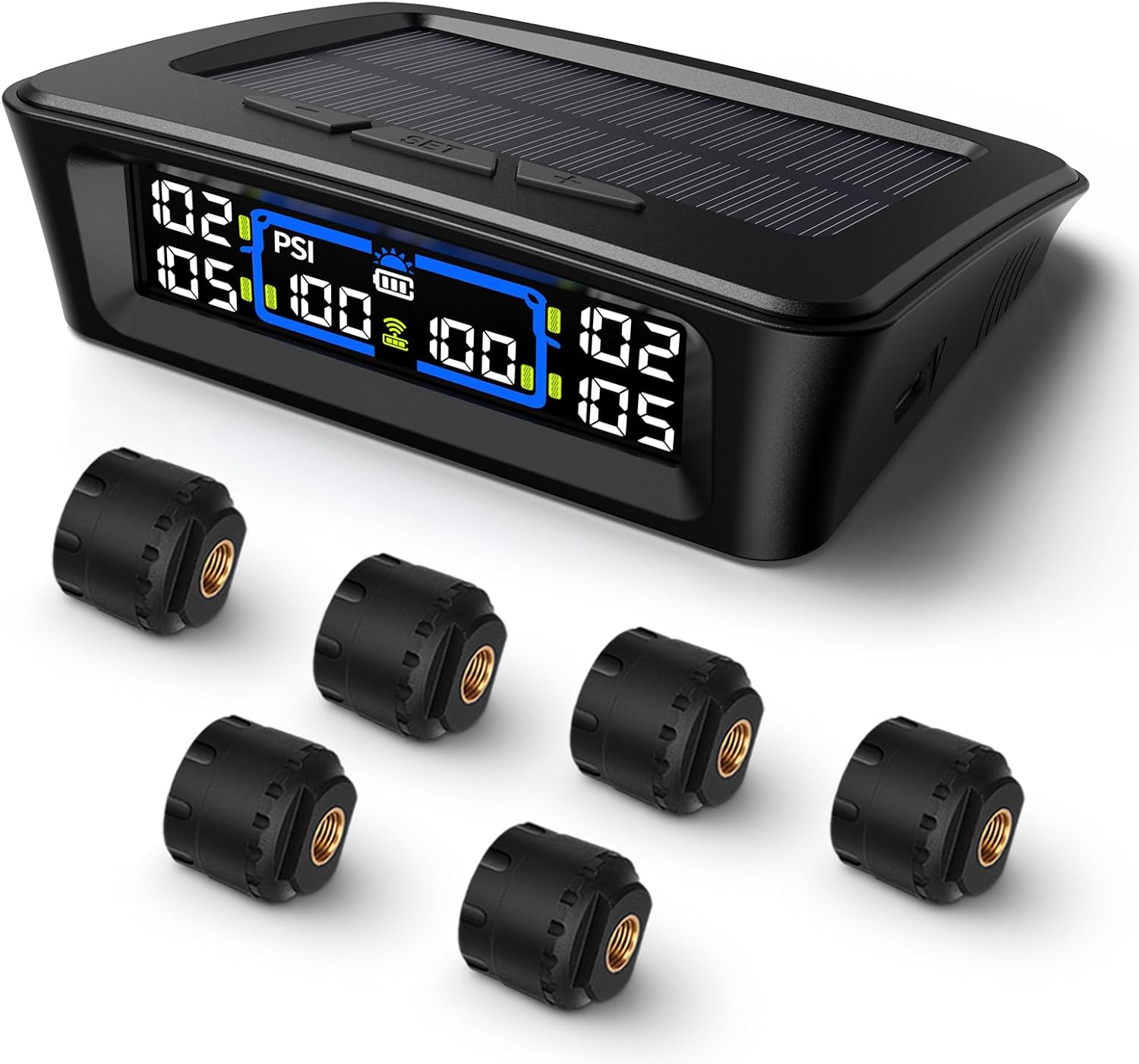
The Tymate TM12 RV TPMS delivers real-time tire pressure and temperature monitoring with a stable 433Hz display for safer long-distance driving. It supports simultaneous monitoring across vehicle and trailer zones, includes six alarm modes for pressure, temperature, leakage, battery, and signal loss, and features easy DIY installation with auto calibration. Power is supplied via USB-C charging or solar recharging, with a wide 0–144 PSI range and up to 50 ft signal coverage for RVs and towable trailers.
Wheel Fitment Specs by Generation (PCD, Center Bore, Offset)
After you match the tire size, confirm the wheel fitment specs. Sonata generations commonly use a 5×114.3 mm pitch circle diameter (PCD), a 67.1 mm center bore, and M12x1.5 lug hardware. These shared specs make many wheels look compatible, but offset and brake clearance still matter.
Common factory-style offsets sit around 35–48 mm, depending on wheel width and model year. A wheel with the wrong offset can cause fender rub, poor steering feel, or suspension clearance problems. Use hub-centric rings only when the wheel center bore exceeds the Sonata’s hub size, and torque the lug nuts to the specification in your owner’s manual.
Replacement Tire Selection: Size, Load & Speed Ratings
Use the OE size, load index, and speed rating shown on the vehicle placard or current tire sidewall. The load index tells you how much weight each tire can carry. Never choose a tire with a lower load index than the one specified for your Sonata.
The speed rating shows the tire’s tested speed capability under set conditions. Many Sonata tires use ratings such as H, V, or higher, depending on trim and tire size. You may use a higher rating, but you should not use a lower one unless a qualified tire professional confirms it fits your driving needs and local rules.
- Match the factory tire size unless you have a clear upsizing plan.
- Keep the same or higher load index.
- Use the same or higher speed rating.
- Choose a tread design that fits your weather and driving style.
- Check warranty terms because coverage can vary by size and rating.
[Products Worth Considering]

Replace worn or malfunctioning GM TPMS sensors with this 433MHz pre-programmed sensor set designed for compatibility with many Chevrolet, Buick, GMC, and Cadillac models. It includes guidance for proper OBDII relearning/pairing after installation and supports reliable long-term operation with a high-performance CR2032 battery. Quality tested for durability and performance to help restore accurate tire pressure monitoring.

Monitor tire tread wear with a smart, color-coded depth gauge that shows clear condition ranges at a glance. The bar is range marked for fast, easy readings, helping you maintain safer traction and performance. Each gauge is portable with a pocket clip, and the set includes 20 units for daily use and sharing.

This TPMS sensor training and relearn reset tool is customized for Ford, Lincoln, and Mercury vehicles to help activate tire pressure programming after sensor replacement or tire rotation. It can activate individual tire pressure sensors with one-button operation, helping prevent TPMS warning light illumination. It is not a sensor programming tool and cannot program replacement sensors—use it to trigger/activate sensors only.
Sonata Tire Recommendations: Seasonal & Performance by Year
Choose Sonata tires based on your climate, wheel size, and driving style. All-season tires work well for mild areas with light winter weather. Dedicated winter tires give better cold-weather grip when you drive in snow, ice, or long periods below freezing.
[Products Worth Considering]

Replace your worn or missing TPMS sensors with pre-programmed, direct-fit sensors for compatible Ford, Lincoln, and select Mazda models. Each sensor comes ready to activate with a scan tool, helping restore accurate tire pressure monitoring and trouble-free installation. Built with a long-life CR2032 battery and tested before factory release, this set provides dependable performance with a one-year warranty.
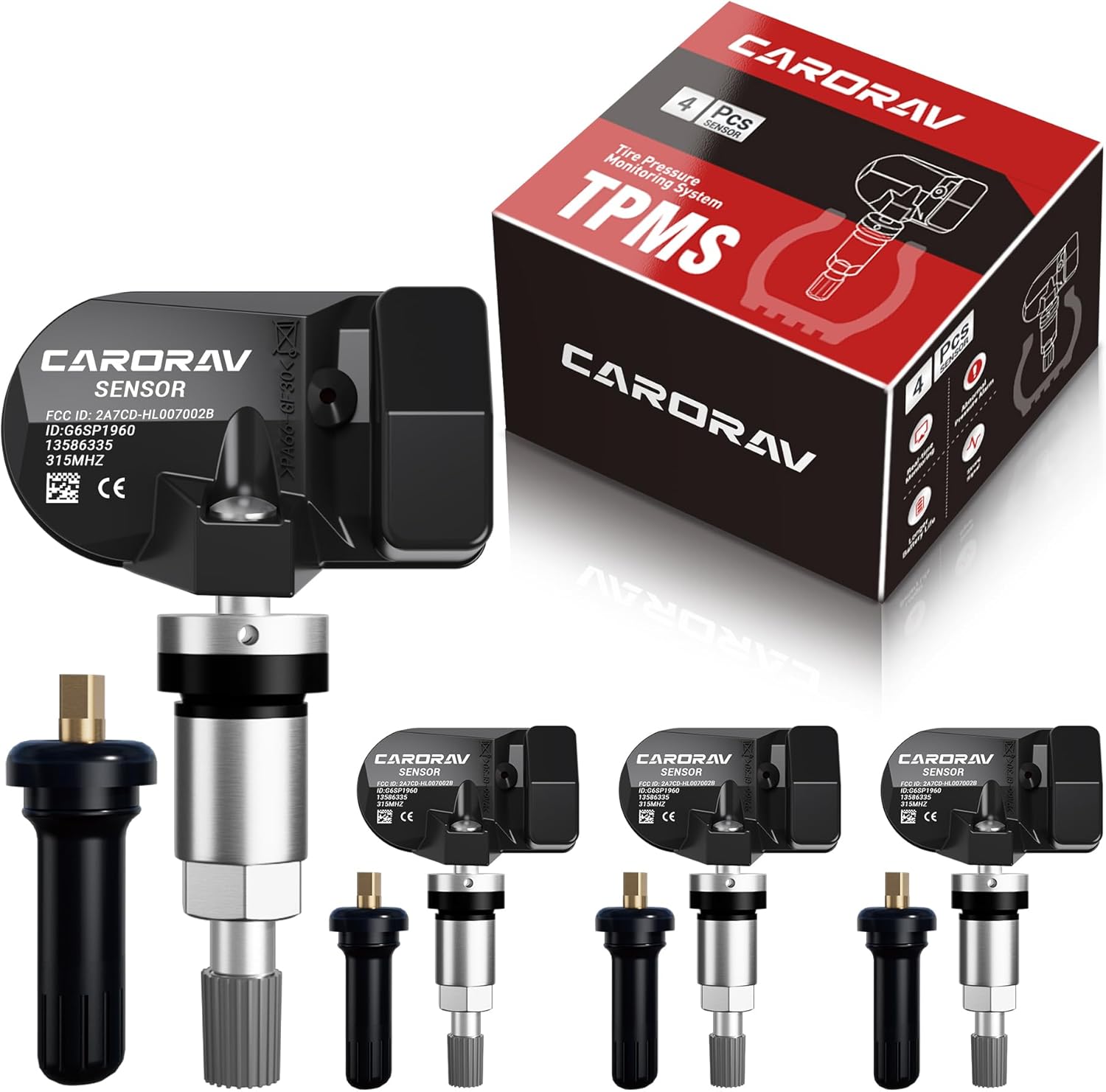
Replace worn or missing TPMS sensors with CARORAV pre-programmed GM-compatible sensors for a smoother installation experience. These 315MHz replacement sensors help monitor tire pressure in real time with long battery life, and they are designed to withstand harsh temperatures. Manual or OBDII relearn may be required to reset the system for proper recognition.

Measure tire tread depth quickly and accurately with this LUMITECO dial gauge that reads in 1/32" increments up to 14/32". The color-coded green/yellow/red zones make it easy to judge tire wear and know when replacement is needed. A rugged, compact design with a protective pouch helps keep the gauge ready for use on cars, trucks, motorcycles, and more.
Seasonal Tire Selection
For 205/65R16 and 215/55R17 sizes, all-season tires often give the best blend of comfort, tread life, and wet-road grip. If you live in a cold region, winter tires can help the car stop and turn with more control. For 19-inch N Line wheels, consider a winter setup with more sidewall if your roads have potholes or heavy snow.
Performance Tire Options
Performance tires can improve steering feel, braking grip, and cornering response. They often trade off some ride comfort, tread life, and cold-weather grip. Choose them when your driving style or trim level justifies the trade.
- Prioritize tread design for wet grip and even wear.
- Choose wider, lower-profile tires only when your wheels and suspension support them.
- Use Z-rated or equivalent tires only when your driving demands them.
- Balance comfort loss against handling gains before you upsize.
Tire Pressure & Rotation
Keep tire pressure at the level shown on the driver-side door placard. Many Sonata models fall around 32–35 psi, but the placard should control your final setting. Check pressure when tires are cold because heat raises the reading.
Rotate tires every 5,000–7,000 miles unless your owner’s manual gives a different schedule. Regular rotation helps even out tread wear and keeps handling more predictable. Inspect tread depth and sidewalls during each pressure check.
| Item | Interval | Notes |
|---|---|---|
| Pressure | Weekly | Use door placard; often 32–35 psi |
| Rotation | 5k–7k mi | Promotes even wear |
| Seasonal swap | As weather requires | Winter vs. all-season |
Tire Maintenance Timing: Rotation, Age, When to Replace
Rotate your Sonata’s tires every 5,000–7,000 miles to help maintain even tread wear. Replace tires when tread depth reaches the legal limit, when damage appears, or when age starts to affect the rubber. Your tire maker may recommend inspection or replacement by age, even when tread remains.
Tire Rotation Intervals
Uneven wear shortens tire life and can make the car pull, vibrate, or feel less stable. Rotate tires on schedule and check pressure before and after rotation. Follow the correct pattern for directional, staggered, or non-directional tires.
- Inspect tread depth and visible damage at each rotation.
- Use the correct rotation pattern for your tire design.
- Shorten the interval if you drive aggressively or on rough roads.
- Record the date and mileage after each rotation.
Tire Age Limits
Tire age matters because rubber hardens and internal materials weaken over time. Many drivers should have tires inspected as they approach six years from the manufacture date. Check the Department of Transportation (DOT) date code on the sidewall to find the tire’s age.
Replace tires sooner if you see cracking, bulges, cuts, or uneven wear. Heat, sunlight, underinflation, and heavy loads can speed up tire aging. Your driving conditions can matter as much as mileage.
When To Replace
Replace tires when tread depth gets too low, damage reaches the sidewall, or the car develops vibration that inspection links to tire failure. You should also replace tires with exposed cords, bulges, or deep cuts. Do not wait for a warning light because many tire problems never trigger one.
- Rotate tires every 5,000–7,000 miles.
- Measure tread depth during routine checks.
- Inspect sidewalls for cracks, cuts, and bulges.
- Replace aged or damaged tires before long trips.
Warning: Do not drive on a tire with a bulge, exposed cord, or deep sidewall cut.
Buying & Fitment FAQs: Upsizing, 19″ Vs 20″, TPMS Compatibility
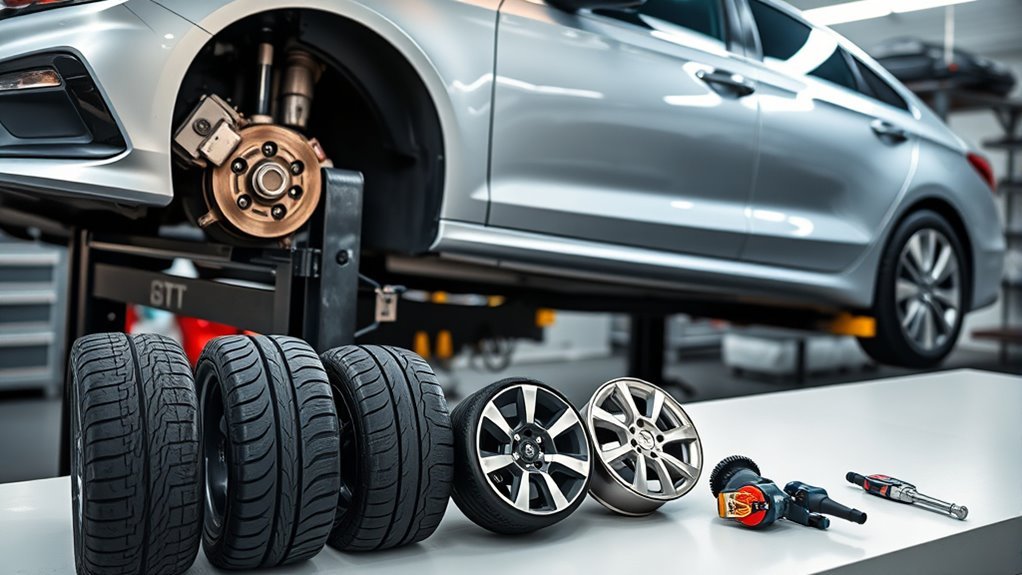
When you upsize Sonata wheels, keep the overall tire diameter within about 3% of the factory size. That helps preserve speedometer accuracy, anti-lock braking system (ABS) behavior, traction control, and steering feel. Compare tire diameter, load index, speed rating, and sidewall height before changing rim size.
For many 2019–2025 Sonata setups, 19-inch wheels balance response and comfort better than 20-inch wheels. A 20-inch setup can improve visual stance and steering sharpness, but it can reduce ride comfort and raise the risk of wheel damage. Confirm brake, suspension, and fender clearance before buying wheels.
TPMS compatibility also matters. Verify sensor frequency, valve type, and programming needs before you mount the wheels. You can transfer compatible original sensors or have a shop program new sensors to the car.
How to Read a Sonata Tire Size
A tire size such as 215/55R17 gives you three key details. The first number shows tire width in millimeters, the second number shows sidewall height as a percentage of width, and the final number shows wheel diameter in inches. The “R” means radial construction, which most modern passenger tires use.
For example, a 215/55R17 tire is 215 mm wide and fits a 17-inch wheel. Its sidewall height equals 55% of the tire width. Use this information when you compare ride comfort, steering response, and replacement options.
Frequently Asked Questions
What Size Tires Are on a 2011 Hyundai Sonata?
The 2011 Sonata commonly uses 205/65R16 tires on GLS trims and 215/55R17 tires on Limited trims. Some sport-style packages may use 225/45R18. Check your door placard before you order tires.
What Is the Best Oil for a Hyundai Sonata?
The best oil depends on your Sonata’s engine and model year. Use the viscosity and specification listed in your owner’s manual or on the oil cap. Many Sonata engines call for common synthetic viscosities such as 5W-20 or 5W-30, but you should confirm before service.
Can You Put 20-Inch Wheels on a Hyundai Sonata?
You may be able to use 20-inch wheels on some Sonata models, but the setup must clear the brakes, suspension, and fenders. Choose a tire size that keeps the overall diameter close to stock. You also need the correct load rating, offset, center bore, and TPMS setup.
Do All Hyundai Sonata Wheels Use the Same Bolt Pattern?
Many modern Sonata generations use a 5×114.3 mm bolt pattern. You should still confirm your model year before buying wheels. Center bore, offset, wheel width, and brake clearance can affect fit even when the bolt pattern matches.
What Happens If You Use the Wrong Tire Size?
The wrong tire size can affect speedometer readings, ride height, braking, traction control, and handling. A tire that is too wide or too tall can rub the fender or suspension. A tire with too low a load index can create a safety risk.
Conclusion
The safest Sonata tire choice starts with the size, load index, and speed rating listed on your door placard. Check wheel specs before upsizing, and confirm TPMS compatibility before you mount new wheels. Rotate, inspect, and replace tires on a steady schedule so the car keeps its intended comfort and control. The right tires help your Sonata feel stable every time you drive.

Related Articles

Danger of Using Summer Tires in Winter on a Hyundai Sonata
Potentially perilous, using summer tires in winter on your Hyundai Sonata can compromise safety—discover the hidden dangers that await you on icy roads.
Read More
Can You Mix Nitrogen and Air in Hyundai Sonata Tires? Answered
Discover the implications of mixing nitrogen and air in your Hyundai Sonata tires—are the benefits worth the risks? Explore the answer inside!
Read More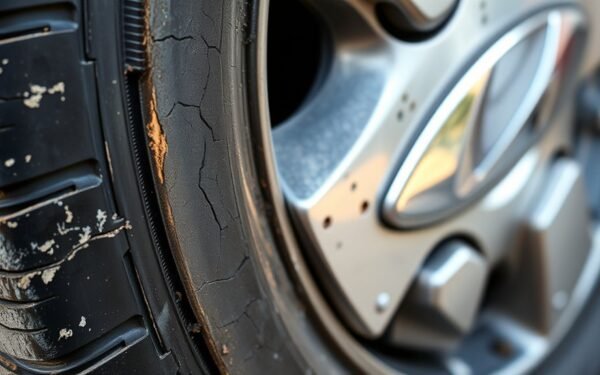
How to Tell If Hyundai Sonata Tires Are Too Old to Use Safely
Understand how to assess the age of your Hyundai Sonata tires and discover crucial signs of deterioration that could compromise your safety on the road.
Read More