
RAV4 Tires Wearing Unevenly: 6 Causes and Fixes
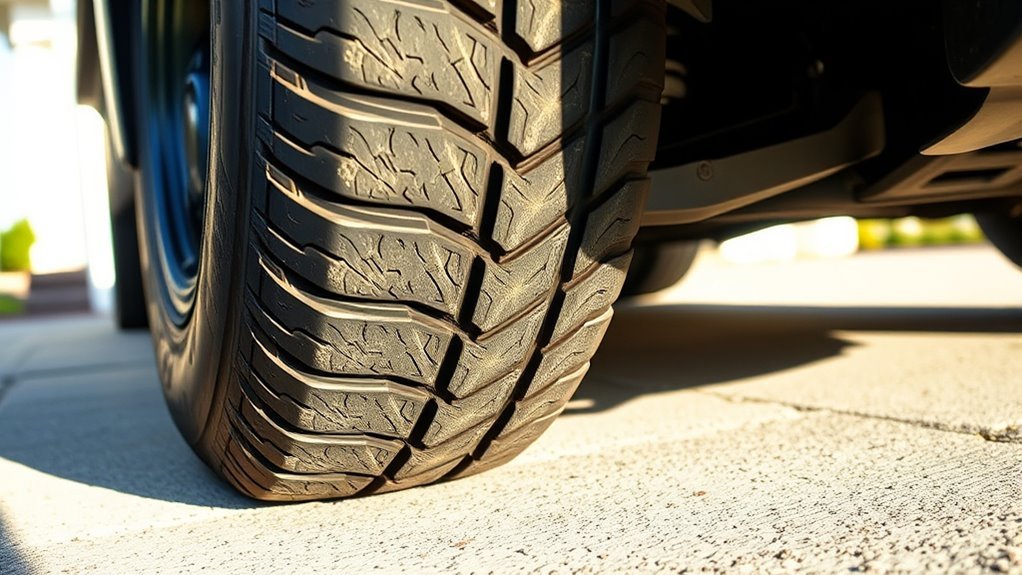
Inside-edge tire wear on your RAV4 can sneak up fast, especially if you only check tread from the outside. The most likely cause is wheel misalignment, often too much negative camber or toe that sits outside spec. This guide explains why it happens, what to inspect, and how you can stop the same wear pattern from coming back.
Quick Answer
Your RAV4 tires usually wear unevenly on the inside because the wheels do not sit at the correct angle. Poor alignment, worn suspension parts, low tire pressure, missed rotations, and hard cornering can all speed up inner tread wear. Check alignment first, then inspect suspension parts before you replace another set of tires.
Key Takeaways
- Check your RAV4’s alignment if the inside edges wear faster than the rest of the tread.
- Rotate your tires every 5,000 to 7,500 miles, or follow the interval in your owner’s manual.
- Inspect control arm bushings, shocks, struts, and camber hardware when uneven wear returns after alignment.
- Keep tire pressure at the door-jamb specification to reduce heat, drag, and tread damage.
- Replace badly worn tires before cords or belts show, since exposed belts create a safety risk.
Why Is My RAV4’s Tire Wear Uneven?
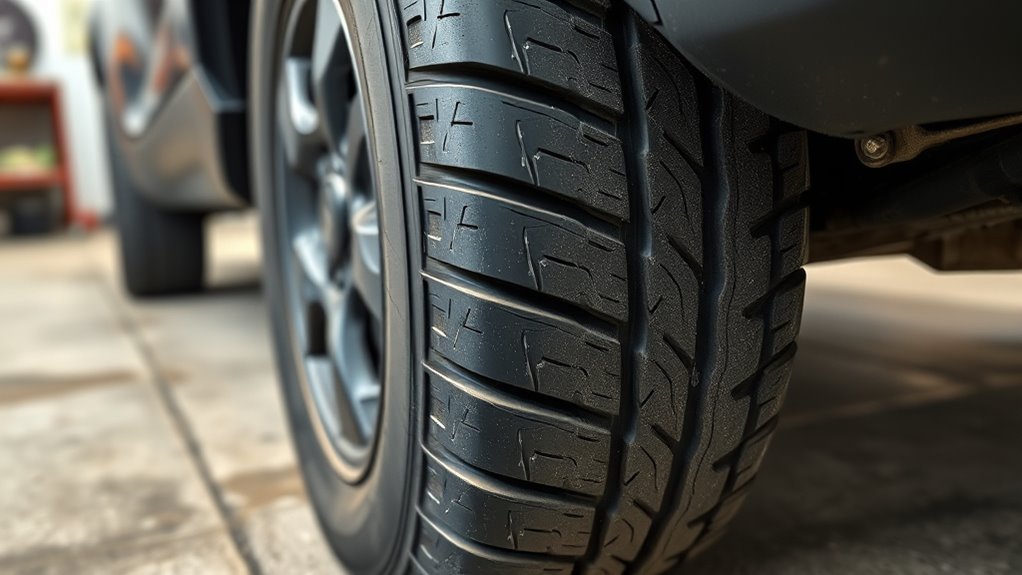
Your RAV4’s tire wear can become uneven when the tire does not meet the road squarely. Inside-edge wear often points to alignment trouble, especially negative camber or toe settings that sit outside the correct range.
Hybrid models may place more load on the tires because of hybrid system components. That added load does not cause bad alignment by itself, but it can make wear show faster when alignment, pressure, or rotation habits are poor.
Your driving habits also matter. Hard cornering, frequent curb hits, pothole impacts, and overloading can all stress suspension parts and change how the tire contacts the road.
[Products Worth Considering]

EVOULTES heavy duty tire inflator with an integrated gauge delivers accurate pressure readings from 10–120 PSI, helping you inflate, deflate, and check tires in one tool. The 16.5-inch extended dual-head air chuck with swivel base reaches hard-to-access dual wheel valves on trucks and RVs. A brass trigger core and side-mounted air release valve make operation smooth, with standard 1/4" NPT threading and quick-connect compatibility for easy setup.

The JACO FlowPro Tire Inflator measures, inflates, and airs down tires up to 100 PSI with battery-free operation and ±2% accuracy after calibration. It features a glowing pressure dial for night visibility, a heavy-duty steel build with a hybrid hose, and a precision push-to-inflate thumb trigger. The patented Lightning Air Chuck locks on for a secure seal, and the kit includes quick-connect hardware for easy inline use with your air compressor.

This portable cordless tire inflator delivers up to 160 PSI with fast 17 L/min airflow to help you quickly top up tires and get back on the road. It features dual power mode, running on a 21V rechargeable battery or a 12V DC adapter for convenient roadside use. An automatic shut-off with digital pressure gauge helps prevent overinflation, and a built-in LED light improves visibility in low-light conditions.
Why You Should Keep Your RAV4 Aligned
Proper alignment helps your RAV4 track straight, handle well, and use the full tread surface. When camber or toe sits outside spec, one edge of the tire can scrub against the road with every mile.
Schedule an alignment after you install new tires, hit a major pothole, notice pulling, or see uneven tread wear. Many owners also check alignment once or twice a year, especially if they drive on rough roads.
Ask the shop for a printed before-and-after alignment report. That report shows whether camber, caster, and toe fell inside Toyota’s specifications after adjustment.
Pro tip: Keep every alignment printout so you can spot repeat camber or toe problems before another tire set wears out.
How to Identify Worn Suspension Parts Impacting Tire Wear
Worn suspension parts can change wheel angle while you drive. That movement can make a fresh alignment drift out of spec and damage new tires.
Start with a suspension inspection. Ask a technician to check these parts:
- Control arm bushings for cracking, looseness, or excess movement
- Ball joints for play, noise, or torn boots
- Struts and shocks for leaks, bounce, or poor damping
- Tie rods for looseness that affects steering and toe angle
- Camber bolts and related hardware for damage or seized threads
Do not align the vehicle until the shop replaces worn parts. A shop can set the angles today, but loose suspension parts can undo that work quickly.
What Causes Misalignment in RAV4 Models?
Misalignment can develop after normal driving, not just after a crash. Potholes, curb strikes, worn bushings, and weak shocks can all change the way your wheels sit.
Too much negative camber tilts the top of the tire inward. Bad toe settings can also scrub the tread and cause feathering, shoulder wear, or rapid inside-edge wear.
Factory alignment settings give a target range, but your vehicle still needs a real measurement. Tire wear, ride height, part wear, and driving conditions can all affect the final setup.
How to Fix Uneven Tire Wear Effectively
Fix uneven tire wear with a step-by-step check, not a guess. Replacing tires without fixing the cause can leave you with the same problem again.
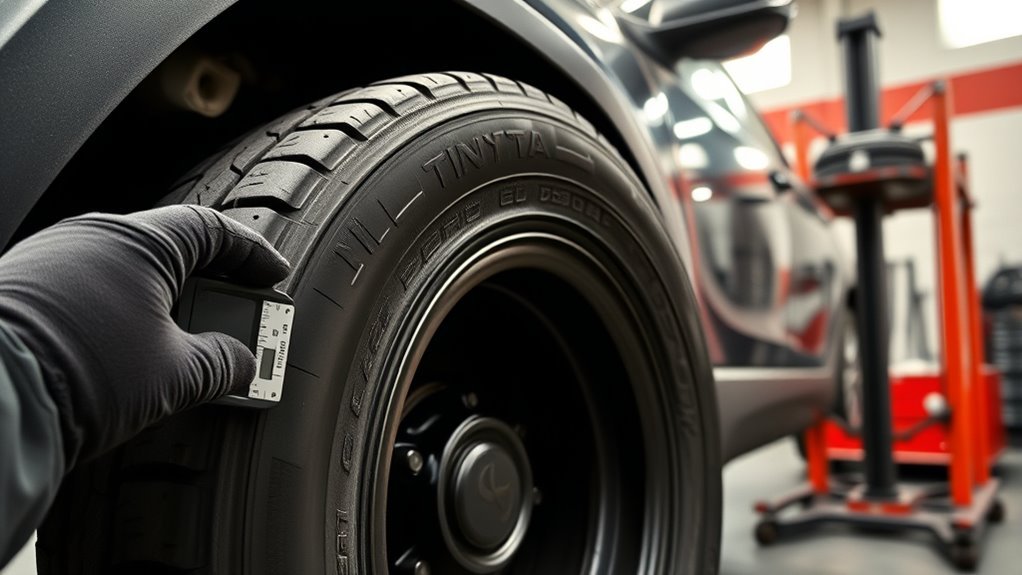
- Measure the tread depth: Compare the inside, center, and outside tread on each tire. Uneven readings help confirm the wear pattern.
- Check tire pressure: Inflate each tire to the pressure listed on the driver’s door-jamb label, unless your owner’s manual says otherwise.
- Rotate the tires: Rotate tires every 5,000 to 7,500 miles, or use the interval Toyota lists for your model and tire type.
- Get a four-wheel alignment: Ask the shop to correct camber and toe where adjustment is available.
- Inspect suspension parts: Replace worn bushings, struts, shocks, ball joints, or tie rods before you rely on a new alignment.
- Replace unsafe tires: Install new tires if tread sits below the legal limit, cords show, or the tire has cracking, bulges, or exposed belts.
Warning: Do not keep driving on tires with exposed cords or belts, because they can fail without much warning.
[Products Worth Considering]
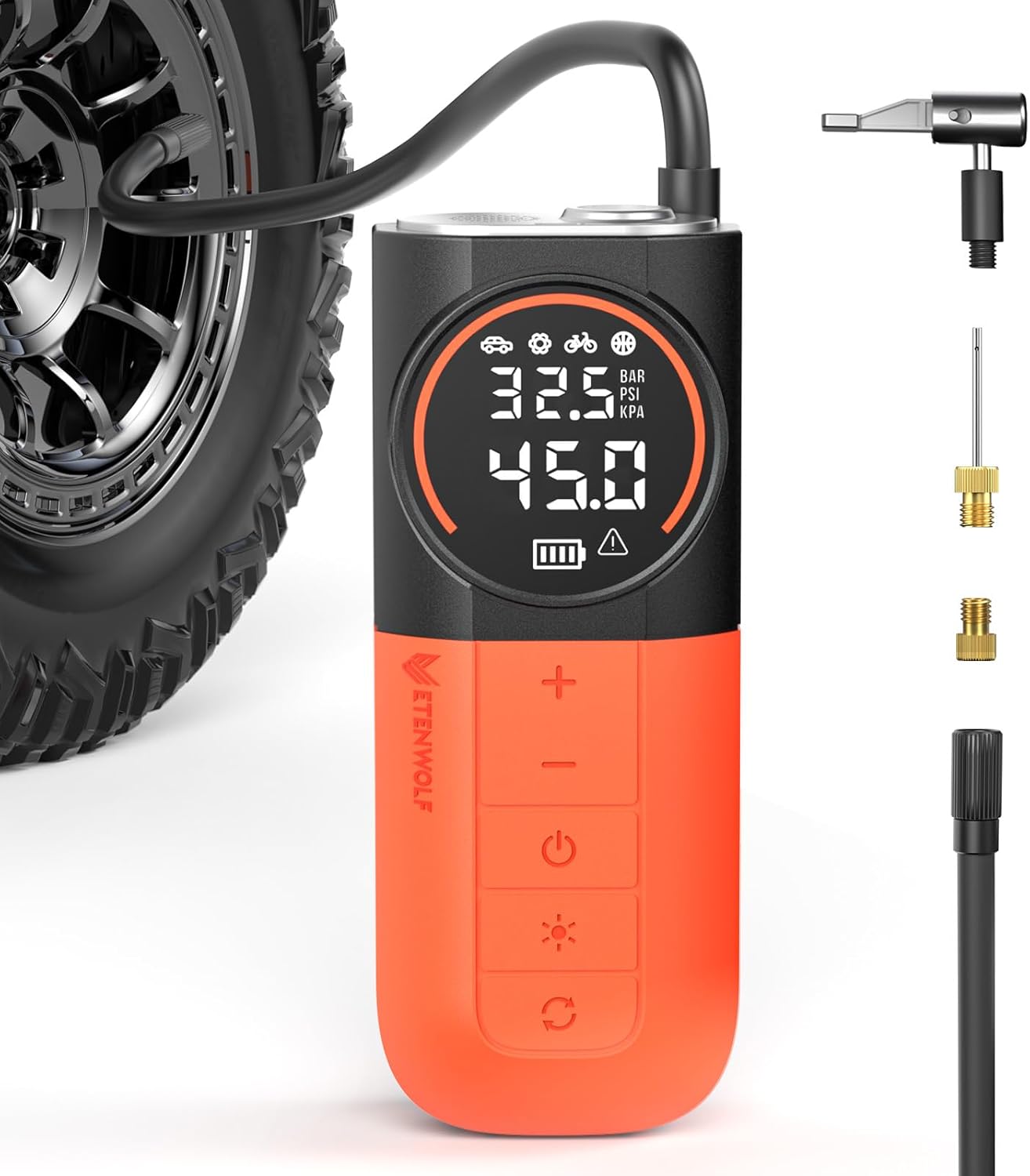
The ETENWOLF S1 cordless tire inflator delivers ultra-fast inflation with up to 160 PSI and a 20 L/min airflow for quicker tire top-offs. Its 5200mAh battery and cooling system support inflating many tires and sports balls on a single charge, while the digital pressure gauge and multi-unit display help you reach the right pressure accurately. With preset modes, pressure memory, an auto-stop feature, and an LED flashlight, it’s built for easy roadside and everyday use.

The AstroAI L7 Air Tire Inflator refills car tires quickly with up to 150PSI max pressure and a fast 1-minute inflation claim. It includes 5 preset modes for car, motorcycle, bicycle, balls, and manual use, along with an auto shutoff to help prevent overinflation. Designed for convenience, it features a digital gauge with unit switching, a top LED light with multiple modes, and USB-C/USB ports for backup power.
How Can You Tell If Alignment or Tire Pressure Is the Problem?
Different wear patterns point to different causes. Inside-edge wear often points to alignment, while center wear can point to overinflation.
Wear on both outer edges can point to underinflation or hard cornering. Feathered tread blocks often point to toe problems, especially when the tire feels rough in one direction.
Use these patterns as clues, not a final diagnosis. A tread-depth gauge, pressure check, alignment report, and suspension inspection give you the best answer.
When Should You Replace Unevenly Worn RAV4 Tires?
Replace a tire when tread depth reaches the legal minimum in your area or when any cords, belts, bulges, or sidewall damage appear. Do not judge safety only by the best-looking part of the tire.
If the inside edge has much less tread than the outside, the tire may be unsafe even when the outer shoulder looks fine. Ask a tire shop to inspect it if you cannot see the inner edge clearly.
Fix the alignment and suspension issue before installing new tires. That step helps your next set last longer and keeps your RAV4 more stable.
Frequently Asked Questions
What Is the Most Common Issue With the Toyota RAV4?
The most common tire-related issue is uneven tire wear from alignment, tire pressure, rotation, or suspension problems. If your RAV4 pulls, vibrates, or wears one tire edge quickly, schedule an inspection before you replace the tires.
Can bad toe cause inside tire wear on a RAV4?
Yes, bad toe can scrub the tire as it rolls. That can cause feathering, noise, and fast wear on one edge of the tread.
How often should you align a RAV4?
Check alignment after new tires, suspension work, curb impacts, pothole hits, or any clear uneven wear. Many drivers also check it once a year if they drive on rough roads.
Will rotating tires fix inside-edge wear?
Rotation can slow uneven wear from getting worse on one position, but it will not fix the cause. You still need to check alignment, pressure, and suspension parts.
Are RAV4 Hybrid tires more likely to wear unevenly?
A RAV4 Hybrid can show wear sooner if alignment, tire pressure, or rotation habits are poor. The added hybrid system weight may increase load, but maintenance and correct alignment still matter most.
Conclusion
Uneven inside tire wear on your RAV4 usually means the tire is not contacting the road the right way. Start with tire pressure, rotation history, alignment readings, and a suspension inspection.
If you catch the issue early, you can often protect the next set of tires and improve how your RAV4 drives. Keep a simple maintenance record, watch the inside edges, and act before minor wear turns into an unsafe tire.

Related Articles

Toyota RAV4 TPMS Reset: Easy Steps That Work
Unlock the secrets to resetting your Toyota RAV4's TPMS effortlessly—discover the essential steps to ensure your tires are always safe.
Read More
Toyota RAV4 Tire Rotation: DIY Steps & Pattern
Take control of your Toyota RAV4's tire maintenance with our simple DIY rotation guide—discover the best steps for optimal performance and longevity!
Read More
Mix Tire Brands on a Toyota RAV4? Expert Guide
Keeping your RAV4 safe? Learn when mixing tire brands risks traction, ABS/TCS and AWD damage — and what exact matches you must insist on.
Read More
2 Comments