
Why Do Tires Lose Pressure in Cold Weather on a RAV4?
Cold mornings can make your Toyota RAV4’s tire pressure warning light appear even when the tires looked fine the day before. That does not always mean you have a flat tire. In many cases, the air inside the tire has contracted as the temperature dropped. Still, low pressure should be checked right away because it can affect handling, fuel economy, tire wear, and winter traction.
Quick Answer
RAV4 tire pressure drops in cold weather because air contracts as temperature falls. A common rule of thumb is about 1 PSI for every 10°F drop. Check the tires when cold, inflate them to the PSI on the driver-side door placard or owner’s manual, and recheck if the TPMS light stays on.
Key Takeaways
- Cold weather can lower tire pressure by about 1 PSI for every 10°F temperature drop.
- Use the RAV4’s driver-side door placard or owner’s manual for the correct cold tire pressure, not the maximum PSI printed on the tire sidewall.
- Check tire pressure before driving or after the vehicle has been parked for at least three hours.
- A TPMS warning means you should stop and check the tires, but TPMS is not a replacement for regular manual pressure checks.
- If one tire keeps losing air, look for a puncture, valve leak, bead leak, wheel damage, or tire aging.
At a Glance
| Time Required | 5–10 minutes for a pressure check and inflation |
| Difficulty | Easy DIY maintenance |
| Tools Needed | Accurate tire pressure gauge, air compressor or gas-station air pump, valve caps |
| Cost | Usually free to a few dollars for air; $5–$20 for a basic gauge |
How Cold Weather Affects Tire Pressure
Cold air makes tire pressure drop because the air inside the tire contracts. A useful everyday estimate is that tire pressure changes by about 2% for every 10°F change in air temperature. For standard passenger-vehicle tires, that usually works out to about 1 PSI for every 10°F.
For example, if your RAV4 tires were set to 35 PSI on a mild 70°F day, a 30°F morning could leave them roughly 4 PSI lower before you even start driving. That drop may be enough to make the tires look slightly soft, make the ride feel less stable, or trigger the tire pressure warning light.
A 40°F temperature drop can lower standard passenger-tire pressure by roughly 4 PSI, even when there is no puncture or leak.
Temperature is not the only cause of low pressure. Tires can also lose air slowly through the rubber, around the valve stem, at the bead where the tire meets the wheel, or through a nail or screw in the tread. Cold weather often exposes these problems because the pressure is already lower.
[Products Worth Considering]

EVOULTES heavy duty tire inflator with an integrated gauge delivers accurate pressure readings from 10–120 PSI, helping you inflate, deflate, and check tires in one tool. The 16.5-inch extended dual-head air chuck with swivel base reaches hard-to-access dual wheel valves on trucks and RVs. A brass trigger core and side-mounted air release valve make operation smooth, with standard 1/4" NPT threading and quick-connect compatibility for easy setup.
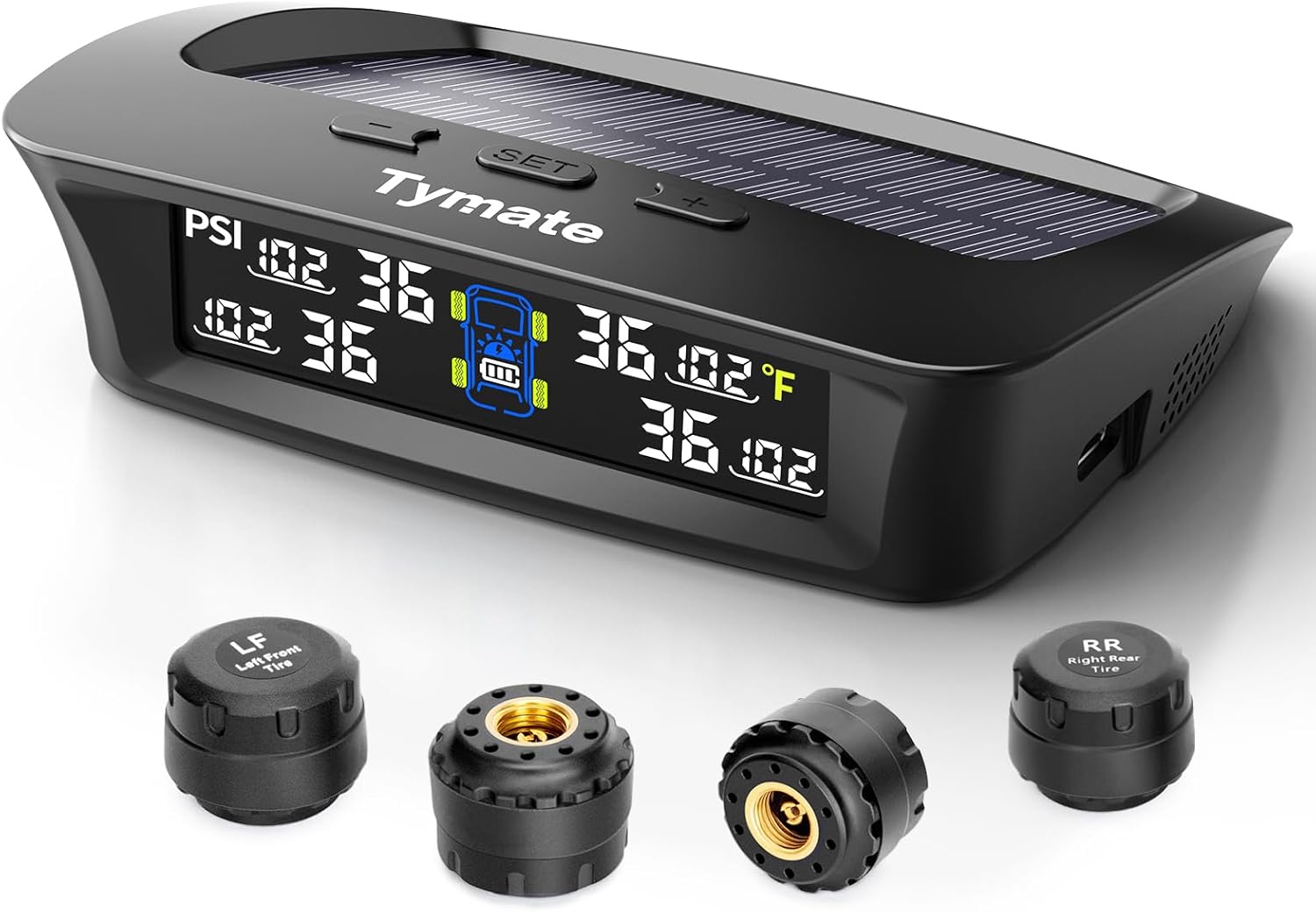
The Tymate TM3 RV TPMS delivers real-time tire pressure monitoring from 0 to 144 PSI with accurate readings and dependable wireless communication. It includes four external sensors with pre-pairing, six alarm modes for rapid leak, pressure extremes, temperature, and signal loss, plus an easy-reference setup for alert thresholds. Solar and USB-C charging help keep the display powered, while the color LCD and adaptive backlight improve visibility for safer driving and towing.

The JACO FlowPro Tire Inflator measures, inflates, and airs down tires up to 100 PSI with battery-free operation and ±2% accuracy after calibration. It features a glowing pressure dial for night visibility, a heavy-duty steel build with a hybrid hose, and a precision push-to-inflate thumb trigger. The patented Lightning Air Chuck locks on for a secure seal, and the kit includes quick-connect hardware for easy inline use with your air compressor.
Find the Correct RAV4 Tire Pressure First
The right tire pressure for your Toyota RAV4 is the cold tire inflation pressure listed on the tire and loading information label, usually on the driver-side door jamb. You can also confirm it in the Toyota owner’s manual or Toyota support information.
Warning: Do not use the maximum PSI printed on the tire sidewall as your normal RAV4 tire pressure. The sidewall number is the tire’s maximum cold inflation rating, not the vehicle manufacturer’s recommended pressure.
Many RAV4 models use a recommended cold pressure in the low-to-mid 30 PSI range, but the exact number can vary by model year, trim, tire size, wheel package, and load. If the front and rear pressures on your door placard are different, follow those separate numbers.
Common Signs of Low Tire Pressure in Winter
Low tire pressure can show up in several ways during winter. The most obvious sign is the TPMS warning light, but you may notice driving changes before or after the light appears.
- TPMS warning light: The low tire pressure symbol turns on when the system detects significant under-inflation.
- Soft-looking tires: A tire may look flatter at the bottom, especially on a cold morning.
- Heavier steering: Under-inflated tires can make the RAV4 feel less responsive.
- Reduced stability: The vehicle may feel less settled during turns, lane changes, or braking.
- Lower fuel economy: Under-inflated tires create more rolling resistance.
- Uneven tire wear: Low pressure can wear the outer shoulders of the tire faster.
Do not rely on appearance alone. A tire can be several PSI low and still look normal. A gauge reading is the only reliable way to know the pressure.
The Importance of Regular Tire Pressure Checks
Checking tire pressure is especially important in winter because pressure can change quickly after a strong cold front. Toyota recommends checking tire pressure at least monthly, and some current Toyota RAV4 owner information recommends checking as often as every two weeks.
How Often to Check RAV4 Tire Pressure
- At least once a month: This is the minimum habit most drivers should follow.
- Every two weeks in winter: Better for cold climates with frequent temperature swings.
- Before long trips: Check before highway travel or carrying passengers and cargo.
- After a large temperature drop: Recheck when the weather falls 20°F or more.
- Any time the TPMS light turns on: Stop in a safe place and check all four tires.
Safety and Performance Impact
Proper tire pressure helps the tire carry the vehicle’s weight, maintain the right tread contact with the road, and control heat buildup. Under-inflation can reduce handling, increase tire wear, and lower fuel economy. FuelEconomy.gov notes that under-inflated tires can reduce gas mileage by about 0.2% for every 1 PSI drop in the average pressure of all tires.
| Impact | What It Can Cause |
|---|---|
| Reduced tread contact | Less predictable handling and traction |
| More rolling resistance | Lower fuel economy |
| Extra sidewall flex | More heat buildup and tire stress |
| Uneven pressure across tires | Pulling, uneven wear, or inconsistent braking feel |
Get to Know Your RAV4’s TPMS
Your RAV4’s Tire Pressure Monitoring System, or TPMS, warns you when one or more tires become significantly under-inflated. Under U.S. FMVSS No. 138, TPMS must illuminate the low tire pressure warning when pressure is at or below 25% under the vehicle manufacturer’s recommended cold inflation pressure, or the applicable minimum threshold, whichever is higher.
That means your tires can be a few PSI low before the light turns on. TPMS is a helpful safety system, but it is not a substitute for checking pressure with a gauge.
- Solid TPMS light: Usually means one or more tires are low. Check all four tires and inflate to the placard pressure.
- Flashing light, then solid light: Often points to a TPMS malfunction, sensor issue, or system problem. Check the owner’s manual and schedule service if it continues.
- Light comes on only in the morning: Cold pressure may be low. Check and inflate when the tires are cold.
- Light stays on after inflation: Recheck pressure with a reliable gauge. Some systems may need driving time or a reset procedure listed in the manual.
Note: If your RAV4 has a spare tire with a TPMS sensor, include it in your checks. Some temporary spares do not have TPMS sensors, so follow your owner’s manual.
How to Safely Correct Low Tire Pressure
Correcting low tire pressure is simple, but timing matters. For the most accurate reading, check pressure before driving or after the RAV4 has been parked for at least three hours. Driving warms the tires and can temporarily raise the reading.
[Products Worth Considering]
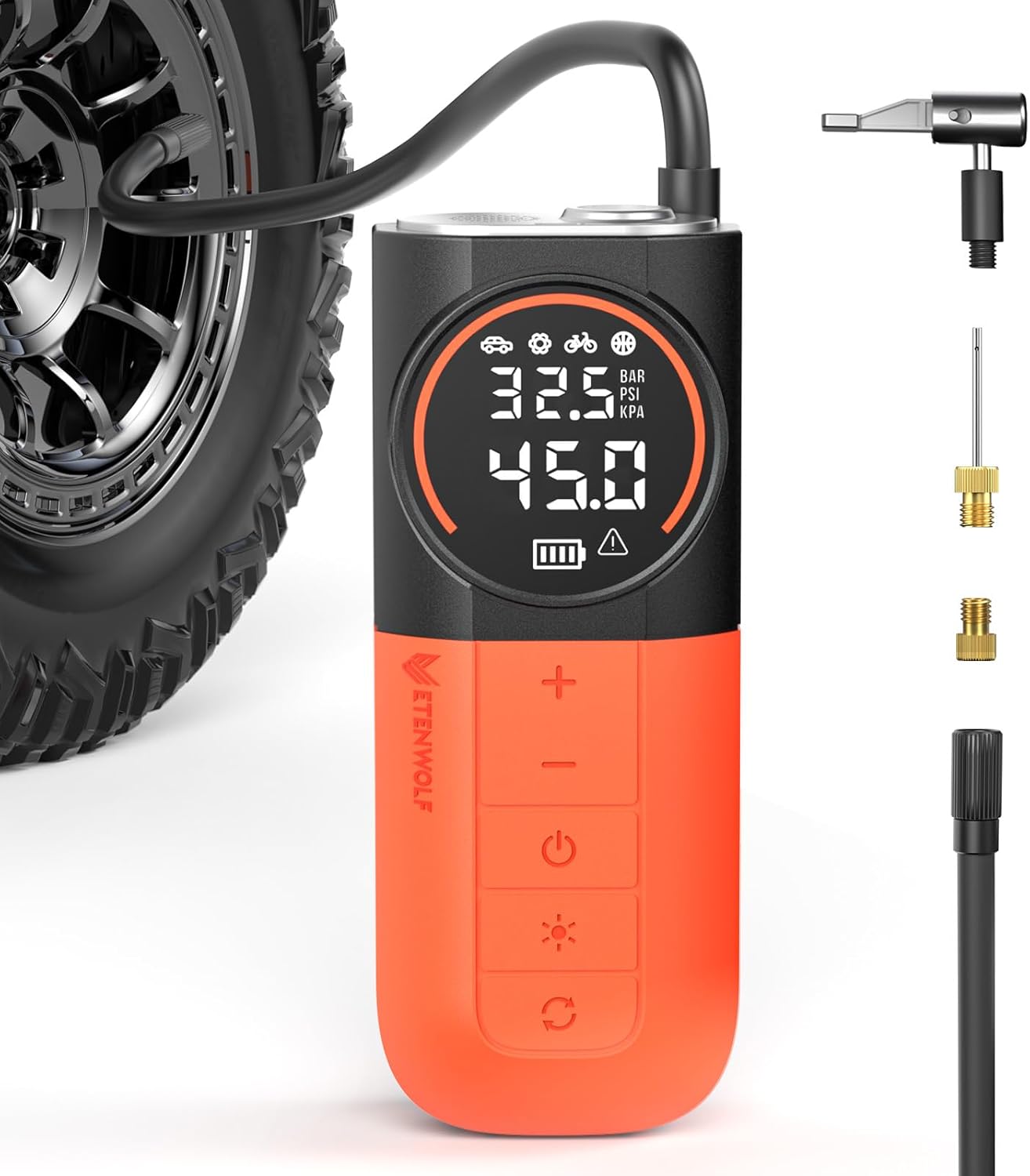
The ETENWOLF S1 cordless tire inflator delivers ultra-fast inflation with up to 160 PSI and a 20 L/min airflow for quicker tire top-offs. Its 5200mAh battery and cooling system support inflating many tires and sports balls on a single charge, while the digital pressure gauge and multi-unit display help you reach the right pressure accurately. With preset modes, pressure memory, an auto-stop feature, and an LED flashlight, it’s built for easy roadside and everyday use.

The Fanttik X10 Pro is a cordless portable tire inflator that reaches up to 150 PSI and can inflate an R15 tire in about 35 seconds for quick roadside or home top-ups. With AccuInFlate auto-stop and smart start/stop controls, it helps maintain accurate pressure and frees your hands once the target is reached. A high-visibility digital display and preset modes make it easy to set and monitor inflation for cars, motorcycles, bikes, and balls.
Tire Inspection Steps
- Park safely on level ground. Set the parking brake and keep the vehicle away from traffic.
- Find the correct PSI. Use the driver-side door placard or owner’s manual.
- Inspect each tire. Look for nails, screws, bulges, cracks, cuts, uneven wear, or a damaged valve stem.
- Remove the valve cap. Keep it somewhere clean so it does not get lost.
- Press the gauge firmly onto the valve stem. A brief hiss is normal, but a long hiss means the gauge is not sealed correctly.
- Write down each tire’s pressure. Compare the readings with the front and rear PSI listed on the placard.
Proper Inflation Techniques
- Add air in short bursts. Stop and recheck with your gauge.
- Set each tire to the cold placard PSI. Do not guess or add extra air just because it is cold.
- If the tire is warm, be cautious. Inflate to the recommended cold pressure as a temporary step, then recheck when the tire is cold.
- Replace the valve caps. They help keep dirt and moisture away from the valve core.
- Drive normally if needed. Some TPMS lights turn off after a short drive; others may require a manual reset procedure in the owner’s manual.
Pro Tip: Keep a small digital tire pressure gauge in the glove box. Gas-station gauges can be worn, dropped, or inaccurate, especially in freezing weather.
When to Seek Help
Cold weather can explain a small, even pressure drop across all four tires. A single tire losing much more air than the others usually points to a leak or damage.
- One tire drops repeatedly after you inflate it.
- You see a nail, screw, cut, bubble, or sidewall damage.
- The valve stem hisses or looks cracked.
- The wheel is bent, corroded, or leaking around the bead.
- The TPMS light flashes or stays on after pressures are corrected.
- The RAV4 pulls to one side or feels unstable.
If any of these happen, have the tire inspected by a Toyota dealer, tire shop, or qualified mechanic before you keep driving normally.
When to Seek Professional Tire Help
Professional tire service is the safest choice when pressure loss is persistent, uneven, or linked to visible damage. Do not keep adding air to a tire that loses pressure quickly. The tire may fail while driving.
| Sign to Seek Help | Best Action |
|---|---|
| One tire loses air faster than the others | Check for puncture, valve leak, or bead leak |
| TPMS light flashes before staying on | Have the TPMS system and sensors diagnosed |
| Sidewall bulge, crack, or cut | Do not repair the sidewall; replace the tire if advised |
| Uneven or rapid tread wear | Schedule tire inspection, rotation, alignment, or suspension check |
| Pressure drops again within days | Have the tire removed and inspected from the inside |
Common Cold Weather Pressure Mistakes
- Checking after a long drive: Warm tires read higher, which can hide low cold pressure.
- Using the tire sidewall PSI: That number is not your RAV4’s recommended pressure.
- Only checking the tire that looks low: Check all four tires because cold affects all of them.
- Ignoring small drops: A tire that is 3–5 PSI low can still affect wear, economy, and handling.
- Forgetting heated garages: A tire inflated in a warm garage may read lower once it sits outside in freezing air.
- Assuming TPMS catches everything: TPMS usually warns only after significant under-inflation.
Frequently Asked Questions
What should tire pressure be in winter for a Toyota RAV4?
Use the cold tire pressure listed on your RAV4’s driver-side door placard or owner’s manual. Many RAV4 models are in the low-to-mid 30 PSI range, but the exact number depends on model year, tire size, trim, and load. Do not use the tire sidewall maximum as your normal pressure.
Why does my tire pressure keep going down in cold weather?
Tire pressure drops because cold air contracts. A drop of about 1 PSI per 10°F is normal for many passenger tires. If one tire loses pressure faster than the others, the cause may be a puncture, leaking valve stem, bead leak, wheel corrosion, or tire damage.
Should I add extra air above the recommended PSI in winter?
Inflate to the recommended cold pressure on the door placard. Do not overinflate just to prevent the TPMS light. If your RAV4 is parked in a warm garage and then driven into very cold outdoor air, recheck the pressure outside after the tires have cooled.
Can I check RAV4 tire pressure after driving?
You can check after driving if you need a quick safety check, but the reading will usually be higher because the tires are warm. For the most accurate pressure, check before driving or after the RAV4 has been parked for at least three hours.
Why is my TPMS light still on after I added air?
First, recheck all four tires with a reliable gauge and confirm they match the placard pressure. Some RAV4 systems may need a short drive or a manual reset procedure. If the light flashes or stays on after correct inflation, the TPMS may need service.
Does nitrogen stop tire pressure loss in cold weather?
Nitrogen can reduce moisture inside the tire, but it still responds to temperature changes. Even with nitrogen, you still need to check your RAV4 tire pressure regularly and keep it at the recommended cold PSI.
Conclusion
Cold weather can make your RAV4 tire pressure drop quickly, often by about 1 PSI for every 10°F decrease. The fix is simple: check the tires when cold, use the PSI on the driver-side door placard or owner’s manual, and inflate each tire evenly. If the TPMS light stays on, flashes, or one tire keeps losing air, treat it as a possible leak or system issue and have it inspected.
Sources
- Toyota Owners — 2025 RAV4 Hybrid Tire Inflation Pressure — supports checking tire pressure and using the vehicle tire and loading information label.
- Toyota Support — Recommended Tire Pressure — supports finding the correct pressure in the owner’s manual or driver-side door placard.
- Toyota — How to Check Tire Pressure — supports cold-tire checking, seasonal effects, and inflation steps.
- NHTSA TireWise — Tire Safety Ratings and Awareness — supports cold tire pressure checks and safe inflation guidance.
- eCFR — 49 CFR 571.138 Tire Pressure Monitoring Systems — supports TPMS warning threshold and owner-manual warning language.
- FuelEconomy.gov — Keeping Your Vehicle in Shape — supports fuel-economy impact of under-inflated tires and not using sidewall max pressure.

Related Articles

Toyota RAV4 TPMS Reset: Easy Steps That Work
Unlock the secrets to resetting your Toyota RAV4's TPMS effortlessly—discover the essential steps to ensure your tires are always safe.
Read More
Toyota RAV4 Tire Rotation: DIY Steps & Pattern
Take control of your Toyota RAV4's tire maintenance with our simple DIY rotation guide—discover the best steps for optimal performance and longevity!
Read More
Mix Tire Brands on a Toyota RAV4? Expert Guide
Keeping your RAV4 safe? Learn when mixing tire brands risks traction, ABS/TCS and AWD damage — and what exact matches you must insist on.
Read More
One Comment