
What Happens When a Tire Blows Out at Highway Speed? Full Guide

A tire blowout at highway speed is sudden, loud, and dangerous, but your response matters more than the noise. Do not slam the brakes, jerk the wheel, or rush across lanes. Hold the steering wheel with both hands, keep the vehicle pointed straight, avoid abrupt inputs, and move to the shoulder only after the vehicle feels controlled.
Quick Answer
If a tire blows out on the highway, hold the wheel with both hands, keep your lane, avoid hard braking, and do not abruptly lift off the accelerator. Keep the vehicle stable first, then ease off gradually, use hazard lights, slow gently, and pull onto a safe shoulder.
Key Takeaways
- Grip the wheel firmly, look where you want to go, and steer with small corrections.
- Do not slam the brakes, jerk the wheel, or suddenly lift off the accelerator.
- After the vehicle stabilizes, ease off the accelerator, slow gently, and use hazard lights.
- Pull off only when the shoulder, turnout, or exit area gives you enough space from traffic.
- Underinflation, overloading, heat, impact damage, tire aging, and worn tread can raise blowout risk.
- Check tire pressure monthly when tires are cold, inspect tread and sidewalls, and do not rely on TPMS alone.
At a Glance
| Time Required | Immediate response while driving, then a few minutes to stop safely, check your surroundings, and call for help if needed. |
| Difficulty | Moderate under stress, because the safest actions are calm, smooth, and deliberate. |
| Tools Needed | Hazard lights, phone, roadside assistance contact, tire pressure gauge, spare tire or inflator kit, jack, lug wrench, reflective triangles or flares, flashlight, gloves, and a safety vest if available. |
| Cost | The emergency response costs nothing. Tire replacement, wheel repair, roadside assistance, or towing costs vary by vehicle, tire size, location, and coverage. |
Warning: Do not try to change a tire on a narrow shoulder beside fast traffic. If you cannot get far from moving lanes, stay belted in the vehicle when that is safer, call roadside assistance or emergency services, and wait for professional help.
How To Recognize a Tire Blowout
A blowout usually feels different from a slow leak. You may hear a loud bang, pop, flap, or thump. The steering wheel may pull hard to one side, or the rear of the vehicle may start to sway. You may also feel heavy vibration through the wheel, seat, or floor.
If the tire loses air more slowly before it fails, you may notice a TPMS warning, repeated low-pressure readings, uneven tire noise, a bulge, a wobble, or a rhythmic thumping sound. Treat those signs seriously. A tire that keeps losing air or showing visible damage needs inspection before another highway trip.
[Products Worth Considering]

This tire repair kit provides fast emergency puncture repair without removing the tire from the rim, helping you get back on the road quickly. Its screw plug system is designed for punctures in both tread and sidewall and includes a complete patch plug tool set with essential accessories. A portable storage bag makes it easy to carry for cars, trucks, SUVs, motorcycles, and heavy-duty applications.

EVOULTES heavy duty tire inflator with an integrated gauge delivers accurate pressure readings from 10–120 PSI, helping you inflate, deflate, and check tires in one tool. The 16.5-inch extended dual-head air chuck with swivel base reaches hard-to-access dual wheel valves on trucks and RVs. A brass trigger core and side-mounted air release valve make operation smooth, with standard 1/4" NPT threading and quick-connect compatibility for easy setup.

This portable cordless tire inflator delivers up to 160 PSI with fast 17 L/min airflow to help you quickly top up tires and get back on the road. It features dual power mode, running on a 21V rechargeable battery or a 12V DC adapter for convenient roadside use. An automatic shut-off with digital pressure gauge helps prevent overinflation, and a built-in LED light improves visibility in low-light conditions.
What To Do During a Tire Blowout?
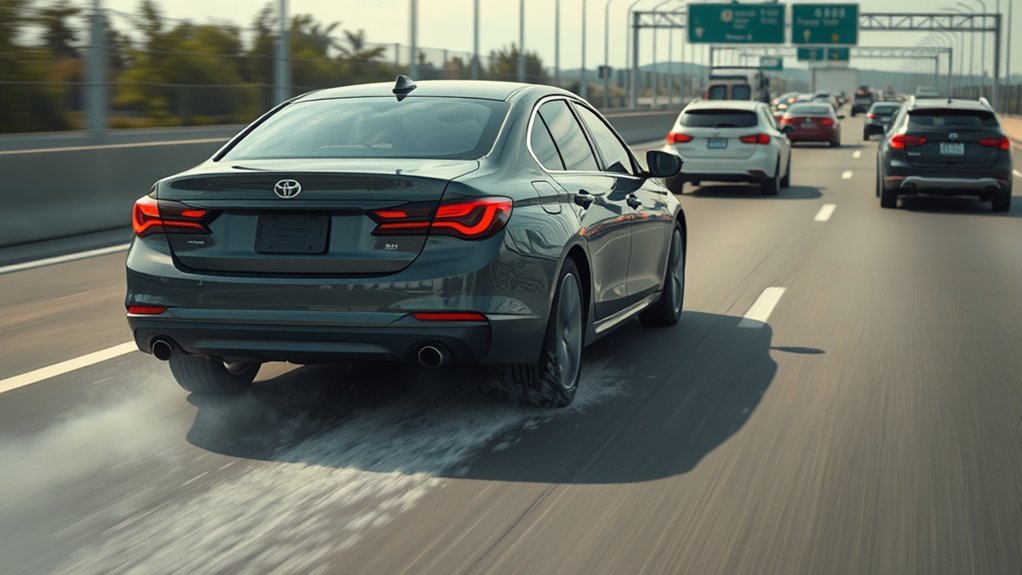
If your tire blows out, your first goal is to keep the vehicle balanced and controllable. The National Highway Traffic Safety Administration advises drivers to avoid panic and overreaction during a blowout. Sudden braking, sharp steering, or abruptly removing your foot from the accelerator can make control harder.
- Hold the steering wheel with both hands. Keep your grip firm, but do not yank the wheel.
- Keep the vehicle pointed straight. Look where you want the vehicle to go and make small steering corrections.
- Hold steady for a moment if needed. If the vehicle feels unstable, do not suddenly lift off the accelerator or stab the brakes.
- Gradually release the accelerator. Once the vehicle feels controlled, let speed come down smoothly.
- Brake gently only after the vehicle stabilizes. Smooth braking helps avoid a skid or sudden weight transfer.
- Turn on hazard lights. Warn nearby drivers as soon as you can do so safely.
- Move to a safe shoulder, exit ramp, or turnout. Stop as far from traffic as possible, ideally with the damaged tire away from moving lanes.
After you stop, set the parking brake, keep your hazard lights on, and check your surroundings before opening a door. If traffic is close, visibility is poor, or the shoulder is narrow, call for help instead of trying to work beside traffic.
What Not To Do During a Tire Blowout
The most dangerous mistakes happen in the first few seconds. Your instincts may tell you to brake hard, turn sharply, or get to the shoulder immediately. Resist that urge. A blown tire changes how the vehicle carries weight, so sudden inputs can make the pull, sway, or skid worse.
| Do Not | Do This Instead |
| Slam the brakes | Keep control first, then brake gently after the vehicle tracks straight. |
| Jerk the steering wheel | Use small steering corrections and look where you want to go. |
| Rush across lanes | Stay in your lane until the vehicle is stable and traffic gives you space. |
| Stop in a live lane if avoidable | Keep rolling slowly to the safest nearby shoulder, turnout, ramp, or wide breakdown area. |
| Change the tire beside fast traffic | Call roadside assistance or emergency services if you cannot work far from moving vehicles. |
How To Regain Control Safely
A blowout can pull the vehicle toward the failed tire, but the safest response is not force. Use calm, steady inputs. Your vehicle needs balance before it needs braking.
Stay Calm, Steer Straight
When a tire blows out at highway speed, keep your eyes up and your hands steady. Avoid staring at the shoulder, guardrail, or damaged tire. Your hands tend to follow your eyes, so look down the lane and steer toward the path you want.
Do not jerk the steering wheel to fight the pull. Small corrections work better than big ones. If the vehicle drifts, guide it back smoothly while keeping the wheel as straight as conditions allow.
Ease Off, Regain Control
Once the vehicle feels stable, ease off the accelerator gradually. Do not stomp on the brake pedal. Hard braking can transfer weight suddenly, increase sway, and make the damaged tire harder to control.
After the vehicle slows and tracks straight, apply the brakes gently. Signal if traffic allows, check mirrors, and move toward the shoulder only when you have enough space. Keep rolling until you reach the safest available stopping point.
Pro Tip: Practice saying the sequence out loud before you ever need it: hold, steer, steady, ease off, hazards, slow, shoulder. A simple phrase is easier to remember under stress.
Front vs. Rear Tire Blowout: What Feels Different?
The response is the same whether a front or rear tire fails, but the warning signs can feel different. A front tire blowout usually pulls through the steering wheel. A rear tire blowout often feels more like the back of the vehicle is swaying, wobbling, or pushing sideways.
| Front tire blowout | You may feel a strong pull in the steering wheel. Keep both hands on the wheel and steer smoothly. |
| Rear tire blowout | You may feel the vehicle sway from the seat or body. Avoid overcorrecting and let the vehicle settle. |
What Causes Tire Blowouts at Highway Speed?
Blowouts usually happen when a tire can no longer hold its structure under speed, load, heat, or damage. Highway driving adds stress because the tire flexes rapidly and heat builds inside the casing. Poor maintenance makes that stress worse.
NHTSA reported 511 traffic fatalities in tire-related crashes in 2024, which makes tire maintenance a real safety issue, not just a cost issue.
Underinflation and Heat
Underinflation is one of the biggest preventable tire risks. A low tire flexes more than it should, and that extra flex creates heat. Heat can weaken internal tire materials and contribute to tread separation or sudden air loss.
| Check | Action |
| Door placard or owner’s manual | Use the vehicle manufacturer’s recommended cold PSI, not the maximum pressure printed on the tire sidewall. |
| Cold weather or seasonal changes | Recheck pressure because temperature changes can make marginally low tires trigger a warning. |
| Before long trips | Check all four tires and the spare before highway driving. |
Speed and Tire Stress
Higher sustained speed increases heat and stress inside the tire. That does not mean every highway trip is risky, but it does mean tire condition matters more at speed. Low pressure, old rubber, overloaded cargo, and damaged tread leave less margin for error.
Temperature resistance is part of the U.S. tire grading system. NHTSA explains that sustained high temperature can cause tire deterioration, blowouts, and tread separation. That is why pressure, load, and tread checks matter before long highway drives.
Overloading and Wrong Tire Fitment
Every vehicle has a load limit, and every tire has a size and load rating. If you overload the vehicle or use tires that do not match the vehicle’s requirements, the tire may carry more stress than it was designed to handle.
Check the Tire and Loading Information Label on the driver’s door edge or doorjamb. It lists the correct tire size and recommended cold inflation pressure for your vehicle.
Tire Damage, Age, and Recalls
Road debris, potholes, curb impacts, cuts, bulges, sidewall cracking, exposed cords, and uneven wear can all make a tire unsafe. Tire aging also matters, especially on vehicles that sit for long periods or spend years in hot climates.
Check for recalls through the NHTSA recall tool, especially when buying used tires or a used vehicle. A recalled tire should be replaced or serviced according to the recall instructions.
What To Do After a Tire Blowout?
After you reach the shoulder, do not rush. Keep your hazard lights on, set the parking brake, and look for traffic before opening a door. If you have warning triangles or flares and can place them safely without stepping near traffic, use them to increase visibility.
- Stop as far from moving traffic as possible.
- Keep passengers away from the traffic side of the vehicle.
- Exit only from the non-traffic side when it is clearly safer to leave the vehicle.
- Do not stand behind or beside the vehicle in an active lane or narrow shoulder.
- Call roadside assistance if you cannot work safely.
- Call emergency services if the vehicle is blocking traffic, disabled in a lane, or in immediate danger.
If you can inspect the tire safely, look for a shredded sidewall, tread separation, bent wheel, smoke, or fluid leaks. A severe blowout can damage the wheel, fender liner, brake parts, or suspension. Do not keep driving on a destroyed tire unless you must move a very short distance to escape immediate danger.
Can a Blown Tire Be Repaired?
Most true blowouts are not simple punctures. If the sidewall shredded, the tread separated, the tire was driven while flat, or the casing shows heat damage, the tire usually needs replacement. A tire shop should also inspect the wheel, valve stem, brake parts, and nearby suspension components.
The U.S. Tire Manufacturers Association says proper repair requires removing the tire from the wheel for a complete internal inspection. Repairs are limited to the tread area. Sidewall, shoulder, large, overlapping, or run-flat damage should not be treated as a normal patch job.
Note: A tire sealant or inflator kit may help you move to a safer place, but it is not proof that the tire is safe for highway driving. Have the tire inspected as soon as possible.
Can You Change the Tire Yourself?
You can change the tire yourself only when the vehicle is on flat, stable ground and well away from traffic. You also need the right spare, jack, lug wrench, and enough visibility to work safely.
Note: Temporary spare tires often have speed and distance limits. Check the spare tire label and your owner’s manual before driving on it.
Call for towing or roadside help if the shoulder is narrow, the blown tire is on the traffic side, lug nuts are stuck, the jack point is damaged, the spare is flat, or you feel unsure. The safest tire change is the one you do not attempt in a dangerous place.
[Products Worth Considering]

This roadside assistance kit helps drivers and passengers in urgent situations after an accident or breakdown, providing practical support while waiting for help. It includes a lightweight, compact tire inflator for fast inflation of standard vehicle tires, plus reinforced jumper cable protection for safer handling. Ideal for winter weather, road trips, camping, and travel, with everything stowed neatly in a trunk bag.
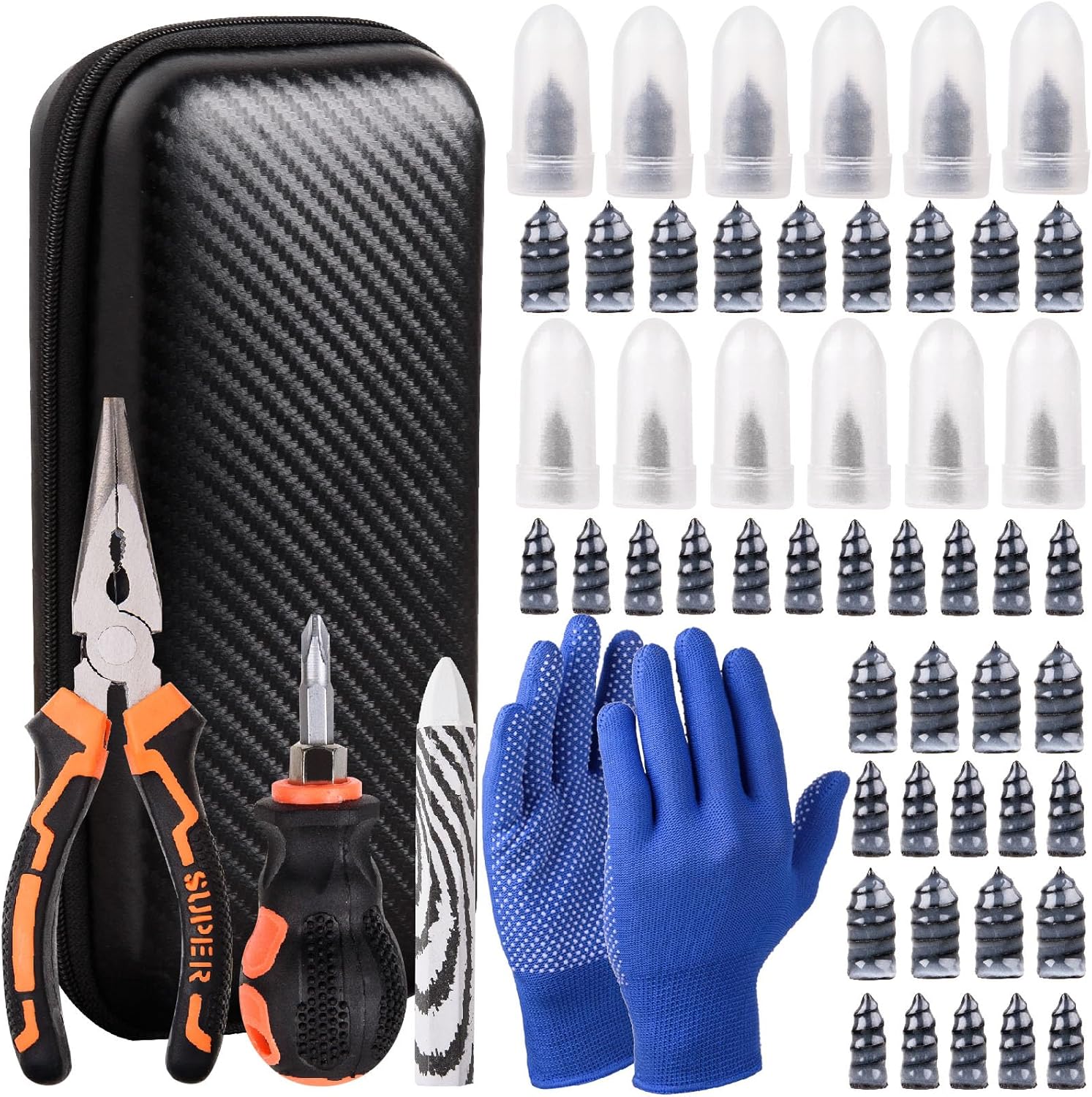
This tire sidewall puncture repair kit fixes flats fast without removing the tire, helping you get back on the road in minutes. It includes self-tapping repair nails, essential tools, gloves, and a portable storage bag for convenient roadside use. Designed for tubeless tires, it helps create a tight, leak-resistant seal for cars, motorcycles, trucks, SUVs, and ATVs.
How To Prevent Tire Blowouts
Preventing a tire blowout starts with routine maintenance. NHTSA says poor tire maintenance, including low pressure and missed rotation, can lead to a flat tire, blowout, or tread separation.
| Risk Factor | Prevention Step |
| Low tire pressure | Check pressure monthly when tires are cold and inflate to the door placard PSI. |
| Worn tread | Replace tires at 2/32 inch tread depth or earlier if traction is poor or wear is uneven. |
| Visible damage | Replace tires with bulges, exposed cords, deep cuts, sidewall cracks, or repeated air loss. |
| Overloading | Stay within the vehicle’s load limit and use tires with the correct size and load rating. |
| Irregular wear or vibration | Have the tire, wheel balance, alignment, and suspension checked by a qualified technician. |
| Recall or old tire history | Check NHTSA recalls and replace tires with unsafe age, damage, or recall status. |
Rotate tires according to your owner’s manual. NHTSA notes that if the vehicle manufacturer recommends rotation, many vehicles use a 5,000 to 8,000 mile interval, or sooner if uneven wear appears.
How To Check Tire Pressure Correctly
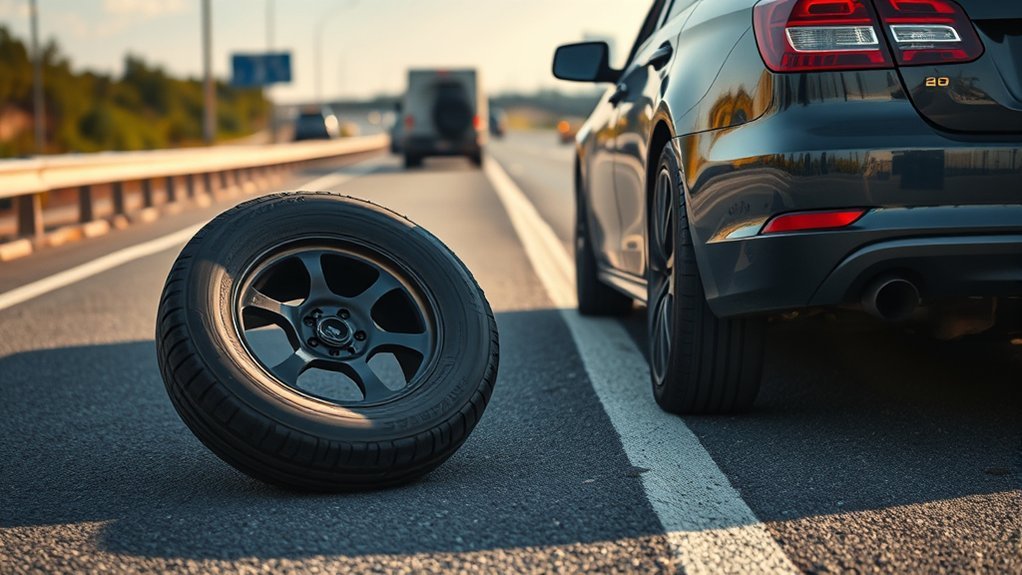
Check tire pressure when the tires are cold, ideally before you drive or after the vehicle has been parked for at least three hours. Heat from driving raises pressure and can make the reading misleading.
- Find the recommended cold PSI on the driver’s door placard or in the owner’s manual.
- Remove the valve cap and press a reliable gauge firmly onto the valve stem.
- Read the pressure and compare it with the vehicle’s recommended PSI.
- Add air if the tire is low, then recheck with the gauge.
- Release air slowly if the tire is overinflated, then recheck.
- Repeat for all tires, including the spare if your vehicle has one.
- Replace valve caps to help keep dirt and moisture out of the valve stem.
Do not use the maximum PSI printed on the tire sidewall as your normal target. That number is not the same as the vehicle manufacturer’s recommended cold inflation pressure.
What About TPMS Warnings?
A Tire Pressure Monitoring System can warn you when a tire is significantly underinflated, but it does not replace manual pressure checks. NHTSA says underinflated tires can be hard to detect visually, so you should inspect tires monthly with an accurate gauge.
If the TPMS light turns on, check your tires as soon as possible. If the light flashes for about 60 to 90 seconds and then stays on, the system may have a malfunction and should be inspected. Until the system is repaired, it may not warn you correctly about low tire pressure.
What To Keep in Your Roadside Kit
A small roadside kit can make a blowout safer to manage. Keep these items in your vehicle, especially before long highway trips:
- Tire pressure gauge
- Properly inflated spare tire or manufacturer-approved inflator kit
- Jack and lug wrench that fit your vehicle
- Reflective triangles, warning light, or LED road flares
- Flashlight or headlamp with fresh batteries
- Work gloves and a reflective safety vest
- Phone charger or power bank
- First aid kit
- Roadside assistance information
- Owner’s manual
Check the spare during your regular pressure routine. A flat spare can turn a simple tire failure into a towing situation.
When To Call for Towing Help
Call for towing help if you cannot stop safely, the tire is shredded, the wheel is damaged, the spare is missing or flat, or the vehicle feels unstable after the blowout. You should also call for help if you are on a busy highway and cannot work far from traffic.
When you call, give dispatch your exact location, direction of travel, vehicle make and model, tire position, and whether you are in a lane, shoulder, ramp, or parking area. If anyone is injured or the vehicle is creating an immediate traffic hazard, call emergency services first.
Check your insurance, roadside assistance membership, credit card benefits, or vehicle warranty for towing coverage. Coverage details vary, but knowing your options before a blowout can save time.
Frequently Asked Questions
What should you do if your tire blows out on a highway?
Hold the steering wheel with both hands, keep the vehicle pointed straight, avoid hard braking, and do not abruptly lift off the accelerator. Once the vehicle stabilizes, ease off gradually, turn on hazard lights, slow gently, and pull onto a safe shoulder when traffic allows.
Should you brake immediately if a tire blows out?
No. Do not slam the brakes. Hard braking can unsettle the vehicle and make it harder to steer. Stabilize the vehicle first, gradually release the accelerator, and brake gently once the vehicle is tracking straight.
Is it safe to accelerate during a tire blowout?
Do not speed up aggressively. The safer goal is steady control, not acceleration. Avoid abrupt throttle changes, keep the vehicle pointed straight, and ease off gradually after the vehicle feels stable.
Which is worse, a front tire blowout or a rear tire blowout?
Both can be dangerous. A front blowout is usually felt more through the steering wheel, while a rear blowout is often felt through the seat or body of the vehicle. The response is the same: hold steady, steer smoothly, avoid hard braking, and slow after stabilizing.
What happens if your tire falls off on the highway?
If a wheel or tire separates from the vehicle, steering, braking, and stability can become severely compromised. Keep the wheel as straight as possible, avoid sudden braking, slow gradually, and move to safety if you can. Call emergency services or towing because the vehicle may have wheel, brake, suspension, or hub damage.
Can you keep driving after a tire blowout?
You should not keep driving on a blown tire except to move a very short distance to a safer stopping spot. Driving on a destroyed tire can damage the wheel, brakes, suspension, and bodywork, and it can make the vehicle harder to control.
Can a blown tire be repaired?
Usually not if the sidewall shredded, the tread separated, the tire was driven flat, or internal damage is present. A technician must remove the tire from the wheel and inspect it. Safe repairs are generally limited to certain tread-area punctures.
Is it safe to change a tire on the highway shoulder?
Only change a tire if the vehicle is on flat, stable ground and far from moving traffic. If the shoulder is narrow, the damaged tire faces traffic, visibility is poor, or you feel unsafe, call roadside assistance or emergency services instead.
Conclusion
When a tire blows out at highway speed, calm actions protect you. Hold the wheel with both hands, steer straight, avoid hard braking, avoid abrupt throttle changes, ease off gradually after the vehicle stabilizes, and move to the shoulder only when you have enough space.
Prevention matters just as much. Check tire pressure monthly when tires are cold, inspect tread and sidewalls, stay within load limits, rotate tires on schedule, and replace damaged or worn tires before they fail. A few minutes of tire care can reduce the chance that an ordinary highway drive turns into an emergency.
Sources
- NHTSA TireWise — supports blowout response steps, tire pressure checks, tread depth, TPMS guidance, tire aging, tire rotation, tire temperature risk, and tire-related crash data.
- NHTSA Recalls — supports checking vehicles, tires, and equipment for safety recalls.
- NHTSA Report a Safety Problem — supports reporting suspected tire or vehicle safety defects.
- U.S. Tire Manufacturers Association Tire Repair Basics — supports tire repair limits, tread-area repair guidance, and internal inspection requirements.
- Canada.ca Emergency Car Kit — supports roadside kit items such as first aid supplies, flashlight, jumper cables, and warning lights or flares.

Related Articles
How to Break a Car Window in an Emergency Safely
After an emergency, a few simple moves can break a car window safely—but one crucial choice could change everything.
Read More
How to Buy Car Insurance: Coverage Guide for Beginners
Choose the right car insurance coverage and compare smarter to avoid costly gaps—discover the key details beginners often miss.
Read More
How to Get Cheap Car Insurance: 10 Ways to Cut Costs
Maximize savings on cheap car insurance with 10 smart cost-cutting moves, and discover the one strategy most drivers overlook.
Read More