
What Does 101H Mean on a Tire? Load, Speed & Rating Guide
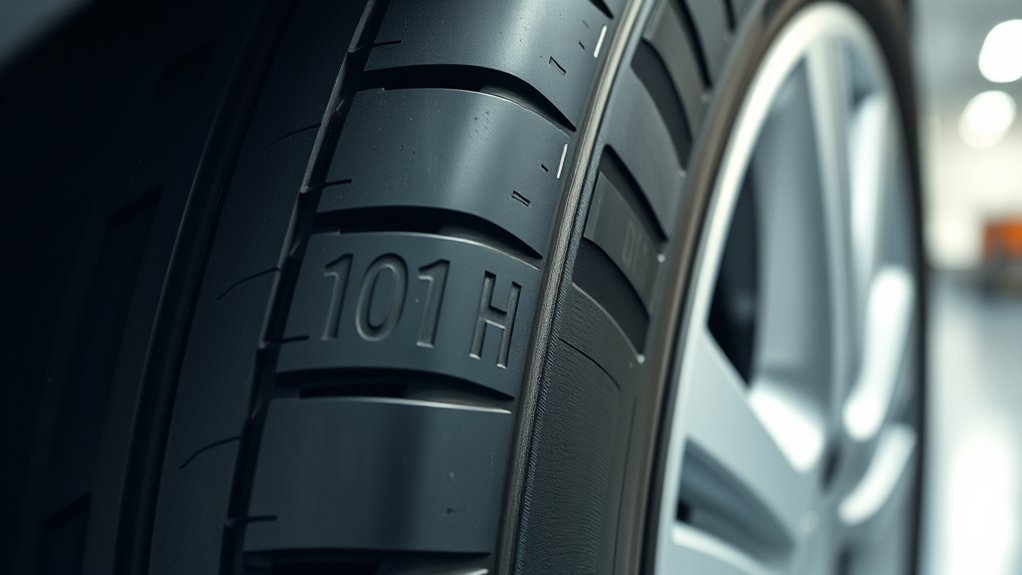
A tire marked 101H uses a short service description to show two important limits. The number 101 is the tire’s load index, and the letter H is the speed rating. Together, they help you confirm whether the tire matches your vehicle’s required size, load capacity, and speed capability before you buy or install it.
Quick Answer
101H means the tire has a 101 load index and an H speed rating. A 101 load index carries up to 1,819 pounds per tire when properly inflated. An H speed rating means the tire is rated up to 130 mph under controlled test conditions.
Key Takeaways
- 101H combines a load index and a speed rating.
- 101 equals 1,819 pounds of maximum load per tire when properly inflated.
- H equals a maximum speed rating of 130 mph or 210 km/h under test conditions.
- Replacement tires should meet or exceed your vehicle manufacturer’s required load and speed ratings.
- A higher tire rating does not increase your vehicle’s payload, axle rating, or legal load limit.
What Does 101H Mean on a Tire?
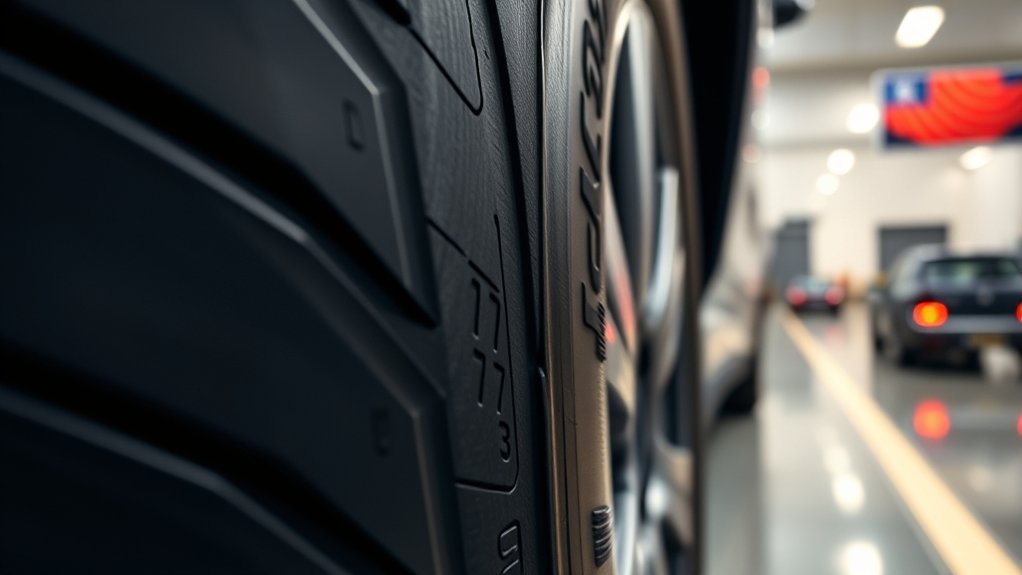
A tire marked 101H tells you the tire’s load and speed limits. The 101 is the load index, which means one tire can carry up to 1,819 pounds or 825 kg when it is the correct size and inflated correctly. The H is the speed rating, which means the tire is rated up to 130 mph or 210 km/h under controlled conditions.
You will usually see 101H at the end of a tire size, such as 225/50R17 101H. In that example, the size comes first, then the load index and speed symbol come last. Those final characters are not optional details. They help confirm whether the tire can safely support the vehicle and match the performance level the manufacturer specified.
Note: A speed rating is not permission to drive at that speed. It reflects a controlled laboratory test. Road damage, heat, underinflation, overloading, worn tread, and weather can all reduce the tire’s real-world safety margin.
[Products Worth Considering]

The SAFELIFE dial tire tread depth gauge measures tread depth in 1/32 inch increments with clear, easy-to-read 2-inch dial face. Color zones using a traffic light system help you quickly judge whether tread is low, marginal, or ample for safer driving. Built with a durable zinc cast body and a metal detect probe for precise, comfortable use across cars, motorcycles, trucks, and buses.

Measure tire tread depth quickly and accurately with this LUMITECO dial gauge that reads in 1/32" increments up to 14/32". The color-coded green/yellow/red zones make it easy to judge tire wear and know when replacement is needed. A rugged, compact design with a protective pouch helps keep the gauge ready for use on cars, trucks, motorcycles, and more.

Accurately measure tire tread depth with a calibrated gauge marked from 0 to 1 inch in 1/32 inch increments. The color-coded bar helps you quickly identify tread condition ranges, supporting safe driving for trucks, motorcycles, automobiles, and passenger vehicles.
What Does the 101 Load Index Mean?
The 101 load index means the tire can carry up to 1,819 pounds when properly inflated and used within its approved fitment. The load index is a standardized number that corresponds to a maximum load for one tire. It does not describe speed, tread life, traction, or ride comfort.
For a four-tire vehicle, four tires with a 101 load index have a combined theoretical tire capacity of 7,276 pounds. That does not mean your vehicle can safely carry that much weight. Your actual carrying limit still comes from the vehicle’s gross vehicle weight rating, gross axle weight ratings, payload rating, and tire placard.
Common Load Index Examples
| Load Index | Maximum Load Per Tire |
| 100 | 1,764 lb / 800 kg |
| 101 | 1,819 lb / 825 kg |
| 102 | 1,874 lb / 850 kg |
| 103 | 1,929 lb / 875 kg |
You should choose a replacement tire that meets or exceeds the load index listed by your vehicle manufacturer. A lower load index can leave the tire unable to support the vehicle’s intended weight, especially with passengers, cargo, towing tongue weight, or heavy accessories.
What Does the H Speed Rating Mean?
An H speed rating means the tire is rated for speeds up to 130 mph or 210 km/h when properly inflated, correctly loaded, and tested under specified conditions. The speed symbol appears next to the load index in the tire’s service description.
H-rated tires are common on many sedans, coupes, crossovers, and touring tires that need a balance of everyday comfort and highway performance. They sit above S and T ratings but below V, W, and Y ratings.
H Rating Speed Limit
The H rating marks a controlled-test speed capability, not a safe everyday driving target. Even if a tire is rated to 130 mph, you still need to follow posted speed limits and account for heat, road condition, tread depth, pressure, alignment, and vehicle load.
H vs V Tires
The main difference between H and V tires is speed capability. H-rated tires are rated up to 130 mph, while V-rated tires are rated up to 149 mph. A V-rated tire may also be built with a sportier handling target, but that depends on the tire model. The letter alone does not guarantee quieter ride, better grip, longer tread life, or better wet braking.
Common Speed Ratings
| Speed Rating | Maximum Rated Speed |
| S | 112 mph / 180 km/h |
| T | 118 mph / 190 km/h |
| H | 130 mph / 210 km/h |
| V | 149 mph / 240 km/h |
| W | 168 mph / 270 km/h |
| Y | 186 mph / 300 km/h |
Where H Fits
H sits between U and V in the traditional speed-rating order. It often appears on passenger vehicles that need more performance capability than a basic touring tire but do not require a higher-performance V, W, or Y rating. The safest choice is not the highest letter you can find. The safest choice is the rating your vehicle manufacturer specifies, in the correct tire size and load range.
Can You Use a Higher or Lower Rating?
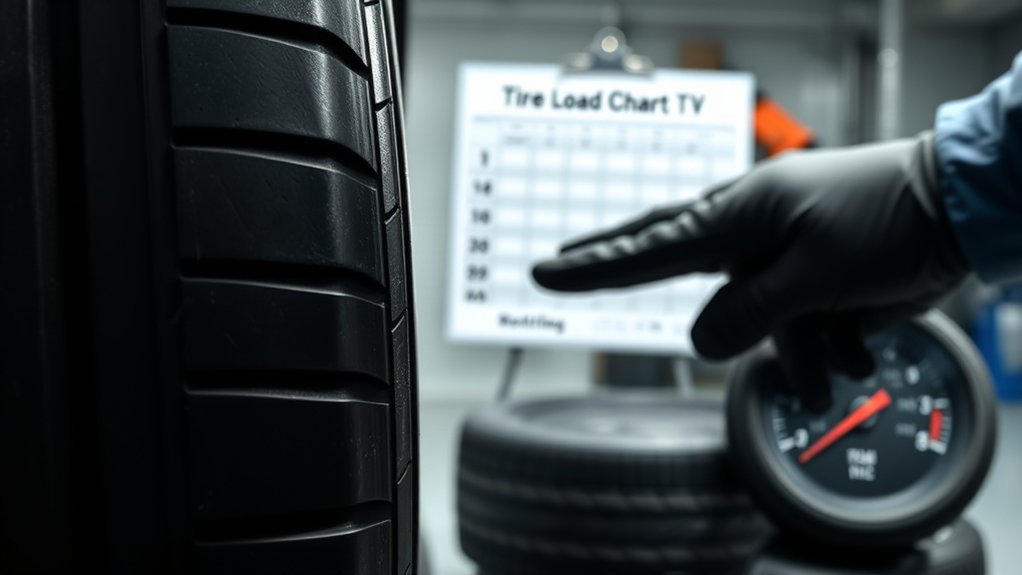
You can usually replace a tire with one that has a higher load index or a higher speed rating, as long as the tire size, load range, wheel fitment, pressure requirements, and vehicle manufacturer guidance still match. A higher load index does not raise your vehicle’s payload or axle rating. It only means the tire itself has a higher rated capacity.
Warning: Do not install tires with a lower load index than your vehicle requires. Under-rated or overloaded tires can overheat, wear abnormally, and fail. If you are considering a lower speed rating for winter-capable tires, confirm the setup is allowed and never drive faster than the tire’s rating.
- Higher load rating: Often acceptable if the tire fits correctly, but it does not increase vehicle payload.
- Lower load rating: Avoid it unless the vehicle manufacturer specifically allows it.
- Higher speed rating: Usually acceptable, but it may change ride feel, cost, or treadwear depending on the tire model.
- Lower speed rating: Not recommended for regular replacement tires unless an approved winter or all-weather tire exception applies.
How Do Tire Sidewall Markings Work?
You can read a tire sidewall as a code. A typical marking such as 225/50R17 101H breaks down into tire width, aspect ratio, construction, wheel diameter, load index, and speed symbol. The U.S. Tire Manufacturers Association tire care guide explains that tire sidewalls include useful information such as size, service description, maximum load, maximum inflation, and safety warnings.
[Products Worth Considering]

Monitor tire tread wear with a smart, color-coded depth gauge that shows clear condition ranges at a glance. The bar is range marked for fast, easy readings, helping you maintain safer traction and performance. Each gauge is portable with a pocket clip, and the set includes 20 units for daily use and sharing.

Black Magic Tire Wet delivers a deep wet-look shine that makes tires appear dark, rich, and freshly detailed. Its long-lasting formula helps resist rain, dust, and road grime for weeks of glossy protection, not days. Apply by spraying onto clean, dry tires—no buffing or wiping required—with a low-sling design to reduce splatter on paint and wheels.

Upgrade your wheels with MIKKUPPA closed-end lug nuts designed for reliable fit and corrosion resistance. The one-piece, cold-forged and heat-treated steel construction helps resist rust and stripping, while the integrated finish delivers a durable black appearance. Built to OEM standards with a conical 60-degree seat, these nuts provide a secure solution for compatible Ford, Honda, Jeep, and Chevrolet models.
Sidewall Code Breakdown
Here is how a tire size like 225/50R17 101H works:
- 225 means the tire’s section width is 225 millimeters.
- 50 means the sidewall height is 50% of the tire’s width.
- R means radial construction.
- 17 means the tire fits a 17-inch wheel.
- 101 is the load index, equal to 1,819 pounds per tire.
- H is the speed rating, equal to 130 mph under controlled conditions.
Reading Size, Load, Speed
Start with the full tire size, not just the 101H service description. Two tires can share the same load index and speed rating but use different widths, aspect ratios, wheel diameters, or construction types. A correct 101H tire still needs to match the vehicle’s approved size and inflation pressure.
The load index should also not be used alone to judge replacement acceptability. You need the complete tire size, load index, speed rating, pressure requirement, and vehicle placard information before choosing a replacement tire.
How to Find Your Tire’s Correct Rating
To find the correct tire rating, start with the vehicle tire placard, usually on the driver’s door jamb or door pillar. NHTSA explains that the placard includes critical tire safety information such as vehicle capacity weight, recommended inflation pressure, and tire size designation. You can also check the owner’s manual and the sidewall of the original equipment tires.
Use the placard and owner’s manual as your starting point. The tire sidewall confirms what is installed, but the vehicle maker’s specification tells you what the vehicle requires.
- Find the original tire size on the driver’s door placard or in the owner’s manual.
- Check the required load index and speed rating.
- Match the wheel diameter and tire size exactly unless an approved alternate size is listed.
- Choose a replacement tire that meets or exceeds the required load index.
- Choose a speed rating that meets or exceeds the original rating, unless an approved winter-tire exception applies.
- Inflate the tires to the vehicle placard pressure, not just the maximum pressure printed on the tire.
- Ask a tire professional before changing size, load range, or speed rating.
Pro Tip: If your original tire was 101H, replacing it with another 101H tire in the same approved size is usually the simplest match. If you move to 102H, 101V, or another rating, confirm the size, pressure, and vehicle requirements before buying.
Frequently Asked Questions
What is the difference between 101V and 101H tires?
Both have the same 101 load index, so both carry up to 1,819 pounds per tire when properly inflated. The difference is the speed rating. H is rated up to 130 mph, while V is rated up to 149 mph. Choose the rating your vehicle requires.
What tire rating is better, H or V?
V is the higher speed rating, but that does not automatically make it the better tire for every vehicle. H may be the better match if your vehicle calls for H-rated tires and you want the ride, treadwear, and handling balance the tire maker designed for that model.
What does 101 mean on a tire?
The number 101 is the tire’s load index. It means the tire can carry up to 1,819 pounds when properly inflated and used within its approved fitment. It does not describe speed, treadwear, traction, or tire size.
Which is better, S or H speed rating?
H is the higher speed rating. S is rated up to 112 mph, while H is rated up to 130 mph. The better choice is the one that meets your vehicle manufacturer’s requirement. Do not downgrade from H to S unless the vehicle maker or a qualified tire professional confirms it is acceptable.
Can I use 101H instead of 101V?
Use 101H instead of 101V only if your vehicle allows an H speed rating. The load capacity is the same, but the speed rating is lower. If your placard or owner’s manual requires V-rated tires, stay with V or a higher approved rating.
Does a higher load index let my vehicle carry more weight?
No. A higher load index only means the tire has a higher rated carrying capacity. Your vehicle’s payload, axle ratings, and maximum loaded weight still come from the vehicle manufacturer. Never use tire capacity to exceed the vehicle’s rated limits.
Conclusion
101H means a tire has a 101 load index and an H speed rating. The 101 load index supports up to 1,819 pounds per tire when properly inflated, while the H speed rating equals 130 mph or 210 km/h under controlled test conditions.
Before replacing tires, check the vehicle placard, owner’s manual, and tire sidewall together. Match the correct size first, then confirm the load index and speed rating. A tire that meets or exceeds the manufacturer’s rating helps protect handling, load capacity, heat control, and overall tire safety.
Sources
- NHTSA TireWise — tire safety, labeling, maintenance, recalls, and consumer tire guidance.
- NHTSA FMVSS No. 110 interpretation — vehicle tire placard information, tire size designation, capacity weight, and inflation-pressure context.
- Michelin load and speed rating guide — load index chart showing 101 = 825 kg / 1,819 lb and speed chart showing H = 210 km/h / 130 mph.
- Michelin USA tire load and speed rating guide — replacement guidance for matching or exceeding vehicle manufacturer specifications.
- Bridgestone tire speed rating guide — common speed ratings including H and V.
- U.S. Tire Manufacturers Association Tire Care and Safety Guide — tire sidewall markings, service description, and replacement-rating cautions.
[Products Worth Considering]

This tire inflator with pressure gauge delivers long-lasting performance with a durable rubber-protected gauge and sturdy build. The longer hose and 360 swivel air chuck help you seal the valve securely and keep your hands free while measuring, inflating, or deflating. It’s battery-free for reliable use and provides ±2 PSI accuracy in the mid-range for most typical tires, with universal compatibility for 1/4 NPT compressor outputs.

Measure tyre tread depth precisely with a digital gauge that reads in both MM and inches, helping you monitor safe driving conditions. The large LCD screen is easy to operate, and the compact tool fits for cars, trucks, and motorcycles. It provides high accuracy with a 0-25.4mm range and includes a 1-year warranty for added peace of mind.

Milton S-921 pencil tire pressure gauge helps you maintain optimal tire pressure for passenger cars with accurate readings in PSI and kPa. It features a built-in deflator valve for convenient pressure adjustments, plus a single chuck head and nylon indicator bar for easy use on the go. Built from durable plated brass and designed for reliable performance, it’s a practical road trip and cold-weather maintenance tool.

Related Articles
How to Inspect a Tire: 8-Point Safety Check
Just when you think your tires are fine, this 8-point safety check reveals hidden problems you’ll want to catch before they turn dangerous.
Read More
How to Prove Someone Slashed Your Tires: Evidence Guide
Mysterious tire damage can reveal more than you think—discover the evidence that could prove sabotage and keep reading for the key clues.
Read More
How to Drive on a Donut Tire: Speed and Distance Limits
Carefully learn how far and fast you can safely drive on a donut tire before risking a blowout or losing control.
Read More