
Toyota Hilux Tire Keeps Going Flat: Common Causes
If your Toyota Hilux tire keeps going flat, the problem is usually a slow leak rather than a random one-time failure. Start with the basics: check the cold tire pressure, inspect the tread for nails or screws, look at the valve stem, then test the bead and rim area with soapy water. If the same tire keeps losing air after you refill it, have a tire shop inspect it off the wheel.
Quick Answer
A Toyota Hilux tire that keeps going flat is most often caused by a puncture, leaking valve stem, loose or damaged valve core, bead leak, rim corrosion, cracked wheel, or pressure loss from temperature changes. Check pressure when the tire is cold, test for bubbles with soapy water, and get persistent leaks inspected professionally.
Key Takeaways
- Use the Hilux tire placard or owner’s manual for the correct cold pressure, not the maximum PSI printed on the tire sidewall.
- A slow leak often comes from the tread, valve stem, bead seat, rim, or wheel rather than from an obvious large puncture.
- Pressure can drop about 1 PSI for every 10°F temperature drop, but one tire losing air faster than the others usually has a leak.
- Do not keep driving on a flat, bulging, cracked, or sidewall-damaged tire. Use the spare or roadside assistance instead.
- A safe puncture repair usually requires removing the tire from the wheel and using a proper plug-patch repair in the tread area only.
At a Glance
| Time Required | 10–20 minutes for a basic driveway check; longer if you need to remove the wheel or visit a tire shop. |
| Difficulty | Easy for pressure and visible leak checks; professional help is best for bead, rim, and internal tire inspections. |
| Tools Needed | Tire pressure gauge, spray bottle, dish soap and water, flashlight, tire inflator, gloves, and the Hilux tire placard or owner’s manual. |
| Cost | Usually free for inspection at home; tire-shop leak diagnosis, valve replacement, repair, or wheel work varies by shop and damage type. |
Understanding Common Causes of Flat Tires
A flat tire on a Toyota Hilux usually starts with one of five areas: the tread, the valve, the bead, the rim, or the wheel itself. A nail or screw in the tread may leak slowly for days. A cracked valve stem can leak only when the stem bends. A dirty bead seat can let air escape where the tire seals against the wheel.
Temperature changes can also make tire pressure drop. Continental Tire explains that tire pressure can rise or fall by about 1 PSI for every 10°F change in ambient temperature. That type of loss should affect all tires in a similar way. If only one tire drops faster than the others, treat it as a leak until you prove otherwise.
One low tire is usually a leak. Four slightly low tires after a cold night may simply need a cold-pressure adjustment.
[Products Worth Considering]

This tire repair kit provides fast emergency puncture repair without removing the tire from the rim, helping you get back on the road quickly. Its screw plug system is designed for punctures in both tread and sidewall and includes a complete patch plug tool set with essential accessories. A portable storage bag makes it easy to carry for cars, trucks, SUVs, motorcycles, and heavy-duty applications.

EVOULTES heavy duty tire inflator with an integrated gauge delivers accurate pressure readings from 10–120 PSI, helping you inflate, deflate, and check tires in one tool. The 16.5-inch extended dual-head air chuck with swivel base reaches hard-to-access dual wheel valves on trucks and RVs. A brass trigger core and side-mounted air release valve make operation smooth, with standard 1/4" NPT threading and quick-connect compatibility for easy setup.

This compact capsule-style tire repair kit helps you quickly fix punctures and plug flats with minimal effort. The rugged stainless steel shell protects the contents for reliable roadside use, while the simple plug assembly makes repairs fast and tool-free. Suitable for motorcycles, cars, ATVs, UTVs, and even mountain bikes.
Check the Tire Pressure First
Before you look for a puncture, check the tire pressure when the tire is cold. Toyota says the correct pressure is listed on the driver’s door-jamb sticker, in the owner’s manual, or in online manuals for the specific vehicle. Do not use the maximum pressure printed on the tire sidewall as your target.
For current Hilux examples, Toyota UK lists 225/70 R17 tires at 2.4 bar or 35 PSI and 265/65 R17 or 265/60 R18 tires at 2.0 bar or 29 PSI. Use those numbers only as examples. Your Hilux may need a different pressure depending on model year, market, tire size, load, accessories, and towing use.
- Park safely and let the tire cool: Cold pressure is most accurate before driving or after the vehicle has sat for several hours.
- Check all four tires and the spare: One low tire points toward a leak. All tires being low may point to seasonal temperature change or neglected maintenance.
- Compare readings with the placard: Inflate to the Hilux placard pressure unless your tire maker or Toyota service information gives different guidance for your setup.
- Recheck after 24 hours: If the same tire drops again, continue with leak testing.
Note: If your Hilux has a tire pressure warning system, do not rely on the warning light alone. Toyota explains that the light warns when pressure drops below a programmed tolerance, but a manual pressure check is still the best first step.
Quick Diagnosis Table for a Hilux Tire Losing Air
| Symptom | Likely Cause | What to Check Next |
| One tire loses air overnight | Slow puncture, valve leak, bead leak, or cracked rim | Use soapy water on tread, valve, bead, and rim edge. |
| All tires are low after cold weather | Temperature-related pressure drop | Set all tires to the placard pressure while cold. |
| Bubbles around the valve stem | Valve core, valve stem, or TPMS valve issue | Replace or tighten the faulty valve part through a tire shop. |
| Bubbles where tire meets rim | Bead leak, corrosion, dirt, or bent wheel lip | Have the tire demounted and the bead seat cleaned or repaired. |
| Visible bulge, sidewall cut, or exposed cords | Structural tire damage | Do not drive on it. Replace the tire or use the spare. |
How to Maintain Proper Tire Pressure to Prevent Flats
Proper tire pressure helps your Hilux handle, brake, carry weight, and wear evenly. Toyota notes that underinflated tires can reduce stability, handling, braking performance, fuel economy, and tire life. Low pressure can also increase heat buildup and tire failure risk.
- Check pressure monthly: NHTSA recommends checking tire pressure at least once a month when tires are cold, including the spare.
- Check before towing or heavy loads: A Hilux used for work, off-road gear, trailers, or canopy setups may need closer pressure checks.
- Use a reliable gauge: A small digital or dial gauge is often easier to trust than a worn service-station gauge.
- Do not bleed hot tires: Pressure rises as tires heat up while driving. Let the tire cool and then set the cold pressure.
- Reinstall valve caps: Valve caps help keep moisture and dirt away from the valve core.
Pro Tip: Write down all four pressure readings. If the right-rear tire drops 5 PSI while the other three stay nearly the same, you have a strong clue about where to focus your leak check.
How to Spot Valve Stem Problems
A valve stem can leak even when the tire tread looks perfect. The leak may come from the valve core, the rubber stem, the metal TPMS valve, or the seal where the valve meets the wheel. Dirt, corrosion, age, impact damage, and missing valve caps can all make valve problems worse.
Signs of Air Loss
When you hear a hissing sound while inflating the tire or notice steady pressure loss with no visible nail, check the valve area closely. Common signs include:
- Consistent pressure drops: The same tire loses air even after proper inflation.
- Bubbles in soapy water: Spray the valve area. Bubbles around the core or stem show escaping air.
- Cracked rubber or corrosion: Weathered rubber stems and corroded metal valve stems can leak under pressure.
- Missing valve cap: A missing cap does not always cause a leak by itself, but it lets dirt and moisture reach the valve core.
Visual Inspection Techniques
Start by removing the valve cap and checking for dirt, damage, or looseness. Then spray the valve stem, valve core opening, and base of the stem with soapy water. If bubbles form, the valve needs attention. Do not ignore a valve leak just because it seems small. A slow leak can turn into a flat when the tire flexes under load or heat.
Routine Maintenance Checks
Each time you check pressure, take a few extra seconds to inspect the valve stems. Replace damaged caps, clean away mud or grit, and ask a tire shop to replace worn stems when tires are changed. If your Hilux has TPMS or TPWS valves, use a shop familiar with sensor-equipped valve assemblies.
Detecting Tire Bead Leaks Easily
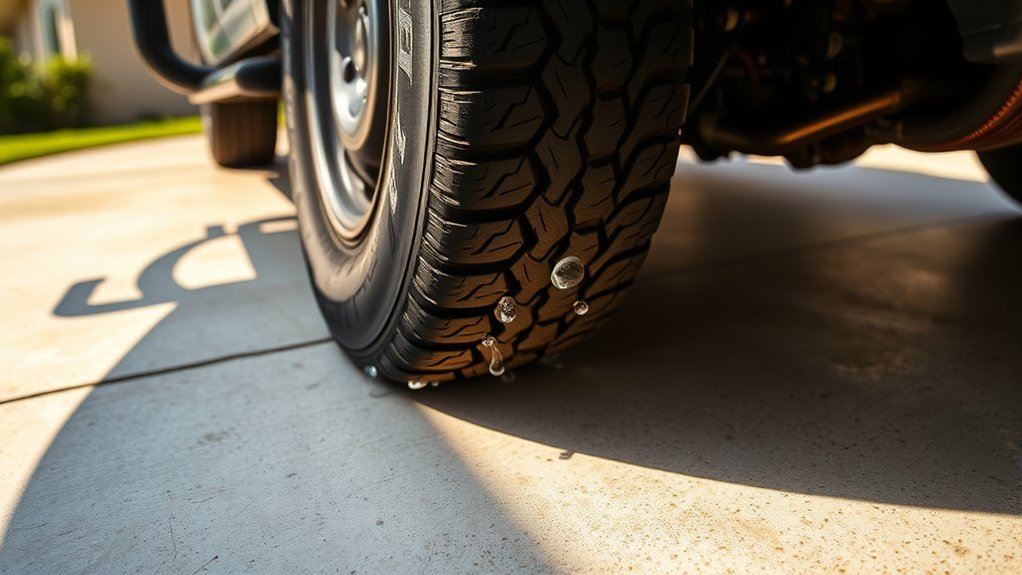
A tire bead leak happens where the tire seals against the wheel rim. This can happen after off-road impacts, pothole hits, corrosion, dirt buildup, old tire mounting residue, or a slightly bent wheel lip. Hilux owners who drive gravel roads, worksites, farms, or trails should pay close attention to this area.
To test for a bead leak, mix dish soap and water in a spray bottle. Spray around the full rim edge on both sides of the tire if you can reach them safely. Bubbles forming along the bead show air escaping. A shop may need to demount the tire, clean the rim, inspect the bead, replace the valve, and reseat the tire.
Warning: Do not drive on a tire that is flat, severely underinflated, bulging, cracked, or cut in the sidewall. Driving on it can destroy the tire internally and may make a repair unsafe or impossible.
Flat Tire Risks From Common Road Hazards
Road hazards can damage any tire, even when the pressure is correct. Nails, screws, glass, metal scraps, potholes, curb impacts, sharp rocks, and construction debris are common causes of slow leaks and sudden flats. A Hilux used on worksites or unsealed roads may face more tread and sidewall hazards than a vehicle driven only on paved streets.
- Scan the road surface: Give yourself time to avoid obvious debris, potholes, and sharp rock edges.
- Slow down on rough surfaces: Speed makes pothole and rock impacts more severe.
- Inspect after off-road driving: Check the tread, sidewalls, and bead area after trails, corrugations, mud, or gravel.
- Watch for sidewall cuts: A sidewall injury is usually not a safe simple repair.
If you find a nail or screw in the tread, do not pull it out unless you are prepared for the tire to lose air quickly. Mark the spot, inflate the tire if it is safe to do so, and go to a tire shop for a proper repair.
[Products Worth Considering]

Wykodra tire plugs provide quick vulcanizing repairs for tubeless tires, helping you seal punctures and get back on the road. The industrial-strength rubber creates a long-lasting, leak-resistant bond and is designed for emergency fixes without removing the tire. Choose between two standard plug sizes with color-matched options for small to larger damage across many vehicles and off-road uses.
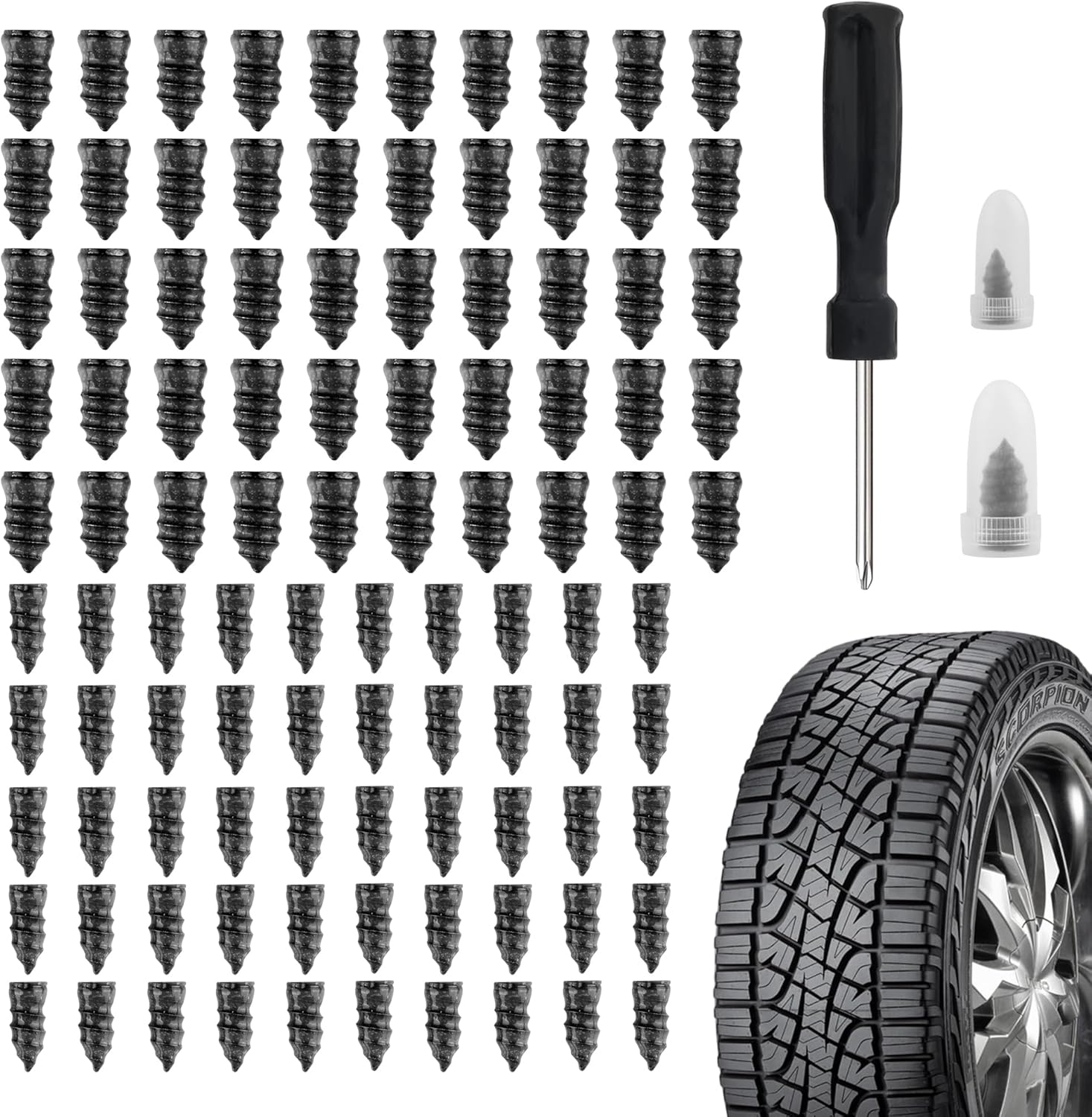
Salior’s tire plug kit provides a fast, reliable self-service fix for punctured or leaking tires without the need for flaring tools. Choose the correct plug size, then screw the nail into the puncture using the included screwdriver for an enhanced seal. The set is durable and convenient for on-the-go maintenance across multiple vehicle types.
What Repairs Are Safe?
Not every flat tire should be repaired. The U.S. Tire Manufacturers Association says puncture repair should be considered only when the damage is in the tread area and the puncture is no larger than 1/4 inch or 6 mm. It also says the tire should be removed from the wheel so the inside can be inspected, and a plug alone or a patch alone is not an acceptable repair.
A safe repair is usually a plug-patch repair from inside the tire after inspection. Damage in the shoulder, sidewall, bead, or inner liner may mean the tire must be replaced. If the tire was driven flat, the shop should inspect for internal heat and sidewall damage before repairing it.
Why Regular Tire Maintenance Matters
Regular tire maintenance helps you catch small problems before they become flats. It also helps your Hilux steer, brake, and carry loads safely. Make pressure checks, tread checks, valve inspections, and rotation part of your normal service routine.
Regular Pressure Checks
NHTSA recommends monthly checks for tire pressure, treadwear, and tire damage. Check when the tires are cold and include the spare. If a tire needs air every few days, do not treat that as normal maintenance. Find the leak.
- Fuel use: Underinflated tires increase rolling resistance, which can increase fuel use.
- Tire life: Low pressure can cause uneven wear and heat buildup.
- Safety: Correct pressure helps the tire keep its intended shape, load support, and road contact.
Routine Tire Rotations
Routine tire rotation helps even out wear across the front and rear axles. Toyota Australia recommends following the interval in your owner’s manual and checking for uneven wear or damage during rotation. Many owners rotate tires around 5,000 to 7,500 miles, but your Hilux use may require a different interval.
If you tow, carry heavy loads, drive off-road, or use aggressive all-terrain tires, ask your tire shop or Toyota service center for a rotation pattern that fits your tire type and wheel setup.
Visual Inspections Benefits
A quick visual inspection can reveal problems before your Hilux leaves you with a flat. Look for:
- Tread objects: Nails, screws, wire, glass, and stones lodged in grooves.
- Uneven wear: Feathering, cupping, shoulder wear, or one tire wearing faster than the others.
- Sidewall damage: Cracks, cuts, bulges, scrapes, or exposed cords.
- Rim damage: Bent wheel lips, corrosion, or fresh impact marks near the bead.
- Valve issues: Cracked stems, missing caps, corrosion, or bubbling during a soapy water test.
When to Seek Professional Help for Persistent Flats
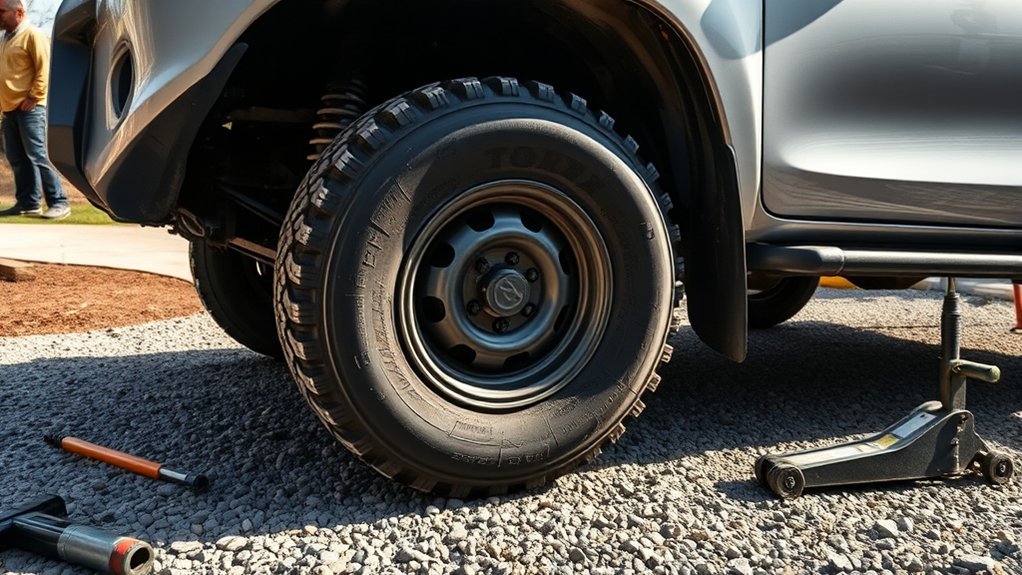
Seek professional help if the same Hilux tire keeps going flat after you refill it, if bubbles appear at the bead or rim, if the valve stem leaks, or if you see sidewall damage. A shop can remove the tire from the wheel and inspect the inner liner, bead, valve, rim, and tread from all sides.
Professional inspection matters because some problems are hidden from the outside. A tire may have internal damage from being driven underinflated. A wheel may have corrosion or a hairline crack. A bead may look normal until the tire is removed. If one shop only adds air and the tire keeps dropping pressure, ask for a full leak test and demount inspection.
Frequently Asked Questions
What can cause my Toyota Hilux tire to keep going flat?
The most common causes are a nail or screw in the tread, a leaking valve stem, a loose valve core, bead-seat leakage, rim corrosion, a cracked wheel, sidewall damage, or temperature-related pressure loss. If only one tire keeps dropping pressure, assume it has a leak until a proper test proves otherwise.
Why does my tire keep losing air if there is no visible puncture?
The leak may be at the valve stem, valve core, bead, rim, or inside edge of the tire where you cannot see it easily. Spray soapy water around the valve, tread, sidewall, bead, and rim. If you still cannot find the leak, a tire shop can inspect the tire off the wheel.
Why did my Hilux tire go flat after being parked for a few weeks?
A tire can lose some pressure naturally over time, and cold weather can lower pressure further. However, a tire that goes completely flat after parking usually has a slow leak from a puncture, valve, bead, rim, or wheel. Inflate it only if safe, then test it before driving far.
Can I drive my Hilux with a slow tire leak?
You should not ignore a slow leak. If the tire is only slightly low, inflate it to the correct cold pressure and drive carefully to a nearby tire shop. If it is flat, severely low, bulging, cracked, or sidewall-damaged, use the spare or roadside assistance instead.
Can a sidewall puncture be repaired?
A simple sidewall puncture repair is usually not considered safe. Industry repair guidance limits normal puncture repairs to the tread area, and the puncture must be within size limits. If the sidewall, shoulder, bead, or inner liner is damaged, the tire may need replacement.
Conclusion
A Toyota Hilux tire that keeps going flat needs a methodical check, not repeated top-offs. Start with the correct cold pressure, compare all tires, inspect the tread and valve, then use soapy water around the bead and rim. If the same tire keeps losing air, get it inspected by a qualified tire technician before the leak damages the tire or leaves you stranded.
Sources
- Toyota: How To Check Tire Pressure — supports checking the tire placard, owner’s manual, cold pressure, and underinflation risks.
- Toyota UK: Toyota Tyre Pressure and Size Guide — supports current Hilux tyre-size pressure examples and where to find Toyota pressure information.
- NHTSA TireWise — supports monthly pressure, tread, alignment, and tire condition checks.
- Continental Tire: Nitrogen vs. Air — supports temperature-related tire pressure change and regular pressure maintenance.
- U.S. Tire Manufacturers Association: Tire Repair Basics — supports puncture repair limits, demount inspection, and plug-patch repair guidance.
- Toyota Australia FAQs — supports following owner’s manual guidance for tire rotation and checking for uneven wear or damage.

Related Articles

best high-performance tires for toyota hilux
You rely on your Hilux for work, adventure, and everyday driving, so choosing high-performance tires matters more than you might think. The right tires…
Read More
best premium off-road tires for toyota hilux
You rely on your Hilux to handle rough trails, heavy loads and unpredictable weather, so choosing the right premium off-road tires matters. The right…
Read More
best premium winter tires for toyota hilux
Choosing the right premium winter tires for your Toyota Hilux matters because you rely on strong traction and load capacity when roads turn icy…
Read More