
How Tall Is a 275 65 R20 Tire? Exact Height, Width & Dimensions
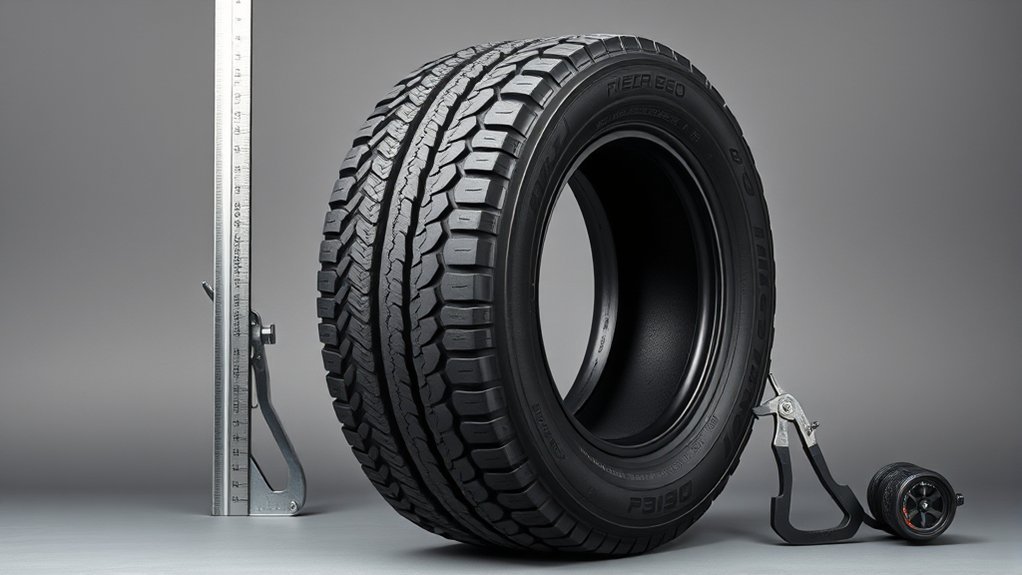
A 275/65R20 tire is about 34.1 inches tall overall, with an approximate width of 10.8 inches and a sidewall height near 7.0 inches. Its diameter is roughly 34.1 inches, circumference about 107.1 inches, and it spins around 592 revolutions per mile. Compared with a 275/60R20, it’s about 1.1 inches taller. If you’re checking fitment, speedometer error, or clearance, you’ll want the full breakdown next.
Key Takeaways
- A 275/65R20 tire is about 34.1 inches tall overall, or 866 mm in diameter.
- Its section width is 275 mm, which equals about 10.8 inches.
- The sidewall height is roughly 7.0 inches, based on the 65% aspect ratio.
- Circumference is about 107.1 inches, with around 592 revolutions per mile.
- It is about 1.1 inches taller than a 275/60R20, which can affect clearance and speedometer readings.
275/65R20 Tire Size in Inches
A 275/65R20 tire is about 34.1 inches tall overall, with a tread width of 10.8 inches and a sidewall height of roughly 7.0 inches. You can treat this tire as a metric-to-inch conversion that gives you a clear overall diameter for fitment checks, clearance planning, and stance evaluation. The 20-inch wheel keeps the profile tall enough to support load while preserving road contact. Its sidewall height adds compliance, and the 275 mm section width gives you a broad footprint without excess bulk. You also get an approximate circumference of 107.1 inches, which translates to about 592 revolutions per mile. That lets you compare gearing and speedometer effects with precision. If you want dimensional freedom without guesswork, this size delivers a balanced package of height, width, and rolling behavior. Additionally, selecting the right tire can enhance safety and comfort during year-round driving.
What Is the Height of a 275/65R20 Tire?
The height of a 275/65R20 tire is approximately 34.1 inches, or 866 mm, measured from the ground to the top of the tire when inflated. That height defines the tire size you’re working with, and it matters when you need exact fitment, clearance, or gearing data. In this tire size, the overall height comes from the sidewall geometry and the 20-inch rim diameter working together. You can use the 34.1-inch dimension to compare this tire against stock equipment, check wheel well space, or verify speedometer impact. Since the tire’s dimensions are standardized, you don’t have to guess: you can calculate compatibility with confidence and make informed choices that support your vehicle’s freedom of motion. If you’re planning an upgrade, this height gives you the core reference point for layout, stance, and performance expectations. Additionally, understanding the importance of all-season tires can help you select the best fit for varied driving conditions.
275/65R20 Tire Width and Sidewall Size
With a 275/65R20 tire, you’re working with a section width of 275 millimeters, or about 10.83 inches, and a sidewall height of 179 millimeters, or roughly 7.04 inches. That width gives you a broad contact patch, which can support stability and load control. The sidewall height is 65% of the section width, so the tire carries a relatively tall profile. You’ll notice this when you compare fitment, suspension clearance, and fender space. The tire’s diameter also reflects this structure, since the sidewall adds significant height above the 20-inch wheel. When you assess compatibility, focus on these three measurements together, not in isolation. A larger width can influence handling feel, while the sidewall height affects ride compliance and visual stance. If you want a tire setup that keeps geometry honest and performance predictable, this size gives you clear, measurable dimensions without guesswork. Additionally, understanding the tread life and performance of tires can help you choose the best option for your driving needs.
275/65R20 Diameter, Circumference, and Revolutions Per Mile
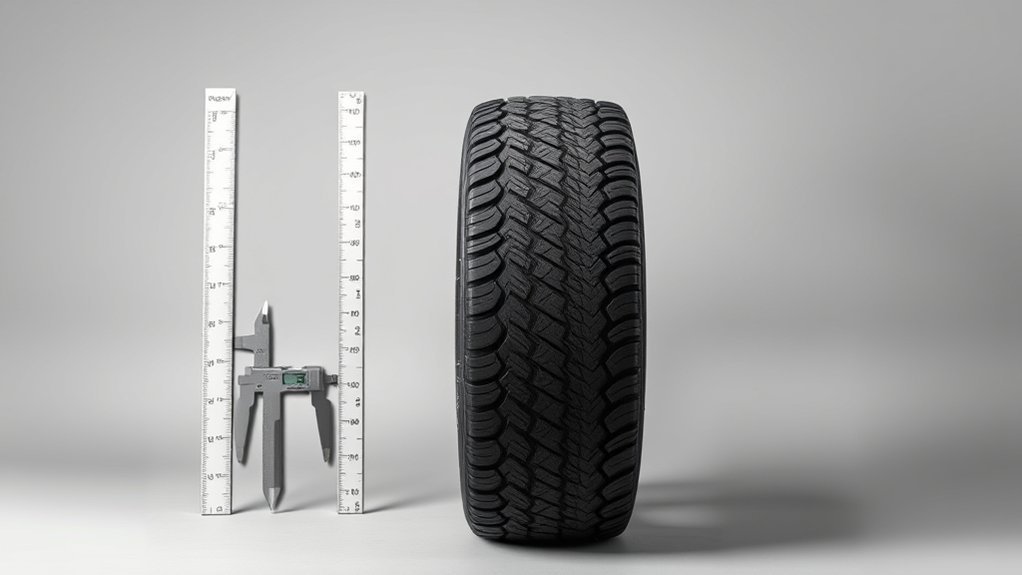
A 275/65R20 tire has an overall diameter of about 34.1 inches, which helps you estimate its installed height and fitment. Its circumference is roughly 107.1 inches, so each full rotation covers that distance. You can also expect about 592 revolutions per mile, which matters when you’re comparing speedometer accuracy and gearing. Additionally, selecting the right tires can significantly impact tread life and performance.
Overall Diameter
A 275/65R20 tire measures about 34.1 inches in overall diameter, or 866 mm, giving you a clear reference for fitment and clearance. That overall diameter comes from the tire’s width, the 65 aspect ratio, and the 20-inch wheel, so you can judge stance and suspension space fast.
- You’re looking at a 10.8-inch tread width.
- The sidewall rises about 7.0 inches.
- The diameter helps you compare tire height quickly.
- It gives you a direct fitment baseline.
Use this number to confirm whether your setup frees enough room for turning, articulation, and loaded travel. When you know the overall diameter, you make cleaner choices and keep your rig’s geometry honest.
Circumference Details
The 275/65R20 tire’s circumference is about 107.1 inches (2719.2 mm), which means it rolls roughly 592 times per mile. You can use that circumference to compare fitment, gearing, and speed calibration with precision. Its dimensions follow from a 34.1-inch overall height and a 7.0-inch sidewall height, so you know the tire’s scale before you mount it. The 10.8-inch tread width also helps you judge clearance without guesswork. When you measure circumference, you’re measuring the path the tire covers in one full turn, and that directly reflects height in motion. If you’re choosing tires for control and independence, these numbers give you the facts you need to make a clean, informed decision.
Revolutions Per Mile
At about 592 revolutions per mile, a 275/65R20 tire gives you a clear baseline for speedometer accuracy, gearing effects, and odometer calibration. You can use this figure to compare your setup against stock specs and spot any mismatch fast. The 275/65R20 diameter of about 34.1 inches and 107.1-inch circumference drive that count.
- Fewer revolutions mean taller effective gearing.
- More revolutions increase engine speed at a given road speed.
- Your odometer may under- or over-report distance if the size changes.
- You gain a precise reference for fitment and performance tuning.
When you want control, this data helps you make exact, independent choices without guesswork.
275/65R20 vs 275/60R20 Size Difference
Compared with a 275/60R20, a 275/65R20 is about 1.1 inches taller overall, measuring roughly 34.1 inches in diameter versus 33.0 inches. That size change raises your Tacoma’s ride height slightly and increases ground clearance, which can help on rough terrain. You also get about 0.5 inches more sidewall, from 6.5 to 7.0 inches, so the taller tire can absorb impacts better and feel less harsh. The 275/65R20’s circumference is about 107.1 inches, versus 103.6 inches for the 275/60R20, so your speedometer will read a bit differently unless you recalibrate. Switching down to the 275/60R20 cuts sidewall height by 8.3%, which tightens response but can reduce comfort. If you want a freer stance and fewer clearance worries, the 275/65R20 gives you more room before rubbing during turns or suspension compression. Additionally, opting for larger tires like the 275/65R20 can enhance off-road traction in various terrains, making your rides smoother and more enjoyable.
275/65R20 vs 35-Inch Tire Comparison
A 275/65R20 tire measures about 34.1 inches tall, so it’s slightly shorter than a true 35-inch tire and has less sidewall height. You’ll also see fitment differences because the 275/65R20 is about 10.8 inches wide, which can affect clearance and wheelwell space. If you switch to 35-inch tires, your speedometer and odometer can read low because the larger circumference changes the effective gearing. Additionally, it’s important to consider load rating when selecting tires for your vehicle, as this ensures they can handle your driving needs.
Size And Height Difference
The 275/65R20 tire measures about 34.1 inches tall, so it’s roughly 1 inch shorter than a typical 35-inch tire. You can confirm that with a Tire Size Finder and the diameter of the wheel. That smaller diameter changes stance, gearing, and speedometer behavior.
- 275/65R20: 34.1 inches overall
- 35-inch tire: about 35.1 inches overall
- Sidewall: 7.0 inches vs 8.8 inches
- Circumference: 107.1 inches, affecting fuel economy factory ratios
You get a shorter profile, less rotating mass, and a tighter fit to stock geometry. If you want liberation from vague fitment guesses, compare exact measurements, not labels. The real difference is simple: one size gives you a bit less height, which can help preserve response and efficiency while staying close to factory setup.
Width And Fitment
On fitment, the 275/65R20 runs narrower than a typical 35×12.50×20, so you get a 10.8-inch tread width instead of a much wider footprint. That narrower width can free up clearance in tight wheel wells and reduce rub risk. Your dimensions stay close to 35-inch class, but the stance looks cleaner and less aggressive.
| Spec | Value |
|---|---|
| Width | 10.8 in |
| Height | 34.1 in |
| Sidewall | 7.0 in |
| Fitment | Narrower than 35×12.50×20 |
You’ll feel the difference in steering response and packaging. If you want liberation from bulky fitment problems, this tire gives you a disciplined profile without losing the 35-inch visual target.
Speedometer And Mileage Impact
That 34.1-inch diameter doesn’t just affect fitment; it also changes how your speedometer and odometer read. You’ll see about 6.2% error, so your speedometer accuracy drops unless you recalibrate. Your mileage calculations also shift because the 275/65R20’s 107.1-inch circumference covers more ground per revolution than stock. Compared with a 35-inch tire, the height gap is only about 0.9 inch, but that small increase still alters gear ratios enough to change towing feel and hill performance.
- Actual speed exceeds indicated speed
- Odometer underreports distance
- Fuel economy can fall 1–2 mpg
- Regear or recalibrate to restore control
Will 275/65R20 Fit on Stock Trucks?
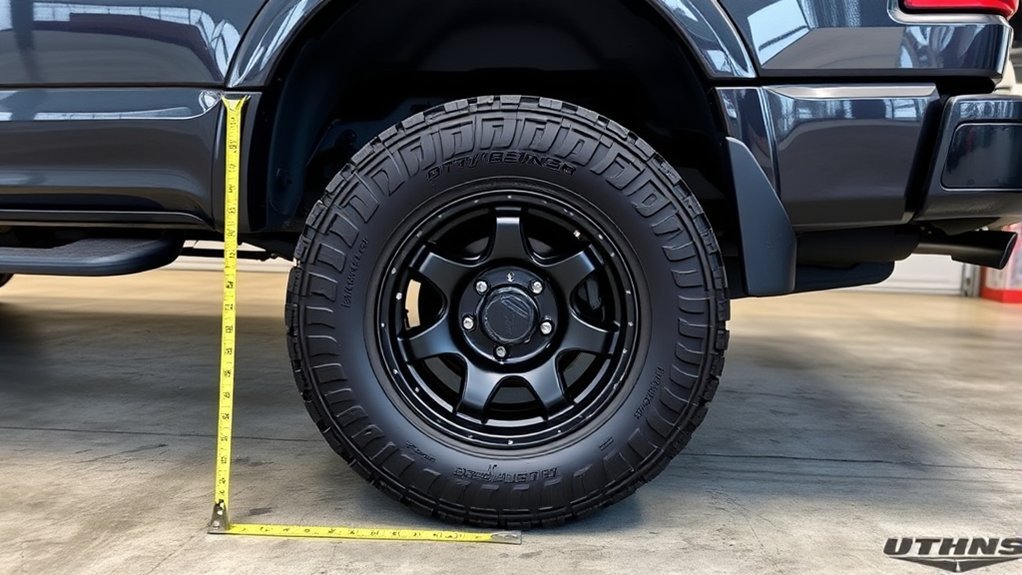
A 275/65R20 tire will fit many stock trucks, especially models already set up for 20-inch wheels, since its 34.1-inch overall height and 10.8-inch width are commonly compatible with factory wheel packages. You can expect strong vehicle compatibility on 275/65R20 stock trucks such as the Chevrolet Silverado 3500 HD and Ford F-250 Super Duty. Most stock rims for this size are about 8 inches wide, which supports proper seating and handling. Still, you should verify clearance at full steering lock and during suspension compression, because rubbing can appear in tight wheel wells. Load rating also matters: a 275/65R20 typically weighs about 55 pounds, so you need to confirm your truck can carry that mass without compromise. Additionally, many drivers seek affordable RAV4 tires that enhance performance without breaking the bank. Check factory specs before you buy, and you’ll keep your setup efficient, legal, and ready for real-world use.
Best Wheel Width for 275/65R20 Tires
For a 275/65R20 tire, the best wheel width is 7.5 to 9.5 inches, with 8 inches as the ideal match for proper fitment. You should target this range because 275/65R20 tires have a section width of about 10.8 inches, and the right wheel width keeps the carcass shaped correctly.
- Too narrow: sidewall flex rises, handling softens.
- Too wide: tread crowns, wear accelerates.
- Correct match: stability improves under load.
- Proper fitment: ride quality stays controlled and clean.
When you stay within spec, you reduce rubbing during turns and suspension compression, which helps your truck move freely without compromise. If you want balanced performance, choose a wheel width that supports the tire’s geometry instead of forcing it. That’s how you get dependable grip, safer steering response, and better ride quality from 275/65R20 tires. Additionally, maintaining proper tire inflation is crucial for optimizing performance and longevity.
How 275/65R20 Affects Speedometer Accuracy
Because a 275/65R20 tire has an overall diameter of about 34.1 inches and a circumference near 107.1 inches, it can throw off speedometer accuracy by roughly 6.2%. When you fit this size, the vehicle travels farther per revolution, so your dash may underreport true road speed. At an indicated 60 mph, you’re actually moving near 64 mph. That gap matters when you want precise control and independent road awareness. Additionally, using the wrong tire size can affect your vehicle’s tread life and performance, making it crucial to verify fitment before installation.
| Item | Value |
|---|---|
| Tire size | 275/65R20 |
| Diameter | 34.1 in |
| Circumference | 107.1 in |
| Speedometer error | ~6.2% |
These tire dimensions change the calibration your speedometer expects. If you use 275/65R20, you should verify readings with GPS or a recalibration tool. That keeps your numbers honest and supports safer, more confident driving.
How 275/65R20 Affects MPG and Power
A 275/65R20 tire usually lowers your MPG by about 1–2 mpg because its larger diameter and higher rolling resistance increase drivetrain load. You’ll also need more torque to hold speed, so acceleration and towing performance can feel weaker, especially on grades. If your gearing stays stock, the taller tire effectively raises the gear ratio, which can further reduce power at the wheels. Additionally, choosing tires with good hydroplaning resistance can enhance safety during wet conditions, mitigating some of the performance drawbacks.
MPG Impact
Although 275/65R20 tires improve ground clearance, they usually reduce fuel economy by about 1 to 2 mpg because their 34.1-inch diameter, added rotating mass, and higher rolling resistance demand more energy from the drivetrain. This mpg impact comes from the larger overall diameter, which changes your effective gearing and makes steady cruising less efficient. You’ll also see the speedometer read about 6.2% low, so your fuel calculations can look misleading.
- Larger tread footprint increases drag
- Heavier tires need more energy to spin
- Taller diameter alters shift behavior
- Fuel economy drops most in stop-and-go use
Power and Torque
Switching to 275/65R20 tires changes how your vehicle makes power, not just how it looks. The tire’s 34.1-inch diameter increases rotational mass, so you need more torque to spin it, especially from a stop or during hard acceleration. That extra demand can dull throttle response and make the engine work harder for the same move. You may feel a slight loss in power at the wheels even though the engine hasn’t changed. The taller diameter also raises rolling resistance, which can shave 1-2 mpg from real-world driving. If you want freer movement, know that the tradeoff is mechanical load: bigger tires ask more from your drivetrain, and that request shows up every time you launch, climb, or tow.
Gear Ratio Changes
Because a 275/65R20 tire has an overall diameter of about 34.1 inches, it effectively raises your gear ratio and changes how the vehicle loads the drivetrain. You’ll feel less snap off the line, but cruise rpm drops slightly. That shift can hurt performance metrics if you expect stock behavior.
- Fuel economy usually falls 1-2 mpg.
- Speedometer error climbs to about 6.2%.
- Tow and hill climbs can hold higher gears longer.
- Tire manufacturers often warn about added rotational mass.
You’ll need more torque to spin the larger tire, so acceleration softens and transmission logic adapts. If you want freer rolling with better ground clearance, this setup delivers, but you should calibrate expectations and, if needed, regear to restore balance.
Frequently Asked Questions
Is a 275 65R20 a 33 Inch Tire?
No, you’re not looking at a true 33-inch tire. A 275/65R20 measures about 34.1 inches tall, so your size comparison shows it’s roughly 1.1 inches larger than 33 inches. Those tire specifications matter because they change gearing, speedometer accuracy, and off road performance. You’ll get more ground clearance, but you won’t have exact 33-inch dimensions. For liberation through precision, know your actual tire size before you choose.
Is a 275 65 a 35 Inch Tire?
No, you’re not fitting a true 35-inch tire. You’re looking at tire measurements that land around 34.1 inches in overall diameter, so it’s close, but not exact. Your sidewall height is about 7.0 inches, which shapes the fit and stance. In tire comparisons, this size often gets labeled a 35, yet the math says otherwise. You’ll want precise specs before you choose freedom from fitment guesswork.
How Much Taller Is a 275 65 R20 Than a 275 60 R20?
You’ll gain about 1.1 inches of extra diameter with a 275/65R20 versus a 275/60R20, so it’s the taller option in this tire size comparison. The aspect ratio impact raises sidewall height from roughly 6.5 to 7.0 inches, which can slightly change ride feel and gearing. Load capacity differences may also vary by tire model, but size alone doesn’t guarantee a higher rating. Expect a larger circumference, too.
Is a 275 60 20 the Same as a 33 12.50 20?
No, you’re not getting the same shoe. A 275/60R20 and a 33×12.50R20 stand about 33 inches tall, but they don’t share the same footprint. Your 275 has a narrower width, lower aspect ratio, and cleaner tire sizing. The 33×12.50R20 boosts off road performance with more bite, but it’s wider and may need more rim. You’ll keep freedom, yet not identical fit.
Conclusion
In the end, you can see a 275/65R20 tire stands about 35.1 inches tall, with a 10.8-inch width and a 7.0-inch sidewall. That means you get a taller, tougher tire with modest changes in speedometer reading, gearing, and gas mileage. When you choose this size, you should verify wheel width, clearance, and load rating. With careful comparison and correct fitment, you’ll get confident traction, clean clearance, and consistent performance.

Related Articles
How Tall Is a 265 70R16 Tire? Exact Height, Width & Dimensions
Perfect fitment starts with knowing a 265/70R16’s exact height, width, and impact—see the full dimensions before you buy.
Read More
How Tall Is a 245 75 R17 Tire? Exact Height, Width & Dimensions
Just how tall is a 245/75R17 tire, and what else should you know about its width and fitment?
Read More
How Tall Is a 235 75 R15 Tire? Exact Height, Width & Dimensions
Overall, discover the exact height, width, and fitment details of a 235/75R15 tire before comparing it with other common sizes.
Read More