
How Many Miles Per Tire? Average Life by Brand & Type

Tire life is not one fixed number. The exact tire model, vehicle, road conditions, climate, maintenance, and driving style all affect how many miles a set can safely cover. Mileage warranties can help you compare products, but tread depth, damage, age, and changes in ride or handling matter more than the odometer alone.
Quick Answer
There is no single mileage limit. Current manufacturer examples range from a 30,000-mile limited treadwear warranty on a max-performance summer tire to 80,000 miles on a touring all-season tire; a winter model may carry 40,000 miles. Replace sooner for 2/32-inch tread, damage, irregular wear, age concerns, or performance changes.
Key Takeaways
- Use the exact tire model’s warranty and specifications instead of relying on one mileage range for an entire tire category.
- NHTSA says tires should be replaced when tread reaches 2/32 inch, even if the mileage is lower than expected.
- Check pressure monthly when tires are cold, using the vehicle placard or owner’s manual—not the maximum pressure molded on the tire.
- Follow the vehicle manual for rotation; if no interval is listed, industry guidance commonly recommends 5,000 to 8,000 miles.
- Age, cracks, bulges, repeated pressure loss, vibration, and uneven wear can end a tire’s service life before the tread is worn out.
- A mileage warranty is limited coverage under stated conditions, not a guarantee that every driver will reach that number.
How Many Miles Do Tires Last?
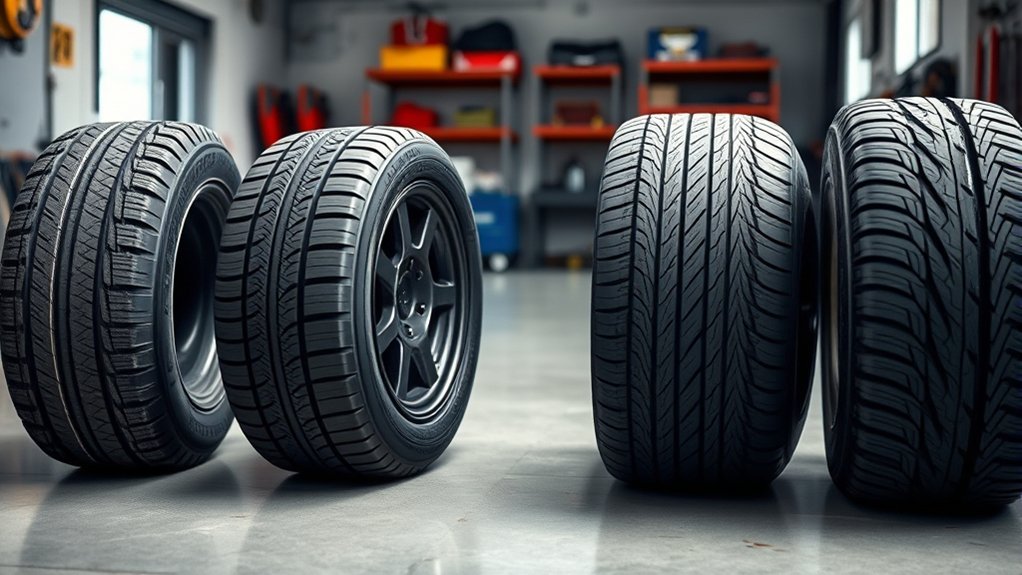
The safest answer is that tire life varies by the exact product and how it is used. A long-wearing touring tire may have a much higher limited treadwear warranty than a performance tire designed for stronger grip and quicker steering response. Winter tires use compounds and tread designs made for cold-weather traction, so their warranty and useful seasonal life must be checked model by model.
Current manufacturer examples show how wide the spread can be. The Michelin Defender2, a touring all-season tire, lists an 80,000-mile limited treadwear warranty on most sizes. The Michelin Pilot Sport 4 S, a max-performance summer tire, lists 30,000 miles. The Michelin X-Ice Snow winter tire lists 40,000 miles. These are examples, not universal category averages.
| Tire type | Current model example | What to remember |
|---|---|---|
| Touring all-season | 80,000-mile limited warranty on Michelin Defender2 | Often designed to favor tread life, comfort, and daily use |
| Max-performance summer | 30,000-mile limited warranty on Michelin Pilot Sport 4 S | Grip and response usually take priority over maximum tread life |
| Winter | 40,000-mile limited warranty on Michelin X-Ice Snow | Warm-weather use can accelerate wear; check the exact model’s terms |
Note: A treadwear warranty is not the same as predicted service life. Coverage may be prorated and may require proof of proper inflation, rotation, alignment, and other maintenance. Read the warranty for your exact tire size and application.
[Products Worth Considering]

EVOULTES heavy duty tire inflator with an integrated gauge delivers accurate pressure readings from 10–120 PSI, helping you inflate, deflate, and check tires in one tool. The 16.5-inch extended dual-head air chuck with swivel base reaches hard-to-access dual wheel valves on trucks and RVs. A brass trigger core and side-mounted air release valve make operation smooth, with standard 1/4" NPT threading and quick-connect compatibility for easy setup.
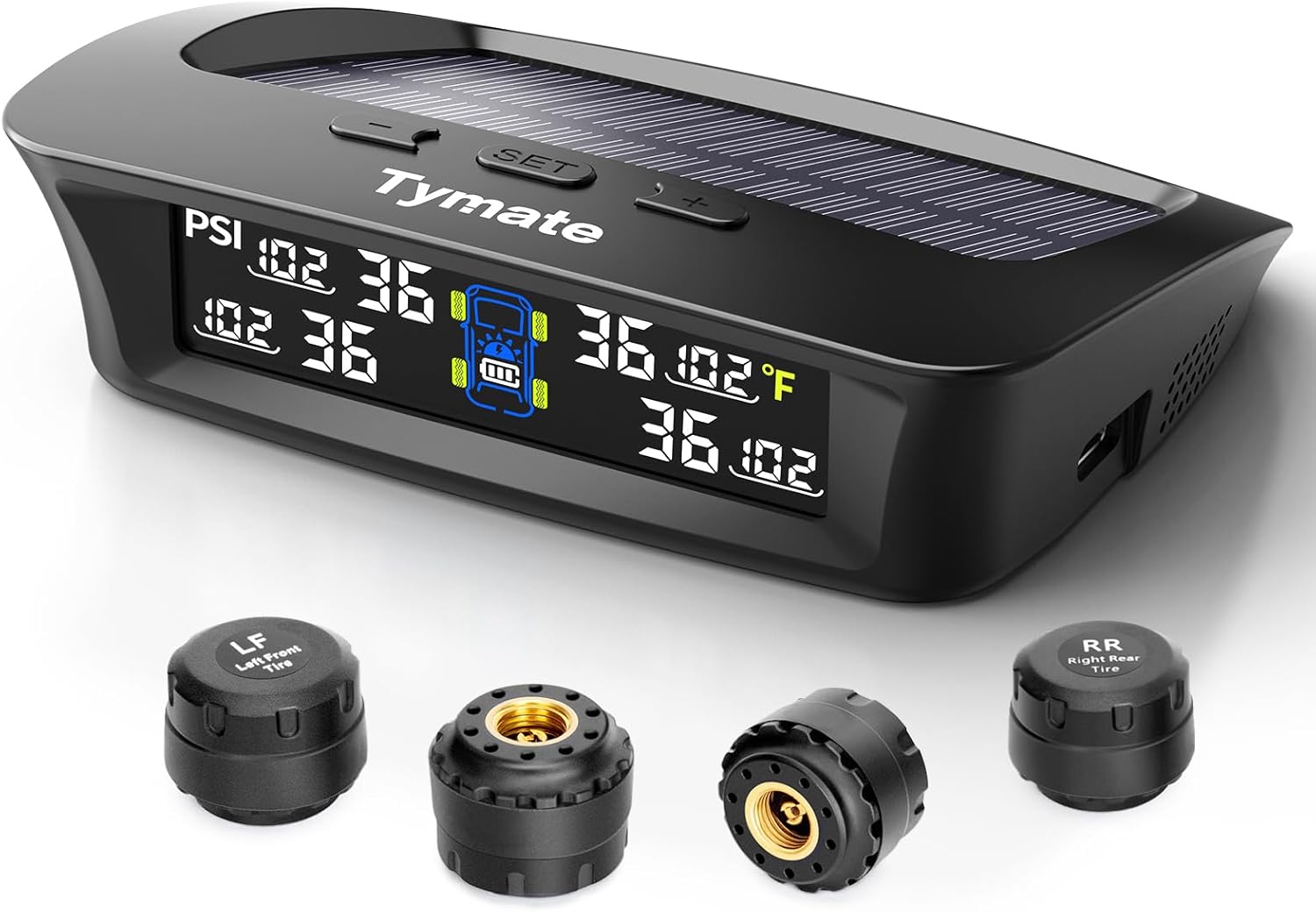
The Tymate TM3 RV TPMS delivers real-time tire pressure monitoring from 0 to 144 PSI with accurate readings and dependable wireless communication. It includes four external sensors with pre-pairing, six alarm modes for rapid leak, pressure extremes, temperature, and signal loss, plus an easy-reference setup for alert thresholds. Solar and USB-C charging help keep the display powered, while the color LCD and adaptive backlight improve visibility for safer driving and towing.

Keep RV, trailer, or truck dual-axle tires protected with waterproof, UV-resistant covers that help guard against sunlight, snow, rust, and dirt. The dual tire covers are easy to install with a rope/bungee fastener for a stable fit that won’t easily slip. Designed for 27–30 inch diameter wheels, they help maintain tire condition through harsh weather.
What Affects Tire Life?
Tire life depends on tire design, vehicle setup, load, pressure, alignment, road surface, climate, driving style, and age. Two drivers using the same tire can get very different results because their vehicles and operating conditions are not identical.
Tire Design and Treadwear Rating
Touring tires often emphasize longer wear and comfort, while summer and high-performance tires commonly trade some tread life for grip and steering response. Winter tires use cold-weather compounds and should not be driven through warm seasons unless the manufacturer specifically permits it.
The Uniform Tire Quality Grading treadwear number is a relative wear rating measured under controlled conditions. A higher number suggests slower relative wear in that test, but it does not tell you the exact mileage you will get. Do not convert a UTQG number directly into a guaranteed lifespan.
Pressure, Alignment, Rotation, and Load
Underinflation increases flex and heat, while overinflation can reduce the contact patch and encourage center wear. Misalignment can rapidly wear one shoulder or create feathered tread. Skipped rotations may let front and rear tires wear at different rates, although some staggered, directional, or specialty fitments have limited rotation options. Overloading adds heat and stress to the tire structure.
Roads, Climate, and Driving Style
Potholes, sharp debris, gravel, rough pavement, high temperatures, repeated hard braking, fast cornering, and rapid acceleration can shorten useful life. Smooth driving does not eliminate wear, but it reduces unnecessary tread scrubbing and heat.
Tire Age
Rubber and internal materials change with time, even when a vehicle is driven only occasionally. According to NHTSA tire-aging guidance, some vehicle and tire manufacturers recommend replacement at six to 10 years regardless of tread depth. Follow the earlier recommendation from your vehicle or tire manufacturer and include the spare in age checks.
Mileage is only one part of tire life. Condition, tread depth, age, maintenance history, and how the tire performs on the road determine whether it should remain in service.
How Long Does Each Tire Type Last?
All-Season Tire Lifespan
All-season tire life varies widely. Touring-focused models may carry long mileage warranties, while performance all-season tires may carry shorter coverage. Compare the exact model, size, load rating, speed rating, warranty terms, and intended use. A broad claim that every all-season tire lasts 50,000 to 70,000 miles is too simple to be reliable.
Performance Tire Lifespan
Performance tires are built to deliver stronger grip, quicker steering, or higher-speed capability. Those priorities can reduce tread life, especially with aggressive driving or track use. Some street-focused performance models include mileage warranties, while track-focused or original-equipment versions may have different coverage. Check the exact tire rather than assuming every performance tire will wear out at the same mileage.
Winter Tire Lifespan
Winter tire mileage depends on the compound, tread design, climate, and how many months each year the tires are installed. Driving winter tires in warm weather can accelerate wear and reduce their cold-weather advantage. Measure tread before each winter season and replace them when they no longer provide the traction needed for your conditions, even if they remain above the minimum 2/32-inch threshold.
Truck, SUV, and Specialty Tire Lifespan
Light-truck, all-terrain, mud-terrain, run-flat, trailer, and electric-vehicle applications can have different load, construction, rotation, and warranty requirements. Heavy loads, towing, high torque, off-road use, and incorrect fitment can change wear quickly. Use a tire approved for the vehicle’s size, load, and speed requirements.
Which Driving Habits Wear Tires Out Faster?
Aggressive or careless driving can shorten tire life, but unsupported percentage estimates should not be treated as fact. The type and severity of wear depend on the vehicle, tire, road, and frequency of the behavior.
| Habit or condition | Likely effect |
|---|---|
| Hard acceleration and braking | More heat and tread scrubbing |
| Fast cornering | Faster shoulder wear and higher tread stress |
| High-speed or track driving | Higher temperatures and accelerated wear |
| Pothole and curb impacts | Possible internal damage, wheel damage, or misalignment |
| Driving underinflated or overloaded | Excess heat, shoulder wear, and higher failure risk |
How to Make Tires Last Longer
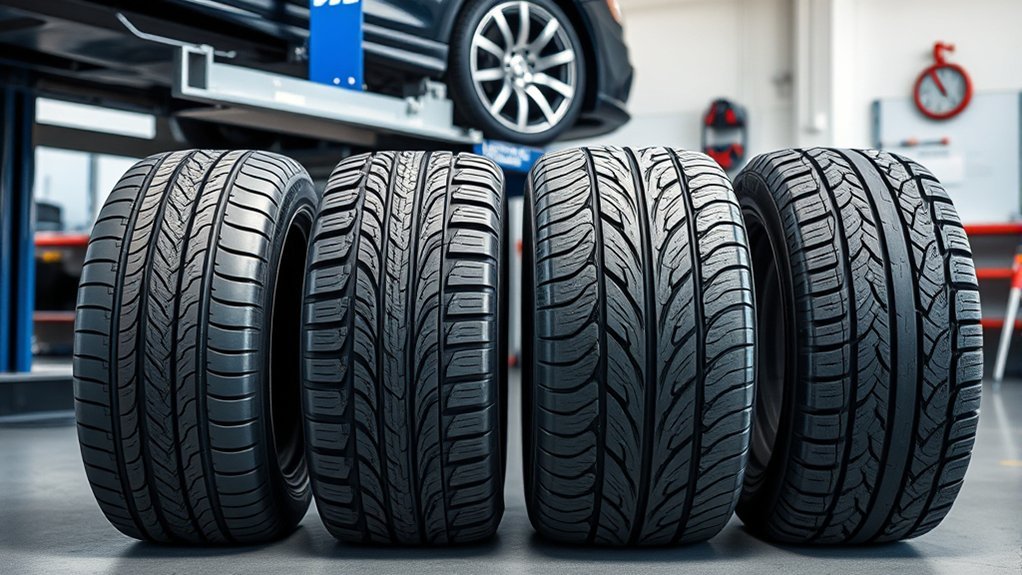
- Check pressure monthly when the tires are cold. Use the pressure on the driver-side door placard or in the owner’s manual. The pressure molded on the tire sidewall is not the vehicle’s normal inflation target.
- Follow the correct rotation schedule. Use the vehicle manual first. If it gives no interval, the U.S. Tire Manufacturers Association recommends rotation every 5,000 to 8,000 miles.
- Correct alignment problems quickly. Pulling, an off-center steering wheel, feathering, or one-sided wear can signal an alignment issue.
- Balance tires when needed. Persistent vibration can indicate imbalance, damage, wheel problems, or another condition that requires inspection.
- Inspect tread and sidewalls monthly. Look for cuts, cracks, bulges, exposed cords, embedded objects, repeated pressure loss, and uneven wear.
- Stay within load limits. Follow the Tire and Loading Information Label and account for passengers, cargo, accessories, and trailer tongue weight.
- Drive smoothly. Progressive braking, moderate acceleration, and controlled cornering reduce unnecessary heat and abrasion.
- Keep maintenance records. Record installation mileage, pressure checks, rotations, alignments, repairs, and inspections in case you need warranty support.
Pro Tip: Check all tires at the same time each month, including the spare. A TPMS warning is not a substitute for a gauge because the light may not appear until a tire is already significantly underinflated.
How to Check Tread Depth and Tire Age
[Products Worth Considering]

RVMATE dual-axle RV tire covers help shield your tires from sunlight, snow, rust, and dirt to keep them in better condition in harsh weather. Made with heavy-duty waterproof, UV-resistant 420D Oxford fabric, they provide strong shading and help reduce wear. They install easily by placing the cover on the wheel and fastening the rope for a stable fit.
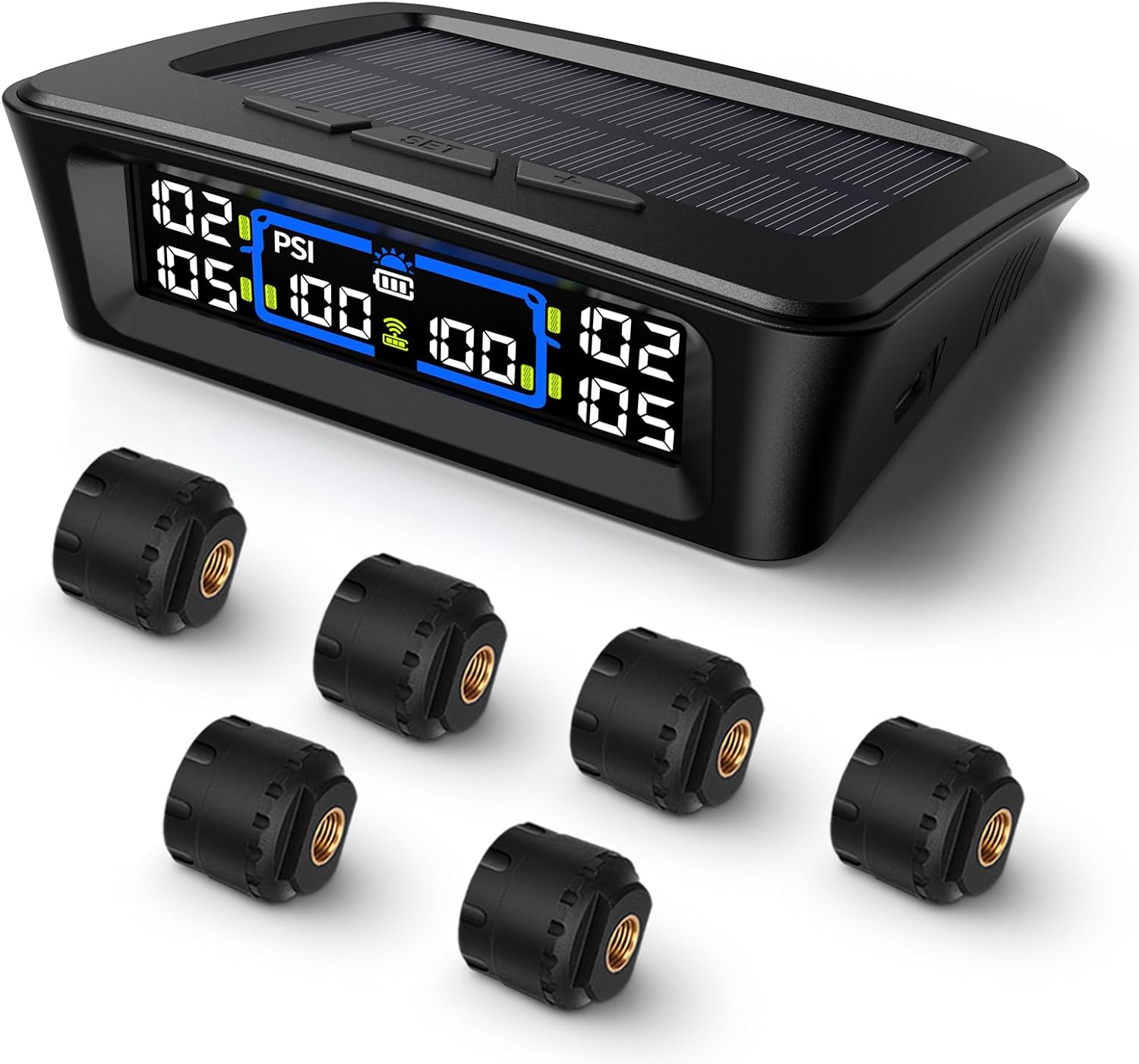
The Tymate TM12 RV TPMS delivers real-time tire pressure and temperature monitoring with a stable 433Hz display for safer long-distance driving. It supports simultaneous monitoring across vehicle and trailer zones, includes six alarm modes for pressure, temperature, leakage, battery, and signal loss, and features easy DIY installation with auto calibration. Power is supplied via USB-C charging or solar recharging, with a wide 0–144 PSI range and up to 50 ft signal coverage for RVs and towable trailers.
Check Tread Depth
Tires have wear bars molded across the tread grooves. When the tread is level with those bars, it has reached about 2/32 inch and should be replaced. NHTSA also describes the penny test: insert a penny into a main groove with Lincoln’s head upside down. If the top of his head remains visible, the tread is at or below the replacement point.
Check several grooves across the width of each tire. A single measurement can miss inner-edge, outer-edge, or isolated wear. Wet, snow, and off-road performance may become unacceptable before the tire reaches the minimum tread depth, so replace earlier when your conditions require more tread.
Read the DOT Date Code
Find the Tire Identification Number on the sidewall. The final four digits show the week and year of manufacture. For example, 2324 means the tire was made in the 23rd week of 2024. The complete code may appear on only one side, so inspect the inner sidewall if necessary.
Warning: Stop using a tire and have it professionally inspected if you find a bulge, exposed cords, major cut, repeated pressure loss, severe cracking, impact damage, or sudden vibration. Do not keep driving simply because the tread still looks deep.
When Should You Replace Your Tires?
Replace a tire when it reaches the tread limit, develops unsafe damage, no longer holds pressure, becomes too old under the applicable manufacturer guidance, or stops delivering safe and predictable performance.
| Condition | Action |
|---|---|
| Tread at 2/32 inch or wear bars flush | Replace the tire |
| Bulge, exposed cords, serious cut, or structural damage | Remove from service and obtain professional inspection |
| Uneven or rapid wear | Inspect pressure, alignment, suspension, balance, and rotation history |
| New vibration, noise, pulling, or pressure loss | Have the tire and wheel inspected promptly |
| Reaches the vehicle or tire maker’s age limit | Replace even if visible tread remains |
| Insufficient wet, snow, or off-road traction for your use | Replace before the minimum tread limit |
How Tire Mileage Warranties Work
A mileage warranty gives limited treadwear coverage for an eligible tire under the manufacturer’s written terms. It usually does not mean the manufacturer will replace a worn tire for free at the stated mileage. Coverage may be prorated based on remaining tread and may require proof that the tire was properly maintained.
Warranty eligibility can change with tire size, original-equipment status, staggered fitments, commercial use, damage, improper inflation, misalignment, lack of rotation, or use outside the tire’s intended conditions. Review the warranty before buying and keep receipts and service records.
Frequently Asked Questions
Is 30,000 miles on a set of tires good?
It can be. Thirty thousand miles is close to the listed warranty for some max-performance summer tires, but it would be early wear for a touring tire carrying a much longer warranty. Compare the exact model, tread depth, condition, age, and maintenance history.
Is 20,000 miles on tires a lot?
It depends on the tire and use. Twenty thousand miles may be plausible for a performance tire used aggressively, but it can signal premature wear on a long-warranty touring tire. Check inflation, alignment, rotation history, tread pattern, and warranty terms.
Is 40,000 miles a lot on tires?
Forty thousand miles can represent normal service for some tires and early wear for others. A current winter-tire example carries a 40,000-mile limited warranty, while some touring all-season models list much more. Condition remains more important than mileage alone.
Is a 70,000-mile tire good?
A tire with a 70,000-mile limited treadwear warranty offers relatively long coverage, but the number is not a promise of exact life. Correct pressure, rotation, alignment, load, road conditions, and driving style still affect wear and warranty eligibility.
Can tires need replacement even with tread left?
Yes. Age, bulges, cracks, exposed cords, repeated pressure loss, impact damage, vibration, irregular wear, or poor traction can make replacement necessary before the tread reaches 2/32 inch.
How often should you inspect your tires?
Check pressure and visually inspect tread and sidewalls at least once a month. Also check before long trips and after a hard pothole, curb, or road-hazard impact.
Conclusion
Tire lifespan is determined by the exact tire, not a universal category number. Use the manufacturer’s warranty as a comparison tool, then judge serviceability by tread depth, age, damage, wear pattern, pressure history, and road performance. Monthly checks, correct inflation, timely rotation, proper alignment, and smooth driving can help you get more safe miles without pushing a tire beyond its limits.
Sources
- NHTSA TireWise — tire pressure, tread depth, UTQG, tire aging, date codes, and replacement guidance.
- NHTSA Summer Safety Road Tips — monthly cold-pressure checks and the 2/32-inch replacement threshold.
- U.S. Tire Manufacturers Association Tire Care Essentials — inspection, wear bars, rotation, and alignment guidance.
- Michelin Defender2 — current touring all-season warranty example.
- Michelin Pilot Sport 4 S — current max-performance summer warranty example.
- Michelin X-Ice Snow — current winter-tire warranty example.

Related Articles
AWD Tire Rotation Pattern: How Often and How to Do It
W**ondering the right AWD tire rotation pattern and timing? Discover the simple method, ideal schedule, and mistakes to avoid before your tires wear unevenly.
Read More
Wheel Damage: Types, Repair Options, and Costs
Many wheel damages look minor, but some hide costly safety risks—learn which repairs are worth it and when replacement is smarter.
Read More
Tire Balancing Weights: Types, Cost, and Why You Need Them
Precisely chosen tire balancing weights reduce vibration and wear, but which type fits your wheels and what it really costs may surprise you.
Read More