How Many Lug Nuts Are on a Tire? Count by Vehicle Type

You’ll usually find 4 or 5 lug nuts on each tire for most passenger cars, for a total of 16 to 20 on a four-wheel vehicle. SUVs and light trucks often use 5 or 6 per wheel, while heavy-duty trucks may use 8. Dual rear-wheel setups can use 10 lug nuts per rear assembly. Your vehicle’s manual gives the exact count, size, and torque, and the details matter if you want a safe fit.
Key Takeaways
- Most passenger cars have 4 or 5 lug nuts per wheel, so a four-wheel vehicle usually has 16 to 20 total.
- Compact sedans often use 4 lug nuts, while many cars and crossovers commonly use 5.
- Trucks and SUVs usually have 5 or 6 lug nuts per wheel, with heavy-duty models sometimes using 8.
- Dual rear wheel setups typically have 10 lug nuts per assembly, with 5 on each side.
- Check the owner’s manual for the exact lug nut count, size, thread pitch, and torque specification.
How Many Lug Nuts Are on a Tire?

How many lug nuts are on a tire? You can’t guess safely; you must verify the wheel hardware you’re using. Most vehicle owners find four or five lug nuts per wheel on passenger cars, which gives you 16 to 20 for a four-wheel setup. Light trucks and SUVs often use five or six, while heavy-duty trucks can use six to eight. Your exact count depends on the standard lug pattern, the number of threads per fastener, and the wheel design. If you run aftermarket wheels, the count can change because specialty mounts may use fewer or more fasteners than OEM parts. You should check your owner manual before you buy replacements or tighten anything. That manual tells you the required lug nuts, torque spec, and fitment details. Use that data to keep your vehicle secure, independent, and road-ready. Additionally, tire selection is crucial for ensuring optimal performance and safety on the road.
Lug Nut Counts by Vehicle Type
You’ll usually find 4 or 5 lug nuts per wheel on a passenger car, which means 16 or 20 total on a standard four-wheel setup. SUVs, light trucks, and dual rear wheel sets often use more fasteners, so you need to check for 5 to 8 lug nuts per wheel and confirm the total against the axle layout. If you’ve got aftermarket wheels or a specialty vehicle, verify the spec directly because the lug count can differ from the standard pattern. Additionally, tire compatibility is essential when considering different wheel setups to ensure optimal performance.
Passenger Car Counts
Most passenger cars use 4 or 5 lug nuts per wheel, which provides a secure connection between the wheel and the hub. You’ll usually see compact sedans with 4 lug nuts, while many passenger cars and crossovers use 5. The wheel studs align the wheel, and the lug nuts clamp it firmly to the hub so you can drive with confidence and control. For exact counts, check your owner’s manual and match the vehicle specifications; manufacturers can differ by make, model, and wheel design. Some luxury or performance passenger cars may use 6 or even 8 lug nuts for added stability at speed.
- A compact sedan’s wheel with 4 bright studs
- A clean five-lug rim seated flush
- A torque wrench tightening lug nuts evenly
- An owner’s manual open to vehicle specifications
Truck And SUV Counts
Trucks and SUVs usually use 5 or 6 lug nuts per wheel, though larger models often step up to 8 for extra strength and stability. You’ll see 5-lug setups on common SUVs like the Toyota Highlander and Honda CR-V, while heavy-duty trucks such as the Ford F250 and F350 usually run 8. That extra wheel lug capacity helps manage towing, payload, and rough terrain without giving up control. If you’re fitting aftermarket wheels, verify the lug nuts, bolt pattern, and nut sizes before you mount anything. Off-road vehicles and performance trucks may use 6- or 8-lug layouts for durability and traction. Match the wheel’s specs to your vehicle so you stay safe, stay free, and keep the ride working as intended.
Dual Rear Wheel Sets
Dual rear wheel (DRW) vehicles, especially heavy-duty trucks and commercial rigs, typically use 10 lug nuts per wheel assembly, with five lug nuts securing each side of the dual setup. You’ll usually see an 8-lug configuration, like 8×6.5 inches, on the tire and wheel package, though some trucks run 10-lug setups and carry twenty lug nuts at the rear.
- Two rear tires, one shared axle line
- Steel rims clamped tight with equal spacing
- Lug nuts seated cleanly on each stud
- A torque wrench checking each fastener
Follow torque specifications, often 100 to 140 ft-lbs, so you keep control without depending on guesswork. Do regular inspections; loose lug nuts can threaten stability and your freedom on the road.
Why Trucks and SUVs Use More Lug Nuts
Because of their greater size and weight, trucks and SUVs typically use six to eight lug nuts per wheel instead of the four to five found on most passenger cars. You get better load distribution across the wheel assembly, which lowers stress and reduces the chance of wheel detachment. That extra fastening also supports larger brake hardware and heavier tires, both common on vehicles built for towing, hauling, and off-road use. Manufacturers often specify higher torque for these lug nuts, so they stay clamped under hard acceleration, braking, and rough terrain. Wider wheelbases and heavier suspensions add more lateral and vertical forces, so more fasteners help preserve alignment and vehicle handling. In practical terms, the design gives you a stronger, more secure connection between the wheel and hub. For trucks and SUVs, that added security isn’t excess—it’s the engineering needed to keep the vehicle stable, capable, and under your control. This is especially important when considering all-terrain tire performance, as it ensures optimal handling across various surfaces.
How to Check Lug Nut Size and Thread Pitch
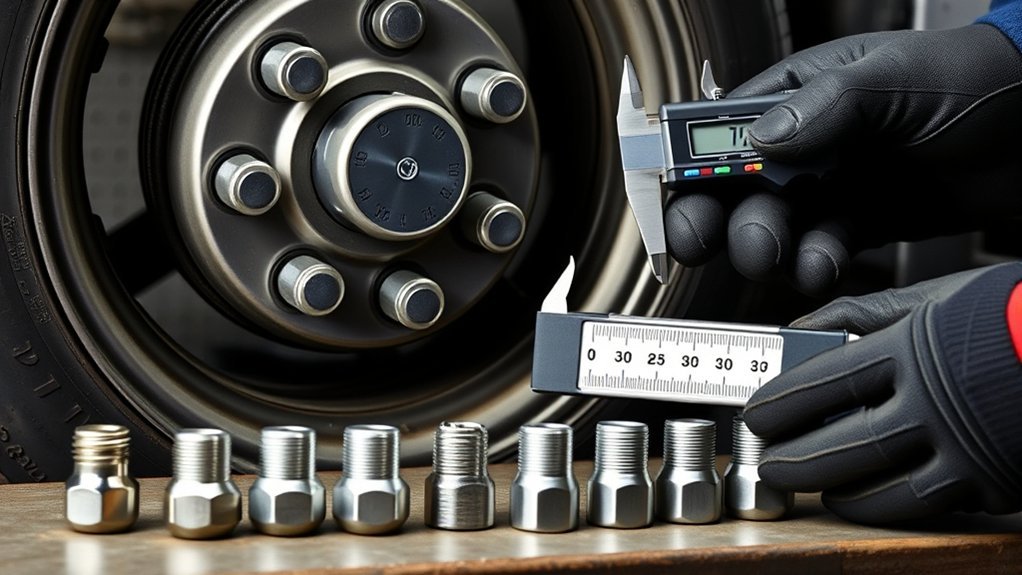
How do you confirm the correct lug nut size and thread pitch? Start with your vehicle’s owner’s manual; it lists the exact lug nut size, diameter, and thread pitch. Then verify by measuring with a caliper and a thread gauge. Match the diameter and thread spacing to common sizes like 10mm x 1.25, 12mm x 1.50, or 14mm x 1.25. Most lug nuts use right-hand threads, but check for “L” or “LHT” markings if you suspect left-hand threads. Use precise measuring, not guesswork, so you can work safely and keep control of the job. Additionally, regular checks of tire pressure can help ensure optimal vehicle performance and safety.
Check your owner’s manual, then confirm with a caliper and thread gauge before buying or installing.
- Read the owner’s manual like a map.
- Slide a thread gauge across the threads.
- Compare measurements to common sizes.
- Inspect markings before you buy or install.
Which Lug Nuts Fit Aftermarket Wheels?
Once you’ve confirmed the lug nut size and thread pitch, check the wheel seat shape next, since most aftermarket wheels need conical 60-degree lug nuts for a secure fit. You should match aftermarket lug nuts to the conical seat so the wheel centers correctly and clamps evenly. Then verify the lug nut thread against the wheel stud diameter; common setups use 12mm x 1.5 or 14mm x 1.5, but your setup may differ. If the wheel is thicker than original equipment (OE), choose extended thread lug nuts to preserve full thread engagement. Keep the wheel’s specifications and vehicle OE data aligned so you don’t force mismatched parts into service. When the wheel maker lists a torque target, use a calibrated torque wrench and follow that value exactly. That keeps the installation precise, protects the studs, and lets you fit aftermarket wheels with confidence and control. Additionally, ensure your tire selection is compatible with all-season performance to maximize driving safety and comfort.
Lug Nut Torque and Safe Installation Tips
You should tighten lug nuts to the vehicle’s specified torque, which is often 80 to 120 foot-pounds and listed in the owner’s manual. Use a calibrated torque wrench so you don’t over-tighten and damage the wheel or studs. Tighten the nuts in a star pattern to apply even clamping force across the wheel. Additionally, ensure that the tire size is appropriate for your vehicle to maintain optimal performance and safety.
Proper Torque Specs
Proper lug nut torque is critical to safe wheel installation, and the correct ft-lb spec varies by vehicle, so you should always check the owner’s manual before tightening. Use proper torque specs for your lug nuts, and set a calibrated torque wrench to the listed foot-pounds. That keeps you in control, not guesswork.
- A wrench clicking at the right setting
- Clean threads meeting a steel wheel
- Lug nuts seated flush against the hub
- A tire rolling free, secure, and true
If you under-tighten, the wheel can loosen; if you over-tighten, you can damage the stud or lug nut. After installation, recheck and retorque after 50 to 100 miles, then inspect periodically.
Star Pattern Tightening
Star tightening matters because it spreads clamping force evenly across the wheel, helping the rim seat flat against the hub and reducing the risk of warping. When you’re installing lug nuts, follow the star pattern, not a circle, so each fastener loads the wheel uniformly. Use the original equipment (OE) torque spec for your vehicle, measured in ft-lbs, and verify it with a calibrated torque wrench. Too much torque can stretch studs or distort the wheel; too little can let the wheel loosen in motion. After the first drive, re-torque the lug nuts to confirm they’ve settled correctly. This method gives you control, protects the hardware, and keeps the assembly secure without surrendering precision.
Frequently Asked Questions
Is It Okay to Drive on 4 Lug Nuts?
No, you shouldn’t drive on 4 lug nuts unless your vehicle design specifies that count. You risk reduced lug nut safety, poor driving stability, tire damage, and uneven load on the wheel. Check torque specifications, then replace the missing lug nut right away. If you’re in an emergency situation, drive only a short distance at low speed to the nearest repair shop, and inspect the wheel immediately.
What Size Are the Lug Nuts on a Mitsubishi Outlander?
Like a well-cut key in a lock, you’ll usually find Mitsubishi Outlander specifications call for 12mm x 1.5 lug nuts with a conical seat. You should check Lug nut materials and confirm Common lug sizes before buying replacements. Follow Tire maintenance tips and Wheel safety checks after service. Watch for Vehicle compatibility issues, since model years can differ. Torque them to 80–100 ft-lbs, and you’ll keep your wheels secure, free, and road-ready.
How Many Lug Nuts on a Tire?
You’ll usually see 4 to 8 lug nuts on a wheel, depending on your vehicle. You should check lug nut types, lug nut materials, and lug nut patterns before service, because they affect wheel safety and proper torque. For tire maintenance, inspect every nut for wear, corrosion, and fit. Your owner’s manual gives the exact count, so you can maintain control and keep your ride secure, efficient, and free.
Will 3 Lug Nuts Hold a Tire?
No, 3 lug nuts won’t reliably hold a tire; that’s like balancing a chair on one leg. You need the correct lug nut types, proper lug nut torque, and full wheel safety to preserve tire stability. During vehicle maintenance, replace missing fasteners fast—don’t gamble with lug nut replacement. A wheel may stay on briefly, but you’re risking failure, uneven wear, and suspension damage. Choose safety, not roadside improvisation.
Conclusion
So, how many lug nuts are on a tire? Usually, you’ll see 4, 5, or 6, depending on the vehicle type. One useful stat: many modern passenger cars use 5-lug wheels, which gives you a good balance of strength and weight. If you’re replacing wheels or tightening fasteners, don’t guess. You need the right lug nut size, thread pitch, and torque spec to keep the wheel secure and safe.

Related Articles
How Does a Car Tire Work? Construction, Function & Design
When tires seem simple, their hidden construction, tread, and sizing secrets reveal how they grip, protect, and perform in surprising ways.
Read More
How Do Tire Gauges Work? Analog vs. Digital Explained Simply
L]earn how tire gauges really measure pressure—and why analog and digital models can tell different stories.
Read More
Are Tire Donuts Universal? What Spare Tires Fit & How to Check
Universal fit isn’t guaranteed for tire donuts, and this guide shows how to check which spare fits your car before you get stranded.
Read More