
Can Bad Shocks Cause Tire Wear? Suspension & Tire Connection
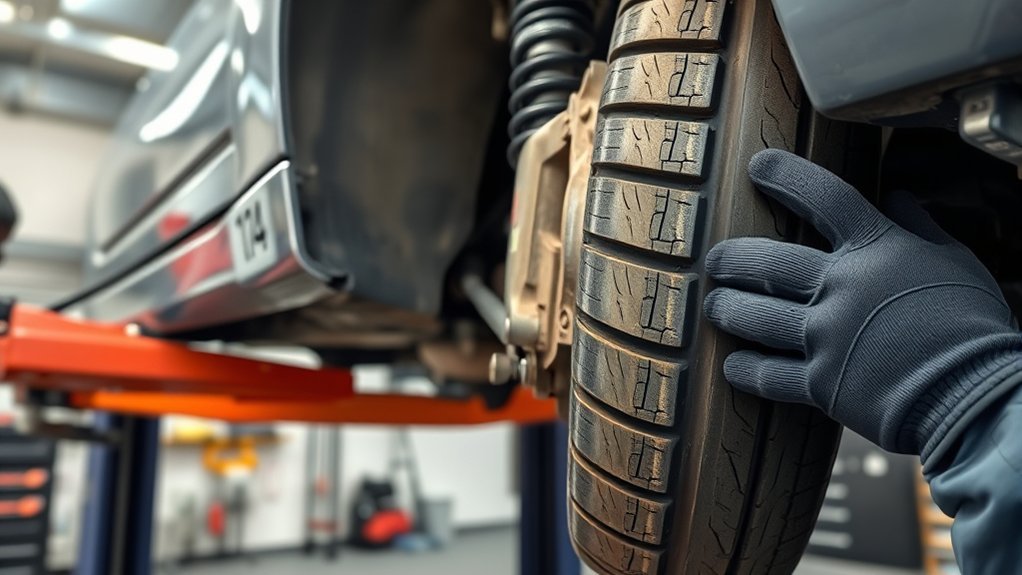
Yes, bad shocks can cause tire wear because they let the tire bounce instead of staying planted on the road. That loss of damping can create uneven tread patterns such as cupping, scalloping, chopped tread blocks, and fast shoulder wear. The tricky part is that alignment problems, low tire pressure, wheel imbalance, worn bearings, loose ball joints, and missed rotations can create similar symptoms, so you should inspect the full tire and suspension system before replacing parts.
Quick Answer
Bad shocks can cause tire wear by allowing the wheel to bounce and lose steady road contact. The most common shock-related pattern is cupping or scalloping, where the tread develops uneven dips. Fix worn shocks or struts first, then check alignment, wheel balance, and tire safety before installing new tires.
Key Takeaways
- Bad shocks can contribute to uneven tire wear because weak damping lets the tire skip, bounce, and scrub the road.
- Cupping, scalloping, vibration, extra bouncing, nose dive, body roll, and fluid leaks are strong warning signs.
- Alignment, tire pressure, wheel balance, worn bearings, worn bushings, and poor rotation habits can mimic shock-related tire wear.
- Do not install new tires before fixing worn shocks, struts, or loose suspension parts, or the new tread can wear unevenly too.
- A proper inspection should include tires, shocks, struts, springs, control arms, bushings, ball joints, tie rods, wheel balance, and alignment.
At a Glance
| Time Required | 10 to 20 minutes for a basic tire and visual shock check; longer for a full shop inspection |
| Difficulty | Easy for visible tire checks; professional diagnosis recommended for suspension play, leaks, vibration, and alignment problems |
| Tools Needed | Flashlight, tire pressure gauge, tread depth gauge or penny, gloves, and a safe level parking area |
| Cost | Basic visual check is free; professional suspension inspection, alignment, shocks, struts, or tires vary by vehicle |
Can Bad Shocks Cause Tire Wear?
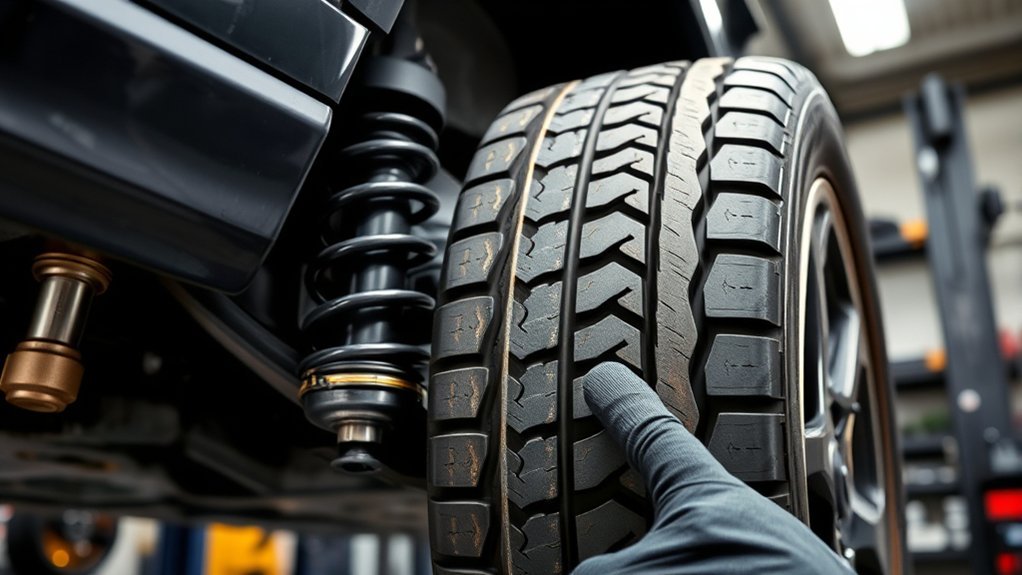
Bad shocks can cause tire wear when they lose the ability to control suspension movement. A shock absorber does not hold the vehicle up by itself. Its job is to damp spring movement and control how quickly the wheel moves after bumps, braking, and cornering. When that damping fades, the tire can hop, skip, or chatter across the road instead of rolling smoothly.
That bouncing motion can wear small patches of tread faster than the rest of the tire. Over time, those patches can become cupping or scalloping. You may also feel vibration, hear rhythmic road noise, or notice that the tread feels rough when you run your hand across it.
Still, bad shocks are not the only cause of uneven tread wear. Poor alignment, incorrect tire pressure, worn suspension joints, wheel imbalance, and skipped rotations can all create irregular patterns. The National Highway Traffic Safety Administration recommends regular tire pressure, tread, balance, alignment, and rotation checks because tire maintenance affects safety, tire life, and vehicle control.
Warning: Do not ignore severe cupping, exposed cords, sidewall bulges, leaking shocks, strong steering pull, or unstable braking. Those signs can affect control, especially at highway speed or on wet roads. Have the vehicle inspected before continuing normal driving.
[Products Worth Considering]

EVOULTES heavy duty tire inflator with an integrated gauge delivers accurate pressure readings from 10–120 PSI, helping you inflate, deflate, and check tires in one tool. The 16.5-inch extended dual-head air chuck with swivel base reaches hard-to-access dual wheel valves on trucks and RVs. A brass trigger core and side-mounted air release valve make operation smooth, with standard 1/4" NPT threading and quick-connect compatibility for easy setup.

The JACO FlowPro Tire Inflator measures, inflates, and airs down tires up to 100 PSI with battery-free operation and ±2% accuracy after calibration. It features a glowing pressure dial for night visibility, a heavy-duty steel build with a hybrid hose, and a precision push-to-inflate thumb trigger. The patented Lightning Air Chuck locks on for a secure seal, and the kit includes quick-connect hardware for easy inline use with your air compressor.

This portable cordless tire inflator delivers up to 160 PSI with fast 17 L/min airflow to help you quickly top up tires and get back on the road. It features dual power mode, running on a 21V rechargeable battery or a 12V DC adapter for convenient roadside use. An automatic shut-off with digital pressure gauge helps prevent overinflation, and a built-in LED light improves visibility in low-light conditions.
How Worn Shocks Cause Uneven Tire Wear
Worn shocks cause uneven tire wear by letting the wheel move too much after it hits bumps, dips, potholes, or rough pavement. Modern hydraulic shock absorbers control motion through damping force, pressure changes, and internal fluid movement. When that control weakens, the tire does not press against the road with the same steady force.
Good damping helps the tread stay flat against the pavement. Weak damping lets the tire unload and reload repeatedly. Each bounce creates a small scrub point. When this happens thousands of times, the tread can develop a wavy, chopped, or scalloped pattern.
Tire Cupping Patterns
Tire cupping usually appears as dips, scoops, or scalloped low spots around the tread. You may see the pattern along one shoulder, across the full tread, or in repeating patches around the tire. The vehicle may also create a humming or thumping sound that gets louder as speed increases.
Worn shocks are a common clue because they let the wheel bounce instead of controlling rebound. Wheel imbalance, bad bearings, bent wheels, and worn suspension joints can also create cupping, so do not replace shocks based on tread appearance alone. Use the tread pattern as a clue, then inspect the rest of the system.
Shock Wear Effects
As shocks or struts wear out, you may feel extra bouncing after bumps, more body roll in turns, nose dive under braking, and a loose or floating ride. These symptoms matter because they show the suspension is no longer settling the vehicle quickly.
Weak damping can also make existing alignment problems feel worse. If the tire is already tilted, toe is out of spec, or a bushing has play, bad shocks can add more movement and speed up wear. The result is often a mix of cupping, feathering, and shoulder wear rather than one perfect pattern.
What Shock-Related Tire Wear Looks Like Up Close
Shock-related wear often looks uneven instead of smooth. The tread may feel like waves, steps, or shallow scoops around the tire. You may notice the pattern before the tire reaches the legal tread limit because uneven tread blocks can make noise and vibration early.
- Cupping: Repeating dips or scoops around the tire, often paired with humming or thumping road noise.
- Scalloping: Wavy low spots that make the tire feel uneven when you move your hand across the tread.
- Chopped tread blocks: Alternating high and low tread edges, sometimes caused by weak damping, imbalance, or rotation neglect.
- Mixed shoulder wear: Edge wear combined with cupping, often caused by more than one issue, such as bad shocks plus poor alignment.
If the wear is smooth on one edge only, alignment or worn steering parts may be more likely than shocks alone. If the steering wheel vibrates at a narrow speed range, wheel balance or tire runout should move higher on the inspection list.
Common Tire Wear Patterns to Watch For
Your tread pattern can tell you which problem to inspect first. Look across the full tire, then compare the inside shoulder, center tread, and outside shoulder. Check all four tires because shock wear, alignment faults, and pressure issues often show up differently from one wheel position to another.
| Wear Pattern | What It Looks Like | Common Causes |
|---|---|---|
| Cupping or scalloping | Dips, scoops, waves, or chopped patches around the tread | Worn shocks, weak struts, wheel imbalance, worn bearings, bent wheels, loose suspension parts |
| Inner or outer edge wear | One shoulder wears faster than the rest of the tire | Poor alignment, worn control arms, worn ball joints, sagging springs, incorrect camber or toe |
| Feathering | Tread feels smooth one way and sharp the other | Toe alignment problem, worn steering parts, suspension play |
| Center wear | Middle of the tread wears faster | Overinflation, wrong tire pressure, tire construction or load mismatch |
| Both shoulders worn | Inside and outside edges wear faster than the center | Underinflation, overloading, aggressive cornering, neglected pressure checks |
Pro Tip: Run your palm lightly over the tread in both directions. Feathering often feels smooth in one direction and sharp in the other. Cupping often feels like uneven dips or waves around the tire.
Bad Shocks or Another Tire Problem?
Uneven wear does not always mean the shocks are bad. Start with the simple checks first, then move deeper into suspension diagnosis. This prevents wasted money and helps you fix the real cause before installing new tires.
| Symptom | More Likely Cause | What To Check |
|---|---|---|
| Vehicle keeps bouncing after a bump | Weak shocks or struts | Shock leakage, strut mounts, damping performance, spring condition |
| Steering wheel vibrates at certain speeds | Wheel imbalance or tire issue | Wheel balance, bent wheel, tire runout, uneven tread |
| Vehicle pulls to one side | Alignment, brake drag, tire pressure difference | Cold tire pressure, alignment angles, brake caliper, tire condition |
| Both outer shoulders are worn | Underinflation or overloading | Door-jamb tire placard, load rating, monthly pressure checks |
| One edge is worn smooth | Alignment or worn suspension parts | Toe, camber, bushings, ball joints, control arms |
Suspension Problems That Cause Tire Wear
Several suspension problems can create premature tire wear. Weak shocks and struts are important, but they are only one part of the system. Springs hold ride height, control arms locate the wheels, bushings reduce movement, ball joints allow steering and suspension travel, and alignment angles keep the tire tracking straight.
| Problem | Result | Why It Matters |
|---|---|---|
| Worn shocks | Bounce, cupping, weak control | The tire loses steady road contact and scrubs unevenly. |
| Weak struts | Poor damping, body roll, possible alignment changes | Struts are structural on many vehicles, so wear can affect ride and alignment. |
| Worn control arm bushings | Wheel movement under braking or cornering | The tire may change angle while driving and wear one side faster. |
| Loose ball joints or tie rods | Steering play and feathering | The tire cannot track cleanly if steering parts have play. |
| Sagging springs | Ride height changes and alignment shift | A lower corner can change camber and toe enough to wear the tire. |
Signs Your Shocks or Struts Are Failing
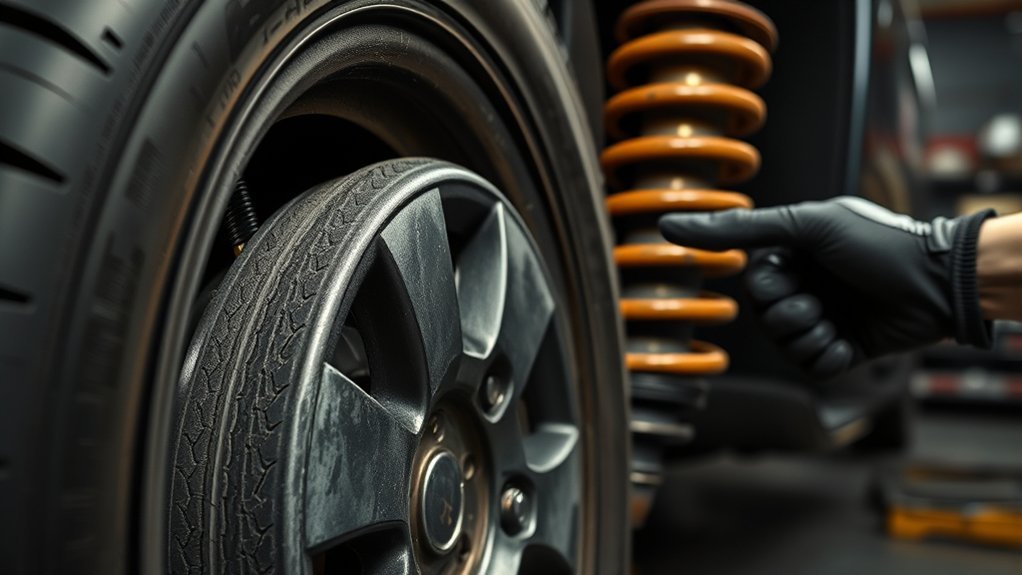
Start with how the vehicle feels. If it keeps bouncing after bumps, dives forward during braking, squats hard during acceleration, or leans more than usual in corners, the shocks or struts may be weak. You may also hear clunks over rough pavement if mounts, bushings, or related suspension parts are worn.
Next, look for visible signs. Fluid on the shock body or strut housing often points to seal leakage. Heavy rust, bent bodies, damaged mounts, torn bushings, and uneven ride height also deserve attention. A dry shock can still be worn internally, but leakage gives you a strong reason to inspect further.
Finally, compare the tires. Shock-related wear often shows as cupping or scalloping. Alignment-related wear often shows as shoulder wear or feathering. If you see both, expect more than one issue.
- Ride symptom: repeated bouncing, floating, nose dive, rear squat, or extra body roll.
- Visual symptom: oily residue, bent shock body, damaged mount, cracked bushing, or broken spring.
- Tire symptom: cupping, scalloping, chopped blocks, or uneven tread noise that returns after rotation.
- Driving symptom: unstable braking, wandering, clunks, vibration, or reduced control on rough pavement.
How Bad Shocks Affect Braking and Handling
Bad shocks can affect braking and handling because the tires need stable road contact to grip. When the suspension allows too much bounce or body motion, the tires can unload at the wrong time. That can make the vehicle feel less settled during hard braking, quick lane changes, and rough-road cornering.
[Products Worth Considering]

The Fanttik X10 Pro is a cordless portable tire inflator that reaches up to 150 PSI and can inflate an R15 tire in about 35 seconds for quick roadside or home top-ups. With AccuInFlate auto-stop and smart start/stop controls, it helps maintain accurate pressure and frees your hands once the target is reached. A high-visibility digital display and preset modes make it easy to set and monitor inflation for cars, motorcycles, bikes, and balls.
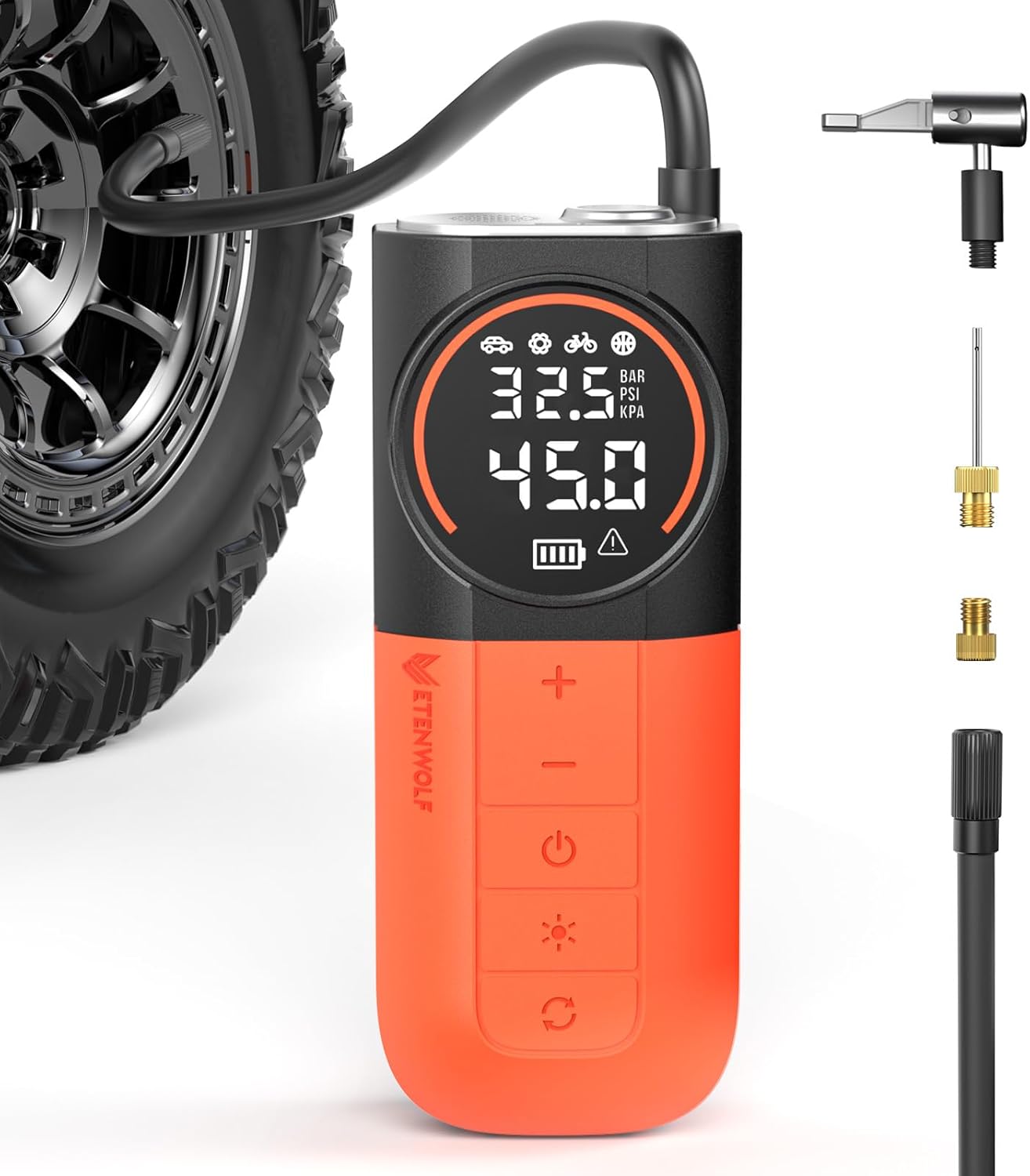
The ETENWOLF S1 cordless tire inflator delivers ultra-fast inflation with up to 160 PSI and a 20 L/min airflow for quicker tire top-offs. Its 5200mAh battery and cooling system support inflating many tires and sports balls on a single charge, while the digital pressure gauge and multi-unit display help you reach the right pressure accurately. With preset modes, pressure memory, an auto-stop feature, and an LED flashlight, it’s built for easy roadside and everyday use.
Braking Distance Can Increase
Worn shocks can increase stopping distance, especially on rough, wet, or uneven roads. The brake system may still work, but the tires cannot use braking force well if they are bouncing or losing consistent contact. You may also feel extra nose dive, pulsing vibration, or instability during sudden stops.
NHTSA reported 511 traffic fatalities in tire-related crashes in 2024, which is a reminder that tire condition and tire maintenance are safety issues, not just tread-life issues.
Handling Becomes Unstable
When shocks cannot control bounce and body movement, the vehicle may feel loose or delayed when you steer. You may notice extra sway in turns, more correction on the highway, or less confidence during evasive maneuvers. These symptoms can become more obvious when the vehicle is loaded, towing, or driving on uneven pavement.
Unstable handling also adds stress to other suspension and steering parts. If worn shocks have already caused cupped tires, the tires themselves can add noise, vibration, and reduced grip even after the shocks are replaced.
Tire Contact Drops
A tire can only grip well when it stays pressed against the road. Weak shocks let the tire unload and reload more often. That hurts comfort, braking, steering response, and tread life.
| Condition | Result | Risk |
|---|---|---|
| Worn shocks | Less consistent tire contact | Longer stops and uneven tread wear |
| Hard braking | Extra nose dive | Reduced stability |
| Rough roads | Tire hop and vibration | Cupping or scalloping |
| Cornering load | Extra body roll | Shoulder wear and weaker control |
How To Check for Shock-Related Tire Wear
You can do a basic check at home before scheduling service. Park on a level surface, set the parking brake, and let the tires cool if you recently drove. Do not crawl under a vehicle supported only by a jack.
- Check tire pressure first. Use the pressure listed on the driver-side door placard or owner’s manual, not the number molded into the tire sidewall. NHTSA recommends checking pressure when tires are cold.
- Inspect tread depth and pattern. Look for cupping, scalloping, feathering, one-edge wear, center wear, or both-shoulder wear. Replace tires that are worn to 2/32 inch tread depth or show damage.
- Compare all four tires. One cupped tire may point to a local suspension or balance issue. Multiple cupped tires may suggest broader suspension wear or rotation neglect.
- Look for shock or strut leaks. Use a flashlight to check for oily residue on the shock body or strut housing.
- Notice driving symptoms. Bouncing, nose dive, body roll, clunks, vibration, and unstable braking all matter.
- Schedule a professional inspection. Ask the technician to check shocks, struts, mounts, springs, bushings, ball joints, tie rods, wheel balance, tire runout, and alignment.
Note: The old “bounce test” can reveal a very weak shock, but it cannot reliably prove that a shock or strut is good. A visual inspection, road test, tire inspection, and professional suspension check give a better answer.
When to Replace Shocks and Struts
Replace shocks or struts when they fail inspection, leak fluid, create poor vehicle control, or contribute to abnormal tire wear. Mileage can help you decide when to inspect them, but it should not be the only reason you replace them. Road conditions, potholes, towing, heavy loads, salt, heat, and driving style can all change how quickly they wear.
- Inspect shocks and struts during routine service and any time ride, braking, handling, or tire wear changes.
- Use higher mileage, including around 50,000 miles, as a practical checkpoint for closer inspection rather than an automatic replacement rule.
- Replace leaking, damaged, bent, or weak units after a proper diagnosis.
- Replace shocks or struts in pairs on the same axle to keep damping balanced.
- Check alignment after strut replacement or after replacing parts that affect suspension geometry.
- Inspect cupped tires before reusing them because severe cupping can continue to cause noise and vibration.
What To Fix First: Shocks, Tires, or Alignment?
Fix the cause before replacing the tire. If you install new tires while shocks, struts, alignment, or suspension parts are still bad, the new tread can wear unevenly in a short time.
Use this repair order:
- Check tire pressure and tread damage. Replace unsafe tires immediately.
- Inspect shocks, struts, and suspension parts. Repair worn parts before alignment.
- Balance wheels if vibration is present. Imbalance can mimic or worsen cupping.
- Perform alignment after suspension repairs. Alignment helps the tire track straight and reduces edge wear.
- Rotate tires if they are still safe and the vehicle allows it. NHTSA notes that rotation can reduce irregular wear and may be recommended every 5,000 to 8,000 miles, depending on the vehicle manufacturer.
After the Repair: How To Protect New Tires
Once the bad shocks, struts, or loose suspension parts are fixed, protect the tires by resetting the basics. Set cold tire pressure to the door placard, balance any wheel that vibrates, align the vehicle if suspension geometry changed, and follow the rotation pattern in your owner’s manual.
If the old tires are badly cupped, they may stay noisy even after the suspension is repaired. A technician can tell you whether they are safe to keep using, should be rotated to a different position, or need replacement.
Why a Suspension Inspection Helps
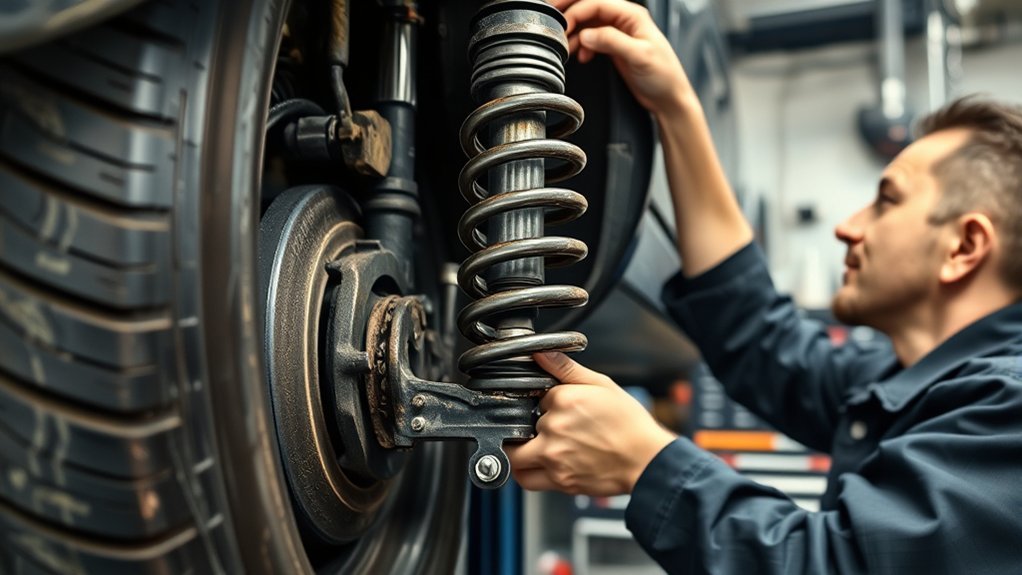
A suspension inspection helps you catch worn shocks and struts before they ruin a good set of tires. It also helps separate shock wear from alignment, balance, tire pressure, and steering problems.
| Check | What It Shows | Why It Matters |
|---|---|---|
| Tire cupping | Possible weak damping, imbalance, or loose parts | Catches uneven wear before the tire becomes noisy or unsafe |
| Shock and strut leakage | Seal failure or damaged housing | Weak damping can reduce tire contact and control |
| Springs and ride height | Sagging or broken spring issues | Ride height changes can affect alignment |
| Control arms, bushings, and ball joints | Play, cracking, or looseness | Loose parts can create feathering and edge wear |
| Alignment and wheel balance | Tracking and vibration problems | Prevents the same wear pattern from returning |
A good inspection protects more than tread life. It helps restore braking stability, steering confidence, and ride control. It also prevents you from replacing tires before the suspension problem is fixed.
When Not To Drive on a Worn or Cupped Tire
Do not keep driving normally if the tire shows exposed cords, steel belts, sidewall bulges, deep cuts, rapid air loss, or severe cupping that causes strong vibration. Those signs can affect control and may point to tire damage that cannot be fixed with shocks, rotation, or alignment.
If the car pulls hard, bounces badly, feels unstable during braking, or makes loud thumping noises, drive only as far as needed to reach a safe inspection point. Use roadside assistance instead if the tire looks damaged or the vehicle feels unsafe to control.
Frequently Asked Questions
What does tire wear from bad shocks look like?
Tire wear from bad shocks often looks like cupping or scalloping. You may see uneven dips, chopped patches, or wavy tread around the tire. The tire may also make a humming or thumping sound. Similar wear can come from imbalance, worn bearings, or loose suspension parts, so inspect the full system.
What are the symptoms of a bad shock?
Common bad shock symptoms include extra bouncing after bumps, nose dive during braking, body roll in turns, clunking over rough roads, fluid leaks, uneven tire wear, and a loose or floating ride. A vehicle can also feel less stable during emergency stops or quick lane changes.
What is the most common cause of tire wear?
Normal driving slowly wears every tire, but abnormal tire wear often comes from improper tire pressure, poor alignment, missed rotation, wheel imbalance, worn suspension parts, or aggressive driving. Edge wear often points to alignment or pressure problems, while cupping can point to shocks, balance, bearings, or loose suspension components.
Can bad shocks cause inside tire wear?
Bad shocks can make inside wear worse if the tire is already bouncing or the suspension has extra movement. However, smooth inside-edge wear usually points more directly to alignment, camber, toe, worn control arm bushings, or loose steering parts. Check alignment and suspension play before blaming shocks alone.
Should I replace shocks before tires?
Yes, replace or repair the worn suspension parts before installing new tires unless the tire is unsafe and needs immediate replacement. If the cause stays on the vehicle, the new tire can develop the same cupping, feathering, or shoulder wear.
Can I drive on cupped tires?
You may be able to drive on mildly cupped tires long enough to get an inspection, but severe cupping, strong vibration, exposed cords, bulges, or rapid air loss means you should stop normal driving. Have the tires, shocks, balance, bearings, and alignment checked before taking a highway trip.
Sources
- National Highway Traffic Safety Administration: TireWise — tire pressure, tread depth, balance, alignment, rotation, and tire-related crash safety data
- A universal nonlinear model for the dynamic behaviour of shock absorbers — hydraulic shock absorber dynamics and damping behavior
- Nonlinear Dynamics DOI record for shock absorber model — peer-reviewed record for the shock absorber dynamics study

Related Articles
Tire Balancing Weights: Types, Cost, and Why You Need Them
Precisely chosen tire balancing weights reduce vibration and wear, but which type fits your wheels and what it really costs may surprise you.
Read More
Tire Repair Kits: What’s Inside and How to Use One
Get the essentials of tire repair kits, learn how each tool works, and discover the simple steps that can save your trip.
Read More
How to Get More Miles Out of Your Tires: 10 Proven Tips
Maximize tire life with 10 proven tips that save money and boost safety—discover the simple habits that can add many more miles.
Read More