
What Is a Tire Gauge? Types, Accuracy & How to Use One
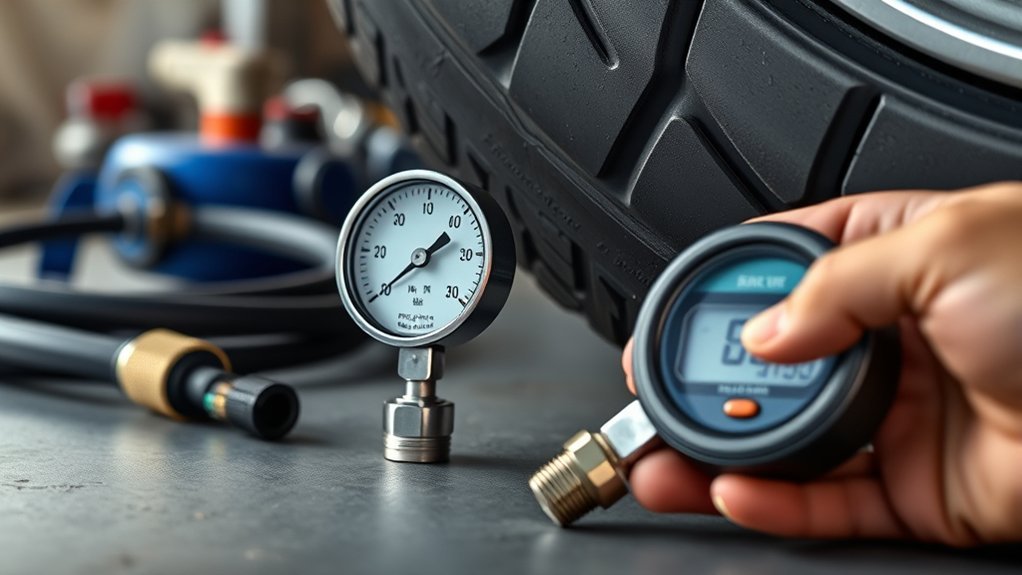
A tire gauge measures the air pressure inside your tires in PSI, so you can keep each tire at the vehicle maker’s recommended cold pressure. Use it when tires are cold, press it squarely onto the valve stem, read the number, then add or release air as needed. The right pressure helps your tires grip, wear evenly, last longer, and support better fuel economy.
Quick Answer
A tire gauge is a small tool that checks tire pressure in PSI. For the most accurate reading, check tires when they are cold, seal the gauge firmly on the valve stem, compare the result with the driver-side door placard or owner’s manual, then adjust and recheck.
Key Takeaways
- A tire gauge measures tire air pressure in PSI and helps prevent underinflation, overinflation, uneven wear, and poor handling.
- Always use the vehicle’s recommended cold tire pressure from the door placard or owner’s manual, not the maximum PSI printed on the tire sidewall.
- Digital, analog, stick, liquid-filled, and inflator gauges can all work well when they fit your vehicle’s pressure range and valve access.
- Check all tires, including the spare if your vehicle has one, at least monthly and before long trips.
- A TPMS warning light is helpful, but it does not replace regular checks with an accurate tire gauge.
At a Glance
| Time Required | 5–10 minutes for all four tires |
| Difficulty | Easy beginner maintenance |
| Tools Needed | Tire gauge, valve caps, and an air compressor or inflator if pressure is low |
| Cost | Usually low cost for a basic gauge; free if you already own one |
What Is a Tire Gauge?
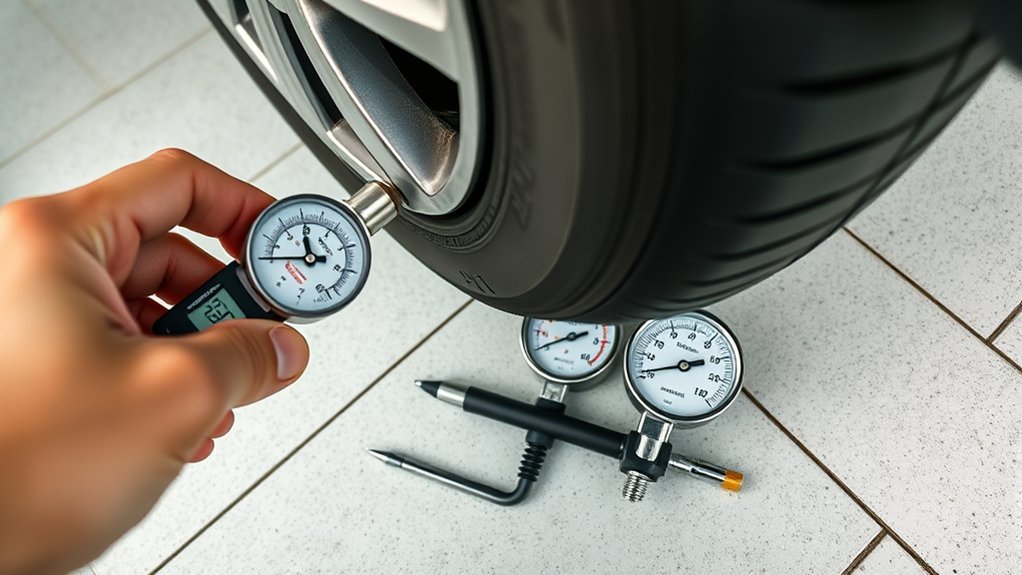
A tire gauge is a pressure-measuring tool that tells you how much air is inside a tire. Most gauges show the reading in PSI, which stands for pounds per square inch. Some also show kPa or bar, depending on the model.
You use a tire gauge to compare your tire’s current pressure with the recommended cold pressure listed on the vehicle’s tire information label or in the owner’s manual. The U.S. National Highway Traffic Safety Administration says proper tire pressure affects safety, durability, and fuel consumption, and it recommends checking pressure at least once a month when tires are cold. You can review NHTSA’s tire pressure guidance here: NHTSA TireWise tire safety guide.
A good gauge helps you avoid underinflation, which can increase heat buildup and wear, and overinflation, which can reduce ride comfort and change how the tire contacts the road. It also helps you verify pressure after using a compressor, portable inflator, or service-station air pump. Additionally, using a gauge that provides accurate readings can significantly improve your vehicle’s performance and safety.
NHTSA reported 511 traffic deaths in tire-related crashes in 2024, which is one reason regular tire pressure checks belong in your basic maintenance routine.
[Products Worth Considering]

EVOULTES heavy duty tire inflator with an integrated gauge delivers accurate pressure readings from 10–120 PSI, helping you inflate, deflate, and check tires in one tool. The 16.5-inch extended dual-head air chuck with swivel base reaches hard-to-access dual wheel valves on trucks and RVs. A brass trigger core and side-mounted air release valve make operation smooth, with standard 1/4" NPT threading and quick-connect compatibility for easy setup.
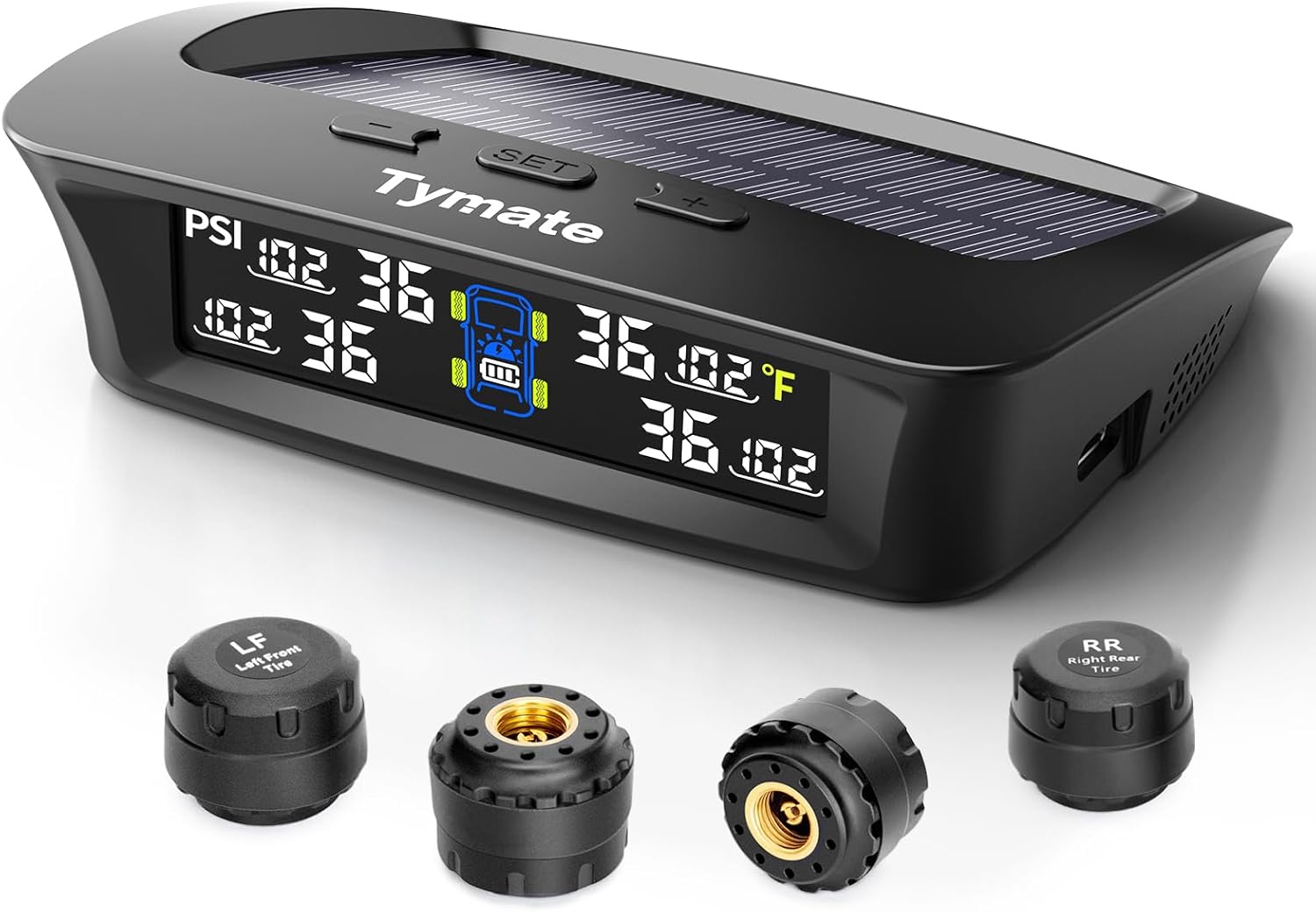
The Tymate TM3 RV TPMS delivers real-time tire pressure monitoring from 0 to 144 PSI with accurate readings and dependable wireless communication. It includes four external sensors with pre-pairing, six alarm modes for rapid leak, pressure extremes, temperature, and signal loss, plus an easy-reference setup for alert thresholds. Solar and USB-C charging help keep the display powered, while the color LCD and adaptive backlight improve visibility for safer driving and towing.

The JACO FlowPro Tire Inflator measures, inflates, and airs down tires up to 100 PSI with battery-free operation and ±2% accuracy after calibration. It features a glowing pressure dial for night visibility, a heavy-duty steel build with a hybrid hose, and a precision push-to-inflate thumb trigger. The patented Lightning Air Chuck locks on for a secure seal, and the kit includes quick-connect hardware for easy inline use with your air compressor.
How to Use a Tire Gauge Properly
Start with tires that are cold. In practical terms, that means the vehicle has been parked for at least three hours or driven only a short distance at low speed. Warm tires can show a higher reading, so checking cold gives you the cleanest number.
- Find the recommended PSI. Look on the driver-side door placard, door edge, B-pillar, fuel door, glove box, or owner’s manual. Do not use the tire sidewall maximum as your target pressure.
- Remove the valve cap. Place it somewhere safe so it does not roll away.
- Press the gauge straight onto the valve stem. Push firmly enough to stop hissing air.
- Read the PSI right away. Check the dial, stick, or digital screen.
- Adjust the pressure. Add air if the tire is low, or bleed air slowly if the tire is high.
- Recheck the pressure. Repeat until the reading matches the recommended cold PSI.
- Replace the valve cap. A cap helps keep dirt and moisture away from the valve core.
Maintaining proper tire pressure is essential for optimal tire performance and safety during your drives.
Check the Valve Stem Seal
Before you trust the reading, make sure the gauge seals tightly on the valve stem. A loose angle lets air escape and can make the reading look lower than it really is. Inspect the valve stem for cracks, cuts, corrosion, or obvious damage before you press the gauge on.
- Look at the valve stem and valve cap before checking.
- Press the gauge straight on, not at an angle.
- Listen for hissing air around the chuck.
- Re-seat the gauge if the fit slips.
- Remove the gauge cleanly after the reading appears.
If the valve stem keeps leaking after you remove the gauge, have the valve core or stem inspected by a tire professional.
Read PSI Accurately
Hold the tire gauge steady and read the number immediately. With a digital gauge, wait for the display to settle. With a dial gauge, keep the chuck sealed until the needle stops moving. With a stick gauge, read the mark where the sliding bar stops.
Compare the reading with your vehicle’s recommended cold PSI. Many passenger vehicles fall near the 30–35 PSI range, but the correct number depends on the vehicle, tire size, load, and front/rear axle recommendation. Always follow the placard or owner’s manual first.
Warning: The PSI printed on the tire sidewall is usually the tire’s maximum pressure, not the vehicle’s recommended cold tire pressure. Use the vehicle placard or owner’s manual as your target.
Adjust Pressure Safely
If the pressure is too high, release air in short bursts. Many dial and digital gauges include a bleeder valve for this. If your gauge does not have one, press the small pin inside the valve stem gently, then recheck with the gauge.
- Wipe dirt from the valve stem first.
- Seal the gauge tightly before reading.
- Compare PSI to the vehicle’s recommended cold pressure.
- Bleed air slowly if the reading is high.
- Add air in short bursts if the reading is low.
- Recheck until the pressure matches the placard.
Do not overrelease air. Low pressure can hurt handling, increase heat, reduce fuel economy, and speed up tire wear. FuelEconomy.gov notes that underinflated tires can lower gas mileage, while proper inflation helps tires last longer and stay safer. See the guidance here: FuelEconomy.gov tire inflation and fuel economy tips.
What Tire Pressure Should You Use?
Use the recommended cold tire pressure set by your vehicle manufacturer. You can usually find it on the driver-side door jamb label, on the door edge, in the owner’s manual, or in the vehicle information screen on some newer models.
The right pressure is not the same for every vehicle. A small hatchback, SUV, pickup, loaded van, and RV can all need different PSI. Some vehicles also use one pressure for the front tires and another for the rear tires. If your placard lists different front and rear pressures, follow that split.
Check pressure at least once a month, before long trips, before towing or hauling, and after major temperature swings. Tire Rack explains that light-duty tire pressure often changes by about 1 PSI for every 10°F change in air temperature, so seasonal weather can move your readings. You can read its tire pressure temperature guide here: Tire Rack on temperature and tire pressure. Additionally, maintaining proper tire pressure enhances tread life longevity, which is crucial for maximizing the performance of your tires.
Note: If you must add air after driving, inflate to the recommended pressure for now, then recheck and fine-tune the tires when they are cold.
Which Tire Gauge Type Is Best for You?
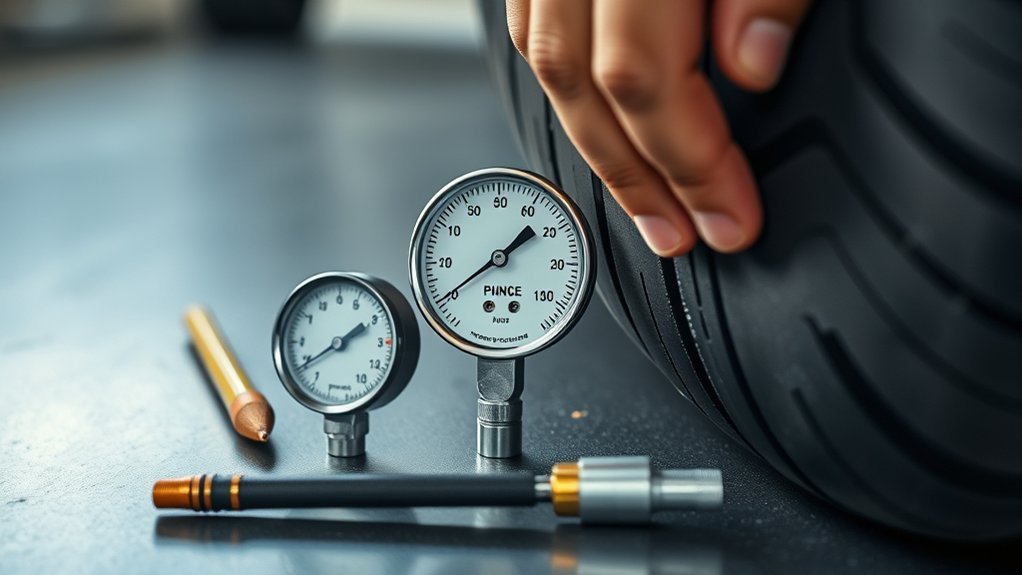
Which tire gauge type is best for you depends on your vehicle, your budget, how often you check pressure, and whether you also want to add air. A simple analog or stick gauge works for quick checks. A digital gauge is easier to read in low light. A liquid-filled gauge can keep the needle steadier around vibration. An inflator gauge lets you measure and fill from the same tool.
The best tire gauge is the one that fits your vehicle’s pressure range, seals well on the valve stem, and gives repeatable readings.
- Stick gauge: compact, low cost, battery-free, and easy to keep in a glove box.
- Analog dial gauge: easy to read, often durable, and available with hoses and bleeder valves.
- Digital gauge: quick display, useful in low light, and often precise enough for routine maintenance.
- Liquid-filled gauge: useful when vibration makes a standard needle harder to read.
- Inflator gauge: best when you want to check, fill, and bleed pressure with one tool.
- High-pressure gauge: useful for trucks, RVs, trailers, and other vehicles that need higher PSI ranges.
Choose a gauge that suits your needs and matches the pressure range you actually use. For most passenger cars and small SUVs, a 0–60 PSI or 0–100 PSI gauge is usually more useful than a very high-range gauge because the scale is easier to read in the normal pressure range. Choosing a gauge that suits your needs can enhance your tire maintenance routine and ensure optimal performance on the road, especially when considering the benefits of tire inflators.
How Accurate Are Tire Gauges?
Tire gauge accuracy depends on the gauge design, build quality, age, storage, and how carefully you use it. A quality digital or dial gauge can give consistent readings, but even a good gauge can drift after drops, dirt, moisture, or long-term wear.
For everyday driving, repeatability matters. If you check the same tire three times and the readings jump around, the gauge may not be sealing well or may be damaged. Try reseating it straight on the valve stem. If readings still vary widely, compare it with another trusted gauge or replace it.
Do not assume a gas-station pump gauge is perfect. Those gauges see heavy public use and may be dropped, weathered, or out of calibration. Your own clean, protected gauge can be more dependable for routine checks. Additionally, maintaining proper tire pressure enhances fuel economy and safety, contributing to a better driving experience.
Why Tire Gauge Accuracy Matters
Accurate pressure readings matter because tire pressure affects safe handling, braking feel, ride comfort, fuel use, and tread wear. Low pressure can make the tire flex too much and build heat. High pressure can reduce ride comfort and change the tire’s contact patch.
- Avoid underinflation that raises rolling resistance.
- Reduce overinflation that can reduce ride comfort and grip.
- Prevent uneven tread wear and early replacement.
- Lower the risk of tire overheating during long drives.
- Keep comfort and steering feel more consistent.
Pressure also changes with temperature and driving. That is why you should compare readings under similar conditions whenever possible. A cold morning check gives you the best baseline. Accurate readings give you control, and control means freedom on the road. Additionally, maintaining optimal tire pressure helps improve fuel efficiency, contributing to reduced emissions and environmental impact.
[Products Worth Considering]

The Fanttik X10 Pro is a cordless portable tire inflator that reaches up to 150 PSI and can inflate an R15 tire in about 35 seconds for quick roadside or home top-ups. With AccuInFlate auto-stop and smart start/stop controls, it helps maintain accurate pressure and frees your hands once the target is reached. A high-visibility digital display and preset modes make it easy to set and monitor inflation for cars, motorcycles, bikes, and balls.
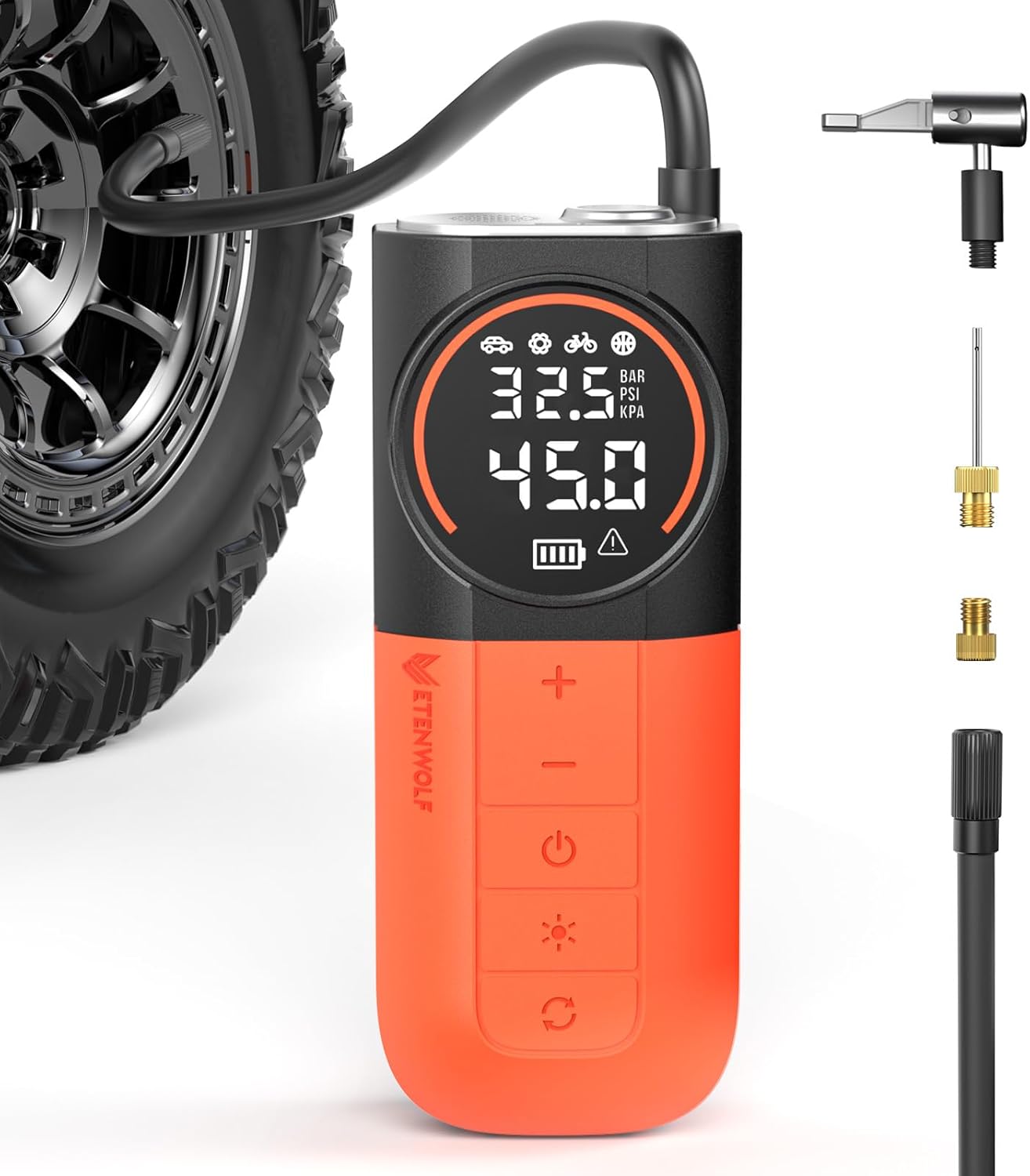
The ETENWOLF S1 cordless tire inflator delivers ultra-fast inflation with up to 160 PSI and a 20 L/min airflow for quicker tire top-offs. Its 5200mAh battery and cooling system support inflating many tires and sports balls on a single charge, while the digital pressure gauge and multi-unit display help you reach the right pressure accurately. With preset modes, pressure memory, an auto-stop feature, and an LED flashlight, it’s built for easy roadside and everyday use.
How to Choose the Best Tire Gauge
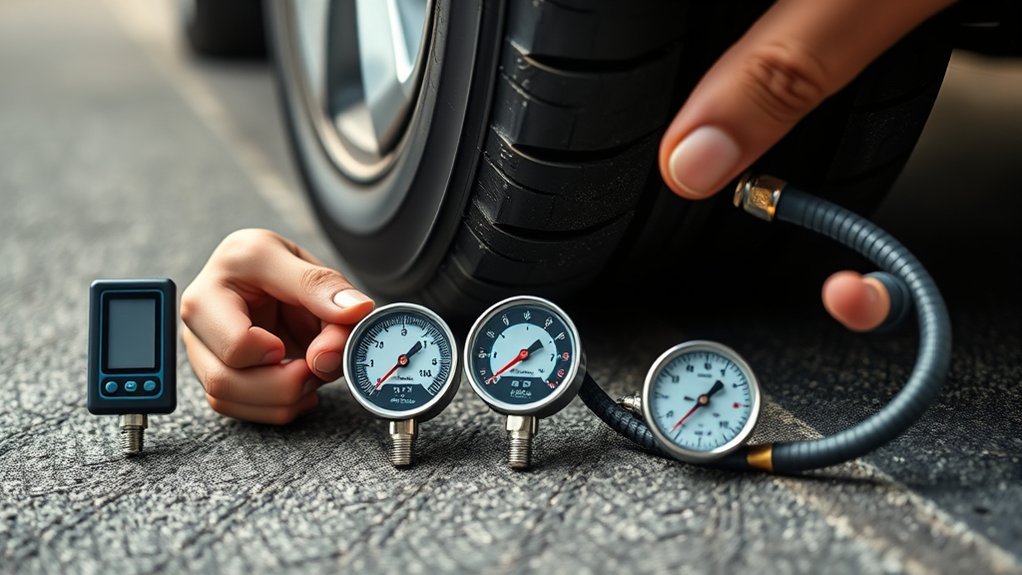
To choose the best gauge, match the tool to how you check pressure and how exact you need the reading to be. Pick an analog tire gauge if you want simple, rugged use. Choose a digital model if you want a quick display. Choose an inflator gauge if you already use a compressor and want to fill and read pressure in one step.
| Feature | What to choose |
|---|---|
| Readout | Digital for easy reading; analog for durability; stick for compact storage |
| Range | 0–60 or 0–100 PSI for many light vehicles; higher range for trucks, RVs, and trailers |
| Build | Metal chuck, sturdy body, flexible hose, and a bleeder valve if you adjust pressure often |
| Valve access | Straight chuck for easy stems; angled or swivel chuck for tight wheels |
Check grip and access too. A flexible hose and swivel chuck help you reach valves at awkward angles, while sturdy construction keeps your tire gauge reliable over time. Additionally, consider tire selection criteria to ensure your tires align with your driving needs.
Pro Tip: Store your gauge in a glove box, console, or small pouch. Dirt inside the chuck and impact damage from drops can make readings less reliable.
What If Your Tire Gauge Reading Seems Wrong?
If the number looks wrong, do not keep adding or releasing air without checking the setup. Remove the gauge, inspect the valve, then try again with a straight, firm seal. A small hiss at the valve can make the reading drop quickly.
- Reading changes every time: reseat the gauge straight on the valve stem.
- Gauge reads much lower than expected: check for a loose seal, leaking valve core, or damaged tire.
- Gauge reads much higher after driving: let the tires cool and check again later.
- One tire keeps losing pressure: inspect for nails, rim leaks, valve leaks, or sidewall damage.
- Two gauges disagree: compare both with a trusted shop gauge and replace the one that is inconsistent.
If a tire keeps dropping pressure after you adjust it, have it inspected. A slow puncture or valve leak can leave you stranded if you ignore it.
Does TPMS Replace a Tire Gauge?
No. A tire pressure monitoring system, or TPMS, helps warn you when a tire becomes significantly underinflated, but it does not replace manual checks. NHTSA says TPMS is not a substitute for regular tire maintenance, so you should still inspect tires monthly with an accurate gauge.
TPMS also may not warn you about every small pressure change. If all four tires slowly lose pressure together, or if pressure changes with weather, you may still be below the ideal cold PSI before you notice a warning. Use TPMS as a backup alert, not your only pressure check.
Frequently Asked Questions
What PSI for RAV4 tires?
Use the PSI listed on your Toyota RAV4’s driver-side door placard or owner’s manual. Many RAV4 trims fall around the low-to-mid 30 PSI range, but the exact number can vary by model year, tire size, trim, and load. Check pressure when tires are cold, then adjust all tires to the listed front and rear recommendations.
What tire pressure for Kia Forte?
Set your Kia Forte tires to the cold PSI shown on the driver-side door jamb label or in the owner’s manual. Do not rely on a generic number or the sidewall maximum. Check before driving, add or release air as needed, and recheck after major temperature changes or before long highway trips.
What should my tire pressure be for a Subaru Outback?
Use your Subaru Outback’s door-jamb placard or owner’s manual because pressure can vary by model year, tire size, trim, and load. Some vehicles list different front and rear pressures. Check when the tires are cold, adjust carefully, and keep all four tires within the manufacturer’s recommended range.
What PSI should my Mini Cooper tires be?
Your Mini Cooper’s correct PSI is listed on the tire information placard or in the owner’s manual. The exact pressure depends on the model, tire size, and load. Check pressure monthly, before longer trips, and after temperature swings. Proper inflation helps maintain steering feel, braking response, fuel economy, and tire life.
Is a digital tire gauge better than an analog gauge?
A digital tire gauge is easier to read and often convenient in low light, but it is not automatically better than every analog gauge. A quality dial gauge can be very reliable. Choose the style that seals well, matches your PSI range, feels easy to use, and gives repeatable readings.
Should you check tire pressure hot or cold?
Check tire pressure cold whenever possible. A cold reading means the vehicle has been parked for several hours or has not been driven far. Heat from driving, sunlight, and warm weather can raise pressure temporarily, which may lead you to underinflate the tire for the next cold start.
Conclusion
A tire gauge gives you simple, direct control over one of the most important tire maintenance tasks. Use it when tires are cold, compare the reading with the vehicle placard or owner’s manual, and adjust pressure in small steps. That quick habit can improve handling, fuel economy, ride comfort, and tire life.
Choose a gauge that fits your vehicle and your routine. Keep it clean, protect it from drops, and use it monthly or before long trips. When you measure correctly, you do more than inflate tires. You maintain safety, performance, and confidence every time you drive.
Sources
- NHTSA TireWise: Tire Safety Ratings and Awareness — supports cold-pressure checks, tire placard guidance, TPMS limits, and tire safety context.
- FuelEconomy.gov: Keeping Your Vehicle in Shape — supports the fuel-economy and tire-life benefits of proper inflation.
- Tire Rack: How Temperature Change Affects Tire Air Pressure — supports temperature-related tire pressure changes and cold-check guidance.

Related Articles
305 Tire Size Explained: How Big Is It?
I explain how big a 305 tire really is—and why the exact fit can surprise you.
Read More
Tire Ply Rating Explained: What the Numbers Mean
Tire ply ratings reveal more than numbers, hinting at strength, load capacity, and hidden tradeoffs you’ll want to understand before choosing.
Read More
2 Ply Vs 4 Ply Tires: What’s the Real Difference?
I’ll explain the real difference between 2-ply and 4-ply tires, and the choice may surprise you depending on where you drive.
Read More