
What Does a Broken Belt in a Tire Look Like? Signs & Symptoms
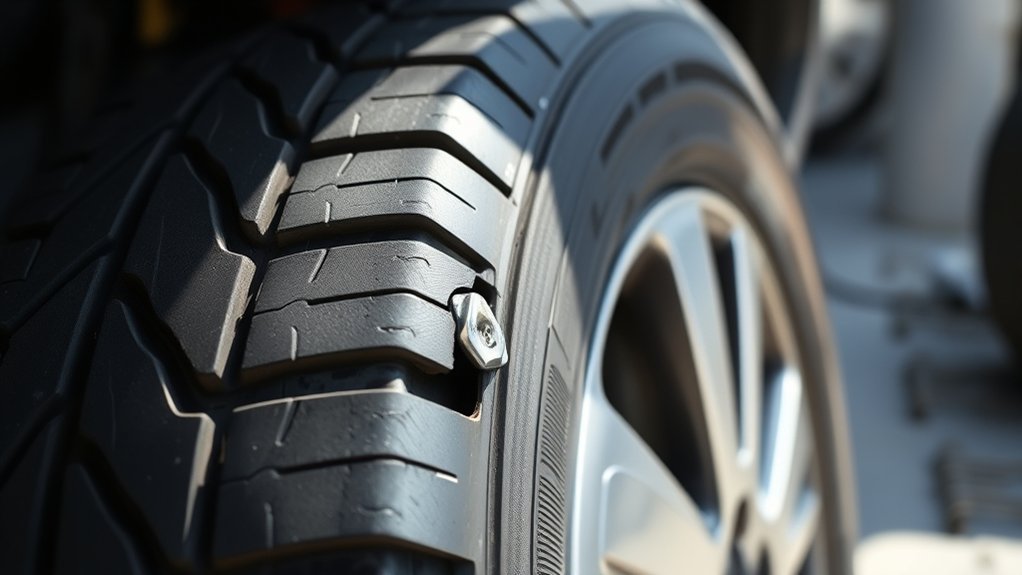
A broken tire belt usually looks like one distorted section of the tire. You may see a bulge, raised tread area, flat patch, wavy tread, or sidewall bubble. You may also feel steering-wheel vibration, a repeated thump, a wobble, pulling, or a rough ride that gets worse with speed. Treat these signs as possible internal tire damage, not normal tread wear.
Quick Answer
A broken tire belt often appears as a bulge, ripple, raised tread area, flat spot, or uneven wear in one section of the tire. While driving, it can cause vibration, thumping, pulling, or wobbling. If you see a bulge or feel a sudden repeated shake, stop driving as soon as it is safe and have the tire inspected.
Key Takeaways
- A broken tire belt can show as a bulge, wave, flat spot, raised tread area, or warped tire shape.
- Common driving symptoms include steering-wheel vibration, thumping, wobbling, pulling, or a rough ride.
- A visible bulge or tread distortion can mean the tire has internal structural damage.
- A tire can have hidden internal damage after a pothole strike, even if it does not show a large bubble right away.
- You should not keep driving on a suspected broken belt except to reach a safe stopping place.
- Most confirmed belt separation or structural tire damage cannot be repaired. Replacement is usually the safe fix.
Warning: If a tire has a visible bulge, exposed cords, severe wobble, or repeated thumping, do not test it at highway speed. Slow down smoothly, avoid hard braking, pull over when safe, and use a spare tire or roadside assistance.
What Does a Broken Tire Belt Look Like?
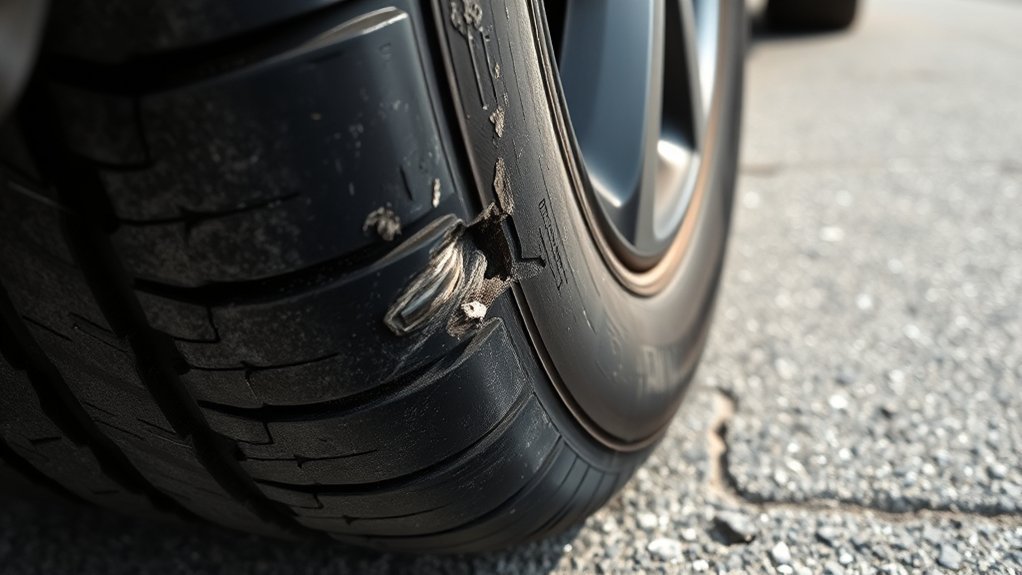
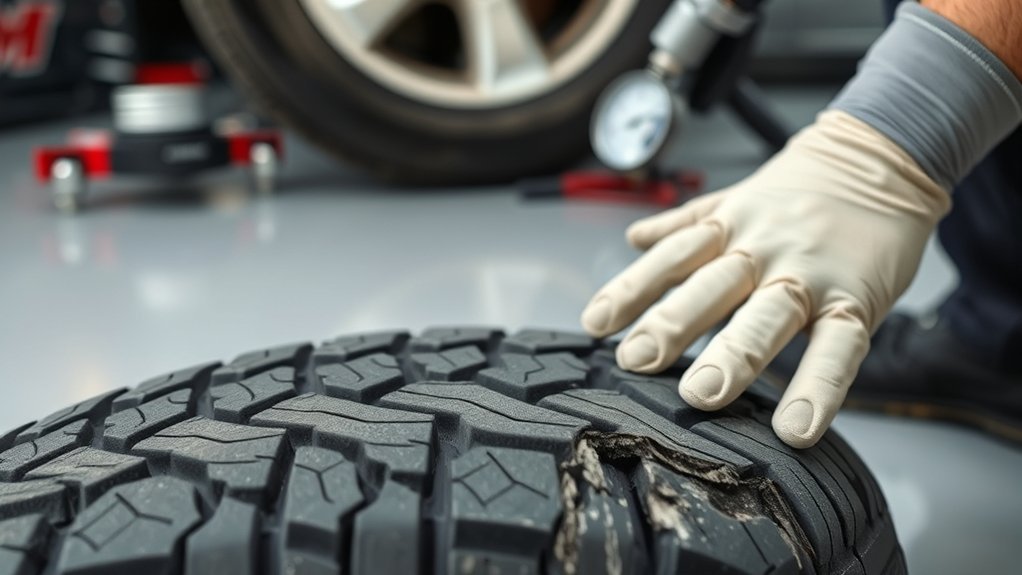
A broken tire belt often shows up as a section of the tire that no longer looks round and even. You may see a raised area, a sidewall bulge, a tread bubble, a dip, or a flat patch that interrupts the tire’s normal shape.
The tire may also look slightly out of round when you roll the vehicle forward slowly. One tread section may appear higher than the rest, or the tread blocks may look wavy instead of uniform. These signs can point to internal belt separation, where the steel or fabric reinforcement under the tread has shifted, separated, or failed.
Look across the tread face, shoulders, and both sidewalls. A broken belt does not always create a dramatic bubble at first. Sometimes the first clue is a small ripple, uneven shoulder wear, or one patch of tread that looks scrubbed compared with the rest of the tire.
| What You See or Feel | What It May Mean | What To Do |
| Bulge, bubble, or raised spot | Possible internal separation, impact damage, or cord damage | Stop driving and get the tire inspected |
| Wavy or warped tread | Tire may no longer rotate evenly | Avoid highway speeds and use a spare or tow |
| Thumping with each rotation | Damaged area may be hitting the road unevenly | Pull over when safe and inspect visually |
| Vibration that gets worse with speed | Possible tire damage, balance issue, bent wheel, or suspension problem | Have the tire and wheel assembly checked |
[Products Worth Considering]

This tire repair kit provides fast emergency puncture repair without removing the tire from the rim, helping you get back on the road quickly. Its screw plug system is designed for punctures in both tread and sidewall and includes a complete patch plug tool set with essential accessories. A portable storage bag makes it easy to carry for cars, trucks, SUVs, motorcycles, and heavy-duty applications.

This VEVOR tire bead breaker uses a slide-hammer impact and wedge tip to separate tire beads from rims quickly and efficiently without damaging hub surfaces. The long handle and sturdy steel construction help reduce user strain while providing reliable, portable tire changing for cars, trucks, and more. Ideal for home mechanics and repair shops handling multiple vehicle tire sizes.

EVOULTES heavy duty tire inflator with an integrated gauge delivers accurate pressure readings from 10–120 PSI, helping you inflate, deflate, and check tires in one tool. The 16.5-inch extended dual-head air chuck with swivel base reaches hard-to-access dual wheel valves on trucks and RVs. A brass trigger core and side-mounted air release valve make operation smooth, with standard 1/4" NPT threading and quick-connect compatibility for easy setup.
Can a Broken Tire Belt Be Hidden?
Yes. A tire can have internal belt damage before it shows a large bubble. This can happen after a hard pothole strike, curb impact, road-debris hit, severe underinflation, overload, or heat buildup. The outside may look normal at first, but the tire may start to vibrate, thump, or wear unevenly later.
That is why a new vibration after an impact deserves attention even when the tire still holds air. Holding air does not prove the belt package is healthy.
Broken Tire Belt Symptoms You’ll Notice
If a tire belt is broken or separating, you may feel the problem before you clearly see it. The most common symptom is a steady vibration through the steering wheel, seat, or floor. It may start mild at low speed and become stronger on the highway.
You may also hear a thump, bump, or slap that repeats with tire rotation. The sound may change with speed because the damaged section contacts the road differently from the rest of the tread.
- Steering-wheel shake that was not there before
- A rough ride on smooth pavement
- Thumping, bumping, or rhythmic road noise
- Pulling to one side without a clear alignment reason
- One tire showing unusual wear compared with the others
- A visible bulge, wave, dip, or flat spot
- A tire that appears to hop when rotated on a balance machine
These symptoms can also come from wheel balance, a bent rim, alignment problems, brake issues, or worn suspension parts. The difference is that a bulge, ripple, or tread distortion points more strongly to tire structure damage. If you see that kind of shape change, treat it as urgent.
What Causes a Tire Belt to Break?
A tire belt can break or separate when the tire’s internal structure gets damaged, overstressed, overheated, or weakened with age. The belt package sits under the tread and helps the tire keep its shape. Once that layer fails, the tire may no longer roll evenly.
Road Impacts
Potholes, curb strikes, road debris, and sharp pavement edges can bruise or damage the tire’s internal layers. The outside of the tire may look normal right after the hit, but the belt can still weaken inside.
- Potholes can compress the tire sharply against the wheel.
- Curbs can pinch the sidewall and belt package.
- Road debris can cut or bruise the tread area.
- Repeated gravel-road impacts can add stress over time.
After a hard impact, inspect the tire right away. If vibration starts soon after the hit, do not assume it is only a balance issue.
Defects and Wear
Overloading, underinflation, poor maintenance, age, and manufacturing defects can also contribute to belt failure. Underinflation is especially harmful because it makes the tire flex more, which builds heat and stress inside the casing.
The National Highway Traffic Safety Administration says poor tire maintenance, including not having enough air and failing to rotate tires, can lead to a flat tire, blowout, or tread coming off the tire. NHTSA also recommends checking tire pressure monthly when tires are cold.
Age matters too. Rubber and internal materials change over time because of heat, storage, sunlight, climate, and use. A tire with good-looking tread can still be unsafe if it has aged, been overloaded, run underinflated, or suffered internal damage.
How to Check for a Broken Tire Belt
At a Glance
| Time Required | 5 to 10 minutes for a basic visual check |
| Difficulty | Easy screening, but diagnosis should be done by a tire technician |
| Tools Needed | Flashlight, tire pressure gauge, tread depth gauge or penny, gloves, chalk or tape |
| Cost | Free for a basic check; shop inspection or replacement cost varies by tire and vehicle |
Start with the tire parked on level ground. Let it cool if you have been driving, then inspect the tread, shoulders, and sidewalls under good light. You are looking for shape changes, not just tread depth.
- Check for bulges and ripples. Look along the sidewall and tread face from several angles.
- Feel the tread carefully. Run your hand over the tread only when the vehicle is parked, the tire is cool, and you can do it safely. Watch for raised or dipped sections.
- Compare tires. Look at the matching tire on the same axle. One odd-looking tire is a stronger warning sign.
- Check pressure cold. Use the pressure on the driver-side door placard or owner’s manual, not the maximum pressure on the tire sidewall.
- Check tread depth and wear. NHTSA says tires are not safe and should be replaced when tread reaches 2/32 inch.
- Look for fresh impact clues. Check for rim dents, sidewall scuffs, cuts, pressure loss, or new vibration after a pothole or curb hit.
- Watch for hop or wobble. If the vehicle is safely lifted by a professional, spinning the wheel may reveal an out-of-round tire.
Pro Tip: Mark the suspicious spot with chalk or tape before visiting a tire shop. It helps the technician inspect the exact area that looked raised, flat, or distorted.
A driveway check can help you spot danger signs, but it cannot prove the belt condition inside the tire. If you see deformation or feel vibration, have a qualified tire technician inspect the tire and wheel assembly.
How Do You Tell Which Tire Has the Problem?
Start with the safest clues. Do not drive faster to “test” the tire. Instead, inspect each tire while parked, compare both tires on the same axle, and look for one tire that has a bulge, ripple, uneven shoulder wear, pressure loss, or a different shape from the others.
Where you feel the vibration can help, but it is not proof. Steering-wheel shake often points toward a front tire, wheel, or suspension issue. Seat or floor vibration can come from the rear. Still, vibration can travel through the vehicle, so a shop inspection matters.
- If vibration started after a pothole, check the tire and wheel that took the impact first.
- If one tire has a visible bulge or wavy tread, treat that tire as unsafe.
- If the tire looks normal but vibration is new, ask a tire shop to check balance, wheel runout, tire roundness, and suspension condition.
- If the vehicle pulls suddenly after impact, avoid long driving and get the tire and alignment checked.
Note: A tire pressure monitoring system can warn you when a tire is significantly underinflated, but it does not diagnose a broken belt, tread separation, out-of-round tire, or sidewall bubble. Still check the tire visually and with a pressure gauge.
Is It Safe to Drive on a Broken Tire Belt?
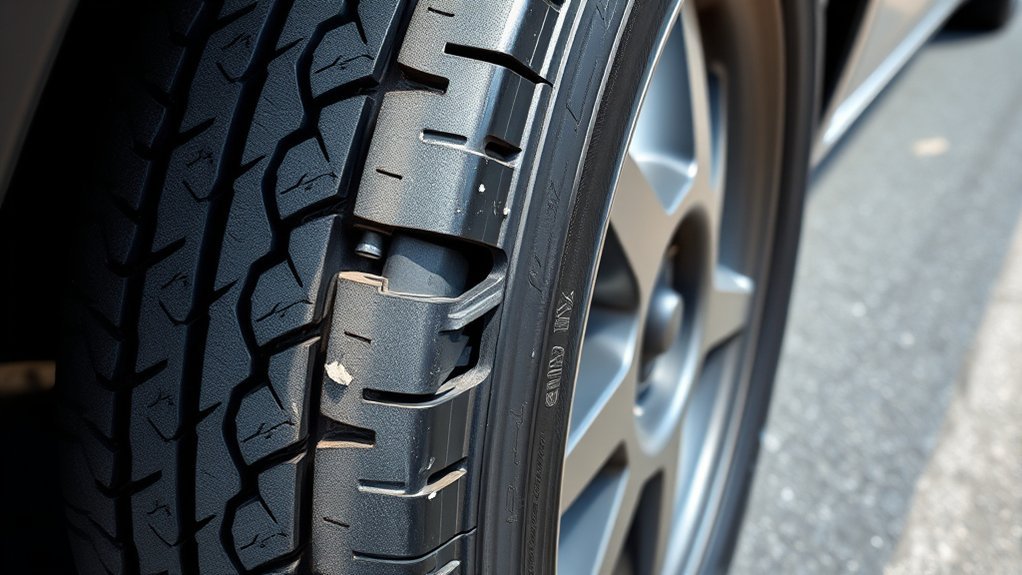
No. It is not safe to keep driving on a suspected broken tire belt. The tire’s structure may be compromised, and the damaged area can worsen without much warning. That can lead to sudden air loss, tread separation, or unstable handling.
NHTSA explains that a tire blowout is a rapid loss of air pressure that can cause a vehicle to lose control. If a tire starts shaking, thumping, or wobbling, do not test it by driving faster.
What To Do If It Happens While Driving
- Hold the steering wheel firmly with both hands.
- Do not slam on the brakes.
- Ease off the accelerator smoothly.
- Correct your steering gently to keep the vehicle stable.
- Signal and move out of traffic when it is safe.
- Stop in a safe place and inspect the tire from outside the traffic lane.
- Install the spare only if it is safe to do so, or call roadside assistance.
If the tire has a visible bulge, severe tread distortion, exposed cords, or repeated thumping, do not continue to your normal destination. Use the spare, a tow, or a professional mobile tire service.
Can You Fix a Broken Tire Belt?
A broken tire belt or separated belt usually cannot be repaired. A plug or patch can repair some small punctures in the repairable tread area, but it cannot rebuild separated belts, restore steel cord strength, or make a distorted tire round again.
This distinction matters. A nail puncture in the correct tread area is different from a bulge, bubble, exposed cord, tread separation, or out-of-round casing. Once the structure is damaged, balancing the wheel may reduce vibration for a short time, but it will not fix the failed belt. Adding air also will not repair internal damage.
- Do not plug a tire to “fix” a bulge.
- Do not keep driving because the tire still holds air.
- Do not rely on balancing to solve visible tread distortion.
- Do not ignore a tire that thumps after an impact.
- Do have the tire removed and inspected from the inside when a technician recommends it.
If the belt damage is confirmed, replacement is the safe repair.
[Products Worth Considering]

This portable cordless tire inflator delivers up to 160 PSI with fast 17 L/min airflow to help you quickly top up tires and get back on the road. It features dual power mode, running on a 21V rechargeable battery or a 12V DC adapter for convenient roadside use. An automatic shut-off with digital pressure gauge helps prevent overinflation, and a built-in LED light improves visibility in low-light conditions.
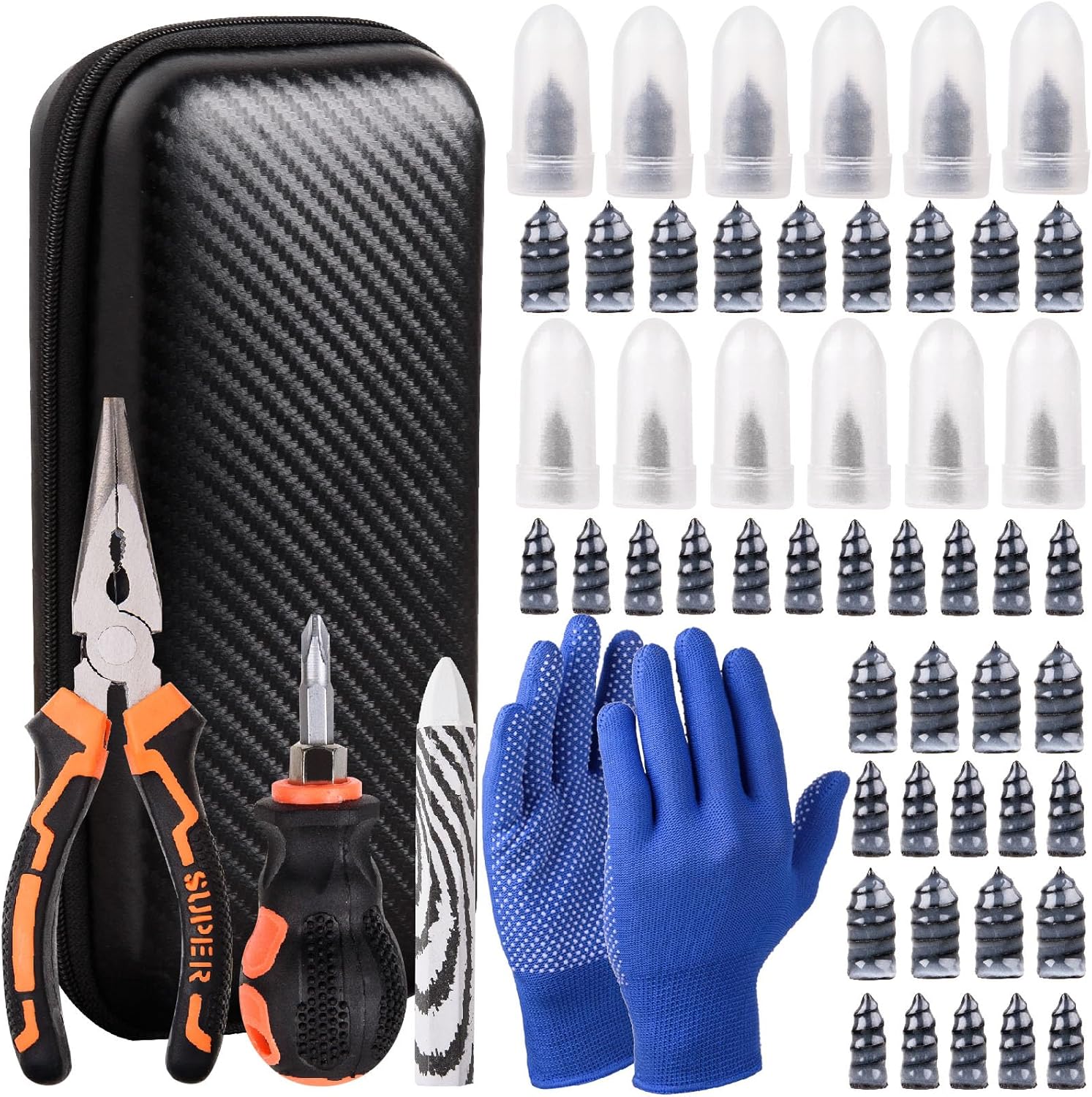
This tire sidewall puncture repair kit fixes flats fast without removing the tire, helping you get back on the road in minutes. It includes self-tapping repair nails, essential tools, gloves, and a portable storage bag for convenient roadside use. Designed for tubeless tires, it helps create a tight, leak-resistant seal for cars, motorcycles, trucks, SUVs, and ATVs.
When Tire Replacement Is the Only Option
Replacement is usually the only option when a tire has a confirmed broken belt, tread separation, sidewall bulge, exposed cords, or severe distortion. These are not cosmetic issues. They mean the tire may not carry load, hold shape, or handle heat correctly.
You should also replace the tire if it has irregular wear combined with vibration or thumping. Even if the tread depth looks legal, the tire can still be unsafe if the internal structure has failed.
When replacing one tire, ask the technician whether the matching tire on the same axle also needs replacement. Some vehicles, especially all-wheel-drive vehicles, may need tires with closely matched tread depth to protect the drivetrain. Follow your owner’s manual and tire shop guidance.
What Else Can Feel Like a Broken Tire Belt?
Not every vibration means the tire belt is broken. Several other problems can create similar symptoms, so diagnosis matters.
- Wheel imbalance: often causes vibration at certain speeds, but may not create a visible bulge.
- Bent wheel: can cause wobble after a pothole or curb strike.
- Bad alignment: can create pulling and uneven wear over time.
- Worn suspension parts: can cause cupping, bouncing, or instability.
- Brake rotor issues: often cause shaking during braking rather than steady cruising.
- Separated tread or sidewall damage: can look and feel similar because the tire’s shape or structure has changed.
The safest rule is simple: vibration alone needs inspection, but vibration plus a bulge, ripple, thump, or warped tread means you should stop driving the tire as soon as you safely can.
How to Prevent Tire Belt Damage
You cannot prevent every pothole strike or hidden defect, but you can reduce the risk of belt damage with simple tire care. The biggest habits are correct inflation, regular inspection, rotation, alignment checks, and avoiding overload.
- Check tire pressure at least once a month when tires are cold.
- Use the pressure listed on the door placard or owner’s manual.
- Inspect tread and sidewalls for cuts, cracks, bulges, and uneven wear.
- Rotate tires on the schedule in your owner’s manual.
- Balance tires when installing new ones or when vibration appears.
- Get an alignment if the vehicle pulls or tires wear unevenly.
- Slow down for potholes, railroad crossings, debris, and broken pavement.
- Do not exceed the vehicle’s load rating.
- Replace damaged valve stems and repair slow leaks promptly.
Also check your tire age. NHTSA notes that aging can make tires more prone to failure, and some vehicle and tire manufacturers recommend replacement after six to 10 years regardless of treadwear. Check the DOT Tire Identification Number on the sidewall to find the tire’s production week and year.
When to Get a Tire Inspection
Schedule a tire inspection right away if you notice steering-wheel vibration, thumping noises, visible bulges, wavy tread, uneven surfaces, sudden pulling, or irregular wear. Do the same after a hard pothole strike or curb impact.
NHTSA advises consumers to watch both visual tire condition and performance changes. If a tire has problems such as noise, vibration, or failure to maintain pressure, consult a tire service professional.
Warning Signs
- A bulge, bubble, ripple, or raised area on the tread or sidewall
- A repeated thump or slap that follows vehicle speed
- New vibration through the steering wheel, seat, or floor
- One tire wearing faster or differently than the others
- A tire that looks out of round when slowly rolled
- Sudden pulling after an impact
- Pressure loss from the same tire more than once
Any one of these signs deserves attention. Several signs together make the tire much more suspicious.
After Impact Checks
After a pothole strike or curb impact, park in a safe place and inspect the tire that took the hit. Look for sidewall swelling, tread distortion, rim damage, pressure loss, or a new vibration.
If the vehicle starts shaking after the impact, do not assume the problem will go away. A tire can suffer internal damage even when the outside looks mostly normal.
Professional Assessment
A tire technician can inspect the tread, sidewall, wheel, balance, and alignment. They may remove the tire from the rim to check internal damage when symptoms or visible signs justify it.
Ask the shop to check the tire and wheel assembly for out-of-round movement, belt separation signs, rim bends, pressure loss, uneven wear, balance problems, and suspension looseness. If the technician finds structural damage, replacement is safer than trying to hide the vibration with extra weight or air pressure.
You can also check whether your tire has an open safety recall. The NHTSA recall search lets you search tires and other equipment for recalls, investigations, complaints, and manufacturer communication.
Note: Tire grades such as treadwear, traction, and temperature can help compare passenger tires when shopping, but they do not diagnose a broken belt. A distorted tire still needs a hands-on inspection.
NHTSA reports 511 deaths in tire-related crashes in 2024, which is why bulges, vibration, tread distortion, and pressure problems deserve quick attention.
Frequently Asked Questions
How do you know if you broke a belt in your tire?
You may have a broken tire belt if you see a bulge, ripple, raised tread section, flat spot, or uneven wear in one area. You may also feel vibration, wobbling, pulling, or hear a repeated thump while driving. A tire technician should confirm the problem because wheel balance, bent wheels, and suspension issues can feel similar.
Is it okay to drive on a tire with a broken belt?
No. A broken belt is a structural tire problem, so you should not keep driving on it. If symptoms appear while driving, slow down smoothly, avoid hard braking, pull over when safe, and use a spare tire or roadside assistance. Driving at highway speed can increase the risk of sudden tire failure.
Can a broken tire belt be fixed?
A broken tire belt usually cannot be fixed. A patch or plug can repair some small tread punctures, but it cannot restore a separated belt, damaged internal cords, or a distorted tire casing. If a technician confirms belt failure, tire replacement is normally the safe solution.
Can a broken tire belt be hidden?
Yes. Internal belt damage can be hidden at first, especially after a pothole strike or curb impact. The tire may still hold air and look mostly normal, but vibration, thumping, uneven wear, or a small ripple can appear later. Have the tire inspected if new symptoms start after an impact.
How long will a tire last with a broken belt?
There is no safe mileage estimate for a tire with a broken belt. It might hold air for a while, or it might worsen quickly under speed, heat, and load. Treat it as unsafe, stop driving as soon as practical, and have the tire inspected and replaced if the belt damage is confirmed.
Can a broken belt cause vibration only at certain speeds?
Yes. A damaged tire can vibrate more at certain speeds because the distorted section hits the road rhythmically. However, wheel imbalance and bent rims can also cause speed-related vibration. If vibration comes with a bulge, ripple, thump, or warped tread, treat the tire as a safety concern.
Will balancing fix a broken tire belt?
No. Balancing can correct weight imbalance in a tire and wheel assembly, but it cannot repair separated belts, damaged cords, sidewall bulges, or an out-of-round tire. If the tire is structurally damaged, replacement is the safer fix.
Will TPMS warn me about a broken tire belt?
Not always. TPMS is designed to warn about significant underinflation, not to diagnose belt separation, sidewall bubbles, tread distortion, or out-of-round movement. If the tire vibrates, thumps, or looks distorted, inspect it even if the TPMS light is off.
Conclusion
A broken tire belt can look like a bulge, ripple, raised tread section, flat spot, warped tire shape, or uneven wear in one area. It can also feel like vibration, wobbling, pulling, thumping, or a rough ride that gets worse with speed.
Do not ignore these signs. Tire damage can affect control, traction, and stopping stability. If you see a bulge or feel a new repeated shake, stop driving as soon as it is safe and have the tire checked. A confirmed broken belt usually means the tire needs replacement, not repair.
Sources
- NHTSA TireWise — tire maintenance, pressure checks, tread depth, aging, TPMS limits, vibration, damage, tire-related crash deaths, and blowout safety guidance.
- NHTSA Recalls — tire and equipment recall search guidance.
- DOT/NHTSA Consumer Guide to Uniform Tire Quality Grading — treadwear, traction, and temperature grade context for tire shoppers.

Related Articles
Tire Balancing Weights: Types, Cost, and Why You Need Them
Precisely chosen tire balancing weights reduce vibration and wear, but which type fits your wheels and what it really costs may surprise you.
Read More
Tire Repair Kits: What’s Inside and How to Use One
Get the essentials of tire repair kits, learn how each tool works, and discover the simple steps that can save your trip.
Read More
How to Get More Miles Out of Your Tires: 10 Proven Tips
Maximize tire life with 10 proven tips that save money and boost safety—discover the simple habits that can add many more miles.
Read More