
How Wide Is a 215 Tire? Exact Width & Fitment Guide
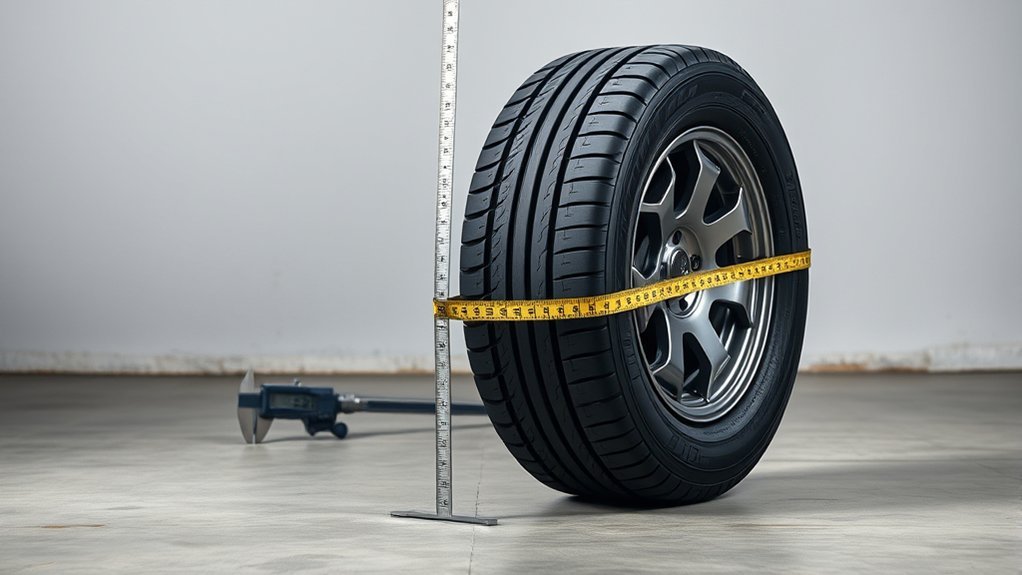
A 215 tire is about 215 millimeters wide, or 8.46 inches, across its nominal section width. That number describes the tire’s widest sidewall-to-sidewall measurement, not the tread width or the full tire diameter. For safe fitment, you still need the full tire size, wheel diameter, approved rim-width range, offset, bolt pattern, load rating, speed rating, and vehicle clearance before you mount it.
Quick Answer
A 215 tire is nominally 215 mm wide, which equals about 8.46 inches. The real mounted width can vary slightly by tire model and rim width. A 215 tire often fits wheels around 6.0 to 8.5 inches wide, but you should always confirm the exact tire maker’s approved rim range.
Key Takeaways
- A 215 tire is about 215 mm wide, or 8.46 inches, based on nominal section width.
- The 215 number does not tell you rim diameter, sidewall height, load rating, or overall tire height by itself.
- Many 215 passenger tires fit roughly 6.0- to 8.5-inch-wide rims, but the exact approved range depends on the specific tire size and model.
- A 225 tire is 10 mm, or about 0.39 inch, wider than a 215 tire with the same measurement method.
- Before changing size, check the tire placard, owner’s manual, rim width, brake clearance, offset, load index, and speed rating.
How Wide Is a 215 Tire?
A 215 tire is 215 millimeters wide by its nominal section width. Converted to inches, that is about 8.46 inches. Tire size markings use millimeters for section width, so the first three-digit number in a size such as 215/60R16 tells you the tire’s approximate width from outer sidewall to outer sidewall.
That measurement is not the same as tread width. The tread is only the part that contacts the road. Section width includes the sidewall bulge, so it gives you a better starting point when checking fender, strut, and suspension clearance.
Actual mounted width can vary slightly. Tire construction, air pressure, and rim width all affect how wide the tire measures after installation. Tire Rack notes that section width changes slightly when the tire is mounted on a narrower or wider wheel than the measuring rim width used for the tire’s published specs.
Note: Treat 8.46 inches as the labeled section width, not a promise that every installed 215 tire will measure exactly 8.46 inches on every wheel.
[Products Worth Considering]

AstroAI’s tire pressure gauge with inflator helps you check and adjust car tire pressure accurately for safer, smoother driving. It offers 3-in-1 operation to inflate, deflate, or measure pressure, with an easy-to-read 2.5-inch glow dial and a heavy-duty air chuck for convenient use. Universal compatibility supports Schrader-valve tires and quick-connect 1/4" NPT air compressors for quick maintenance.

Replace worn pool cleaner tires with this all-purpose C10 tire set made to fit compatible Polaris automatic pool cleaners. The tires are designed for maximum traction while helping protect your pool finish, and they match Polaris OEM size and material. Each pack includes three new tires in sealed bags.

Autel MX TPMS sensors combine 315MHz and 433MHz in a single easy-to-install press-in design for faster tire service. They support wireless programming with strong signal performance, and the sensors are clone-able for streamlined replacement. Built for reliability and tested to SAE standards, each sensor includes a series number for quality control.
What Does 215 Mean on a Tire Size?
The 215 in a tire size means the tire has a nominal section width of 215 mm. It does not tell you the tire’s wheel diameter, sidewall height, load capacity, speed rating, or whether it fits your vehicle.
Use a full tire code to get the rest of the fitment picture. For example, in 215/60R16:
| Tire code part | What it means | Why it matters |
|---|---|---|
| 215 | Nominal section width in millimeters | Helps you estimate sidewall-to-sidewall width and clearance |
| 60 | Aspect ratio | Sidewall height equals 60% of 215 mm |
| R | Radial construction | Identifies the tire’s internal construction type |
| 16 | Wheel diameter in inches | Must match the rim diameter exactly |
This is why “215 tire” is only a partial size. A 215/45R17 and a 215/70R15 have the same nominal width, but they have very different sidewall heights and overall diameters.
215 Tire Width in Inches and Millimeters
Measured in metric sizing, a 215 tire is 215 mm wide. To convert that to inches, divide by 25.4:
215 mm ÷ 25.4 = 8.46 inches
For comparison, a 205 tire is about 8.07 inches wide, and a 225 tire is about 8.86 inches wide. Each 10 mm step equals about 0.39 inch. That sounds small, but it can matter near fenders, struts, control arms, and inner wheel wells.
| Nominal width | Width in inches | Difference from 215 |
|---|---|---|
| 205 mm | About 8.07 in | 0.39 in narrower |
| 215 mm | About 8.46 in | Baseline |
| 225 mm | About 8.86 in | 0.39 in wider |
Use these numbers as a width comparison, not as a full replacement-size recommendation. The aspect ratio and rim diameter also affect overall tire height, speedometer reading, ride feel, and clearance.
Which Wheels Fit a 215 Tire?
A 215 tire often works with rim widths in the 6.0- to 8.5-inch range, depending on the tire’s exact size and construction. Some 215 sizes may list a narrower approved range, while others may allow a wider one. Always check the tire manufacturer’s specification sheet or the tire retailer’s spec table before mounting.
You also need the correct wheel diameter. A tire marked 215/60R16 must go on a 16-inch wheel. A tire marked 215/55R17 must go on a 17-inch wheel. The 215 width alone does not decide the rim diameter.
Wheel Fitment Checklist
Before you buy wheels or change tire size, check these fitment points:
| Fitment item | What to check |
|---|---|
| Rim diameter | Must match the tire code exactly, such as R16 with a 16-inch wheel. |
| Rim width | Must fall within the tire maker’s approved rim-width range. |
| Bolt pattern | Must match your vehicle’s hub pattern. |
| Offset | Controls how far the wheel sits inward or outward. |
| Hub bore | Should match the hub or use correct hub-centric rings where appropriate. |
| Brake clearance | Wheel barrel and spokes must clear calipers and hardware. |
| Load and speed rating | New tires should meet or exceed the vehicle manufacturer’s required rating. |
| Vehicle placard | Check the driver-door placard and owner’s manual for the original tire size and recommended cold pressure. |
Warning: Do not mount a tire on a rim width or wheel diameter that the tire maker does not approve. A poor tire-and-wheel match can affect bead seating, handling, tire wear, rubbing clearance, and vehicle control.
How Rim Width Changes a 215 Tire
A 215 tire can measure slightly narrower on a narrow rim and slightly wider on a wide rim. That change may look minor on paper, but it can be enough to cause rubbing on modified vehicles or tight factory wheel wells.
This matters most when you are close to the limits. If your current setup already sits near the fender liner or suspension strut, even a small width change can create contact during turns, bumps, or heavy loads.
Pro Tip: If you are changing width, test fit one front wheel first. Turn the steering wheel lock-to-lock and check inner fender, strut, brake hose, and splash-shield clearance before mounting the full set.
Can You Replace 215 Tires With 225?
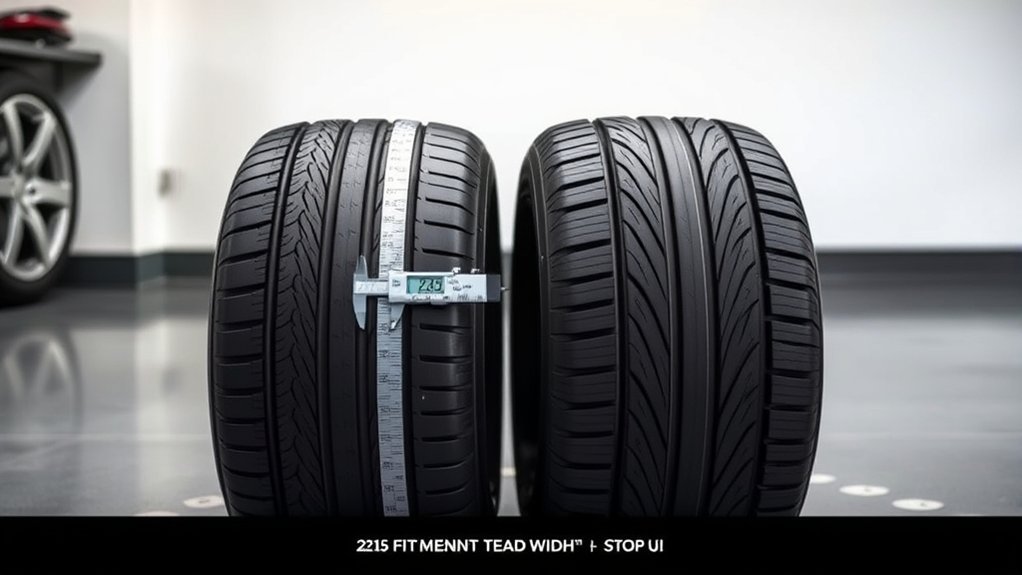
You can often replace a 215 tire with a 225 tire, but only when the full tire size works with your vehicle and wheels. A 225 tire is 10 mm wider, or about 0.39 inch wider, than a 215 tire. That extra width can improve road contact, but it can also reduce clearance and slightly increase rolling resistance.
The bigger issue is overall diameter. If you keep the same aspect ratio and rim diameter, a 225 tire usually becomes taller as well as wider. For example, compare 215/60R16 and 225/60R16:
| Size | Nominal width | Approx. sidewall height | Approx. overall diameter |
|---|---|---|---|
| 215/60R16 | 215 mm / 8.46 in | 129 mm | 664 mm / 26.16 in |
| 225/60R16 | 225 mm / 8.86 in | 135 mm | 676 mm / 26.63 in |
| Difference | +10 mm / +0.39 in | +6 mm | +12 mm / +0.47 in |
That diameter change can affect speedometer reading, ABS behavior, traction-control calibration, and clearance. If the 225 size has a different aspect ratio, the result can change again. That is why you should compare the complete tire size, not just the first number.
[Products Worth Considering]

This 22-piece car wash and detailing kit includes a collapsible 20L bucket, lint-free wash mitt, microfiber sponge, super-absorbent drying towels, and specialized tools for wheels, tires, and windows. Soft, scratch-free accessories help protect paint and glass while tackling grime both inside and out. It’s a complete interior and exterior care set for cars, motorcycles, RVs, and home cleaning tasks like windows and mirrors.

The AUTOWN tire repair kit is designed to quickly fix punctures and plug flats with professional-quality steel components. It includes a T-handle and spiral probe tool for easy tire access, plus a compact storage case for convenient carry. Suitable for many vehicles including cars, motorcycles, ATVs, RVs, trailers, and trucks, it helps restore airtight performance for reliable roadside repairs.

AUTOWN’s 68-piece tire repair kit helps you fix punctures and plug flats quickly and effectively. It includes a T-handle and spiral probe tool for easy insertion, while the steel patch and plug materials are designed for strong adhesion and long-lasting airtight performance. The compact case makes it convenient for roadside repairs across a wide range of vehicles.
215 Vs 225 Tires: Grip, Comfort, and Fuel Economy
A 225 tire gives you a slightly wider section width than a 215 tire. That can help traction and cornering stability when the tire compound, tread design, pressure, and vehicle setup also support it. Width alone does not guarantee better performance.
A 215 tire may have a small efficiency advantage because it is narrower and often lighter than the comparable wider size. It may also fit more easily inside tight wheel wells. For everyday driving, the difference between 215 and 225 is usually modest, but it can matter on vehicles with limited clearance.
| Category | 215 tire | 225 tire |
|---|---|---|
| Width | About 8.46 inches | About 8.86 inches |
| Grip potential | Balanced for daily use | Can offer more contact area |
| Clearance | Usually easier to fit | Needs more side clearance |
| Fuel economy | May be slightly more efficient | May add slight rolling resistance |
| Best use | Factory-style fitment and daily driving | Extra grip when clearance and specs allow |
Which Tire Size Should You Pick?
Start with the tire size listed on your vehicle’s tire placard or owner’s manual. That size reflects the manufacturer’s intended balance of load capacity, wheel clearance, speedometer accuracy, handling, and ride comfort.
Choose a 215 tire if it matches your vehicle’s approved size or an accepted optional size. It gives many passenger cars and small SUVs a practical balance of grip, comfort, and efficiency.
Consider a 225 tire only if the full size keeps the overall diameter close to the original, fits your rim width, meets load and speed requirements, and clears the vehicle through the full steering and suspension range.
- Check the driver-door tire placard and owner’s manual first.
- Match the wheel diameter exactly.
- Confirm the tire maker’s approved rim-width range.
- Compare overall diameter before changing aspect ratio or width.
- Verify load index and speed rating meet or exceed the original requirement.
- Test for rubbing at full steering lock and under suspension compression.
If you want the safest answer, stay with the original equipment size or a manufacturer-approved optional size. If you want to upgrade, compare the complete size and confirm it with a trusted tire shop before installation.
Frequently Asked Questions
How wide is a 215 tire compared to a 225 tire?
A 215 tire is about 8.46 inches wide, while a 225 tire is about 8.86 inches wide. The 225 tire is 10 mm, or about 0.39 inch, wider. That extra width can improve contact area, but you still need to check rim width, clearance, load rating, and overall diameter.
Which tire is wider, 205 or 215?
A 215 tire is wider than a 205 tire. The difference is 10 mm, or about 0.39 inch. A 205 tire is about 8.07 inches wide, while a 215 tire is about 8.46 inches wide.
Is 215 considered a wide tire?
A 215 tire is usually considered a moderate-width tire for many passenger cars and small SUVs. It is wider than 195 or 205 sizes, but narrower than 225, 235, or 245 sizes. Whether it is “wide” depends on the vehicle class and original tire size.
What size tire is a 215 in inches?
A 215 tire is about 8.46 inches wide. That number only describes nominal section width. To know the tire’s height and wheel fitment, you need the full size, such as 215/60R16 or 215/55R17.
Will a 215 tire fit a 7-inch rim?
Many 215 passenger tires can fit a 7-inch-wide rim, but you should verify the exact tire’s approved rim-width range. The full tire size and tire model matter. Do not rely on section width alone.
Does a wider 225 tire always handle better than a 215?
No. A 225 tire can offer more contact area, but handling also depends on tire compound, tread design, rim width, air pressure, suspension setup, and alignment. A properly fitted 215 can outperform a poorly fitted 225.
Conclusion
A 215 tire is 215 mm wide, or about 8.46 inches, based on nominal section width. That makes it a balanced, moderate-width option for many passenger vehicles, but width is only one part of fitment.
Before you choose a 215 tire, move to a 225 tire, or change wheel size, check the full tire code, rim-width range, wheel diameter, load index, speed rating, tire placard, and physical clearance. Small size changes can affect rubbing, handling, speedometer accuracy, and ride quality, so treat the full tire size as the real decision point.
Sources
- Tire Rack: How Do I Read My Tire Size On My Sidewall? — supports section width, aspect ratio, construction, and wheel-diameter explanations.
- Tire Rack: What Is The Rim Width Range For A Tire? — supports rim-width range and how rim width affects section width.
- Discount Tire: Tire Size Calculator — supports tire-size comparison, section width, sidewall height, overall diameter, and speedometer-impact guidance.
- eCFR: 49 CFR 571.110 — supports vehicle placard tire-size and recommended cold inflation pressure requirements.
[Products Worth Considering]

This compact capsule-style tire repair kit helps you quickly fix punctures and plug flats with minimal effort. The rugged stainless steel shell protects the contents for reliable roadside use, while the simple plug assembly makes repairs fast and tool-free. Suitable for motorcycles, cars, ATVs, UTVs, and even mountain bikes.

This AUTOWN flat tire repair kit is designed for quick, reliable puncture repairs using a plug kit and spiral probe tool to simplify installation. Built for durability and safe handling, it offers strong adhesion and flexibility to help maintain tire air tightness. With a portable storage case and a multi-vehicle approach, it’s suitable for cars, motorcycles, ATVs, tractors, lawn mowers, RVs, jeeps, and trucks.

The AUTOWN 31-piece flat tire repair kit helps you quickly fix punctures and get back on the road. It includes a T-handle and spiral probe for easy plug insertion, plus a portable storage case for convenient carry. Designed for multiple vehicle types, this kit supports repairs for cars, motorcycles, ATVs, tractors, and more with reliable sealing.

Related Articles
305 Tire Size Explained: How Big Is It?
I explain how big a 305 tire really is—and why the exact fit can surprise you.
Read More
Tire Ply Rating Explained: What the Numbers Mean
Tire ply ratings reveal more than numbers, hinting at strength, load capacity, and hidden tradeoffs you’ll want to understand before choosing.
Read More
2 Ply Vs 4 Ply Tires: What’s the Real Difference?
I’ll explain the real difference between 2-ply and 4-ply tires, and the choice may surprise you depending on where you drive.
Read More