
How Tall Is a 255 75 R17 Tire? Exact Height, Width & Dimensions
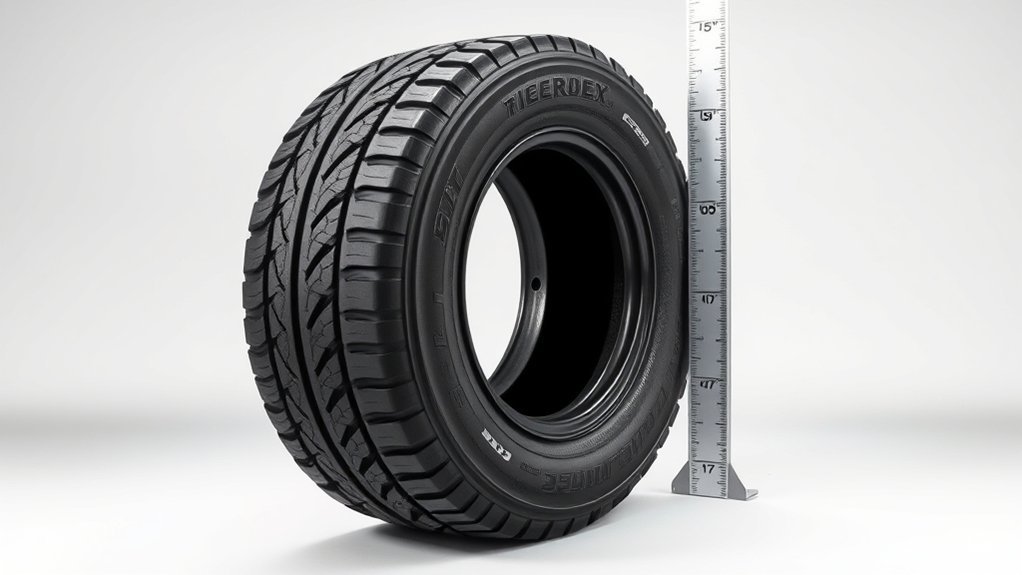
A 255/75R17 tire is about 32.1 inches tall, about 10.0 inches wide, and has a calculated sidewall height of about 7.5 inches. That makes it a tall 17-inch tire size often considered for trucks, Jeeps, and SUVs where extra ground clearance matters. Before installing it, you need to check more than diameter alone. Fitment depends on wheel offset, rim width, suspension travel, load rating, speed rating, and the tire size recommended on your vehicle’s door placard or owner’s manual.
Quick Answer
A 255/75R17 tire has a calculated overall diameter of about 32.1 inches, a section width of 255 mm or 10.0 inches, and a sidewall height of about 7.5 inches. Exact mounted dimensions can vary slightly by tire brand, tread design, rim width, and inflation pressure.
Key Takeaways
- A 255/75R17 tire is roughly 32.1 inches tall by formula.
- Its section width is 255 mm, or about 10.0 inches.
- The sidewall height is about 7.5 inches because the aspect ratio is 75% of 255 mm.
- The “R17” means radial construction for a 17-inch wheel.
- Changing from a smaller stock tire can affect clearance, gearing, ABS/traction-control behavior, and speedometer accuracy.
- Always confirm tire size, load index, speed rating, rim width, and inflation pressure against your vehicle’s placard, owner’s manual, and tire manufacturer data.
What Is the Height of a 255/75R17 Tire?
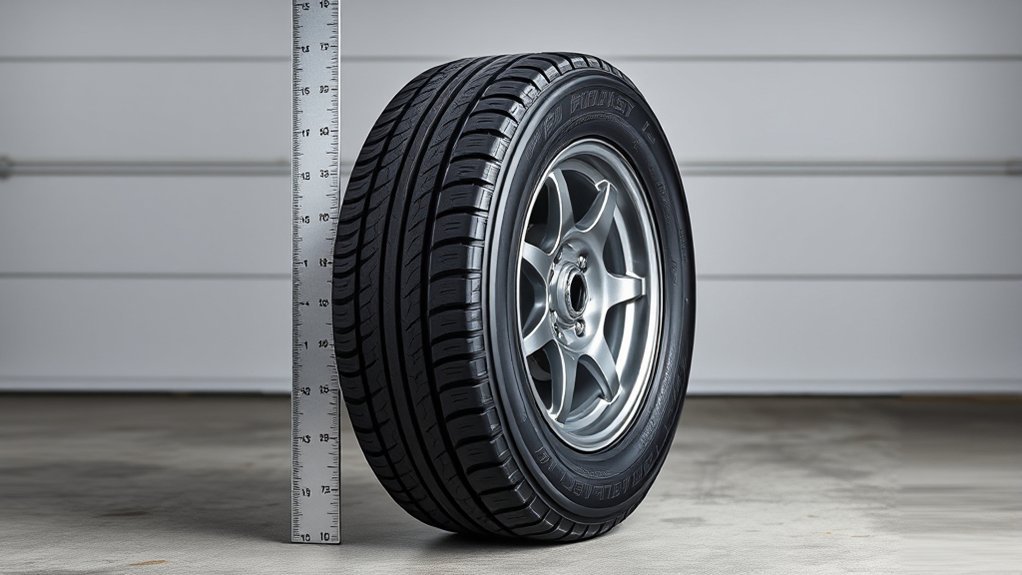
A 255/75R17 tire is about 32.1 inches tall overall when calculated from its size code. You get that number by converting the 255 mm section width into inches, multiplying it by the 75% aspect ratio, doubling the sidewall, and adding the 17-inch wheel diameter.
The simple formula is:
Overall diameter = wheel diameter + 2 × sidewall height
For 255/75R17, the math works like this:
- Section width: 255 mm ÷ 25.4 = 10.04 inches
- Sidewall height: 10.04 × 0.75 = 7.53 inches
- Overall diameter: 17 + 7.53 + 7.53 = 32.06 inches
That rounds to 32.1 inches. Tire Rack explains that the three-digit number in a tire size is the section width in millimeters, the next number is the sidewall aspect ratio, “R” means radial construction, and the final number is the matching wheel diameter. Tire Rack’s tire size guide is a useful reference for reading those markings.
Note: The 32.1-inch figure is a calculated size. Real mounted tire height can vary slightly by tire brand, tread depth, rim width, load, and inflation pressure. Use the tire manufacturer’s published specs when exact clearance matters.
[Products Worth Considering]

Keep RV, trailer, or truck dual-axle tires protected with waterproof, UV-resistant covers that help guard against sunlight, snow, rust, and dirt. The dual tire covers are easy to install with a rope/bungee fastener for a stable fit that won’t easily slip. Designed for 27–30 inch diameter wheels, they help maintain tire condition through harsh weather.

RVMATE dual-axle RV tire covers help shield your tires from sunlight, snow, rust, and dirt to keep them in better condition in harsh weather. Made with heavy-duty waterproof, UV-resistant 420D Oxford fabric, they provide strong shading and help reduce wear. They install easily by placing the cover on the wheel and fastening the rope for a stable fit.

The Tymate TM12 RV TPMS delivers real-time tire pressure and temperature monitoring with a stable 433Hz display for safer long-distance driving. It supports simultaneous monitoring across vehicle and trailer zones, includes six alarm modes for pressure, temperature, leakage, battery, and signal loss, and features easy DIY installation with auto calibration. Power is supplied via USB-C charging or solar recharging, with a wide 0–144 PSI range and up to 50 ft signal coverage for RVs and towable trailers.
255/75R17 Size at a Glance
| Tire Size | 255/75R17 |
| Calculated Overall Diameter | 32.06 in, rounded to 32.1 in |
| Section Width | 255 mm, about 10.04 in |
| Sidewall Height | 7.53 in |
| Calculated Circumference | About 100.7 in |
| Estimated Revolutions Per Mile | About 629 revs/mile |
| Construction | Radial |
| Wheel Diameter | 17 in |
How Wide Is a 255/75R17 Tire?
A 255/75R17 tire has a section width of 255 mm, which equals about 10.04 inches. This is the tire’s nominal sidewall-to-sidewall width, not always the exact tread width. The tread face is often narrower than the section width, and the final mounted width can change slightly depending on the wheel width used.
Width matters because it affects inner clearance, steering clearance, wheel compatibility, and how much space the tire uses inside the wheel well. A wider tire can also change steering feel and road tracking. If you are comparing sizes for mixed weather or all-terrain use, tread design also matters because the tread pattern controls how the tire handles water, gravel, snow, and loose dirt. Additionally, understanding the tread design can help you choose a tire that performs well in various weather conditions.
What Does 255/75R17 Mean?
The tire code breaks down into four parts:
- 255 means the tire’s section width is 255 millimeters.
- 75 means the sidewall height is 75% of the section width.
- R means the tire uses radial construction.
- 17 means it fits a 17-inch wheel diameter.
This tells you the basic tire dimensions, but it does not tell the whole fitment story. You also need the tire’s load index, speed rating, load range if it is a light-truck tire, approved rim-width range, and inflation guidance.
Warning: Do not choose a replacement tire by height alone. The National Highway Traffic Safety Administration recommends checking your owner’s manual or Tire and Loading Information Label for the correct tire size. A replacement must also meet the vehicle’s load and speed requirements.
How Does 255/75R17 Compare With Stock Tires?
You can compare a 255/75R17 against a stock tire by checking diameter, section width, circumference, and revolutions per mile. A larger tire travels farther with each rotation, which can affect gearing, acceleration, braking feel, speedometer accuracy, odometer reading, and clearance.
Compared with a common 225/65R17 tire, a 255/75R17 is about 3.5 inches taller and about 1.2 inches wider. That is a major change, not a small cosmetic swap.
| Metric | 225/65R17 | 255/75R17 | Change |
|---|---|---|---|
| Diameter | 28.5 in | 32.1 in | +3.5 in |
| Width | 8.9 in | 10.0 in | +1.2 in |
| Circumference | 89.6 in | 100.7 in | +12.4% |
| Estimated revs/mile | 707 | 629 | Fewer rotations |
If your vehicle was calibrated for 225/65R17 tires and you install 255/75R17 tires without recalibration, an indicated 60 mph can be close to 67 mph actual speed. That estimate comes from the diameter change, so the exact number can vary by real tire model. Use a tire-size calculator, then confirm the change with GPS or a professional scan-tool calibration where applicable. Additionally, selecting the right tire can significantly impact handling and traction during various driving conditions.
Stock Size Difference
The stock-size difference depends on what tire your vehicle came with. Against a smaller size like 225/65R17, a 255/75R17 is a large jump. Against sizes such as 265/70R17 or 245/75R17, it is much closer.
You should compare these points before buying:
- Diameter change: affects ground clearance, gearing, speedometer reading, and braking feel.
- Width change: affects fender, liner, suspension, and steering clearance.
- Load and speed ratings: must meet or exceed your vehicle’s requirements.
- Rim width: must fall within the tire manufacturer’s approved range.
- Offset and backspacing: decide how close the tire sits to suspension and body parts.
Diameter and Width Changes
The 255/75R17 measures about 32.1 inches in overall diameter and 10.0 inches in section width. The taller diameter can lower engine RPM at a given road speed, but it can also reduce acceleration and increase stress on driveline components if the gearing is not matched to the tire size.
The wider footprint can help traction in some conditions, but it can also make the tire more likely to rub during turns or suspension compression. This is why a tire that looks fine while parked may still rub while driving over bumps, backing up, or turning at full lock.
Fitment and Clearance Risks
Fitment gets more complicated with a 255/75R17 because its roughly 32.1-inch diameter is taller than many stock 17-inch tire sizes. That extra height can reduce clearance at the front and rear of the wheel well. The extra width can also move the sidewall closer to control arms, sway-bar links, inner liners, mud flaps, and fender edges.
| Check | Why It Matters |
|---|---|
| Full steering lock | Reveals rubbing at liners, frame, arms, and mud flaps. |
| Suspension compression | Shows clearance under bumps, cargo, towing, and off-road articulation. |
| Wheel offset | Moves the tire inward or outward, changing body and suspension clearance. |
| Spare location | A taller tire may not fit in the factory spare well or underbody carrier. |
| Load rating | The new tire must safely support your vehicle and cargo needs. |
In tighter setups, you may need trimming, a lift, a different wheel offset, or a smaller tire size. If you are not sure, test-fit one wheel and tire before buying a full set.
Will a 255/75R17 Tire Rub on Your Vehicle?
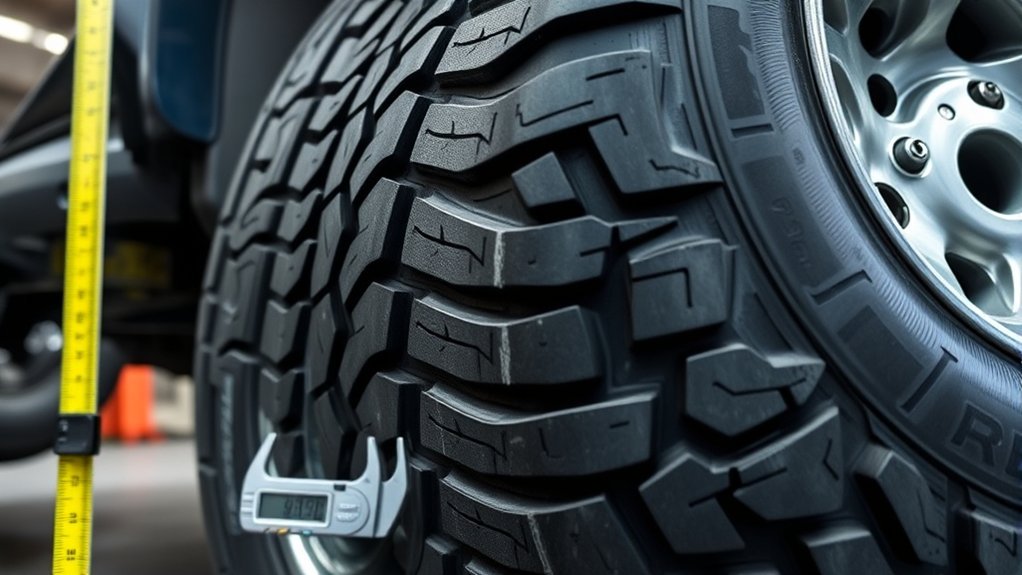
A 255/75R17 tire can rub if your vehicle does not have enough wheel-well clearance. At about 32.1 inches tall and 10.0 inches wide, it can contact fender liners, mud flaps, pinch welds, suspension parts, bumper edges, or frame areas during steering and suspension movement.
Do not judge clearance only while the vehicle is parked. Turn the steering wheel fully left and right. Check clearance while reversing. Check with cargo loaded. If the vehicle is used off-road, also consider suspension articulation. A size that clears on flat pavement may rub when the tire moves upward into the wheel well.
Pro Tip: If you are moving up from a much smaller stock tire, calculate both the diameter change and the speedometer change before installation. A small-looking sidewall difference can become a large real-world change once multiplied around the tire circumference.
A tire-size finder can help you compare dimensions, but real-world clearance still depends on your vehicle, wheels, suspension, and tire model. Additionally, consider how tire fitment affects your vehicle’s handling and performance.
[Products Worth Considering]
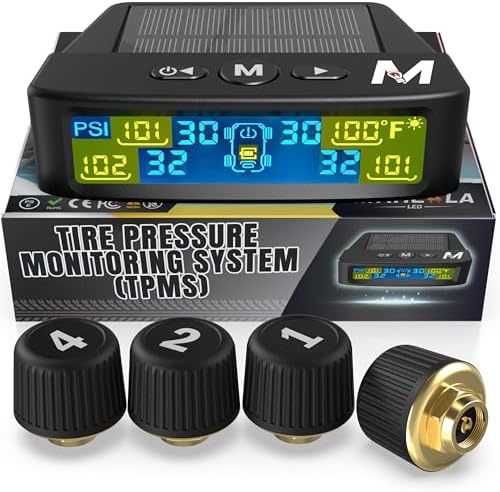
Marcala’s TPMS set of four sensors helps you monitor tire pressure and temperature in real time while driving, with updates every second. The bright color LCD uses auto-dimming for easy viewing, powered by dual solar and USB charging, and offers six alarm modes. Built for trailers, RVs, campers, trucks, and towing setups, the sensors support monitoring 1-4 wheels up to 98 PSI with IP67 waterproof protection.

Secure your trailer or RV tires with a scissor-style wheel chock stabilizer that applies opposing force to help prevent wheel shift. It fits tight wheel gaps from 3.5 inches up to 12 inches and works for travel trailers, campers, fifth wheels, toy haulers, and heavy-duty trucks. The surface uses new electrophoretic technology to help prevent rust for reliable travel use.
What Vehicles Can Run 255/75R17 Tires?
A 255/75R17 tire is most realistic on trucks, Jeeps, and SUVs with enough wheel-well space for a 32-inch tire. Some off-road-focused vehicles may accept this size more easily than compact crossovers or vehicles with tight factory clearances. Still, there is no universal “fits all” answer.
Use this table as a general fitment guide, not a guarantee:
| Vehicle Type | Fit Notes |
|---|---|
| Jeep Wrangler and similar off-road SUVs | Often the most likely candidates, but trim, wheel offset, lift, and tire model still matter. |
| Toyota 4Runner, Tacoma, and similar midsize 4x4s | Possible on some setups, but rubbing checks are important, especially near liners and body mounts. |
| Full-size trucks and large SUVs | May have more room, but load rating, wheel specs, and trim-specific clearance still decide fitment. |
| Crossovers and tight-clearance SUVs | Often difficult without modifications. Verify carefully before buying. |
The key point is simple: a tire can fit a 17-inch wheel and still fail to fit the vehicle safely. Confirm the approved rim-width range from the tire manufacturer and the correct replacement size from your vehicle’s owner’s manual or tire placard. Additionally, many off-road tires, such as those with aggressive tread patterns, can enhance traction and stability in various conditions.
What Are the Best Similar Tire Sizes?
If you want a size close to 255/75R17, compare diameter first, then width. A close diameter helps limit speedometer and gearing changes, while a different width can change clearance and steering feel.
Closest Metric Equivalents
These metric sizes are common comparison points near the 32.1-inch target:
| Size | Calculated Diameter | Diameter Difference vs 255/75R17 |
|---|---|---|
| 245/75R17 | 31.47 in | -1.84% |
| 285/65R17 | 31.59 in | -1.47% |
| 265/70R17 | 31.61 in | -1.41% |
| 235/80R17 | 31.80 in | -0.80% |
| 275/70R17 | 32.16 in | +0.31% |
The closest diameter match in this group is 275/70R17, but it is wider than 255/75R17. If your vehicle has limited side clearance, a narrower option with a slightly smaller diameter may fit better.
Popular Plus-Size Options
Some shoppers compare 255/75R17 with inch-based off-road sizes. These can be helpful, but they are not exact replacements because width, tread design, and load range may change.
- 32×12.50R17: Similar height at about 32 inches, but much wider than 255/75R17.
- 33×10.50R17: Taller at about 33 inches and close in width, but more likely to need clearance changes.
- 275/70R17: Very close in height, wider than 255/75R17, and common in all-terrain options.
Choose based on your vehicle’s real clearance, not just the printed tire size. Additionally, consider the tire selection criteria that balance daily use and off-road performance for optimal compatibility.
How to Check If 255/75R17 Will Fit
Before buying a full set, work through this checklist:
- Check the door placard and owner’s manual. Confirm the original tire size, load rating, pressure, and any approved optional sizes.
- Compare tire diameter and width. Look at the current tire versus the 255/75R17 dimensions.
- Check wheel specs. Confirm rim width, offset, and backspacing.
- Confirm load index and speed rating. Do not install a tire with ratings below your vehicle’s requirements.
- Measure inner clearance. Inspect space near control arms, struts, sway-bar links, and brake lines.
- Measure outer clearance. Inspect fenders, liners, mud flaps, bumper corners, and pinch weld areas.
- Test full steering lock. Turn fully left and right, forward and reverse.
- Account for compression. Consider passengers, cargo, towing tongue weight, and off-road articulation.
- Check spare storage. Make sure a 32-inch tire fits where your spare is carried.
- Recalibrate if needed. Larger tires may require speedometer, odometer, or driver-assistance recalibration.
The Discount Tire tire size calculator can help compare diameter, circumference, revs per mile, and speedometer change, but a calculator cannot confirm body clearance on your exact vehicle.
Frequently Asked Questions
Which tire is taller, 275/70R17 or 255/75R17?
A 275/70R17 is slightly taller by calculation. A 255/75R17 is about 32.06 inches tall, while a 275/70R17 is about 32.16 inches tall. The difference is only about 0.1 inch, so width and clearance usually matter more than height in this comparison.
What is the overall height of a 255/70R17 tire?
A 255/70R17 tire is about 31.1 inches tall by formula. It has the same 255 mm section width as a 255/75R17, but the 70% aspect ratio gives it a shorter sidewall. That makes it about 1 inch shorter overall than a 255/75R17.
How tall is a 225/75R17 tire?
A 225/75R17 tire is about 30.3 inches tall by formula. Its section width is about 8.9 inches, and its sidewall height is about 6.6 inches. That makes it shorter and narrower than a 255/75R17.
What size tire is 255/75R17?
A 255/75R17 is a radial tire for a 17-inch wheel. It is 255 mm wide, has a sidewall height equal to 75% of that width, and has a calculated overall diameter of about 32.1 inches. It is commonly considered a tall truck, Jeep, or SUV tire size.
Will 255/75R17 tires affect my speedometer?
Yes, they can if they are larger or smaller than your original tire size. A taller tire travels farther per wheel rotation, so the vehicle may move faster than the speedometer shows. The bigger the diameter change, the more important speedometer recalibration becomes.
Is 255/75R17 the same as a 32-inch tire?
It is very close. A 255/75R17 calculates to about 32.06 inches tall, so most people round it to a 32-inch tire. Exact tire-model specs can be slightly different once mounted and inflated.
Conclusion
A 255/75R17 tire is about 32.1 inches tall, about 10.0 inches wide, and has a sidewall height of about 7.5 inches. It can be a useful size when you want more ground clearance and a taller tire on a 17-inch wheel, but it is not a guaranteed direct swap for every vehicle.
Before you commit, compare it with your stock size, check speedometer change, confirm load and speed ratings, verify rim-width compatibility, and inspect real clearance at full steering lock and suspension compression. The right answer is not only “Does it fit the wheel?” It is “Does it fit the vehicle safely?”
Sources
- Tire Rack: How Do I Read My Tire Size On My Sidewall? — supports section width, aspect ratio, radial construction, and wheel-diameter explanations.
- Discount Tire: Tire Size Calculator — supports tire-size comparison metrics including sidewall height, section width, diameter, circumference, revolutions per mile, and speedometer change.
- NHTSA TireWise — supports replacement-size, tire placard, tire pressure, tread, balance, alignment, and tire safety guidance.

Related Articles
305 Tire Size Explained: How Big Is It?
I explain how big a 305 tire really is—and why the exact fit can surprise you.
Read More
Tire Ply Rating Explained: What the Numbers Mean
Tire ply ratings reveal more than numbers, hinting at strength, load capacity, and hidden tradeoffs you’ll want to understand before choosing.
Read More
2 Ply Vs 4 Ply Tires: What’s the Real Difference?
I’ll explain the real difference between 2-ply and 4-ply tires, and the choice may surprise you depending on where you drive.
Read More