
Tire Rotation Pattern for Toyota RAV4 Guide

Uneven tire wear can make your Toyota RAV4 feel less stable, less smooth, and less safe. The right tire rotation pattern helps each tire share the workload so the tread wears more evenly. This guide explains which pattern to use, how tire type changes the process, and what to check if your tires show uneven wear.
Quick Answer
For most Toyota RAV4 models with non-directional tires, use a front-to-rear rotation pattern that follows your owner’s manual. Directional tires should move front to rear on the same side only. Rotate your tires about every 5,000 to 7,500 miles, or use Toyota’s recommended service interval for your model.
Key Takeaways
- Check your owner’s manual before choosing a tire rotation pattern.
- Move directional tires front to rear without switching sides.
- Rotate non-directional tires based on the drivetrain and tire setup.
- Inspect tread wear and tire pressure during every rotation.
- Fix alignment, balance, or suspension issues if uneven wear keeps coming back.
Recommended Tire Rotation Patterns for Your Toyota RAV4
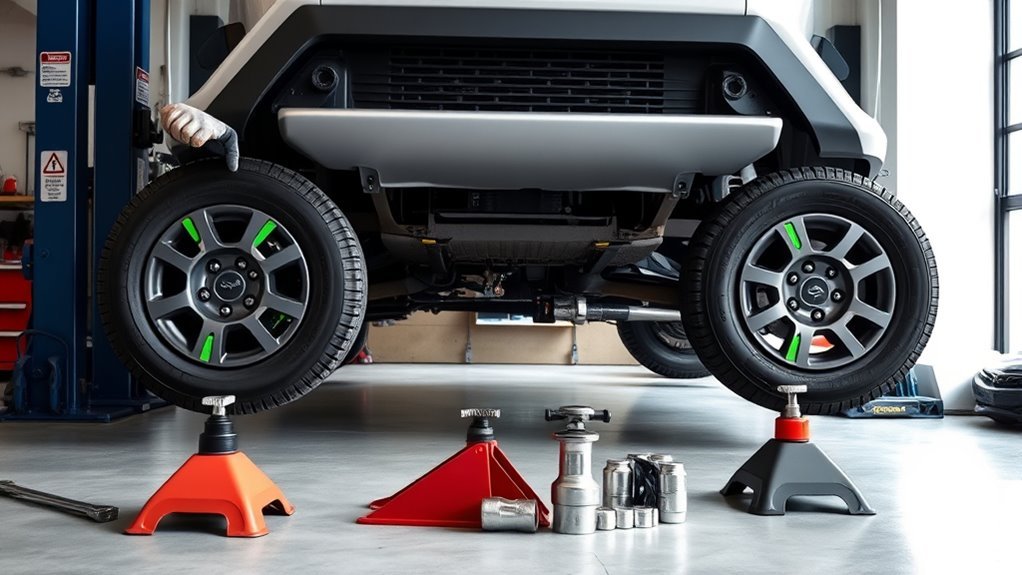
The best tire rotation pattern for your Toyota RAV4 depends on tire type, drivetrain, and the instructions in your owner’s manual. Many RAV4 models use a front-wheel-drive or all-wheel-drive layout, so you should not assume one pattern fits every trim.
For directional tires, move the front tires straight to the rear and the rear tires straight to the front. Keep each tire on the same side of the vehicle so the tread keeps rolling in the correct direction.
For non-directional tires, you may use a forward cross pattern on front-wheel-drive models when Toyota or your tire maker allows it. In that pattern, the front tires move straight to the rear, while the rear tires cross to the opposite front positions.
Rotate your tires about every 5,000 to 7,500 miles, or follow the service schedule for your exact RAV4 model. Regular rotation helps reduce uneven tread wear, improve ride quality, and support safer handling.
[Products Worth Considering]

EVOULTES heavy duty tire inflator with an integrated gauge delivers accurate pressure readings from 10–120 PSI, helping you inflate, deflate, and check tires in one tool. The 16.5-inch extended dual-head air chuck with swivel base reaches hard-to-access dual wheel valves on trucks and RVs. A brass trigger core and side-mounted air release valve make operation smooth, with standard 1/4" NPT threading and quick-connect compatibility for easy setup.

The JACO FlowPro Tire Inflator measures, inflates, and airs down tires up to 100 PSI with battery-free operation and ±2% accuracy after calibration. It features a glowing pressure dial for night visibility, a heavy-duty steel build with a hybrid hose, and a precision push-to-inflate thumb trigger. The patented Lightning Air Chuck locks on for a secure seal, and the kit includes quick-connect hardware for easy inline use with your air compressor.

Upgrade your air tools with this 18-piece air compressor accessory kit featuring a 25ft recoil poly hose, 1/4" NPT quick connect fittings, and a 100 PSI tire inflator gauge. The set also includes a heavy-duty blow gun with safety and tapered nozzles, plus couplers, inflation needles, plugs, and other essentials for everyday mechanic and workshop tasks. Corrosion-resistant steel and brass components help keep connections reliable for inflating, blowing out, and general pneumatic use.
Understanding Tire Types: Directional vs. Non-Directional
Your tire type controls which rotation pattern you can use. Before you rotate your tires, look at the sidewall and tread pattern.
Directional tires usually have an arrow on the sidewall that shows the correct rolling direction. Non-directional tires can roll either way, so they allow more rotation options.
Directional Tire Characteristics
Directional tires use tread grooves that work best in one rolling direction. This design can help move water away from the tire and support grip on wet roads.
Do not switch directional tires from one side of the vehicle to the other unless a tire shop remounts them on the wheels. If you install them backward, the tread may not clear water as designed.
Warning: Always check the sidewall arrow before rotating directional tires, since the wrong direction can reduce wet-road performance.
Non-Directional Tire Benefits
Non-directional tires give you more flexibility during rotation. You can often move them front to rear or use a cross pattern, depending on the vehicle and tire maker’s guidance.
This flexibility helps you spread wear across all four tires. It also makes it easier to correct mild uneven wear before it becomes severe.
| Benefit | Description |
|---|---|
| Flexibility | Allows more rotation patterns when approved |
| Tread Longevity | Helps tires wear more evenly over time |
| Traction Stability | Supports balanced grip across all four tires |
How to Check Which Tire Rotation Pattern You Need
Start with your RAV4 owner’s manual because Toyota’s guidance may vary by model year, drivetrain, and tire package. Then check the tire sidewall for a rotation arrow or wording that says the tire is directional.
You should also check whether all four tires match in size, brand, tread depth, and load rating. If your RAV4 has a temporary spare, do not include that spare in a normal four-tire rotation.
Pro tip: Mark each tire position before removal so you can track wear patterns and spot repeat problems.
Why You Should Follow Manufacturer Guidelines
Manufacturer guidelines help you protect tire life, traction, and handling. Toyota designs its maintenance schedule around the way your RAV4 carries weight and sends power to the wheels.
Your tire maker may also give limits based on tread design, tire size, or warranty terms. Following both sets of guidance helps you avoid avoidable wear and keeps your tire warranty easier to support.
Manufacturer Expertise Matters
Your RAV4’s drivetrain affects how the tires wear. Front tires often handle more steering and braking force, while all-wheel-drive systems can add more wear differences between axles.
The correct rotation pattern helps balance those forces. It also gives you a routine chance to inspect tread depth, sidewall damage, and tire pressure.
Consistency Reduces Tire Wear
A consistent rotation schedule helps your tires wear at a more even rate. Skipping rotations can leave two tires working harder than the others.
Uneven wear can cause vibration, road noise, and reduced traction. If you catch wear early, you may fix the cause before you need new tires.
Safety Enhancements Through Guidelines
Good tire maintenance supports safer braking, steering, and wet-road control. Correct rotation keeps tread depth more balanced from front to rear.
You should also check tire pressure at least once a month and before long trips. Proper pressure helps your RAV4 handle well and can reduce excess heat buildup.
Debunking Common Tire Rotation Myths
Many drivers hear tire rotation advice that sounds simple but does not fit every tire. Cross rotation works well for some non-directional tires, but it does not suit directional tires unless a professional remounts them.
Another myth says you can skip rotation if the tread looks even. Regular rotation still helps you catch hidden issues, such as inside-edge wear, cupping, or early alignment problems.
You should also avoid one fixed mileage rule for every RAV4. Use your owner’s manual, tire warranty terms, and driving conditions to choose the right interval.
[Products Worth Considering]

This compact capsule-style tire repair kit helps you quickly fix punctures and plug flats with minimal effort. The rugged stainless steel shell protects the contents for reliable roadside use, while the simple plug assembly makes repairs fast and tool-free. Suitable for motorcycles, cars, ATVs, UTVs, and even mountain bikes.

Blackline Blackout is a water-based trim and tire dressing that restores rubber, vinyl, and plastic with a rich satin, blackout look. Its no-sling formula dries quickly and helps prevent messy transfer onto paint. The coating repels water and offers UV protection to help prevent fading, cracking, and discoloration for a clean, long-lasting finish.
Effective Tips for Tire Maintenance

Good tire maintenance takes only a few checks, but it can prevent costly wear. Build these steps into your regular service routine:
- Rotate your tires about every 5,000 to 7,500 miles, or follow your owner’s manual.
- Use the correct pattern for directional or non-directional tires.
- Check tire pressure when the tires are cold.
- Inspect tread depth, sidewalls, valve stems, and visible damage.
- Schedule alignment and balancing checks when you notice pulling, vibration, or uneven wear.
What to Do About Uneven Tire Wear?
Uneven tire wear often points to low pressure, high pressure, poor alignment, worn suspension parts, or unbalanced wheels. Start by checking tire pressure and comparing tread depth across all four tires.
If one edge wears faster than the other, schedule an alignment check. If the tread shows cupping, vibration, or patchy wear, ask a tire shop to inspect the balance, shocks, struts, and suspension parts.
Do not rely on rotation alone to fix a mechanical issue. Rotation can spread normal wear, but it cannot correct worn parts or bad alignment.
Frequently Asked Questions
What Is the Tire Rotation Pattern for a Toyota RAV4?
The correct tire rotation pattern for a Toyota RAV4 depends on your tires and drivetrain. Directional tires should move front to rear on the same side, while many non-directional tires can use a front-to-rear or cross pattern when approved.
What Does Toyota Recommend for Tire Rotation?
Toyota generally recommends rotating tires as part of routine maintenance, but the exact interval can vary by model year and service schedule. Check your owner’s manual or maintenance guide for the correct mileage interval for your RAV4.
Can You Rotate RAV4 Tires Yourself?
You can rotate your RAV4 tires yourself if you have the right jack, jack stands, torque wrench, and wheel chocks. Use the correct pattern and tighten lug nuts to the torque listed in your owner’s manual.
Should You Include the Spare Tire in a RAV4 Rotation?
Do not include a temporary spare in a normal tire rotation. If your RAV4 has a full-size matching spare, check your owner’s manual and tire maker’s guidance before using a five-tire rotation.
Conclusion
The right tire rotation pattern helps your Toyota RAV4 tires wear more evenly and perform more safely. Start by checking your owner’s manual, then confirm whether your tires are directional or non-directional. If you see uneven wear, fix the cause instead of relying on rotation alone. A simple rotation schedule can help you get more life, comfort, and confidence from every set of tires.

Related Articles

Toyota RAV4 TPMS Reset: Easy Steps That Work
Unlock the secrets to resetting your Toyota RAV4's TPMS effortlessly—discover the essential steps to ensure your tires are always safe.
Read More
Toyota RAV4 Tire Rotation: DIY Steps & Pattern
Take control of your Toyota RAV4's tire maintenance with our simple DIY rotation guide—discover the best steps for optimal performance and longevity!
Read More
Mix Tire Brands on a Toyota RAV4? Expert Guide
Keeping your RAV4 safe? Learn when mixing tire brands risks traction, ABS/TCS and AWD damage — and what exact matches you must insist on.
Read More