
How to Become a Tire Dealer: Steps, Licensing & Business Tips
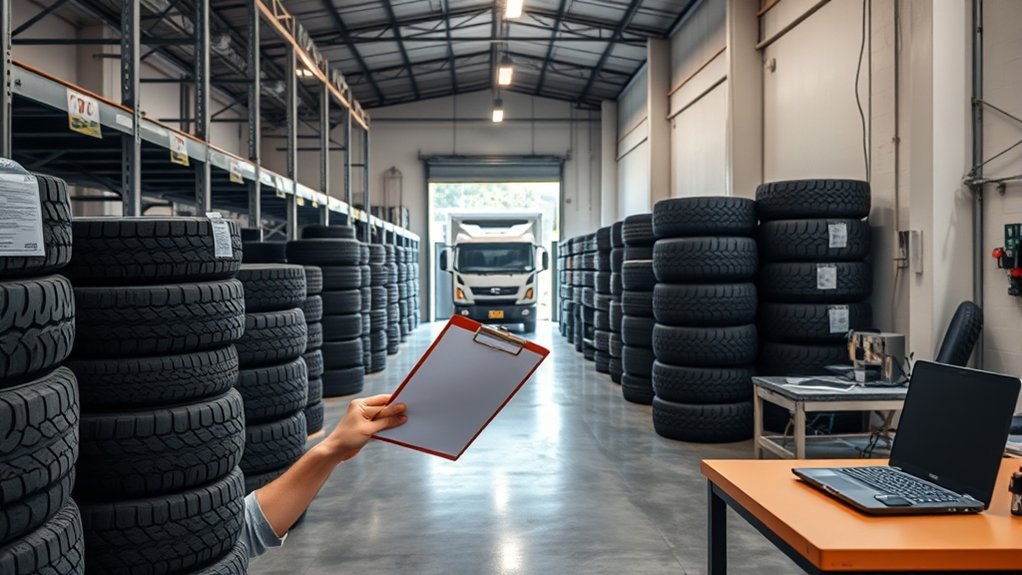
To become a tire dealer, you should first pick a business structure, like an LLC, corporation, partnership, or sole proprietorship, and register it with the state. Next, secure zoning approval, then submit your tire dealer application, operation form, and waste hauler details. You’ll also need a tire storage and disposal plan, plus fire protection if required. Expect a $300 license fee, and keep compliance active. There’s more to help you open smoothly.
Key Takeaways
- Choose a business structure, register it with the state, and obtain a Tax ID before applying for your tire dealer license.
- Confirm local zoning allows tire sales, and secure zoning approval before leasing space or buying inventory.
- Submit the tire dealer license application with operation details, storage information, and required forms through eCLIPSE or in person.
- Verify PA DEP-registered waste haulers, keep written disposal contracts, and maintain a tire storage and pickup plan.
- Budget for the $300 license cost, monitor renewal deadlines, and keep compliance records updated to avoid penalties.
Tire Dealer License Requirements

To get your tire dealer license, you and your business agent must submit a license application and a tire dealer operation information form. As a tire dealer, you’ll need to identify your business activity type, list registered PA DEP waste haulers, and disclose tire storage size plus fire protection systems. You also need zoning approval for tire sales, whether sales are primary or incidental. If you’ll store tires outdoors above six feet, prepare a site plan; it shows compliance and helps you avoid delays. The initial business license fee is $300, and the $20 application fee isn’t lost—it applies toward that total. Pay online by electronic check or credit/debit card, or visit the Permit and License Center to pay in person. Check the surcharge before you submit card payments, then file complete documents so your application moves quickly. Additionally, understanding fuel-efficient tires can help you better serve your customers and enhance your business offerings.
Choose Your Business Structure
Once you’ve handled the licensing paperwork, the next step is choosing a business structure that fits how you want to operate. You can form a Corporation, Partnership, Individual, or L.L.C., and each business structure changes your liability, taxes, and control. If you want stronger protection from business debts, corporations and L.L.C.s usually limit your personal exposure. If you value simplicity and direct management, a sole Individual setup or Partnership may feel freer, but it can leave more personal assets at risk. Review how each option handles taxation: some structures pass profits through to you, while others face corporate taxes. That difference affects cash flow and long-term planning. After you decide, register the structure with your state’s appropriate department and get your Tax ID so your operation stays organized. For the best fit, consult a business attorney who can check that your choice supports your goals, compliance needs, and room to grow. Additionally, consider durability ratings as you decide on inventory and tire options for your business.
Get the Permits and Approvals You Need
To get started, you’ll need to submit a license application and a tire dealer operation information form that spell out your business activities, tire storage details, and PA DEP-registered waste haulers. You’ll also need zoning approval showing tire sales as a primary or incidental use, and if outdoor tire storage is over six feet, you must include a site plan for review. The application requires a non-refundable $20 fee, which goes toward the $300 total license fee, and you can file online through eCLIPSE, book a virtual appointment, or apply in person by appointment in Philadelphia. Additionally, understanding tire selection criteria can greatly enhance your ability to meet customer needs.
License Application Requirements
When you apply for a tire dealer license, submit the license application along with the tire dealer operation information form, which asks for your business activity type and tire storage size. For your tire business, you’ll also need to identify PA DEP registered waste haulers and show the required zoning approval for tire sales. If your outdoor tire storage rises above six feet, prepare a site plan that meets local rules. Pay the non-refundable $20 fee; it counts toward the full $300 license fee, so track your costs carefully. You can file online through eCLIPSE or visit the Permit and License Center in person, but you’ll need an appointment for that option. Stay organized, because accurate paperwork speeds your approval and keeps you in control.
Zoning And Site Approval
Before you can open your tire dealer business, confirm that your location is properly zoned for tire sales as a primary or incidental use. Seek zoning approval early so you can move with confidence, not confusion. Talk with local zoning authorities, ask what they require, and verify whether your outdoor tire storage triggers a site plan.
| Check | Why it matters |
|---|---|
| Zoning status | Protects your right to operate |
| Site plan | Shows compliance when storage exceeds six feet |
| Fire protection details | Supports safety review |
| Accurate application data | Prevents delays and denials |
List your storage size and fire protection systems clearly on your tire dealer operation form. If you skip approvals, you risk fines or a rejected license application. Get the rules, align your plan, and claim your space on your terms.
Fees And Payment Methods
Budget for the $300 tire dealer license fee, which includes a non-refundable $20 application fee applied to the total, and choose a payment method that fits how you’re filing. Online, you can use electronic checks, credit cards, or debit cards; note the 2.10% card surcharge and the $3.45 debit fee. If you file in person at the Permit and License Center, you’ve got more payment methods: electronic check, credit card, debit card, check, money order, or cash. Pay on time, because late renewal adds 1.5% per month to the $300 license fee. Protect your application by verifying your account info, since returned checks trigger a $20 fee and can void your filing if you don’t fix them quickly.
Meet Zoning and Tire Storage Rules
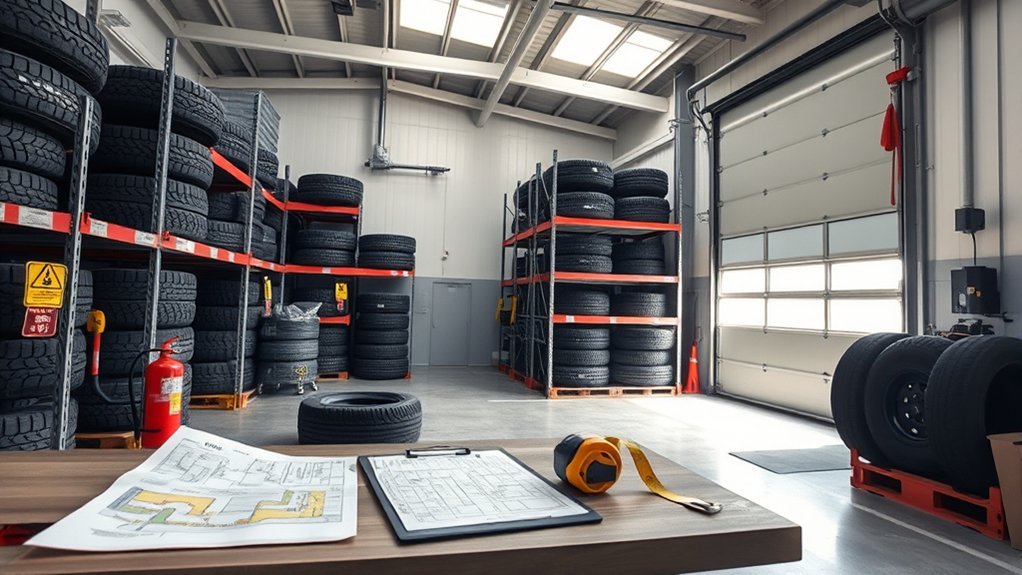
To operate legally, you need to confirm that local zoning rules allow tire sales as a primary or incidental use at your location. Get zoning approval before you lease, buy, or invest in inventory, because the wrong location can trigger delays, fines, or a shutdown. Review local zoning laws carefully so you know what your city expects from your tire storage setup. If you plan outdoor tire storage above six feet, submit a site plan that clearly shows the storage area and its dimensions. Include accurate tire storage size information in your license application, since regulators use it to judge compliance. Treat these rules as practical safeguards, not red tape: they help you protect your business, keep your license, and operate on your terms. When you meet zoning and storage requirements upfront, you reduce risk and create a cleaner path to opening, growing, and staying in control. Additionally, understanding tire performance ratings can help you better meet customer expectations and regulatory standards.
Set Up Tire Disposal and Waste Haulers
You’ll need to verify that your tire waste hauler is registered with the Pennsylvania Department of Environmental Protection so your disposal process meets state rules. Keep written contracts with licensed haulers and check local recycling facilities that accept used tires to give yourself flexible, cost-conscious disposal options. Build a clear tire storage and disposal plan, then review it regularly so you stay compliant and avoid fines or disruptions. Additionally, ensure that your plan incorporates environmental health risks associated with improper tire disposal to further safeguard public health.
Waste Hauler Registration
Before you can open for business, you’ll need to line up PA DEP-registered waste haulers for tire disposal and include their details in your licensing application. Verify each waste hauler holds the permits to transport and dispose of waste tires, and confirm they meet local rules so you don’t invite fines or delays. Keep a clear file with contact info, service terms, pickup schedules, and renewal dates; treat it like a living compliance record, not a one-time form. If you’re coming from a repair shop, use the same discipline: vet partners, compare costs, and keep control of the process. Review contracts regularly so you can renegotiate, stay compliant, and protect your margins while moving forward with confidence and freedom.
Tire Disposal Planning
Once your waste hauler is in place, build a tire disposal plan that clearly defines how used tires will be collected, stored, and removed in line with PA DEP requirements. Register with PA DEP, then partner with approved haulers so your tire disposal process stays lawful and efficient. This gives you control, reduces risk, and helps your repair shops operate cleanly.
- Set collection points for used tires.
- Store tires securely, dry, and separated.
- Schedule pickups with registered haulers.
- Log quantities and tire types removed.
- Review your plan often for rule changes.
Keep records of every load, invoice, and manifest. That paper trail protects you during inspections and shows you’re managing waste responsibly. When you treat compliance as part of your business model, you free your operation to grow without regulatory drag.
Understand Tire Dealer License Costs
Understanding tire dealer license costs helps you budget accurately before you apply. You’ll pay $300 total, and that includes a $20 non-refundable application fee. For tire dealers, license fees aren’t just paperwork; they shape your startup cash flow and protect your freedom to plan with confidence. Additionally, understanding tire performance ratings can help you select the best products for your customers.
| Cost Item | Amount |
|---|---|
| Application fee | $20 |
| License fee | $300 |
| Renewal fee | $300 |
If you renew late, expect a 1.5% monthly penalty, so act early to avoid draining your margin. Online, you can use electronic checks, credit cards, or debit cards, but card processing adds extra charges. In person, cash, check, money order, or card payments won’t add fees. Watch your bank account closely: a returned check costs $20 and can void your application if you don’t resolve it. Treat these license fees as part of your operating budget, not a surprise.
Apply Online or In Person
Now that you’ve budgeted for the fee, you can submit your tire dealer license application online through eCLIPSE or arrange a virtual appointment for help. Choose the path that fits your tire shop’s workflow and keeps you moving without needless delay. If you prefer in person, book an appointment at the Permit and License Center, 1401 John F. Kennedy Blvd., Philadelphia, PA. Bring forms with zoning approval, waste hauler details, and your business information; also confirm your sales tax permit status. This process ensures that you have the required tire specifications to meet industry standards.
- Online filing through eCLIPSE
- Virtual appointment for guided support
- In-person appointment required
- Hours: Mon–Fri, 8 a.m.–3:30 p.m.
- Last Wednesday closes at noon
Submit the non-refundable $20 application fee with your package; it counts toward the $300 license total. Review every field before you send it. Accuracy now protects your freedom later and helps you launch on your own terms.
Renew Your Tire Dealer License

When your tire dealer license comes up for renewal, submit the renewal application with the non-refundable $300 fee and make sure every detail is current and accurate. This license renewal keeps your business moving without interruption, so don’t delay. If you miss the deadline, a 1.5% monthly penalty stacks up fast. Use the method that fits you best:
| Renewal option | Key point |
|---|---|
| Online | Pay by electronic check or credit card; cards carry a 2.10% surcharge. |
| In person | Visit the Permit and License Center and bring accepted payment methods. |
| Records | Keep prior licensing data and updates ready for a faster renewal. |
Before you submit, confirm your zoning approval still covers tire sales and note any operational changes or location shifts since your last application. Additionally, consider how tire performance characteristics can enhance your offerings and customer satisfaction. Stay organized, act early, and protect your freedom to serve customers on your own terms.
Keep Your Tire Dealer Business Compliant
To keep your tire dealer business compliant, submit a complete license application and tire dealer operation information form, then verify that your zoning approvals still allow tire sales at your location. You protect your freedom to operate when you treat compliance as a daily discipline, not a one-time task. Track records, permits, and inspections so you can prove you’re meeting state, local, and federal rules.
Keep compliance active, not occasional—file your forms, verify zoning, and maintain records to protect your tire dealer business.
- Keep PA DEP registered waste hauler records current.
- Install required fire protection systems for tire storage areas.
- Review disposal, sales, and storage regulations often.
- Confirm zoning and land use approvals before expanding.
- Audit your files to spot gaps before regulators do.
When you stay organized, you reduce risk, avoid penalties, and strengthen your business foundation. A clean paper trail shows you run a responsible operation and lets you focus on serving customers without unnecessary legal pressure. Additionally, staying informed about tire performance specifications can help you better serve your customers’ needs and ensure compliance with industry standards.
Frequently Asked Questions
What Kind of License Do You Need to Open a Tire Shop?
You need a tire dealer license from your local authority, plus zoning approval and a completed operation information form. You’ll also submit waste-hauler details, storage and fire-protection info, and pay the $300 fee. If you plan outdoor storage over six feet, add a site plan. Apply online through eCLIPSE or in person. Watch tire industry trends and sharpen customer service strategies to build a shop that serves your community well.
What Is the 3% Rule for Tires?
The 3% rule means you should replace your tires when tread reaches 3/32 of an inch, not 3%. You’ll get better grip and less hydroplaning risk, especially on wet roads. This benchmark is more conservative than the legal minimum of 2/32, so it gives you extra safety margin. For smart Tire wear monitoring and Tire maintenance, you can check tread regularly and advise replacement before control suffers.
How Much Does It Cost to Get a Dealership Licence?
It costs $300 to get your dealership licence, and that includes a $20 non-refundable application fee applied to the total. You’ll also face dealership fees for renewals, which are $300 again, plus late penalties of 1.5% per month. Check the licensing requirements carefully, because payment methods can add charges. You can pay by electronic check, card, or cash, but bounced checks bring a $20 fee and risk voiding your application.
What Are the Five Steps to a Tire Sale?
You identify the customer’s needs, recommend the right tires, present pricing and warranties, install them properly, and follow up after the sale. Strong customer engagement helps you match size, type, and use, while disciplined inventory management keeps the right options ready. You’ll close faster if you explain payment choices clearly and verify balancing and alignment. Then you build trust, support safety, and earn repeat business.
Conclusion
Becoming a tire dealer takes planning, but you can move forward with confidence if you handle licensing, zoning, waste disposal, and renewals early. One useful stat: the U.S. generates about 250 million scrap tires each year, so strong disposal compliance matters. If you choose the right business structure, keep your permits current, and stay organized, you’ll reduce risk and build credibility. Stay proactive, and you’ll be better positioned to run a legal, profitable tire business.

Related Articles
How Tall Is a 285 75R16 Tire? Exact Height, Width & Dimensions
Knowing how tall a 285 75R16 tire really is could change your fitment plans—discover the exact dimensions before you buy.
Read More
How Many Inches Is a 265 Tire? Size Conversion Guide
Perfect for quick tire-size conversions, this guide reveals how many inches a 265 tire measures and why the exact fit may surprise you.
Read More
How Big Is a 305 Tire? Full Size Breakdown & Dimensions
Uncover the true size of a 305 tire, from width to diameter, and see which fitment details could change everything.
Read More