What Is a T/a Tire? Complete Guide & Best Options
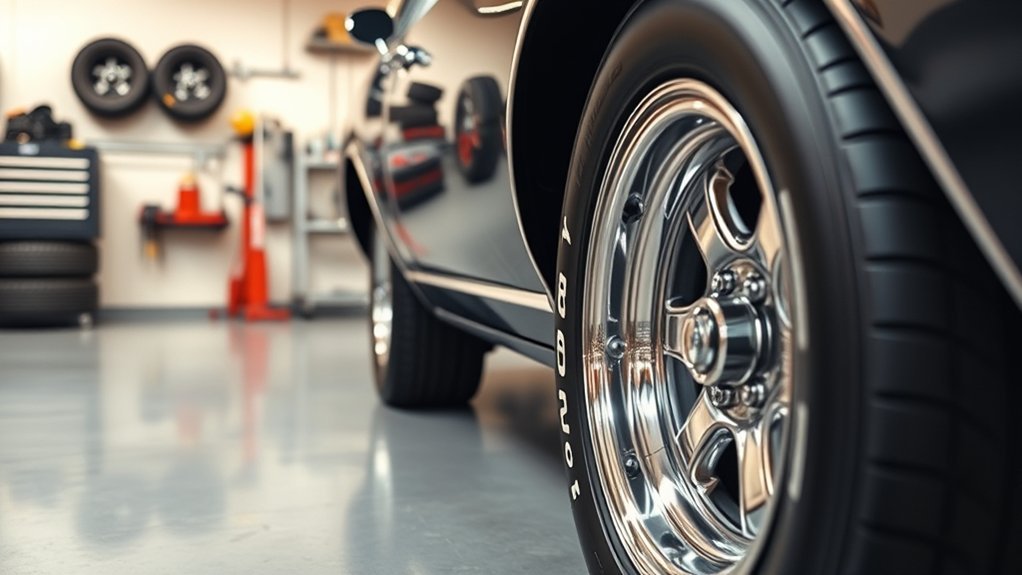
A T/A tire is BFGoodrich’s “Traction Advantage” line, tied to its Trans Am heritage, and it’s built for strong grip, stability, and responsive on-road performance. You’ll see T/A on models like the Radial T/A and All-Terrain T/A KO3, but it isn’t a universal rating like M+S. Compared with A/T tires, T/A options lean more toward paved-road control and performance. If you want the right fit, check size, load index, markings, and specs next.
Key Takeaways
- T/A tire means “Traction Advantage,” a BFGoodrich branding used for performance-oriented tires with strong grip and stability.
- T/A tires prioritize on-road handling and traction, while A/T tires are built for mixed-terrain and off-road versatility.
- BFGoodrich offers T/A models like Radial T/A and All-Terrain T/A KO3, each tuned for different driving needs.
- T/A tires suit muscle cars, SUVs, and light trucks, but you should match size, load rating, and weather markings carefully.
- Choose based on driving style, road conditions, reviews, and warranty coverage to find the best T/A tire option.
What Does T/A Mean on Tires?
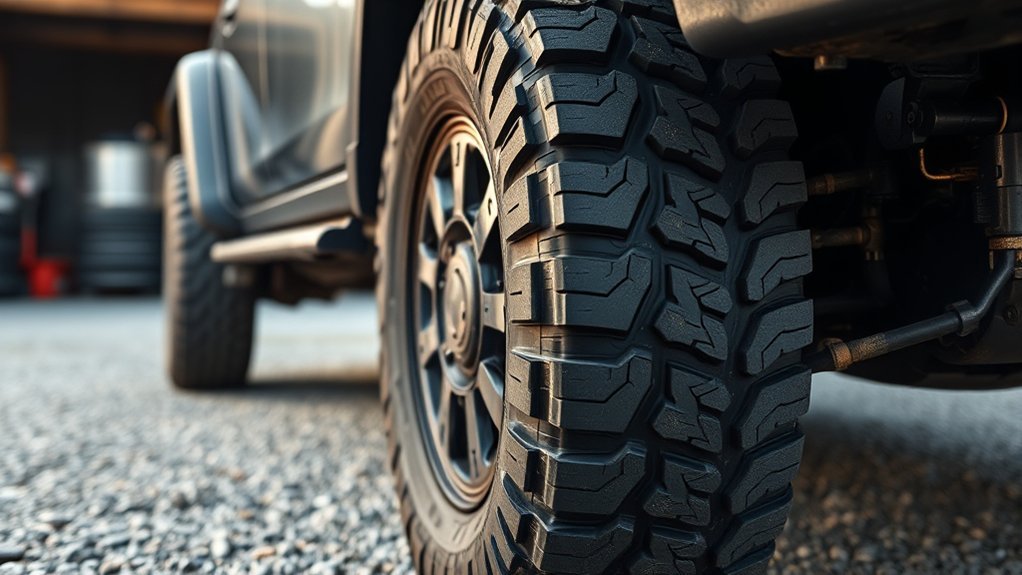
T/A on a BFGoodrich tire usually means “Traction Advantage,” though it also nods to the brand’s historical Trans Am performance tires. When you see the T/A designation, you’re looking at a label that signals grip and stability, not a single tire category. BFGoodrich uses this mark across several lines, so you need to read the full model name and tire size, not just the badge. The Traction Advantage idea fits tires built for controlled handling across varied pavement, and many T/A models target Light Truck, SUV, and CUV use. You’ll also find passenger-car options, including the Advantage Control and Radial T/A. Don’t assume T/A means a standardized rating like M+S. It doesn’t. Check the sidewall and spec sheet to judge traction, handling, and seasonal fit. That’s how you choose tires with confidence and keep your mobility on your terms. Additionally, understanding tire performance features can help you select the best options for your driving needs.
How Are T/A Tires Different From A/T Tires?
T/A tires, especially BFGoodrich models, mean “Traction Advantage” and focus on performance, while A/T tires mean “All Terrain” and prioritize mixed-surface versatility. You’ll usually see T/A tires tuned for traction, stability, and on-road behavior on light trucks, SUVs, and passenger cars, whereas A/T tires target off-road and uneven-terrain use. In practice, that means T/A tires and A/T tires differ most in their design balance, with A/T options often carrying more rugged tread and mud-and-snow capability. Additionally, A/T tires like the Falken Wildpeak A/T4W excel in off-road traction and durability, making them ideal for adventurous driving conditions.
T/A Meaning Explained
At first glance, T/A and A/T can look similar, but they point to different tire concepts. T/A tires from BFGoodrich usually mean “Traction Advantage,” a branding cue for grip and stability, not a formal standard like M+S. You’ll also see the historic Trans Am link, which helped give T/A its performance reputation. In practice, T/A tires often target paved-road control and light off-road use, with many drivers praising dry traction and response. A/T, by contrast, means “All Terrain” and signals broader terrain coverage. If you want a tire tuned for road performance with some versatility, T/A fits that brief. If you need wider off-road capability, A/T is the more direct category.
A/T Tire Basics
All-terrain tires are built to do a little bit of everything, with tread patterns and compounds that balance on-road comfort, off-road traction, and durability. When you choose an A/T tire, you’re picking versatility: it can handle pavement, dirt, gravel, and changing conditions without locking you into one task. That’s different from a T/A tire, which focuses on performance, sharper handling, and stronger dry grip. T/A models often suit sporty cars and light trucks, while A/T tires are better if you need a practical all-season tire for mixed use. Some T/A tires can manage rough surfaces, but they aren’t classified as all-terrain. If you want freedom to move across surfaces with fewer compromises, A/T is the broader tool.
Key Design Differences
Although they can look similar at a glance, these tire types are built for different jobs: T/A tires prioritize traction, stability, and sharper handling for performance-oriented driving, while A/T tires are designed to balance on-road comfort with off-road capability.
| Feature | T/A | A/T |
|---|---|---|
| Tread | Wider, aggressive | Tighter lugs |
| Focus | Grip, control | Versatility |
| Use | Muscle cars | Mixed terrain |
| Rating | Higher performance ratings | Utility-oriented |
| Snow | May skip M+S | Often M+S |
When you see T/A stand for traction and handling, you’re looking at a tire tuned for dry-road authority. BFG’s T/A line targets performance, while A/T tires trade some grip for broader use. Choose T/A if you want liberated, precise feedback; choose A/T if you need one tire for more conditions.
Which BFGoodrich Tires Use the T/A Name?
You’ll see the T/A name across several BFGoodrich model lines, not just one tire category, and it signals a performance-focused design. BFG uses it on car, truck, and UTV-oriented tires such as the Radial T/A, All-Terrain T/A KO3, HD-Terrain T/A KT, Trail-Terrain T/A, Krawler T/A KX, and Commercial T/A All Season 2. Unlike A/T, which describes all-terrain use, T/A is a branding cue that marks specific BFGoodrich lines built for traction, durability, and broader on-road or off-road performance. This includes options like the All-Terrain KO2, known for its durability and performance in varying conditions.
BFG T/A Model Lines
BFGoodrich uses the T/A name across several model lines, and it doesn’t refer to a single tire type so much as a performance-oriented branding family. When you shop BFGoodrich, you’ll see Radial T/A, All-Terrain T/A KO3, HD-Terrain T/A KT, Trail-Terrain T/A, and Krawler T/A KX, each tuned for a defined job. Radial T/A targets classic street performance, while the others extend the badge into all-terrain, trail, and specialty off-road use. The name carries Trans-Am racing heritage, which helps explain the emphasis on grip and control. You should expect strong traction in many conditions, but real-world feedback is mixed for wet and off-road behavior. For you, the practical takeaway is simple: T/A signals capability, not one fixed construction or vehicle class.
Car, Truck, And UTV
That broad T/A badge shows up on BFGoodrich tires for cars, trucks, and even UTV-focused off-road models, so it’s best to read the name as a performance label rather than a vehicle-class limit. You can choose T/A tires for street grip, hauling, or trail duty with real freedom.
| Vehicle | Example T/A tire | Primary use |
|---|---|---|
| Car | Radial T/A | Muscle and street driving |
| Light trucks | All-Terrain T/A KO3 | Mixed-road traction |
| UTV | Mud-Terrain T/A KM3 UTV | Off-road control |
That range matters because BFGoodrich tunes tread, sidewall strength, and stability for different demands. If you drive light trucks or a daily car, the T/A name tells you the tire targets confident handling, traction, and rugged versatility without locking you into one narrow use case.
T/A Versus A/T Names
While A/T simply means all-terrain across the tire market, T/A is a BFGoodrich model designation tied to Traction Advantage and, historically, the Trans Am name. When you compare T/A vs A/T, don’t treat them as equivalent categories: A/T describes terrain use, while T/A signals BFGoodrich’s focus on traction, stability, and performance. You’ll see the T/A badge on tires like the all-terrain T/A KO3 and the Radial T/A, plus other BFGoodrich lines. That means the name can fit an all-terrain tire, but it doesn’t define one. In practice, T/A often points to a higher-performance setup, and the Radial T/A proves it with muscle-car style and modern road grip.
Are BFGoodrich T/A Tires Right for Your Vehicle?
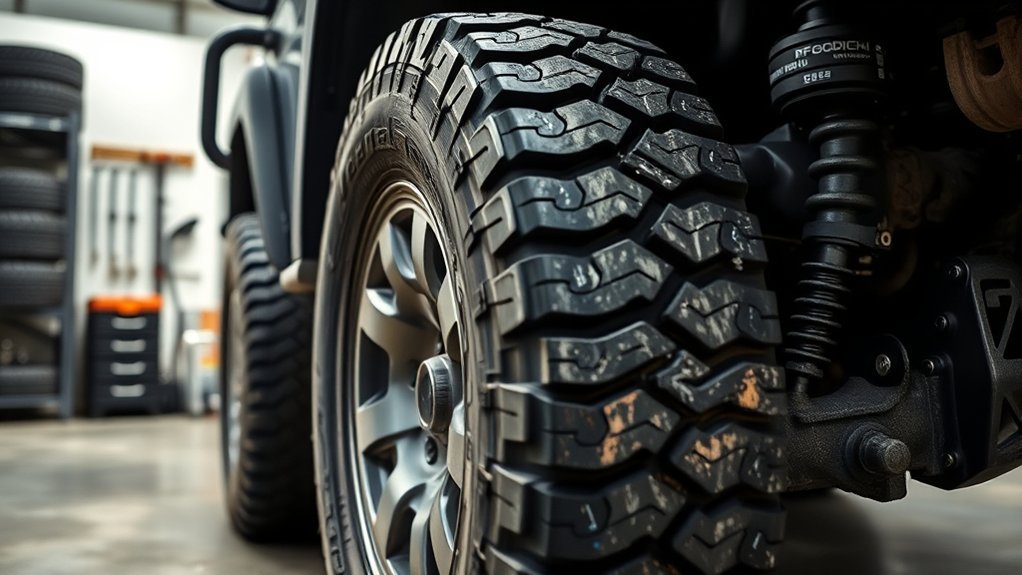
Yes—if your vehicle is a light truck, SUV, or performance car, BFGoodrich T/A tires can be a strong fit. You’ll get a design that combines classic styling with modern grip, so your vehicle feels planted without giving up character. The T/A name signals traction and stability, and that matters when you drive in dry conditions, light snow, or mixed weather. Models like the All-Terrain T/A KO3 and BFGoodrich Radial T/A also work well for both street and trail use, giving you real versatility instead of compromise. If you want responsive steering and strong dry traction, these car tires deliver. Some drivers do note weaker wet-road performance and don’t love the white lettering, so check your priorities. Still, the limited warranty adds confidence: you’re covered for tread life or six years from purchase.
How to Choose the Right T/A Tire
To choose the right T/A tire, start with your vehicle type and how you drive, since these tires are built for light trucks, SUVs, and passenger cars with different needs. Match the tire size and load rating to your vehicle, then compare performance ratings for dry traction, steering response, and tread wear. Those numbers tell you how the tire will feel and how long it should last. Check the sidewall for M+S or three-peak mountain snowflake markings if you need added traction in mixed or severe weather. Read customer reviews to spot real-world issues, especially wet grip or white-letter styling complaints. Then compare warranty terms; a solid limited warranty can protect you against defects and help you judge long-term value. When you choose with facts, not hype, you keep control, maximize safety, and select tires that support the freedom to drive on your terms. Additionally, consider the road noise associated with specific tire models to ensure a comfortable driving experience.
Which BFGoodrich T/A Tire Fits Your Driving Style?
Which BFGoodrich T/A tire fits your driving style depends on how and where you drive. If you want BF Goodrich T/A tires for rugged freedom, choose the All-Terrain T/A KO3. It gives you strong off-road traction, stable control, and acceptable pavement manners for Light Truck, SUV, and CUV use. If you drive a classic car and want crisp dry-road handling, the Radial T/A matches that purpose better. T/A tires aren’t a single tire type; they’re engineered for traction and stability across different conditions.
- Feel unchained on dirt and gravel
- Trust steady grip on dry asphalt
- Enjoy a classic performance look
- Accept that wet feedback can vary
- Choose capability that fits your route
You’ll get the best result when you match the tire’s design to your daily terrain. That way, you drive with more control, less compromise, and more confidence. For example, all-terrain tires are designed to enhance both off-road capability and on-road comfort, making them a versatile choice for various driving conditions.
Frequently Asked Questions
Is RT Better Than AT?
R/T isn’t always better than A/T; you choose based on your drive. If you need stronger mud performance and a sharper traction comparison off-road, R/T usually wins with deeper voids and more aggressive lugs. If you want quieter highways, better comfort, and balanced daily use, A/T fits you better. You should match the tire to your terrain, not marketing. For freedom from limits, pick the option that serves your route.
Does a T Mean All-Terrain Tires?
No, you don’t read the T in T/A as all-terrain; that’s a common wrong turn. You should check the tire specifications and tread patterns instead, because T/A often signals performance heritage, not off-road intent. Like a map with hidden routes, the code can mislead you. If you want true all-terrain capability, look for A/T designation, which gives you the freedom to match the tire to your driving demands.
Are BF Goodrich Radial T-A Tires Good in Snow?
No, not really—BFGoodrich Radial T/A tires give you only modest snow performance. You’ll get usable traction in light snow, but their tread design isn’t built for deep snow, slush, or icy roads. They don’t carry an M+S rating, so you shouldn’t trust them for harsh winter duty. If you want dependable winter control, you’ll need dedicated winter tires for safer, more confident driving in colder conditions.
Is a T-Tire Good for Snow?
No, a T-tire isn’t ideal for snow. You might think its tread can handle winter, but tire performance drops fast on packed snow and ice. Snow traction is usually modest unless the tire carries an M+S or three-peak mountain snowflake rating. For light flurries, you may get by, but for real control and freedom in winter conditions, you’ll want dedicated winter tires with deeper siping and softer compound.
Conclusion
Now you know that T/A means “Traction Advantage,” and that BFGoodrich uses it to identify tires built for specific performance goals. In fact, BFGoodrich has used the T/A name for decades across popular on-road and off-road models, which shows how long drivers have trusted it. When you compare tread design, terrain needs, and your driving habits, you can pick the right T/A tire with confidence. Choose carefully, and you’ll get better grip, control, and value.

Related Articles
What Does M T Mean on a Tire? Load, Speed & Rating Guide
Puzzled by M/T tire markings? Discover what they mean for load, speed, and ratings—and why choosing wrong could cost you off-road traction.
Read More
What Does HT Stand For on a Tire? Full Meaning Explained
Genuine answers about HT tires reveal what they mean, why they matter on pavement, and how they compare to AT options.
Read More
What Do Tire Spacers Do? Effects on Handling, Safety & Look
Haven’t decided if tire spacers are worth it? Discover how they change handling, safety, and style—and what most drivers miss.
Read More