
What Does M T Mean on a Tire? Load, Speed & Rating Guide
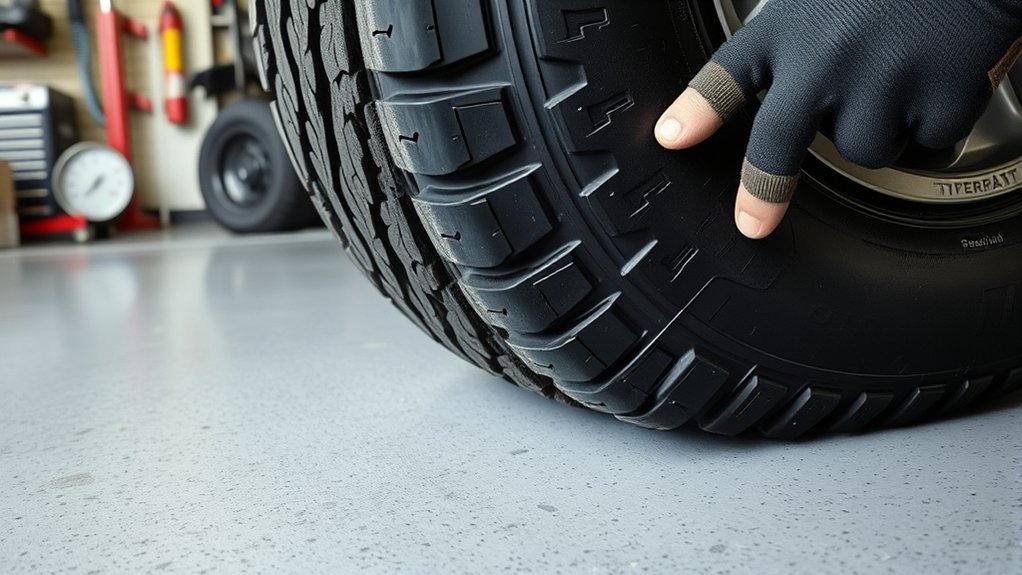
M/T on a tire usually means mud-terrain, a tire category built for strong off-road traction in mud, rocks, ruts, and loose soil. These tires use aggressive tread blocks, wide voids, and tough sidewall features to keep grip where highway tires struggle. The tradeoff is simple: M/T tires are usually louder, firmer, and faster-wearing on pavement than A/T or R/T tires.
Quick Answer
M/T means Mud-Terrain on most tires. It identifies an off-road-focused tire with large tread blocks, deep grooves, and open voids that help grip and clear mud, rocks, and loose ground. Choose M/T tires for serious off-road use, not for quiet daily highway comfort.
Key Takeaways
- M/T usually means Mud-Terrain, although some brands also describe MT as “maximum traction.”
- M/T tires are best for mud, rocks, ruts, trails, farms, work sites, and other loose or uneven terrain.
- The same aggressive tread that helps off-road can create more noise, vibration, rolling resistance, and tread wear on pavement.
- Load index, load range, and speed symbol are safety details, not style details; match them to your vehicle placard and owner’s manual.
- For winter roads, do not assume M/T or M+S means true severe-snow performance. Look for the 3PMSF symbol when snow traction matters.
What Does M/T Mean on a Tire?
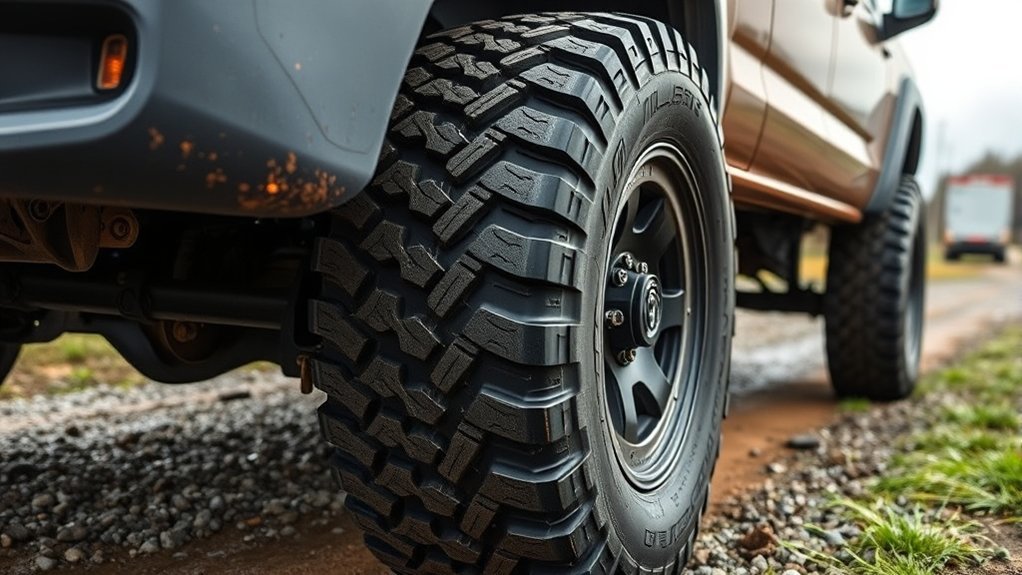
M/T means Mud-Terrain on most tire sidewalls and product names. It describes a tire built for off-road use where grip, self-cleaning tread, and sidewall toughness matter more than a quiet highway ride. Some tire makers also use MT language to describe a “maximum traction” off-road tire, but the shopping category is generally understood as mud-terrain.
An M/T tire is easy to spot. It usually has large tread blocks, deep grooves, wide open spaces between the blocks, and shoulder lugs that help the tire bite into mud, dirt, gravel, rock, and ruts. Those open spaces help the tread clear mud and debris as the tire rolls, which is one reason M/T tires work so well in sloppy or loose terrain.
That design also explains the downside. On smooth pavement, the tread blocks have less continuous rubber touching the road than a highway tire or many all-terrain tires. You may hear more tread noise, feel more vibration, and see faster wear if most of your driving is on highways.
Note: M/T is not the same as M+S. M/T describes a mud-terrain tire category. M+S means mud and snow, but it is mainly based on tread design. For severe snow performance, look for the three-peak mountain snowflake symbol, often written as 3PMSF.
[Products Worth Considering]
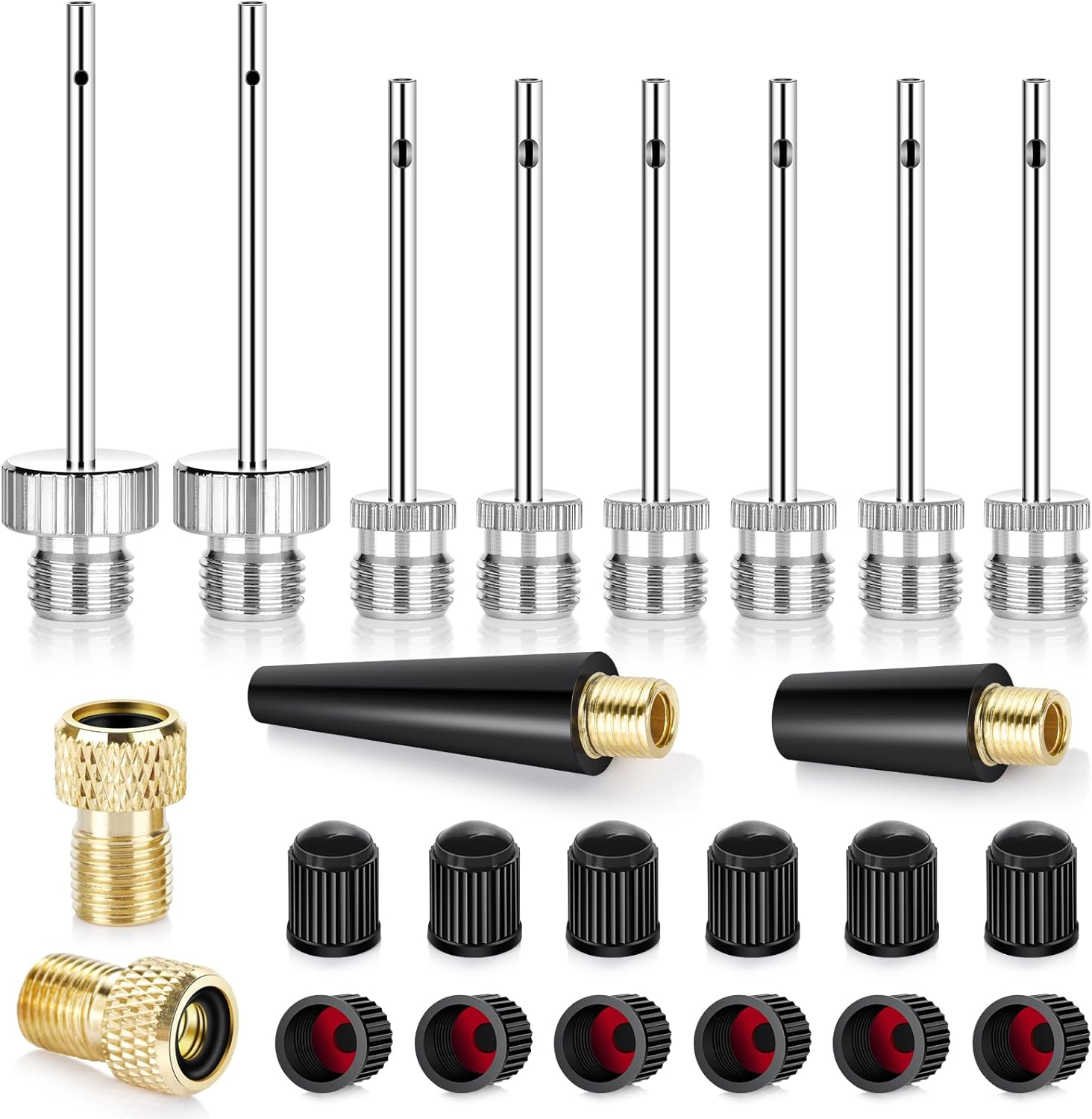
This ball pump needles kit includes brass ball needles for inflating footballs, soccer balls, basketballs, and volleyballs, plus conical nozzles for air mattresses, exercise balls, balloons, and swim rings. It also offers Presta to Schrader valve adapters for easy use with compatible bikes and rideables. The set includes sealed valve caps and a storage case, helping keep your equipment organized and ready to inflate quickly.
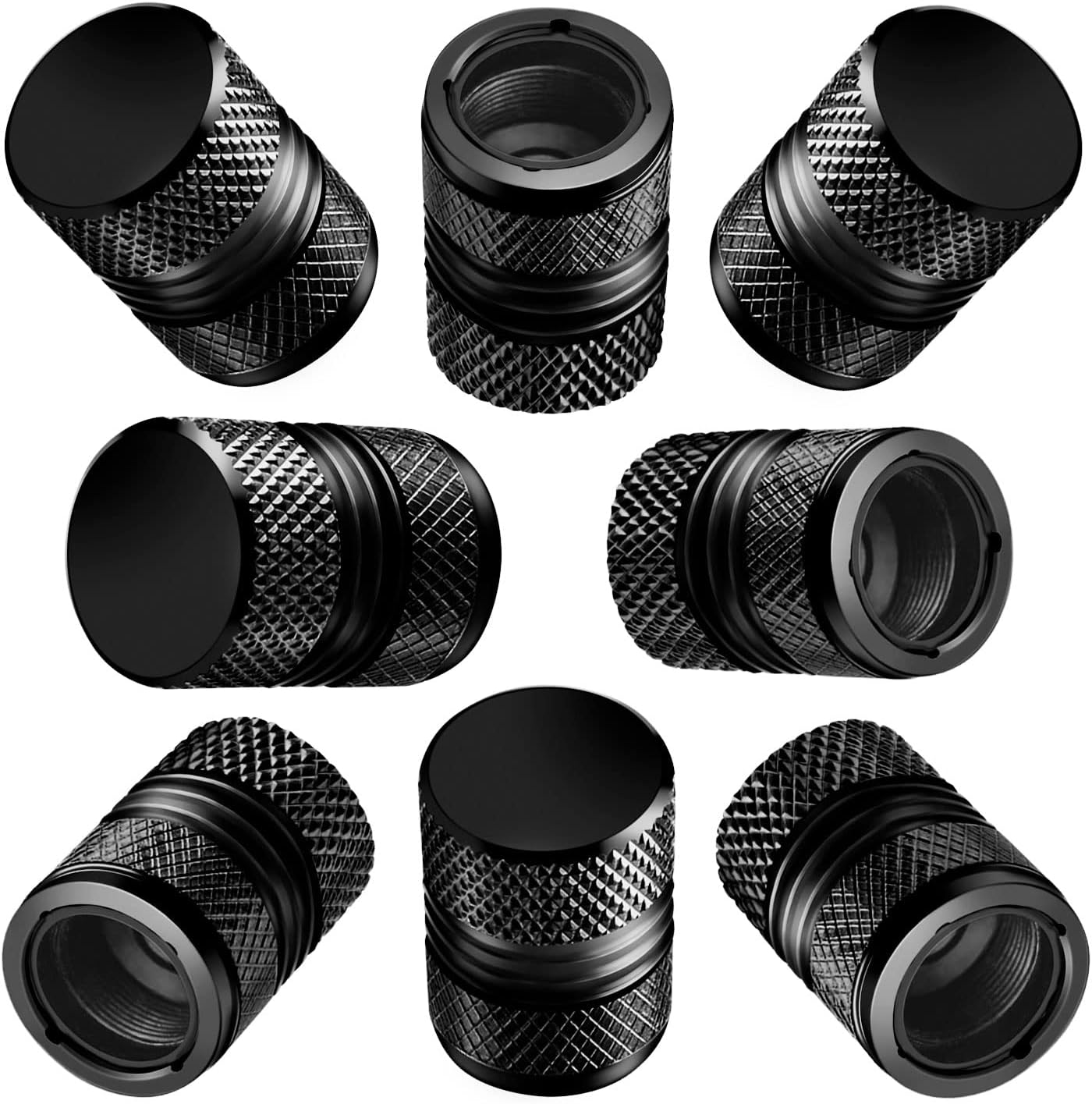
BAURATTI tire valve stem caps provide corrosion-resistant protection using anodized aluminum alloy with a plastic liner to help prevent rust and cracking. Designed for universal compatibility with standard Schrader valve stems, they install easily by hand and fit cars, SUVs, trucks, RVs, motorcycles, and bikes. Each pack includes 8 caps to support everyday replacement and sharing.

BESKAR foot scrubber mat lets you clean, exfoliate, and massage your feet in the shower or bathtub without bending or straining. Hundreds of flexible bristles scrub between toes and help remove dead skin and calluses, while suction cups keep the mat securely in place. The large silicone design provides a spacious area to reach pressure points and soothe tired, achy feet.
What Do M/T Load and Speed Ratings Mean?
The letters “M/T” tell you the tire type, but the numbers and letters near the tire size tell you whether that tire can safely match your vehicle. According to the Tire Industry Association sidewall guide, the service description includes the load index and speed symbol.
Load Index Vs Load Range
The load index is a number that corresponds to the maximum weight the tire can carry under specified conditions. For light trucks, you may also see a load range letter such as C, D, E, or F. Load range is not the same thing as the load index; it relates to the tire’s construction and inflation capacity category.
When choosing M/T tires, do not guess from appearance alone. Check your tire placard, owner’s manual, axle ratings, towing setup, and the tire manufacturer’s load chart. A tire with a tough-looking tread can still be wrong for your vehicle if the load index is too low.
Speed Rating Basics
The speed rating, also called the speed symbol, indicates the tire’s tested speed capability under controlled conditions. M/T tires often have lower speed ratings than performance or touring tires because they are built around off-road traction and durability instead of high-speed highway handling.
That does not mean you should drive at the maximum speed printed on the tire. Speed ratings assume a properly installed, properly inflated tire in good condition. Heat, overloading, underinflation, damage, road hazards, and weather can all reduce safe performance.
Warning: Never install replacement tires with a lower load index or lower load-carrying capacity than your vehicle manufacturer specifies. The U.S. Tire Manufacturers Association advises matching the size, load index, and speed rating designation recommended by the vehicle or tire manufacturer.
How Do M/T Tires Perform on Pavement?
M/T tires can be driven on pavement, but pavement is not where they are most comfortable. Their large lugs and open tread pattern can produce more road noise, more vibration, and a firmer ride. Wet pavement grip can also vary widely by tire model because mud-terrain tread is not usually optimized for smooth-road water evacuation the same way a highway tire is.
You may also notice lower fuel economy compared with a less aggressive tire. That can happen because many M/T tires are heavier and create more rolling resistance. The exact difference depends on tire size, construction, vehicle weight, inflation pressure, alignment, and driving style.
If your truck, Jeep, or SUV spends most of its time commuting, towing on highways, or carrying family on long road trips, an A/T or R/T tire may be a better fit. If you regularly drive deep mud, rocky trails, ranch roads, construction sites, or rutted backroads, M/T tires may be worth the comfort tradeoff.
Why Are M/T Tires So Good Off-Road?
M/T tires work off-road because their tread is designed to bite and clear. Wide voids help mud and loose material escape instead of packing between the tread blocks. Deep lugs dig into soft surfaces. Shoulder blocks and reinforced sidewall features can help the tire grip when the vehicle is leaning, climbing, or crawling over uneven ground.
- Wide voids help the tread clear mud, gravel, and small stones.
- Deep tread blocks bite into loose soil, clay, sand, and rock edges.
- Open shoulders improve side bite in ruts and off-camber terrain.
- Reinforced sidewalls can help resist cuts, bruising, and punctures.
- Off-road-focused construction supports low-speed crawling better than highway-style tires.
The main advantage of an M/T tire is not comfort. It is controlled traction when the ground is loose, wet, rocky, or uneven.
M/T Vs A/T Tires: Which Should You Buy?
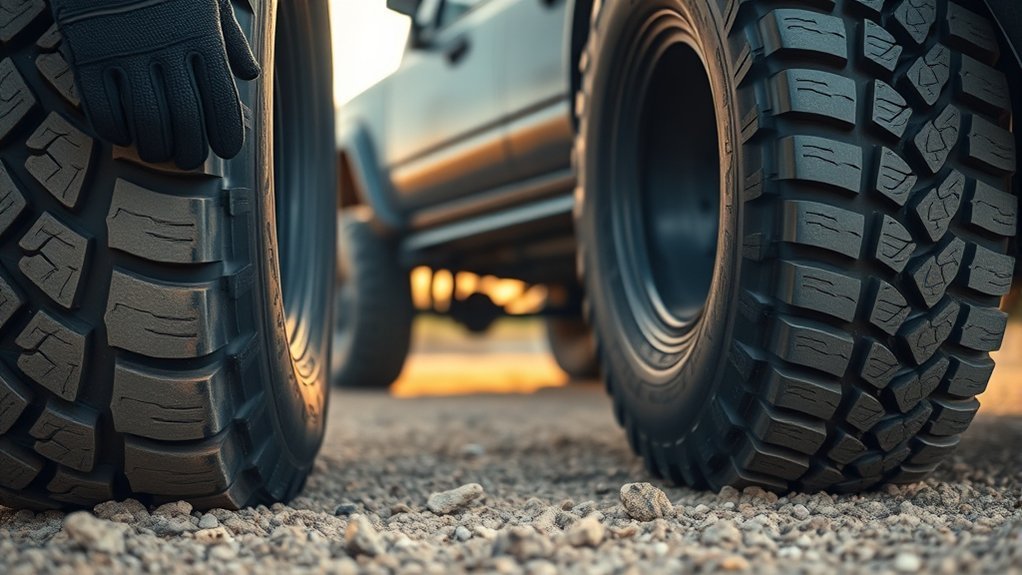
Your choice between M/T and A/T tires should start with where you actually drive. M/T tires favor serious off-road traction. A/T tires balance pavement manners with light to moderate off-road ability. Neither one is automatically better; the better tire is the one that matches your terrain, vehicle weight, weather, and comfort expectations.
| Tire Type | Best For | Main Tradeoff |
| M/T | Deep mud, rocks, ruts, trails, farms, and work sites | More road noise, firmer ride, and often faster pavement wear |
| A/T | Daily driving with gravel roads, dirt roads, camping, and light trails | Less deep-mud bite than a true mud-terrain tire |
| R/T | Drivers who want a more aggressive tire than A/T but more road manners than M/T | Not as quiet as many A/T tires and not as aggressive as most M/T tires |
On-Road Vs Off-Road Use
Choose M/T tires when off-road traction is a real need, not just a look. They make sense if you often drive through sticky mud, deep ruts, rocky climbs, job sites, hunting trails, forest roads, or other terrain where a highway tire would clog or lose bite.
Choose A/T tires if you drive mostly on pavement but still want confidence on gravel, dirt roads, campsites, or mild trails. A/T tires usually ride smoother, run quieter, and last longer on pavement than aggressive M/T tires.
Traction, Noise, And Wear
M/T tires win in deep mud and loose rock because they can dig and self-clean. A/T tires usually win for daily comfort because their tread blocks are closer together and more stable on pavement. Noise and wear depend on the exact model, but as a category, the more open and aggressive the tread is, the more pavement compromise you should expect.
Pro Tip: If you want an aggressive look but still commute every day, compare an R/T or more aggressive A/T before buying M/T tires. You may get enough trail grip without as much highway noise.
M/T Vs R/T Tires: What’s The Difference?
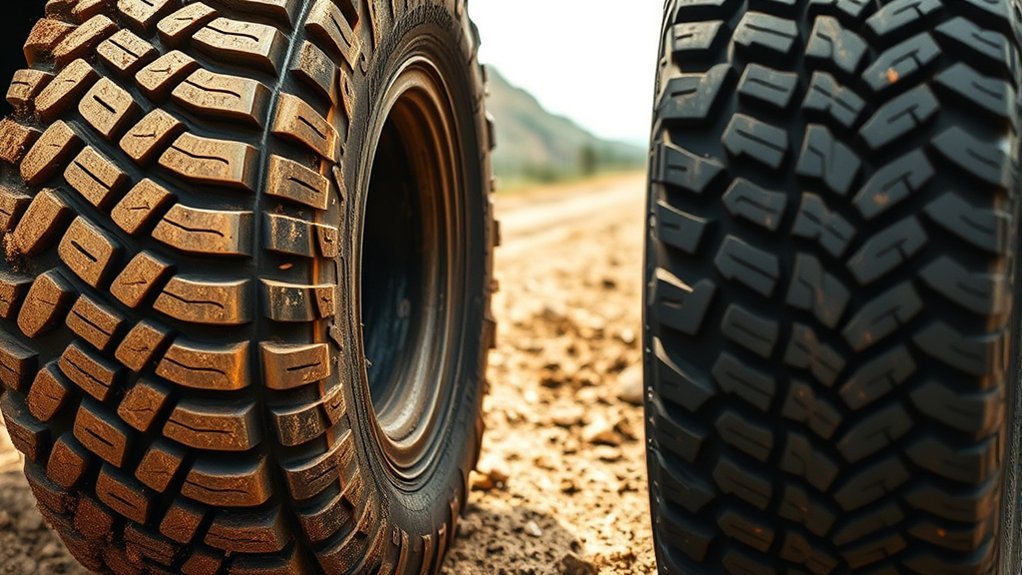
M/T and R/T tires are both aggressive truck and SUV tires, but they are built for different priorities. M/T tires lean harder toward extreme off-road traction. R/T tires, often called rugged-terrain tires, sit between all-terrain and mud-terrain designs. Discount Tire describes rugged-terrain tires as a hybrid category for drivers who want off-road capability with better on-road manners than a heavy mud-terrain tire.
- M/T tires favor deep mud, rocks, ruts, and harsh off-road use.
- R/T tires favor mixed driving with a more aggressive look than many A/T tires.
- M/T tread usually has deeper, wider, more open voids.
- R/T tread often has more siping and tighter block spacing for better pavement control.
- Winter performance should be judged by the tire’s actual markings and manufacturer specs, not by rugged appearance alone.
If you split your time between pavement and dirt, R/T tires may be easier to live with. If you regularly drive terrain that packs tread with mud or threatens sidewall damage, M/T tires usually provide the stronger setup.
[Products Worth Considering]

Yasiby’s 16-piece brass and ABS valve adaptor kit makes it easy to inflate bikes, motorcycles, and vehicles by converting between Presta and Schrader/Dunlop valve types. The set also includes ball needles and tapered inflatable nozzles for sport balls, balloons, and swim rings. Corrosion-resistant threads and durable parts help you keep inflating smoothly at home, on the road, or with a compressor or mini pump.

A portable bicycle repair bag built for on-the-go maintenance, pairing a scalable mini tire pump with a multi-tool, crank and bone wrenches, tire levers, and self-adhesive glueless patches. The included patch set helps you quickly seal punctures using the integrated prep/rasp step, while the waterproof nylon bag keeps tools organized and easy to access. Ideal for road, mountain, and home bike emergencies, repairs, and routine adjustments.

The Big Rig Defense Tire Thumper is a truck tire pressure checker that lets you quickly check multiple tires by giving them a firm whack. Listen for a reassuring thump and feel the stick bounce when a tire is fully inflated, helping you get back on the road safely. It features a comfortable, glove-friendly handle and a secure wrist strap for confident use on busy routes.
How To Choose The Best M/T Tire
To choose the best M/T tire, start with the terrain, then check the safety numbers. A tire that looks aggressive is not automatically correct for your vehicle.
- Match the tire to your terrain. Choose wider voids and deeper lugs for mud and ruts. Look for stronger sidewall features if you drive rocks, stumps, or construction debris.
- Check the size, load index, and speed rating. Use the vehicle tire placard, owner’s manual, and tire maker’s data. The NHTSA TireWise guide explains that tire size and cold inflation pressure should come from the vehicle placard or owner’s manual.
- Consider load range for trucks and towing. If you tow, haul tools, or run a heavy overland build, make sure the tire’s capacity matches the real axle load and the manufacturer’s guidance.
- Think about wet roads and winter roads. If snow or ice is common, look for the 3PMSF symbol and winter-performance information. M/T tread alone is not a substitute for a true winter-capable tire.
- Plan for maintenance. Check cold pressure, rotate on schedule, inspect for cuts or uneven wear, and keep alignment in spec. Aggressive tread can become loud or uneven if neglected.
Also check whether the tire is available in your exact wheel size and whether it fits your vehicle without rubbing. Bigger M/T tires may require wheel-offset changes, trimming, suspension changes, speedometer correction, or professional fitment advice.
M/T Tire Maintenance Tips
M/T tires need the same basic care as any tire, but their aggressive tread makes neglect easier to hear and feel. Poor inflation, worn suspension parts, or bad alignment can cause cupping, vibration, and uneven tread wear.
- Check pressure cold. Use the pressure listed on the vehicle placard or owner’s manual unless a qualified tire professional has set a different pressure for a modified setup.
- Rotate regularly. NHTSA says many vehicles should follow the owner’s manual, and if the manufacturer recommends it, rotation is often every 5,000 to 8,000 miles.
- Inspect sidewalls. Look for cuts, bulges, exposed cords, and embedded rocks after trail use.
- Rebalance if vibration starts. Large lugs can hold mud or stones, and off-road impacts can knock a tire/wheel assembly out of balance.
- Watch tread depth and uneven wear. Replace tires when they are worn, damaged, aged out, or no longer safe for your conditions.
Frequently Asked Questions
Which is better, M/T or A/T tires?
A/T tires are usually better for daily driving, highway comfort, and mixed light off-road use. M/T tires are better when you need maximum grip in deep mud, rocks, ruts, and loose terrain. Choose based on where you drive most, not only on the tread appearance.
What are the drawbacks of M/T tires?
The main drawbacks are more road noise, a firmer ride, more vibration, possible fuel-economy loss, and faster tread wear on pavement. Wet-road and winter performance also vary by model, so check the tire’s ratings and manufacturer information before buying.
What’s the difference between M/T and LT tires?
M/T describes the tire’s terrain category: mud-terrain. LT means light truck and describes the tire service type or construction category. A tire can be both LT and M/T, such as an LT-size mud-terrain tire built for a truck, Jeep, or SUV.
Do M/T tires wear faster?
They often wear faster on pavement than A/T or highway tires, especially if they are oversized, underinflated, overloaded, misaligned, or not rotated. The exact tread life depends on the tire model, vehicle weight, driving style, pressure, alignment, and road surface.
Are M/T tires good in snow?
M/T tires can dig through some loose snow, but they are not automatically winter tires. Packed snow and ice need the right compound, siping, and certification. If winter traction matters, look for the three-peak mountain snowflake symbol and read the tire maker’s winter-performance guidance.
Can you daily drive on M/T tires?
Yes, but expect tradeoffs. M/T tires can be louder, rougher, heavier, and less efficient than less aggressive tires. If your daily driving is mostly highway or city pavement, an A/T or R/T tire may be more comfortable.
Conclusion
An M/T tire is built for maximum off-road traction in mud, rocks, ruts, and loose terrain. It is the right choice when trail grip, self-cleaning tread, and sidewall toughness matter more than a quiet ride. Before buying, check the tire size, load index, load range, speed rating, winter markings, and vehicle placard. If you spend most of your time on pavement, compare A/T and R/T options first. If your driving regularly takes you where the road ends, the right M/T tire can help your vehicle keep moving with control.
Sources
- NHTSA TireWise — supports tire size, pressure, rotation, balance, alignment, and tire-safety guidance.
- Tire Industry Association: Reading a Tire Sidewall — supports load index, speed symbol, DOT code, and sidewall terminology.
- U.S. Tire Manufacturers Association: Replacing Tires — supports matching replacement tire size, load index, and speed rating to manufacturer recommendations.
- Goodyear Wrangler Territory MT — supports MT/maximum-traction product language and mud-clearing tread design context.
- Discount Tire: Rugged Terrain Tires — supports the R/T tire category comparison with A/T and M/T tires.
- Continental: Winter Tire Markings — supports M+S and 3PMSF winter-symbol explanations.
[Products Worth Considering]

This PXZBLG bike repair kit helps you tackle common tire and on-the-ride issues with a compact, ride-ready tool collection. It includes a mini tire pump supporting both Presta and Schrader valves, a 16-in-1 bike multitool, tire levers, glueless patches with a plastic box, plus 4mm and 5mm Allen wrenches. A convenient bike bag stores everything so you can mount it on your road bike or mountain bike for lightweight, portable preparedness.

Protect your inner tube with this universal bike tire liner designed to block thorns, glass, nails, and sharp trail debris. It installs easily by measuring and trimming to fit, creating a durable barrier between tire and tube. Lightweight polyurethane construction helps reduce sudden flats for more confident rides.

These waterproof RGB LED bike spoke lights deliver bright, eye-catching visibility for safer night rides. With 14 LEDs and up to 30 pattern options, the light effects change every few seconds and create striking wheel designs. Motion-sensor automatic mode and a manual switch offer flexible control, while IP66 water resistance supports riding in wet conditions.

Related Articles

Breaking In New Tires: How Long It Takes and Why
Keen to know why new tires feel slippery at first and how long break-in really takes before grip returns?
Read More
Wheel Diameter Explained: How Rim Size Affects Your Ride
Might bigger rims improve handling while ruining comfort, range, and braking? Discover how wheel diameter changes your ride before choosing the wrong size.
Read More
ZR vs R Tires: What the Speed Rating Really Means
Just how much does ZR vs R really change your drive? Discover the speed-rating differences that could alter grip, comfort, and safety.
Read More