
What Does NHS Mean on a Tire? Load, Speed & Rating Guide

NHS on a tire means “Not for Highway Service”. Some manufacturers also describe NHS tires as “Non-Highway Service”. The marking identifies tires designed primarily for off-road or specialty equipment rather than normal highway operation. On a mower tire, NHS does not tell you the size, load capacity, or correct operating pressure by itself, so match the full size, rim diameter, tread pattern, load specification, and inflation guidance to your equipment.
Last updated: August 18, 2026
Quick Answer
NHS on a tire means “Not for Highway Service.” Some manufacturers use “Non-Highway Service” for the same NHS category. It is primarily an off-road service marking, not a size or load rating. On mower tires, read the complete sidewall size, then check rim fit, tread, ply or load designation, rated load, and the equipment maker’s inflation guidance before buying a replacement.
Key Takeaways
- NHS means “Not for Highway Service”; some manufacturers also use “Non-Highway Service.” In either case, it identifies a tire intended primarily for off-road or specialty-equipment service.
- A common mower size such as 18×8.50-8 NHS means about 18 inches tall, 8.50 inches wide, and made for an 8-inch rim.
- NHS does not tell you the load capacity by itself; check the sidewall or product specs for maximum load, PSI, ply rating, or load range.
- Ribbed tread usually works well on front steering wheels, while turf or lug tread may be better on drive wheels depending on terrain.
- Do not treat an NHS tire as a normal highway tire. Temporary or incidental public-road use depends on the exact tire, equipment manufacturer guidance, and applicable local rules.
At a Glance
| Time Required | 5–10 minutes to read the sidewall, check the manual, and compare replacement specs. |
| Difficulty | Easy, as long as the sidewall markings are still readable. |
| Tools Needed | Flashlight, tire pressure gauge, owner’s manual, and the old tire’s sidewall markings. |
| Main Checks | Full tire size, rim diameter and width, rated load, inflation guidance, tread pattern, and tube or tubeless setup. |
What Does NHS Mean on a Tire?
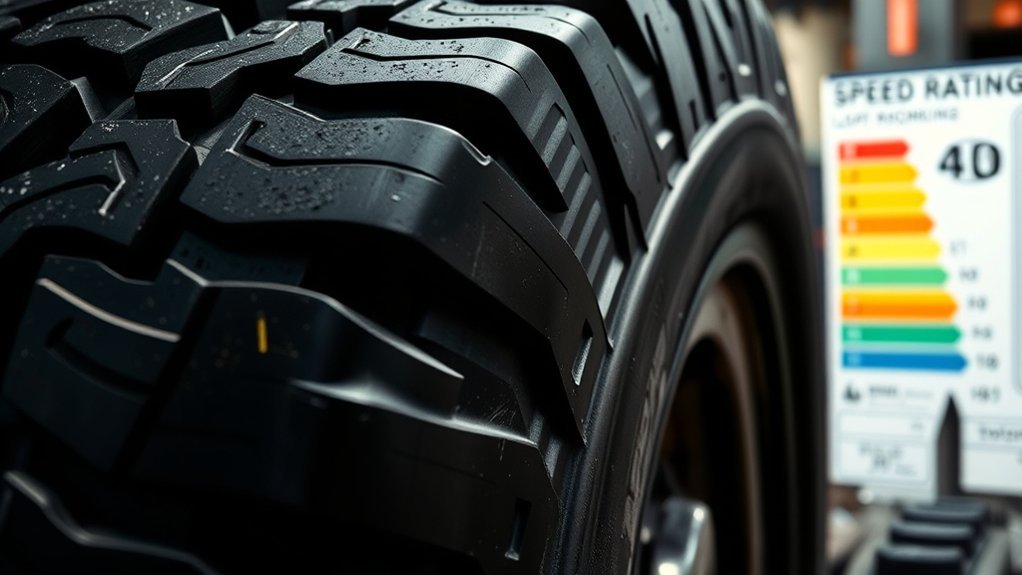
NHS means Not for Highway Service. Some manufacturers describe the same category as Non-Highway Service. The practical meaning is that the tire is designed primarily for off-road or specialty-equipment use rather than normal highway operation. You’ll often find NHS markings on lawn mower tires, garden tractor tires, turf tires, golf cart or utility-vehicle tires, and some agricultural or industrial equipment tires.
The NHS marking is a service designation. It does not replace the rest of the sidewall information. You still need to check the tire size, rated or maximum load, inflation limits, the equipment maker’s recommended operating pressure, tube or tubeless marking, ply or load designation, and tread pattern before choosing a replacement. For general tire safety and sidewall information, the National Highway Traffic Safety Administration tire safety guide is a useful reference.
Warning: Do not assume an NHS tire is suitable for normal road or highway service. NHS tires are designed primarily for off-road use. Some standards and manufacturers allow temporary or incidental public-road use for certain NHS tires, but that depends on the specific tire, the equipment, manufacturer instructions, and local law.
[Products Worth Considering]
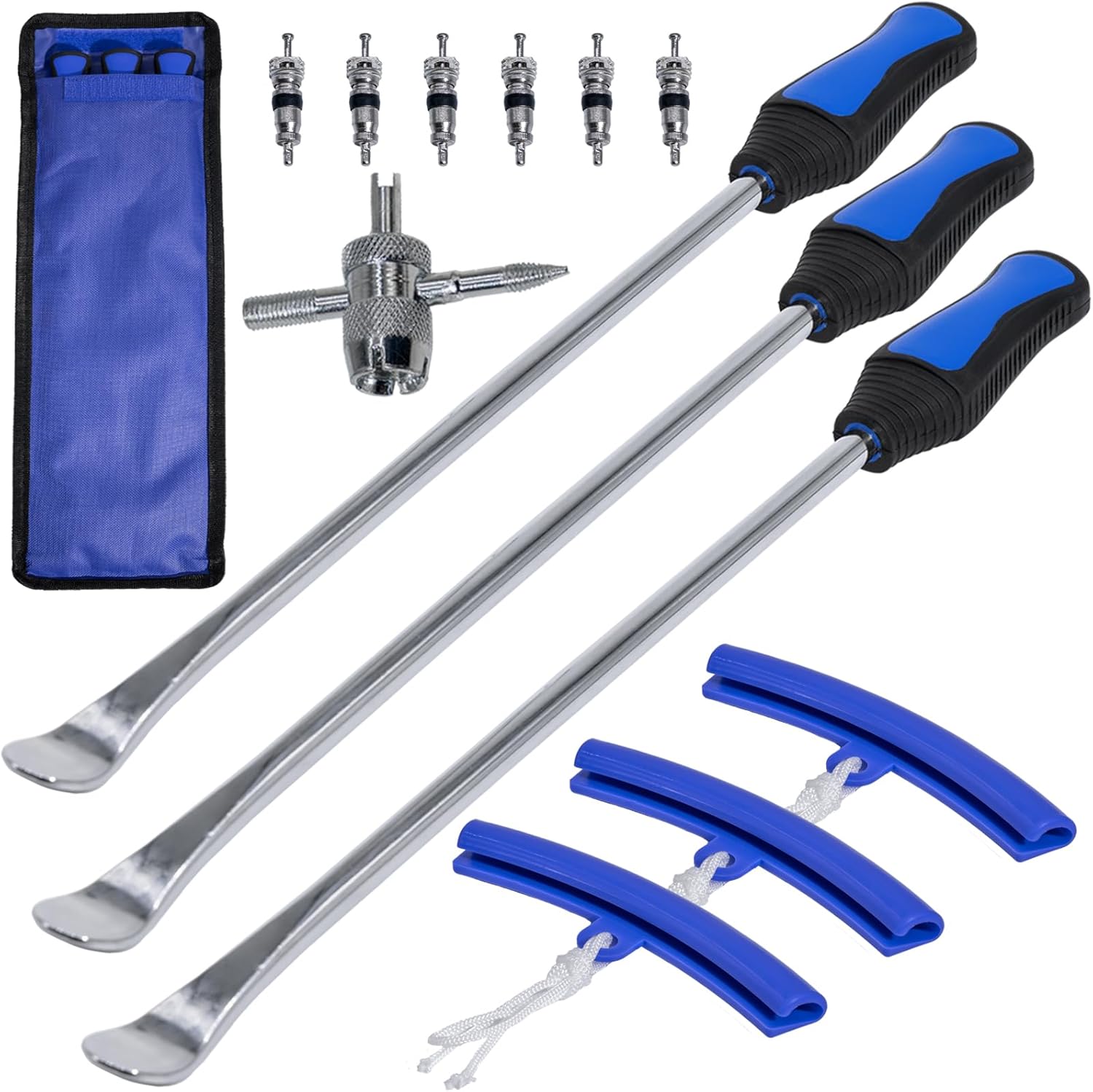
This tire spoon set helps you remove and install motorcycle, dirt bike, lawn tractor, and bicycle tires with extra leverage from a 14.5-inch spoon length. The kit includes tire removal tools, rim protectors, and a valve tool to simplify repairs and help protect rims during changing. Designed for quick, on-the-go service, it’s convenient for garage work, trails, and track-side fixes.

This 4-in-1 tire valve core removal tool helps you deflate, unblock, and remove or install valve cores quickly for easier tire repair. The multifunction design also supports re-taping damaged threads and reaming inside the valve stem for smoother service. Included as a 2-pack, it’s compact for convenient carry and works for cars, bicycles, and motorcycles.

This VEVOR tire bead breaker uses a slide-hammer impact and wedge tip to separate tire beads from rims quickly and efficiently without damaging hub surfaces. The long handle and sturdy steel construction help reduce user strain while providing reliable, portable tire changing for cars, trucks, and more. Ideal for home mechanics and repair shops handling multiple vehicle tire sizes.
How to Read Lawn Mower Tire Size
A common lawn mower tire size has three numbers, such as 18×8.50-8 NHS. Read it from left to right:
| Marking | Meaning |
| 18 | Approximate overall tire diameter in inches when inflated. |
| 8.50 | Approximate tire width in inches. |
| 8 | Rim diameter in inches. |
| NHS | Not for Highway Service; some manufacturers use the term Non-Highway Service. |
The three numbers are nominal size designations, so actual mounted dimensions can vary by tire model and approved rim width. For example, one current Carlstar Turf Saver in size 18×8.50-8 is listed at 17.9 inches mounted diameter and 8.2 inches mounted width on a 7-inch rim, with a 520-pound rated load, 10 PSI, and a 10 mph rated speed. Those figures are model-specific and should not be applied to every 18×8.50-8 tire.
Some mower and small-equipment tires use a two-number format, such as 4.80-8. In that style, the first number is the tire width and the second number is the rim diameter. Always copy the full sidewall marking before ordering. If your tire is too worn to read, check the owner’s manual, the wheel size, or the equipment manufacturer’s parts listing.
Note: Do not choose a replacement tire by tread appearance alone. Two tires can look similar but have different rim diameters, widths, load ratings, or inflation limits.
NHS vs DOT Tires: What’s the Difference?
An NHS marking identifies a tire designed primarily for non-highway service. A DOT symbol on a motor-vehicle tire, by contrast, is the manufacturer’s certification that the tire complies with the applicable U.S. Federal Motor Vehicle Safety Standards for that tire. The two markings are not interchangeable, and an NHS mower tire should not be treated as a normal highway replacement tire just because its physical size looks similar to a road tire.
Passenger-car tire grading is covered separately under Uniform Tire Quality Grading standards. That rule applies to new pneumatic passenger-car tires, with listed exceptions, so UTQG grades are not the right shopping criteria for mower and turf NHS tires.
For mower tires, the practical checks are: match the equipment manual, match the rim diameter and approved rim width, meet the required load capacity, use the equipment maker’s recommended operating pressure without exceeding tire limits, and choose tread for the axle position and terrain.
Which Tread Works Best on Your Mower?
After you match the tire size and confirm the NHS marking, choose the tread pattern by axle position and terrain.
- Ribbed tread: Best for many front, non-drive steering wheels because it tracks straight and reduces turf scuffing.
- Turf tread: Good for drive wheels on lawns because it balances traction with grass protection.
- Knobby or lug tread: Better for loose soil, slopes, mud, or utility work, but it can mark soft lawns more easily.
- Smooth tread: Useful on delicate turf or hard surfaces where maximum ground protection matters more than traction.
Front and rear tires do different jobs. A front tire usually needs to steer cleanly without digging into the lawn. A rear tire on a riding mower or garden tractor often needs more traction because it carries drive power. If your mower has four-wheel drive, steering brakes, or unusual wheel sizes, follow the equipment manual before changing tread type.
Pro Tip: If you like how your mower handles now, replace each tire with the same size, similar tread, and equal or higher load rating. Changing only one tire size or tread style can affect cut quality, traction, and steering.
What Ply Rating Do You Need?
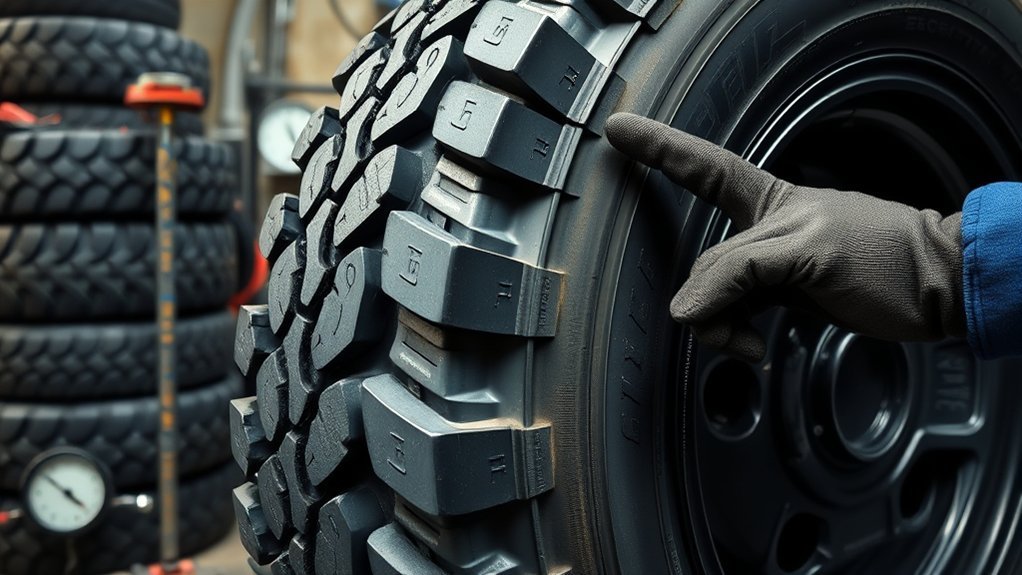
The right ply or load designation depends on how much weight the tire must carry and the service conditions. Many mower tires are sold with 2-ply, 4-ply, or 6-ply ratings. Ply rating is a strength/load classification, not a guaranteed count of the tire’s physical cord plies. A higher rating can allow a higher load or inflation limit within a given tire line, but the number alone is not enough. Verify the rated load and pressure in the specific tire’s data table or sidewall markings.
Use a turf-appropriate tire for normal mowing and a tire with enough load capacity for attachments, carts, rough ground, or commercial work. Do not under-spec the tire. Underinflation or overload can increase casing flex and heat and may lead to bead problems, leaks, or tire damage.
Maximum PSI is a limit, not automatically the pressure you should run. Use the mower or equipment manufacturer’s recommended operating pressure when available, and do not exceed the tire manufacturer’s limits. Industry standards for tire and rim fitment are maintained by organizations such as the Tire and Rim Association.
Sidewall Checklist Before Buying an NHS Tire
Before you order a replacement, write down every important marking from the old tire. Check for:
- Full size: for example, 18×8.50-8, 15×6.00-6, or 20×10.00-8.
- NHS marking: identifies non-highway/off-road service rather than a load or size rating.
- Ply rating or load range: helps identify tire strength.
- Maximum load: the weight the tire can carry at the stated pressure.
- Maximum or rated PSI: a tire limit or rating; do not assume it is the mower’s recommended operating pressure.
- Tube type or tubeless: match this to your wheel and valve setup.
- Tread direction: some lug or directional tires must be installed a certain way.
- Rim diameter: the last number in a three-part mower size must match your wheel.
- Rated speed or service condition: if the manufacturer lists one, keep the tire within that stated service envelope.
[Products Worth Considering]

This tire valve adapter kit lets you connect a 3/4-inch garden hose to tire valves to fill tires with air or liquid. It includes two adapters for standard bore and large bore valves plus a convenient bleeder valve to release trapped air. Designed for tractor tire tubes and compatible air/water valves and extensions, it’s a practical repair tool for getting back on the road or field quickly.

Camco Trailer Aid Plus tandem tire ramp lifts your trailer for quick, safe tire changes with ample clearance from its 5 1/2-inch lift. It helps you change a flat tire without unloading cargo, making roadside and routine maintenance more efficient. The heavy-duty, waterproof and rustproof polymer design supports up to 15,000 lb and is built for easy portability and storage.
How to Choose the Right Mower Tire
To choose the right mower tire, start with the full sidewall size, then compare it with your mower’s manual or parts diagram. Match the rim diameter exactly and use a rim width approved for that tire. A tire made for an 8-inch rim will not safely fit a 6-inch or 10-inch rim.
Next, choose the tread based on the job. Use ribbed tread for many front steering positions, turf tread for general lawn mowing, and deeper lugs for rougher terrain. Then check load capacity and ply rating. A light-duty residential mower may not need the same tire strength as a commercial zero-turn mower, garden tractor with attachments, or utility machine that carries heavy loads.
Finally, inspect the current tire problem. If the old tire failed from cracking, dry rot, exposed cords, sidewall bulges, repeated flats, or bead leaks, replacing it with the same size is only part of the fix. You may also need a new valve stem, tube, rim cleaning, or wheel repair. If you are replacing the tire yourself, follow a safe lifting and mounting process in this lawn mower tire replacement guide.
Note: Replace tires in pairs on the same axle when the tread depth, tire height, or casing shape is noticeably different. Mismatched tires can make a mower pull, scalp, or cut unevenly.
When to Replace an NHS Mower Tire
Replace an NHS mower tire when it can no longer hold air, carry load safely, or protect the rim. Common warning signs include:
- Cracks in the sidewall or between tread blocks.
- Bulges, bubbles, or soft spots.
- Exposed cords or fabric.
- Repeated punctures or plug failures.
- Dry rot that keeps spreading.
- Bead leaks that return after cleaning and reseating.
- Tread worn so low that the mower loses traction or slides on slopes.
If the tire is old, cracked, or damaged, do not rely on sealant as a permanent fix. Sealant may help with small tread-area leaks, but it will not repair structural damage, sidewall failure, or an overloaded tire.
Frequently Asked Questions
What does 8 NHS mean on a tire?
On a size such as 18×8.50-8 NHS, the final 8 means the tire fits an 8-inch rim, and NHS means Not for Highway Service. It does not mean the tire is automatically 8 inches wide. The width is the middle number in a three-part mower tire size.
What does NHS mean on Carlisle or Carlstar tires?
Carlstar currently describes its outdoor power equipment tires as Non-Highway Service (NHS), while U.S. tire-industry and ISO references also use Not for Highway Service. In practical terms, NHS identifies a tire intended primarily for off-road or specialty-equipment service. It does not tell you the tire’s load capacity, size, or correct operating pressure by itself.
What is an NHS tire rating?
NHS is not a load rating by itself. It is a service designation for non-highway/off-road use. To understand the tire’s capacity, read the specific size, rated load, inflation data, ply or load designation, and any rated-speed or service-condition information supplied by the manufacturer.
What does 12 NHS mean on a tire?
If the tire size ends in -12 NHS, the 12 usually means the tire fits a 12-inch rim, and NHS means Not for Highway Service. If you only see “12 NHS” without the full size, look for the complete sidewall marking before ordering a replacement.
Can I drive an NHS tire on the road?
Do not treat an NHS tire as a normal highway tire. NHS tires are designed primarily for off-road use. Some standards and manufacturers allow temporary or incidental public-road use for certain NHS tires, so check the exact tire specifications, equipment manual, and local road rules before any public-road operation. For lawn equipment, transporting the machine by trailer is usually the clearer option when road travel is required.
Does an NHS mower tire need a UTQG rating?
No for a typical mower or turf NHS tire. Federal UTQG rules apply to new pneumatic tires for use on passenger cars, with stated exceptions. For mower and turf NHS tires, focus on the equipment manual, tire size, rim fit, rated load, inflation guidance, ply or load designation, and tread pattern instead.
Is an NHS tire the same as a DOT tire?
No. NHS identifies a tire designed primarily for non-highway service. A DOT symbol on a motor-vehicle tire is the manufacturer’s certification that the tire meets the applicable U.S. Federal Motor Vehicle Safety Standards for that tire. Do not use NHS and DOT as interchangeable shopping labels.
Conclusion
NHS on a tire means Not for Highway Service; some manufacturers also use Non-Highway Service. The marking tells you the tire is intended primarily for off-road or specialty-equipment service, but it does not replace the rest of the sidewall specifications. Before buying a mower tire, copy the full size, match the rim diameter and approved rim width, choose the tread for the job, verify the rated load and ply or load designation, and use the equipment maker’s recommended operating pressure without exceeding tire limits. Do not treat an NHS tire as a normal highway tire.
Sources
- U.S. Tire Manufacturers Association — Misapplication of Not for Highway Service (NHS) Tires — supports the Not for Highway Service terminology and off-highway service distinction.
- Trelleborg Tires — FAQ — supports the definition of NHS tires as primarily for use off public roads, with temporary or occasional public-road use possible for certain applications.
- Carlstar — Turf Saver Technical Specifications — supports current mower-tire sizing, mounted dimensions, rated load, rated speed, and PSI.
- Carlstar — Turf Smart — supports the manufacturer’s current Non-Highway Service (NHS) terminology for outdoor power equipment tires.
- National Highway Traffic Safety Administration — Tires — supports general tire safety, inflation, inspection, and replacement guidance.
- NHTSA Interpretation 2664o — supports the meaning of the DOT symbol as a manufacturer certification of compliance with applicable Federal Motor Vehicle Safety Standards.
- 49 CFR § 575.104 — Uniform Tire Quality Grading Standards — supports the scope of UTQG as a passenger-car tire grading system.
- Bridgestone Americas — Tire Terminology — supports load-range and ply-rating terminology.
- The Tire and Rim Association — supports standardized tire and rim dimensions and load/inflation data.

Related Articles

Firestone Tire Installation Cost: Full Price Guide
Compare Firestone tire installation costs and discover what hidden fees could change your final bill.
Read More
Tire Rack vs Costco: Which Is Better for Tires?
Pick the better tire deal between Tire Rack and Costco before hidden differences change your choice.
Read More
How Much Does It Cost to Install Rims?
Need to know what installing rims really costs? Discover the hidden fees and price factors before you pay more than you should.
Read More